Category Archives: Military Leadership

Golts on Command Changes, ‘Effective Management’ Producing Cynicism

Writing in Yezhednevnyy zhurnal, Aleksandr Golts says the age limit story for Boldyrev, et al, doesn’t hold water.  These guys were honored for their performance in the five-day war, and then tossed out.  Surovikin obviously got demoted.  It was a general pogrom.
 
The brief Georgian war was not great victory, but the leadership couldn’t punish the general incompetence then.  First, it had to give out medals, and wait a year before firing them.
 
Another possibility is the retired generals were being repaid for their unsuccessful implementation of Serdyukov’s reforms.  They bore the hard burden of cutting tens of thousands of officers.  Then they lost their jobs because the process didn’t go as well as Genshtab chief Makarov has claimed.  Why were they fired if they’ve just been honored as great military leaders?
 
This takes Golts back to the issue of honor.  The Defense Ministry leadership is worried about the morale of officer corps.  It wants this new honor code to become corporate rules of conduct officers operating as members of the same caste from lieutenant to general.  But Golts concludes the new code won’t change the reality that junior officers are crap, they’re serfs.  Does a new code mean anything when generals get awards they don’t deserve, then they’re forced out?  Does it mean anything if officers are dismissed after 10-15 years of service and don’t get their benefits.  Getting officers to request dismissal or putting them outside the TO&E seems so brilliant as a  bureaucratic move, but it’s disastrous for morale.  ‘Effective management’ like this only infects the new generation of officers with cynicism, and no honor code will remedy that.

Babich on the Command Changes

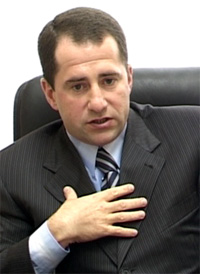
Duma Deputy Mikhail Babich

United Russia Duma deputy, and deputy chair of the Duma’s Defense Committee, Mikhail Babich believes that those who don’t agree with reforms in the armed forces are being pushed out.  NEWSru.com reports on what Babich told Interfaks

Babich says: 

“Changing military commanders–this is not a planned rotation.  This is an attempt to stop the possibility of a leak of any objective information from the troops.  Former Ground Troops CINC [Army] General Boldyrev, being a sufficiently professional military commander and understanding the hopelessness of what’s occurring, calculated it was better for him to go out on his pension than to continue putting today’s reforms into practice.  This also goes for the dismissal of very promising, well trained, and organized General [-Colonel] Sergey Makarov, but it’s only tied to the fact that the SKVO commander correctly, but very professionally established his position in relation to the negative consequences of transferring the district’s troops to the so-called new profile.  Rotating military commanders, undoubtedly, will continue to the point when those who don’t agree (with the conduct of reforms) or who have their own point of view no longer remain at all in the armed forces.” 

Babich sees General Staff Chief Nikolay Makarov appointing his SibVO loyalists to MD posts in these personnel changes. 

“The Genshtab chief is promoting people personally attached to him who owe him their military careers.  In this way, he’s trying to buy some time to cover up the negative consequences of the ongoing military reform, which are increasingly obvious today.” 

Babich said a just completed check of unit and formation combat readiness in the DVO “ended in complete failure.”   

“According to the results of the check, practically all units of the air-assault and motorized rifle brigades put on alert turned out to be not combat ready.  A complete zero–beginning from manning, ending with equipment readiness, its capability to exit the parking area, availability of mechanic-drivers and drivers, who are qualified to operate this equipment.  Despite the fact that they’ve already reported to the Supreme Commander-in-Chief [Medvedev] ten times about the fact that since 1 December 2009 all units and formations of the Russian Army have been transferred to the permanent combat readiness category and are fully combat ready, really not one of them is such.  The real situation is completely otherwise, but the Genshtab chief continues to mislead the Defense Minister and the country’s highest military-political leadership about the real state of affairs.” 

More on the Command Changes

Interfaks-AVN reported today that Boldyrev’s resignation was his third attempt.  He allegedly tried to resign following the Defense Minister’s criticism of commanders in the five-day war with Georgia and while the ‘new profile’ reforms were being drawn up.

Aleksey Nikolskiy in today’s Vedomosti makes the good point that, at 57 and his rank, SKVO commander Sergey Makarov could have served another three years under the law.  So, following this logic, he was moved out for a reason.  Nikolskiy claims new GOU Chief Andrey Tretyak is close to General Staff Chief Nikolay Makarov.  He notes that Postnikov and Galkin served under Nikolay Makarov when he commanded the SibVO.  The command changes may have been Makarov’s idea, and just approved by the Defense Minister.  And all those promoted are proponents of the Serdyukov-Makarov reforms.

Nikolay Poroskov, writing in Vremya novostey, notes that, in his nearly three-year tenure, Serdyukov has now changed out just about every significant military leader.  Poroskov notes that Defense Ministry spokesman Aleksey Kuznetsov had cited age and rotation as reasons for the changes, but he adds a third one–sources tell him it is the results of a personnel inspection conducted in the Defense Ministry.  The Main Military Prosecutor and others a conducting a major anti-corruption inspection that will last until 1 March.

Dmitriy Litovkin in Izvestiya says the departed generals like Boldyrev and Sergey Makarov weren’t officers who didn’t fit the ‘new profile.’  They know how to fight and how to control large force groupings.  But it may be that Serdyukov is really insistent on keeping to 55 as a general age limit for service.  Not really convincing…

A source has told Ivan Konovalov, writing for Kommersant, that the changes were about Nikolay Makarov putting his own guys in place in the MDs.  Konovalov notes the strange, meteoric rise of Surovikin, and his equally quick return to the ‘sticks.’  Konovalov has a source who says Surovikin didn’t cope well with GOU work at a time when it was being drastically cut.  The colonels and generals in GOU didn’t jump like conscripts, apparently.  At any rate, Serdyukov has said three-year rotations are going to be the norm.

In a more fanciful vein, Argumenty nedeli writes that N. Makarov could replace Serdyukov–who’s done his duty and his time.  Serdyukov could replace Sergey Ivanov as a deputy prime minister in charge of the defense sector.  Poor Ivanov would take responsibility for the North Caucasus.  Seems unlikely.

Yuriy Gavrilov in the government daily Rossiyskaya gazeta tries to damp things down a bit by saying the changes aren’t so revolutionary.  It’s not surprising that two ‘Siberians’ should move up because the SibVO is one of the best MDs [but there are only 6].  And Gavrilov draws the Siberian connection between N. Makarov, Postnikov, and Galkin.  A source has assured that Surovikin committed no missteps at GOU resulting in his return ‘to the troops.’  We get the same story about learning at the center, then taking the experience back out to the field.

Funny no one’s yet mentioned the old Siberian army ‘mafia’ led by former Ground Troops CINC Army General Kormiltsev when Sergey Ivanov was defense minister.  He had his ‘Siberians’ in key spots.  Actually, it might have been a former Transbaykal MD (ZabVO) ‘mafia.’  A lot of the members came to SibVO when ZabVO was shut down in 1998.

In Nezavisimaya gazeta, Vladimir Mukhin repeats the rumor that Serdyukov might go, and a military man could replace him.  But the issue is whether President Medvedev can, or feels like he can, replace one of Putin’s men.  Perhaps it would all depend of the circumstances of a possible Serdyukov departure, promotion, etc.  It’s very difficult to see why they would go back to a uniformed officer after having Sergey Ivanov, basically a civilian as minister, and Serdyukov, who is a complete civilian.

Why the Command Changes?

Writing in Grani.ru, Vladimir Temnyy reminds that Komsomolskaya pravda also indicated 58th CAA commander Anatoliy Khrulev would be retired.  This follows a theory that the Defense Ministry is cashiering all commanders from the five-day Georgian war.

But Temnyy says there are more serious reasons for the changes.  He says Serdyukov’s struggle to introduce the ‘new profile’ still has an ‘information-propaganda quality’ and real changes are coming with extreme difficulty, especially in the largest service, the Ground Troops.

According to Temnyy, here is where the greatest structural changes came–more than 20 combined arms divisions liquidated to make 80 brigades.  And although the Genshtab reported last month that all reform plans were fulfilled, today realistically not more than 10 percent of the troops entrusted to former CINC Boldyrev are ready to fulfill combat missions.  The rest are in a drawn out transitional state. 

Temnyy expects more retirements in other services.  He concludes that Serdyukov didn’t get to pick any [well, not many, certainly not most] of these military leaders.  Recent years of war, chaotic reforms, scandal, and intrigue have formed such a pack of military leaders that, if you grab any one of them, you get a real zero.

Some other thoughts…Utro.ru turned to one Yuriy Kotenok, who said the changes are a continuation of the army reforms.  He believes the departure of Boldyrev and Makarov is hard to explain since he calls them the ‘designers’ of victory in the five-day war.  They preserved the training and the units that fought, so in his opinion, their retirement won’t do anything to raise combat readiness or lead to anything good.  About the formula “retired on reaching the age limit” for service, one thing can be said, when the leadership needs it, it falls back on this method.  And considering that several [sic?] hundred thousand officers and warrants have fallen under it, the practice is sufficiently widespread.

Not terribly convincing…

One more try…Gzt.ru quotes a Defense Ministry spokesman, Aleksey Kuznetsov, who said that Postnikov is 53 and this is a good age for a Ground Troops CINC.  Kuznetsov said, in this reshuffling, the Defense Ministry’s desire for younger personnel and rotations is being pursued.  Commanders should get leadership experience in the central apparatus and then take it out ‘to the troops.’

Privately, a number of Defense Ministry sources told Gzt.ru that before the end of May chiefs of staff and deputy commanders would be changed in all MDs.  In the Genshtab, they’re expecting more high-level retirements.  By spring, Serdyukov may shed those generals who don’t agree with something in the reforms he’s introduced.  Vitaliy Shlykov hints that having new command teams in the MDs may not make the reform process easier in the short run, since they’ll need time to get oriented.

Postnikov New Ground Troops CINC

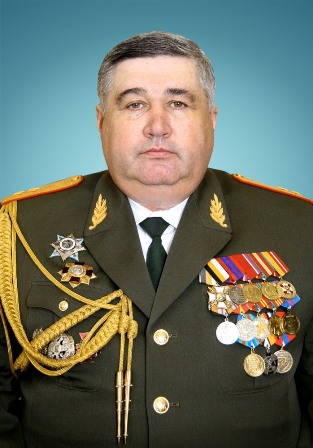
General-Colonel Aleksandr Postnikov

This morning ITAR-TASS reported a number of changes in the Ground Troops and military distict leadership.  SibVO commander Postnikov becomes Ground Troops CINC, replacing Vladimir Boldyrev, retired on age grounds–he just turned 61. 

Postnikov will be 53 in February.  Commissioned in 1978, he’s served in many combined arms command posts, including in the GSFG and several military districts.  He served in army-level staff and command posts in the MVO and SKVO.  He was chief of staff, first deputy commander of the SKVO from 2004 to late 2006, when he moved to SibVO, becoming its commander in mid-2007. 

Postnikov now goes by Postnikov, but his real surname is Streltsov.  After marrying the daughter of former Army General Stanislav Postnikov, he adopted the hyphenated Postnikov-Streltsov, later dropping Streltsov completely.  The recent problems at the frozen ‘Steppe’ garrison in Postnikov’s SibVO didn’t hurt his promotion chances.  He eagerly publicized every SibVO effort to implement Serdyukov’s ‘new profile,’ and it apparently paid off.  

Postnikov’s chief of staff, first deputy commander also benefited.  General-Lieutenant Aleksandr Galkin moves from SibVO to become SKVO commander, replacing 57-year-old General-Colonel Sergey Makarov, sent off to retirement. 

General-Lieutenant Aleksandr Galkin

Galkin commanded the 41st CAA before moving up in the SibVO.  He’ll be 52 in March.  He doesn’t strike as particularly fit. 

General-Lieutenant Vladimir Chirkin will replace Postnikov as SibVO commander.  Chirkin was chief of staff, first deputy commander of the PUrVO. 

General-Lieutenant Vladimir Chirkin

Chirkin once served as chief of staff of the SKVO’s 58th CAA, and later as a deputy commander of the MVO.  He served in the GSFG and several MDs.  He will be 55 this year.  Interestingly, he was born in Khasavyurt, Dagestan and has four children.  He needs more apartment space. 

In a move that may reflect continued downgrading of the central apparatus and staff in Moscow, the very junior General-Major Sergey Surovikin will leave the [once?] prestigious Genshtab Main Operations Directorate (GOU) to replace Chirkin as chief of staff, first deputy commander in PUrVO.  Officers used to leave GOU only to move up or to retire. 

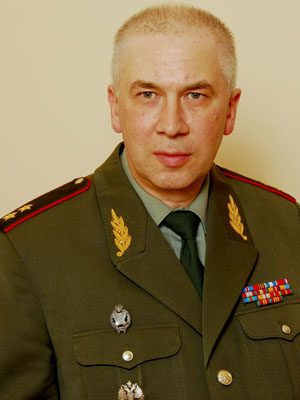
General-Major Sergey Surovikin

Surovikin commanded the 20th CAA before replacing the very experienced General-Colonel Rukshin as GOU Chief before the war with Georgia in 2008.  Surovikin will turn 46 this year.  He reportedly fought in Afghanistan, Tajikistan, and Chechnya.  He commanded the 34th and 42nd MRDs.  He is said to come from the ‘iron fist’ school of military leadership.  While commanding the 34th, one of his colonels blew his brains out in front of the entire staff after Surovikin upbraided him.  Serdyukov’s weeding out of GOU apparently occurred on Surovikin’s watch; about 500 posts, including lots of colonels and generals were reportedly eliminated from GOU in late 2008 and early 2009. 

It’s strange Surovikin would return to the ‘sticks’ so soon, and simply to what would be the next rung of the career ladder for him.  Did he cope with the GOU assignment or not?  Maybe he accomplished what was intended and wanted to return ‘to the troops.’  But his GOU tour seems like an abbreviated one. 

General-Lieutenant Andrey Tretyak moves from chief of staff, first deputy commander of LenVO to take over GOU from Surovikin.  Before his LenVO tour, Tretyak commanded the 20th CAA, and served in various MDs plus the GSFG. 

General-Lieutenant Andrey Tretyak

Tretyak is probably about 50-51, and was born into a serviceman’s family in Soviet-occupied East Germany. 

Finally, General-Major Ivan Buvaltsev will take Tretyak’s place as LenVO chief of staff, first deputy commander. 

General-Major Ivan Buvaltsev

Buvaltsev has been serving as first deputy chief of the Defense Ministry’s Main Combat Training and Troop Service Directorate.  He previously headed the MVO’s combat training directorate and commanded a tank division.