Tag Archives: New Profile

Pukhov Criticizes Serdyukov’s Reforms

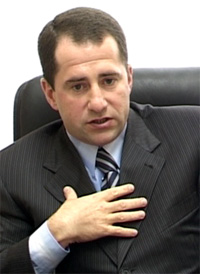
Ruslan Pukhov (photo: Radio Rossii)

In today’s Komsomolskaya pravda, Viktor Baranets interviews Ruslan Pukhov, Director of the Center for Analysis of Strategies and Technologies, and Member of the Defense Ministry’s Public Council.  Pukhov provides a fairly balanced assessment of Defense Minister Serdyukov’s reforms, one year on.

Pukhov believes Serdyukov managed to reorganize and shake up the Defense Ministry apparatus, and partially achieved more rational use of the military’s budget money.  He says the main thing is the breakthrough on the ‘organizational measures’ of military reform.  He calls the ‘new profile’ the deepest organizational change for Moscow since 1945, citing its large-scale relocation of troops and equipment, cutting of personnel and obsolete armaments, reorganization of military education, and civilianization of many military jobs.  Pukhov concludes the administrative tasks of the reform are largely complete.

However, Pukhov also agrees with Baranets that the reforms have created a structural shell that has to be brought to life, made effective, and combat capable.  This will be harder than what’s been done so far.  Pukhov says there are few who doubt the army needed a radical, not just a cosmetic, reform, and the five-day August 2008 war proved it.

Pukhov thinks the reforms have created a new army, fundamentally different from the Soviet or previous Russian Army.  In scale, they can only be compared with the military reform of Peter the Great.  If it’s possible to reproach the Russian leadership for anything, it’s for dragging the process out with half measures which turned into a permanent degradation of the army, according to Pukhov.

Asked about Serdyukov’s greatest achievement and greatest failure, Pukhov says the former is having the political and administrative will to complete the first phase of reform.  But the greatest failure is Serdyukov’s inability to win the support of the entire officer corps, and this has put part of the officer corps against him.  Bureaucratic and poorly explained changes have often demoralized personnel, and poorly thought out personnel cuts have created discontent in the ranks, from contractee to general.  Military discontent with the methods of conducting the reform could discredit the reform itself, and make it too difficult for the political leadership to continue supporting Serdyukov, although for now Kremlin is satisfied with Serdyukov and his role as the army’s ‘surgeon.’

Pukhov says many of the measures have been extremely painful, affecting the fate of hundreds of thousands of servicemen, and often been implemented in a typical Russian fashion he describes as ‘up the ass.’  The Defense Ministry’s ‘secret-bureaucratic’ approach itself has had an effect here as well.

After practically calling Serdyukov’s the army’s proctologist-in-chief, Pukhov cuts him some slack, saying he didn’t personally plan and implement the largest part of the ‘orgshtat measures.’  They were done by military specialists in the Defense Ministry, General Staff, and service and district staffs, by men who’ve served out there themselves and are now engaged in transferring their colleagues, cutting some, putting some outside the TO&E, ‘optimizing,’ and so forth.  But Pukhov notes, all this could be done humanely, with respect toward the men and their professional experience.

Pukhov agrees with Baranets that a ‘soulless’ style of dealing with people, a lack of concern about human capital, and disregard for the human factor is traditional in the army.  And, unfortunately, it permeates the entire military system, according to Pukhov.  And a significant portion of the officer corps has become victim to such an approach during these rapid reforms.

Pukhov ends with some criticism for the top military leadership which often says it has come all the way from the bottom ranks, like those being ‘optimized’ today.  But what’s happening, including the aforementioned ‘excesses’ of reform, in Pukhov’s view, should make one think that there are some unhealthy morale-psychological tendencies in the army, which started long before Serdyukov, and can’t be considered normal.  Perhaps, for the success of reforms, the leadership should focus on the human aspect and recognize that the army, first and foremost, is people, and not pieces of iron.

So it sounds a little like Pukhov is saying the civilian Serdyukov didn’t realize how military men would implement his changes in their own organization, and what the human costs would be.  Again, it sounds like he wants to cut Serdyukov some slack, and share the blame for the pain caused with others around him wearing uniforms with big stars.  This tends to overlook the reality that many of those with the stars who objected were sent packing by someone.

Fridinskiy’s Latest Military Corruption Report

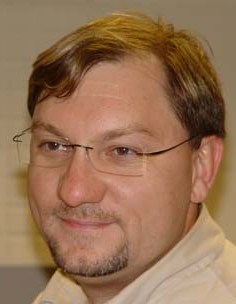
Sergey Fridinskiy (photo: photoxpress)

An Interfaks reporter has interviewed Main Military Prosecutor (GVP) Sergey Fridinskiy for the pages of today’s Izvestiya

Not surprisingly, Fridinskiy didn’t really bite when asked if the GVP had any hand in the recent Defense Ministry cadre ‘revolution.’  He said the GVP keeps its hands on its part [i.e. law enforcement]. 

Fridinskiy says the GVP monitored the implementation of the ‘new profile.’  In some places, it went more or less normally, but in others, it got out of hand and there were mass violations of servicemen’s rights, like putting 600 men in a barracks for 300.  So the prosecutor reacts to such a situation.  Fridinskiy said the GVP gave quarterly reports on violations to the Defense Minister. 

Asked about the military’s involvement in the tragic ‘Lame Horse’ club fire in Perm, Fridinskiy said the chief and chief engineer of the KECh which was responsible for the property were aware of what was going on there and might have been getting a cut, but the fact that they allowed gross fire safety violations resulting in a tragedy with many victims is what resulted in the investigation and criminal case against them.  He indicated the KECh chief died in the fire, and they are investigating whether the chief engineer got bribes.  Fridinskiy noted other responsible military officials in the district got disciplinary punishment. 

On the ‘Steppe’ garrison boiler house case, Fridinskiy revealed that state inspectors looked at it in May or June and declared it unfit for use, but the locals did cosmetic repairs and used it anyway.  He says other districts and garrisons, especially Kostroma, are being inspected.  He believes old equipment is largely to blame, but it’s up to the GVP to force people to do their jobs and not let the situation reach the point of an accident. 

Fridinskiy termed the general crime situation in the armed forces as stable, with some favorable points.  Registered offenses were down 16 percent in 2009 against the year before.  The numbers of grievous and especially grievous crimes were down.  These figures were for all uniformed power ministries, not just the armed forces.  Dedovshchina looked like it would continue a significant decline, but actually ended up increasing by 2 percent.

Asked to address the reported interethnic Baltic Fleet incident, involving Slavs and Caucasians, Fridinskiy said:

“As a rule, we’re talking not about interethnic fights, but interpersonal conflicts.  For us it’s just accepted:  if a Slav gives it to another Slav based on appearance, then this is simply a fight.  But if the very same thing happens with a Caucasian participating, then another hue appears here, even though the fight is based, as a rule, on a normal everyday situation.  However taking into account the mentality of southerners, who’re inclined to stick together, a fight between two guys grows into a group fight, and the appearance of an interethnic conflict comes up.  When the affair goes to criminal responsibility for nonregulation relations, an ethnic motive doesn’t figure in.  But rumors continue to pressurize the circumstances.”

Fridinskiy claims that in the group of ‘barracks hooligans’ in the Kaliningrad garrison there were both North Caucasians and Slavs [but were they part of the same group or in different groups?].  He said 8 were charged in the incident, and some have already been convicted.

Asked about crime among higher officers, Fridinskiy says malfeasance, exceeding authority, and fraud were the biggest offenses.  Eight generals [probably from all power ministries] were convicted and six got prison terms from 3 to 5 years.  He said the theft of state money was greatest in the GOZ, RDT&E, and housing programs.  He indicates he’s investigating 8 cases where apartments didn’t get built by the SU-155 construction firm, despite the fact there were state contracts in place for them.

Fridinskiy seems to indicate he registered 1,500 crimes among senior officers in 2009 [as of late October, he had this number at a little less than 900].

As for how to fix the crime situation in the military, Fridinskiy doesn’t offer much advice beyond using the law.  Of course, that gives him lots of business.

Serdyukov on New Boiler House for ‘Steppe’

New Boiler House in a SibVO Garrison

During his Far East trip last week, Defense Minister Serdyukov ordered a new boiler house before next winter for the ‘Steppe’ garrison that froze between 21 December and early January.  His press secretary said he was paying special attention to the living conditions of servicemen and their families, particularly questions of heat and electricity supply, during his DVO visit.  Of course, ‘Steppe’ isn’ t the only place where heating has been a serious problem.  The Defense Ministry has to deal with aging, neglected service housing infrastructure in many locations, and these ‘housekeeping’ issues are quite a headache.

As previously noted, heating is a problem in the Khabarovsk Kray garrison of Pereyaslavka.  The loss of its regiment to the ‘new profile’ has compounded its problem.  The kray’s authorities are getting complaints from residents about low temperatures in the garrison’s apartment buildings.  The local press notes that the military installed new boilers at Pereyaslavka, but can’t or won’t pay a civilian service company to operate and maintain them.  Local officials want to take over heating for the former garrison, but need a formal agreement that spells out the respective responsibilities of the DVO, the kray, and the rayon.  Recall from an earlier post that the locals seem fairly eager to take control of the military town.

Another tale of heating problems came this fall from Samara where retired officers have waited since 2007 to occupy completed apartment buildings, but the Defense Ministry, Samara KECh, the builders, and city authorities have not paid for and arranged a connection to the nearest boiler house and heating network.  See Nezavisimoye voyennoye obozreniye’s coverage.

A military pensioner’s family in Troitsk, Chelyabinsk Oblast has appealed publicly to President Medvedev for help with its housing and heating problems, according to Lenta.ua.  Since 2002, the retired military man has tried to get a GZhS, but meanwhile lives in a cold apartment in the Troitsk military town.  The temperature indoors is reported between 54 and 57 F, and as low as 43 F in some years.  However, the military town’s housing commission, including a deputy unit commander, maintains there are no heating problems.  More than twenty other retired servicemen are similarly awaiting GZhS here.

The PUrVO KEU [apartment management directorate] indicates that responsibility for energy supply in Troitsk has gone over to a civilian firm, and that any heating problems have been corrected.  Not so, according to the pensioner’s family.  The Chelyabinsk garrison prosecutor hasn’t been any help, even though, in 2007, it declared the boiler house’s equipment  obsolete and worn out as the result of many years of use.

In a more positive vein, in June, the Defense Ministry and Voronezh Oblast announced they would construct a new modular gas boiler to supply heat and hot water for 11 apartment blocks and more than 700 families in the military town of Buturlinovsk.  The project was jointly financed, and reportedly being completed in November, but was also caught up in the issue of whether the military town and utilities would transfer to civilian municipal control.  The Defense Ministry and Voronezh are dickering over a lot of issues and property since the oblast’s military presence, especially VVS, is growing under the ‘new profile.’

In the end, the promise of a new boiler house this year to a garrison that already froze last year won’t be enough to fix the major infrastructure problem that is Russia’s service housing stock.

Commander Provides Glimpse Inside ‘New Profile’

Colonel Anatoliy Omelchenko

For many years, Colonel Omelchenko commanded the 237th Center for Demonstrating Aviation Systems named for I. N. Kozhedub in Kubinka.  In other words, he ran the home base for Russia’s Vityazi and Strizhi flight teams that fly over the Kremlin in Victory Day parades and perform at air shows.

In mid-2008, Omelchenko became deputy commander of the 32nd Air Defense Corps at Rzhev, Tver Oblast.  The 32nd was part of central Russia’s air defenses known as the Special Designation Command (and before that as the Moscow Air Defense District).

With the advent of the ‘new profile,’ Omelchenko became commander of the new 6th Air-Space Defense Brigade (and of the Rzhev garrison as well).  It is one of the country’s 13 new air-space defense (VKO) brigades and likely part of the Operational-Strategic Command of Air-Space Defense (OSK VKO) that replaced the old Special Designation Command.

In late December, the local Veche Tveri paper reported that the region’s governor, other officials, and military commanders had met to discuss coordination and cooperation in the ‘social sphere,’ i.e. housing, communal services, and employment.  The military representatives were primarily VVS and RVSN officers based on what forces call Tver Oblast home and Omelchenko spoke at length in the meeting.

The Defense Ministry has bought 425 apartments in Tver and is considering 705 more.  A civilian official reported on rising unemployment in parts of the oblast.  Then Omelchenko noted that, in the transition to the ‘new profile,’ 4 units were disbanded and 10 units and sub-units were reformed in the process of creating his brigade.  In all, 957 military personnel (557 officers, 180 warrants, 220 sergeants and soldiers) and more than 300 civilian workers were subject to ‘org-shtat measures.’  As of 19 December, 31 officers and 15 warrants were dismissed.  All warrant billets were abolished and their duties given over to sergeants, and 40 officers and 33 warrants were put into sergeant posts.

Omelchenko said units at Andreapol and Bezhetsk were particularly affected.  More than 300 servicemen from the former went to the air base at Kursk and other units.  Its aviation-technical base and independent comms battalion became a komendatura–more than 200 servicemen and 65 civilians were transferred to it, Kursk, or other unitsIts automated C2 center was downgraded and 155 civilians were let go.  Sovetskaya Rossiya published a good account of the angst at Andreapol as its 28th Guards Fighter Aviation Regiment disbanded in favor of the 14th Fighter Aviation Regiment at Kursk.

The situation at Bezhetsk was much the same.  Its unit sent 284 servicemen to the air base at Khotilovo and other units.  Two hundred servicemen and 65 civilians from the tech base and comms battalion became a komendatura, went to Khotilovo, or other unitsIts understrength radar battalion became an independent company.  And nearly 150 civilians were dismissed.

Omelchenko noted that the growth in the closed military town of Khotilovo-2 due to its regiment’s change into an air base has strained the housing situation.  The command is unable to provide housing for servicemen according to legal norms.  Two hundred to 250 apartments are needed.  Khotilovo doesn’t have enough jobs for military wives and nearly 200 jobs are needed for women with specialized training or technical education.  They might be found in Vyshnyaya Volochka, but there’s no public transportation.  Khotilovo’s ancient kindergarten has only 40 spots and probably 90 are needed.

Omelchenko’s life was probably easier in Kubinka.

Babich on the Command Changes

Duma Deputy Mikhail Babich

United Russia Duma deputy, and deputy chair of the Duma’s Defense Committee, Mikhail Babich believes that those who don’t agree with reforms in the armed forces are being pushed out.  NEWSru.com reports on what Babich told Interfaks

Babich says: 

“Changing military commanders–this is not a planned rotation.  This is an attempt to stop the possibility of a leak of any objective information from the troops.  Former Ground Troops CINC [Army] General Boldyrev, being a sufficiently professional military commander and understanding the hopelessness of what’s occurring, calculated it was better for him to go out on his pension than to continue putting today’s reforms into practice.  This also goes for the dismissal of very promising, well trained, and organized General [-Colonel] Sergey Makarov, but it’s only tied to the fact that the SKVO commander correctly, but very professionally established his position in relation to the negative consequences of transferring the district’s troops to the so-called new profile.  Rotating military commanders, undoubtedly, will continue to the point when those who don’t agree (with the conduct of reforms) or who have their own point of view no longer remain at all in the armed forces.” 

Babich sees General Staff Chief Nikolay Makarov appointing his SibVO loyalists to MD posts in these personnel changes. 

“The Genshtab chief is promoting people personally attached to him who owe him their military careers.  In this way, he’s trying to buy some time to cover up the negative consequences of the ongoing military reform, which are increasingly obvious today.” 

Babich said a just completed check of unit and formation combat readiness in the DVO “ended in complete failure.”   

“According to the results of the check, practically all units of the air-assault and motorized rifle brigades put on alert turned out to be not combat ready.  A complete zero–beginning from manning, ending with equipment readiness, its capability to exit the parking area, availability of mechanic-drivers and drivers, who are qualified to operate this equipment.  Despite the fact that they’ve already reported to the Supreme Commander-in-Chief [Medvedev] ten times about the fact that since 1 December 2009 all units and formations of the Russian Army have been transferred to the permanent combat readiness category and are fully combat ready, really not one of them is such.  The real situation is completely otherwise, but the Genshtab chief continues to mislead the Defense Minister and the country’s highest military-political leadership about the real state of affairs.” 

Why the Command Changes?

Writing in Grani.ru, Vladimir Temnyy reminds that Komsomolskaya pravda also indicated 58th CAA commander Anatoliy Khrulev would be retired.  This follows a theory that the Defense Ministry is cashiering all commanders from the five-day Georgian war.

But Temnyy says there are more serious reasons for the changes.  He says Serdyukov’s struggle to introduce the ‘new profile’ still has an ‘information-propaganda quality’ and real changes are coming with extreme difficulty, especially in the largest service, the Ground Troops.

According to Temnyy, here is where the greatest structural changes came–more than 20 combined arms divisions liquidated to make 80 brigades.  And although the Genshtab reported last month that all reform plans were fulfilled, today realistically not more than 10 percent of the troops entrusted to former CINC Boldyrev are ready to fulfill combat missions.  The rest are in a drawn out transitional state. 

Temnyy expects more retirements in other services.  He concludes that Serdyukov didn’t get to pick any [well, not many, certainly not most] of these military leaders.  Recent years of war, chaotic reforms, scandal, and intrigue have formed such a pack of military leaders that, if you grab any one of them, you get a real zero.

Some other thoughts…Utro.ru turned to one Yuriy Kotenok, who said the changes are a continuation of the army reforms.  He believes the departure of Boldyrev and Makarov is hard to explain since he calls them the ‘designers’ of victory in the five-day war.  They preserved the training and the units that fought, so in his opinion, their retirement won’t do anything to raise combat readiness or lead to anything good.  About the formula “retired on reaching the age limit” for service, one thing can be said, when the leadership needs it, it falls back on this method.  And considering that several [sic?] hundred thousand officers and warrants have fallen under it, the practice is sufficiently widespread.

Not terribly convincing…

One more try…Gzt.ru quotes a Defense Ministry spokesman, Aleksey Kuznetsov, who said that Postnikov is 53 and this is a good age for a Ground Troops CINC.  Kuznetsov said, in this reshuffling, the Defense Ministry’s desire for younger personnel and rotations is being pursued.  Commanders should get leadership experience in the central apparatus and then take it out ‘to the troops.’

Privately, a number of Defense Ministry sources told Gzt.ru that before the end of May chiefs of staff and deputy commanders would be changed in all MDs.  In the Genshtab, they’re expecting more high-level retirements.  By spring, Serdyukov may shed those generals who don’t agree with something in the reforms he’s introduced.  Vitaliy Shlykov hints that having new command teams in the MDs may not make the reform process easier in the short run, since they’ll need time to get oriented.

New Officers’ Honor Code and Ethics Needed

Over the weekend, a Defense Ministry source told Interfaks-AVN that, until 1 February, officers in units, brigades, and ships are discussing a new honor code.  Deputy Defense Minister Nikolay Pankov is leading this broad discussion on the “moral profile of the contemporary Russian officer.”

A new set of corporate ethics for officers will be adopted during the Defense Ministry’s 3rd All-Army Assembly of Officers this November in Moscow.  The Assembly will address raising the educational level and professionalism of officers, the “social-legal” defense of servicemen, and raising the status of officers in society.

Today Aleksandr Konovalov told Gzt.ru that military men need to choose their work as service to the people not just a profession, and officers need to have higher standards than average citizens.  He describes his idealized vision of an officer who has a high sense of justice and duty, values the lives of his subordinates, and won’t use the army for anyone’s private interests, including those in power.

Vitaliy Shlykov also gave Gzt.ru his view on military professionalism.  He says there are now way too few instructors who can impart the qualities officers need–competence, traditions and ethics, and corporateness.  The basic provisions of the new code need to be laid out first though, according to Shlykov.

Konovalov wants to start from scratch.  “New profile officers” have to be formed outside the existing army traditions, which have appeared spontaneously and not always honorably.

How does this square with the reality that officers commit most crimes in the Russian Armed Forces?  Not well.

In the midst of an optimistic army crime report on 26 November, Krasnaya zvezda admitted:

“One of the main problems is the growth of legal violations among officers, including stealing budget money allocated for defense needs, and other corruption crimes by military officials.  The scale of ‘officer’ crime has reached the highest level in the last decade.  Today every fourth registered crime among the troops is committed by this category of servicemen, a third of them are of the corruption type.  The losses caused to military units and organizations by these crimes have increased by one-third and exceed the half-billion level.  The structure of this type of crime has substantially transformed.  Today the theft of military property and financial means is almost half of all the legal violations of officers.  The quantity of cases of bribetaking, of forgery of duty positions, of appropriations, and expenditures has grown substantially.”

According to KZ, senior officers are more often the perpetrators.  In the last year, they committed more than half of all illegal acts.  In 2008, 20 generals and admirals were held criminally responsible, 1,611 officers, including 160 unit commanders, were found guilty.  Out of the 874 people held criminally responsible in 2009, 162 were commanders of units, 127 were colonels and captains 1st rank and 14 were general officers.  More than 270 people were convicted, including 3 generals.  In 2009, over 5,500 law violations were uncovered in this sphere over the course of prosecutor inspections.  The losses amount to 2 billion rubles.

The smaller officer corps–now 150,000 according to the Defense Ministry–and the possibility of dramatically higher pay for all officers by 2012 might reduce officer crime and make those officers who are still part of the ‘new profile’ more honorable and ethical.

Unrest in the Black Sea Fleet?

In Part 2 of his article, Shurygin ended by describing the Black Sea Fleet as being on the verge of an explosion.  We’ll see if he elaborates on this in the final part when it’s published.

Meanwhile, on 12 November, Moskovskiy komsomolets wrote about thousands of officers and families in Sevastopol “thrown to their fate,” without the possibility of getting a job in Ukraine, and left practically without money and housing.  The author, Yekaterina Petukhova, like Shurygin, said the situation in Crimea is on the “verge of revolt.”

Young BSF Officer and Guided Missile Cruiser Moskva

According to Petukhova, 2,000 BSF personnel were cut in 2009, and another 9,000 have been warned that they will be dismissed.  She talked to an officer named Oleg, who said he was one of the “fortunate” ones who were put outside the fleet’s TO&E.

The situation’s not worse anywhere.  They’ve already cut thousands, now they’re mowing down the command and control organs.  When they put you outside the TO&E, for a half year they still pay your salary, but minus premiums and minus the supplement for handling secret information.  But this is nevertheless some money.  But then it’s all gone.  View it however you want.  But we’re all here with Russian citizenship.  Where are they going to let us work?  And we can’t go back anywhere in Russia.  They don’t want to give us the service apartments in Sevastopol which we lived in all this time.  They are proposing several cities in Russia, but there really aren’t apartments there—it’s excavation that could go on forever.  And so officers sit, they don’t get pay, nor can they finalize a pension without a permanent residence permit.

Oleg went on to say that single officers especially don’t know what to do.  They aren’t giving out single apartments and, if they get together with a friend and apply for an apartment for two, they are derided as homosexuals.

He gives his view of how it might end. 

Can you generally imagine such a crowd of healthy men, who know military matters firsthand, wandering around Crimea and the quays?  Some kind of Lenin will be found and he’ll raise a crowd, then people will wish he hadn’t turned up.  The fleet commander is silent, everyone spits on us, a kind of chaos is being created.

Petukhova ends by noting that when Kyiv makes a move against the BSF, Moscow politicians race to the defense of Russian sailors, but they’re all silent when the Russian authorities have driven thousands of BSF men and their families to the edge.  She concludes that the ‘new profile’ of the armed forces has an unpleasant odor.

Railroad Troops Officers Put in Sergeant Posts

Railroad Troops Working in Abkhazia

Today a Railroad Troops spokesman provided a year-ender for these bastard children of the Defense Ministry, and he described their efforts to adopt a ‘new profile’ in 2009.

Most interestingly, the spokesman said that the Railroad Troops have placed 300 excess officers, mostly lieutenants and senior lieutenants, in sergeant billets.  These men, who’ve suddenly discovered they’re no longer officers, will be the first to be promoted into officer positions when they become available, according to the spokesman.  He also said a similar scheme for preserving officer cadres, i.e. demoting them into the NCO ranks, exists in the other services and branches of the armed forces.

So rumors that officers were being ‘offered’ transfers into the NCO ranks turn out to be true.  This was reported as far back as the closure of the SibVO’s 67th Spetsnaz brigade late last winter, but had not been confirmed until now.

The Railroad Troops also put over 1,000 warrant officers into sergeant’s posts, but this downgrading was always an overt part of the Defense Ministry’s plans.

The Railroad Troops spokesman said 1,500 officers and 1,200 warrants were dismissed in 2009, and nearly 1,800 officers and warrants entered the limbo of being placed at the disposal of their commanders, i.e. they’ve lost their duty posts and are outside the TO&E.

Housing remains a problem.  About 3,000 personnel need apartments, or improved housing conditions.  The Railroad Troops need 1,700 apartments for dismissed servicemen.  They were allocated 472 apartments and 81 state housing certificates (GZhS).

Shurygin Critiques Military Reform (Part 2)

Continuing on with Reform or Lie, Shurygin describes today’s efforts against officers perceived as disloyal to the Defense Ministry leadership as comparable to Stalin’s repression of the officer corps.  Alluding to the FSB’s monitoring of the army, he says the constant search for leaks includes the use of wiretaps and the compilation of names of officers’ “undesirable” acquaintances and contacts.

In the SibVO, the officer corps has been cut in half.  4,000 dismissed outright, and 2,500 were placed outside the TO&E, i.e. left without a duty post.  According to Shurygin, they’ll get their base pay, but only for six months.  So there are 37,000 officers deprived of a way to make a living.  But he says some have been offered vacant sergeant positions.

Young officers coming out of VVUZy have also been surprised.  Military linguists from the Military University in 2009 were either put out of the service immediately or offered posts in the rear services.  Forty thousand of 142,000 warrant officers found a place in the ‘new profile’ and the rest were dismissed.

Shurygin suggests the High Command has been bought off by the Defense Minister.  He says “loyal” military district commanders are getting 300-400,000 rubles per month, deputy chiefs of the General Staff 500,000, and Makarov himself more than 800,000 rubles every month.

He believes Serdyukov and Makarov’s underlings have to deceive them about the real state of affairs, and report what they want to hear.  There are currently no structures to check up on the reformers, according to Shurygin.  Lapses and failures are presented like victories and successes.

He turns to the contract army.  There are so few contractees now, less than 79,000, that they barely cover the minimal need for them.  One-fourth are women.  The remainder barely cover a fourth of the manning needed for ‘new profile’ brigades.  So all services and branches are 75 percent manned by conscript soldiers.  Of the 300,000 men called up every six months, fully 100,000 are needed simply to cover the deficit in professional contractees.

The professional sergeants program was delayed because the majority of possible candidates couldn’t pass secondary school-style entrance exams.  When finally launched in one location–Ryazan, the sergeants’ training center has less than one-third the trainees intended.

Shurygin describes the closure of the 47th Independent Reconnaissance Aviation Regiment in Shatalovo.  According to him, they flew aircraft to their new base in Voronezh, and transported their engines back to Shatalovo, so that other aircraft could fly into Voronezh. 

Shurygin says Serdyukov has already signed off on a decision to scrap 1,000 aircraft requiring capital repairs.  This will shrink Russia’s aircraft inventory by one-third.  The tank inventory will be cut by a factor of four if only operational tanks are left in the force.  Shurygin asks what will happen in the next five years when another 1,000 aircraft use up their service lives.  Russia will have an air force about the size of Israel’s, according to him.  Only 70 future fixed-wing and helicopter pilots entered training in Krasnodar this year.

Shurygin criticizes Makarov for his less than savvy comments, for instance, about deploying the S-400 to the Far East against North Korean missiles or moving Bulava production to another factory.  He says the degradation of the army has continued for two years under Serdyukov, but he and Makarov don’t have to answer for anything.  They were forced to acknowledge that the infamous Order 400 on premium pay was a mistake that divided officers, and now they’ll be giving it to entire units.

In the future, officers from platoon to division will be earning 75,000-220,000 rubles per month and bonuses and supplements will disappear in favor of a higher pay scale.  But Shurygin complains that Serdyukov intends to ‘reform’ military pensions to decouple them from the new pay scale.

Lastly, Shurygin describes the Black Sea Fleet as on the verge of an explosion.  Officers have been put out.  They can’t keep their service apartments and they can’t get apartments in Russia.  They can’t work in Ukraine and live like bums.  And the situation gets worse every month.

The last part of Shurygin’s hasn’t been published.