Tag Archives: New Profile

Shurygin Critique of Military Reform (Part 1)

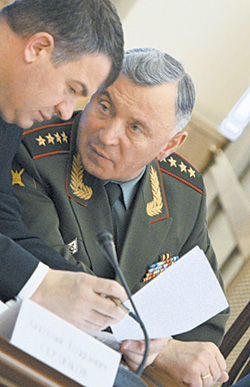
Vladislav Shurygin

In part one of Big Reform or Big Lie, military commentator and critic Shurygin complains that opposing views on Serdyukov’s military reforms have not been heard.    

Instead of his idealized view of the former Soviet Army fairly harmoniously serving the state’s interests, he sees today’s Russian military as an army of the underprivileged, who can’t escape service, protecting the interests of particular individuals, or political and economic groups.  He likens it to an old Soviet labor camp, with officers in the roles of overseers and guards, and conscripts as inmates, divided into various upper and lower castes.   

Shurygin provides unsourced polling data that “would shock any sociologist.”  More than 80 percent of conscripts don’t trust the government.  Sixty percent are dissatisfied with the country today, and 90 percent are disenchanted with Russia’s social and economic inequality and don’t want to risk their lives for it.  

He says mass drunkenness, self-interest, protectionism, and corruption is flourishing in the officer corps.  Officers live a pitiful half-beggarly life and are demoralized.  They serve to obtain apartments and a pension, or the possibility of arranging a good existence in the civilian world.  Eighty-eight percent of officers retire within six months of receiving an apartment or a pension.  And the High Command has lost its will, backbone, and ability to talk to the authorities as equals as result of purges.  

So what has two years of reforms brought?  The fully combat-ready brigade as the universal unit from Kamchatka to Pskov, according to Shurygin.  But the lovely paper plans of the staff are far from real implementation.  Many brigades are light, having only 2,200 men instead of 3-5,000.  There are several different forms of brigades and it’s impossible to find even two identical ones.  

Shurygin concludes the brigade is an especially bad fit for Russia’s Far East.  They are spread thin.  Despite this, General Staff Chief Makarov tells the media that they can hold off an enemy for 45 days while mobilization and reinforcement takes place.  Shurygin compares Makarov’s optimistic words to those of Stalin’s generals who promised to defeat the USSR’s enemies on their own territory.  

By contrast, officers in the Far East joke that after the Serdyukov-Makarov “optimization,” the Chinese Army won’t find it hard to defeat Russians.  The problem will be to find them. 

Shurygin believes ‘optimized’ brigades are not equal to the regiments they replaced in combat capabilities.  It is difficult to move brigades as a single combat units.  It’s a chaotic, extended process in which command and control is lost.  He attributes much of this to not having enough officers. 

Regiments of 2,000 had 400 officers and warrants, whereas new brigades of 4,000 have 327 officers.  Weakness in command and control is felt especially in the brigade staff, where officers with combat experience and long years of service are missing because of dismissals.  The old regiment staff had 48 officers and warrants, the new brigade staff only 33 officers. 

Shurygin thinks the new brigades are especially lacking in reconnaissance.  They have a reconnaissance chief, but no department or section to analyze and integrate information for the commander. 

In battle against a technologically advanced enemy, the enemy’s reconnaissance, target designation, and weapons delivery capabilities would exceed those of the ‘new profile’ brigades several times over.

Some things needed for real combat capability have been forgotten.  In copying Western-style brigades, the Defense Ministry forgot to copy their strong logistic support which is still provided by divisions.  Shurygin cites General-Major Vladimirov in calling the new brigades “abnormally inflated regiments,” which Shurygin says have fully lost the mobility and unity of regiments.

Shurygin turns next to the vaunted 1-hour readiness assertion first publicized by Makarov.  He wants to ask Makarov whom he intends for motorized rifle brigades in Tver, Naro-Fominsk, or Samara to fight on one hour’s warning.  By contrast, according to him, the U.S. concept of readiness comes into play once forces are deployed to their theater of action.  Shurygin goes on to explain that VOSO, the Russian staff’s military transportation service responsible for strategic mobility, has been slashed from 2,500 to 400 personnel.  As an example of the current lacked of needed mobility, he says it took 5 days for a partial tank brigade to move 500 kilometers in Russian-Belorussian exercises this summer.  So it’s understandable that Makarov would rather focus on 1-hour readiness than on mobility.

Shurygin ends by citing Khramchikhin on what kind of forces Russia is getting via military reform.  For Georgia or terrorism, Russia has the RVSN and nuclear submarines it can’t use.  For advanced opponents like the U.S. and NATO, Russia is clearly weak and can’t effectively oppose them.  For an equal like China, there simply aren’t enough Russian forces.
Combat Readiness Doesn’t Equal Combat Capability

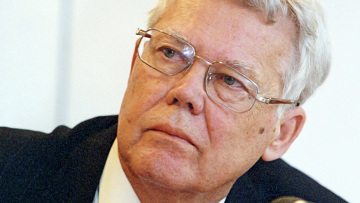
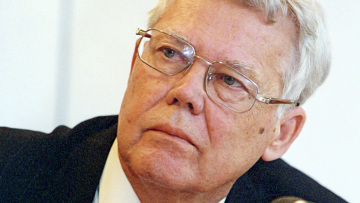
Vitaliy Shlykov (photo: RIA Novosti)

In an article entitled Secrets of Serdyukov’s Blitzkreig, Shlykov assesses that Defense Minister Serdyukov has done rapidly what none of his predecessors was able to do.  Shlykov’s positive assessment has something to do with the fact that Serdyukov’s success has validated a lot of things the author advocated.  Nevertheless, Shlykov offers a nice rundown of why Serdyukov’s reforms were needed, and also some cautionary notes for the future.

According to Shlykov, someone not following the changes in the armed forces closely over the last year won’t be able to believe what’s happened.  Serdyukov’s 11-minute speech on 14 October 2008 started a completely unexpected ‘revolution from above’ to put the entire force structure into permanent readiness and turn the officer corps from a ‘bloated egg’ into a pyramid.  Shlykov describes how previous cuts in the armed forces left too many officers in place commanding mobilization units with equipment and no soldiers.  Junior officers escaped pitiful conditions in the army by various means.

But slashing the empty, ‘big war’ force structure in favor of a smaller, permanent readiness army was Serdyukov’s most radical move.  Along the way, Shlykov makes note of Ground Troops CINC Boldyrev’s comment that, in 2008, only six army divisions were considered combat ready.

Shlykov’s math on Russian officers and warrants provides an interesting picture of sharply increasing importance of sergeants and soldiers in the force over the next three years.  In 2008, there were 623,500 sergeants and soldiers in a 1,118,800-man army (56 percent).  In 2012, they are supposed to be 850,000 (including 180,000 contractees) of a million-man army (85 percent).  I think this is why some observers are wondering if the much-reduced officers corps will be able to control its subordinates.

Shlykov notes the drastic cut in the military educational establishment–65 to 10 institutions–and the fact that new cadets in 2009 numbered only 3,000, instead of the 18-19,000 of recent years.

Summarizing a bit, he says no element of the military was untouched by cuts and reorganizations.  Actually, there were some major ones–the RVSN and VDV.

The ‘new profile’ brought sharp criticism in the media, and a “muffled discontent” in the military.  Despite this, according to Shlykov, Serdyukov’s basic goals were achieved a year after he began.

Shlykov says military districts will assume a bigger role in the command and control system, taking responsibility for things like engineer brigades and former GRAU arsenals on their territory.  Taking control of things like the Navy’s arsenal in Ulyanovsk could be a major headache.  He mentions the professional sergeant corps training at Ryazan, but not its very slow and difficult start.

The secret of Serdyukov’s success?  His personal qualities, especially his exceptional management capabilities, played the greatest role, Shlykov says.  But being purely civilian–something Shlykov has advocated–also played a part in his success.

Shlykov says Serdyukov has also succeeded because, unlike his predecessors, he broke the taboo on borrowing what works from foreign experience in “military organizational development,” that is basically force structure and force development policy.  Serdyukov saw that the generals basically didn’t have the answers after nearly 20 years of supposed reforms.  Serdyukov saw that there are certain priniciples of military organization that are axiomatic and don’t need to be tested or examined, and can be introduced without further discussion.  Some were suggested by Shlykov’s SVOP but rudely rejected by the Genshtab.

Shlykov says he and his colleagues don’t claim authorship of Serdyukov’s reforms.  He’s inclined to think that generals themselves proposed the majority of them.  All the innovations are dictated by common sense, which many generals have.  What they didn’t have were ministers who were ready to listen.  From the beginning, Serdyukov said he didn’t intend to launch a grandiose reform, but the avalanche began and other changes inevitably followed the first ones.

Finally, Shlykov says we can’t confuse combat readiness with combat capability.  The army now has only 10 percent new equipment which is up to world standard.  Even President Medvedev has warned about this:  “Our next task is more complex–the technical reequipping of the army and navy.”  And common sense can’t get you around this.

The Year of Military Reform

Defense Minister Serdyukov and General Staff Chief Makarov (photo: RIA Novosti)

Nezavisimaya gazeta’s number one military story of the year is the achievement of the ‘new profile.’  NG concludes not just anyone could have introduced this year’s changes.  Serdyukov succeeded where a line of others before him failed.  And he did it like Peter the Great; he didn’t consult the boyars, he didn’t pay attention to seething discontent among the troops and dismissed officers, and he completely ignored experts and the military community.

He turned the General Staff into an obedient instrument by sweeping out opponents, then proceeded to put all military units into permanent readiness.  He reduced the officer corps from 355,000 to 150,000 in one year, and established a command pyramid by reducing generals, colonels, and lieutenant colonels and adding to the lieutenant ranks.  According to Makarov, all 142,000 warrant officers were either dismissed or took another posts, often as sergeants.

Makarov says one-third of officers will receive premium pay in 2010–this will be up to 75,000 rubles for a platoon commander and 200,000 for a division commander.  He says all officers will be paid on this scale by 2012.

 The effectiveness of the reform was constantly criticized, especially when the year’s training results showed that 60 percent of the new brigades were rated only satisfactory.  Only 4 units got outstanding, and they were ships or submarines. 

Makarov says reequipping the armed forces is the next fundamental task.  He calls it the most labor-intensive, “Firstly, we have started to equip the southern districts.”  Toward 2016, the army is supposed to have 30 percent modern arms, and 70-100  percent by 2020.

The Genshtab says 37,000 officers were placed outside the TO&E (without duty posts and much of their pay) to await apartments and dismissal.  It promises they won’t be dismissed without housing, but officers don’t believe this too much.  It was promised that the Defense Ministry would get 45,000 apartments in 2009, but it really received less than 30,000 by year’s end.  Another 45,000 are promised in 2010, but these plans are being frustrated, and this is quite an important affair for dismissed officers.

Makarov Declares Transition to ‘New Profile’ Basically Complete

According to Rossiyskaya gazeta, General Staff Chief Nikolay Makarov told a foreign military attache audience that Russia’s new military doctrine, with a reinforced emphasis on possible first nuclear use, has gone for President Medvedev’s signature.  Makarov has declared the military’s transition to a ‘new profile’ basically complete.  He says all remaining formations and units are now in a permanent readiness condition.  Although only 9 days remain in 2009, he insists the Defense Ministry will get 45,500 apartments for servicemen this year.  In line with planned cuts, Makarov said officers who have served their full careers and have housing were dismissed this year, but 37,000 were put outside the TO&E to await housing before being dismissed.  He says some 20,000 warrant officers were retained, but the rest were dismissed or transferred to sergeant positions.  General officers were cut from 1200 to 780, and Makarov claims the military is already down to only 150,000 officers.  Makarov called rearmament one of the most complex problems of reform, that will be costly and drawn out to 2020. He looks forward to a new strategic arms agreement with the U.S. that doesn’t harm Russia’s interests like START.