Tag Archives: VPK

Rearmament Tempo Less Than 2 Percent Per Year

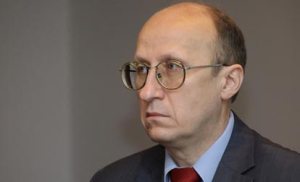
Vasiliy Burenok

Vasiliy Burenok told a round table at the ‘Army and Society’ exhibition in Moscow Friday that the current pace of Russian force modernization, not more than 2 percent, won’t support the transition to a ‘new profile’ military.

Burenok is Director of the Defense Ministry’s 46th Scientific-Research Institute (46 NII).  The 46 NII is a lead organization involved in formulating the State Armaments Program (GPV) and State Defense Order (GOZ).  It works on military-technical policy documents and program planning methodologies.  Burenok is a member of the Scientific-Technical Council of the RF Government’s Military-Industrial Commission (VPK).

Reviewing history a bit, Burenok told his audience, at the beginning of the 1990s, the rearmament rate was 5-7 percent annually.  But, between 1991 and 2000, financing for new arms and equipment declined more than 50 times, leaving only enough money to maintain existing weapons.

Burenok concludes to get the army to the ‘new profile’ it’s essential to introduce 9 percent new equipment every year, and for some services and combat arms, up to 11 percent.

This 9 to 11 percent is, of course, the difficult target President Medvedev set at the Defense Ministry Collegium.  Burenok indicated just how difficult–going from less than 2 to an 11 percent annual renewal rate.

Armaments Chief and Deputy Defense Minister Vladimir Popovkin also addressed the ‘Army and Society’ round table.  He said GPV 2011-2020 will go to the president for approval in June.  The new GPV will be accompanied by yet another new Federal Targeted Program for OPK Development.

Popovkin said a number of systems won’t be produced under the new GPV.  They include short-range tube artillery, and BTR-80, BMP-2, and BMP-3 combat vehicles that soldiers are afraid to ride in.

New Chief of Defense Minister’s Apparat

Mikhail Mokretsov (photo: RIA Novosti)

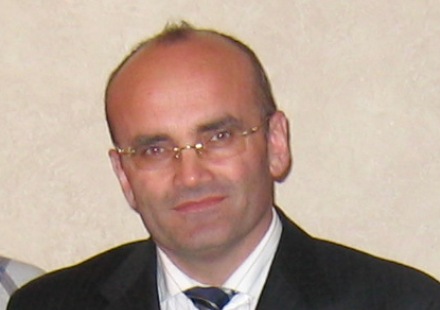
Yesterday’s press announced that Mikhail Mokretsov, ex-Director of the Federal Tax Service (FNS) and long-time colleague of Anatoliy Serdyukov, will be the Defense Minister’s Apparat Chief.  

Kommersant says Serdyukov had largely kept his old team in place, and still influenced personnel decisions in the Finance Ministry’s FNS.  And the FNS has been a stable supplier of high-level cadres for Serdyukov’s Defense Ministry.  Along with ex-deputy directors of the FNS Dmitriy Chushkin and Yevgeniy Vechko, not less than 10 other highly placed former tax service officials have come over to Serdyukov’s Defense Ministry. 

Kommersant indicates this may represent the end of Serdyukov’s ‘agreement’ with Finance Minister Kudrin to leave his old cronies in place in the FNS for three years.

Mokretsov’s work in the tax service has drawn some praise.  Deputy Chairman of the Duma’s Budget Committee Andrey Makarov says the Defense Ministry can use another strong manager like Mokretsov, and he adds:

“The main thing in reforming the army is to stop the stealing.  Control and auditing are essential there.”

Perhaps playing the provocateur, Gzt.ru suggests that some in the Genshtab see Mokretsov’s arrival as a precursor to Serdyukov’s departure from the Defense Ministry.  Under this scenario, Serdyukov would be preparing Mokretsov to take his place as Defense Minister when he moves to a higher post.  But a PA source denied any prospect for a change of Defense Minister and specifically ruled out Mokretsov’s chances.

Mokretsov will occupy a long-vacant post.  Its last occupant, Andrey Chobotov left with former Defense Minister Sergey Ivanov when he became Deputy Prime Minister.  Chobotov apparently works in Ivanov’s office and in the government’s Military-Industrial Commission (VPK).  Since Chobotov had the job, the apparat has been considered a Defense Ministry ‘service’ [not to be confused with an armed service] and this brings its chief the title of Deputy Defense Minister.

According to Gzt.ru, retired General-Lieutenant Andrey Kazakov has been the acting apparat chief since Chobotov’s departure.  Kazakov has served in the Defense Minister’s apparat, primarily as Chief of the Defense Ministry’s Affairs Directorate, since at least 2001.

The apparat chief wields serious power–at least within the administrative system.  According to Gzt.ru, he is not simply the Defense Minister’s right hand.  He’s a chief of staff and critical gatekeeper whose agreement is necessary to get documents signed and decisions made.  This power is largely unofficial, deriving from personal proximity to the Defense Minister.

The apparat chief’s official, statutory powers are more modest.  Mil.ru lists six official elements under him.  The Expert Center of the RF Defense Minister’s Apparat is something of a ‘think tank’ preparing analytical information and reports on military-technical policy, force structure, and force development, under the Defense Minister’s direction.  The Main Legal Directorate of the RF Defense Ministry has been reinvigorated of late, and its role is self-evident.  The above-mentioned Affairs Directorate serves as property manager and business agent for the Defense Ministry in Moscow.   The Directorate of State Assessment of the RF Defense Ministry is responsible for ensuring that military infrastructure complies with an array of government regulations.  The apparat also includes, without explanation, Inspection of State Architectural-Construction Oversight and the Management Directorate of the RF Defense Ministry.

Gzt.ru got our old friend Leonid Ivashov to comment on yesterday’s news.  Ivashov hates to contemplate the idea of career growth for Serdyukov, and he thinks the idea of Serdyukov putting Mokretsov in place behind him is ‘patently untenable.’  He holds even less back than usual when he says:

“If the task is to destroy the country the way Serdyukov has destroyed the army, then such an appointment is possible.  Serdyukov is a destroyer.  And the fact that they are dragging their nonprofessionals into the [Defense] Ministry supports this.  It’s very sad that the Defense Minister of our country is first when it comes to being an example of corruption and disrespect for the army.  Mokretsov can’t help Serdyukov straighten out financial flows which go through the military department.  But he will absolutely help him steal from them.”

Ivashov goes on to complain about Serdyukov’s commercialization of Defense Ministry functions, e.g. turning rear services into Oboronservis.

Vitaliy Shlykov, who views Serdyukov favorably, sees the Mokretsov move as promoting creation of a civilian Defense Ministry that still doesn’t exist.  And Shlykov doesn’t see Serdyukov leaving the Defense Ministry since it is, in many ways, a higher post than a deputy prime minister with a portfolio, who doesn’t really run anything.

Today’s Vedomosti intimates that Mokretsov will focus on auditing the State Defense Order on the heels of Prime Minister Putin’s remarks this week about corruption, waste, and poor results in the OPK .

More about Mokretsov specifically . . .

He joined the tax service in 2000, moving quickly from department chief to deputy director of the Tax Ministry’s Directorate for St. Petersburg, deputy director of the Directorate for Moscow, and Chief of the Directorate for International Tax Relations.  In 2004, he became deputy director of the renamed Federal Tax Service under Serdyukov, and Director of the FNS in February 2007 when Serdyukov left for the Defense Ministry.  

The 49-year-old Mokretsov was born in Udmurtiya, and graduated in 1984 from the Leningrad Financial-Economic Institute.  He was called up after graduation and served two years as a finance officer in the Soviet Army.  Between 1986 and 2000, he worked in unnamed government and commercial enterprises in St. Petersburg.

Trouble Building Submarines at Sevmash

Northern Machinebuilding Enterprise (Sevmash)

Here is 9 February RIA Novosti verbatim:

“Sevmash” Will Not Meet Schedules for Nuclear Submarine Construction Due to Insufficient Personnel

SEVERODVINSK, 9 Feb – RIA Novosti.  The “Sevmash” enterprise in Severodvinsk, Arkhangelsk Oblast will fall behind schedule in constructing nuclear submarines, it was announced to RIA Novosti on Tuesday in the enterprise’s press service.

Information about the lag in the schedule was heard in the session of the interdepartmental coordinating council which took place under the leadership of RF Government Military-Industrial Commission member Vladimir Pospelov and Deputy Navy Commander-in-Chief for Armaments Nikolay Borisov.

Members of the coordinating council discussed the state of affairs in producing nuclear submarines at “Sevmash” – “Yuriy Dolgorukiy,” “Aleksandr Nevskiy,” “Vladimir Monomakh” (project 955 “Borey”), and also “Severodvinsk” and “Kazan.”

“Today, as noted in the session, there is some lag from the construction schedule acknowledged by Sevmash and its partner-enterprises,” stated the press service’s announcement.

Factory General Director Nikolay Kalistratov explained the delay was caused by a lack of qualified personnel.

“It’s essential to apply maximum effort to realize the outlined plans and complete orders on time.  In the near future, we have to attract an additional 500 qualified production workers in the specialties pipefitter, machinist-fitter, ship finisher.  It should also be noted that over two years we’ve increased the number of basic production workers by 2,000 people, but this force is still insufficient,” said the director of the enterprise’s press service.

The directors of TsKB MT [Central Design Bureau of Naval Technology] “Rubin,” SPMBM [St. Petersburg Naval Machinebuilding Bureau] “Malakhit,” “Rosatom” state corporation, RF Ministry of Industry and Trade and other departments also attended the session.

Now at the “Sevmash” factory in various degrees of completion are three strategic nuclear submarines of project 955 “Borey” – “Yuriy Dolgorukiy,” “Aleksandr Nevskiy” and “Vladimir Monomakh.”  Work on construction of the fourth strategic nuclear submarine of this project, with the provisional name “Saint Nikolay” began in December 2009.  In all by 2015 it is planned to build eight nuclear submarines of this class.

This statement seems to imply there’s no problem with money, but, at a certain point, more workers equal money because higher wages should attract them, the northern climate notwithstanding.  So to some degree, this is a Sevmash call for more resources to do the work already on its order books.  Although these Sevmash officials said work’s begun on the fourth 955, RIA Novosti from 8 February made it clear there’s no firm idea of when its keel-laying ceremony would occur.  And Navy CINC Vysotskiy said the problem was “technological,” not related to the fate of the Bulava SLBM or to funding.  So maybe he meant a labor shortage, but, as noted, a lack of labor  is an inability or unwillingness to pay what it costs to do the work.

Yuriy Dolgorukiy SSBN has more sea trials before handover to the Navy. Sevmash says Aleksandr Nevskiy will be launched in 2010 (it was laid down in early 2004).  Vladimir Monomakh is about two years behind it.  The big question for these boats is when and if they’ll have a missile.  Late last year, a number of Russian media outlets claimed SSBN production was frozen due to Bulava’s problems.  But Sevmash’s call for more workers doesn’t track with that.  In October, the Russian government also announced Sevmash would receive 4 billion rubles to add to its working capital for modernization, along with a 6 billion ruble credit from VEB.

Leadership Looking at the OPK’s Problems

Since fall, Putin, Medvedev, and Serdyukov have focused on the problems of Russia’s defense-industrial complex (OPK) and whether it will be up to the job of rearming the armed forces by 2020.

At an OPK conference in Nizhniy Novgorod on 24 December, Serdyukov noted that the oblast has nearly 16 billion rubles worth of state contracts for arms and equipment.  Defense Ministry armaments chief Vladimir Popovkin said, however, that the region’s producers who fail to supply weapons on time will be subject to millions of rubles in fines.

Conference participants also discussed necessary measures to organize timely placement of tasks and financing with contractors.  In particular, the Defense and Finance Ministries are reportedly trying to make production advances available in January 2010 for next year’s contracts.

In Vremya novostey, some Nizhniy Novgorod producers gave their own views on their problems.  They call the state’s pricing policy one of their main problems.  Despite the government constant statements about an increasing State Defense Order (GOZ), defense enterprises are not being paid on time or fully.  The oblast’s production grew in 2009, but the Defense Ministry has not hurried to pay for it.  Advances range from 30-70 percent, but firms often wait a long time for the balance and may have to take out expensive loans in the interim.  The profitability of the region’s defense producers was low in 2009 in part because of higher prices for natural gas and electricity.  Enterprises shaved some personnel to improve their bottom lines.  They’ve asked for tenders in December, rather than in spring or summer for the 2010 GOZ, and for higher advance payments.  They say they cannot cut prices as the government has asked because they work within the real economy where inflation is a factor.

On 22 December, Putin discussed the 1.17 trillion ruble 2010 GOZ (8 percent higher than this year’s) with the government’s presidium.  He said the GOZ can’t “be limited only to modernization,” the forces need to receive “large shipments of modern equipment, not just individual samples.”  Putin noted the recent series of conferences on the OPK and said, “We’ll be seriously occupied with these problems.  However it’s already now obvious:  it’s necessary not simply to increase financing for the state defense order, that’s necessary itself, but it doesn’t solve all problems.  It’s necessary to seriously increase the demands for quality in production, reestablish effective cooperation links, to work on personnel support for the OPK.”  He also said long-term rearmament programs need to be formed and they need to be closely linked to the missions facing the armed forces.   Defense industry needs to make its technological development and modernization plans, conduct RDT&E and organize series production of equipment for the troops under these programs.  Putin promised to concentrate the work of the government’s Military-Industrial Commission (VPK), the Defense Ministry, and other core ministries on this in 2010.

On 18 December, Putin visited St. Petersburg to have a conference on shipbuilding.  He called for naval shipbuilding to develop a minimum 30-year plan of development.  He said there’s nothing wrong with buying foreign equipment if, in the future, Russian ships are built with 100 percent domestic materials and equipment.  He called on naval shipbuilding to have clear priorities and not shift between projects.  Writing in Nezavisimoye voyennoye obozreniye a week later, Vladimir Shcherbakov noted that Putin’s words don’t square with the government’s actions.  Shcherbakov doesn’t believe buying the French Mistral amphibious landing ship will do much to move Russian shipbuilding forward.  He contrasts the government’s willingness to send money to the Amur Shipbuilding Factory working on the Akula-class SSN Nerpa for lease to India and its inability to help save smaller shipyards like Avangard in Petrozavodsk from bankruptcy.  He suspects Mistral may be a special deal just for Mezhprombank’s United Industrial Corporation (OPK) and its shipyards.  Whereas Putin had praise for civilian shipbuilding, he criticized the quality of naval construction.  Putin called for military shipbuilding to reestablish its technological and production links among enterprises, but he didn’t say anything about the state’s United Shipbuilding Corporation (OSK) which is supposed to perform this function.  To Shcherbakov, the government, Defense Ministry, and Navy just aren’t prepared to provide proper financing and orders to shipbuilders.

On 12 December, TV Tsentr’s Postscriptum featured independent views on rearmament from Leonid Ivashov and Ruslan Pukhov.  They talked about the role of corruption in high prices for defense production.  Pukhov said, “Of course, there is monstrous corruption and ineffective management, which exists in an entire range of defense enterprises, and then this collusion between the purchasing authorities of the armed forces branches and services and military-industrial complex enterprises, when under the cover of secrecy a huge quantity of resources are doled out, and it is practically stolen.  In the opinion of many high officials and directors of the Defense Ministry, kickbacks often go up to 50 percent.”  Ivashov said, “There are many causes for high prices.  Which of them is first, I don’t know, however there is pervasive corruption, Putin recognized this, and Medvedev recognizes this, it exists and, it means a system of kickbacks exists.  And for a defense enterprise director or even a group of enterprises to receive a defense order, they openly demand a kickback, this raises the price.

On 9 December, Viktor Litovkin reviewed Putin’s recent activity on OPK issues, noting that his 8 December visit to Uralmashzavod and other Sverdlovsk Oblast enterprises was his third trip to OPK plants in two months.  He earlier visited missile producers in Kolomna, and liquid-fueled rocket engine maker Energomash in Khimki.  Litovkin noted that Russian tank production is now more important to India than Moscow.  In Nizhniy Tagil, Putin called for a unified plan of future design work for armored systems.  Putin said Uralvagonzavod would receive 10 billion rubles in early 2010 to establish and run armor “service centers” for the Defense Ministry, relieving troops of this noncore function.

In early December, Air Forces Commander-in-Chief indicated he is not happy with the development of Russia’s new S-500 air defense system.  He doesn’t want a continuation of the S-400, but a system to counter missiles in “near space.”  Sergey Ivanov once called for it to be a 5th generation anti-air, anti-missile or aerospace defense system.