Yearly Archives: 2021

Russian Military Pay Still Lags

Despite Defense Minister Shoygu’s announcement of “higher than planned” pay increases for Russian servicemen in 2022 and 2023, military salaries will still lag woefully behind cumulative consumer inflation amounting to more than 90 percent since 2012.

At the December 22 MOD Collegium, Sergey Shoygu said RF servicemen will get higher than planned pay increases in 2022 and 2023.
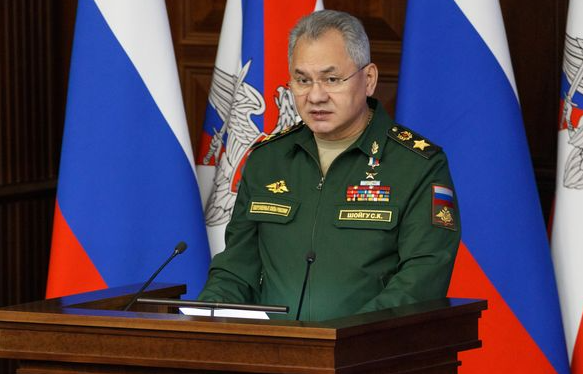
Conveniently for him, he didn’t say what the original plan was, so Russian officers and soldiers will simply take what the MOD gives and be grateful.

No one (outside the MOD or RF government) will know if it’s more or not. But on Runet, there are rumors (perhaps hopes) of 4, 5, or even 9 percent. Four one year and 5 the next, who knows?

At the Collegium, Shoygu also reported that a 3.7 percent indexation of military wages occurred in 2021. It was part of the first series of pay raises since 2012.

Announced at the start of 2018, the salary increases were supposed to be delivered in the amounts of 4.3 percent in 2019, 3.8 percent in 2020, and 4 percent in 2021.

So the actual indexation in 2021 turned out to be less than planned.

Recall that those raises didn’t compensate for the military’s eroded purchasing power. The RF’s CPI went up 50 percent between 2012 and 2018. The three indexations covered only about 12 percent of the rise in consumer prices over that period.

With RF inflation at roughly 8 percent this year, overall prices for essentials paid by Russian servicemen are now 90 percent greater than what they were in 2012.

A nice graph of Russian inflation over the past decade by Trading Economics based on Rosstat data. 

Speaking to same Collegium, the Supreme CINC of the RF Armed Forces Vladimir Putin stated:

One of the unconditional priorities is increasing the level of social guarantees to servicemen. Defenders of the Motherland are fulfilling special missions, often very complex, responsible, and risky ones and we will aim for them to receive worthy compensation for their service.

As in recent years, the base pay of servicemen should not simply correspond to the level of pay for labor in the leading sectors of the economy, but exceed it — we agreed on this with the government already several years ago.

For reference: this correlation is still preserved. The forecast average level of wages in the economy this year is 55 thousand rubles [per month], the average pay in leading economic sectors, that is oil, finance, transport is 62.2 thousand. According to my data, the Finance Ministry says a little more, in the Defense Ministry the average level of base pay of a serviceman at the rank of “lieutenant” in 2021 is 81.2 thousand rubles. It happens differently, various lieutenants serve differently, but the average level is 81.2 thousand, and, as I said, in leading sectors of the economy 63.2 [thousand].

The government needs to index the base pay of servicemen in a timely manner and in that amount which supports this correspondence and, of course, increase military pensions.

So Putin says, on average, lieutenants are making one-third more than employees in the main sectors of Russia’s economy — roughly 80,000 rubles per month versus 60,000.

Most Russian sources still place the average lieutenant’s base (rank and duty) pay at between 35,000 and 45,000. To get to 80,000, a lot of nadbavki (supplemental pay) are required. There are a large number of them and it’s pretty much completely within a commanding officer’s purview to pay or not pay them. They include many things — work with state secrets, special conditions of service, special combat training, at-sea service, command duties, class qualifications, special achievements, good conduct, service outside the RF, etc.

There are many reported cases of commanders requiring kickbacks from subordinates before authorizing these supplements.

The average Russian lieutenant might be very surprised to find out he’s averaging 80,000 per month.

The apparatus supplying Putin information on the situation in the military must be very interesting. It must assume absolutely no one tracks this stuff over time or compares what’s said today to what was said in the past.

At the time of the 2018-2020 indexations (which actually happened in 2019-2021), MOD finance chief Shevtsova said the average platoon commander was making 66,000 and the average lieutenant colonel almost 89,000. Now we’re supposed to believe an O-3 makes what an O-5 made just a couple years ago. It seems a bit improbable. And, as far back as 2014, she said military pay already exceeded salaries in the oil industry — reported as averaging 62,000 — so oil workers haven’t gotten raises in eight years?!
Promotion List

Annual December promotions used to mark the adoption of the RF’s first post-Soviet constitution on December 12, 1993. The two are less often linked now, perhaps because an increasing number of basic citizen’s rights exist only on paper.

Maybe also because Putin rammed through the constitutional amendment restarting his “two term” limit and allowing him to be president until 2036 — basically 36 years in power (Medvedev’s interlude notwithstanding).

Be it as it may, we have the December military promotions list.

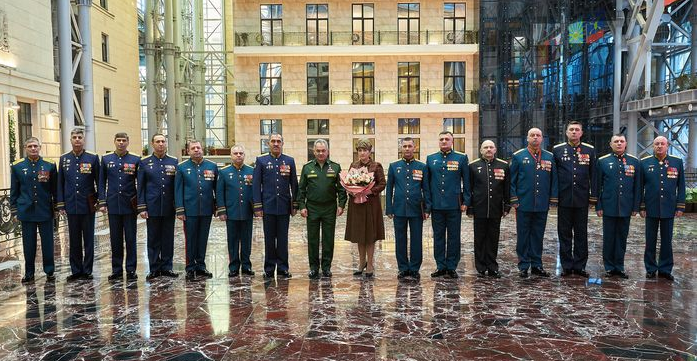
In a new wrinkle, Defense Minister Shoygu had 14 of 24 promotees on hand to accept new shoulderboards in the atrium of the RF National Defense Command and Control Center (NTsUO).

KZ covered the event.

The RF MOD got three three-stars, six two-stars, and 15 one-stars (including four rear-admirals). Putin’s National Guard got just two one-stars. Here’s the December 8 promotion decree.

The new general-colonels included:

New lieutenant-generals:

  • Anatoliy Kontsevoy, Deputy Commander of VDV.
  • Aleksandr Maksimtsev, zampolit of Aerospace Forces.
  • Andrey Mordvichev, new commander of 8th CAA, Southern MD.
  • Yaroslav Moskalik, Deputy Chief, Main Operations Directorate, General Staff.
  • Viktor Novozhilov, Deputy Chief, NTsUO.
  • Valeriy Solodchuk, commander of 36th CAA, Eastern MD.

Most of these officers waited a while for a third or second star: Teplinskiy — 7 years; Yudin — almost 7; Kontsevoy — 8; Maksimtsev — 6 and a half; Mordvichev — 8 and a half; and Solodchuk — almost 8.

Teplinskiy still looks like a contender for a future MD command when one opens up, but he faces significant competition (Kuzovlev, possibly Kuralenko).

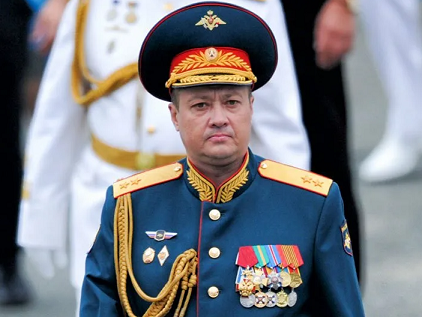
Mordvichev is only 45, so he was a general-major at roughly 37.

RIAN says this is him (it probably is). But he looks more worn than his 45 years.

New general-majors and rear-admirals included the:

  • Chief, Main Computing Center, RF Armed Forces.
  • Chief, National Nuclear Weapons Storage Site Voronezh-45.
  • Chief, National Nuclear Weapons Storage Site Vologda-20.
  • Chief, Organization-Mobilization Directorate, Southern MD.
  • Commander, 326th Heavy Bomber Aviation Division.
  • Deputy Chief of Staff for Reconnaissance, Central MD.
  • Chief of Staff, First Deputy Commander, 20th CAA, Western MD.
  • Chief, RKhBZ Troops, Central MD.
  • Chief, Operations Directorate, Pacific Fleet.
  • Commander, Moskva CG, Black Sea Fleet.
  • Chief, Shipbuilding Directorate, RF Navy.

Four one-stars couldn’t be identified in a post.

At 47, COS / FDC of the 20th CAA General-Major Andrey Pyatayev might be pretty young still if and when he gets an army of his own.

Pyatayev with General-Lieutenant Aleksandr Yevteyev (now deceased) in 2016.

OB Notes

Here’s a new OB page.

Have been expanding, updating, and rearranging it. But there’s always more to do.

Promotion List

Here’s an updated list.

Many changes made but work always remains.

Expect the usual promotion decree to come in mid-December.

As a WAG, one would have to assess that the RF MOD is leaning pretty hard on corruption in its general officer ranks right now.

File contains some notes on prominent on-going cases.

Chayko

A reader provided this…nice to have.

From TVZvezda last week.

What Ever Happened To…

An indication of prospects for current Russian army commanders is the fate of their predecessors. Here’s what’s become of them.

Former army commanders are waiting for (or possibly no longer expecting) assignment to higher posts (usually MD commander), and they fall into three groups.

Fast Track

Wearing three stars is one clear sign of excellent prospects. Most former commanders are two-stars. Those in the general-colonel group include Chayko, Kuralenko, and Kuzovlev.

Chayko reportedly also wears Hero of the Russian Federation (2020). He seems the most accomplished of the bunch, and he’s quite young. He had a stint as likely remains a deputy chief of the General Staff.

Still don’t have a picture of Chayko as a general-colonel with his Hero of the RF medal.

Though wearing three stars, Kuralenko is already 59. His pedigree is good, but he’s on a detour as chief of Russia’s military police.

General-lieutenants with good chances include Nikiforov, Teplinskiy, and Zavizon. They’re serving as chief of staff, first deputy commander of an MD.

Teplinskiy seemed like a fast-burner having been COS/FDC for two MDs. He has a Hero of the RF (1995) he earned as a JO under fire (not as a general safe at headquarters) in the First Chechen War. But Teplinskiy’s been waiting for his third star seven years and counting.

Prominent service in Syria — commander or chief of staff, deputy commander of the RF MOD contingent — may be a harbinger of future promotions. Chayko did three tours — one as chief of staff and two as commander. Kuzovlev and Nikiforov are past commanders. Zavizon was a deputy commander in Syria.

Teplinskiy doesn’t have Syrian time, but allegedly led Russian militias in the Donbass. Zavizon also reportedly commanded them.

On Track

Generals seemingly on course for a chance at a higher post include: Avdeyev, Chebotarev (but where is he?), Kuzmenko (he’s young but now sidetracked at MAGS), Muradov, Nosulev, Peryazev (though he may stay in GUBP), Seritskiy, Sevryukov, and Tsekov (if he escapes VUNTs SV).

Time is working against all of them. The best chances may belong to Avdeyev, Muradov, Nosulev, Seritskiy, and Sevryukov. They are all deputy MD commanders. Muradov might be a good bet; he’s young and just had the high-profile job of peacekeeping in Nagorno-Karabakh.

Off Track

Former MD commanders who are off course include: Astapov, Kaloyev, Kovalenko, Poplavskiy, Romanchuk, Salmin, and Tsilko. They are off track mostly for age and failure to secure a COS/FDC post in an MD. Some have accepted honorable pre-retirement jobs out of the mainstream like Deputy CINC of the Navy or department chair at MAGS.

It’s Not Scientific

There’s no formula for any of this. Case in point: there was no real reason to see General-Colonel Gennadiy Zhidko coming as the new Eastern MD commander in late 2018. He was chief of staff in Syria and had a year as deputy chief of the General Staff. That alone isn’t much to recommend an officer for MD command. It’s hard to say whom he impressed — possibly General Staff Chief Valeriy Gerasimov. He also served under Western MD commander General-Colonel Zhuravlev in Syria. The personal connections are very, very difficult to track.

Some detail on each of the above-mentioned former army commanders follows:

General-Lieutenant Viktor Astapov…58…former commander, 49th CAA (2012-2013)…deputy commander of the Southern MD…chief of staff, first deputy commander of the Western MD…Deputy CINC of the Navy for Ground and Coastal Troops.

General-Lieutenant Aleksey Avdeyev…54…former commander, 29th CAA (2014-2017) and 1st TA (2017-2018)…deputy commander of the Southern MD.

General-Colonel Aleksandr Chayko…50…former commander, 20th CAA (2014), 1st TA (2014-2017)…chief of staff of the Russian group of troops in Syria and two tours as its commander…chief of staff, first deputy commander of the Eastern MD…deputy chief of the General Staff.

General-Major Sergey Chebotarev…??…former commander, 35th CAA (2017-2020)…current posting unknown.

General-Lieutenant Khasan Kaloyev…60…former commander, 41st CAA (2013-2016)…deputy commander, Central MD…first deputy chief, Combined Staff, CSTO.

General-Major Dmitriy Kovalenko…??…former commander, 36th CAA (2015-2017)…deputy commander of the Pacific Fleet for Ground and Coastal Troops.

General-Colonel Sergey Kuralenko…59…former commander, 49th CAA (2011-2012) and 6th CAA (2013-2015)…deputy commander of the Western MD…deputy commander and commander of Russian group of troops in Syria…chief of staff, first deputy commander, Eastern MD…chief of the Main Military Police Directorate, RF MOD.

General-Lieutenant Andrey Kuzmenko…48…former commander, 6th CAA (2015-2019)…chairs a department of the Military Academy of the General Staff.

General-Colonel Sergey Kuzovlev…54…former commander, 20th CAA (2015-2016), 58th CAA (2016-2017), 8th CAA (2017-2019)…chief of staff, first deputy commander of the Southern MD…commander of Russian group of troops in Syria.

General-Lieutenant Rustam Muradov…48…former commander, 2nd CAA (2017-2018)…deputy commander, Southern MD…commanded Russian peacekeeping forces in Nagorno-Karabakh.

General-Lieutenant Yevgeniy Nikiforov…51…former commander, 20th CAA (2016-2017), 58th CAA (2017-2019)…chief of staff, first deputy commander, Eastern MD…commander of Russian group of troops in Syria.

General-Lieutenant Mikhail Nosulev …56…former commander, 36th CAA (2017-2019)…deputy commander, Eastern MD.

General-Major Aleksandr Peryazev…55…former commander, 20th CAA (2017-2018)…deputy chief, Main Combat Training Directorate, RF Armed Forces.

General-Lieutenant Yevgeniy Poplavskiy…59…former commander, 29th CAA (2017-2018)…deputy commander, Central MD.

General-Lieutenant Aleksandr Romanchuk…62…former commander, 29th CAA (2011-2014)…deputy commander, Southern MD…chief of VUNTs SV.

General-Lieutenant Aleksey Salmin…59…former commander, 5th CAA (2013-2016)…first deputy commander (probably for Ground and Coastal Troops), Pacific Fleet…deputy commander, Western MD.

General-Lieutenant Igor Seritskiy…56…former commander, 2nd CAA (2014-2016)…deputy commander, Western MD.

General-Lieutenant Sergey Sevryukov…57…former commander, 49th CAA (2013-2019)…deputy commander, Eastern MD.

General-Lieutenant Mikhail Teplinskiy…52…former commander, 36th CAA (2013-2015)…chief of staff, first deputy commander, Southern MD…chief of staff, first deputy commander, Central MD.

General-Lieutenant Oleg Tsekov…54…former commander, 5th CAA (2018-2020)…deputy chief, VUNTs SV.

General-Lieutenant Vladimir Tsilko…61…former commander, 36th CAA (2009-2012)…deputy commander, Eastern MD…chairs command and control department of MAGs.

General-Lieutenant Aleksey Zavizon…56…former commander, 41st CAA (2016-2018)…chief of staff, first deputy commander, Western MD.

Too Old?

How old is too old? Here’s some perspective on the clock ticking against Russian army commanders as they climb the career ladder.

General-Colonel Gerasimov was 56 when he took command of the Central MD in April 2012. He was appointed chief of the General Staff seven months later.

Since 2010 when Russia’s current MDs were established, 14 generals have been appointed to command them.

Their ages at appointment run from 47 to 58. General-Colonel Surovikin took command of the Eastern MD at 47. One of his predecessors — Admiral Sidenko — took over at 58.

Here’s what the 14 ages look like:

47 — 52 — 53 — 53 — 53 — 54 — 54 — 54 — 55 — 55 — 56 — 56 — 56 — 58

Not a card-carrying statistician, but this much is obvious. The median age is 54. Range 11 years. Throw out the high and low and it’s a narrower window of 52 to 56.

The four current MD commanders were 52, 53, 54, and 55. An average of 53.5 years.

Overlay on this the twelve current army commanders with ages running from 46 to 55.

The older ones might not receive serious consideration for future stepping-stone jobs as deputy commanders or chiefs of staff, first deputy commanders in one of the MDs.

Younger ones just have more time for advancement, more time to spend as a deputy waiting for a possible first deputy job.

It leads, however, to a major unknown. Is age even a significant consideration in Shoygu’s and Putin’s decision making on MD commanders?

Life expectancy for males in the RF in 2019 was 68 years.

Army Commanders

Almost three years since the last look. Eight of 12 commanders have been replaced in that span. Four holdovers plus one have been in place for two or three years. The remaining seven were appointed sometime in 2020.

The current rundown of armies, headquarters, MD/OSK, and commanders is:

1st TA…Bakovka…Western…General-Lieutenant Sergey Kisel.

6th CAA…Agalatovo…Western…General-Lieutenant Vladislav Yershov.

20th CAA…Voronezh…Western…General-Lieutenant Andrey Ivanayev.

8th CAA…Novocherkassk…Southern…General-Lieutenant Andrey Sychevoy.

49th CAA…Stavropol…Southern…General-Lieutenant Yakov Rezantsev.

58th CAA…Vladikavkaz…Southern…General-Lieutenant Mikhail Zusko.

2nd CAA…Samara…Central…General-Lieutenant Andrey Kolotovkin.

41st CAA…Novosibirsk…Central…General-Lieutenant Sergey Ryzhkov.

36th CAA…Ulan Ude…Eastern…General-Major Valeriy Solodchuk.

29th CAA…Chita…Eastern…General-Lieutenant Roman Berdnikov.

35th CAA…Belogorsk…Eastern…General-Major Aleksandr Sanchik.

5th CAA…Ussuriysk…Eastern…General-Major Aleksey Podivilov.

Army command is a significant milestone. These officers have moved from large tactical formations to the operational level of command. They have (or will receive) pogony with two stars and assignment to at least one higher post.

They are men of the early 1970s. Only three — Sanchik, Sychevoy, and Ryzhkov — were born in the late 1960s. Yershov and Berdnikov are the youngest at 46 and 47 respectively. Sanchik and Ryzhkov the oldest at 55 and 53.

All spent time as chief of staff, first deputy commander of an army before getting an army command of their own. Rezantsev and Ryzhkov are on their second army commands. Rezantsev commanded the 41st and 49th; Ryzhkov the 58th and 41st.

Their experience of war looks like this:

1st Chechen2nd ChechenGeorgiaCrimeaDonbassSyria
KiselXXX
YershovX
IvanayevXXX
SychevoyX
RezantsevX
ZuskoXX
KolotovkinXX
RyzhkovXXX
SolodchukXX
Berdnikov
SanchikX
PodivilovX

Handicapping the prospects of these generals is difficult except to say that relative youth provides more chances for career advancement.

More enlightening is what happens when they move beyond the army level of command. Next we’ll look at what’s become of their predecessors.

Russian Navy Shuffle

Along with General-Colonel Kartapolov’s retirement to take his seat in the new Duma for United Russia, TASS announced a number of leadership changes in the navy. The news agency cited an as-yet unpublished presidential decree.

Baltic Fleet commander Admiral Aleksandr Nosatov is the new chief of the Navy Main Staff, First Deputy CINC of the Navy. His predecessor Admiral Vitko was retired just after turning 60. 58-year-old Nosatov became Baltic Fleet commander when Putin wiped its leadership slate clean for corruption and providing false status reports in 2016. Nosatov apparently righted the fleet to the president’s satisfaction. He served his early years in the Pacific Fleet’s surface forces.

Admiral Aleksandr Nosatov

Vice-Admiral Viktor Liina took Nosatov’s place in the Baltic Fleet.

Other navy changes are in the final paragraph of the TASS report.

MOSCOW, 5 October. /TASS/. Deputy head of the Russian military department Andrey Kartapolov has been dismissed from military service in connection with his election as a deputy of the State Duma, and a number of cadre changes in the Navy were also effected, Russian Defense Minister Sergey Shoygu has stated.

“By presidential decree, Deputy Defense Minister – Chief of the Main Military-Political Directorate of the RF Armed Forces General-Colonel Kartapolov Andrey Valeryevich was relieved of duty and dismissed from military service in connection with his election as a State Duma deputy,” Shoygu said at a video conference on Tuesday.

He stated that by decree of the head of state “Admiral Vitko Aleksandr Viktorovich, chief of the Main Staff – First Deputy Commander-in-Chief of the Navy was relieved of duty and dismissed from military service.”

The minister expressed gratitude to both military leaders “for the high professionalism, responsibility and diligence exhibited by them in the fulfillment of their service obligations.”

According to Shoygu’s statement, by this decree of the head of state Admiral Aleksandr Nosatov was appointed chief of the Main Staff – First Deputy CINC of the Navy, Vice-Admiral Viktor Liina replaced him as commander of the Baltic Fleet.

The minister announced that Rear-Admiral Vladimir Vorobyev was appointed deputy chief of the General Staff; Rear-Admiral Konstantin Kabantsov chief of staff – first deputy commander of the Northern Fleet; Vice-Admiral Sergey Pinchuk chief of staff – first deputy commander of the Black Sea Fleet; Vice-Admiral Arkadiy Romanov deputy commander of the Black Sea Fleet.

The Most Modern Army

In mid-July, Sergey Shoygu declared the Russian Army to be the world’s most modern. Over eight or nine years, he said, the armed forces have cardinally changed their composition.

Most observers won’t confuse “modern” with adjectives like “good” or “best” and descriptions like “most capable” or “most effective.”

Such assessments depend on a multitude of other factors including manpower, training, employment, etc. They require a hard look at whether recently-procured systems are the right ones. The ones needed for the next war.

Modern also implies and necessitates serious investment in maintenance, upkeep, and more updating and modification down the road. A continuing commitment to stay modern.

But, when all is said and done, modern is better than the alternative.

Aleksandr Golts looks at how Russia’s Defense Ministry has gotten (or is getting) modern, what it means, and what it costs in a recent piece for Republic.ru (paywalled).

Golts notes that Shoygu could have claimed 120 percent modern and no one could dispute him given that only the MOD possesses the data. A good bit of Russia’s “modern” equipment, he writes, consists of venerable but modernized weapons systems like the Su-24 and T-72.

He asks why Russia’s OPK isn’t thriving while pumping out all these modern arms. Put simply the answer is the Putin regime’s unwillingness to pay what they really cost (like gold Golts says) and giving defense industries just enough financing and bailouts for them to limp along. He updates Yuriy Borisov’s previous statements about more than 2 trillion rubles ($27 billion) in total OPK debt.

Lastly, Golts explains the failure to launch new weapons like the Su-57 into series production is due to the inability to get multitudinous subsystems, components, and materials needed for final assembly at KnAAPO. Paying what those parts actually cost inevitably raises the MOD’s final purchase price.

It’s worth remembering that truly independent Russian military journalists of Golts’ caliber — not afraid to write and speak about issues that should make the regime uncomfortable — are an increasingly endangered species.

Below is a moderately cleaned up Google Translate translation.

How much Shoygu’s boasting costs.

“Modern weapons,” which the bosses are so proud of, cost the country as much as if they were made of gold

Russian Defense Minister Sergey Shoygu bragged about stuff. Speaking in Rostov-na-Donu before employees of [Russia’s] largest helicopter plant Rosvertol, the military department’s head said something sensational: “Today everyone – some angrily, some approvingly – understands and says the Russian Army has more than 70%, or if we put it precisely, almost 71% modern armaments and equipment. This is the highest percentage among all world armies.” With two months left until the Duma elections, and Shoygu in the federal “five” of the ruling party and, it can’t be excluded, planning to continue his career in some higher position, such boasting looks excusable. Before elections, they certainly lie no less than in war and in hunting.

Competing with yourself

But the statement that our army is not only one of the most advanced armies in the world (this has already been stated more than once), but that it even surpasses them, requires at a minimum clarifications. First of all, we note that Russia surely wins a competition with itself. Such a criterion as the percentage of modern weapons exists in the official documents of only the Russian military department. For the armed forces of the United States, like the armies of most other states, it would look meaningless at least. There, overseas, military equipment lives a full and very long period of time. Once put into service, the tank and aircraft consistently — stage by stage, cycle by cycle — undergo scheduled repairs and modernization, remaining in service for decades. Here you can recall the F-15 aircraft (adopted in 1976, will remain in the inventory until 2025), the F-16 (transferred to the armed forces in 1978, will serve until 2025), the Abrams tank (in service from 1980, there are no plans to replace it) and the Patriot air defense system (entered service in 1982, serves at the present time). If it had occurred to anyone to calculate the percentage of “modern” weapons in the American armed forces, it would most likely be steady.

Russia, on the other hand, introduced this indicator [“modern”] due to very specific circumstances. ⁠During 15–20 years (from the beginning of the 1990s to the mid-late 2000s), the Russian military’s armament inventory was not only not updated or modernized. The equipment was not even repaired or maintained in proper condition. In 2008, during the war with Georgia (the war that became the moment of truth for the Kremlin), almost half of the tanks and infantry fighting vehicles urgently taken from storage bases simply broke down and did not reach the border. It was already impossible to bring most of this equipment into operation. As a result, the concept of “modern equipment” was invented, which today safely includes both recently developed Su-57 fighters and Armata tanks, as well as the modernized Su-24 and T-72, which have been in service for almost half a century.

It should also be noted that the existing system of secrecy and the monopolization of information by the military department excludes any possibility of verifying the victorious reports of General Shoygu. The only exception is strategic nuclear forces, data on the composition of which Moscow regularly provides, fulfilling its obligations under the START Treaty (there is a high rate of “modern weapons” — 83% — due to the fact that Russia spends, according to experts, over 20% of its entire military budget on nuclear weapons). As for the general-purpose forces, Sergey Shoygu can draw any indicator of the availability of modern weapons — at least 70, at least 120% — it is impossible to verify this.

OPK in debt

But if we take the minister’s words on faith, it turns out that the successes in the rearmament of the Russian army are much more significant than those of the U.S. armed forces (whose military budget is more than 10 times higher than the Russian one) and of the Chinese army (which spends at least four times more on military purposes than Russia). But if so the the military-industrial complex (OPK), which fulfills the state defense order so remarkably, should flourish. However, it’s never happened. In 2019, even before all the covid lockdowns and ensuing economic losses, Deputy Prime Minister for the defense sector Yuriy Borisov shocked the expert community, announcing that about 2 trillion rubles of debt was hanging over enterprises of the defense-industrial complex. Moreover, he confirmed “the main body of the credits will never be repaid.” In fact, he talked about the inability even to pay interest on loans. Defense enterprises spent about 200 billion rubles on interest payments, according to Borisov. “This figure beats with the planned profits of the defense industry enterprises, it turns out to be such a paradox. I cite an example from real life all the time: we boil water, drink and refill. That is, there is practically no opportunity to rely on internal sources, on the most effective sources, on our own funds,” Borisov complained. Previously, he compared the work of the military industry with exercising on a stationary bike: no matter how much you push on the pedals, you still won’t get anywhere.

According to media reports, more than 10% of defense industry enterprises (140 out of 1319) are approaching bankruptcy. The only thing that the state can offer is early repayment of loans at the expense of the budget. In 2016, 800 billion of budget rubles were spent on this, in 2017 – another 200 billion. At the same time, the debt burden did not decrease in a remarkable way, but grew. In 2020, Yuriy Borisov proposed to write off the debts of defense enterprises already by 600-700 billion rubles. And he managed to convince Putin of the need for this. According to Borisov, in 2020 “350 billion rubles of ‘toxic’ loans were written off through additional capitalization of enterprises. Another 260 billion rubles were restructured, and there is still a 150 billion ruble reserve.”

So the state twice (once through the allocation of funds for production, the second time through the write-off of loans) financed the manufacture of “modern weapons”, which Sergey Shoygu boasts. Do you think that after that there was finally financial prosperity? Not at all. At the end of last year, as reported by the Vedomosti newspaper, it was decided to again finance the implementation of the state defense order with bank loans, although initially it was proposed to do this through the federal treasury, that is, to transfer money directly from the state budget to the defense industry enterprises. Most likely, this is due to the fact that the state is resolutely unwilling to abandon ambitious rearmament programs, despite the fact that the necessary funds are no longer there. It is planned to attract 360 billion rubles of loans in three years to fulfill the state defense order. That is, there is a continuation of the vicious practice of the past decade, when enterprises disrupted production deadlines, and with them the deadlines for paying debts, and finally got entangled in the endless payment of interest.

Russian defense sector with Soviet problems

I’d venture that the source of the problem is the archaic system of the OPK. With the blessing of Vladimir Putin in the mid-2000s, Sergey Ivanov drove military-industrial enterprises into a dozen and a half vertically integrated industrial corporations, which were a caricature of the famous nine Soviet defense-industrial ministries. They quite successfully inherited all the vices of Soviet bureaucracy, endless approvals, corruption, and unwillingness to take responsibility. But, fortunately or unfortunately, they could no longer inherit the production system. Because of its absence. In the Soviet Union, only final assembly plants were considered defense. And numerous components (in the Su-27, for example, up to 1,500) were manufactured at civilian enterprises, each of which had a so-called mobilization task. It had nothing to do with the economy. The cost of producing military products [those components] was actually included in the cost of civilian goods, which was reflected in their quantity (remember the eternal Soviet deficit) and their quality. To create at least the appearance of profitability, the all-powerful Gosplan [State Planning Committee] artificially balanced the prices of civilian goods and weapons. It is no coincidence that now from OPK managers it’s possible to hear proposals for the revival of Gosplan.

In the meantime, even under the threat of criminal punishment, the state has failed to force owners of private enterprises to make components for the OPK at a loss. Indeed, for the production of a limited number of particular parts, it is necessary to maintain separate production lines (the military has completely different requirements for quality and precision) and extra workers. As a result, the military industry is doomed to produce components at final assembly plants. Only this can explain the simply snail-like pace of armaments production which has been declared serial.

So, serial deliveries of the fifth generation Su-57 fighter were supposed to begin in 2016. In reality, the first aircraft was manufactured by the end of 2019, but it crashed during a test flight. After that, exactly one year passed before the next “serial” fighter was transferred to the Aerospace Forces. The head of the United Aircraft Building Company, Yuriy Slyusar, promised Vladimir Putin to deliver as many as four aircraft this year. The same story with serial production of the newest tank “Armata.” It was planned to produce more than two thousand tanks by 2020. Then they started talking about only a hundred tanks. Now they promise to start serial production in 2022, but they don’t specify the size of the series. It’s no secret that serial production is characterized by a sharp reduction in the cost of production. After all, the product, roughly speaking, is assembled from a set of standard assemblies and parts. Nothing needs to be “adjusted” and “customized” any longer. However, this isn’t seen at all in the production of “Armata” (and they specify clearly reduced prices for the Su-57). The approximate cost of the tank has increased from 250 million rubles to 450 million rubles per unit.

On July 20, the international air show MAKS-2021 will open in Zhukovskiy near Moscow. Vladimir Putin promised to attend. Probably, on this day we will hear a lot of praise about the successes of our OPK, including, of course, the rearmament of the army. However, one must remember: all these “modern weapons”, of which the authorities are so proud, cost the country like they were made of gold.