Category Archives: Officer Corps

Retired Officer Rails Against Army’s ‘Sergeantization’

One retired Colonel A. A. Karasev, deputy of the Saratov city duma and chairman of the Saratov branch of the Union of Soviet Officers, has written in KPRF.ru about communists and former servicemen picketing Prime Minister Putin’s reception office in Saratov on 17 February.

According to him, they demonstrated their concern about ruinous army reforms and carried signs saying “Putin!  Return Serdyukov to the Furniture Store.”  And, of course, they addressed an open letter to Putin.

Their letter said they’d taken to the streets before what used to be Soviet Army and Navy Day to make their woes, pains, and demands known to the head of government, and to defend the army, OPK, veterans, and their families from the outrages committed by bureaucrats and Duma deputies.

Their particulars included:

  • The U.S.-Russian balance of strategic forces is broken.  The leadership’s rush to a new strategic arms agreement is only reducing Russia’s security.
  • The OPK continues to be destroyed.  Defense factories in Saratov have closed.  Remaining plants get financing only in late spring or summer each year.
  • The Defense Ministry has not thought out its reforms of the army in the American mold.  The combat possibilities of Russia’s brigades are less than those of the formations and units of the ‘probable enemy’ [they really think the U.S. and Russia will go head-to-head?].
  • ‘Sergeantization’ [i.e. officer cuts and efforts to create professional NCOs] of the army means its enfeeblement.  There isn’t a sergeant with an intermediate specialized education [i.e. vocational high school diploma] who can replace an officer from a higher command or engineering school.  Promising contract-sergeants 20-30,000 ruble pay after training only adds extra tension to their relations with officers.
  • Military pensions have fallen to the level of pay for the least qualified workers, and below the subsistence minimum in many cases.
  • Military wives have not received social guarantees to compensate for their inability to work in many garrisons.

They want all these problems rectified, of course, but want to start with firing Serdyukov and his team.

The tension over what they’ve termed ‘sergeantization’ is interesting. 

In the Defense Ministry’s view, officers who’ve been cut, or turned into sergeants themselves, either weren’t needed or weren’t performing officer work or supervising troops.  So officers have been cut, and those that remain will really be officers with real units to command.  Some of them will get premium pay to reward them for now, and, from 2012, much higher base pay, for example, maybe 60,000 rubles for a lieutenant.  Meanwhile, as the Defense Ministry sees it, there won’t be any problem with newly-minted professional sergeants entering the ranks and earning higher pay [which still won’t approach that of officers].

The KPRF has an alternate scenario for the future.  It sees many officers, who were needed, put out of the service and replaced by some poorly trained contract sergeants who will earn more than before.  Two-thirds of officers don’t get premium pay for now, and the KPRF is probably skeptical that greatly increased pay for all remaining officers will be actually be delivered in 2012.  The future it sees has a mass of officers and sergeants, not differentiated by much of anything, including pay.  While the officer-NCO interaction was long ago worked out in Western armies, it’s still a troubling vision for an army in the throes of major structural changes and lacking a professional NCO tradition.
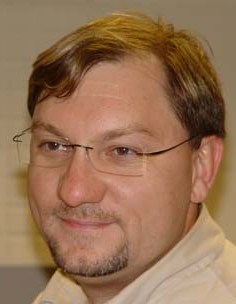
Pukhov Criticizes Serdyukov’s Reforms

Ruslan Pukhov (photo: Radio Rossii)

In today’s Komsomolskaya pravda, Viktor Baranets interviews Ruslan Pukhov, Director of the Center for Analysis of Strategies and Technologies, and Member of the Defense Ministry’s Public Council.  Pukhov provides a fairly balanced assessment of Defense Minister Serdyukov’s reforms, one year on.

Pukhov believes Serdyukov managed to reorganize and shake up the Defense Ministry apparatus, and partially achieved more rational use of the military’s budget money.  He says the main thing is the breakthrough on the ‘organizational measures’ of military reform.  He calls the ‘new profile’ the deepest organizational change for Moscow since 1945, citing its large-scale relocation of troops and equipment, cutting of personnel and obsolete armaments, reorganization of military education, and civilianization of many military jobs.  Pukhov concludes the administrative tasks of the reform are largely complete.

However, Pukhov also agrees with Baranets that the reforms have created a structural shell that has to be brought to life, made effective, and combat capable.  This will be harder than what’s been done so far.  Pukhov says there are few who doubt the army needed a radical, not just a cosmetic, reform, and the five-day August 2008 war proved it.

Pukhov thinks the reforms have created a new army, fundamentally different from the Soviet or previous Russian Army.  In scale, they can only be compared with the military reform of Peter the Great.  If it’s possible to reproach the Russian leadership for anything, it’s for dragging the process out with half measures which turned into a permanent degradation of the army, according to Pukhov.

Asked about Serdyukov’s greatest achievement and greatest failure, Pukhov says the former is having the political and administrative will to complete the first phase of reform.  But the greatest failure is Serdyukov’s inability to win the support of the entire officer corps, and this has put part of the officer corps against him.  Bureaucratic and poorly explained changes have often demoralized personnel, and poorly thought out personnel cuts have created discontent in the ranks, from contractee to general.  Military discontent with the methods of conducting the reform could discredit the reform itself, and make it too difficult for the political leadership to continue supporting Serdyukov, although for now Kremlin is satisfied with Serdyukov and his role as the army’s ‘surgeon.’

Pukhov says many of the measures have been extremely painful, affecting the fate of hundreds of thousands of servicemen, and often been implemented in a typical Russian fashion he describes as ‘up the ass.’  The Defense Ministry’s ‘secret-bureaucratic’ approach itself has had an effect here as well.

After practically calling Serdyukov’s the army’s proctologist-in-chief, Pukhov cuts him some slack, saying he didn’t personally plan and implement the largest part of the ‘orgshtat measures.’  They were done by military specialists in the Defense Ministry, General Staff, and service and district staffs, by men who’ve served out there themselves and are now engaged in transferring their colleagues, cutting some, putting some outside the TO&E, ‘optimizing,’ and so forth.  But Pukhov notes, all this could be done humanely, with respect toward the men and their professional experience.

Pukhov agrees with Baranets that a ‘soulless’ style of dealing with people, a lack of concern about human capital, and disregard for the human factor is traditional in the army.  And, unfortunately, it permeates the entire military system, according to Pukhov.  And a significant portion of the officer corps has become victim to such an approach during these rapid reforms.

Pukhov ends with some criticism for the top military leadership which often says it has come all the way from the bottom ranks, like those being ‘optimized’ today.  But what’s happening, including the aforementioned ‘excesses’ of reform, in Pukhov’s view, should make one think that there are some unhealthy morale-psychological tendencies in the army, which started long before Serdyukov, and can’t be considered normal.  Perhaps, for the success of reforms, the leadership should focus on the human aspect and recognize that the army, first and foremost, is people, and not pieces of iron.

So it sounds a little like Pukhov is saying the civilian Serdyukov didn’t realize how military men would implement his changes in their own organization, and what the human costs would be.  Again, it sounds like he wants to cut Serdyukov some slack, and share the blame for the pain caused with others around him wearing uniforms with big stars.  This tends to overlook the reality that many of those with the stars who objected were sent packing by someone.

Golts on Command Changes, ‘Effective Management’ Producing Cynicism

Writing in Yezhednevnyy zhurnal, Aleksandr Golts says the age limit story for Boldyrev, et al, doesn’t hold water.  These guys were honored for their performance in the five-day war, and then tossed out.  Surovikin obviously got demoted.  It was a general pogrom.
 
The brief Georgian war was not great victory, but the leadership couldn’t punish the general incompetence then.  First, it had to give out medals, and wait a year before firing them.
 
Another possibility is the retired generals were being repaid for their unsuccessful implementation of Serdyukov’s reforms.  They bore the hard burden of cutting tens of thousands of officers.  Then they lost their jobs because the process didn’t go as well as Genshtab chief Makarov has claimed.  Why were they fired if they’ve just been honored as great military leaders?
 
This takes Golts back to the issue of honor.  The Defense Ministry leadership is worried about the morale of officer corps.  It wants this new honor code to become corporate rules of conduct officers operating as members of the same caste from lieutenant to general.  But Golts concludes the new code won’t change the reality that junior officers are crap, they’re serfs.  Does a new code mean anything when generals get awards they don’t deserve, then they’re forced out?  Does it mean anything if officers are dismissed after 10-15 years of service and don’t get their benefits.  Getting officers to request dismissal or putting them outside the TO&E seems so brilliant as a  bureaucratic move, but it’s disastrous for morale.  ‘Effective management’ like this only infects the new generation of officers with cynicism, and no honor code will remedy that.

New Officers’ Honor Code and Ethics Needed

Over the weekend, a Defense Ministry source told Interfaks-AVN that, until 1 February, officers in units, brigades, and ships are discussing a new honor code.  Deputy Defense Minister Nikolay Pankov is leading this broad discussion on the “moral profile of the contemporary Russian officer.”

A new set of corporate ethics for officers will be adopted during the Defense Ministry’s 3rd All-Army Assembly of Officers this November in Moscow.  The Assembly will address raising the educational level and professionalism of officers, the “social-legal” defense of servicemen, and raising the status of officers in society.

Today Aleksandr Konovalov told Gzt.ru that military men need to choose their work as service to the people not just a profession, and officers need to have higher standards than average citizens.  He describes his idealized vision of an officer who has a high sense of justice and duty, values the lives of his subordinates, and won’t use the army for anyone’s private interests, including those in power.

Vitaliy Shlykov also gave Gzt.ru his view on military professionalism.  He says there are now way too few instructors who can impart the qualities officers need–competence, traditions and ethics, and corporateness.  The basic provisions of the new code need to be laid out first though, according to Shlykov.

Konovalov wants to start from scratch.  “New profile officers” have to be formed outside the existing army traditions, which have appeared spontaneously and not always honorably.

How does this square with the reality that officers commit most crimes in the Russian Armed Forces?  Not well.

In the midst of an optimistic army crime report on 26 November, Krasnaya zvezda admitted:

“One of the main problems is the growth of legal violations among officers, including stealing budget money allocated for defense needs, and other corruption crimes by military officials.  The scale of ‘officer’ crime has reached the highest level in the last decade.  Today every fourth registered crime among the troops is committed by this category of servicemen, a third of them are of the corruption type.  The losses caused to military units and organizations by these crimes have increased by one-third and exceed the half-billion level.  The structure of this type of crime has substantially transformed.  Today the theft of military property and financial means is almost half of all the legal violations of officers.  The quantity of cases of bribetaking, of forgery of duty positions, of appropriations, and expenditures has grown substantially.”

According to KZ, senior officers are more often the perpetrators.  In the last year, they committed more than half of all illegal acts.  In 2008, 20 generals and admirals were held criminally responsible, 1,611 officers, including 160 unit commanders, were found guilty.  Out of the 874 people held criminally responsible in 2009, 162 were commanders of units, 127 were colonels and captains 1st rank and 14 were general officers.  More than 270 people were convicted, including 3 generals.  In 2009, over 5,500 law violations were uncovered in this sphere over the course of prosecutor inspections.  The losses amount to 2 billion rubles.

The smaller officer corps–now 150,000 according to the Defense Ministry–and the possibility of dramatically higher pay for all officers by 2012 might reduce officer crime and make those officers who are still part of the ‘new profile’ more honorable and ethical.

Kamenka Officers Go Down for Hazing Incident

The 138th Motorized Rifle Brigade (MRB) at Kamenka (V/Ch 02511) in the LenVO has always had a pretty bad rep for hazing cases.  A Defense Ministry source told Fontanka.ru that 8 Kamenka officers have been removed from duty over the latest incident.  They include platoon, company, battalion, and brigade commanders, the battalion and brigade chiefs of staff, and deputy brigade commanders for armaments and socialization work.  They have reportedly been dismissed from the service as well, although the Defense Ministry has not confirmed this.  In early October, a conscript and contract serviceman were beaten by three drunken sergeants in the unit.  They turned to the Soldiers’ Mothers of Petersburg for assistance.  Initial press reports said 16 soldiers in all were beaten by the sergeants.  See Forum.msk for more.  This was probably just the last straw after a long line of incidents in this troubled brigade.