Monthly Archives: September 2011

Military Housing Promises

“By 2010 the question of permanent, and by 2012 of service housing for servicemen must be finally resolved.”

So declared President Vladimir Putin in his Poslaniye on May 10, 2006.

According to RIA Novosti, at United Russia’s interregional conference in Cherepovets today, Prime Minister Putin declared:

“Throughout Russia from 2011 to 2013, servicemen will be presented nearly 77 thousand apartments, that will allow the housing line for the armed forces to be eliminated completely.”

Putin had 5 years, 7 months, and 22 days to keep his original military housing promise.  Even though he admits he failed to keep it, he actually still has 118 days remaining on the original deadline.

He now has 1 year, 3 months, and 27 days to keep his new pledge.

Now many will argue that, when it comes to apartments and housing for Russian military men, the Putin regime’s glass is half, two-thirds, or mostly full, or something like that.

But it can also be argued that this was a pretty straightforward task, and that, with proper management, with adequate funding, and without inordinate corruption, it should have been accomplished pretty easily.

It’s another question altogether whether Russian voters keep track of political pledges and broken promises . . . and whether it means anything when they point them out. 

In any event, the military is a small constituency no politician really worries about offending.

The GOZ Last Week (Part I)

Let’s start with the news.  In short, Defense Minister Serdyukov told the press all GOZ-2011 contracts, except ones with OSK, were signed.  But most news outlets concluded he failed to meet Prime Minister Putin’s August 31 deadline for finishing the contracting process.

ITAR-TASS reported the Defense Ministry signed its fourth contract with OSK on August 29.  It was with Baltic Shipbuilding Factory “Yantar” for three Proyekt 11356M frigates.  Kommersant reported others are with Admiralty for three Proyekt 636 diesel-electric submarines and with Zvezda Shipyard in the Far East for nuclear submarine (probably OSCAR II-class) repairs and modernization.

But the largest and most important contracts with Sevmash for Proyekt 955 Borey-class SSBN and Proyekt 885 Yasen-class SSN production are still not signed.  The contract is supposed to cover two of the former and one of the latter that are already (or almost) complete.  Kommersant says the contracting delay means a fourth 955 and second 885 won’t be laid down until sometime in 2012.

ITAR-TASS concluded there are still differences over pricing although there is progress in the negotiations.  The wire service writes that Sevmash refuses to make concessions taking below a minimum profitability level, while the Defense Ministry calls price increases unjustifiable, and says it will only pay for concrete items regardless of the producer’s profitability.

On September 1, ITAR-TASS reported Serdyukov’s announcement that, on the whole, the Prime Minister’s order to conclude all GOZ contracts had been fulfilled.  It provided some choppy, weaseling quotes from Serdyukov:

“We are reprogramming for other requirements – precision weapons mainly, aviation, air defense . . . some suppliers because of some obstacles can’t provide their products.  . . . now we’re making changes – on the order of 30 billion [rubles].  . . . in essence, this is a formality  . . . .  Essentially, we’ve been through the entire agreed part.  The signing itself occurred yesterday-day before yesterday.  Only the United Shipbuilding Corporation contract remains.  Perhaps that’s all.”

Kommersant added Serdyukov’s comment that:

“We, unfortunately, can’t accept the figures which industry gives us.  For the most part, they are simply unjustified.”

Kommersant’s sources maintain, in addition to OSK, contracting with OAK and MIT remains incomplete, and no one’s willing to guess when this still-difficult process will end.

On September 2, Kommersant’s source said part of MIT’s contracts are done, but it would be premature to say the process is complete.

ITAR-TASS added that Sevmash’s contract is now supposed to be signed in mid-September.  The factory reportedly will agree to current prices for its submarines in exchange for some kind of “coefficient” to offset their rising costs starting in 2013.  The wire service also claimed there are now 6 of 13 OSK contracts signed.  And it put the cost of a Borey-class SSBN at a somewhat hard-to-believe 23 billion rubles.  OAK and MIT sources also told ITAR-TASS their contracts aren’t complete.

Vedomosti cited Konstantin Makiyenko on long-term submarine production costing 500 billion rubles.  If that’s eight Borey– and eight Yasen-class boats, it’s a $17 billion contract, basically $1 billion per submarine.  Thirty billion rubles a boat is a lot closer to 23 billion than the 47 or 112 billion that Serdyukov complained about in July.

Despite indications to the contrary, one has to wonder if Serdyukov isn’t very slowly winning his battle with the OPK.  But ultimately, it’s hard to say before we see what gets delivered, when, and how good it is.

Serdyukov’s New First Deputy

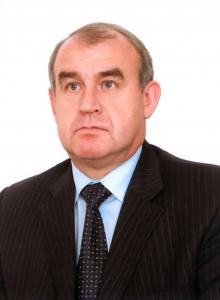
Aleksandr Sukhorukov

As rumored in mid-summer, President Medvedev announced today former KGB and FSB officer Aleksandr Sukhorukov, most recently Director of the Federal Service for the Defense Order (Rosoboronzakaz), will be First Deputy Minister of Defense.

According to ITAR-TASS, Defense Minister Serdyukov introduced the 55-year-old Sukhorukov during a working meeting with Medvedev in Stavropol.

Medvedev and Serdyukov noted Sukhorukov will be responsible for arms procurement and the beleaguered state defense order.

He’ll be sitting in the hot seat right away.  Medvedev told him:

“. . . this is a very delicate process:  on one side, you need to understand the realm of the Armed Forces, the field of modern military technology, on the other, you need to build relationships with suppliers correctly.  But it’s not always simple to do, the current history of concluding contracts shows this.” 

RIA Novosti elaborated:

“Last night, RF Prime Minister Vladimir Putin’s deadline for concluding all Gosoboronzakaz-2011 contracts expired.  On Thursday, the media reported that this task was not completed.”

Sukhorukov takes the post vacated by Vladimir Popovkin, who took over the Russian space agency Roskosmos.

Sukhorukov was with Serdyukov at the Federal Tax Service.  He followed the Serdyukov team to the Defense Ministry, becoming Deputy Director of Rosoboronzakaz in mid-2008, and Director a year later.  But he kept a low public profile at that agency.

He was born November 11, 1955 in Kasli, Chelyabinsk Oblast.  He graduated from the Chelyabinsk Higher Tank Command School in 1977, and later a KGB Higher School.  He apparently worked for the KGB in the Armed Forces, retiring as an FSB lieutenant colonel in 1996.   

From 1996 to 2004, he was deputy director, then director for the Finance Ministry’s northwest regional center for hard currency and export control.  He was a deputy director and director of a territorial directorate (probably northwest again) of the Federal Service for Finance-Budget Oversight in 2004-2006. 

In 2006-2007, he worked for then-Federal Tax Service Director Anatoliy Serdyukov as Chief of the Organizational-Inspectors Directorate.

In 2007, Sukhorukov followed Serdyukov to the Defense Ministry as an advisor.  He became Chief (not surprisingly) of its Organizational-Inspectors Directorate.  Serdyukov made reference to this directorate in his 2010 year-ender when he described how he checks on implementation of his policies. 

But, in late 2007, Sukhorukov jumped ship to the government, becoming assistant to then-Prime Minister (and Serdyukov’s father-in-law) Viktor Zubkov, and then Director, Department for Control and Verification of Fulfillment of RF Government Decisions.

In mid-2008, he arrived at Rosoboronzakaz.

You can find bio data here, here, and here.

In the Russian context, Sukhorukov seems like someone who knows how to find out if people are getting things done, and presumably what to do to them if they’re not (shoot them, send them to work in the fresh air, or fire them).  He seems very much a Putin man, an archetypal silovik.

He doesn’t, however, seem like someone who can help people figure out how to get things done.  Perhaps the Defense Ministry could have used someone with not just investigative, accounting, or legal experience, but maybe with an engineering, industrial, scientific, or technical background in the OPK.

It’d be interesting to know what Sukhorukov did in the army / KGB / FSB . . . he might have been a run-of-the-mill osobist, a “special section” guy monitoring some unit’s reliability and loyalty, or helping secure its secrets.  But he might have served in a defense plant, or been detailed to work in anti-corruption efforts.