Category Archives: Air Forces

When Will the Air Forces Get More S-400s?

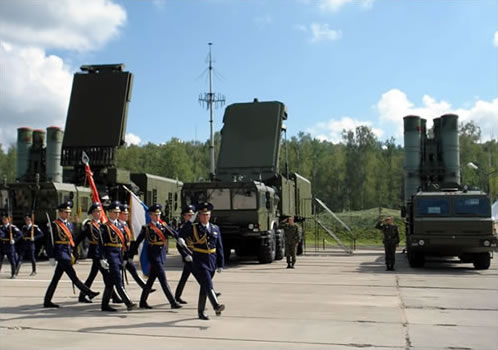
First S-400 Battalion on Duty in 2007 (photo: Leonid Yakutin)

On 9 February, RIA Novosti quoted Air Forces CINC Aleksandr Zelin:

“All that has been planned and must be supplied in the coming years, has been agreed with Almaz-Antey, will be fulfilled on time.  The S-400 antiaircraft missile system is fully entering the Air Forces’ weapons inventory.  The shift in the schedule for its supply has some organizational but mainly a technical character.”

Reminding the press that he’s member of the Almaz-Antey board of directors, Zelin said, “At the last session, we talked over all issues connected with planned supplies of the S-400 to the Air Forces.”

It sounds like Zelin is admitting the S-400 has been delayed, and the reasons are technical in nature.  Maybe there’s been some problem in the S-400’s operations or capabilities. 

So where does the S-400 stand?  Two battalions were fielded at Elektrostal near Moscow in 2007 and 2008, and Air Forces spokesmen have said repeatedly that 5 additional battalions will be delivered this year. The State Armaments Program, 2007-2015, called for 18 battalions by 2015.  But, as Mikhail Rastopshin has said, 18 battalions don’t cover Russia’s main administrative and industrial centers or support its strategic nuclear forces. 

In the midst of his late November criticism of Russian defense industry’s inability to provide the VVS with the UAVs it needs, Zelin also said Russian needs a second factory to produce the S-400 Triumf and other future air defense systems.  According to him, Almaz-Antey cannot fully satisfy the country’s demand for S-400 systems.  Not sounding too sure, he added that, “In 2010, we need to receive another five battalions, but everything depends on the industry and financing.”

Commenting on the S-400 tests at Ashuluk, Zelin said he was satisfied with the results, but the tactical-technical characteristics in the system are “still less than we wanted.”  He may be referring to lingering, well-known problems with the S-400’s long-range missiles.
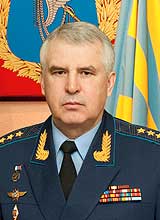
VVS CINC General-Colonel Aleksandr Zelin

Zelin went on to criticize the pace of development of the next generation S-500:

“Development of this system doesn’t satisfy me.  We would like for the existing potential in the Almaz-Antey concern to be doubled or even tripled.”

He said he planned to raise the S-500 development issue at the December board meeting.

More recently, on 28 January, Rosoboroneksport General Director Isaykin indicated that, although he has foreign orders for the S-400, Russia’s requirements would be met first.

On 17 September, Almaz General Director Ashurbeyli told ITAR-TASS that the S-500 would need 4-5 years to complete.  On possible S-400 export orders, he said he could only say two countries had signed large agreements for more than 10 battalions, but contracts remained to be finalized.  But Zelin made another statement this day that the system would go first to Russia’s armed forces.

So to recap.  The S-400 supply schedule has shifted for technical reasons.  The VVS hasn’t gotten a battalion since 2008.  Zelin admits he’s not fully happy with the S-400’s capabilities.  He says everything depends on the manufacturer, with whom he’s unhappy.  Meanwhile, foreign customers are already lined up for the S-400 that Russia can’t get and Almaz-Antey is marching off on the new S-500.

Industry More Important Than Army

Konstantin Makiyenko (photo: Dmitriy Lebedev/Kommersant)

Commenting in today’s Vedomosti, Konstantin Makiyenko of Moscow’s Center for the Analysis of Strategies and Technologies (ЦАСТ), also a member of the Duma Defense Committee’s Scientific-Expert Council, addresses the recent tendency of Russian military leaders, especially Air Forces and Navy, to criticize and even reject the OPK’s homegrown products.

He notes VVS CINC Zelin’s publicly expressed dissatisfaction with the pace of work on the S-500, and the Navy’s ‘slap in the face’ to Russian shipbuilding over consideration of the Mistral and German conventional subs.  He claims the oboronki themselves sensed Defense Minister Serdyukov’s bias against them and rushed to confess their problems.

And Makiyenko concludes the criticism is well-founded, as many OPK enterprises and companies are in pitiful shape, and the management of a number them leaves a lot to be desired.  However, he asserts, the OPK’s post-Soviet decline is not as great as that of the armed forces.  And restoring Russia’s ‘normal’ military potential is a higher priority task than preserving or adding to the OPK’s scientific-industrial potential.

Makiyenko believes Russia’s place as the number 2 or 3 arms exporter in the world indicates the OPK’s real potential.  Even more so since the economic conditions in which the OPK operates are worse than those of its competitors.  So, for all its problems, the OPK is still number 2 or 3 in the world, according to Makiyenko, while the army, nuclear weapons aside, is capable only of defeating the lilliputian armies of the former Soviet republics.

Makiyenko believes the degradation of the Soviet Armed Forces was occurring as early as the 1970s, while the Soviet OPK was reaching the peak of its capabilities at the end of the Soviet epoch.  It had practically overcome any lag with the U.S. and was building competitive products.  So, Makiyenko concludes, the OPK, rather than the Soviet Army, was the advanced guard in the last stage of the Cold War.  And Russia’s arms market successes would have been impossible without the Soviet OPK legacy.

Makiyenko suggests that the OPK should have priority over the army because, not only can it play a role in national development, but, with some effort, it can be restored in 5-10 years, while if it is [completely?] lost, it could take one or two generations to rebuild.  And even if Serdyukov builds the best army in the world, it won’t be able to provide for the country’s security without the basis of national defense–Russian industry.

So, without orders from its own army, without financing for basic research or RDT&E for the last 15 years, the OPK isn’t always able to meet demands for low priced, high technology goods on tight schedules to help Serdyukov rearm the armed forces quickly and effectively.  But this is no reason to call oboronki thieves and junk dealers.  Makiyenko calls for a long-term perspective and systematic evaluation of the situation instead of nearsightedness.

This is all well and good.  Makiyenko’s a smart guy and makes valid points, and he’s done an admirable job of defending the OPK.  But let’s remember that he tends to shill for arms sales.  Russian weapons sold abroad have had more than their share of problems in recent years.  And the Soviet technology in them grows older and older.  Also, there appears to be no cogent program for fixing the OPK anywhere in sight.  Nor is there even any clear analysis of how buying arms abroad will affect the OPK.

Realities of Military Housing

Too much doctrine makes Jack a dull (ok, duller) boy.

Writing in Moskovskiy komsomolets, Olga Bozhyeva again puts reality and faces on Russia’s military housing problems.

Colonel Valeriy Ananyev (photo: Gennadiy Cherkasov)

Bozhyeva contrasts the announcement of a major aerial portion of the upcoming 9 May Victory Parade, featuring Long-Range Aviation among other Air Forces aircraft, with the living conditions of LRA officers:

“Homeless [apartmentless, if you will] bums from dormitories declared unfit 9 years ago will demonstrate the power of our strategic aviation on this holiday.”

Thirty-nine families of command personnel from LRA live in 14 communal apartments in the building on 41 Myasnitskaya Street.  Thirty-two of the officers are Honored Pilots or Navigators of the RF.  Their apartment block was built in 1891.

Colonel Ananyev says they’ve talked about relocating these officers since 2002, so they didn’t do any capital repairs.  An inspection showed that living in the building was dangerous.  Bozhyeva thinks maybe Defense Ministry officials thought this was ok since LRA officers are accustomed to danger.

Ananyev himself wears three military orders–the Red Star for Afghanistan, For Military Services for Chechnya, and For Honor for planning and participating in the LRA part of the 2008 parade over Red Square.

So, Bozhyeva asks, why didn’t Ananyev and his LRA neighbors in this dangerous building get some of the 45,000 military apartments reportedly acquired last year?  Because 44 apartments in Kozhukhovo intended for them are caught up in an investment contract dispute.

The State Property Committee (Goskomimushchestvo) was originally involved in preparing the paperwork so an investor could build an office building on the site of the ruined dormitory and the new Kozhukhovo apartments could be occupied by the LRA men.  However, Defense Minister Serdyukov squeezed Goskomimushchestvo out of the Defense Ministry’s property business in 2008 and the whole deal had to restart.  But it was forgotten until May 2009 when the Defense Ministry and the investor each blamed the other for not fulfilling the contract.

Apparently, under the contract, the Defense Ministry was supposed to move the LRA officers and their families out of the old building, so the investor could start work, and the LRA men would move into temporary quarters, then on to the new apartments when the investor finished them.  The company even offered to settle them directly in the new apartments, albeit on a provisional basis.  But the Defense Ministry didn’t accept, and the investor has empty apartments for which it pays communal fees and provides security.

So what led Ananyev to become a poster boy for the military housing problem?  He wrote twice to Serdyukov without receiving an answer.  Then he wrote to President Medvedev, and he got an answer, only from the Defense Ministry–no one would be allowed to occupy the Kozhukhovo apartments directly before the Defense Ministry took ownership of them.

No one can say when this will happen, but it’s only a matter of signing documents, according to Ananyev.

But it’s not so simple according to a Defense Ministry source familiar with the housing issue who spoke with Bozhyeva.

The source indicated there is a financial motive in this situation, but not corruption or bribery.  The Defense Ministry is operating according to an unwritten order–don’t give any more housing to officers in Moscow.  Kozhukhovo is the same as Moscow.  But in the outlying suburbs and Moscow Oblast housing is cheaper and the Defense Ministry can buy more apartments faster. 

Apparently, some officers have gone to court to get apartments in Moscow, but the courts, while backing their claims to apartments, are not enforcing their legal right to choose Moscow as the location.

Bozhyeva thinks this is a plausible explanation in the case of the LRA officers on Myasnitskaya Street.

She wrote a similar piece on the plight of PVO officers this summer, find it here.  They live at 37 Myasnitskaya.

Golts Looks Under the Hood of PAK FA

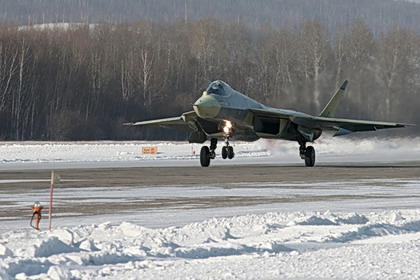
PAK FA in First Test Flight (photo: RIA Novosti)

In today’s Yezhednevnyy zhurnal, Aleksandr Golts turns his skeptical eye toward the PAK FA, Russia’s 5th generation fighter aircraft which just took its first test flight.

Golts says, looking a little like the F-22 and even more than the Su-27, PAK FA called forth a storm, a waterfall of success reports.  He notes that Prime Minister Putin cited it as proof of the wisdom of creating the United Aircraft-building Corporation [UAC or OAK] four years ago. 

Those in charge of the project are breathing easier.  After the Bulava SLBM failures, getting the new fighter off the ground was a matter of principle, especially since the leadership promised that it would fly every year since 2005.  Golts believes the Bulava failures combined with the 5th gen fighter delays caused people to discuss whether Russia could modernize, and whether it could develop high-tech products.  One thing Bulava and PAK FA have in common is that both are truly Russian projects, ones that are being implemented without dependence on significant leftover Soviet-era resources.  Their results could enable observers to question whether the OPK is being managed correctly, whether it was smart for Putin, [Sergey] Ivanov, and Chemezov to herd hundreds of enterprises into several gigantic OPK kolkhozy. 

Golts says some aviation industry leaders worried that OAK was created, not to concentrate resources to build PAK FA, but for Moscow bureaucrats to get their hands on profits from foreign aircraft orders [doesn’t ROE do this already?].  And Golts reminds that around 2000 then-Minister of Industry Ilya Klebanov said PAK FA development would cost $1.5 billion, but as we’ve learned the pricetag was closer to $10 billion over ten years. 

And it had to fly no matter what, and so it did.  But what actually flew, Golts asks.  One thing for sure, the first new airframe in 25 years.  And that’s it.  Everything else–speed, max and min ceilings, radars, weapons systems–all remain to be seen. 

As for the engines, Golts says we just don’t know.  Years ago the engine producers fought it out to be the designer and builder.  NPO ‘Saturn’ won out.  And, according to Golts, its director started to lie.  Putin and Ivanov both recognize that the engine problems will take some time to work out.  But on the day of PAK FA’s first test, the managing director of ‘Saturn,’ who directs the PAK FA program for the United Engine-building Corporation [ODK], claimed the new fighter has the newest engine, not an improved version of the Su-35’s engine, as the press and specialists have written. 

So what Putin and Ivanov worried about was secretly resolved by NPO ‘Saturn’ and the new engine is ready.  This is great news for Air Forces CINC Zelin.  Just four months ago he said that the PAK FA engine couldn’t be foreseen in the near future.  He said it would fly with a ‘Saturn’ engine, the 117S, a ‘deeply modernized’ version of the AL-31F. 

So, according to Golts, either ‘Saturn’ decided to pawn off on the Motherland an engine it demonstrated four years ago or, worse, having pocketed the contract, it simply decided to put old engines in a new aircraft. 

Golts concludes honestly that he can’t say whether PAK FA will be a true 5th generation aircraft, but it has taken off in a thick fog of lies.  And here’s the distinction between it and Bulava; there’s no way to hide Bulava’s failures since the U.S. gets the telemetry and people in other countries can see evidence of an unsuccessful test launch.  There aren’t the same limits on lying about PAK FA. 

So PAK FA is a “cat in a sack.”  You can’t say much for sure about the cat, but don’t worry, it’s a 5th generation sack.

Fifth Generation Fighter Maiden Flight Today

Commander Provides Glimpse Inside ‘New Profile’

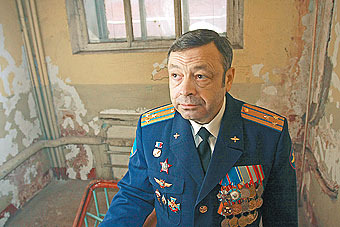
Colonel Anatoliy Omelchenko

For many years, Colonel Omelchenko commanded the 237th Center for Demonstrating Aviation Systems named for I. N. Kozhedub in Kubinka.  In other words, he ran the home base for Russia’s Vityazi and Strizhi flight teams that fly over the Kremlin in Victory Day parades and perform at air shows.

In mid-2008, Omelchenko became deputy commander of the 32nd Air Defense Corps at Rzhev, Tver Oblast.  The 32nd was part of central Russia’s air defenses known as the Special Designation Command (and before that as the Moscow Air Defense District).

With the advent of the ‘new profile,’ Omelchenko became commander of the new 6th Air-Space Defense Brigade (and of the Rzhev garrison as well).  It is one of the country’s 13 new air-space defense (VKO) brigades and likely part of the Operational-Strategic Command of Air-Space Defense (OSK VKO) that replaced the old Special Designation Command.

In late December, the local Veche Tveri paper reported that the region’s governor, other officials, and military commanders had met to discuss coordination and cooperation in the ‘social sphere,’ i.e. housing, communal services, and employment.  The military representatives were primarily VVS and RVSN officers based on what forces call Tver Oblast home and Omelchenko spoke at length in the meeting.

The Defense Ministry has bought 425 apartments in Tver and is considering 705 more.  A civilian official reported on rising unemployment in parts of the oblast.  Then Omelchenko noted that, in the transition to the ‘new profile,’ 4 units were disbanded and 10 units and sub-units were reformed in the process of creating his brigade.  In all, 957 military personnel (557 officers, 180 warrants, 220 sergeants and soldiers) and more than 300 civilian workers were subject to ‘org-shtat measures.’  As of 19 December, 31 officers and 15 warrants were dismissed.  All warrant billets were abolished and their duties given over to sergeants, and 40 officers and 33 warrants were put into sergeant posts.

Omelchenko said units at Andreapol and Bezhetsk were particularly affected.  More than 300 servicemen from the former went to the air base at Kursk and other units.  Its aviation-technical base and independent comms battalion became a komendatura–more than 200 servicemen and 65 civilians were transferred to it, Kursk, or other unitsIts automated C2 center was downgraded and 155 civilians were let go.  Sovetskaya Rossiya published a good account of the angst at Andreapol as its 28th Guards Fighter Aviation Regiment disbanded in favor of the 14th Fighter Aviation Regiment at Kursk.

The situation at Bezhetsk was much the same.  Its unit sent 284 servicemen to the air base at Khotilovo and other units.  Two hundred servicemen and 65 civilians from the tech base and comms battalion became a komendatura, went to Khotilovo, or other unitsIts understrength radar battalion became an independent company.  And nearly 150 civilians were dismissed.

Omelchenko noted that the growth in the closed military town of Khotilovo-2 due to its regiment’s change into an air base has strained the housing situation.  The command is unable to provide housing for servicemen according to legal norms.  Two hundred to 250 apartments are needed.  Khotilovo doesn’t have enough jobs for military wives and nearly 200 jobs are needed for women with specialized training or technical education.  They might be found in Vyshnyaya Volochka, but there’s no public transportation.  Khotilovo’s ancient kindergarten has only 40 spots and probably 90 are needed.

Omelchenko’s life was probably easier in Kubinka.

Restoration of Frozen ‘Steppe’ Garrison Continues

Vesti.ru has a good report on the situation.  Notice that SibVO’s acting chief of apartment management is on the scene.  Restoration has proven more difficult than thought.  The 100 evacuated residents have not returned.  Crews are working inside the buildings, but it’s a large amount of work.  There are problems in every building, including five of 10 apartment blocks where full restoration of heating had been reported earlier.  Of course, the military prosecutors are laying the incident entirely on the chief of the garrison’s apartment management unit, one Lieutenant Colonel Konstantin Kondrashov, who faces criminal charges of ‘negligence.’  During preparations for the heating season, he allegedly failed to take needed maintenance measures in the garrison’s boiler room.  See also Newsru.com coverage.

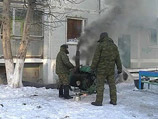
Troops Blow Warm Air into Apartment Block

Chief of Staff’s and Shamanov’s VDV Year Enders

General-Lieutenant Nikolay Ignatov

In an interview today, the VDV’s Chief of Staff summarized 2009 and plans for 2010 in Russia’s airborne forces.  

General-Lieutenant Ignatov said 90 percent of the VDV was outfitted with individual soldier radios based on the Akveduk system in 2009, and the remainder will get it in 2010.  The Akveduk-5UNE is the basic UHF transceiver, and Akveduk-5UNVE and Akveduk-50UNVE are the individual radios.  

The VDV also took delivery of 100 modernized BMD-2, 18 Nona self-propelled artillery systems, and 600 KamAZ vehicles.  It got communications vehicles including 14 R-149 KShM and 23 radio stations mounted on KamAZ high mobility vehicles.  

Ignatov said 80 percent of the VDV’s fall 2009 conscripts have already completed their first jump.  In all, 10,000 conscripts are joining the VDV ranks from the fall draft.  Another VDV spokesman said the airborne made 189,000 jumps in 2009, 29,000 more than the year before.  

Stepping back a bit, in mid-December, VDV commander Shamanov told NVO that the airborne received 150 combat vehicles in 2009, including modernized BMD-2 and BMD-3.  He hopes to get more BMD-4M vehicles for field testing in 2010.  He wants 200 of them eventually.  Unlike the VVS, he emphasized that he likes domestically produced UAVs, thermal sights, and sniper rifles.  Shamanov noted that 15-20 percent of the VDV’s armored vehicles might be wheeled in the future, and he plans to obtain some GAZ-2330 Tigr vehicles for recce and Spetsnaz subunits.   

Shamanov essentially said the VDV intends to lobby for control of helicopter units, presumably from the VVS where they’ve been since 2002, to transport and support its air assault elements.  Specifically, he’s talking about the Mi-28N, Ka-52, Mi-8MTV, and Mi-26.  The Ground Troops would also like to get army aviation back; perhaps both are ganging up on VVS. 

On 10 December, Shamanov called for a simple, functional approach to equipping the VDV.  Unhappy with defense industries, he said he won’t buy anything that doesn’t suit the VDV.  He wants better stuff than he already has in his stockpiles.  As an example, he wondered when he’ll get a mine detector that works on rocky terrain.  So, to some degree, Shamanov has joined the list of military leaders lambasting defense industries for poor products. 

Shortcomings of the Air Forces

Su-30MKI (photo: http://www.irkutavia.ru)

Recent months have seen a spate of press items criticizing the Russian Air Forces, their capabilities, and plans.

Writing for Pravda-KPRF on 17 December, retired Colonel Robert Bykov notes that Russia’s tactical aviation consists of about 1,800 aircraft, almost all of which are more than 20-30 years old.  The service life of the Su-24 has been artificially extended to 40 years.  Problems in 80 percent of Russia’s MiG-29s have reportedly been fixed.  He quotes General Staff Chief Makarov from late 2008 to the effect that only 5 of 150 Air Forces regiments had their complement of 24 aircraft, while others had pilots and practically no flyable aircraft, and this resulted in the degradation of pilot skills. 

Whereas in Soviet times, the Air Forces received a reported 400-600 aircraft per year, for 15 years, the Russian Air Forces have received only a handful or none.  Bykov notes that the plans announced at MAKS-2009 amount to only 67 aircraft to be acquired by 2015–only about 15 per year.  He goes on to describe deficiencies in the Su-34–only two aircraft so far, and they supposedly lack an air-to-air weapons system.  The Su-35 has not been accepted yet, after one crashed and burned during runway tests in April 2009.  Then he plugs for what he calls one true success–the multirole Su-30MKI.  Bykov says Russia could get 50-60 of these per year right now from the Irkutsk Aviation Production Association (IAPO), five years sooner and for half the price of the Su-35.  He concludes that, if the fiasco with the Su-34 and Su-35 continues, Russia will be left without tactical aviation in the future.  He blames Mikhail Pogosyan, general director of Sukhoy, as well as those who can’t straighten out the Bulava SLBM mess and want to buy Mistral from the French, for blocking acquisition of the Su-30MKI for Russia’s Air Forces.

In Forum.msk, Lieutenant Colonel Yuriy Karnovskiy notes that the ‘new profile’ for the Air Forces means only 1,000 of the newest airplanes and helicopters will be put into the new organizational structure, and the rest will be written off.  The idea of the reform for the Air Forces is to concentrate the most combat capable forces into a small number of air bases to allow for more intensive training and to conserve resources. 

However, pilots of the Domna-based 120th Fighter Aviation Regiment have written him to describe how they’ve been reformed into a squadron and subordinated to an air base in Chita commanded by a helicopter pilot.  They described the mixed group as complete bedlam, lacking a normal flight schedule, but they have to fly anyway.  Mid-ranking ground support personnel have been cut.  The squadron has no trainers.  General Staff Chief Makarov’s mantra about one pilot per operational aircraft is becoming reality.  The next step in the reform will make squadrons into detachments.  Karnovskiy concludes, when there’s only one aircraft per theater of military operations, the president will announce that the armed forces have completely introduced the ‘new profile’ and the housing problem for pilots has been solved.

Another good analysis on this issue came from Mikhail Rastopshin in Nezavisimoye voyennoye obozreniye on 23 October.  He notes that the Air Forces received no new aircraft between 1994 and 2003, and only three since then–a Tu-160 and two Su-34.  He reported that ‘experts’ conclude the Air Forces probably have only 500 combat aircraft capable of taking off.  Air Forces CINC Zelin has politely noted that his service’s rearmament rate is inadequate.

Rastopshin explains how Long-Range Aviation’s old Tu-160, Tu-95MS, and Tu-22M3 can’t be modernized to serve as particularly effective bombers against a robust air defense.  He sees the loss of 4 aircraft officially, or 8 or 10 unofficially, against Georgia as evidence of the Air Forces’ problems.  He explains how many of Russia’s missiles have a short launch range that leaves aircraft in range of enemy air defense weapons.  Russian smart bombs can only be used against a fully suppressed air defense.  Aircraft like the Su-24, Su-25, and Su-27 have been modernized, but not sufficiently to operate against serious defenses.  Old ordnance and anti-radar missiles don’t allow aircraft to stay out of the enemy’s tactical air defense zone.

One last one of interest.  In Sovetskaya Rossiya, Colonel I. Ivanov writes that only 30-35 percent of the Air Forces’ inventory is operational.  Regiments have only 30 percent of requisite supplies, and shortages of equipment and personnel for airfield maintenance exist.  Defense Minister Serdyukov’s new logistics corporation, OAO Oboronservis and its affiliate OAO Aviaremont, will now run the Defense Ministry’s aircraft repair plants.  Ivanov complains that Aviaremont’s main concern will be profit rather than combat readiness.  He doubts current aircraft can continue to fly for another 5-7 years while waiting for new ones.  He claims average flight hours per pilot have increased because more fuel is available, but also because there are now fewer pilots to share the hours.  Like Karnovskiy above, he lampoons Makarov’s comment about cutting pilots down to the number of operational aircraft and increasing their flight hours.  If Russia has only one airworthy aircraft and one crew, the Air Forces can report 100 percent combat readiness.  Ivanov says most training is limited to three aircraft at a time, so there’s little chance for regiment-level command and control training.  Pilots don’t get enough practice missile firings.

He concludes that the U.S. has a great advantage in ALCMs, while the Russian munitions inventory has seen little improvement in the past 15 years.  The new Kh-555 and Kh-90 with conventional warheads are accurate, but are not being produced in quantity for the Air Forces.

Ivanov claims only 2-3 Tu-160s are getting flying time, so they don’t make for much of a leg of the nuclear triad.  He says getting 2 Tu-160s to Venezuela required an enormous and expensive effort.  His bottom line–the Air Forces can’t safeguard Russia against the colossal advantage enjoyed by U.S. and NATO aerospace forces.  Serdyukov’s reforms aren’t helping this situation either.