Category Archives: Ground Troops

Three-Month Combat Training

Three-and-a-half years after it started phasing in one-year service, the Russian Army’s condensing combat training into three months so it can put draftees in line units for their remaining months.  One wonders what they’ve tried to this point, or if they’re just now addressing the implications of the shortened draft term.

Twelve weeks of basic training is about the norm by world standards for draftee armies.  But the Russians have compressed what they previously taught over a longer period, so the question is how well conscripts absorb, retain, and employ their lessons.

Officially, Russia’s three-month accelerated combat training program is experimental.  Krasnaya zvezda reports, since June, the 19th Independent Motorized Rifle Brigade in North Ossetia, has been trying a new program to take new draftees and turn them into professionals, ready to serve in combat sub-units [подразделения], in three months.

The army daily claims these new conscripts focus exclusively on the combat training course, which now reportedly includes 1.5-2 times more “practical exercises” than in the past.  The course covers 90 days (536 hours).  It retains the traditional first month of individual training, and the last two consist of training and coordination [слаживание] of sections, platoons, and companies (batteries).  The course ends with several days of test exercises, sub-unit combat firings, and company-tactical exercises.

The brigade’s deputy commander says:

“In the new program, theory has been practically thrown out, the stress is on the practical part.  In connection with cutting the conscript service term to one year, the task of preparing, in three months, a coordinated sub-unit, ready to fulfill missions in various conditions, stands before us.”

The choice of the 19th IMRB wasn’t accidental.  As KZ notes, the formation saw action in the five-day war with Georgia.  It has a “reinforced company-tactical group” of BMP-3s fueled for a 500-kilometer roadmarch ready to depart garrison within 30 minutes, according to KZ.

KZ then describes how outsourcing repair and support work has enabled draftees to focus entirely on combat training.

This week, Mil.ru updated the experiment.  It said the brigade is currently finishing platoon coordination and beginning company coordination, which will continue until mid-August.  The Defense Ministry says the Ground Troops’ Main Combat Training Directorate is monitoring the accelerated program.  In late August, it will oversee the company tactical exercises, and determine their capabilities for action under combat conditions.  Conclusions about the three-month combat training program will come in September.

Writing in Nezavisimaya gazeta yesterday, Vladimir Mukhin questions whether it’s possible to train professionals in three months.  He notes the Southern MD was supposed to be 70 percent contractee-manned by now, according to the Defense Ministry old contract service plan.  Parents of green soldiers feel like their sons are serving in a “hot spot,” according to Mukhin.  Conscripts from this formation died in the Georgian conflict.  The onus is on the political leadership, says Mukhin, rather than military commanders to explain why units here aren’t manned with professionals.

Mukhin quotes former Ground Troops’ Chief, General-Colonel Yuriy Bukreyev:

“If a conscript soldier has basic military training, then it’s possible to give him the skills to employ him in combat conditions in the North Caucasus.  I’m giving the same conclusion from the Soviet Afghan experience again, when I headed the staff of the Turkestan Military District.  But then soldiers served two years.  At first, they were in training sub-units, they underwent additional mountain training in special training centers.  Only afterwards, that is when they’d served in the troops a year or more, were they sent to Afghanistan.  Today conditions are a little different.  The conscript soldier’s service term’s been shortened to 12 months.  And this means the intensity of combat training should increase.  The Ground Troops’ Glavokomat is just conducting an experiment in training first-year soldiers to carry out missions under the conditions of an armed conflict.  We’d like to hope that raw soldiers won’t be drawn into resolving such missions.  Professional sub-units would appear more effective here.  But, unfortunately, in our Armed Forces reliable conditions for the mass recruitment of contractees into the troops still haven’t been established.”

Making Soldiers in the Southern MD

Nezavisimoye voyennoye obozreniye’s Oleg Vladykin participated in a press-tour of the Southern MD (OSK South), and last Friday he published his take on what he saw.

Deputy District Commander, General-Lieutenant Igor Turchenyuk set the scene, telling assembled journalists about establishing the YuVO last year:

“A substantial — more than two times — growth in the combat potential of the grouping of troops and forces deployed on YuVO territory is the result of the transformations which have been carried out.”

Turchenyuk said the YuVO conducted more than 200 command-staff and tactical exercises, including jointly with air and naval forces, during the winter training period.  This was reportedly seven times greater than comparable training in the old North Caucasus MD.  

Turchenyuk claims the intensity of everyday combat training has increased noticeably, doubling fuel and ammunition expenditure.  Outsourcing food and laundry services and arms and equipment maintenance made this possible.  By eliminating extraneous duties, a more intense 40-hour week has added more than 300 hours of training time to the year.   

Turchenyuk’s main point:

“As a result, we got the chance to prepare a real professional serviceman-specialist even under the conditions of a one-year training cycle.”

And Vladykin’s:

“Of course, it’s hard to argue with figures.  Therefore, I really wanted to confirm with my own eyes how conscript servicemen are being turned into real professionals.”

Vladykin and the others were taken first to the 34th Independent Motorized Rifle Brigade (Mountain), built from scratch on President Putin’s order.  The 34th was established as an elite, model formation as good as any “show” unit elsewhere in the Armed Forces.

But, says Vladykin, not everything turned out as imagined, especially with the formation’s manning. 

The brigade found 5,000 contractees to train as professional mountain infantry, but today, with the cut in contractees, more than half the brigade’s manpower are conscripts.  After seeing some training, Vladykin concludes:

“I won’t say that all soldiers looked like high-class mountain infantry.  But since I know most participants in the exercises have served a little over half a year, I’m ready to acknowledge: they’re not badly trained.”

Next up was the 22nd Independent Brigade of Special Designation (Spetsnaz).  Its professionalism needs to be even higher, but this brigade is currently 60 percent draftee.  Vladykin wonders out loud whether they will be able to carry out the brigade’s missions, and whether it’s possible to grow a real soldier from a conscript.

Lastly, in the 19th Independent Motorized Rifle Brigade, practically all soldiers and junior commanders (NCOs) are conscripts.  Here, says Vladykin, they learned the difference between draftees and contractees in battles in two Chechen campaigns and in South Ossetia.

Its officers reserve judgement about the efficacy of outsourcing rear service functions.  Conscript drivers learn vehicle maintenance from contracted civilian mechanics who won’t be with them in combat.

The brigade’s chief of staff describes how a reinforced company tactical group meets the formation’s permanent (one-hour) readiness requirement in the volatile North Caucasus.  Another officer says duty officers have returned to the barracks to keep order at night.  The officers here don’t fully trust their conscript soldiers and sergeants.

Vladykin doesn’t provide a larger bottom line.  It seems to be that the YuVO may be turning draftees into soldiers, but not true professionals.  For all the figures about the district’s higher training tempo, Vladykin doesn’t seem too impressed.

New SAM for Troop Air Defense?

Last Thursday, a Ground Troops’ spokesman told ARMS-TASS the army is testing a new portable surface-to-air missile system (PZRK):

“Tests are being conducted at the 726th Training Center on a new portable surface-to-air missile system, the tactical-technical characteristics of which surpass those of other types in the armament of formations and units.”

The spokesman said it’s planned to complete experimental-design work (OKR) on the new system this year, and procure up to 250 of them under this year’s state defense order.  He said the systems will go into the SAM batteries of air defense battalions of independent motorized rifle and SAM brigades.  The new SAM will be deployed on mobile platforms that support automated remote launches.

The army representative also said:

“All together in the framework of the state defense order for 2011, it’s planned to buy more than 400 pieces of missile-artillery armament for Troop PVO units and to conduct capital repair with modernization of nearly 100 pieces of equipment.”

In his estimation, as a result of this, an increase in the combat capabilities of PVO troop groupings of up to 40 percent, according to a number of indicators, is expected.

Exploding Arsenals

Media commentaries on the arsenal explosions were outstanding.  Here are excerpts from some . . .

Viktor Myasnikov in Nezavisimaya gazeta:

“The father of one of 300 conscripts assigned to the arsenal, Andrey Chukavin, said three days before the incident he complained on the Defense Ministry website about safety rule and regulation violations in the loading-unloading work.  In his opinion, the arsenal didn’t figure on the quantity of munitions that arrived in the last month.  ‘Conscripts and civilians had to work in two shifts for loading-unloading.  Work went on from 8:30 until three in the morning or later,’ — he told journalists.”

“However, in past years there hasn’t been a single explosion at a civilian enterprises disarming munitions.  Because automated systems of disassembly are working there, safe techniques of eliminating explosives are employed and safety rules are strictly observed.  But it’s more advantageous for the Defense Ministry to use draftees, old-fashioned manual disassembly and save budget resources on its arsenals.  And then the state will spend billions covering the damage from such economizing.”

“Soon, as punishment, the president will dismiss the next batch of generals and colonels.  But the system remains.  So explosions will rumble in the arsenals again in a year or two, or even earlier.”

Itogi’s Oleg Andreyev:

“. . . they’ve made responsible for the explosion in the artillery depot in the Bashkir village of Urman a conscript whose guilt consists probably of not being trained to work with explosive substances.”

“Really everything that’s happening now under Serdyukov’s administration is absolutely natural.  Specifically, under him, the last professionals who received a classical military education departed the Armed Forces.  In essence, continuity was destroyed, and, as they say, the experience of organizing service, literally paid for with blood, drained away into the sand.  Including also experience in storing and servicing explosive substances, munitions and combat means.  To put it differently, there are still shells and missiles, bombs and torpedoes in the arsenals, but experience and skill is lacking!  Explosions in depots don’t just cause deadly fireworks.  In society’s consciousness, the shock wave will raze all of military reform to the ground.”

In Nasha versiya, Vadim Saranov writes:

“Can it be that in June 2010 [sic] after the explosions at the arsenal in Ulyanovsk, the president dismissed an entire handful of generals, but, as we see, nothing came out of this.  On the other hand, several other Defense Ministry decisions, in the opinion of specialists, are increasing by several times the risk of similar events at depots and ranges.  As ‘Nasha versiya’ already wrote, at the beginning of 2010, Defense Minister Anatoliy Serdyukov issued a directive, according to which the Russian Army should rid itself of all old munitions by the end of 2011.  But no kind of serious investment in this program was foreseen.  It was ordered to get rid of shells either by explosive methods or in army arsenal workshops which have obsolete equipment.  Today, according to our Defense Ministry sources, to fulfill these instructions, dismantlement is taking place in a rush in units.  It isn’t excluded that this hurrying itself could even be the cause of future accidents.  Judge yourself:  according to official statements, the first explosion in the depot in Udmurtia happened on the night of 2-3 June during some ‘loading-unloading’ work.  Ask yourself:  from what kind of panic, really, is loading-unloading work conducting at night in a second-rank arsenal?  Did a war start?  According to regulations, at this time there should only be sentries, duty officers, and orderlies on watch.  Then who was handling shells?  How much time did this soldiers rest in the previous day?  For this reason, it can’t be hoped that the events in Bashkiria and Udmurtia will be the last in the series of bombardments of peaceful Russian towns.  The minister’s order will be fulfilled at any price.”

Lastly for this post, Pavel Felgengauer in Novaya gazeta:

“In every separate instance (according to the results of official investigations) the guilty one is either a negligent officer or soldier (one-year conscript) who somehow didn’t handle shells and artillery powder casings carefully enough or threw down a butt.  And then the negligent chiefs who didn’t ensure supervision, order and discipline.  Even if all this is true, it isn’t possible with just one administrative dressing-down, even if Medvedev removed the minister [Serdyukov] as punishment, to solve universally the problems of masses of unneeded, expired munitions in Russia.  It wasn’t under Serdyukov that ammunition began to burn and explode regularly in Russia, and it won’t stop after him.”

“We need, of course, to arrange a reliable, effective and safe system of dismantling old munitions instead of the usual, harmful and dangerous  explosive demolition.  We need to construct reliable storage bases with secondary containment and strong concrete shelters.  Medvedev is right — we have to struggle against sloppiness.”

Felgengauer goes on to note that Russia has had to keep old shells for its old guns and tanks that haven’t been replaced.

“When the chiefs say that the army and navy’s weapons are 90 percent obsolete — this is true, but this isn’t all.  The munitions have become obsolete just the same, if not worse.  That is, old munitions are used and saved, but they from time to time randomly explode, maiming and killing people, destroying buildings.  So here’s the system, because of which it’s impossible to avoid tragedies and accidents.  And in the future, undoubtedly, there will only be more of them since weapons and munitions are getting even older, and discipline in the troops will continue to fall in response to half-baked reforms.”

Not Utopia

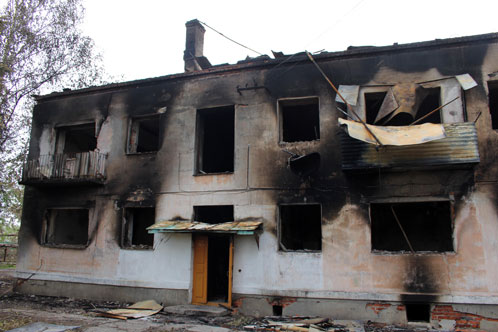
Burned Out Building in Urman Near the 99th Arsenal (photo: Komsomolskaya pravda / Timur Sharipkulov)

Yes, it’s definitely not utopia.

Sometimes it seems Anatoliy Serdyukov resides in a special dystopia reserved for reformers.  In an interview at the very end of last year, Serdyukov said as much.  He admitted his reform of the military isn’t solving every problem.

Addressing munitions dismantlement on December 31, the Defense Minister said:

“The problem is very serious.  For long years, munitions were stockpiled to excess, calculated for a multimillion-man army.  Besides, in the last twenty years, virtually no attention was given to combat training and firings, but the norms of munitions stockpiling remained as before.  As a result, so much ended up in excess that we have work for several years.  To dismantle them by industrial methods is quite complex – there aren’t enough enterprises.  Besides, this is very expensive and not safer than destruction.”

“Therefore, we’re now preparing special teams, certifying equipment, and selecting officers.  They mainly need to be combat engineers.  We’re picking ranges.  We’ve figured where, in what volume, and what we need to blow up, and worked out safe techniques.  We need at a minimum two, maybe three years of such work.  Yes, this will create some temporary discomfort and difficulties.  But it’s impossible to not do this.  If the entire arsenal at Ulyanovsk had blown up, the trouble would have been much more serious.”

Well, he’s right.  It’s a huge problem that has to be resolved. 

There was lots of good (albeit repetitive) news reporting on the two arsenal explosions, and the news analyses and op-eds had a lot of common themes we’ll summarize below.  Many of the same points were made at the time of the 31st Arsenal disaster in 2009.  The major shared ideas are:

  • Russia’s munitions depot problem is enormous, and massive resources are required to resolve it.  The current effort is very belated, and probably grossly underfinanced.  And now the dismantlement and destruction of excess ammunition is being rushed with tragic consequences.
  • Conscripts and crude methods are being employed in place of professional military specialists, civilian experts, and modern equipment.  There’s a willingness to ignore basic safety regulations since draftees are still considered expendable.
  • Military district commanders were not appropriately prepared to supervise storage depots and the dangerous work of eliminating explosives when they took control of them from the Defense Ministry’s Main Missile-Artillery Directorate (GRAU). 
  • The three criticisms above all add to blaming Serdyukov’s reforms for the exploding arsenals.  Critics say he’s rushed the process, forced now sorely-needed ordnance officers out of the army, and taken the situation out of the GRAU’s experienced hands.

Now, to be fair, some of the conditions listed above existed before Serdyukov arrived, and some he created or exacerbated.  And arsenals exploded before.  But these disasters seem to occur more frequently now.

A few other points made by commentators:

  • Trying to destroy munitions on the cheap is leading to even greater losses for the state when it has to compensate injured civilians.
  • Other countries have eliminated huge munitions stockpiles safely, but Russia seems to have a peculiar national tradition of technological carelessness that keeps it from doing the same.
  • The Kremlin and the Defense Ministry won’t find the guilty in these explosions, but some officers and, possibly, officials, will be appointed to fill the role.

Moreover, the MChS says wildfires already cover an area three times larger than this time last year.  Another terrible fire season might threaten many military facilities, including arsenals.

To sum this all up, it’s worth reprinting how Vladislav Shurygin was recapped on these pages 18 months ago:

“He cites the catastrophic state of Russia’s overflowing arsenals and munitions depots.  This summer Serdyukov transferred responsibility for them from the GRAU to the MDs and fleets who aren’t technically prepared to manage them.  Shurygin notes it was GRAU personnel who were punished for the November blasts at the Navy’s arsenal in Ulyanovsk.  Convenient people are punished rather than those who are truly guilty, according to him.”

Off With Their Pogonies!

Friday's Security Council Session

Dmitriy Medvedev’s asked again for the heads (or pogonies) of the guilty.  A couple weeks after his government delivered several of those allegedly responsible for breaking the GOZ, he’s ordered Defense Minister Serdyukov to tear the pogonies (officer’s shoulderboards or погоны) off those to blame for massive munitions depot explosions in Udmurtia and Bashkortostan.

It is, of course, quite a presidential thing to do.

Let’s look at how the fairly one-sided conversation went.

In the published opening moments of Friday’s Security Council session at Gorki, Medvedev had to forego mentioning anything about the G8, missile defense, and Libya in order to focus instead on the depot explosions:

“. . . I would like to turn the Defense Minister’s attention to the fact that we are for the second time recently experiencing ‘doomsday’:  shells exploding, there are injured, missing.  We conducted a special meeting on this issue the year before last I think.”

“Afterwards the situation was on the whole, in my view, under control:  we succeeded in arranging the work of supervisory structures, naturally, after dismissing a whole row of Defense Ministry colleagues.  But everything’s come loose again, some problems have arisen again.”

“Two times — this is already systemic, Anatoliy Eduardovich.  Prepare a proposal for me on who should answer for this and how.  They still don’t understand well — for two years everything was OK, — this means we have to take somebody’s shoulderboards off again.”

“Conduct an investigation.  Naturally, the Investigative Committee [under the General Prosecutor] and other units [FSB] are conducting an independent investigation, and together present me with proposals and organizational conclusions.”

For its part, the Defense Ministry insists it’s not being hasty.  Its spokesman told ITAR-TASS:

“Aiming for a full and objective investigation of the circumstances which have occurred in the TsVO, a Defense Ministry commission under the leadership of Deputy Chief of the RF VS General Staff, General-Colonel Valeriy Gerasimov has been sent.” 

“Based on the results of the conduct of the entire complex of verification measures by the military department’s commission jointly with investigative organ representatives and the military prosecutor, the causes of what happened will be established and the responsibility of officials will be determined.  Only after the checks are finished will concrete decisions, including personnel ones, regarding the guilty be adopted.”

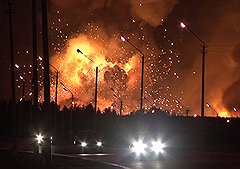
Explosions at the 102nd Arsenal (photo: NTV)

Of course, today’s papers were full of speculation about who might get the blame and the boot for these disasters.  But, as usual, it’s not likely any dismissals will reach highly-placed officers and officials who are truly responsible for the sloppy, breakneck campaign to destroy Russia’s massive stockpiles of old shells and ammunition.

There’s lots more interesting commentary relevant to these most recent arsenal explosions.  Unfortunately, your patience will be required.

Russia’s Fading Army Fights Losing Battle to Reform Itself

A very good article by the Wall Street Journal’s Richard Boudreaux . . . though missing a few of the most up-to-date pieces of the story, his report captures important aspects of the Russian contract service experiment that even so-called specialists overlook.

“VOLGOGRAD, Russia—Sergei Fetisov, a 23-year-old welder, signed on for one of the most ambitious projects in Vladimir Putin’s Russia: rebuilding the remains of the once-mighty Soviet Red Army.”

“A cornerstone of that effort was the creation of special combat-ready units staffed entirely by professional soldiers, not conscripts.  Mr. Fetisov volunteered to be one of them.  He enlisted for a renewable three-year stint, enticed by higher pay and the chance to learn new skills.”

“One of his first tasks, he recalls, was toiling past midnight shoveling snow and ice from a football-field-size parade ground.  The work that followed was menial, humiliating and of little practical use, he says.  Combat training consisted of two firing exercises a year, he says, and a chunk of his paycheck was routinely withheld by corrupt officers.”

“‘When I realized that being a professional soldier was just the same as serving as a conscript, I wanted to tear up my contract and get out of there,’ he says.  He quit when his commitment ended in July, he says, ‘but we had guys who simply ran away.’”

“With volunteers like Mr. Fetisov leaving in droves, the Defense Ministry has abandoned the initiative altogether.  The program’s failure shows the limits of Mr. Putin’s grand plan to transform the army from a cumbersome machine designed for European land war into a lithe force capable of fighting regional wars and terrorism.”

“Russia’s struggle to rebuild its armed forces comes as the world’s military balance is in flux.”

“Two decades after the Cold War ended, China is engaged in a military buildup that has many of its neighbors, including Russia, scrambling to bolster their defenses.  The U.S., still the world’s dominant military power, is trying to rein in defense spending—while simultaneously keeping a wary eye on China, projecting power in the volatile Middle East and dealing with the North Atlantic Treaty Organization’s persistent concerns about Moscow.”

“Currently, Russia is at odds with NATO’s air assault in Libya. Moscow has stayed out of the military conflict, despite its stakes in weapons deals and oil-exploration ventures with Col. Moammar Gadhafi’s regime.  But Mr. Putin said last month that the bombing in Libya is part of a ‘steady trend’ of U.S. military intervention around the world and ‘a timely indicator that our efforts to strengthen [Russia’s] defense are justified.’”

“In February, Russia outlined a $650 billion plan to acquire new warplanes, ships, missiles and other arms over the next decade, the Kremlin’s biggest spending spree since the Cold War.”

“Mr. Fetisov’s account of poor morale in the army’s ranks, however, raises questions about Russia’s long-term ability to assert power abroad.”

“The Defense Ministry declined to comment on Mr. Fetisov’s complaints, but has acknowledged that widespread discontent among volunteers undermined its enlistment campaign.  Defense Minister Anatoly Serdyukov has said that the program had been poorly managed and would cost too much to fix.”

“‘We cannot afford to create a fully professional army,’ he said in October.  ‘If we save funds elsewhere, we will certainly go back to this idea, but well prepared.’”

“The setback has the Kremlin in a bind.  Counting on volunteers to make up nearly half of all soldiers, Mr. Putin had bowed to public sentiment and shortened the draft from two years to one.  Now, the dearth of volunteers and a drop in Russia’s draft-age population have prompted the Defense Ministry to cancel some deferments and step up conscription of men 18 and older, risking discontent over a twice-yearly ritual that began anew on April 1 and is widely evaded.”

“Russia relies mainly on its nuclear arsenal to project power and protect its territory.  Tensions with the West have eased, but Mr. Putin sought a revival of conventional forces, which had been weakened by budget cuts, to put muscle behind his push for influence in former Soviet republics that are now independent.”

“The army’s decline became evident in the mid-1990s with its battering by separatist rebels in Chechnya.  The land, air and naval forces Mr. Putin inherited when he became president in 2000 were a pale shadow of the Red Army, five million strong at the time of the Soviet Union’s breakup in 1991.  They stand at one-fifth that size today.”

“Under the enlistment program, launched in 2004, officers were to train volunteers as career specialists and make the new combat-ready units fully operational by 2010.  The shift to professional soldiers was supposed to better enable the army to operate the high-tech weaponry Russia plans to acquire.”

“The U.S. abolished the draft in 1973, attracting volunteers through advertising, pay increases, educational benefits and re-enlistment bonuses.  By the time of the Persian Gulf War of 1991, the move was widely viewed as a success.”

“Russia’s campaign to attract volunteers, by contrast, was not as well funded or advertised.  By 2008, the army said it had signed up 99,000 volunteers for the new units, about 40,000 short of the goal.”

“Then the number began a sharp decline as most of them chose not to re-enlist or went AWOL.  That trend was evident during Russia’s clumsy but ultimately successful invasion that year of neighboring Georgia.  Conscripts were sent to fight and die there, despite Mr. Putin’s promise that only professionals would serve in hot spots.”

“Despite the shortage of volunteers, Mr. Serdyukov, the defense minister, announced at the end of 2009 that Russia’s ground forces had been reorganized into 85 brigades of ‘permanent combat readiness,’ doing away with bulkier divisions and making the army more mobile.  Only later did officials acknowledge that the brigades were made up mostly of one-year conscripts, men with few combat skills.”

“The enlistment drive’s failure puts constraints on Russia’s reach.  When ethnic rioting in June threatened to tear Kyrgyzstan apart, its president appealed for Russian peacekeepers, the kind of force Moscow once deployed routinely as a political tool.  This time the Kremlin demurred—in part, defense analysts say, because the army couldn’t spare a full brigade of professional soldiers.”

“Democratic reformers have lobbied for years to end the draft, arguing that a smaller, professionalized force could better defend the nation’s interests.  Opinion polls show majority support for the idea, and Mr. Putin endorsed it early in his presidency.”

“But tradition-bound generals favored keeping a large conscript army. Mr. Putin opted in 2003 for a compromise:  The Defense Ministry would continue to draft, but also would start recruiting for the combat units.  The government budgeted $3.3 billion for higher pay and better housing for volunteers.”

“By the time Mr. Fetisov received a draft notice four years later, the plan was faltering.  Recruiting stations, unaccustomed to any task other than rounding up draft-age men, were given no blueprint for luring volunteers.”

“The army was a tough sell, too.  Salaries for contract soldiers averaged $270 per month at the end of 2007, about half the average salary for civilians.  Housing construction at bases fell behind schedule.  Residential buildings paid for by the military were turned over without running water, plumbing or electrical wiring, government auditors reported.”

“Mr. Fetisov, who has dyed-blond hair and a passion for video games, had no interest in leaving his $370-a-month welding job.  He lived with his mother and two brothers in Volgograd, a ‘hero city’ once named Stalingrad and famed for resisting the Nazis in World War II, but he wasn’t attracted to military life.”

“Once he was drafted, however, an army contract seemed to offer advantages.  Draftees at the time served 18 months, earning next to nothing.  But they had the option to go professional six months after induction.  Mr. Fetisov, who says he was offered $400 a month, thought a contract would raise his status in the army and enable him to master new skills.”

“He reported to the 99th Artillery Regiment’s base near Nizhny Novgorod in November 2007.”

“His disillusionment began with midnight snow-shoveling duty.  ‘We worked in cleaning, construction, regular things, not serving as soldiers,’ he says.  ‘We didn’t do anything that would help us in a combat situation.’”

“Mr. Fetisov and others who served in recent years say the army’s search for contract servicemen centered exclusively on draftees already under its control.”

“The 99th Artillery, for example, had 600 volunteers on three-year contracts, including Mr. Fetisov, and 300 draftees.  Officers were under instruction to recruit as many new volunteers as possible.”

“Mr. Fetisov says they resorted to an unusual recruiting technique:  Nearly every night at 11 that first winter, conscripts were mustered on the parade ground and made to stand in formation for hours, facing superiors who sometimes were drunk.”

“‘Finally an officer would say, ‘Those willing to sign contracts, you’re dismissed.  The rest of you, stay at attention,’‘ Mr. Fetisov recalls.  ‘A personnel officer would tell stories about the great treatment contract soldiers get.’”

“‘They had to stand there in the cold until at least two or three men agreed to sign,’ Mr. Fetisov says.  ‘This went on for weeks, but they never got 100%’ of the regiment on contract.”

“Volunteers under contract lived three to a room in new barracks with televisions and DVD players.  Conscripts slept in bunk beds, 20 to a room.”

“Beyond that, the distinction seemed to blur.  Volunteers and conscripts alike were treated harshly, Mr. Fetisov says.  Sometimes a soldier who broke disciplinary rules was ordered to dig a deep pit and stay inside for days, he says.”

“His accounts were corroborated by two other contract soldiers, Artyom Pugach and Denis Pushkin, who served at the base and were interviewed separately.”

“The three soldiers say they experienced arbitrary deductions from their paychecks of $20 to $135 a month for what they say an officer described as ‘needs of the regiment.’  Some contract soldiers had to forfeit their final month’s pay in exchange for discharge papers, says Mr. Pushkin.”

“A 2008 study by Citizen and Army, a Russian human-rights group, said such deductions were widespread, amounting to large-scale misappropriation.  Mr. Fetisov says his commander had leeway with payroll money because his contract, like many others, didn’t state the salary he was promised.  He says the commander threatened to punish anyone who challenged the cuts.”

“‘We were told there were some financial difficulties with the military reform,’ he says.  ‘But we could see that the commanders got new cars.…We saw what they were driving, and it was clear what was being spent on what.’”

“Crime and coercion plagued other volunteer units.  Police in Russia’s Far East broke up gangs that extorted cash from soldiers on paydays at three bases.”

“In Kaliningrad, a military prosecutor’s inquiry led to the annulment in 2006 of 83 contracts signed under pressure, according to that city’s chapter of the Soldiers’ Mothers Committee, an advocacy group.  Elsewhere, commanders of soldiers who went AWOL kept them on the roster, pocketing their salaries, says Alexander Golts, a military specialist and deputy editor of Yezhedevny Zhurnal, an online Russian publication.”

“In 2009, Mr. Fetisov was among 160 soldiers sent to form the all-volunteer artillery battalion of the new 6th Specialized Tank Brigade.  There, he says, he injured his hand badly while cleaning the artillery barrel of a tank, and army doctors neglected it.  When his three-year contract came up for renewal, Mr. Fetisov bailed out.  At the time, he says, only 10 volunteers remained of the 160.  The rest had been replaced by draftees.”

“‘The army ran out of fools,’ his mother, Tatyana Fetisova, said recently as she listened to her son tell his story.”

“And so it went at bases across Russia.  The exodus left a handful of all-volunteer units, staffed by a few thousand contract soldiers, in an army made up overwhelmingly of conscripts, say defense officials and independent observers.”

“‘It’s no secret how the contract service was implemented,’ Mr. Serdyukov, the defense minister, told news magazine Odnako.  ‘Active duty soldiers were induced to sign contracts by all means.  Their [low] monthly salary and standard barracks life made them quit the armed forces as early as possible.  There was no systematic preparation of military specialists.’”

“Mr. Serdyukov, a former business executive close to Mr. Putin, was appointed during the enlistment effort and felt cheated by officers who resisted or mismanaged it, says Vitaly Shlykov, a retired colonel who advises him.  The minister, he says, concluded that Russia must change the culture of its officer corps before trying to switch to a professional army.”

“Backed by Mr. Putin and the current president, Dmitry Medvedev, Mr. Serdyukov is slashing the number of officers and changing the way new ones are educated.  He is training Russia’s first corps of career sergeants since the czarist era, starting with a class of 300.”

“But those leaders will take a generation to develop, Mr. Shlykov says, and meanwhile ‘Russia will have a conscription army for years to come.’”

“That is bad news for Russia, says Mr. Fetisov, the former enlistee, but at least those who serve will do so with fewer illusions.”

“‘Now everybody knows you just put up with a year of hell,’ he says, ‘and then you’re free.’”

Another Trouble Brigade

Today’s Presidential ukaz on military personnel changes is attracting attention because it relieved and dismissed General-Lieutenant Vadim Volkovitsky from the service.  Of late Volkovitskiy was First Deputy CINC of the Air Forces (VVS), and Chief of the Main Staff. 

General-Lieutenant Volkovitskiy

He’s a career air defender who’s been a two-star for the last ten years.  He’ll be 55, statutory retirement age next Friday.  He commanded air and air defense troops in the Urals in 2006, and came to Moscow and the VVS headquarters in 2007.

We don’t really know why Volkovitskiy’s going out right on time, but it does seem President Medvedev and Defense Minister Serdyukov have made an effort to keep senior officers from serving forever.

God-Forsaken Pechenga

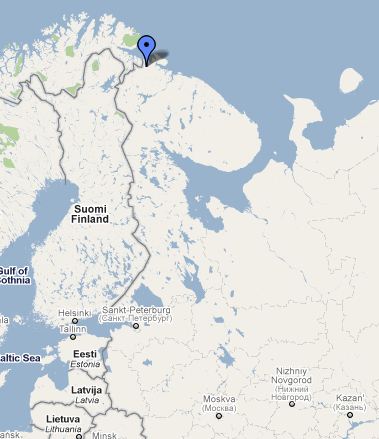
Far more interesting is the President relieving Colonel Vitaliy Leonidovich Razgonov, Commander of the 200th Independent Motorized Rifle Brigade based at god-forsaken Pechenga.  He’s only been commander there for 18 months. 

The 200th Brigade remains in its Cold War deployment along the Russian border with Norway.  It’s probably not what the Defense Ministry has in mind for its future Arctic brigade. 

This brigade has more than its share of trouble, and Colonel Razgonov’s apparent inability to control his men might — repeat might — have something to do with the change of command.  The ukaz, of course, gives no reason.

Just on Monday, Komsomolskaya pravda published on all of v / ch 08275’s problems.  The paper’s reporters say this command is unable to maintain elementary order.  The brigade’s officers complain that today’s young men are already so corrupted that the army can’t fix them, and that they don’t have any tools to deal with disorder among their men.  But KP says the soldiers don’t look disorderly during the day, but become that way at night when they’re unsupervised in the barracks.  The paper suggests the officers themselves are corrupt and disorderly at Pechenga.

Several weeks ago a conscript from Dagestan got three and a half years for killing an ethnic Russian junior sergeant in June 2010.  The command initially tried to make it look like an accident rather than murder.  Svpressa.ru suggests 4 or 5 men from Dagestan beat the victim.  The Soldiers’ Mothers Committee helped his family get the military prosecutors on the case.

Another conscript was beaten severely right on the brigade’s parade ground in early March.  According to IA Regnum, the young man — a graduate of the Murmansk School of Music — had two operations and his spleen was removed.

Last September a conscript shot and killed another conscript before shooting himself to death.  The parents of the shooter don’t believe this version of what happened, and have turned to the Soldiers’ Mothers Committee for help.

Last May, the chief of the brigade’s missile-artillery service stabbed his wife and six-year-old son to death.  He was subsequently diagnosed as a paranoid-schizophrenic.  This can happen anywhere, but it’s interesting it happened in a place already so afflicted with misfortune.  One wonders if there isn’t more to the story.

Where does this leave us?

It’s hard to say.  All the evidence of trouble is, so to say, circumstantial when it comes to Colonel Razgonov and whether he’s up to the job or has been derelict.  We don’t have enough information.  Maybe Razgonov himself asked to be relieved.  Who knows?  But it may be that someone in the chain, in the Defense Ministry or elsewhere, recognized a situation that needs to change.  The question now is will it?

Defense Ministry Reversal on Spetsnaz

The latest painful walk back started this week on the issue of returning just-moved Spetsnaz brigades from the Ground Troops to the General Staff’s Main Intelligence Directorate (GRU), at least presumably. 

This is not a done deal, and it’s certainly not entirely clear Spetsnaz will go back to the GRU.  The special operations men might go back to the General Staff in some form separate and distinct from the GRU, and answering directly to the Genshtab.

Spetsnaz weren’t gone long enough for anyone to decide that giving them to the Ground Troops and MD / OSK commanders wasn’t a good idea in a military sense.  No, this sudden shift is most likely the product of bureaucratic and political infighting.  And it seems like a blow to those close to the Defense Minister, and, to some extent, to Anatoliy Serdyukov himself.

In all this, one recalls past rumors about carving up the GRU.  The FSB and SVR wanted its agent operations.  And the FSB and Ground Troops wanted its Spetsnaz as part of a large, unified special operations force.  Kvachkov and Popovskikh called for Spetsnaz to be its own separate service branch.

At any rate, the story’s details . . .

On Tuesday, Moskovskiy komsomolets reported that the Defense Ministry intends to return Spetsnaz brigades to Main Intelligence Directorate (GRU) control just several months after giving them to the Ground Troops.  The idea of giving them to the army was recognized as a failure, according to the paper.

Spetsnaz officers at the time said it was a crazy idea that wouldn’t bring any positive results.  Just exactly whose concept it was is unknown to the public, but, according to MK, former Ground Troops Glavkom Army General Vladimir Boldyrev lobbied for the change to shore up his position after the five-day war with Georgia, and then-GRU Chief Valentin Korabelnikov wasn’t able to defend his Spetsnaz, and had to give them up.

MK implies the GRU focused on preserving its strategic intelligence operations [i.e. agent networks], and even leaders of its Spetsnaz directorate changed over to agent operations.  The “Senezh” Spetsnaz training center was taken from the GRU and subordinated to the General Staff.  According to MK, the Genshtab appointed former FSB Group A General Medoyev to head “Senezh.”  He was replaced within weeks by General Aleksandr Miroshnichenko, also a Group A or “Alpha” veteran. 

Your present author notes Medoyev’s replacement by Miroshnichenko was published in the presidential decree on military personnel from 26 October.  Medoyev was relieved and dismissed from the service by a decree from 1 October.  Both men were listed only as “assistant to the Defense Minister.”

A Genshtab source tells MK:

“The plan to transfer army Spetsnaz to the ground pounders was recognized as a failure.  For a year, no one managed them [the Spetsnaz], they left everything hanging.  Now on General Staff Chief Makarov’s desk there’s a document on their resubordination [to whom?].  It’s true it still isn’t signed.”

The same GRU Spetsnaz leaders who gave their brigades to the ground pounders are seeking a place in the new Spetsnaz leadership.  One can only imagine what the structure will become with these men participating in it.  A GRU source tells MK:

“Take, for example, General Russkov, whose service term expired long ago, he’s 57, but still in the ranks.  And, probably, not because he’s an outstanding military man.  How many promising young guys did they dismiss, but such “dinosaurs” are still serving.  And he’s the very one who provided the rationale for the intelligence directorate not needing Spetsnaz.  After all our brigades were resubordinated, he became an agent operator.  And his deputies and assistants, Colonels Mertvishchev, Shpilchin, and Sobol, who didn’t do anything to keep Spetsnaz in the GRU structure, are actively vying for the leadership of the new Genshtab structure which is being established.”

Argumenty nedeli’s less-nuanced version of the story followed MK’sArgumenty claims sending Spetsnaz back to the GRU will correct one of the biggest mistakes made by the Defense Ministry’s team of “effective managers.”  Its Genshtab source says the GRU might form a Special Operations Directorate [of course, the Genshtab might form its own instead].  The decision on moving Spetsnaz was made “at the very top,” and it weakens the position of Ground Troops Glavkom General-Colonel Aleksandr Postnikov.  Argumenty finishes its somewhat rambling version of the story by saying ex-FSB men – specifically “Senezh” Chief Miroshnichenko – will control the army Spetsnaz.

Postnikov on the Army and OPK (Part II)

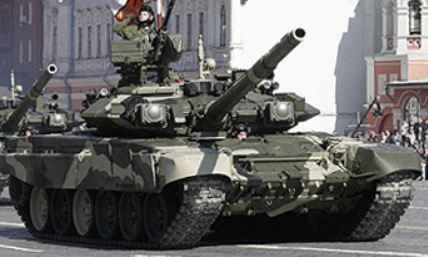
T-90 on Red Square

Continuing with reaction to Ground Troops CINC, General-Colonel Postnikov last week . . .

Speaking to a RIA Novosti press conference, Director of the Ministry of Industry and Trade’s (Minpromtorg) Defense-Industrial Complex Development Department, Igor Karavayev answered Postnikov this way:

“Unfortunately, we are encountering unwarranted criticism of the tactical-technical characteristics of Russian military equipment lately.  Allegedly, it doesn’t match its international counterparts.  An objective evaluation of the characteristics and tests conducted, but also the pace at which our exports are growing, attest to the contrary.”  

He said more than a few countries buy Russian tanks, and the T-90A got a positive evaluation from testing in difficult climatic conditions, including in Saudi Arabia, India, and Malaysia.  In Saudi Arabia, according to Karavayev, the T-90A was the only tank to destroy more than 60 percent of its targets after a road march.  Karavayev continues:

“The tests conducted in Saudi Arabia as part of an open tender fully and completely contradict the Glavkom’s [Postnikov’s] assertions.”

This T-90 modification supposedly has a new turret, a 1,000-hp engine, an improved thermal sight, new active defense measures, and a number of other improvements.  Karavayev flatly said neither the German Leopard, French LeClerc, nor American Abrams is equal to the T-90: 

“So to talk about how our tanks are worse than Western equivalents is not completely reliable information.”

“The price Postnikov quoted exceeds by approximately one and a half times the price at which the producer is ready to supply the vehicle [tank] to the troops.  This situation requires additional professional discussion.”

So that’s about 78 million vice 118 million rubles per T-90.

Izvestiya talked to Uralvagonzavod’s chief armor designer, Vladimir Nevolin, who said:

“The main complaints against the T-90 today are connected with its insufficient survivability.  Its deficiency is the placement of people, weapons, and fuel in one compartment.  In any case of armor penetration, the igniting of fuel is unavoidable.  Even with a fire suppression system, such a possibility isn’t excluded.  Therefore, the development of modern armored equipment is going the way of separating people from the fuel and munitions.  Moreover, the employment of remotely-controlled armaments is essential.  These principles were implemented in our future product – “item 195.”  For example, on it, the tank turret no longer had the crew.  But it turns out no one needed such a project.”

Vesti FM asked Igor Korotchenko whether Postnikov’s claim that Russian arms aren’t up to snuff is true.  He said there are objective problems with Russian-designed weapons, and some planned for introduction are really obsolete.  But, according to Korotchenko, the Defense Ministry’s main criticism is that Russian combat vehicles don’t meet survivability requirements.

At the same time, Korotchenko says Russia can’t fall into dependence on the West.  New armor has to be financed and put into serial production.  Limited purchases of Western military technology and licenses for the newest thermal sights and munitions are acceptable in his view, he says Russia’s national technological base for producing major weapons needs to be protected.

Finally, it was Viktor Baranets’ turn in Komsomolskaya pravda.

Baranets noted Postnikov complained quite openly about Russia’s weapons for a military leader of his rank.  And he opined that Moscow is not only competitive, but superior in some military systems.  But Baranets claims the T-90 cost has doubled from 60 million rubles two years ago due to higher electricity and metal prices as well as adding expensive French or Israeli thermal sights.  Nevertheless, says Baranets, Postnikov exaggerated about buying Leopards for the price of a T-90.

Baranets also interviewed Mikhail Barabanov.

Barabanov says the T-90 really is the 17th modification of the T-72, initially called the T-72BU, but T-90 sounded more modern, at least in 1992.  The T-90A has grown old, but could still be updated with a new turret, gun, and weapons control system.  The 118-million-ruble pricetag comes from a small production run, and it’s steep for a tank that’s not the most modern.

Barabanov says for 118 million you could only buy 3 1980s-vintage Leopard-2A4 from the Bundswehr reserve.  And such tanks don’t have any particular advantage over T-90.  A new Leopard-2A6 is more than $4 million, but with service, training, spares and munitions, it can’t be obtained for less than $10 million.

Baranets asks Barabanov if the share of modern ground armaments really be brought up to 70 percent by 2020.  The latter says:

“It’s realistic given fulfillment of the State Program of Armaments.  But its [the GPV’s] fulfillment depends first and foremost on the country’s capacity for high economic growth rates.”