Category Archives: Law, Order, and Discipline

Serdyukov’s Post-Collegium TV Interview

After last Friday’s Defense Ministry collegium, Serdyukov was interviewed on Rossiya 24.

He probably fielded more pointed questions than normal, but he easily navigated them.  At times, he answered partially and the interviewer didn’t follow up with the next logical question.

Asked about officers dismissed in 2009, he said the armed forces shed 65,000 of them, who retired on age or health grounds, requested dismissal, or violated their contracts.  There was no mention of those put in limbo outside the TO&E, without duty posts and only their rank pay to live on.  These are the officers who can’t formally be dismissed because they don’t have housing, and are living at their ‘commander’s disposal.’  There was also no mention of how many warrant officers were put out in 2009.

Serdyukov said some officers accepted civilianized posts, and 4,000 received job retraining–a pretty small number against the large need for it.

The Defense Minister said dedovshchina was officially down 15 percent, and he doesn’t want only platoon and company commanders punished when it happens in their units.  He wants to see all levels of command take more responsibility for the problem.  Not sure what he’s insinuating, but it could be a warning to higher ups that they could suffer too when big time violence cases hit the news and make the Arbat military district look bad.

Serdyukov talked about higher officer training and appraisals, mentioning the assembly for 550 officers from the military districts and army commands.  He said we tried to make them understand what it is we’re trying to do.  But many lacked the knowledge and necessary skills–presumably to continue in the service.  See today’s Nezavisimaya gazeta.  Viktor Litovkin writes about generals and senior officers dismissed under Serdyukov.  Military district and fleet staffs which used to number 500-700 officers have been cut to 300.  Trimming the ‘bloated egg’ is generally a good idea, but as Litovkin says, it really depends on the quality of those left behind.

Back to Serdyukov’s interview . . . in cutting the military educational establishment from 65 to 10 mega-institutions, he said fewer officers will be needed but the quality of their training must be improved.  The 10 left standing have or will have their faculty members assessed for fitness to serve and they’ll get facility improvements.

On contract service which General Staff Chief Makarov has pronounced dead, Serdyukov said:

“The results of the program were not satisfactory.  In reality, we underestimated the situation somewhat, as regards who should switch to contract service and on what terms, or with what pay.”

“. . . the next program should be revised in an attempt after all to think it out regarding what specific positions should be filled by contract service personnel.  Of course, this applies to complex skills, where expensive equipment is operated.”

Nevertheless, he noted that he expects the contract sergeant program [albeit small-scale and apparently no longer funded] to succeed.

He said the army borrowed from foreign military experience in deciding on the shift from divisions to brigades.  He said the latter’s potential is virtually the same or even greater in some cases than that of the former.

Serdyukov said the Defense Ministry has reported to the Supreme CINC on its view of how it would like to reequip over the next 5-10 years.  He repeated that cuts to R&D and maintenance had allowed for bigger buys of new arms in 2008 and 2009.

He admitted Bulava hasn’t been successful, but he expects this system to be put right and completed.

He addressed possible foreign arms purchases:

“. . . in some areas we are lagging behind quite badly.  This relates not just to the Navy but also other services.  We are buying things in single numbers right now.  They are things like UAVs, all kinds of sights, night vision equipment–it is a very broad spectrum where we are specifically lagging.”

Despite reports that Moscow would be negotiating only with Paris on Mistral, Serdyukov claimed Russia is talking to the Netherlands and Spain.  He denied it was no more than a glorified cruise ship, saying it could perform many roles and had many different capabilities.

Russians Don’t Want to Serve in the Army

Three polls are better than one.  Three different opinion polls find Russians prefer their sons and brothers not serve in the army by a margin ranging from fully one-half to nearly two-thirds of those queried.  Press reporting on these polls didn’t do them justice, so here’s another take on them.

Look first at Levada-Tsentr, the most independent and well-respected Russian polling firm.  Levada’s published numbers on yes-or-no to army service date back to 1998, when 84 percent said they’d prefer their relatives not serve in the armed forces.  This no-to-service number declined to 77 percent in 2004, and to 53 percent in 2008, before increasing again to 57 percent of respondents indicating a preference against service this year.  The corresponding yes-to-service numbers start from a low of 13 percent in 1998, rising to 35 in 2007, 36 in 2008, and 34 percent this year.

So, in late January-early February 2010, 57 percent said don’t serve, 34 percent said serve.  Presumably, 9 percent just didn’t answer either way even though that wasn’t a choice in Levada’s survey.

Levada also asked, ‘if not, why not?’  Respondents could choose from multiple ‘why not’ reasons.  ‘Dedovshchina, nonregulation relations, violence in the army’ was the top ‘why not’ answer with 40 percent in 1998 and still 37 percent in 2010.  It’s interesting that the 2006 number spiked to 49 percent, probably because the poll came right after the notorious Sychev abuse case broke.

Levada’s next top 5 ‘why not’ answers:

  • ‘Death/injury in Chechen type conflicts’
  • ‘Denial of rights and humiliation of servicemen by officers, commanders’
  • ‘Difficult living conditions, poor food, health dangers’
  • ‘Moral decay, drunkenness, drug abuse’
  • ‘Collapse of the army, irresponsible policy of the authorities in relation to the army’

The number of those picking these declined by nearly, or more than, half over the 12-year period, 1998-2010.  But dedovshchina, hazing, abuse, violence, whatever you call it, persisted.

Since 1998, Levada has also asked whether Russians prefer conscript or contract service, and they’ve consistently answered contract, but the gap has narrowed since the mid-2000s to 54 percent for contract and 39 for conscript in 2010.

Similarly, for three years, Levada asked Russians whether a family member should serve, or seek a way to avoid serving, if drafted.  This one’s pretty much a toss-up this year, with 46 percent saying serve, and 42 percent saying find a way to avoid serving.

Levada also published two years of responses on whether Russia should preserve a million-man army or cut it and use the savings to equip the army with the newest weapons.  The gap on this question went wider this year with 36 percent favoring the million-man army and 50 percent the smaller, better equipped one.

Levada always asks about threats to Russia and the army’s ability to defend the country.

On threats to Russia from other countries, the poll tends to go up or down by 10 percent from year to year, but has still been pretty consistent over the last decade.  In 2010, 47 percent said there are definitely or likely threats to Russia (48 percent said this in 2000).  This year 42 percent said there are most likely or definitely not threats to Russia (vs. 45 percent in 2000).

On the army’s ability to defend Russia, the number also goes up or down by 10 percent from year to year.  In 2010, 63 percent said definitely or most likely yes it can defend Russia.  This figure was 60 percent in 2000, and 73 percent in 2008 and 2009 (perhaps still high from victory in the war with Georgia).  So it seems the number returned more to the norm this year.  Those who said it definitely or most likely can’t defend Russia was just 22 percent this year.  It had been 38 percent in 2005, and 31 percent in 2000.

But back to the mainline question on serving or not serving in the army . . . .

The All-Russian Center for the Study of Public Opinion (VTsIOM or ВЦИОМ) asks the same basic question as Levada—effectively, would you want your son or brother to serve in the army?  It’s the same question because Levada and his close associates went on their own when the Russian government moved to assert control over this inconvenient organization in 2003.

In VTsIOM’s mid-February poll, 50 percent said no-to-service and 36 percent yes-to-service.  Unlike the yes-no on Levada’s survey, VTsIOM allows for ‘I find it difficult to answer’ and 14 percent indicated that (but in Levada’s poll 9 percent didn’t answer, so there’s not a great difference here).  VTsIOM also breaks its responses out by sex.  Women were not surprisingly less likely to say yes-to-service than men and somewhat more likely to say no-to-service. 

VTsIOM also cross-referenced responses to its yes-or-no-to-service question by the respondent’s evaluation of the Russian Army’s condition.  So, of those who said the Russian Army’s condition is ‘very poor,’ 67 percent also said no-to-service.  But 54 percent of those who said its condition is ‘very good’ still favored no-to-service.

VTsIOM’s ‘if not, why not’ data is a little different from Levada’s.  It only gives data for 2000, 2002, and 2010.  Like Levada, in 2010, the number one reason was ‘Dedovshchina, nonregulation relations, violence in the army,’ but with 75 percent of respondents picking it in this closed, multiple choice question.  Otherwise, its list of top ‘why not’ answers tracked closely with Levada’s.

VTsIOM also collected data on responses by geographic region and educational attainment, though it didn’t fully publish it.  For instance, Russians in Siberia and the Volga basin are more likely to say yes-to-service than the average Russian, according to VTsIOM.  Poorly educated [undefined] respondents said yes-to-service slightly more than half the time.

Educated [undefined] Russians said no-to-service at a 57 percent clip.  And southerners and northwesterners said no at 56 and 55 percent respectively.

Early last October, SuperJob.ru conducted a poll on the issue of service.  But it limited its respondents to Russians with sons, and its question to whether they would want their sons to serve in the army.  SuperJob.ru also broke out respondents whose sons have already served (6 percent) and it also allowed for a ‘I find it hard to answer’ option (11 percent).  That said, this poll’s responses were 63 percent no-to-service and 20 percent yes-to-service.

SuperJob.ru also broke out its data by sex, age groups, and educational attainment.  The age group data was interesting for the 45-55 and the above 55 groups.  Respondents in those groups reported that their  sons had already served at the rates of 22 and 23 percent respectively.  This is a good indication of the general rates at which young Russian men serve (about one-fifth) or manage to avoid serving (about four-fifths) one way or the other.

Russians with higher education were more likely to say yes-to-service (25 percent) and those with only secondary or technical degrees were more likely to say no-to-service (66 percent).

Some of what SuperJob.ru’s respondents said:

‘Yes, I would’ – 20 percent.

  • ‘All men in our family served, and he is no exception.’
  • ‘I myself am an officer.’
  • ‘Why not?’
  • ‘A good school for life.’
  • ‘Let the lad grow.’
  • ‘Yes, I would.  But in my region, so there’s a chance to see him more often.  And on the condition that there’s access to the Internet and mobile phones.  Even more desirable would be if there they taught some kind of profession:  telephone operator, driver, draftsman, etc.’
  • ‘Of course, this is the obligation of every man.’
  • ‘Avoiding army service is shame for a man.’
  • ‘My first son didn’t serve, and should have.’
  • ‘Who can’t survive the army won’t survive in life.’

‘No, I wouldn’t’ – 63 percent.

  • ‘My husband and I gave 30 years to the service, and now don’t have anything.  And we raised two sons without the state’s help.  And now when they are grown, it turns out, they have a debt to the state!  When will the state pay its debts to us?  Enough, we’ve already served ten years for each child.’
  • ‘My brother served, after which he said he would never send his son to the army.’
  • ‘I’m afraid for my child.’
  • ‘I served 25 years myself.  Today year-long service in the army is wasted time for a man with higher education, even during [financial] crisis conditions.’
  • ‘I prefer to get a higher education in a VUZ with a military faculty.’
  • ‘Service needs to be on contract.’
  • ‘What we have is not an army.’
  • ‘There’s still no order in the ranks of our army even among officer personnel, so I wouldn’t want my sons to serve.’
  • ‘I’m afraid for his life and health.’
  • ‘To lose a year of your life is too expensive a present for Russia.’
  • ‘Why put a moral invalid in my family?’

‘I find it hard to answer’ – 11 percent.

  • ‘I want my son to go through training for life, but I don’t want this experience to consist only of beatings.’
  • ‘My son is still young.  And I don’t know what will be in 12 years when he will have to go into the army.  It could be they won’t be conscripting any longer and everything will be volunteer, but it could be, to the contrary, they could ‘shave’ everybody no matter what.’
  • ‘Every young man needs to go through this school to feel like a man and, if necessary, stand up for his country.  However, when kids come back from the army with ruined health, even in peacetime, you begin to think, is this necessary?’

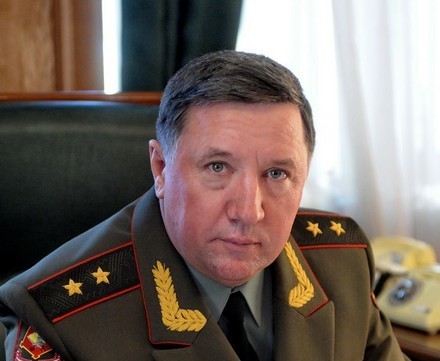
One-Year Conscription Hasn’t Stopped Dedovshchina

General-Lieutenant Chirkin (photo: IA Regnum)

On Thursday, SibVO Commander, General-Lieutenant Vladimir Chirkin told reporters:

“The military expected a dramatic decrease in this type of offenses, but, regrettably, hazing remains an acute problem. The conscripts, who now have to serve 12 months, regard themselves as ‘old timers’ after serving 6 months, and the same thing continues.  Apparently, this virus is transmissible.”

“We now know that we should search for the causes of bullying not in the duration of service but, it seems, deeper.  We now have to work harder with detachment commanders.  This year issues of discipline will be even more important for us than those of combat readiness.”

Chirkin said several high-profile abuse cases are currently under investigation in the SibVO.

Introduced in 2008, the one-year draft was intended to reduce conflict between conscripts from different draft campaigns.  The ‘dedy’ or ‘grandfathers’ about to demobilize would often abuse, haze, or otherwise mistreat brand-new inductees.  But as Veronika Marchenko from Mother’s Right says, it hasn’t been enough to stop dedovshchina:

“In the army then and now they beat people on the third day of service, in two weeks, and in the first months.”

Marchenko believes ending conscription completely is the only way to curb dedovshchina, but that’s not likely now with the virtually complete failure of professionalization through contract service.

Fridinskiy’s Latest Military Corruption Report

Sergey Fridinskiy (photo: photoxpress)

An Interfaks reporter has interviewed Main Military Prosecutor (GVP) Sergey Fridinskiy for the pages of today’s Izvestiya

Not surprisingly, Fridinskiy didn’t really bite when asked if the GVP had any hand in the recent Defense Ministry cadre ‘revolution.’  He said the GVP keeps its hands on its part [i.e. law enforcement]. 

Fridinskiy says the GVP monitored the implementation of the ‘new profile.’  In some places, it went more or less normally, but in others, it got out of hand and there were mass violations of servicemen’s rights, like putting 600 men in a barracks for 300.  So the prosecutor reacts to such a situation.  Fridinskiy said the GVP gave quarterly reports on violations to the Defense Minister. 

Asked about the military’s involvement in the tragic ‘Lame Horse’ club fire in Perm, Fridinskiy said the chief and chief engineer of the KECh which was responsible for the property were aware of what was going on there and might have been getting a cut, but the fact that they allowed gross fire safety violations resulting in a tragedy with many victims is what resulted in the investigation and criminal case against them.  He indicated the KECh chief died in the fire, and they are investigating whether the chief engineer got bribes.  Fridinskiy noted other responsible military officials in the district got disciplinary punishment. 

On the ‘Steppe’ garrison boiler house case, Fridinskiy revealed that state inspectors looked at it in May or June and declared it unfit for use, but the locals did cosmetic repairs and used it anyway.  He says other districts and garrisons, especially Kostroma, are being inspected.  He believes old equipment is largely to blame, but it’s up to the GVP to force people to do their jobs and not let the situation reach the point of an accident. 

Fridinskiy termed the general crime situation in the armed forces as stable, with some favorable points.  Registered offenses were down 16 percent in 2009 against the year before.  The numbers of grievous and especially grievous crimes were down.  These figures were for all uniformed power ministries, not just the armed forces.  Dedovshchina looked like it would continue a significant decline, but actually ended up increasing by 2 percent.

Asked to address the reported interethnic Baltic Fleet incident, involving Slavs and Caucasians, Fridinskiy said:

“As a rule, we’re talking not about interethnic fights, but interpersonal conflicts.  For us it’s just accepted:  if a Slav gives it to another Slav based on appearance, then this is simply a fight.  But if the very same thing happens with a Caucasian participating, then another hue appears here, even though the fight is based, as a rule, on a normal everyday situation.  However taking into account the mentality of southerners, who’re inclined to stick together, a fight between two guys grows into a group fight, and the appearance of an interethnic conflict comes up.  When the affair goes to criminal responsibility for nonregulation relations, an ethnic motive doesn’t figure in.  But rumors continue to pressurize the circumstances.”

Fridinskiy claims that in the group of ‘barracks hooligans’ in the Kaliningrad garrison there were both North Caucasians and Slavs [but were they part of the same group or in different groups?].  He said 8 were charged in the incident, and some have already been convicted.

Asked about crime among higher officers, Fridinskiy says malfeasance, exceeding authority, and fraud were the biggest offenses.  Eight generals [probably from all power ministries] were convicted and six got prison terms from 3 to 5 years.  He said the theft of state money was greatest in the GOZ, RDT&E, and housing programs.  He indicates he’s investigating 8 cases where apartments didn’t get built by the SU-155 construction firm, despite the fact there were state contracts in place for them.

Fridinskiy seems to indicate he registered 1,500 crimes among senior officers in 2009 [as of late October, he had this number at a little less than 900].

As for how to fix the crime situation in the military, Fridinskiy doesn’t offer much advice beyond using the law.  Of course, that gives him lots of business.

You’ll Be Missed, Mr. Kanshin

Aleksandr Kanshin

Press reports yesterday and today say that Mr. Kanshin and his commission have been dropped from the composition of Russia’s Public Chamber (OP) in 2010.

Kanshin is the ex-zampolit and board chairman of the MEGAPIR empire–the National Association of Armed Forces Reserve Officer Organizations, who for several years chaired the OP’s Commission on the Affairs of Veterans, Servicemen, and Family Members.

Kanshin and his commission served as a loyal, but objective and critical, voice when it came to the Defense Ministry and its policies.  His loss, and especially the loss of the commission altogether, is quite a blow against independent information on what’s occurring inside the armed forces.  It means one less critic the Arbat military district will have to fend off.

It will be interesting to see who and why someone got rid of them.  Also, what will come of Kanshin; he’ll probably stay engaged on military and defense issues, but probably without the same kind of access and platform for his views.

Mr. Kanshin particularly followed premilitary fitness and training, manpower, conscription, ‘social protection’ issues, the OPK, and dedovshchina and hazing problems.  He frequently visited the MDs.

Poor Return on Defense Ministry Auctions

 On 10 January, Interfaks-AVN reported that the Defense Ministry has sent the federal budget a fraction of an expected 10 billion rubles in proceeds from sales of its property in 2009, according to a Federation Council committee source.  The Audit Chamber expected 10.6 billion rubles, but only 1.5 billon has been forwarded to the budget.  The income was supposed to come from the sale of vacant land, unused property, and excess equipment.  So, either the sales did not produce the anticipated profits or corruption in the Defense Ministry drained them away.  The source said there was accurate accounting of what was to be sold, and what should be gained from the sales, and so there’s an obvious temptation to steal.

 In a November Duma roundtable, the Deputy Chairman of the Defense Committee, Mikhail Babich said:

“Corrupt practices in the army and navy increase every year, not least because of the Defense Ministry’s noncore functions.  At present the Defence Ministry itself takes stock of its noncore assets, values them itself, and sells military property, land, real estate, and entire military cantonments itself. Is this really the Defense Ministry’s function?  Why doesn’t the Defense Ministry hand its noncore assets over to the Federal Agency for the Management of State Property and the government, for a subsequent sale in accordance with the law?”

It doesn’t because pretty early on Defense Minister Serdyukov won a battle to keep this right inside his department.

Nezavisimaya gazeta’s Vladimir Mukhin picked up on this story yesterday.  He concludes right off that Serdyukov’s ambitious plans to profit from unused Defense Ministry property turned into a fiasco.  He notes the Defense Ministry hasn’t made a secret of this, saying on its auction site that more than half of planned auctions didn’t occur because of the lack of applications to participate.

Mukhin quotes Aleksandr Kanshin, chairman of the Public Chamber’s veterans, servicemen, and families committee, saying the unmet plan for selling excess military property (VVI) is more or less connected with last year’s economic crisis, but from the other side, it’s not really the Defense Ministry’s business to be salesman for state property, and military men have no experience, personnel, or resources for this.  Another interlocutor says there have been significant instances of corruption arising in the sale of VVI.

Simultaneously, the Defense Ministry’s Personnel Inspectorate and the Main Military Prosecutor (GVP) have launched a widespread anticorruption inspection under orders from Serdyukov.  The inspection covers Defense Ministry directorates, the armed services, branches, military districts, and fleets.  A law enforcement source told Interfaks the inspection aims to prevent crimes by officers and generals and will continue until 1 March.

The source said corruption and other offenses by several generals and senior officers had already been uncovered, and the central attestation commission might relieve them of their duties.  Offenses were noted in the VVS, VDV, Railroad Troops, and Ground Troops.

More than 40 percent of offenses by officers involved the theft of property or funds, and crime by senior officers is rising.  The GVP reported damages to the state from military corruption exceeded 2.5 billion rubles.

Krasnaya zvezda’s interview with the MVO military prosecutor is quite astounding.  He says he’s been implementing the national anticorruption plan since 2008, using an interdepartmental group, including “state security organ employees in the troops” [FSB officers] and command representatives.  So, in 2009, prosecutors and FSB officers investigated 190 cases.  Based on these, they gave commands 200 reports leading to disciplinary action against more than 300 “responsible parties.”  More than 130 investigations were directed to the “military-investigative organs” [the military section of the Investigative Committee or SK].  More than 100 criminal corruption cases were developed.  He credits the system of coordination among the “organs” involved.  But corruption sometimes has a very organized character.  He cites the loss of 128 million rubles to a corruption ring of officers from the Defense Ministry’s “central apparatus,” the apartment management directorate and staff of the MVO who stole and sold 140 vehicles and pieces of equipment in 2005-2008.

Mukhin gives some attention to the GVP’s figures too.  He adds that the GVP uncovered 1,500 corruption crimes in the ‘power’ ministries as a whole in 2009.  Every other case was either aggravated, or especially aggravated.  In 70 percent of cases, officers were the culprits.  In the GVP, they say that dishonest military commanders are making a fortune on auctions and contract bidding.

Mukhin then reminds everyone that it was Prime Minister Putin who, in late 2008, gave the Defense Ministry the right to handle its own VVI, rather than the Federal Agency for the Management of State Property.

Commenting for Grani.ru, Vladimir Temnyy also blames Putin for letting the Defense Ministry run these auctions.  The first thing Serdyukov intended was to inventory and get rid of noncore property and functions which lead generals to embezzle state funds, but this has apparently happened anyway since 9 billion rubles are missing.  So why wasn’t somebody like Serdyukov, as everyone expected, able to pull off a successful process of shedding VVI and benefiting the state.  Two reasons–the crisis and theft by his subordinates surpassing all conceivable limits.  Could the reformer become a victim of his own trust in his people?  The state won’t get the money back anyway because it’s already gone into fabulous suburban homes occupied by modest colonels and generals, according to Temnyy.  So the sale of VVI has raised military living standards after all, at least for some.

Recall also that Nikolay Poroskov said one source told him the recent command changes weren’t just about age and rotations, a third reason was the results of the personnel [and GVP?] inspection above.

Also, there’s the talk about devising a new “officer’s honor code.”  Certainly, it will prohibit corruption.  Can’t be a coincidence.

New Officers’ Honor Code and Ethics Needed

Over the weekend, a Defense Ministry source told Interfaks-AVN that, until 1 February, officers in units, brigades, and ships are discussing a new honor code.  Deputy Defense Minister Nikolay Pankov is leading this broad discussion on the “moral profile of the contemporary Russian officer.”

A new set of corporate ethics for officers will be adopted during the Defense Ministry’s 3rd All-Army Assembly of Officers this November in Moscow.  The Assembly will address raising the educational level and professionalism of officers, the “social-legal” defense of servicemen, and raising the status of officers in society.

Today Aleksandr Konovalov told Gzt.ru that military men need to choose their work as service to the people not just a profession, and officers need to have higher standards than average citizens.  He describes his idealized vision of an officer who has a high sense of justice and duty, values the lives of his subordinates, and won’t use the army for anyone’s private interests, including those in power.

Vitaliy Shlykov also gave Gzt.ru his view on military professionalism.  He says there are now way too few instructors who can impart the qualities officers need–competence, traditions and ethics, and corporateness.  The basic provisions of the new code need to be laid out first though, according to Shlykov.

Konovalov wants to start from scratch.  “New profile officers” have to be formed outside the existing army traditions, which have appeared spontaneously and not always honorably.

How does this square with the reality that officers commit most crimes in the Russian Armed Forces?  Not well.

In the midst of an optimistic army crime report on 26 November, Krasnaya zvezda admitted:

“One of the main problems is the growth of legal violations among officers, including stealing budget money allocated for defense needs, and other corruption crimes by military officials.  The scale of ‘officer’ crime has reached the highest level in the last decade.  Today every fourth registered crime among the troops is committed by this category of servicemen, a third of them are of the corruption type.  The losses caused to military units and organizations by these crimes have increased by one-third and exceed the half-billion level.  The structure of this type of crime has substantially transformed.  Today the theft of military property and financial means is almost half of all the legal violations of officers.  The quantity of cases of bribetaking, of forgery of duty positions, of appropriations, and expenditures has grown substantially.”

According to KZ, senior officers are more often the perpetrators.  In the last year, they committed more than half of all illegal acts.  In 2008, 20 generals and admirals were held criminally responsible, 1,611 officers, including 160 unit commanders, were found guilty.  Out of the 874 people held criminally responsible in 2009, 162 were commanders of units, 127 were colonels and captains 1st rank and 14 were general officers.  More than 270 people were convicted, including 3 generals.  In 2009, over 5,500 law violations were uncovered in this sphere over the course of prosecutor inspections.  The losses amount to 2 billion rubles.

The smaller officer corps–now 150,000 according to the Defense Ministry–and the possibility of dramatically higher pay for all officers by 2012 might reduce officer crime and make those officers who are still part of the ‘new profile’ more honorable and ethical.

Kamenka Officers Go Down for Hazing Incident

The 138th Motorized Rifle Brigade (MRB) at Kamenka (V/Ch 02511) in the LenVO has always had a pretty bad rep for hazing cases.  A Defense Ministry source told Fontanka.ru that 8 Kamenka officers have been removed from duty over the latest incident.  They include platoon, company, battalion, and brigade commanders, the battalion and brigade chiefs of staff, and deputy brigade commanders for armaments and socialization work.  They have reportedly been dismissed from the service as well, although the Defense Ministry has not confirmed this.  In early October, a conscript and contract serviceman were beaten by three drunken sergeants in the unit.  They turned to the Soldiers’ Mothers of Petersburg for assistance.  Initial press reports said 16 soldiers in all were beaten by the sergeants.  See Forum.msk for more.  This was probably just the last straw after a long line of incidents in this troubled brigade.