Category Archives: Military Leadership

“Chekist” Matovnikov

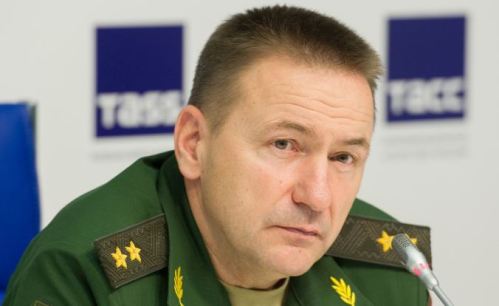
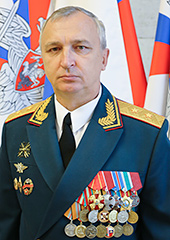
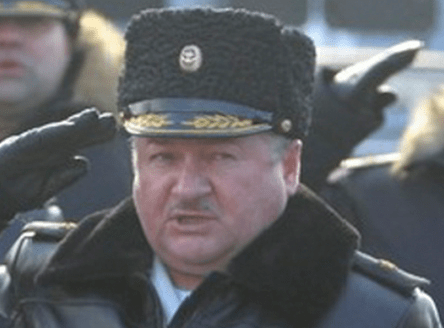
On January 22, President Putin appointed General-Lieutenant Aleksandr Matovnikov to be Deputy CINC of the Ground Troops. He had been Polpred in the North Caucasus Federal District since mid-2018 and Commander of Special Operations Forces (SSO) from 2015 to 2018. 

Matovnikov as general-major next to Putin

54-year-old Matovnikov was born in Moscow, the son of a career KGB officer from the 7th Directorate (Surveillance). His father was retired after destroying incriminating KGB documents when the ill-fated August 1991 putsch against Gorbachev collapsed.

In 1986, the younger Matovnikov graduated from the KGB Border Guards Higher Military-Political School in suburban Moscow. At his father’s request, he received a highly desirable posting to the 7th Directorate’s Alfa anti-terrorist group. He served in a motorized Alfa unit operating with Soviet Border Guards reportedly to interdict weapons and drugs smuggled from Afghanistan into Turkmenistan and Tajikistan.

Matovnikov served on Gorbachev’s security detail in Washington in 1987 and 1988. He went on to become first deputy chief of the FSB’s Directorate A (Alfa).

He fought in both Chechen wars, including involvement in hostage rescues in Budennovsk in 1995, Dubrovka in 2002, and Beslan in 2004. In Chechnya, he got the nickname “Chekist” (“state security man”).

Matovnikov was in charge of Chechen President Akhmad Kadyrov’s security. Kadyrov was assassinated in a 2004 bombing. Matovnikov reportedly got on good terms with Kadyrov’s son Ramzan, the republic’s strongman and possible hitman against those who impugn Mr. Putin.

In 2013, Matovnikov transferred from the FSB to the Ministry of Defense as Deputy Commander, SSO, then Commander in 2015.

In 2018, news outlet Rbc.ru wrote:

Like many Alfa men, Matovnikov then went into a new structure attached to the General Staff — the Special Operations Forces (SSO), which unlike conventional armed forces sub-units could act in covert military operations abroad without the approval of the Council of the Federation. At first Matovnikov became Deputy Commander of the SSO, then headed them after the departure of Aleksey Dyumin in December 2015 for the post of Deputy Defense Minister. Matovnikov built the SSO structure in the image and likeness of Alfa — the equipping and requirements on personnel were the same as for officers in the former service . . . .

Matovnikov, Dyumin, and the SSO were instrumental in Russia’s 2014 seizure of Crimea and likely also in the invasion of eastern Ukraine.

Matovnikov received his Hero of the Russian Federation from Putin in 2017 for his time in Syria. He became a two-star general on February 22, 2018.

In mid-2018, RF President Putin selected Matovnikov to be his Plenipotentiary Representative in the North Caucasus Federal District.

Rbc.ru continues:

. . . in the past he participated in specops in Syria, Africa and Ukraine, but also parallel to his service in the SSO he was attached to the president [Putin] for special assignments, noted a former colleague of Matovnikov. “In [Matovnikov’s] circle, they talk about him as one of the siloviki close to the President — he regularly met Vladimir Putin at Vnukovo Airport and enjoyed his personal trust. It’s possible they decided to try the combat officer in civilian service [as Polpred], in economic work with the aim of a federal political career as they did with Dyumin in his time,” one Alfa veteran told RBK (Aleksey Dyumin at the beginning of 2016 was appointed Governor of Tula oblast). A source close to the Polpred in the SKFO [North Caucasus Federal District] confirmed for RBK that Matovnikov was an officer attached to the president for special assignments.

Matovnikov in mufti sporting his Hero of the Russian Federation

After just 18 months as Polpred, Putin sent him back to the MOD as Deputy CINC of Ground Troops, replacing 63-year-old General-Colonel Aleksandr Lentsov, who became Adviser to the RF Defense Minister — a familiar sinecure one step closer to retirement.

Matovnikov is married with two young children as well as an adult daughter from his previous marriage.

What do we make of the Mr. Matovnikov?

He’s an older, paler reproduction of Dyumin with differences. He’s seven years older and, though cut from the same KGB cloth, he’s Alfa not FSB-FSO-SBP — or Presidential Security Service — like Dyumin, who was Putin’s personal bodyguard and assistant. Many were quick to claim Putin was grooming Dyumin as his successor.

In fact, Putin is probably having auditions for men like Matovnikov and Dyumin to see if they are fit for bigger things. They are loyal KGB types who share Putin’s mentality. This may say more about Putin.

As Brian Taylor has concluded in his insightful The Code of Putinism, since 2015-2016, Putin has been shifting away from old, long-time colleagues who supported Team Putin for many years toward younger, less independent security service veterans who answer to him only. He may be seeking men willing to protect his freedom and fortune and keep him as president-for-life effectively. They could prevent Putin from becoming a future Ceausescu or Qaddafi.

Dyumin was Deputy Minister of Defense for just weeks before moving to Tula where he’s been governor for about 3-1/2 years. Matovnikov’s stint as Polpred was brief for a region as complex as the North Caucasus. Perhaps his stay with the Ground Troops will be brief too before he moves to another fully political post.

The insertion of a former KGB man and SSO veteran into the Ground Troops makes one think Putin wants dramatic and decisive victories, not just plodding, predictable daily management of preparations for wars Russia isn’t likely to fight. As such, Matovnikov is probably pretty unwelcome where senior Russian Army officers have toiled their entire careers.
Promotion List

Can see some folks have been waiting for this. Thanks for your patience.

RF President Vladimir Putin signed out his Constitution Day promotion list on December 12.

For the MOD, it included two three-star, five two-star, and 22 one-star promotions (19 general-majors and three rear-admirals).

For Putin’s Natsgvardiya, it was skimpy. Its top ranks must be full. Only two two-stars and five one-stars.

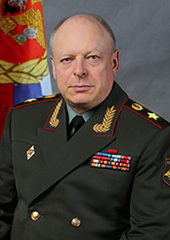
On the MOD list, GOMU Chief Burdinskiy and Eastern MD COS / FDC Kuralenko made general-colonel.

Sergey Kuralenko

Sergey Kuralenko

New general-lieutenants included:

  • Commander, 35th CAA, Eastern MD
  • Deputy Commander, Central MD
  • Deputy Commander for Material-Technical Support, Central MD
  • Director, MOD’s Transportation Support Department (a fast promote — 2 years)
  • A deputy chief of a u/i directorate, Main Operations Directorate, Genshtab

New general-majors and rear-admirals included:

  • Commander, 98th Airborne Division
  • Commanders of two RVSN missile divisions
  • Commander, 9th Missile Defense Division
  • Commander, 102nd Military Base (Armenia)
  • Chief of Staff, Submarine Forces, Northern Fleet
  • Deputy Commander, Submarine Forces, Northern Fleet
  • Chief of Air Defense Troops and Aviation, Central MD
  • Chief of Personnel, Southern MD
  • Chief of Combat Training, Airborne Troops
  • Chief of RKhBZ Troops, Eastern MD
  • Chief of Communications, Central MD
  • Chief, State Secrets Protection Service, Ground Troops
  • Chief, 333rd Combat Training Center, Western MD
  • Chief, Military Education Department, MOD
  • Chief, Chelyabinsk Branch, Air Forces Academy

Six new one-stars couldn’t be identified in a post right now.

The updated spreadsheet with more detail is available here.

Promotion List

The promotion list contains names of 552 generals and admirals against 730 the MOD says it has.

This link goes to a larger file with more data.

The newest promotees were announced on June 11, 2019.

Russia Day Promotions

RF President Vladimir Putin signed out his Russia Day promotion list on June 11. The MOD got 11 two-star and 14 one-star promotions. Putin’s alternative army — the National Guard — did almost as well receiving one three-star, five two-star, and 11 one-star promotions. Find the list here.

Newly minted Vice-Admiral Rekish

Newly minted Vice-Admiral Rekish

Putin’s list this time was interesting because four generals were picked up for two-star after waiting seven or eight years for it. They include:

  • Chief of Staff, First Deputy Commander, Aerospace Forces (VKS);
  • Commander, 33rd Missile Army, RVSN;
  • Commander, 20th CAA;
  • Commander, 36th CAA.

Putin, and Defense Minister Shoygu perhaps, really seem to like the NTsUO and the GSA’s Military Strategy Faculty at this time for some reason.

Other two-stars include the Chief of MOD’s GU MVS, a deputy chief of NTsUO (who picks up his second star in four years), the Chief of the Military Strategy Faculty at GSA, the chief of comms and deputy chief of staff for comms in the Eastern MD (strange choice for general-lieutenant), and the Chief of Staff, First Deputy Commander of the Pacific Fleet (VADM Rekish).

New one-stars commanding significant formations include:

  • 90th Tank Division, Central MD;
  • 76th Air-Assault Division, VDV;
  • Commander, 2nd MRD, Western MD;
  • Commander, 31st Submarine Division (SSBNs), Northern Fleet.

Staff officers getting their first stars include the chief of missile troops and artillery and chief of armor service (Central MD); a professor, Military Strategy Faculty (GSA); chief of personnel directorate (VKS); chief of NTsUO’s flight coordination center and chief of NTsUO’s territorial affiliate in the Black Sea Fleet.

Six promotees couldn’t be identified in a post. Two are new two-stars. We have to assume they only reach general-lieutenant without public mention if they serve in the GRU, SSO, et al.

Short and long promotion list files will be available in the next day or two.

Navy Command Swapped Out

At the outset of the May 8 MOD collegium, Defense Minister Sergey Shoygu announced a shake up in the Russian Navy’s leadership.

Admiral Vladimir Korolev — Navy CINC for just three years — was retired by a May 3 presidential ukaz. He will be 65 next February 1. Shoygu was gracious saying in 46 years of service Korolev strengthened Russian defense capabilities, returned the fleet to the world’s oceans, and rationalized fulfillment of the shipbuilding program to 2050.

Northern Fleet Commander, Admiral Nikolay Yevmenov, who recently turned 57, replaced Korolev. Yevmenov’s a submariner and Pacific Fleet sailor generally.

Admiral Nikolay Yevmenov

Born April 2, 1962, Yevmenov graduated the Higher Naval School of Submarine Navigation (Leningrad) in 1987. He was assigned to the navigation department of a Soviet Pacific Fleet submarine. He completed his senior service school, the Naval Academy named for Kuznetsov in 1999.

Yevmenov then served as an executive officer before commanding Delta III-class ballistic missile submarines K-490 and K-506 Zelenograd. Following a stint as chief of staff for the Pacific Fleet’s 25th Submarine (SSBN) Division, he graduated the General Staff Academy in 2003.

He returned to the 25th as deputy commander and then commander before becoming chief of staff and commander of the 16th Submarine Squadron (all Pacific Fleet nuclear-powered ballistic missile, cruise missile, and attack subs). In 2012, the 16th was renamed simply Pacific Fleet Submarine Forces.

In September 2012, Yevmenov switched fleets with an appointment as chief of staff, first deputy commander of the Northern Fleet. He became Northern Fleet Commander in April 2016 as a vice-admiral (two-star). He was promoted to admiral in December 2017.

After a very brief stint as Black Sea Fleet commander, Vice-Admiral Aleksandr Moiseyev replaces Yevmenov in the Northern Fleet. Moiseyev’s also an SSBN driver, and his career is very similar to Yevmenov’s but far more illustrious.

He wears two Orders of Courage and a Hero of the Russian Federation. One Order for helping to plant the Russian Federation flag in the North Pole seabed in 2007 and the second for the underice inter-fleet transfer of Delta III SSBN K-44 Ryazan to the Pacific Fleet in 2008.

Admiral Aleksandr Moiseyev

Moiseyev’s Hero came in early 2011 after he’d commanded the Northern Fleet’s 31st Submarine (SSBN) Division. He was awarded for successfully testing new weapons and conducting a series of missile launches (probably tests of R-29RMU Sineva — SS-N-23A Skiff SLBMs).

He’s just two weeks younger than Yevmenov.

It’s difficult to see how Yevmenov got ahead of Moiseyev, but he did. There must be a logic obvious to the Kremlin in the choice of Yevmenov, it’s just not apparent to outsiders right now.

Defenders’ Day Promotions

RF President Putin signed out his promotion list for Defenders’ Day on February 22. He was generous to the MOD.

Twenty-seven officers were promoted to or within the general and flag ranks: one four-star, two three-star, six two-star, and 18 one-star promotions were handed out.

Putin’s National Guard got few promotions this time.

The big news, already discussed, was Ground Troops CINC Salyukov’s new army general (O-10) rank.

Main Combat Training Directorate Chief Ivan Buvaltsev and Central MD Commander Aleksandr Lapin became general-colonels.

Four new general-lieutenants included new 8th CAA Commander Andrey Sychevoy, 11th Army Corps Commander Yuriy Yarovitskiy, 68th Army Corps Commander Dmitriy Glushenkov, and 45th Air and Air Defense Army Commander Aleksandr Otroshchenko.

Just shy of 50, Sychevoy seems to be a mover. But he also appears to be camera shy, so no photo.

Yarovitskiy in the Baltic Fleet’s 11th Army Corps served in the First Chechen War and was chief of staff, first deputy commander of the 1st Tank Army, according to one bio.

Yuriy Yarovitskiy as a one-star

Yuriy Yarovitskiy as a one-star

New vice-admirals are Deputy Commander of the Black Sea Fleet Sergey Lipilin and a deputy chief of the NTsUO.

Lipilin wearing rear-admiral

Lipilin wearing rear-admiral

New one-stars included the:

  • Chief of Staff, First Deputy Commander, 5th CAA;
  • Commander, 4th Air Defense Division;
  • Commander, 18th Machine Gun-Artillery Division;
  • Commander, 57th Motorized Rifle Brigade;
  • Chief, Recce Directorate, Central MD;
  • Chief; Organization-Mobilization Directorate (OMU), Eastern MD;
  • Chief, Combat Training Directorate, Southern MD;
  • Chief, EW Service, Eastern MD;
  • Chief, OMU, Northern Fleet;
  • Chief, 9th Directorate, MOD;
  • Deputy Chief, Military Academy of Radiological, Chemical, and Biological Defense (RKhBZ) Troops.

Headed by newly minted General-Major Sergey Parshin, the MOD’s 9th Directorate is one of the Russian military’s more secretive elements. It designs and builds silos, launch positions, command, control, and communications networks, and underground command posts and bunkers for the RVSN and Russia’s missile defense system.

Parshin as a colonel

Parshin as a colonel

There were seven promotees for which a position couldn’t be identified at this time.

Big Star for Salyukov

Russian Federation President Vladimir Putin signed out his Defenders’ Day promotion list yesterday with something unexpected.

Putin handed out the four-star rank of army general for the first time in a while. To Ground Troops CINC Oleg Salyukov.

Salyukov wearing general-colonel

Salyukov wearing general-colonel

Russian media outlets say Putin gave army general to Rosgvardiya chief Viktor Zolotov and Deputy Defense Minister Pavel Popov in 2015. But we’re not talking about cronies and creatures of Putin or Defense Minister Shoygu.

We’re not talking about Shoygu himself, who got his four-star rank as a politician and bureaucrat.

And we’re not talking about Deputy Defense Minister Nikolay Pankov, FSB man and associate of former defense minister Sergey Ivanov. (Pankov’s a fascinating and separate story. He’s the longtime éminence grise of the MOD. One might bet he’s always been Putin’s reliable spy in the high command. He’s also been officially retired from military service for some time.)

So here’s the short list of current Russian Armed Forces four-stars:

  • Army General Valeriy Gerasimov obviously. He became Chief of the General Staff when Shoygu became Minister of Defense. Gerasimov got his fourth star less than four months later — February 20, 2013.
  • Deputy Defense Minister and Chief of Material-Technical Support Dmitriy Bulgakov has been at his post since 2008. He became army general on February 23, 2011.

It’s safe to conclude then that Putin’s been quite parsimonious with the “big star.”

Recall Russia’s gone back and forth on four stars. For some time, army generals actually wore four stars. Now they wear a single “big star” like marshals, but on different epaulets.

The Russian army general rank, however, is equivalent to a full U.S. General (O-10) wearing four stars.

The last Ground Troops, Air Forces, and Navy CINCs to wear four stars were Vladimir Boldyrev in 2010, Vladimir Mikhaylov in 2007, and Vladimir Masorin in 2007.

So why promote Salyukov to four-star? It doesn’t buy him more service time; by law, he still has to retire in 2020. He’ll be 65 on May 21, 2020.

We should note also that Gerasimov will be 65 on September 8, 2020 and old man Bulgakov on October 20, 2019.

But like all Russian laws, the law on military service tenure can be ignored or changed easily if Putin wants.

A little more about Salyukov. He’s a tanker. He served in the old Kiev MD as a junior officer, and then the Moscow MD. He was deputy commander of the 4th Kantemir Tank Division. After the General Staff Academy, he went to the old Far East MD in 1996, serving from division commander to commander of the district in 2010.

When the MD system was reduced to just four MDs, Salyukov returned to Moscow for a four-year stint as deputy chief of the General Staff. In May 2014, he became Ground Troops CINC. His official bio says he’s a combat veteran, but it’s unclear where he was actually under fire.

P.S. Here’s the latest official photo of Salyukov.

Salyukov sporting big star

Salyukov sporting “big star”

Army Commanders

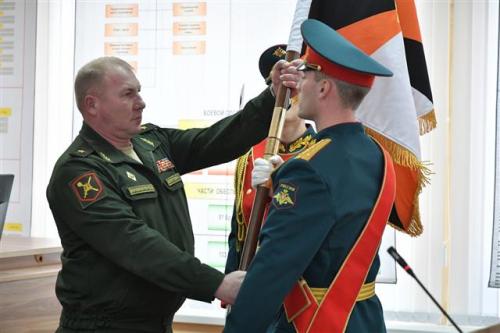
general-major andrey kolotovkin receives the 2nd caa standard

General-Major Andrey Kolotovkin receives the 2nd CAA standard

Seven new Russian combined arms (or tank) army commanders have been appointed since early 2017. Five old ones remain in place.

Eighteen months ago, only three were at post they held 18 months prior to that (i.e. in early 2016).

But two — General-Lieutenants Kuzmenko and Sevryukov — have now served in the same spot for three years or more.

The current rundown of armies, headquarters, MD/OSK, and commanders looks like this:

1st TA…Bakovka…Western…General-Major Sergey Kisel.

6th CAA…Agalatovo…Western…General-Lieutenant Andrey Kuzmenko.

20th CAA…Voronezh…Western…General-Major Andrey Ivanayev.

8th CAA…Novocherkassk…Southern…General-Lieutenant Sergey Kuzovlev.

49th CAA…Stavropol…Southern…General-Lieutenant Sergey Sevryukov.

58th CAA…Vladikavkaz…Southern…General-Lieutenant Yevgeniy Nikiforov.

2nd CAA…Samara…Central…General-Major Andrey Kolotovkin.

41st CAA…Novosibirsk…Central…General-Major Yakov Rezantsev.

36th CAA…Ulan Ude…Eastern…General-Major Mikhail Nosulev.

29th CAA…Chita…Eastern…General-Major Roman Berdnikov.

35th CAA…Belogorsk…Eastern…General-Major Sergey Chebotarev.

5th CAA…Ussuriysk…Eastern…General-Major Oleg Tsekov.

Kisel replaced General-Lieutenant Avdeyev who went to head the Combined Arms Academy. Ivanayev took the place of General-Major Peryazev who moved to the MOD’s Main Combat Training Directorate. 

There’s been considerable churn in the 2nd CAA. In early 2017, General-Major Zhidko was its commander. In less than two years, he served as chief of staff, first deputy commander for the Russian group of forces in Syria, deputy chief of the General Staff, and Commander of the Eastern MD.

General-Major Rustam Muradov replaced the meteoric Zhidko before being replaced himself by General-Major Kolotovkin. Muradov is now a deputy commander of the Southern MD.

General-Lieutenant Zavizon was relieved by Rezantsev. Zavizon is probably in Syria, or, less likely but possibly, even eastern Ukraine.

Followed by Nosulev, General-Major Kovalenko went to the unusual post of deputy commander of the Pacific Fleet for ground and coastal troops.

General-Major Poplavskiy became a deputy commander of the Central MD when Berdnikov replaced him.

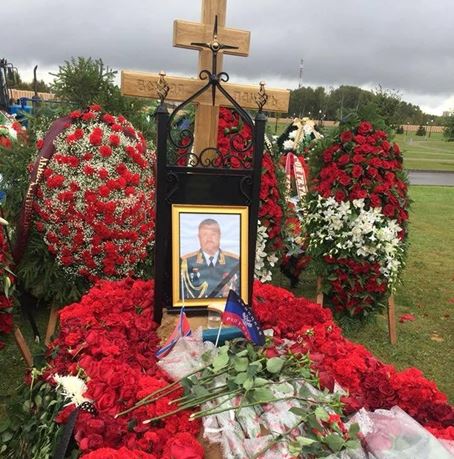
Tsekov took over the 5th CAA after General-Lieutenant Asapov died in a mortar attack in Syria in 2017.

general-lieutenant asapov's grave

General-Lieutenant Asapov’s grave

An observer has noted a flag from the so-called Donetsk People’s Republic on Asapov’s grave. According to some, he commanded the DNR’s “1st Army Corps” at one point. He reportedly also saw combat in Chechnya and Abkhazia as well.

Combat Experience

When Russian President Vladimir Putin got serious about modernizing his military in 2013, he lacked something: somewhere to flex those new muscles.

It’s a “chicken or the egg” paradox. Does a country really have military power if it doesn’t use it? Or does the process of employing the country’s military create that power?

The leaders of the world’s most bellicose nations don’t feel secure until they’ve seen their troops in combat, no matter how well manned, equipped, and trained they are. Supreme CINCs like to see the effect using their military power has on others.

The Kremlin watched while U.S. and NATO forces were used in many places around the globe in the 1990s and 2000s. There were some senior Russian officers who’d done a tour in Afghanistan during the 1980s. But Moscow’s soldiers — and precious few at that — had only Chechnya and Georgia, and the results weren’t encouraging.

So Putin’s modernized forces got their first real practice annexing Crimea and invading eastern Ukraine in 2014. And though Moscow can’t advertise, its generals and units have been fighting alongside the Russian militias in Donetsk and Lugansk ever since.

Syria served as a bigger firing range.

Russia’s intervention in the Syrian civil war in 2015 provided not just a live proving ground for the new weapons and equipment Moscow procured. It created another opportunity for Russian officers and soldiers to acquire combat experience.

There have been various Russian media summaries capturing this, but Interfaks-AVN published one recently that seems pretty comprehensive.

According to Interfaks-AVN, the Russian MOD announced that 68,000 troops, including 460 generals, have received combat experience in Syria.

It indicated that the commanders of all four Russian military districts, all combined arms army and air and air defense army commanders, all division commanders, and also 96 percent of combined arms brigade and regiment commanders have served in Syria.

The MOD said 87 percent of frontal aviation crews, 91 percent of army aviation crews, 97 percent of transport aviation crews, and 60 percent of strategic Long-Range Aviation crews have gotten combat experience over Syria.

The Russian Defense Ministry added that it’s reducing its contingent in Syria now.

These are, of course, pretty remarkable claims, but one wonders: does Russia have 460 general officers in combat command positions from which they could be sent for a tour in a war zone?

Latest Promotions

RF President Vladimir Putin signed out his latest promotion list on December 12, 2018. For the MOD, it included two new three-stars, 10 two-stars, and 11 one-stars.

Against 23 MOD promotees, the National Guard had 13 (1 three-star, 3 two-stars, and 9 one-stars).

Chief of Staff and First Deputy Commander of the Central MD Yevgeniy Ustinov became a general-colonel.

yevgeniy ustinov wearing two stars

Ustinov served as a conscript in 1979-1980 before becoming a career Airborne Troops officer. He earned combat experience in his two years in Afghanistan serving as a deputy battalion commander.

After mid-career assignments and graduating MAGS, he served briefly as commander of the 106th Airborne Division in 2007. In 2009, he became deputy commander of the former Leningrad MD, and then commanded its 6th CAA.

He became deputy commander of the Central MD in 2013. He was TDY in Syria during 2016-2017 when he participated in the second operation to reclaim Palmyra. He was one of the leading contenders to replace Vladimir Shamanov as VDV commander in 2016.

He was passed over when younger General-Lieutenant Aleksandr Lapin was brought in from the Eastern MD to command the Central MD in 2017.

Ustinov has been acting MD commander since October so Lapin is likely commanding Russian forces in Syria now. But what about when Lapin returns? A two-star with a three-star first deputy? Lapin is likely to get his third star in February before he returns to the Central MD.

VDV generals who’ve traded blue for green uniforms may experience jealousy and resentment from career Ground Troops colleagues. Ustinov could be the victim of some of this.

Also getting his third star is Baltic Fleet Commander Admiral Aleksandr Nosatov who got his current post when his predecessor was dismissed for deficiencies in combat training and for distorted reports about the state of his command.

The two-star promotions include:

  • Chief of the command center of the Main Command of Ground Troops;
  • Commander of the RVSN’s 27th Missile Army;
  • Chief of Radiological, Chemical, and Biological Defense (RKhBZ) Troops;
  • Commander of the 58th CAA;
  • Chief of staff, first deputy commander of the Northern Fleet;
  • Chief of staff, first deputy commander of the Black Sea Fleet;
  • A senior air forces officer serving as a deputy chief of the General Staff’s Main Operations Directorate;
  • A duty general from the National Defense Command and Control Center;
  • Deputy commander for material-technical support, Northern Fleet;
  • Deputy chief of the material-technical support directorate, Aerospace Forces.

The one-stars include:

  • Chief of staff, first deputy commander of the Pacific Fleet’s Primorsk Flotilla;
  • Commander of the RVSN’s 7th Missile Division;
  • Commander of the 32nd Air Defense Division;
  • Commander of the 76th Air Defense Division;
  • Commander of the 8th Special Designation Aviation Division;
  • Deputy chief of the Military-Academy of Communications;
  • Chief of the Military-Orchestra Service.

Four new general-majors could not be identified in a post at present.