Category Archives: Military Leadership

Can He Possibly Avoid Prosecution?

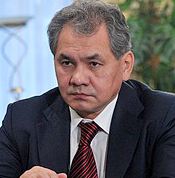
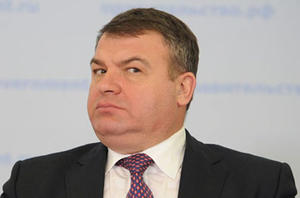
Anatoliy Serdyukov (photo: ITAR-TASS / Aleksandr Mudrats)

Probably not.

It seems likely President Vladimir Putin, at some point, will turn Anatoliy Serdyukov over to the law, such as it is in Russia.  Despite assertions to the contrary, Putin will bow to evidence his former defense minister knew about,  condoned, or even participated in corruption schemes.

What’s Putin’s calculus?

Putin stands to look like a corruption fighter, perhaps for the first time.  Most of that corruption occurred on his protege-predecessor’s watch.  Serdyukov’s lost his tie to Putin’s closest associates through his estranged father-in-law Viktor Zubkov, so it’s free fire.  Putin can even save money by not pouring all 19 trillion rubles into new arms procurement by 2020 while investigators and prosecutors take at least 2-3 years unraveling the mess.

Few will recall Putin appointed Serdyukov to straighten out the Defense Ministry’s financial flows.  That didn’t work out too well.  Not many will remember Serdyukov was brought in because of the meager results of Putin’s stewardship of defense between 2000 and 2007.  Essentially, 12 years of Putin’s control and direction of the armed forces (de jure, de facto, or both) have come to little.  None of this will loom large politically for Putin.

On balance, it’s an easy decision to turn Anatoliy Eduardovich over to his fate.

Compared with nine months ago, clouds completely surround Serdyukov now.

Izvestiya wrote about his sister’s wealth right after the scandal broke.  A FGUP her husband ran won a lucrative one-bidder Defense Ministry vehicle leasing contract in 2010.  It’s not clear he was in charge of the firm when it got the deal.  But there can’t be any doubt the family connection was the reason for getting it.  The story appeared here, but the role of Serdyukov’s brother-in-law was unknown at the time.

This week the media reported Oboronservis affiliates responsible for paying energy suppliers for heating military installations are suddenly 4 billion rubles in the red.

The Investigative Committee (SK) searched Serdyukov’s cottage, along with those of other defense officials.

One-time Serdyukov deputy, apparent girlfriend, and central scandal figure, Yevgeniya Vasilyeva was denied bail and is under home detention.

Law enforcement sources are talking anonymously about much higher-profile and wider investigations.  There’s nibbling at other edges.  The SK is looking into alleged GOZ misappropriations.  The Main Military Prosecutor is reviewing old accusations about the poor design and quality of the army’s new uniforms.

Can Serdyukov avoid prosecutorial sharks with this much blood in the water?  Probably not.  Is he responsible for all Defense Ministry corruption?  Yes, by virtue of his former position. 

Could he become a sympathetic figure if he goes to prison?  Maybe.  Serdyukov might be seen as someone unwilling or unable to fix a broken system.  Perhaps guilty, but no more than Putin . . . a scapegoat or symbol of Russian problems larger than one man or one department of government.
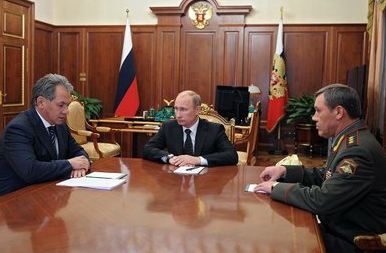
Gerasimov New NGSh

Putin with Shoygu and Gerasimov

Today President Putin retired Chief of the General Staff Nikolay Makarov.  An old hand, currently Commander of the Central MD, General-Colonel Valeriy Gerasimov replaces him.  Putin also dropped First Deputy Defense Minister Aleksandr Sukhorukov (who’d had responsibility for armaments).  Western MD Commander Arkadiy Bakhin replaces Sukhorukov.  Aerospace Defense Troops Commander, General-Colonel Oleg Ostapenko also becomes a deputy defense minister.  Here’s the ukaz on the appointments, and on the dismissals.

Meeting with Gerasimov and Shoygu, Putin told the new NGSh he’s concerned by constantly changing Defense Ministry requirements on industry, and looks to him, and to the new defense minister, to “build a good, stable working partnership with our leading defense industrial enterprises.”

Serdyukov didn’t have one.  Perhaps all is not sweetness and light with the defense order in 2012.

The New Face of Russian Defense Policy

Sergey Kuzhugetovich Shoygu

Quite a surprise, a shock.  An interesting choice.  An ethnic Tuvan, an engineer who spent his post-Soviet life heading MChS — the Ministry of Emergency Situations, who was Governor of Moscow Oblast for just six months.

It’s a hard to imagine Shoygu advancing change and reform in the military to the degree Serdyukov did.

Despite his successes, Anatoliy Eduardovich was done in by offending his estranged mentor, father-in-law, and close Putin confidant, Viktor Zubkov.  The straw that broke the camel’s back was when police found the Defense Minister at Vasilyeva’s apartment, just below his own (how convenient), at 0600.

Ironically, Serdyukov wasn’t done in by the corruption of his young, largely female team of civilian administrators and former tax service officials.  And perhaps he wasn’t done in by his own corruption.  We’ll have to see what fate awaits him.

Serdyukov came close but didn’t match Sergey Ivanov.  Serdyukov spent 2,091 days as defense minister to the latter’s 2,150.

Can’t help but feel Shoygu won’t come close to either number.

Sidorov, Surovikin, Etc.

Krasnaya zvezda covers a couple cadre changes . . . Admiral Maksimov retires out of the Chief of Staff, First Deputy Commander spot in the Western MD.  General-Lieutenant Anatoliy Sidorov from the analogous Eastern MD post assumes Maksimov’s position.  Notorious General-Lieutenant Sergey Surovikin, once reported to be chief of Russia’s military police, takes over for Sidorov in the Eastern MD.

Defense Ministry Collegium

Wednesday Defense Minister Serdyukov presided over a collegium dedicated primarily to military bases, housing issues, and flight security, according to available accounts.

Mil.ru reported Serdyukov and his subordinates discussed the deployment of troops in military towns, the outfitting of garrisons, and preparations for the coming heating season.

Rossiyskaya gazeta was more forthcoming stating that the Defense Ministry owes fuel suppliers the not-small amount of 4.5 billion rubles for earlier deliveries.

According to the paper, the Defense Minister repeated past declarations that the military plans to consolidate its current inventory of 7,500 facilities into 300 by concentrating personnel and units in larger bases and garrisons.

Serdyukov, in Kursk, said five units numbering 5,000 men will move to a military town near that city.  But he also indicated new infrastructure (barracks, housing, medical, recreation, and parking facilities) has to be built to accommodate them.

So it’s not just as easy as ordering them to go there.

Mil.ru wrote that the Defense Minister called provision of permanent housing to former servicemen in accordance with the president’s and prime minister’s instructions a “priority mission.”  He provided more details:

“Since the beginning of the year, 34 thousand servicemen have received apartments.  The number of territorial housing support organs has increased, the normative-legal base is being completed, and the simultaneous transmission of essential information to all levels of housing presentation has also been organized in the interest of fundamentally improving resolution of housing issues.”

Serdyukov also demanded that military leaders eliminate “violations of time periods for making decisions on the receipt of distributed housing by servicemen.”

Serdyukov met with President Putin a week ago to discuss military apartments.

According to Kremlin.ru, Serdyukov told the Supreme Glavk some 54,000 servicemen were owed apartments at the start of this year, and 33,000 have gotten them.  He said the handover of 1,500 to 1,650 apartments is completed every week, and, at that rate, he believes the housing line will disappear by early next year, at the latest.

Then Putin asked his Defense Minister if he dealt with excess bureaucracy in the process of giving out apartments.  Serdyukov replied that 37 additional offices are open for this purpose, and paperwork requirements have been cut.

Putin and Serdyukov seem focused only on procedure and process problems in handing over housing.  But military men have refused large numbers of  proffered apartments because they aren’t ready to inhabit, lack essential infrastructure, or are simply in places they have no desire to live.  It is more likely than not housing will still be an issue well into 2013 and beyond.  For background on substantially larger amounts of money required and 167,000 men awaiting housing, see Kommersant.ru here and here.

But back to the collegium . . .

RG noted the talk about flight safety came against a backdrop of more new airplanes and helicopters arriving — reportedly 150 in 2010 and 2011, 190 thus far in 2012, and perhaps 1,200 over the next seven years.  RIA Novosti hinted the fatal crash of a new Mi-35 helo, blamed on weather and human error, might have prompted discussion of aircraft accidents.

Star Shower

Russian has an untranslatable word, звездопад, invariably used in announcing high-level military promotions.  It might be best translated as meteor shower.  But when it comes to generals, admirals, and O-6s adding metal to their shoulderboards, star shower sounds better.

Late Thursday, President Putin provided a star shower via ukaz, and here are the results:

  • RVSN Commander Sergey Viktorovich Karakayev and VVKO Commander Oleg Nikolayevich Ostapenko become General-Colonel (three stars).
  • New Navy CINC Viktor Viktorovich Chirkov becomes Admiral (three stars).
  • New Air Forces CINC Viktor Nikolayevich Bondarev becomes General-Lieutenant (two stars).

Looks like maybe the new high command team is locked into place for some time to come.

The other promotions:

  • Commander of the 9th VKO Brigade Vladimir Aleksandrovich Korytkov and Chief of PVO Troops and Aviation for the Central MD Yevgeniy Nikolayevich Tuchkov become General-Major (one star).
  • A Northern Fleet division commander Vladimir Mikhaylovich Vorobyev, Chief of Staff of the Northern Fleet’s Kola Mixed Forces Flotilla Vadim Franstevich Kulit, and White Sea Naval Base Commander Viktor Nikolayevich Liina become Rear-Admiral (one star).

Power Couple

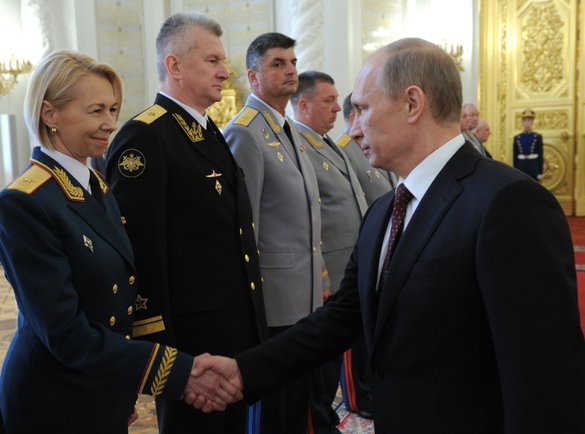
Putin Congratulates Knyazeva

No, not newly-minted General-Major Yelena Knyazeva and President Putin.  The couple is Knyazeva and her husband, Deputy Chairman of the Moscow City Duma, Andrey Metelskiy.

It’s not surprising Kremlin.ru published this picture of the Supreme Glavk shaking Knyazeva’s hand instead of some run-of-the-mill male general’s.

When Putin elevated the fiftyish Knyazeva to one-star rank last month, the Russian press noted his decree gave the Armed Forces a female general for the first time in a number of years.

The last one was the world’s first woman in space, Valentina Tereshkova, who reached general-major in the 1990s.  Media reports added that several women currently hold general officer ranks in the MVD and other uniformed federal services.

This year the Russian Armed Forces indicated having 3,000 female officers in the ranks, a 50 percent increase over 2011.  There were 28 (now 27, of course) women colonels.  There were only 12 female O-6s in 2011, according to RIA Novosti.

Yelena Georgiyevna is Deputy Chief of the Defense Ministry’s Main Directorate for International Military Cooperation.  Before that, she headed the English Department at Moscow’s Military University.  That university now encompasses the Military Institute of Foreign Languages (VIIYa) where she graduated and taught for many years.

She became chief of VIIYa’s English faculty in 1995.  Her participation in international projects during the heyday of Russia-NATO cooperation provided a logical segue to her current duties.  But her timing was fortuitous too.

Under Serdyukov, women emerged in various top Defense Ministry posts, although Knyazeva’s case was somewhat different because she rose inside the military department.

At VIIYa, Knyazeva met her future husband, Andrey Metelskiy, according to Krasnaya zvezda.  Some eight or nine years her junior, Metelskiy studied Farsi and French at the military institute.

Andrey Metelskiy (photo: Volgorad.er.ru)

Metelskiy’s an interesting figure.  In a Bratishka.ru interview, he indicates he was an 18-year-old lieutenant (!?) serving in Afghanistan when he was wounded in 1986.

After finishing VIIYa and leaving the army, Metelskiy was a businessman with a somewhat confusing political biography.  One observer claims he was a Derzhava supporter who only emerged in the youth section of Unity in early 2000.

But Metelskiy’s mainline biography says he was a deputy chairman of the Moscow city branch of Unity before the December 1999 State Duma elections.  He went on to be first deputy of the Moscow regional branch of Unity’s successor, United Russia.

Metelskiy was elected to the Moscow City Duma in 2001, and is currently in his third term.  He has been a Duma Deputy Chairman since 2004, and heads the United Russia faction which holds an overwhelming 32 of 35 seats in the municipal legislature.  Metelskiy represents the Izmaylovo area in northeastern Moscow.

The observer above recounts a legal dustup in late 2005 between Metelskiy and Rodina’s Dmitriy Rogozin who accused him of sporting military awards he didn’t earn.  But Metelskiy won a defamation case against today’s deputy prime minister for the OPK.

On Medvedevu.ru, a man tells his version of a 2009 car accident with Knyazeva, Metelskiy, and their Lexus.  According to him, Metelskiy denied causing the crash, threatened him, and advised him to forget the whole incident.  Nor did the victim get satisfaction after wending his way through the court system for a couple years.

Knyazeva and Metelskiy are an interesting and well-connected Moscow power couple.  Putin was probably just renewing his acquaintance with Knyazeva since it’s more than likely they’d already met given her husband’s position.

General Trash

Late last week news services reported the Investigative Committee (SK) lodged serious allegations against former commander of the Special Designation Command (KSpN), retired General-Colonel Yuriy Solovyev.  The KSpN was a forerunner of today’s VVKO.

Retired General-Colonel Yuriy Solovyev

The gist of the story goes like this.  In 2006, Solovyev supposedly allowed a commercial firm, Proyekt Stroy to establish and operate an unregistered landfill on military property under his command.

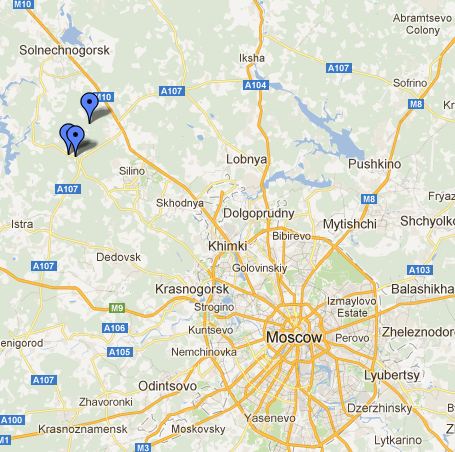
Specifically, military unit 62845, which, according to Warfare.ru, is the 584th Guards SAM Regiment (5th PVO Brigade), near the settlements of Lytkino, Marino, and Povarovo in Moscow Oblast’s Solnechnogorsk Rayon.

Vicinity of Lytkino, Marino, and Povarovo

The regiment operates S-300PM (SA-20 / Gargoyle) SAMs.

The SK apparently plans to charge him for “exceeding his authority with infliction of serious consequences.”  Gazeta.ru reports the 64-year-old ex-general checked into a hospital (where he can’t be charged or interrogated).  His alleged crime could bring a possible 3- to 10-year prison sentence.

According to Gazeta, Solovyev contracted with Proyekt Stroy to reclaim some land, but actually allowed it to use it for an illegal landfill.  The dump grew five times, from four to 20 hectares (about 50 acres or 1/5 of a square kilometer), during Solovyev’s tenure, according to the SK announcement.

Gazeta says specialists estimate the landfill has caused 8 billion rubles in environmental damages.  The investigation is continuing, and more names connected to the case are expected to emerge.

The news site noted that the case stemmed from an MVD investigation back in March.  The MVD announced then that “an organized group consisting of former and current highly-placed RF Defense Ministry officials” was responsible for the dump.  At the time, it estimated 13 billion rubles in damages to the state.

The MVD said the pits Proyekt Stroy dug threatened Moscow’s reservoirs and groundwater sources.  Federal Water Resources Agency experts found concentrations of toxins elevated by more than 200 times at the site.  Vzglyad’s report on this story indicated mercury alone was found at 30 times the allowable level.  Proyekt Stroy reportedly cut 18 hectares of forest before digging the landfill.

Gazeta adds that locals described the dump as the size of five soccer fields and having a powerful stench of methane.  One talked of changes in the color of a nearby stream’s water.  He also estimated possible profit from the trash heap at  $100,000 per day, and confirmed that the military controlled access to the site.

Experts claim this isn’t a unique story, with more than 700 unsanctioned dumps located around Moscow.  They’ve been ignored, but the problem is catastrophic.  New Moscow Oblast Governor Sergey Shoygu has vowed to close illegal landfills, according to Vzglyad.

Kommersant’s March reportage indicated the dump was first reported by locals last September.  The paper claimed 50 “guest workers” work there and live in nearby barracks.  It added that the SAM regiment’s missile launchers were not more than 200 meters from the site.

Kommersant concluded ominously:

“Now the investigation will clarify exactly who in the Defense Ministry permitted the organization of a trash heap right next to militarymen and why they closed their auditing eyes to its operation.”

They’ve apparently found at least one person to blame.

Defense Policy Reset?

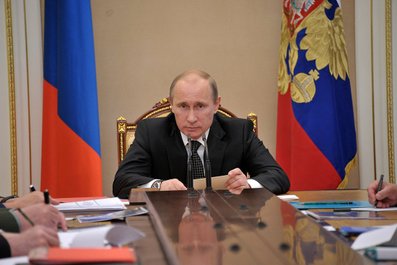
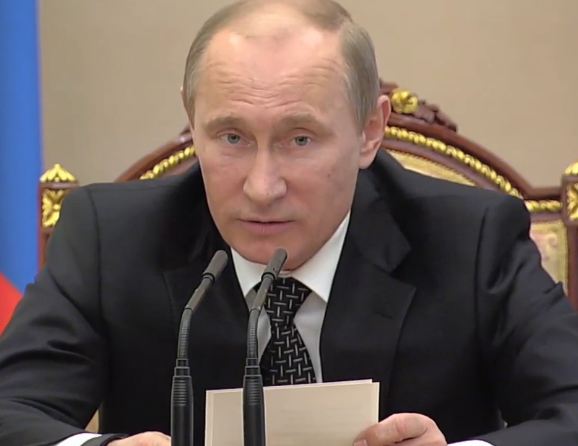
RF President Vladimir Putin last week held the first meeting of his third term to discuss military priorities with senior uniformed officers.

President Putin

He looked less impressive, and less in command of his brief in the video of his introductory remarks than on similar past occasions.

But he clearly laid out his main concerns for Russia’s top Armed Forces leaders:  training, Aerospace Defense Troops, rearmament, contract manning, pay, and housing.

He seemed confounded by the Defense Ministry’s failure to pay new, higher military salaries on time, and by the continuing lag in providing housing to servicemen.  He said his Control Directorate is investigating both situations.

Taking it from the top, Putin said the state of military training and exercises today is completely changed from past years when the Armed Forces were rarely active.  The president twice emphasized conducting joint exercises with Russia’s allies in the CSTO, CIS, and SCO.

His second priority is developing the newly created and reformed Aerospace Defense Troops.

His third is rearmament.  He repeated the familiar goal of replacing 30 percent of weapons and equipment with new generation systems over the next three years (2015), and 70, or in some cases 100, percent five years after that (2020).  And he added:

“I ask you to report promptly about all instances of breakdowns or incomplete deliveries, if you identify them.  Everyone participating in Gosoboronzakaz work must bear personal responsibility.”

The fourth priority is manning, and the earlier announced effort to increase professional soldiers in the ranks to 425,000.  This, he says, would increase their numbers two and a half times, reportedly from 170,000 today.  Putin made the customary comments about carefully screening and selecting enlisted troops, and giving them incentives to serve well.

Fifth and finally, Putin emphasized efforts to provide better social support for servicemen, specifically, this year’s increase raising military pay by up to three times, and his attempt to provide all military men permanent housing in 2013 and service housing by 2014.  He said:

“Sufficient resources have been allocated for this, the necessary amount has been reserved.”

“But I have to note that, to this point, there are many problems in the provision of housing and calculation of pay, unacceptable breakdowns and procrastination, open professional negligence by officials.  And even if on paper and in reports everything is normal, in fact in real life servicemen and their families at times encounter various kinds of bureaucratic procrastination, often with a formalistic indifferent approach.”

“I’ve directed the Russian Federation President’s Control Directorate to conduct a corresponding check in all these areas.  Unacceptable facts are being encountered, already in the first stages of this check this is clear:  this is both delays in the transmission of pay, and the impossibility of normally finalizing the paperwork for an apartment.  Fitting conclusions will be drawn according to the results of the check, and instructions will be formulated.  But today already I’m asking Defense Ministry representatives to report what measures are being adopted to correct the situation.  May is ending, and normal work with pay still hasn’t been smoothed out.  We already talked about these issues more than once.”

Where are outside observers left?

  • Training and exercises have increased as a function of more budget and fuel, but this didn’t happen until the late 2000s.
  • Aerospace Defense Troops are another structural reorganization, potentially a good one, not unlike other reorganizations since the 1990s.
  • Rearmament is a serious downfall.  Despite the Putin factor, nothing really happened on this score until late 2009.  It’s complicated by the difficulties of fixing a dilapidated OPK.  And, although there may be some favorable signs, success here remains to be seen.
  • Contract service is a second serious downfall.  Putin’s first effort to professionalize the army started in 2002.  The General Staff Chief declared it a dismal failure eight years later.  The Defense Minister revived it on an enlarged scale one year after that.  Demographic reality and draft problems leave Moscow no other choice.
  • Low military pay is a downfall.  It became more of a realistic priority with Serdyukov’s arrival in the Defense Ministry, but it was still five long years before the new, higher pay system was implemented.  And Putin admits how poorly it’s functioning.
  • Housing is also a downfall.  Despite progress since Putin first really addressed the issue in 2005, it’s still problematic.  And the president publicly moved back his timetable for a solution.

The downfall areas are problems requiring a long-term, sustained commitment to resolve.  Putin 2.0 is wrestling with the same military issues he identified back in 2000.  It’s still far from certain he can or will bring them to a successful conclusion.

This author believes there’s been progress on Russia’s military issues during the 12 years of Putin’s time as national leader.  But future economic or political challenges could derail progress toward rebuilding the country as a full-scope military power.

Is Putin resetting or rebooting defense policy?  Yes, at least jumpstarting it on key issues.  But a restarted or jumpstarted computer, car, or policy usually works (or doesn’t work) the same way it did before it stalled.  So this isn’t necessarily the path to a successful finish.  But no one ever said making and implementing policy was easy.

Face Recce

Last Wednesday afternoon, President Putin put his Supreme Glavk hat back on and met for a bit with uniformed military leaders on Armed Forces development, manning, training, and social support issues.

The nine-minute video of Putin’s introductory remarks provides a chance to catch up on the players.  There are, of course, many changes of late.

This photo lets us survey everyone (even if only the top of a head or partial face in some cases).

The Full Table

From the left, to Putin in the center, to the extreme right:

  • Rear-Admiral Sergey Alekminskiy, Caspian Flotilla Commander.
  • Rear-Admiral Aleksandr Fedotenkov, Black Sea Fleet Commander.
  • Rear-Admiral Sergey Avakyants, Pacific Fleet Commander.
  • General-Colonel Valeriy Gerasimov, Central Military District Commander.
  • General-Colonel Arkadiy Bakhin, Western Military District Commander.
  • General-Lieutenant Vladimir Shamanov, Airborne Troops (VDV) Commander.
  • Vice-Admiral Viktor Chirkov, Navy Commander-in-Chief.
  • General-Colonel Vladimir Chirkin, Ground Troops Commander-in-Chief.
  • Anatoliy Serdyukov, RF Defense Minister.
  • Vladimir Putin, RF President and Supreme Commander-in-Chief.
  • Army General Nikolay Makarov, General Staff Chief.
  • General-Major Viktor Bondarev, Air Forces Commander-in-Chief.
  • General-Lieutenant Sergey Karakayev, Strategic Missile Troops (RVSN) Commander.
  • General-Lieutenant Oleg Ostapenko, Aerospace Defense Troops Commander.
  • General-Colonel Aleksandr Galkin, Southern Military District Commander.
  • General-Lieutenant Anatoliy Sidorov, Eastern Military District First Deputy Commander.
  • Vice-Admiral Vladimir Korolev, Northern Fleet Commander.
  • Vice-Admiral Viktor Kravchuk, Deputy Baltic Fleet Commander.

Here are a few more looks at the table . . .

Makarov, Bondarev, Karakayev, and Ostapenko

Galkin and Sidorov

Korolev and Kravchuk

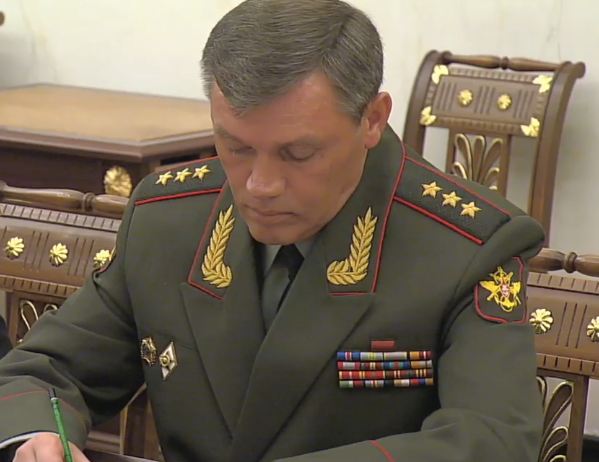
Gerasimov

Putin Recognizes Shamanov’s Promotion to General-Colonel

Not a New Face

In some sense, maybe it is a new face, or at least a reworked one.

We can’t leave this visite de visages (?!) without observations.

The Navy’s top ranks have been cleared.  Its new leaders are pretty junior.  With Chirkov moving up to CINC, Kravchuk is probably acting and set to become Baltic Fleet Commander.

The same thing might be said about the Air Forces with one-star Bondarev in charge.  He should be promoted quickly.  Recall he took a pretty hard line against Igor Sulim.

Gerasimov took over for Chirkin when he became Ground Troops CINC.

While other commanders have been held down in ranks, the MD commanders have crept up to three-stars.

Karakayev’s got to wonder when he’ll get his third.  Ostapenko probably knows Karakayev will get another before he does.

Sidorov is apparently filling in for Eastern MD Commander, Admiral Konstantin Sidenko at this session.