Category Archives: Navy

Navy Main Staff Move to Piter Back On

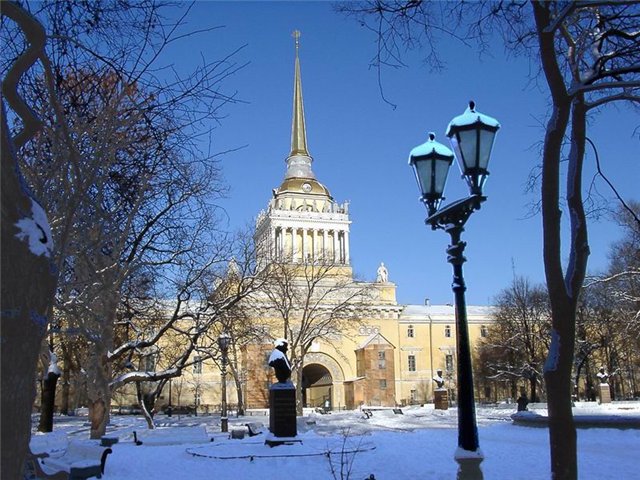
Admiralty

Unnamed Navy sources told the media this week that the Navy Main Staff’s postponed transfer to Admiralty in St. Petersburg is back on, and will begin in July.  But the Navy has not commented officially.  

The Leningrad Naval Base left Admiralty for Kronshtadt, leaving space for the Navy Main Staff in the former.  The Naval Engineering Institute may or may not have left Admiralty for Pushkin. 

The first elements to move could be administrative elements not bearing on the fleet’s combat readiness, while the Navy’s ‘operational services’ remain on Bolshoy Kozlovskiy Lane providing uninterrupted command and control of the fleet, and naval strategic forces in particular.  Some press pieces have said the transfer process could stretch out into 2012. 

A radical ‘optimization’ [i.e. personnel cut] in the Navy’s command and control structures, beginning 1 March, will reportedly precede the move to Admiralty.  Some press sources say the cut will focus on the Navy’s Central Command Post (ЦКП).   

Cutting Navy headquarters personnel may not be all that hard.  Izvestiya notes that, according to some sources, 300 Navy staff officers came out against the transfer to Petersburg when the story first broke in 2007.  Nezavisimaya gazeta has repeated the rumor that  only 10-15 percent of current staff officers will move to Piter and Grani.ru claims most are already looking for other work in Moscow. 

Recall that Duma Speaker Boris Gryzlov first ‘suggested’ the move to Defense Minister Serdyukov in fall 2007, saying that the Navy should return to Russia’s ‘naval capital’ already replete with naval educational institutions and shipbuilding enterprises, and lighten Moscow’s heavy load of governmental organs.  

The plan called forth the late 2007 protest letter signed by many retired admirals, asserting that moving the Navy Main Staff  would “not only lack common sense, but actually undermine the country’s defense capability.”  

Former General Staff Chief Yuriy Baluyevskiy was publicly ambivalent about the wisdom of the transfer.  In early 2009, Navy CINC Vysotskiy told the press he had no orders on the move.  However, new General Staff Chief Nikolay Makarov was quick to remind Vysotskiy: 

“Now command and control organs of the armed forces can be located anywhere.  The main thing is a reliable command and control system should be created which allows for carrying out missions in peace and wartime.” 

But can it really be located anywhere?  

Retired General-Major Vladimir Belous of IMEMO’s International Security Center has been quoted everywhere saying that, in St. Petersburg, the Navy headquarters could come under a devastating enemy air attack in as little as 15-20 minutes. 

Some have guessed the price tag for relocating to Piter at between 26 and 50 billion rubles, Grani.ru guesses 80 billion, and still others say completely rebuilding the Navy’s Moscow infrastructure in the country’s second capital would cost up to 1 trillion rubles.  In any event, a gigantic sum forcing the Defense Ministry to forego lots of other good uses for its money.   

Many experts believe the Navy’s command posts, comms, and underground bunkers will remain in Moscow and Moscow suburbs, since relocating them to Piter will be physically or financially impossible.  Former First Deputy Navy CINC Igor Kasatonov has been widely quoted saying that Piter will be no more than an alternate headquarters for the Navy CINC, from which it will be possible only to exert tactical control over the fleet. 

IA Regnum concludes that, although military experts unanimously believe a Moscow-to-Petersburg move will undermine the Navy’s combat readiness, it’s not clear it matters given the other things [i.e. political considerations, business interests] that are in play. 

Vladimir Temnyy writing for Grani.ru makes the point that old admirals’ alarmist rumblings about disrupting the Navy’s command and control are unimportant to those who want to build a business center and expensive apartments in place of the Navy Main Staff building near the Krasnyye Vorota metro station. 

In Stoletie.ru, Sergey Ptichkin calls the possible move ‘administrative caprice,’ adding that there’s profit motive in this caprice since the Navy headquarter’s building is valuable central Moscow property.  He says not a single expert or Navy leader can justify the move, and brands Gryzlov’s talk of returning the Navy to Russia’s ‘naval capital’ the height of naivete.  He makes the point that the Navy was only in Piter because Piter was the capital of the Russian Empire.  Otherwise, the Navy’s headquarters should be with the rest of the nation’s leadership.  Ptichkin concludes the modern Russian Navy can only be commanded from Moscow’s infrastructure and to replicate it in Piter is, if not impossible, then insanely expensive, especially at a time when there are questions about what kind of Navy will remains to be commanded.

An editorial in Friday’s Nezavisimoye voyennoye obozreniye concluded that the “ambitions of the powers-that-be trump common sense” and “the fact that arguments ‘against’ are clearly superior doesn’t bother them.”

Trouble Building Submarines at Sevmash

Northern Machinebuilding Enterprise (Sevmash)

Here is 9 February RIA Novosti verbatim:

“Sevmash” Will Not Meet Schedules for Nuclear Submarine Construction Due to Insufficient Personnel

SEVERODVINSK, 9 Feb – RIA Novosti.  The “Sevmash” enterprise in Severodvinsk, Arkhangelsk Oblast will fall behind schedule in constructing nuclear submarines, it was announced to RIA Novosti on Tuesday in the enterprise’s press service.

Information about the lag in the schedule was heard in the session of the interdepartmental coordinating council which took place under the leadership of RF Government Military-Industrial Commission member Vladimir Pospelov and Deputy Navy Commander-in-Chief for Armaments Nikolay Borisov.

Members of the coordinating council discussed the state of affairs in producing nuclear submarines at “Sevmash” – “Yuriy Dolgorukiy,” “Aleksandr Nevskiy,” “Vladimir Monomakh” (project 955 “Borey”), and also “Severodvinsk” and “Kazan.”

“Today, as noted in the session, there is some lag from the construction schedule acknowledged by Sevmash and its partner-enterprises,” stated the press service’s announcement.

Factory General Director Nikolay Kalistratov explained the delay was caused by a lack of qualified personnel.

“It’s essential to apply maximum effort to realize the outlined plans and complete orders on time.  In the near future, we have to attract an additional 500 qualified production workers in the specialties pipefitter, machinist-fitter, ship finisher.  It should also be noted that over two years we’ve increased the number of basic production workers by 2,000 people, but this force is still insufficient,” said the director of the enterprise’s press service.

The directors of TsKB MT [Central Design Bureau of Naval Technology] “Rubin,” SPMBM [St. Petersburg Naval Machinebuilding Bureau] “Malakhit,” “Rosatom” state corporation, RF Ministry of Industry and Trade and other departments also attended the session.

Now at the “Sevmash” factory in various degrees of completion are three strategic nuclear submarines of project 955 “Borey” – “Yuriy Dolgorukiy,” “Aleksandr Nevskiy” and “Vladimir Monomakh.”  Work on construction of the fourth strategic nuclear submarine of this project, with the provisional name “Saint Nikolay” began in December 2009.  In all by 2015 it is planned to build eight nuclear submarines of this class.

This statement seems to imply there’s no problem with money, but, at a certain point, more workers equal money because higher wages should attract them, the northern climate notwithstanding.  So to some degree, this is a Sevmash call for more resources to do the work already on its order books.  Although these Sevmash officials said work’s begun on the fourth 955, RIA Novosti from 8 February made it clear there’s no firm idea of when its keel-laying ceremony would occur.  And Navy CINC Vysotskiy said the problem was “technological,” not related to the fate of the Bulava SLBM or to funding.  So maybe he meant a labor shortage, but, as noted, a lack of labor  is an inability or unwillingness to pay what it costs to do the work.

Yuriy Dolgorukiy SSBN has more sea trials before handover to the Navy. Sevmash says Aleksandr Nevskiy will be launched in 2010 (it was laid down in early 2004).  Vladimir Monomakh is about two years behind it.  The big question for these boats is when and if they’ll have a missile.  Late last year, a number of Russian media outlets claimed SSBN production was frozen due to Bulava’s problems.  But Sevmash’s call for more workers doesn’t track with that.  In October, the Russian government also announced Sevmash would receive 4 billion rubles to add to its working capital for modernization, along with a 6 billion ruble credit from VEB.

Industry More Important Than Army

Konstantin Makiyenko (photo: Dmitriy Lebedev/Kommersant)

Commenting in today’s Vedomosti, Konstantin Makiyenko of Moscow’s Center for the Analysis of Strategies and Technologies (ЦАСТ), also a member of the Duma Defense Committee’s Scientific-Expert Council, addresses the recent tendency of Russian military leaders, especially Air Forces and Navy, to criticize and even reject the OPK’s homegrown products.

He notes VVS CINC Zelin’s publicly expressed dissatisfaction with the pace of work on the S-500, and the Navy’s ‘slap in the face’ to Russian shipbuilding over consideration of the Mistral and German conventional subs.  He claims the oboronki themselves sensed Defense Minister Serdyukov’s bias against them and rushed to confess their problems.

And Makiyenko concludes the criticism is well-founded, as many OPK enterprises and companies are in pitiful shape, and the management of a number them leaves a lot to be desired.  However, he asserts, the OPK’s post-Soviet decline is not as great as that of the armed forces.  And restoring Russia’s ‘normal’ military potential is a higher priority task than preserving or adding to the OPK’s scientific-industrial potential.

Makiyenko believes Russia’s place as the number 2 or 3 arms exporter in the world indicates the OPK’s real potential.  Even more so since the economic conditions in which the OPK operates are worse than those of its competitors.  So, for all its problems, the OPK is still number 2 or 3 in the world, according to Makiyenko, while the army, nuclear weapons aside, is capable only of defeating the lilliputian armies of the former Soviet republics.

Makiyenko believes the degradation of the Soviet Armed Forces was occurring as early as the 1970s, while the Soviet OPK was reaching the peak of its capabilities at the end of the Soviet epoch.  It had practically overcome any lag with the U.S. and was building competitive products.  So, Makiyenko concludes, the OPK, rather than the Soviet Army, was the advanced guard in the last stage of the Cold War.  And Russia’s arms market successes would have been impossible without the Soviet OPK legacy.

Makiyenko suggests that the OPK should have priority over the army because, not only can it play a role in national development, but, with some effort, it can be restored in 5-10 years, while if it is [completely?] lost, it could take one or two generations to rebuild.  And even if Serdyukov builds the best army in the world, it won’t be able to provide for the country’s security without the basis of national defense–Russian industry.

So, without orders from its own army, without financing for basic research or RDT&E for the last 15 years, the OPK isn’t always able to meet demands for low priced, high technology goods on tight schedules to help Serdyukov rearm the armed forces quickly and effectively.  But this is no reason to call oboronki thieves and junk dealers.  Makiyenko calls for a long-term perspective and systematic evaluation of the situation instead of nearsightedness.

This is all well and good.  Makiyenko’s a smart guy and makes valid points, and he’s done an admirable job of defending the OPK.  But let’s remember that he tends to shill for arms sales.  Russian weapons sold abroad have had more than their share of problems in recent years.  And the Soviet technology in them grows older and older.  Also, there appears to be no cogent program for fixing the OPK anywhere in sight.  Nor is there even any clear analysis of how buying arms abroad will affect the OPK.

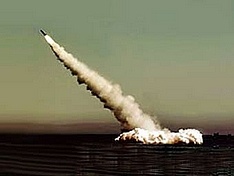
Thrust Control Problem on Bulava

Bulava Test (photo: IA Rosbalt)

 Aleksey Nikolskiy in Vedomosti reports that Bulava testing will resume this summer.  He says the problem in December may have been a defect in the third stage engine, not a design flaw. 

Tests may resume this summer from the modified Dmitriy Donskoy SSBN.  Yesterday ITAR-TASS reported a minimum of two tests would be conducted from Donskoy.  If successful, testing would move to the missile’s intended platform, the new Proyekt 955 Yuriy Dolgorukiy, this fall.  

A Navy Main Staff representative told Vedomosti that Dolgorukiy would need to fire several missiles in a salvo launch.  An industry source said, if all these tests were successful, a “preliminary document on completion of the first phase of testing” could be signed and serial production of the missile could start. 

The Defense Ministry and OPK commission investigating the December failure has provided optimism for those involved, according to a source close to the commission.  In his words, a third-stage thrust control mechanism produced by the Perm-based NPO Iskra failed in the December test.  So some conclude the missile’s overall design is sound and it makes sense to continue work on it. 

Mikhail Barabanov says “shock work” on Bulava might be risky, since MIT already promised that it could produce the missile quickly and cheaply.  Konstantin Makiyenko reiterates the lack of an alternative missile to keep a naval component in Russia’s strategic nuclear forces. 

Denis Telmanov in Gzt.ru adds that a Defense Ministry source has not excluded the possibility that another design bureau, possibly Kolomna Machinebuilding, has gotten orders to work on a missile.  The Makeyev GRTs is another possibility, but its deputy general designer responded that quick development of a missile was physically impossible.  He said, even from an existing system, it would take 5-6 years.  And he said no one in the country’s leadership has taken a decision to start work on a new missile. 

All stories repeated the expressions of support for Bulava from the Defense Minister and Navy CINC.

Unrest in the Black Sea Fleet?

In Part 2 of his article, Shurygin ended by describing the Black Sea Fleet as being on the verge of an explosion.  We’ll see if he elaborates on this in the final part when it’s published.

Meanwhile, on 12 November, Moskovskiy komsomolets wrote about thousands of officers and families in Sevastopol “thrown to their fate,” without the possibility of getting a job in Ukraine, and left practically without money and housing.  The author, Yekaterina Petukhova, like Shurygin, said the situation in Crimea is on the “verge of revolt.”

Young BSF Officer and Guided Missile Cruiser Moskva

According to Petukhova, 2,000 BSF personnel were cut in 2009, and another 9,000 have been warned that they will be dismissed.  She talked to an officer named Oleg, who said he was one of the “fortunate” ones who were put outside the fleet’s TO&E.

The situation’s not worse anywhere.  They’ve already cut thousands, now they’re mowing down the command and control organs.  When they put you outside the TO&E, for a half year they still pay your salary, but minus premiums and minus the supplement for handling secret information.  But this is nevertheless some money.  But then it’s all gone.  View it however you want.  But we’re all here with Russian citizenship.  Where are they going to let us work?  And we can’t go back anywhere in Russia.  They don’t want to give us the service apartments in Sevastopol which we lived in all this time.  They are proposing several cities in Russia, but there really aren’t apartments there—it’s excavation that could go on forever.  And so officers sit, they don’t get pay, nor can they finalize a pension without a permanent residence permit.

Oleg went on to say that single officers especially don’t know what to do.  They aren’t giving out single apartments and, if they get together with a friend and apply for an apartment for two, they are derided as homosexuals.

He gives his view of how it might end. 

Can you generally imagine such a crowd of healthy men, who know military matters firsthand, wandering around Crimea and the quays?  Some kind of Lenin will be found and he’ll raise a crowd, then people will wish he hadn’t turned up.  The fleet commander is silent, everyone spits on us, a kind of chaos is being created.

Petukhova ends by noting that when Kyiv makes a move against the BSF, Moscow politicians race to the defense of Russian sailors, but they’re all silent when the Russian authorities have driven thousands of BSF men and their families to the edge.  She concludes that the ‘new profile’ of the armed forces has an unpleasant odor.

What Others Say About Bulava and Borey

New Borey-class SSBN Yuriy Dolgorukiy on Sea Trials

According to Navy Commander-in-Chief Vladimir Vysotskiy, the slight delay in the laydown of the 4th Borey SSBN unit came from “technological causes” unconnected with the problems of the developmental Bulava SLBM.  Vysotskiy also denied that there were any financing problems behind the postponement.  He said, “All preparatory work for the laydown was complete.”  The laydown was moved from 22 December to sometime in the first quarter of 2010.  Sevmash shipyard officials in Severodvinsk report that they weren’t told any more than that.  However, Vladimir Yevseyev of IMEMO told Gazeta.ru the delay in the next Borey is connected with the unsuccessful test launches of Bulava.  Yevseyev said, “There really is a connection with the postponement of the laydown.  The perspectives are unclear, two boats out, one building, but no missiles.  It’s only possible to put Bulava on boats of this class, therefore after the last unsuccessful launch they decided to wait it out, it’d be strange to spend so much money and lay down a boat without missiles.”

Selivanov Describes a Pathetic Navy

Lenta.ua picked up some of former Main Staff Chief Selivanov’s comments about the state of the Navy at a KPRF round table on Serdyukov’s reforms.  He says 80-85 percent of the Navy’s platforms have been written off.  In the fleets, he sees only about 30-35 ships and submarines.  The Soviet Navy used to get 10 or 11 nuclear submarines per year.  Now, in the Northern and Pacific Fleets, there are just a handful of nuclear submarines.  The fleets have about 129 aircraft.  The Navy can’t perform any of the operations required of it and the West long ago surpassed it technologically.  Russia is looking at steam catapults and the U.S. is working on electromagnetic ones.

Stirrings in the Black Sea Fleet

IA Rosbalt has conjectured that Black Sea Fleet (BSF) Commander, Vice-Admiral Kletskov, might be replaced.  The outspoken Kletskov would take the hit for BSF officers’ anger over Serdyukov’s reforms.  The article says the BSF’s fundamental problem — illustrated by the 21 November submarine breakdown — is its aging order-of-battle and lack of combat capability.  Between Moscow and Kyiv, it doesn’t look like the BSF will get modernized either.  Serdyukov’s personnel cuts are hitting the BSF hard.  IA Rosbalt cites the 10,000 figure for personnel being cut loose there, and, although he’s not to blame, Kletskov could be the scapegoat for reductions. 

Dissatisfaction with Serdyukov’s reforms flows from the particular circumstances of the BSF.  Specifically, dismissed officers will not be able to privatize their service apartments, i.e. base housing.  Many of these apartments were built through the largesse of Moscow Mayor Luzhkov and his patronage of the fleet, and Moscow won’t allow them to be privatized.  But one also has to suspect the issue goes to whether ex-officers of the Russian BSF will be allowed to become permanent residents of Sevastopol.

IA Rosbalt thinks Vice-Admiral Menyaylo, who directed the amphibious assault of Abkhazia in August 2008, might succeed Kletskov, but no one in the BSF is commenting.  The rumors could just remain rumors.

The article finishes with a note about the BSF’s weakness vis-a-vis the Turkish Navy.  Can and whether Moscow wants to revive the BSF is the question.

On 10 December, ITAR-TASS said the Russian Navy Main Staff has asked the Moscow government to privatize nearly 300 service apartments for dismissed officers in the BSF.  Vice-Admiral Smuglin says 940 BSF officers are being dismissed without housing, 287 of whom want to remain in Crimea.  Smuglin notes that the BSF has 1,900 service apartments, 817 of which were built by the Moscow government.  When dismissed, officers have to leave these apartments and the situation is causing ‘social tension.’  The Moscow and Sevastopol governments are looking at whether these apartments can be transferred from the former to the latter.