Category Archives: Serdyukov’s Reforms

Deputy Defense Minister Shevtsova

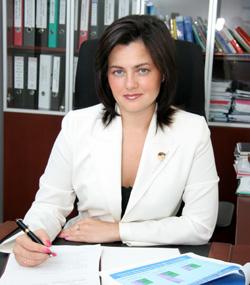
Tatyana Shevtsova at the FNS

Last Friday, Tatyana Shevtsova became the newest deputy defense minister – the ninth overall, seventh civilian, second female.  By all accounts, Shevtsova will oversee and audit Defense Ministry spending and other activities.  Kommersant calls her an ‘oversight and monitoring specialist.’  The Defense Ministry’s spokesman has said as much, according to Vedomosti (read it in Moscow Times as well).  Shevtsova’s another member of Defense Minister Serdyukov’s former team at the Federal Tax Service (FNS or ФНС).  Kommersant describes her as a ‘trusted individual’ who will help Serdyukov supervise all but the Defense Ministry’s purely military functions.  In particular, several commentators believe Shevtsova will track outsourced service and support activities paid for in the state defense order (GOZ).

The 41-year-old Shevtsova was born in Kozelsk, Kaluga Oblast, and graduated from the Leningrad Financial-Economic Institute in 1991.  She’s a candidate of economic sciences (Ph.D.). 

She started in the tax service in 1991 as an inspector in the central rayon of St. Petersburg, eventually heading the tax service’s St. Petersburg directorate.  Kommersant reminds that Serdyukov was a deputy director in the St. Petersburg directorate during Shevtsova’s time there in the early 2000s. 

Shevtsova went to Moscow to head the tax service’s large taxpayer department in early 2004.  In mid-2004, Serdyukov became Director of the FNS, and Shevtsova became one of his deputies. 

Shevtsova stayed at the tax service under Mikhail Mokretsov after Serdyukov left for the Defense Ministry in early 2007.  She was in charge of the oversight directorate and all nine inter-regional inspectorates for large taxpayers.

When Mokretsov and others members of Serdyukov’s FNS team departed for the Defense Ministry in mid-2010, Shevtsova did likewise, becoming an advisor.  According to one official who spoke to Kommersant, she spent the last few months ‘studying the situation’ in the Defense Ministry.

A former Defense Ministry official told Vedomosti Shevtsova is “a talented economist as well as an exacting official, whose subordinates at the Federal Tax Service were very afraid of her.”  She reportedly will turn ten Defense Ministry oversight bodies into a system.

Kommersant said Shevtsova will direct oversight organs for administrative, organizational, and financial activities as well as military housing.  The paper’s source says this could translate into oversight over everything except military command and control and operations.  The ninth deputy minister will reportedly gain some responsibilities once discharged by the chiefs of the ministry’s apparatus, Rear Services, and Housing and Construction Service.

Radio Svoboda was kind enough to interview Aleksandr Golts who concluded:

“It’s more or less obvious Anatoliy Eduardovich Serdyukov rapidly gathers his team in those areas important to him.  As we know, at present a so-called second civilian branch of the Defense Ministry is being formed.  Operational troop command and control, combat training remain with the Genshtab.  At the same time, a very strong area which will withdraw from the ministry a great number of functions connected with service and support of all Defense Ministry units and formations is being formed.  This is very complex work in the realm of the state defense order and the like.  Evidently, Ms. Shevtsova will work in this area.”

 Asked about her first steps, Golts commented:

 “If there will be first steps, we haven’t found out anything about them.  The Defense Ministry very precisely hides the most important directions of its activity from any public scrutiny.  Everything happens very quietly.”

Radio Svoboda also asked Viktor Baranets about ‘civilianization’ and the appointment of a reported 50 women to high posts under Serdyukov:

“They are already sarcastically joking  in the army about the ‘feminization’ of the Defense Ministry leadership.  A large number of women who’ve appeared in key Defense Ministry posts, at various times crossed paths with Serdyukov, and with Putin, and with Medvedev.  Of course, they’re Petersburg natives . . . .  There are unofficial reports that [Shevtsova] actively assisted Serdyukov in destroying Khodorkovskiy’s empire.”

Baranets’ sources in the Defense Ministry also say Shevtsova will be responsible for large sums of service and support funding being directed to contractors.  His general and colonel friends joke:

“We only have one vacant post left – deputy defense minister for corruption.  Because all the other jobs are filled.”

 Or anti-corruption one supposes . . . .

Igor Korotchenko told Vedomosti the Defense Ministry’s growing civilian component is designed to supervise the generals’ spending and accounting, especially in the GOZ.  Ruslan Pukhov calls the ‘invasion’ of former tax officials perfectly normal since Western defense ministries are full of civilian auditors who scrutinize massive military budgets.
Lieutenant Colonel Biront’s Defense

Sounding somewhat dazed, Lieutenant Colonel Viktor Biront told Life News his story about how and why the naval aviation depot near Kolomna burned.  According to Biront, higher authorities were completely informed about his situation days before the facility burned, but ignored repeated requests for assistance.

Biront says firefighters worked to save expensive dachas near his base, but weren’t as willing to help him.

According to Biront, the base he commanded for only three months before the fire had just lost 19 officers and 36 warrants as a result of Defense Minister Serdyukov’s cuts in both personnel categories.  He also lost his firefighting unit in February.

Biront describes how he managed to trade his car to get use of a fire engine.

Reports of the value of property lost have varied widely, but Biront indicates they saved most of what was worth saving.

Here’s the interview verbatim: 

“The lieutenant colonel dismissed because of the fire relates how he and his sailors saved the air base from fire for 10 days.”

“Relieved of duty as military base commander after the big fire, 43-year-old Lieutenant Colonel Viktor Biront tells in an exclusive interview with Life News how he and his subordinates saved the military unit from the fire.”

“The morning of 29 July the lieutenant colonel went to the perimeter and posted people on the edge of the burning forest.”

“’Everyone worked in the forest – both civilians and military,’ said Viktor Ivanovich.  ‘I was there also, only leaving periodically to call and request help.  The chiefs of Civil Defense and Emergency Situations came to evaluate the situation.  Then a strong wind started – the gusts were nearly 20 meters per second – and drove everything from the depth of the forest.  It was terrible to be in the fiery pockets.  Here, look – hands, feet all burned.  We stood on the perimeter, still 1.5 kilometers from the facility.  What a terrible picture – the fire was a wall in the forest.  I gave the order to evacuate.  I was last to leave there, because I was shouting to the last so the boys wouldn’t die there.’”

“According to Viktor Biront, the firemen arrived only two hours after the call.”

“’It’s as if we don’t exist for the city:  neither MChS, nor police . . . no one was with us,’ said the lieutenant colonel.  ‘They saved 1.5 million dollar dachas here.  There were both cordons and police there.  The first help came after several hours – no matter how much I called, how much I asked.  Only after a couple hours a firefighting helicopter flew in.  We can’t get through there – everything’s burning, everything’s blazing . . .  I quickly recounted the people.  Then equipment came from Moscow, and by night a deputy defense minister arrived.  It was impossible to go in.  Sailors were simply suffocating in gas masks – they were saturated with smoke.  I gave the command to take them off . . .’”

“The massive fire that destroyed property worth billions of rubles was preceded by 10 days of struggle with the fire.  And over these 10 days, the big bosses, despite all requests, didn’t take any clear decision about how to save the air base.  In fact, saving it depended only on 40 sailors and their commander.  115 hectares – almost three per man.”

“’I’ve been in the position for three months, they gave me this unit in May in a new composition, after reductions,’ Biront says.  ‘They cut 19 officers, 36 warrants.  In all 40 sailors remained, eleven sergeants and four officers – and this is all the people for such a large unit.  Plus civilian personnel whom I treated with great understanding.  I couldn’t send female clerks into the battle with the fire because the average age of my workers is 58-60.  The pay is low, 5-7 thousand, only female pensioners who’ve worked here a long time do this work.  They also helped as they could.  Men came into the forest with axes and shovels – tried to stop the flames.’”

“’The forest near the unit burned for 10 days,’ Viktor Ivanovich continues.  ‘I turned to them repeatedly, high officials came, had meetings here, made plans, a certain Mr. Shumeyev – deputy for security, an ecologist came here.  The sailors stood two days on the perimeter, not allowing the fire to spread.  I called Civil Defense and Emergency Situations.  Sometimes they gave help, but sometimes they refused.  I didn’t have my own firefighting team – they eliminated it in February of this year.  There was simply an ad hoc firefighting team, they dug themselves in and fought by all means.  When I saw this was all very difficult – I put my non-TO&E car to use, I had to give it to the firemen.  Generally, it’s use is forbidden, we used it because I had to pay money.  They brought a fire engine and handed it over there.  I secured a driver, whom we used to the fullest extent.  We hosed, knocked down flames, in general, battling though I didn’t have specialists.  We had to teach our officers who were extinguishing the fire.’”

“’In principle, we coped with the fire the first ten days,’ says the dismissed commander.  ‘I reported to Moscow by phone, by morning reports, by faxes.  I asked for help.  One time they gave equipment.  A KamAZ came from Shcherbinka from the airport, poured out two cisterns and went back.  Local civilians were all in action – villages burning, the government likewise, then they left 14 castoff portable fire extinguishers, literally the day before the conflagration.  They took them from the unit two kilometers into the forest.’”

“They didn’t manage to save the base.  Viktor Biront learned about his dismissal on the television news. At this moment he’s again writing a statement in the prosecutor’s office.  In this document he indicated that they managed to save property worth 40 million rubles.”

“’My people saved the new equipment.  The burned up property there had expired service lives and required repairs.  But then everything was finished, all closed, but they told us we were all morons generally.  Here it’s burning, and they are crawling through hell and saving equipment.  I’m not defending myself, I’ve told it like it is.  In theory in three months I should have cleared out everything that grew up in this forest over 60 years.  Because in 60 years no one ever did anything there.’”

Disappearing Deputy Defense Minister Portfolios

Or who will answer for what?

On Tuesday, Kommersant and Rossiyskaya gazeta described, even if they can’t explain, Deputy Defense Minister portfolio changes.  The shuffling began in early July, when Grigoriy Naginskiy was ‘freed’ from his responsibilities as Chief of Housing and Construction but remained a Deputy Defense Minister.

According to a decree known, but not published, Medvedev removed General-Colonel Dmitriy Bulgakov from his post as Chief of Rear Services, while retaining him as a Deputy Defense Minister without specific duties.  It’s widely believed, of course, Bulgakov has taken charge of a new Material-Technical Support (MTO) empire that will encompass not only logistics but also arms and equipment supplies.

For his part, Defense Ministry Apparatus Chief Mikhail Mokretsov formally became a Deputy Defense Minister (no longer holding just informal ‘Deputy Minister status’).

Kommersant points out there are still eight Deputy Ministers (six are civilians).  A Defense Ministry source told the paper, however, that Bulgakov might be civilianized.  And his MTO organization will be part of the Defense Ministry’s ‘civilian component’ as opposed to its ‘military component.’  Kommersant says the ‘military component’ (planning and operational troop command and control) will just be the General Staff when the current Defense Ministry reorganization is complete.

Bulgakov has apparently indicated that MTO will have a planning and coordination department, a resource and transportation support department, Main Automotive-Armor Directorate (GABTU), and also repair-refurbishment and metrological directorates.  As announced elsewhere, ten new MTO brigades are to be established in the four new OSKs.  Recall that, in the same presidential decree on Naginskiy, Bulgakov’s rear services chief of staff Sergey Zhirov became Chief of the Planning and Coordination Department (read staff).

One should really look at Mil.ru’s ‘Leadership Structure’ page here.  In it, you’ll see Vera Chistova retains her clear responsibility for finance-economic work.  Bulgakov’s biography notes he became simply Deputy Defense Minister in July.  Naginskiy’s contains no similar notation though it could.  Then comes the oft-forgotten Dmitriy Chushkin who followed Defense Minister Serdyukov from the Federal Tax Service in late 2008.  He has no portfolio spelled out in his title, but his bio reads:

“Responsible for forming and conducting the Defense Ministry’s united military-technical policy in the information and telecommunications technology area which aims to increase the effectiveness of the command and control system, as well as supporting and developing its foundations.”

Mokretsov’s bio has a note that he added Deputy Defense Minister to his title in July.

The ultimate plan behind these moves isn’t clear yet.  But it does seem to go back to late June’s replacement of Kolmakov with Popovkin in one of the Defense Ministry’s two First Deputy slots.  More support functions were and are being consolidated under civilians, while purely military training, planning, and operations may now be more solidly under General Staff Chief, First Deputy Defense Minister Nikolay Makarov.

Will the Genshtab and OSKs Replace the Glavkomaty?

Writing in Vremya novostey yesterday, Nikolay Khorunzhiy claims the recently-concluded, largest post-Soviet exercise – Vostok-2010 – was intended to test the establishment of four operational-strategic commands (OSK or ОСК) in place of Russia’s six military districts, as well as the establishment of structural sub-units of the General Staff in place of the Main Commands (Glavkomaty or Главкоматы) of the Ground Troops, Air Forces, and Navy.

Khorunzhiy continues:

“It’s proposed that the army’s new structure will allow a sharp cut in the steps in passing commands from 16 levels to three, and increase their precision and reliability.  On 6 July, President Dmitriy Medvedev signed a decree establishing OSKs.  Part of the authority of central command and control organs, but also that earlier entrusted to the Glavkomaty, are going to the OSKs.”

The 6 July decree still hasn’t appeared publicly. 

Khorunzhiy notes that then-General Staff Chief Yuriy Baluyevskiy tested the transition to regional commands during Baykal-2006:

“Then he didn’t manage to break the resistance of district commanders who didn’t want to share their authority with OSK commanders.”

Khorunzhiy digresses to the precursors of OSKs, without calling them High Commands of Forces.  Former General Staff Chief Nikolay Ogarkov set out to reform the army’s command and control:

“The instrument of such a reform he considered main commands on strategic directions (theaters of military operations, in modern terminology) which would improve coordination between services and troop branches and would strengthen the unity of command in combat units (permanent readiness units).”

Ogarkov viewed the Soviet North-Western, Western, and South-Western main commands of troops from World War II as prototypes, but these Glavkomaty were only intermediate links between the Headquarters,  Supreme High Command [Stavka VGK] and the fronts, but received no authority, troops, or communications.  Khorunzhiy contrasts this to Vasilevskiy being sent to fight the Japanese in 1945; he had authority and troops.

Then, in 1978, Army General Vasiliy Petrov was sent out to establish the Main Command of Troops of the Far East, and he had authority up to appoint regiment commanders and arrange cooperation with neighboring states.  The situation of troops in the Far East sharply improved.

Ogarkov set off then to establish main commands on strategic directions, and improve command and control and readiness in yearly exercises (West, East, Autumn).  But in 1984, Ogarkov himself was sent off to be CINC of the Western direction in Legnica.  He failed to get enough authority for these commanders from the CPSU or Defense Ministry, and these main commands were eliminated in 1991.

But Khorunzhiy goes on to describe today’s OSK as an ultimate victory for Ogarkov over the ‘parochial interests of the army elite.’  He doesn’t seem to wonder whether it might be too soon to declare victory.

He finishes by looking at the KPRF’s call for a parliamentary investigation and special Duma session on how Serdyukov’s reforms are ‘disarming Russia.’  In particular, Khorunzhiy quotes the KPRF press-service:

“The system of military districts which has existed for centuries has just been eliminated.  In place of them incomprehensible strategic commands have been established according to an American template.  It’s obvious that this endless modernization of military structures is leading unavoidably to the loss of troop controllability.”

What’s it all mean . . . ?

The possible elimination of the Main Commands — the service headquarters — would be a big deal (no one mentioned what might happen to VDV, Space Troops, or RVSN branch commands).   

This would obviously greatly strengthen General Staff Chief Makarov, and really make him lord and master of the uniformed military.  It would strengthen the General Staff (except Serdyukov’s been cutting its personnel, like the rest of the Central Apparatus).

Would it give Makarov too much power?  Maybe, or maybe not if Serdyukov thinks he can fire him and get another general whenever necessary.

The possibility of eliminating service headquarters makes Navy CINC Vysotskiy’s reticence to talk about moving to St. Petersburg in the midst of a command and control reorganization make more sense.  Maybe he was telling us there’s a much bigger issue at work than just OSKs.

Perhaps in the most objective sense, getting rid of the Glavkomaty would reduce personnel and some resistance to new ideas.  But wouldn’t it also throw away yet another place where the regime should seek good alternative ideas, counterarguments, and feedback on its plans?

Interim OSK Commanders Named

Late Thursday Interfaks learned that Defense Minister Anatoliy Serdyukov signed an order naming acting commanders of Russia’s four new military districts, or operational-strategic commands (OSKs).

Volga-Ural MD Commander, General-Colonel Arkadiy Bakhin will be the interim commander of the new Western MD.  Siberian MD Commander, General-Lieutenant Vladimir Chirkin will temporarily head the new Central MD.  Pacific Fleet Commander, Admiral Konstantin Sidenko will command the new Far East MD for now.  And North Caucasus MD Commander, General-Lieutenant Aleksandr Galkin will head the the new Southern MD. 

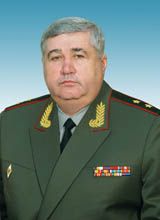
General-Colonel Bakhin

General-Lieutenant Chirkin

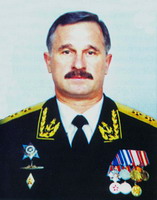
Admiral Sidenko

General-Lieutenant Galkin

Serdyukov wants the new command and control scheme operating from the start of the new training year on 1 December.

Kommersant noted general surprise that a naval officer was picked to head the Far East MD.  Ground Troops generals have always commanded the army-dominated MDs.  But a Navy Main Staff source said Sidenko is not new to commanding army units; he once commanded the combined Navy-Ground Troops force on Kamchatka.

Kommersant also said extramural Defense Ministry collegiums will evaluate the effectiveness of these reorganizations before the end of the year.

Makarov’s Guys Take Key Posts

Bakhin, Chirkin, and Galkin prospered under General Staff Chief Nikolay Makarov when he was Siberian MD Commander from 2002-2007.  Each of them served as an army commander, deputy MD commander, and chief of staff, first deputy MD commander under Makarov in Siberia (or immediately after his departure for Moscow).  Chirkin served as Bakhin’s chief of staff, first deputy commander of the Volga-Ural MD, before becoming Siberian MD Commander this year.

Sidenko is a submariner, and most of his career has been in the Pacific Fleet.  His experience as ‘Commander of Troops and Forces in the North-East’ is, interestingly enough, a little similar to Makarov’s late 1990s time as ‘Commander of Ground and Coastal Troops, Deputy Commander of the Baltic Fleet for Ground and Coastal Troops.’

TsOPI Critiques Serdyukov’s Reforms

In last week’s Nezavisimoye voyennoye obozreniye, IMEMO’s Vladimir Yevseyev presented the results of a recent round table on reform in the RF Armed Forces. The Center for Social-Political Initiatives (TsOPI or ЦОПИ), with support from Germany’s Rosa Luxemburg Foundation, sponsored the event.

Yevseyev described early reform as cutting personnel without changing the army’s structures during a time of political paralysis in the 1990s.  In the Putin era, he says there were still failures and the army’s equipment levels dropped, but the army began to believe it could still fight.

At this time, former Defense Minister Ivanov more than once declared the end of army reform, the troops started to get limited quantities of new weapons, and there was an unsuccessful attempt to move to professional enlisted force.  Yevseyev tries unconvincingly to point out successes in the Putin-Ivanov period.  His leading examples are especially dubious:

“— the elimination of cadre units and formations and forming of permanent readiness units numbering nearly 200 thousand servicemen on a contract basis.”

“— partial fulfillment of the federal targeted program of transition to manning with servicemen conducting military service on contract in a number of formations and military units in 2004-2007 that as a whole with a corresponding change in legislation in 2008 allowed a reduction in the conscripted service term to one year.”

The hollow unit problem wasn’t tackled until late in 2008, and Yevseyev has already labeled contract service a failure.  Moreover, the contract service program probably didn’t attract more than 80,000 soldiers.

And contract service didn’t have anything to do with one-year conscript service.  That change was made to try to encourage more young Russian men to serve rather than avoid serving.  Professional enlisted service, had it worked, would have allowed Moscow to continue drafting only 260,000 men per year for two years, rather than 540,000 per year to serve for a year as it is now.

But Yevseyev comes to the right conclusion:

“. . . radical change in the reform of the Armed Forces did not happen.  The main reason for this was that the Russian leadership could not take the fundamentally important decision on bringing the size of the Armed Forces into correspondence with the economic possibilities we have and with observable (future) external threats.”

Yevseyev writes that the most acute phase of military reform came with Defense Minister Serdyukov, and the war with Georgia, which revealed the army’s shortcomings.
 
But, says Yevseyev, Serdyukov’s initiatives like reducing officers and cutting warrants ran into difficulties.  Forty thousand officers placed outside the TO&E couldn’t be retired because they still lack permanent housing.  And many would-be officer graduates in 2009 and 2010 were forced into sergeant’s duties.

Yevseyev says Serdyukov’s reform is bringing an increased flow of negative consequences as shown in the results of TsOPI’s polling. It surveyed more than 2,500 people, including nearly 1,700 servicemen, in nine major cities.  According to 61 percent of respondents, reform has degraded the entire military command and control system.  Sixty-four percent said the army’s ‘new profile’ has seriously reduced their social status.  Thirty-two percent are not sure their housing, pension, and pay rights will be observed during Serdyukov’s reform.  Twenty-three percent are worried about their outplacement rights, and 8 percent about their medical benefits.

Yevseyev and his colleagues discussed three major problems for the Armed Forces:  rearmament, infrastructure, and manning.

They say 40 percent of Soviet arms and equipment were modern at the end of the 1980s, with the percentage declining to only 10-12 percent by 2005, and 5 percent at present.  They give a useful rundown of what’s been produced over recent years.

In 2004-2008:

  • 36 ‘Topol-M’ ICBMs;
  • 2 battalions of Iskander SSMs;
  • 2 battalions of S-400 SAMs;
  • 150 T-90 tanks;
  • 700 armored combat vehicles;
  • 20 self-propelled artillery systems;
  • 1 Tu-160 strategic bomber;
  • 3 Su-34 bombers;
  • 30 helicopters;
  • 1 diesel submarine;
  • 2 corvettes; and
  • 13 smaller ships and auxiliaries.

In 2009:

  • 49 new or modernized aircraft;
  • 31 helicopters;
  • 304 armored combat vehicles; and
  • 20 artillery systems.

Yevseyev and company conclude:

“It would seem that the situation with equipping the country’s Armed Forces is beginning to be corrected.  But in reality such rates of military equipment supply allow full rearmament across 30-50 years, which significantly exceeds the length of its service life.”

So this will make it difficult to increase the share of new weapons and equipment to 30 percent by 2015, even for permanent readiness units and formations.

They point next to the massive lingering Russian military structure.  Four years ago there were 26,000 military organizations of one type or another, and now only 6,000.  And that will be reduced to 2,500.  But they say, instead of consolidating and realizing cost savings, some of this process was fake, and some organizations were just named as subsidiaries [filialy] of larger ones.  As an example, they cite the shift from regiments to brigades and 1,000 reported TO&E changes, of which only 30 actually involved a physical unit relocation.

Finally, Yevseyev and the round table participants point to a potential unit leadership void when officers and professional enlisted are being cut (or not recruited) at the same time.  They say, given the training time they need, conscripts shouldn’t comprise more than 30 percent of a permanent readiness unit.

Yevseyev sums up:

“. . . the process of implementing military reform in the Russian Armed Forces now prompts the most serious misgivings.  In essence, the military personnel training system is being destroyed, the decline in the Armed Forces’ equipping continues, their system of manning and command and control is being broken.  All this leads to the weakening of the country’s defense capability and requires taking immediate measures to eliminate the negative consequences we are already experiencing.”

General Staff Chief Makarov’s Press Conference

Sound bites from General Staff Chief Nikolay Makarov’s press conference today dribbled out one at a time, as usual.

Makarov told reporters President Medvedev signed a decree establishing four operational-strategic commands (OSK) to replace the existing military districts on 6 July, but the text hasn’t been published.  Makarov also said arrangements putting the OSKs in place would be complete on 1 December.

Makarov talked more about the new “unified system of material-technical support (MTO)” also apparently covered in Medvedev’s decree.

Rear Services Chief, Deputy Defense Minister, General-Colonel Dmitriy Bulgakov, as expected, will head the unified MTO system, and new First Deputy Defense Minister Vladimir Popovkin will supervise the new state armaments program, 2011-2020, as well as coordination with military industries. 

Makarov stressed uniting transportation and supply functions under Bulgakov:

“We had a disconnect when all transport for supplies of material means to the troops was at the disposal of the Deputy Defense Minister for Rear Services, but he didn’t have anything he needed to move with this transport.  The other Deputy Defense Minister, on the other hand, had armaments, but no means for transporting them to the troops.”

“This is very important because now the management of transportation and armaments is concentrated in the hands of one man.  The correctness of the decision was confirmed by the recently completed ‘Vostok-2010’ operational-strategic exercise in the Far East.”

 “Now one official serving as a Deputy Defense Minister heads a unified system of material-technical support which has united rear services and armaments.  He alone personally answer for both the transport of supplies of material-technical means, and for these means themselves.  Now one man answers for the state of affairs with armaments and for their supply to the troops, who will also now be responsible for that.”

The way Makarov puts it, Popovkin be on the hook for product quality:

“He will work with defense-industrial complex enterprises to control their production of armaments and military equipment for the Armed Forces.”

Popovkin’s old job of Chief of Armaments, Deputy Defense Minister will disappear most likely.

Makarov told reporters Russia plans to move to netcentric command and control by 2015, once it equips its troops with new C3 systems united in one information space.  Such systems are now scarce, but he says, they are working hard so to install digital equipment everywhere.  Makarov calls this the main renovation that he’s giving all structures and troops starting in the fall of this year.  He says Russia’s new command posts unite reconnaissance, target designation, and troops and weapons to execute combat missions in real time.

It’s interesting that RIA Novosti took time to explain that the netcentric concept is an American creation more than 10 years old, and one not loved by those used to strictly centralized command and control.

Makarov told the press the army will begin forming light brigades, which it currently doesn’t have, this year.  They’ll have light combat vehicles of some type.  While not providing details, Makarov emphasized that light brigades will be built around a standard vehicle, so that, as in Vostok-2010, a brigade can fly in and its personnel can marry up with their normal vehicles in their place of deployment. 

Answering a question, Makarov said Russia will buy more Il-78 tankers in GPV 2011-2020, but he didn’t specify a number.

Makarov announced an intention to equip all Russian combat aircraft with new targeting-navigation systems over the next three years.  He said the new equipment will increase the accuracy of air strikes and allow the Air Forces to “abandon the previous practice of area bombing.”  He said the new system was tried on a Su-24M2 during Vostok-2010.  Installation of the targeting equipment on the Su-24M2 began in 2007.  Makarov said the VVS has nearly 300 Su-24 of all variants, and naval aviation about 60.

Stoletiye.ru had an interesting observation on Makarov and efforts to streamline command and control in the Russian Army.  It said the move to 4 OSKs and other steps are intended to reduce duplication of officer responsibilities and make 2-3 officers responsible for the fulfillment of combat missions.  It quoted Makarov, “We’ve eliminated the system of spreading responsibility throughout the Defense Ministry.”

Kramnik on Vostok-2010 and Military Reform

This is complete finally.

Ilya Kramnik’s RIA Novosti piece about the exercise has been quoted by others, but it hasn’t gotten attention as a whole on its own.

So what does Kramnik think?  He cites Makiyenko to the effect that Vostok-2010 showed that reform has been positive for the army, but there are, of course, problems.  Troops aren’t uniformly well-trained, and the failure of contract service has really hurt.  But Kramnik gives Defense Minister Serdyukov a lot of credit, on the order of being a 21st century Milyutin.  But back to the problems again.  Things like contract service, tension over officer cuts and premium pay, military education cuts, and the failure to deliver new weapons have to be fixed.  But Kramnik believes Serdyukov is the kind of guy who’ll go back and fix what he didn’t get right or get done.  Then Kramnik shifts to the type of conflict the military reform is preparing the Russian Army to fight.  Obviously [?] not a nuclear one, but rather, again turning to Makiyenko, a Central Asian local war scenario that might threaten the RF’s internal stability.  The conclusion is that, if reform stays on track and occurs quickly, the army will be able to meet this challenge.  Some, however, might well argue that even a properly and rapidly reformed Russian Army might not be enough to contain and damp down the kind of conflagration Makiyenko describes.  Finally, Kramnik concludes that even the U.S. front isn’t secure; an American regime in 2012 or 2016 might take to renewed active support of new ‘color revolutions’ in Moscow’s back (or front) yard.

Here’s a verbatim text:

“The official results of the just ended ‘Vostok-2010’ exercise are still being reckoned, and this will be done by the Defense Ministry.  Meanwhile, it’s already possible to make some conclusions.” 

“‘Vostok-2010’ was the largest of all in the post-Soviet period of Russian history.  More than 20 thousand men, 75 aircraft, 40 combat and auxiliary ships took part on the ground, in the air, and at sea in maneuvers conducted from Altay Kray to Vladivostok.”

“The aim of the exercise was to check the three-level command structure — operational-strategic command – operational command – brigade, and other new elements in the Armed Forces command and control and support system, and to uncover deficiencies needing correction.  An expert of the Russian Center for the Analysis of Strategies and Technologies Konstantin Makiyenko expressed his opinion on the recent maneuvers:  ‘The recent maneuvers fully refuted the propagated myth about how the army is being destroyed as a result of the actions of the current Defense Ministry leadership.  It’s obvious the army is alive and developing.  Units participating in the exercise demonstrated their combat capability, despite the fact that they are not in the ranks of the best military districts, and scarcely armed with the most modern equipment.'”

“‘It’s especially worth focusing on the good morale of the officer personnel — it’s not possible to speak of general enthusiasm, of course, but I didn’t see dim eyes among the officers.  As a group, they are interested in the success of the current reform and hope for its success.'”

“While agreeing with this point of view, one has to note that the situation with soldiers looks a little different, both RIA Novosti’s reviewer [Kramnik] and Konstantin Makiyenko have also noted this.  Very much depends on the branch of troops and the basic training of the soldiers themselves.  Contract-servicemen in a ‘Tochka-U’ operational-tactical missile launch battery look and are trained much better than conscript-soldiers in motorized rifle units.  In the words of motorized rifle officers up to the battalion commander level, the reduction in the number of contractees has negatively affected platoon and company training.  Ideally, the service term of a specialist-soldier (mechanic-driver, weapons system operator, etc.) needs to be three years, that is achievable only on the contract manning principle for these positions.”

“Speaking about the attainability of the announced goals of the reform, one can say the following:   the will of the military leadership which certainly exists, is the main component of success, a firm understanding of the goal is also obvious, and the possession of authority — it’s not possible to doubt this.  As a result, the current Defense Ministry leadership needs only time to realize its ideas.  Overall, the military reform being conducted is the most significant event of Russian history in the last ten years — since the suppression of the separatist rebellion in the North Caucasus.  The Serdyukov-Makarov reform in the military sphere is the most radical and deepest since the time of Mikhail Frunze’s reforms in the 1920s, if not since Dmitriy Milyutin in the 1860s and 1870s.”

“As proof, it’s possible to note the fact that the Defense Ministry leadership is constantly searching and ready to correct those steps which, when checked, turn out to be incorrect or unattainable in real political-economic conditions.  So, the current principles of manning the army will undergo a serious correction:  it’s obvious that neither the organization of contract service, nor, even more, the existing format of conscript service corresponds to the demands of the time.”

“Evaluating the correspondence of the Defense Ministry leadership to its missions, it’s possible to say, that at present Russia has the most appropriate military leadership since the collapse of the USSR.  At the same time, it’s obvious that the radicalism of the reform, the compressed time of its implementation, unavoidable resistance in the environment and hard economic conditions didn’t allow for avoiding a large number of mistakes and excesses.  Among the most fundamental failures it’s possible to name the collapse of the army’s transition to the contract manning principle, serious social tension arising in connection with the rapid reduction of officer personnel, the ambiguous situation with the scale of servicemen’s complaints after the introduction of the differential pay system [premium pay or Serdyukov’s Order No. 400?], the hurried and not completely thought out reform of military education and many, many other things.  It’s  particularly worth focusing on the implementation of the state armaments programs which fail one after another, not being executed in a significant part.  As a result, the lag of Russia’s Armed Forces behind the most developed countries in the level of  technical equipping continues to grow such that in conditions of a quantitative lag it could become very dangerous.  All these mistakes have to be corrected, since they impact on rudiments of the army’s combat capability.”

“For what type of wars does Russia’s new army need to prepare?  Obviously, the time of long wars between the great powers has gone into the past — nuclear weapons haven’t left chances for such a development of events.  The most probable type of conflict in which the Russian Army will be involved is a local conflict on Russia’s borders and the territory of the former USSR, in the course of which there could be clashes with the most varied enemy:  from a regular army to many bandit formations and terrorist groups.”

“In Konstantin Makiyenko’s opinion, Central Asia presents the greatest danger in the future of a possible hot conflict with Russia’s direct participation:  ‘The U.S. and NATO, obviously, are less and less controlling the Afghanistan situation, and it’s not excluded that in the foreseeable future they may have to abandon this country.  The return to power in Afghanistan of the ‘Taliban’ movement looks most realistic in the event of such a development of events.  The arrival of Islamic radicals in power would unavoidably be a catalyst for conflicts on the territory of former Soviet republics of the region already riven by contradictions.  Weak authoritarian regimes in Tajikistan, Turkmenistan and Uzbekistan, not to mention what’s become the ‘failed government’ in Kyrgyzstan, could be easy prey for the Taliban.  As a result, Russia might be forced to consider the likelihood of a large Asian conflagration which it would have to prevent, or if it didn’t succeed — extinguish, at a minimum with the aim of preserving its own internal stability.  One very much wants to believe that the reform will bear fruit before the described situation becomes a reality.'”

“Besides the described scenario it follows to study also the probability of another development of events:  as experience has shown, on the territory of former USSR republics, the rise of openly anti-Russian regimes with external support at their disposal can’t be excluded.  For today, such a situation is a low probability due to the fact that the current administration in the U.S. — the main sponsor of ‘colored revolutions,’ is clearly not inclined to continue the policy of George Bush.  However by 2012, if President Obama loses the election, the situation could change, and this risk is even greater in 2016 when the administration will change in any case.  Meanwhile, you have to note that even the Democrats remaining in power in the U.S. is not a guarantee of a peaceful life:  Obama’s point of view on a coexistence format with Russia is hardly shared by all his fellow party members.  In the worst case, a return to the next variant of Cold War and new spiral of the arms race isn’t excluded.”

“The coming decade isn’t promising Russia an easy life.  The success of military reform is all the more important.”

Pulling Back on Buying Abroad?

Is the Defense Ministry pulling back the reins on efforts to purchase foreign-made weapons and other military equipment?

Late last month, armaments chief Vladimir Popovkin said that Moscow would put German armor on its combat vehicles, perhaps laying to rest rumors that Russia might buy entire vehicles abroad.

Last Thursday, Popovkin and others seemed to put limits on buying more UAVs from Israel, calling the process more of a learning experience to improve Russia’s domestic models.

Then Friday, the press says OSK may have started a formal antimonopoly complaint against Defense Ministry efforts to buy the French Mistral helicopter carrier.  But OSK Board Chairman, Deputy Prime Minister, and Putin confidant Igor Sechin is in charge of negotiating Mistral’s purchase from Paris.

It certainly seems that the reins have been pulled back on foreign procurement somewhat.  But there’s a lot to these threads and not enough time to run them down.

Naginskiy ‘Freed’ From Housing Duties

Grigoriy Naginskiy

This morning’s press reported (with varying degrees of accuracy) that the Chief of Housing and Construction, Deputy Defense Minister Grigoriy Naginskiy has been ‘freed’ from his principal duties, but remains a Deputy Defense Minister.  See Kremlin.ru for the text of President Medvedev’s decree.

The midst of a year of trying to deliver on huge permanent military housing promises seems an odd time to make yet another change of housing chief.

The decree also moved a two-star named Sergey Zhirov from his post as Chief of Staff, First Deputy Chief of Rear Services to a position called “Director of the Department of Planning and Coordination of Rear Support of the Defense Ministry.”

These could be the opening moves in Defense Minister Serdyukov’s reported effort to establish a unified material support establishment responsible for arms, equipment, and all logistics.