Category Archives: Serdyukov’s Reforms

Another One for the ‘Northern Capital’

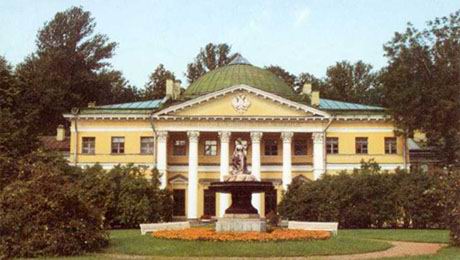
Argumenty.ru on Friday reported a Main Military-Medical Directorate (ГВМУ or GVMU) source says Russia’s military-medical headquarters will relocate from Moscow to St. Petersburg.  Although no timetable is specified, it has been decided that GVMU will end up sharing the complex of the Military-Medical Academy (ВМА or VMA) in Piter.

Military-Medical Academy

The GVMU source said:

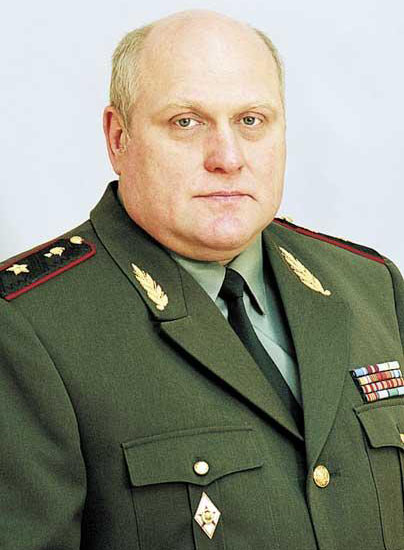
“This issue was raised and decided  positively from the moment when General-Major of the Medical Service Aleksandr Belevitin transferred from the post of VMA chief to the post of GVMU chief.”

General-Major Aleksandr Belevitin

A VMA source says:

“The issue is being actively discussed in the academy, although the exact timing is unknown.  But part of the buildings, in particular, the physical training faculty building have already been set aside.”

Argumenty.ru reminds that the final decision on moving the Navy Main Staff to St. Petersburg was made not long ago, and ‘military experts’ put the cost of that move at 20-25 billion rubles.

This is kind of interesting.  That’s a lot of influence to attribute to the new guy in the job, particularly a job several ‘comrade doctor generals’ have not been able to hold onto for long in recent history.  Moreover, there are a lot of military hospitals and clinics in Moscow to serve the real capital’s large military and ex-military population.  If GVMU moves, they will be somewhat illogically separated from their headquarters element.

Idea of OSKs Waxes Again

In Russian defense policymaking, ideas never die; they wax and wane, and wax again.  Andrey Nikolskiy in Thursday’s Vedomosti reported a source in the Defense Ministry’s central apparatus claims the idea of establishing four regional Operational-Strategic Commands (OSKs) in place of Russia’s current military districts and fleets is waxing again.  This is hardly a new story.

The West reportedly would combine the Moscow Military District (MD) and Leningrad MD, and the Baltic Fleet, under a headquarters located in St. Petersburg.  The East would combine the Far East MD with part of the Siberian MD, and the Pacific Fleet, with its headquarters in Khabarovsk.  The North would combine the remainder of the Siberian MD with part of the Volga-Ural MD, and the Northern Fleet, with Yekaterinburg as the headquarters.  Finally, the South would put the North Caucasus MD with the remainder of the Volga-Ural MD, and the Black Sea Fleet and Caspian Flotilla, with Rostov-on-Don as the headquarters.

Vedomosti  is circumspect on the four OSKs.  It maintains that no decision has been taken yet, and the possibility of creating them is being studied.  Interfaks was quick to claim they’ll be established before the end of the year.  Putting the West headquarters in Piter would track with the apparently continuing effort to relocate the Navy Main Staff to the country’s ‘northern capital.’

So, a little about what would happen if this idea were implemented . . . clear losers are the LenVO, SibVO, and PUrVO, which all disappear.  The VMF won’t like the idea and the VVS is perhaps more ambivalent since its air forces and air defense armies (AVVSPVOs) pretty much exist within the current MD structure anyway.  The East would have 14 active maneuver brigades instead of the DVO’s 10.  The West would have 9 instead of 6.  And the North might be created with 6 brigades.  Of course, the OSKs would also have greater territory to cover than the MDs.

In retrospect, new Ground Troops CINC General-Colonel Aleksandr Postnikov foreshadowed renewed talk of OSKs replacing MDs when he arrived in March mentioning the possibility of an MVO-LenVO merger.

Former Genshtab Chief Yuriy Baluyevskiy’s one-year experiment with an Eastern Regional Command at Ulan Ude headed by General-Lieutenant Nikolay Tkachev was euthanized by his successor, Nikolay Makarov, in October 2008.  Theoretically, it might have been one regional command alongside analogous western and southern structures.  Baluyevskiy’s initiative probably dated back to 2005 discussions about a new command structure in the RF Security Council.  But it’s not clear what kind of regional commands were considered.  Were they to overlay the MDs and fleets like the High Commands of Forces of late Soviet days or replace them in a more radical restructuring?

This winter, then Ground Troops CINC, Army General Boldyrev said that each MD would become an OSK, and the MD-OSK commander would have operational control over all military units on its territory–Navy, Air Forces, MVD Internal Troops (VV), etc.  Boldyrev said:

“The operational-strategic command is a military district.  Such is its function and standing.  The legal status of the OSK has been drafted, its approval is planned in the very near future, this will possibly happen before the end of this year.  The district commander has been declared the commander of the operational-strategic command.”

Nezavisimoye voyennoye obozreniye has been predicting the MD’s replacement for some time, writing in September last year: 

“. . . the leadership of the country and of the Armed Forces are returning to the idea that was proposed several years ago by former RF Armed Forces General Staff Chief, Army General Yuriy Baluyevskiy, who attempted to create Operational-Strategic Commands in theaters of operations, but not on the basis of individual districts, but rather by unifying several districts and fleets under the command of the OSK.” 

The MD is still more part of the administrative, training, and mobilization system for the paradigmatic ‘large-scale war’ of Soviet planning.  The OSK would have to become a combatant command for fighting regional or local wars here and now.  Consolidating three MDs and possibly downgrading fleet commands somewhat might save a few hundred senior officer positions.

As Vedomosti describes it, if the four OSKs actually stand up, they will include armed forces units, not other militarized forces like the VV or FSB Border Guards.  This isn’t surprising since these OSKs would be permanent, not just wartime, command structures. 

The control of strategic nuclear forces is always an issue in debating structures like the OSK.  Would OSK commanders really control and operate the RVSN, SSBNs, and long-range bombers on their territory?  If not, how would the OSK’s general purpose forces support strategic operations?  

Abolishing 6 MDs and especially 4 fleets and their long histories would be a politically daunting task, sure to raise lots of opposition in the ranks and among the publicly vocal ex-military.

Finally, it might be argued that the military has experienced near ‘permanent revolution’ over the last 18 months, and doesn’t need another major organizational innovation while the situation settles out from previous changes.

In any event, the replacement of MDs with OSKs still remains a rumor at this point.

Victim of the ‘New Profile’

Obvious individual suffering from Serdyukov’s ‘New Profile’ military reforms hasn’t been readily apparent until now.

Russian media today carried sad news about a 34-year-old lieutenant colonel, one Aleksey Kudryavtsev, serving in Udmurtiya, who hung himself in the forest upon learning his unit would be disbanded.

Press said he served in v/ch 93233, which Yandex shows is the military commissariat [draft and mobilization office] for Igra Rayon of the Udmurt Republic.  Kudryavtsev must have been one of the few remaining uniforms in the commissariat since most military men were early victims of Serdyukov’s cut in the officer corps.  Some officers have been able to serve on as civilians.

Despondent on finding out about his imminent dismissal, the lieutenant colonel stood to lose not only his post, but also his service apartment.  He wrote his wife a note saying not to look for him and to start a new family, and then disappeared last September.  His body was finally located in a remote wooded area.  He left sons of 4 and 8 behind.

Newsru.com and Argumenty nedeli covered the story.

Of Foreign Arms and Furniture

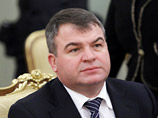
Defense Minister Serdyukov

Defense Minister Serdyukov is looking at a mini-scandal over a tender for new office furniture for the military’s headquarters.  The 14 April tender called for 125 pieces of furniture worth 18.3 million rubles to be delivered in 15 days, but also included agonizingly detailed specifications for each item, leading Russian furniture industry representatives to conclude a specific supplier has been picked in advance.  Moreover, the list of acceptable models, fabrics, and materials makes them assume the furniture will be Italian-made.

Of course, Defense Minister Serdyukov knows the furniture business.  He started in it in 1985, working his way from a department manager of a Lenmebeltorg store to general director of the St. Petersburg ‘Furniture Market’ company, before entering the federal tax service in 2000.  And for his past employment, he’s still derided as mebelshchik—‘furniture man.’

For now the mini-scandal is confined to more liberal papers and websites, and hasn’t resonated in other media.  It is a handy opportunity to take a shot at Serdyukov, but, ironically, it results from the Defense Ministry’s effort to be more transparent about defense procurement by publishing tenders. 

Still, none of this makes the story is insignificant.  It’s emblematic and may foreshadow more serious criticism to come in the burgeoning area of arms imports.  If this is how the management operates when the issue is minor, not affecting anything the least important or serious, how will it operate when turning abroad to buy Mistral, UAVs, armored vehicles, submarines, sniper rifles, or soldier systems?  A little malfeasance, or even just the appearance of something wrong, can spoil even the most sensible policy.

At any rate, more to the story itself . . .  Svpressa.ru says Russia’s furniture manufacturers are offended that the Defense Ministry leadership decided to furnish its offices with Italian cabinets and tables.  

Aleksandr Gordeyev, director of the ‘TNP Furniture World’ factory group, says:

“We regard the striving of such a large and influential state structure to buy furniture abroad as a sign of disrespect toward Russian furniture makers.  Why then all these declarations and announcements of the authorities about the need to support the domestic manufacturer, that is the most real sector, the real taxpayer, particularly in the crisis period?”

Rbcdaily.ru says domestic furniture makers are launching their own organization—the “All-Russian Furniture Union”—to represent 200 manufacturers in 40 regions.  Its first step will be an appeal to Prime Minister Putin on the unacceptability of placing state orders with foreign producers.

According to Novyye izvestiya, the appeal says:

“At this moment, when Russian furniture manufacturers are struggling with the consequences of the difficult economic crisis, the decision of the state’s representatives to make a unilateral financial gesture to foreign competitors looks, at the very least, illogical.”

Gordeyev continues:

“We aren’t insisting on having some kind of preference over foreign competitors, but rights and chances need to be equal for all.  But in effect, in essence, they aren’t even allowing Russian producers access to the competition.”

He tells Rbcdaily.ru, “In Russia, there is a big real sector ready to fulfill similar orders, however, all the big orders from state structures go past us.”  The Defense Ministry’s order is a month’s production for a medium sized furniture factory.

Novyye izvestiya points out that Russian furniture is the equal of Italian models and the Russian furniture market was bigger than Italy’s, at least before the economic downturn.

It also points out, in fairness, that it inspected the tender at http://www.zakupki.gov.ru/ and saw nothing specifically about Italian manufacture, but concluded that, since many of the specs insisted on certain models and fabrics, what domestic furniture makers are saying is not exactly far from the truth.

Andrey Radukhin, General Director of the RF Association of Furniture and Woodworking Industry, said:

“A serious specified supplier made these specifications and, most likely, the furniture is already in Moscow.  It’s a shame such an order passes over our office furniture producers.  Their labor utilization is a minimum of 30 percent, to at most 50.”

Another industry figure told Novyye izvestiya, it would take a Russian firm 3 months rather than 15 days, as specified in the tender, to make the furniture order to specification.

Then he added:

“No one in Italy could take such an order for half a month.  This was all arranged for a specific supplier, most likely, Italian.”

Gordeyev and another industry source were quoted in Newsru.com to the effect that the Defense Ministry’s order must be for the delivery of furniture already made and in-stock.  Russian producers could not meet such a specific order on short notice, so this effectively froze them out of the competition.

Viktor Ilyukhin, head of the KPRF faction in the Duma, told Svpressa.ru:

“Furniture-mania turns out to be characteristic of many ministries, not just the Defense Ministry.  So acts the Internal Affairs Ministry as well as the Finance Ministry:  expensive cars, offices, furniture, hotels, service staff.”

“I’m not surprised at the situation around the military department.  Our Defense Minister Serdyukov has the mentality of a businessman, a big bureaucrat, who is accustomed to good service, luxury, expensive furniture.  He brought this style to the armed forces.  In fact, the armed forces have become a platform for big business.”

“Today practically all military unit and sub-unit commanders are occupied with business.  This gets done proceeding from the Defense Minister’s guidelines:  sell everything you don’t need.  It’s a misfortune for Russia that such a Minister heads the Defense Ministry.”

“Among the military there is great dissatisfaction with Serdyukov’s policy.  Only because of this one thing, the country’s political leadership should think carefully where Serdyukov should be.  Whatever brilliant ideas he’s put forward, his proposals won’t be accepted because of his insignificance and lack of authority in the military.”

“Today the army needs a sufficient quantity of modern military equipment and arms, in management, [it needs] discipline and organization.  Finally, as never it needs to resolve issues of social protection of servicemen.  Today military men are socially protected less than civilians and government officials.  Minister Serdyukov needs to concentrate here on these areas.  And not on buying Italian tables and chairs.”

Gennadiy Gudkov, deputy chairman of the Just Russia faction in the Duma, commented:

“The Defense Ministry tender, in my view is a direct violation of the law on state procurement. I recall the law prohibits excessive detail in the order which narrows the boundaries of the tender.  Only general requirements should appear in the technical specifications.”

“I have seen similar tenders for the purchase of luxury cars that were tailored specifically for one model of Mercedes. All this says that no tender is really being conducted, that there, possibly, we may have a serious corruption incident in the form of a large kickback.  If I were the Prosecutor General and the SKP [Prosecutor’s Investigative Committee], I would conduct an anticorruption analysis of this tender.

“If I were Serdyukov, I would launch a serious investigation, because this tender, by the highest standard, casts a shadow personally on the Defense Minister.”

The editor-in-chief of Kompaniya writes:

“A greedy man with poor taste would not spend 18.3 million budget rubles for 125 pieces of furniture for the offices of the Motherland’s defenders (approximately 146,000 rubles each).  Behind a solid-beech table with natural olive-wood veneer with a top upholstered with natural dark-green buffalo leather sits an intelligent and refined man.  Such a man, for example, as Defense Minister Anatoliy Serdyukov, who’s proposed a new variant of army reform.  The Minister plans to optimize the military’s service time, liberating them from noncore housekeeping functions.  Soldiers will receive weekends off, and contractees—officer’s pay.  Anatoliy Serdyukov’s words are like ‘drinking honey’ in a kitchen ‘of solid maple and cherry veneer with an individually soldered stained-glass ‘Beatrice’ by Arte del Vetro (Italy).’  But it won’t happen.  Generals and bureaucrats still don’t share such things as ‘the beautiful life’ and it doesn’t due to hope for more than ‘serving.’”

German Armor

Serdyukov Wants Troops to Ride Inside

Reports about Russia looking abroad for light armored vehicles and not buying BTR-80s and BMP-3s in GVP 2011-2020 came into better focus this week . . .

On Tuesday Defense Minister Serdyukov announced Russia will buy armor for vehicles and light armored equipment from Germany.  In his meeting with representatives of public organizations, he said:

“The RF Defense Ministry will proceed from the need to guarantee the protection of personnel.”

“We have forced KamAZ and other Russian companies to enter into contacts with foreign firms.  They’ve already begun to make contact in order to buy light armor and use it in reconnaissance vehicles, BTRs, BMPs and other transport means.”

Kommersant talked to KamAZ officials who didn’t know anything about buying armor for vehicles abroad.

Serdyukov said, in particular, they were talking about purchasing light armor from one German company (reportedly Rheinmetall).

ITAR-TASS said Serdyukov was referring to poor protection of personnel inside Russian armored vehicles when he warned:

“We, of course, won’t buy Russian vehicles and armored equipment in the condition they are in.”

“We want Russian industry to produce what we need and what the times demand, so that they (OPK enterprises) will modernize their production and create quality equipment.”

In Stoletiye.ru, Sergey Ptichkin writes that Rostekhnologiya’s Sergey Chemezov and FSVTS’ Mikhail Dmitriyev have concluded that the purchase of foreign arms for the Russian Army is a ‘done deal’ at this point.  Dmitriyev said in particular that the political decision to buy Mistral has been made, and the contract will be signed this fall.

Ptichkin concludes:

“In connection with this, by all appearances, a large number of domestic military programs are being rolled up.  Billions are needed to support the import of ships and weapons.”

Chemezov also said, reluctantly, that Russian armor really doesn’t meet the Defense Ministry’s sharply increased requirements, therefore purchases from Germany are justified.  Ptichkin wonders what Rostekhnologiya’s [Chemezov’s] specialty steel holding will do if Germany supplies Russia’s defense industries.

Media sources alluded to past statements by Deputy Defense Minister, Chief of Armaments, Vladimir Popovkin to the effect that foreign purchases would only be to ‘patch holes’ in the Russian Army and OPK.  They imply that either arms imports have expanded beyond ‘hole patching,’ or the ‘holes’ are bigger than originally thought.

Nezavisimaya gazeta writes that buying armor abroad will be catastrophic for Russian metallurgy.  Without part of the GOZ, they reportedly won’t be able to modernize.  Uralsib metals analyst Nikolay Sosnovskiy said, without state orders, enterprises which still produce something won’t be able to survive.  He said buying foreign armor for BTRs and BMPs will lead to buying it for tanks, which is much more costly.  Sosnovskiy says armor orders were ‘second tier’ for the past 20 years, so no one was working on new types.  On the other hand, Aleksandr Khramchikhin thinks the competition posed by foreign armor will force the Russian industry to improve.

Despite this little uproar, it seems unlikely that the Defense Ministry or Russian government are suddenly ardent fans of free trade in all things.  Moscow’s economic management remains more paternalistic and state-directed than that.  Rather purchases abroad are probably viewed as the only way to:  (a) rearm Russian forces quickly with badly needed high-quality arms and equipment; and (b) shake the OPK enough to get it started on the road to competitiveness.

Hint of Navy Main Staff Move?

Forum.msk.ru yesterday provided a hint that the Navy Main Staff might soon leave Moscow for St. Petersburg.

It reported that a ‘tasty morsel’ of Defense Ministry property in Tushino is being prepared for sale–the base of the Central Fleet Depot, Naval Infantry v/ch 40135, as well as large Military Polyclinic No. 10 (which is apparently being closed as no longer needed).  The old buildings are coming down and the grounds will become a shopping center.

According to the report, the Central Fleet Depot includes:

  • V/ch 40135–a convoy battalion and service company;
  • The Navy Main Staff security battalion–a full-fledged combat capable sub-unit;
  • A construction company; 
  • The Navy Orchestra; 
  • A training unit for the units of central subordination;
  • Polyclinic No. 6; 
  • An automotive battalion.

All of these are effectively service and support elements for the Navy Main Staff.

The depot is a transit point for Navy conscripts as well as transferring officers.  It has a small hotel for the Main Staff.  Until this winter, there was also a branch of the Central Navy Archives here, but it was closed and sent to Gatchina, near Piter.  Now it seems the Central Navy Depot has been closed too.  The sailors and anchors at its gates have been replaced by civilian security guards.

Look for the rest of these Navy Main Staff support elements to turn up near Piter.

Who Defends Officers?

On 13 April, Svpressa.ru made the point that officers don’t have a place to turn for help or protection against abuse in the army, unlike conscripts who have the Committee of Soldiers’ Mothers of Russia (KSMR or КСМР).

In response to the suggestion that officers need a “Committee of Officers’ Wives and Mothers” to help them with problems in the service, KSMR Chairwoman Tatyana Znachkova said:

“There’s no one to defend officers, and many of them live unhappily, not better than conscripts.  So their wives could create a committee for their defense.  Officers or their wives actually have come to us very often in recent times.”

Asked what their complaints are, she says:

“Legal violations in the unit, low wages, problems with obtaining housing.  But we can’t help them.”

“So I advise them to create their own organization because their problems are so very great.  But they are silent.  It’s understandable why the officers themselves are silent, they’re not allowed to gripe, but why are their wives silent?  No one can prohibit them.  If the family is without housing, without work, without money, what’s to lose . . .”

Svpressa continues, many of the officers cut have been thrown overboard, without housing, without work.  So in Voronovo, near Moscow, where a unit was closed a year ago, residents say former colonels and lieutenants go around to nearby dachas offering to do repairs or any kind of work on the houses.  They do it to feed their families since they don’t have any other work.

Anatoliy Tsyganok tells Svpressa:

“Officers have now been thrown to the whims of fate.  There’s really no where for them to complain.  Their problems are resolved well only in words.  Look for yourself, in just the last year, more than 3 thousand officers discharged into the reserves without housing and deceived by the state about the payment of monetary compensation have turned to the European Court . . .  The main part of complaints concerns nonpayment to servicemen of money for participation in this or that combat action or peacekeeping operation.  Part of the complaints are collective.  And the quantity of such complaints will increase since there is more and more of a basis for them.”

Asked about the basis of complaints, Tsyganok says:

“Some officers are outside the TO&E, receiving a fifth of their usual pay for several years, although they are supposed to be in such a situation not more than half a year.  They are waiting for apartments from the Defense Ministry.  They have every basis for placing law suits in Strasbourg.  In the framework of armed forces reform almost all billets in voyenkomaty at different levels were cut.  And 90 percent of former voyenkomat officers, dismissed without apartments, will also appeal to the ECHR [European Court of Human Rights in Strasbourg].  These are educated people who understand they won’t get the truth in a Russian court.  And their only hope is the European Court.  Today there are very many officers left without apartments.  They don’t know in what order, when and who will give them apartments.  These people have a direct road to the ECHR.”

Tsyganok goes on to mention how President Medvedev has promised to house officers, and claimed that an unprecedented 45,000 apartments were acquired for them last year.  Tsyganok believes the number was actually less than 30,000.  He notes that in St. Petersburg officers are being offered prefab housing, fit only for summer living, built for the Defense Ministry at a vastly inflated price (5-6 million rubles vs. 1.25-1.35 million market price).  Officers with apartments in abandoned military towns have to hope the nearest municipality will take them over and assume responsibility for services, but they usually don’t want to.

Tsyganok describes the difficulty in employing former officers.  Businesses generally don’t want anyone new over 40.  An initiative to use officers as teachers didn’t get off the ground.  So, according to Tsyganok, many officers choose between working for security firms or criminal groups.

He repeats his familiar lament that Russia is losing its well-trained, well-educated military intelligentsia—officers who completed 4-6 years in a VVUZ, mid-career branch-specific training, and 3 years in the General Staff Academy.  He concludes:

“So I presume, Russia is flashing back to the former Red Army.  In case, heaven forbid, of some conflict, I believe the current Russian Army won’t survive.  In these conditions, I think it doesn’t compare even with Georgia . . .”

Tsyganok says it’s absurd for an officer to have to repair dachas like a guestworker to feed his family.  It’s even more absurd for him to choose between security guard and criminal.  But the saddest thing in this situation is there’s no place from which to expect help.  So maybe officers need an organization to protect their rights, and in light of the current military reform, the need is very acute.

Organizations and institutions that exist, or have existed, to help officers are like most civil society in Russia—weak or eventually dispersed or coopted by the authorities.  There are ones that come to mind—the All-Russian Professional Servicemen’s Union (OPSV or ОПСВ), the Movement in Support of the Army (DPA or ДПА), and the All-Russian Officers’ Assembly that last met in 2005 or so.

On 14 April, Viktor Baranets picked up some similar themes, saying today’s reformist thinking from Defense Ministry and Genshtab chiefs is generally incomprehensible to Russian Army commanders.  For many years, they inspired the troops by telling how superior contract manning would be, and these serious intentions were underscored by hundreds of billions of rubles.  But the result was fewer contractees than before.  And now the Genshtab has said it’s changed its mind about more professionals and is reversing course.

Similarly, for years there’s been talk of ‘raising the prestige of the officer corps.’  And what does Baranets see in reality:

“And the fact is a large number of majors and even lieutenant colonels have started to be put in sergeant billets.  I’m not talking about captains and senior lieutenants.  Because, do you see, there aren’t enough professional junior commanders.  They’ve only just begun to train them.  But why do we need to ‘pay’ for the tactical calculation of reformers at the expense of downgrading people?  Putting officers in lower positions by every army canon is a form of punishment.  And no kind of service expedience can justify this violation.  And where is the logic even?  With one hand the chiefs give such officers impressive premiums for good service, and with the other they write orders on a transfer to a position which is not seldom even 4 steps lower than the one they occupy!  The rampage of personnel abuse has already gone to the point that they’ve already warned cadet-graduates of the Voronezh Military Aviation University [sic] (tomorrow’s lieutenants):  only those who graduate with a gold medal and distinction will get officer’s positions, the rest—sergeant’s.  In such confusion I don’t exclude that soon General Staff Academy graduates will command platoons.  It’s time for the Main Military Prosecutor to sort it out:  but how do these reform outrages accord with the demands of our laws?  But does it even make sense to put a specialist with higher education, whose 4-5 years of preparation cost the state millions of rubles, in a position yesterday still occupied by a junior sergeant who has secondary school and 3-months of training behind him?”

Viktor Litovkin noted this morning that Serdyukov’s Military Education Directorate Chief, Tamara Fraltsova, told Ekho Moskvy that the VVUZ system will again produce an overabundance of lieutenants this year for a shrinking number of junior officer posts in platoons, companies, and batteries.

Fraltsova said:

“Today the army has the right to pick the most worthy officers from the number of VVUZ graduates.  We’ve tightened the rules for passing examination sessions.  Now a cadet can be put out of the military-education institution for one 2, an unsatisfactory evaluation received in the course of a session.”

Litovkin says the overproduction of lieutenants (and decline in officer posts) led to young air defense officers being assigned to sergeants’ duties last summer.  A similar thing happened with VVS pilots; not every graduate-pilot could find an operational aircraft.  So great resources—3-6 million rubles per pilot—were poured into the sand.  Litovkin sees it as indicative of an armed forces reform in which great resources are expended in vain.  Not to mention the trauma to lieutenants who, against the law, are placed in lower-ranking duties.

Rearmament Tempo Less Than 2 Percent Per Year

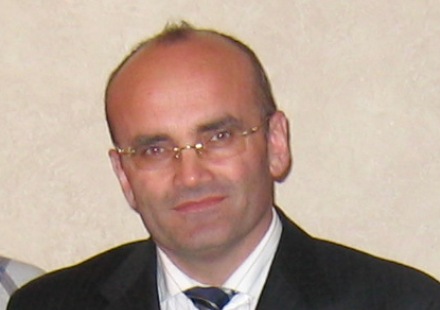
Vasiliy Burenok

Vasiliy Burenok told a round table at the ‘Army and Society’ exhibition in Moscow Friday that the current pace of Russian force modernization, not more than 2 percent, won’t support the transition to a ‘new profile’ military.

Burenok is Director of the Defense Ministry’s 46th Scientific-Research Institute (46 NII).  The 46 NII is a lead organization involved in formulating the State Armaments Program (GPV) and State Defense Order (GOZ).  It works on military-technical policy documents and program planning methodologies.  Burenok is a member of the Scientific-Technical Council of the RF Government’s Military-Industrial Commission (VPK).

Reviewing history a bit, Burenok told his audience, at the beginning of the 1990s, the rearmament rate was 5-7 percent annually.  But, between 1991 and 2000, financing for new arms and equipment declined more than 50 times, leaving only enough money to maintain existing weapons.

Burenok concludes to get the army to the ‘new profile’ it’s essential to introduce 9 percent new equipment every year, and for some services and combat arms, up to 11 percent.

This 9 to 11 percent is, of course, the difficult target President Medvedev set at the Defense Ministry Collegium.  Burenok indicated just how difficult–going from less than 2 to an 11 percent annual renewal rate.

Armaments Chief and Deputy Defense Minister Vladimir Popovkin also addressed the ‘Army and Society’ round table.  He said GPV 2011-2020 will go to the president for approval in June.  The new GPV will be accompanied by yet another new Federal Targeted Program for OPK Development.

Popovkin said a number of systems won’t be produced under the new GPV.  They include short-range tube artillery, and BTR-80, BMP-2, and BMP-3 combat vehicles that soldiers are afraid to ride in.

Shamanov Wants Aviation Back

VDV Commander General-Lieutenant Vladimir Shamanov told ITAR-TASS today that the airborne troops need their organic light transport aviation back because its absence is complicating their training.  He says:

“The results of the air-assault training of the VDV in the first quarter of this year show that the transfer of light aviation to the Air Forces is stalling the system.”

As an example of this, Shamanov said light aviation fulfilled only 60 percent of planned jump training at the VDV’s Omsk Training Center.  He said its commander has asked to continue jumps until 7 May.

Shamanov said the VVS ban on Saturday, Sunday, and Monday flights was making the VDV a hostage.  He continues:

“We’ve already had cases.  The VVS command allocated one helicopter each for jumps by our Spetsnaz and communications regiments near Moscow.  However in practice it turned out that the regiment having clear priority, the Spetsnaz regiment, could use the helicopter coming from Levashovo in Leningrad Oblast for jumps in all for only a half day out of five for purely aviation reasons, at the same time as the second, communications regiment, with the other helicopter coming from Ryazan, jumped for a full week.”

“We’ve sent the Genshtab our proposals to create organic sub-units of light aviation in the VDV.  Unfortunately, there’s no hope for them since no answer has been received from the  Genshtab, but we will continue to assert our position.” 

A VDV spokesman said last year, when they still belonged to the VDV, An-2s supported 140,000 jumps in combat training, and the VVS’ Il-76 medium military transport aircraft only 35,000.

The VDV’s light transport force had 7 squadrons of Mi-8 helicopters and An-2 and An-3 aircraft and three airfields until the General Staff Chief’s 1 January directive transferred them to the VVS.

Shamanov also repeated his past calls for each of his three air-assault formations to have its own regiment of 20 combat and 40 transport helicopters.  He said a proposal to this effect is being prepared.  An interlocutor told ITAR-TASS:

“Having organic helicopter regiments in the VDV’s air-assault formations undoubtedly would raise their air-mobility, fire power, responsiveness of command and control in combat conditions, and in the course of combat training.  So the formation commander, who gets a helicopter regiment, could independently, when he considers it necessary, without turning to the VVS command, decide to have air-assault training for personnel including helicopter jumps.”  

Recall the early January Genshtab directive that transferred all aviation units in other services and arms, with the exception of RVSN, to the VVS. 

Shamanov’s complaint and appeal for a change is interesting.  He isn’t one to be afraid to demand special treatment.  He warded off the change from divisions to brigades in 2009.  

Shamanov last publicly lobbied for an upgraded VDV rotary wing component, both attack and transport helicopters, in late 2009.  The Ground Troops would also like army aviation, which they lost to the VVS in 2002, returned to them.  ITAR-TASS noted that former Ground Troops CINC Army General Boldyrev said as much last September.  He wanted helicopter regiments for air-assault brigades that belong to the military districts.

The organic aviation issue will be another place to watch for a possible policy about-face.

Policy To-and-Fro on Military Police

State Secretary and Deputy Defense Minister Nikolay Pankov probably didn’t surprise a lot of people when he announced the latest Defense Ministry flip (or flop this time?) on the military police issue last week.

 Pankov announced that:

 “The Defense Ministry has found the establishment of military police inexpedient at this stage of Army and Navy reform.  Directive documents on the establishment of military police in the Russian Army have been suspended, and orders on the formation of these structures in the military districts and the fleets have lost force.”

 Later, the press quoted Pankov differently:

 “I wouldn’t say it so categorically – this work is suspended for now.”

But he didn’t elaborate on the Defense Ministry’s reasons for stopping or suspending the effort at this moment.

Military police units are, or were, supposed to stand up in 2010.  Their mission was to maintain order and discipline, and prevent hazing and other barracks violence and crime, primarily thefts of military property.  A military police department started working in the Defense Ministry’s Main Combat Training and Troop Service Directorate last December, drawing up plans and training programs for the new MP units.

In early February, a Defense Ministry representative denied press reports that Defense Minister Serdyukov had suspended work on the military police force.  But a source in the Defense Ministry’s press service told the media that “the documents establishing it have been sent to the appropriate legal directorates for reworking.”  He said that forming the military police would require amendments in federal legislation beyond the Defense Minister’s purview.

The back-and-forth, on-and-off nature of Russia’s yet-to-be created military police calls into question the Defense Ministry’s capacity to formulate and implement policies, or at least to do it so its doesn’t  look foolish.  Why would any military district commander or brigade chief of staff hurry to introduce any new policy or regulation that might just be overturned 6 months from now, or never implemented at all? 

As with the rumored halt in February, the latest stop may in fact be related to legal issues, but they usually only become an obstacle when they’re really protecting someone’s bureaucratic empire.  In this case, the military prosecutor and MVD are obviously very interested parties when it comes to devising a military police policy.  And they are pretty big hitters vis-à-vis the Defense Ministry.

The Defense Ministry already has plenty of people and organizations involved in military law enforcement, but they seem unable or unwilling to organize and cooperate to do the job.  Existing military law enforcement mechanisms could be made to work properly. 

Another sticking point may continue to be who will be in charge of a new military police force.  The prosecutor and MVD probably don’t want military police to answer to the Defense Ministry.  Military commanders could misuse or corrupt military police who would be enforcing laws on those commanders as well as ordinary servicemen.

Svpressa.ru talked to Anatoliy Tsyganok in this vein.  He said:

 “It once again attests to poorly thought-out reforms, zigzagging from side to side, senseless expenditure of resources needed for reequipping the army, and social programs.”

From the get-go, Tsyganok was against spending a ‘not small’ amount of money on a new structure seen as a panacea for all the army’s ills, at a time when the existing military command structure should be able to handle military police functions.

Tsyganok continues:

“. . . I came out not against military police per se, but against the dissipation of resources allocated for army reform:  the fact that they change conscripts for contractees, but then reverse this, the fact that they bring Yudashkin to design uniforms, but then chuck it, now here’s the confusion with military police.  It’d be better to use these resources on weapons for the army.  Russia’s military-industrial complex exports 90 percent of its production.  Aircraft to China and India, helicopters to Latin America and Middle Eastern countries.  Automatic weapons to Venezuela.  But the Russian Army scrapes by with old weapons.  At the same time money is invested in not well thought-out projects.”

“At present our servicemen who have violated order or broken the law are sent to do their time in basements, in special trenches, in storage areas.  Serdyukov doesn’t have financial resources even to build apartments for officers, there can’t even be talk about guardhouses.”

 “Now order among the troops is controlled by commandant (komendatura) forces, commandant patrols, commandant platoons and regiments, internal details; military traffic police structures are active.  This is a huge force.  For example, in Moscow there are 10 districts.  An integral commandant regiment patrols every district.  And is this little?  But military prosecutors, special departments [OO – FSB men—особисты or osobisty, embedded in large military groupings, units, and garrisons] also exist to maintain legal order in the army.  We need to force all this organizational and personnel mass to work effectively.  But for this the Defense Ministry itself needs to work effectively, and not spend money on schemes.”

 “The Defense Ministry leadership in answer to criticism about rampant crime in the army created nothing but the appearance of vigorous activity.  It’s hard to keep order, but forming something else at the expense of budget resources is easy.”

 “The failure of the project was sealed in its very organizational basis.  They proposed to subordinate the military police to the Defense Ministry in the person of the first deputy minister.  The fact is the very same operational structure of military control and repression would wind up in the hands of military leaders themselves.  This is a criminally corrupt thing.  Any Defense Minister, major troop commander, or independent unit commander could arrest on any pretext and end the contract of any inconvenient serviceman.”

Tsyganok kind of skirts around the issue without saying so, but it may be there’s not enough money to pay for building a military police force.

 Interfaks cited Duma Defense Committee Deputy Chairman Mikhail Babich, who called on the Defense Ministry to be more cautious about making changes in the armed forces and to avoid revoking its own decisions, as may be happening in the case of military police.  Babich is a somewhat critical and independent-minded member of Putin’s United Russia party.  He also said armed forces reforms require serious budget expenditures, so every time this or that program is dropped, the reasons should be closely studied and analyzed.  He concludes:

“I think the Defense Minister should hold to account those who were responsible for drawing up and implementing programs deemed unsuccessful.  First of all, this means the federal targeted program for recruiting professional sergeants in 2009-2015, which has not really started and the allocated money was spent on different purposes.”

Babich goes on to note that it’s still unclear what’s happening with Russia’s 85 permanent readiness combined arms brigades that replaced divisions in the Ground Troops.

“The Defense Ministry is keeping silent about this but it’s already clear that plans to establish permanent readiness combined arms brigades have fallen through.  As a result, it’s been decided to divide them into three types:  heavy, medium, and light.  Yet again everything is being done by rule of thumb.”