Category Archives: Shoygu’s Reforms

JO Shortage

Russia’s Eastern Military District (MD) is apparently experiencing a junior officer shortage.

The district headquarters in Khabarovsk announced this week that 227 of its contractees are set to receive lieutenant’s shoulderboards in the near future.

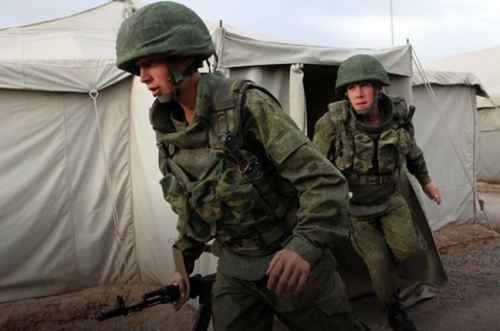
Eastern MD Contractees in Basic Training

Eastern MD Contractees in Basic Training

The Russian MOD site indicated that these contractees already have a higher education, and 39 have a military specialization.  Apparently, they will start serving immediately as junior officers.  The other 188 have been enrolled in military training establishments (VUZy) for an unspecified period.

Another 85 will soon be sent off for similar training.  The MD is already selecting well-prepared contract servicemen who have a higher education.

The district also intends to send representatives from its personnel directorate and military commissariats to western and central Russia to recruit individuals to serve as officers in the Eastern MD.

The MOD site reminded readers that, in May, MD commander General-Colonel Sergey Surovikin said the district needed to find officers “who were forced to resign during the optimization of the structure and size of the Russian Army” as well as contract servicemen with higher education who want to be officers.

The “optimization” of course was that of former defense minister Anatoliy Serdyukov.  His effort to cut bloat in the officer ranks began in earnest in 2009. While focused mainly on senior officers, Serdyukov’s knife also slashed lieutenants and captains at the base of the TO&E pyramid.  At the time, commentators reported complaints from units saying they had trouble keeping order and fulfilling routine requirements due to a lack of platoon and company commanders.

In some sense, the news about a JO shortage is surprising given that each spring the MOD gushes about young lieutenants graduating from VUZy and taking up their responsibilities in the nation’s far-flung armed forces.  It also brags about stiff competition to enter those VUZy every year. 

In another, it isn’t surprising.  Serving in the military in Russia’s harsh and underpopulated Far East is no more popular than living there for other reasons.  It’s a hardship post with little attraction for 22-year-old.

Lastly, each contractee taken to become an officer means another enlisted soldier has to be signed up for the Eastern MD.  And that’s a more difficult sell.  One is left wondering if the recruitment of contract servicemen for the Far East isn’t going so well either.

Sufficient numbers of young Russian men are just getting harder to find.  It’s hard to get them to go where the military thinks they’re needed.  Meanwhile, Moscow is trying to expand its force structure. And the very bottom of Russia’s demographic hole won’t be reached until 2018. 

Serviceability

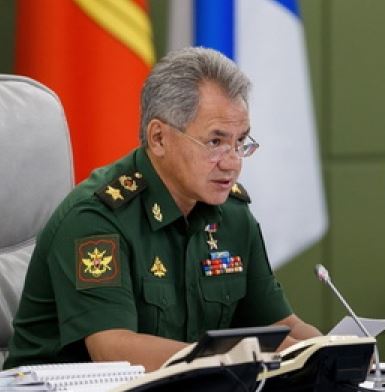
On August 1, Defense Minister Sergey Shoygu conducted a teleconference during which he addressed the serviceability (исправность) of Russia’s weapons and military equipment.

Defense Minister Shoygu

Defense Minister Shoygu

Serviceability is pretty synonymous with “in service,” “good condition,” “operability,” or “equipment operational readiness.”

Shoygu reported that the Russian military has achieved the following serviceability rates:

  • 63 percent for Aerospace Forces (VKS) aircraft;
  • 96 percent for air and missile defense systems;
  • 98 percent for space systems;
  • 76 percent for the Navy;
  • 94 percent for armored units;
  • 93 percent for artillery units.

Shoygu claimed that the military has devoted attention to obtaining higher quality weapons systems and to supporting their serviceability in the future.  He attributed high equipment availability to the shift to “full life cycle” maintenance contracts.  He said the MOD has worked with producers and developers to find problems that occur during use and work out measures to prevent them in the future.

In 2014, Shoygu reported that the overall serviceability of Russian arms and equipment improved from 80 to 85 percent.

In late 2013, Kommersant reported that the serviceability rate of aircraft in the air forces (VVS) was below 50 percent.  “Permanent readiness” requires 80 percent operational availability.

The MOD Action Plan (2013) specifies that equipment in-service rates for the ground troops and navy should be 85 percent and 80 percent for aircraft by 2020.

The U.S. military goal is 90 percent for all equipment except aircraft, which is 75 percent. But actual serviceability varies widely depending on a unit’s training and operational tempo.  Recovery time might actually be more critical.

The Canadian Army recently assessed its major vehicle and equipment fleet serviceability at 60 percent, which apparently didn’t make it too happy.

What do we make of Shoygu’s claims about the Russian military’s serviceability rates?

The Russians have put more effort against equipment modernization, overhauls, and repairs since Shoygu came to the MOD.  Therefore, increasing rates of serviceability aren’t surprising.

At the same time, the serviceability rate can be manipulated easily.

In most militaries, serviceability is determined and reported up the chain by military units themselves.  In the U.S., equipment readiness/serviceability is an element of the Unit Status Report (USR). It’s possible for commanders to fudge it.  The question is are they inclined to do this?

In Russia — where fulfilling the plan and meeting norms is highly valued, it seems likely.  Add to this the recent command housecleaning in the Baltic Fleet.  The MOD did a clean sweep on its headquarters for, among other things, padding numbers on training, readiness, etc.  So perhaps Shoygu double-checks his subordinates’ claims.

This is the country that created the Potemkin village.  For centuries, Russian provincials have been trying to fool any inspector-general (or party bureaucrat) sent from St. Petersburg (or Moscow).

At the same time, fudging can also be initiated at the top.  Mentioned on these pages more than once is the old trick of slashing the denominator to raise your percentage.  If 7,000 of 10,000 tanks are running, write 2,000 off and suddenly 88 percent of the army’s assets are serviceable, right?

In the end, we may have suspicions about Shoygu’s serviceability claims, but we don’t have any independent insight.  It’s true, though, that any military establishment that fools itself (at whatever level) about its “equipment operational readiness” runs an awful risk the next time bullets are fired in anger.

New Division in Rostov-na-Donu

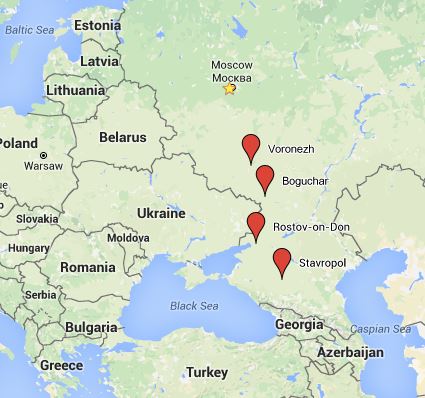
Rostov-na-Donu and the Western Direction

Rostov-na-Donu and the Western Direction

A Southern MD staff source told TASS on 24 March the Russian Army will establish a “full-blooded” motorized rifle division in the vicinity of Rostov-na-Donu this year.  The source indicated orders to this effect came from Chief of the General Staff Army General Valeriy Gerasimov.

The new division will reportedly be based in three garrison towns in Rostov Oblast.  Staff buildings and barracks will be constructed initially, with other facilities to follow in 2017.  Housing the division, storing its equipment, and providing training grounds and other essential infrastructure improvements will cost at least 5 billion rubles [$73 million].

Headquarters to the Southern MD, Rostov-na-Donu is opposite Donetsk and was the staging area for Russian forces that intervened in eastern Ukraine in 2014.

On 12 January, Defense Minister Shoygu announced that three divisions would be established in the western direction during 2016, but didn’t say where.  He also didn’t indicate if they would be completely new formations or existing ones moved to a new location and beefed up.

Most Southern MD forces are located south of Stavropol (headquarters of the 49th CAA) and are oriented on the Caucasus.

But Aleksey Ramm has suggested that an MRD at Rostov-na-Donu might be formed out of the current 33rd Independent Motorized Rifle Brigade (Mountain) now based in Maykop and Novocherkassk.  There aren’t other good candidates except to make a new division out of whole cloth.

If Rostov-na-Donu is one division, what about the other two?

The reincarnated 1st Tank Army just west of Moscow probably needs its 6th Tank Brigade to become a division for the army to be a real tank army (at least two tank divisions).

The 20th CAA — moved from around Nizhniy Novgorod to Voronezh — could have either its 9th MRB or 1st Tank Brigade (both near Boguchar) turned into a division.

But in light of increased tension with NATO, especially with its newest and easternmost members, it seems the Kremlin might want a new division opposite the Baltic states, or perhaps even in Kaliningrad. The latter would be a low-cost reorganization since the Ground Troops already have an independent brigade and regiment in the Russian exclave.

But We Make Rockets

Yes, Russia is making rockets now.

Vladimir Putin came to power on the eve of the 21st century promising (among other things) to remake Russian military power.  But progress was slow.  The economy struggled to emerge from the default and devaluation of 1998.  A poor, unready army found itself mired for several years in the Second Chechen War.

Not until after an uneven military performance in the August 2008 five-day war with Georgia — and not until after the 2009 economic crisis, perhaps in 2012 or 2013 — did the funding necessary for significant improvements in combat readiness and larger procurement of weapons and equipment reach the Russian Armed Forces.

Then came war in Crimea and eastern Ukraine and Syria.  Blowback from Syria could make Central Asia or the North Caucasus Russia’s next front. But questions about recent Kremlin bellicosity already bear close to home — on Russia’s domestic political and economic circumstances.

Consider a Gazeta.ru editorial from October 26.

“But we make rockets”

“Can the army and navy replace everything else for citizens”

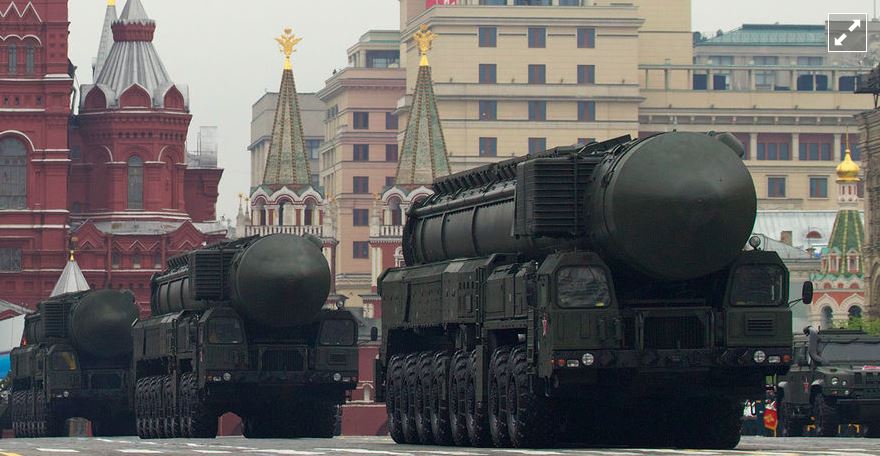
RS-24 Yars ICBMs on Parade (photo: AP / Ivan Sekretarev)

RS-24 Yars ICBMs on Parade (photo: AP / Ivan Sekretarev)

“Often it’s easier for people to accept growing financial hopelessness to the sound of bold military marches.  Not for the first time in Russian history the army is beginning to replace the nation’s economy, life, general human values, and becoming the new old national idea and practically the only effective state institution.”

“Not everywhere in Russian industry are orders shrinking and demand falling.  There is production that is very much in demand.  In the ‘Tactical Missile Weapons’ corporation, for example, they’ve gone to three shifts of missile production for the Syrian front, a source in the defense-industrial complex has told the publication ‘Kommersant-Vlast.’  Against this backdrop, an article appeared in The Independent newspaper about how in Russia, after the events in Crimea and Syria, the army is again becoming the ‘departure point of Russian ideology’ — that very national idea for which they searched so long and unsuccessfully in post-Perestroika Russia and here now, finally, have found.”

“‘Russia has only two reliable allies — the army and navy.’  These famous words of Emperor Aleksandr III (who, incidentally, went down in history we would say now under the nickname Peacemaker) have once again in our history acquired a literal meaning. Other reliable allies of whom Russia was evidently sure over the last year-and-a-half or two years clearly no longer remain with us.”

“In a time of economic crisis, the temptation among Russian authorities to make the army one of the leading state institutions grows even greater.  The remaining institutions are emasculated or work as badly as ever.  In the end, to do this is sometimes simply useless:  the impoverished voter will say — why are your institutions here, is my life improving?  The expenditures are great, but the effect will be, probably, negative.”

“How much better the army is:  there is discipline, and pay, and achievements, and a plan of development.  The share of military expenditures in the budget is growing, but a cut in its absolute size has affected it to a lesser degree than civilian sectors like education and health care.”

“All hope is now on defense — as in ‘peace time’ we placed hope on oil and gas.”

“The army again is a lovely testing ground for demonstrating one more innovation — import substitution.  Not all Russians can understand why it’s necessary to burn up high quality foreign goods. But hardly anyone would object that Russia didn’t buy any aircraft, tanks or missiles abroad.  The president at a session of the Commission on Military-Technical Cooperation Issues announced that thanks to import substitution the country’s defense industrial enterprises are ‘becoming more independent of foreign component supplies.’”

“In general, we found by experience that we didn’t quite succeed in finding any other nation-binding idea over 25 years of not very consistent attempts to draw close to the Western world.  The simple national idea ‘state for the sake of man’ didn’t take root, including, alas, because man somehow didn’t value it very much; attempts to raise free citizens and form a civic nation, bound by common human values, failed.  There were neither citizens, nor values…”

“Being that there wasn’t demand for a free citizen not only above, but even below.  It is precisely therefore that we don’t have normal trade unions, strong nongovernmental organizations, and independent civil initiatives.  It’s not just the state that doesn’t need ‘all this.’  It’s society too.”

“Therefore one year before State Duma elections there isn’t even opposition in political parties to the openly military-oriented budget.”

“Distinct from this is that America which we love to accuse of aggressiveness, but in which military expenditures and their share in the budget are steadily falling in recent years.  In fact, legislative control over the military budget is one of the main forms of civilian society’s control over the army in the USA.  Though in America there were times when the military tried to decide both for society and for politicians.  Considerable force and time was required to put the military under control, but the States succeeded in this.”

“In Russia the easiest and quickest means of unifying the nation turned out to be the bloodless victory in Crimea and the somewhat bloody events in the Donbass.  The idea of abstract imperial power, and the image of ‘the country rising from its knees’ were substantiated, as the man in the street perceived it, and they were near and comprehensible to him.  Like, we lead a miserable life ourselves (when was it otherwise?), but we are a ‘great power’ again.”

“Polite green people, capable quickly without noise and dust of ‘deciding questions,’ create in the multimillion-person army in front of the television an illusion of their own significance.”

“It’s not only the missile corporation that’s working ‘in three shifts’ now, but also the factory of national pride, based exclusively on military victories.”

“Firstly, we are proud of past victories, in which, besides the live heroes of that war, there is no one alive today who isn’t, in essence, a participant:  St. George’s banners and inscriptions on foreign-made cars ‘To Berlin!,’ ‘Thanks granddad for Victory,’ ‘Descendant of a Victor’ flash at every step.  Secondly, they actively urge us to pride in new military victories.”

“Meanwhile the war in distant Syria works for such military-patriotic PR even better than the war in Ukraine.  And further from the borders, pictures of Russian aircraft bombing terrorists a world away inspire the people more than the sullen ‘militiamen’ of which the masses have had enough already.”

“What’s fashionable in war and militancy also enters official political discourse.  Defense Minister Sergey Shoygu has firmly become the second most popular politician and most successful top-manager in the country.  And the president not without some internal pride calls himself the ‘dove with iron wings,’ telling foreign guests directly at a Valday Club session that he was still in the Leningrad courtyard when he learned to ‘strike first’ if a fight is inevitable.”

“And it’s still necessary to remember:  even a war far from the borders, if it’s protracted, requires not  only military, but also great financial resources.”

“So if the economic collapse in Russia continues, pride in the army still cannot fully make up for people the absence of conditions for a normal life.  But for now — in a situation where the authorities live by tactics and not by strategy, — the army and military mobilization of the nation really look like a national idea, and a panacea for the crisis, and a means of supporting a high rating.”

“Polite green people are already capable of becoming not simply a symbol of the Crimean operation, but a symbol of an entire epoch. But they usually don’t solve all the accumulated social, economic, and human problems of a large country.”

Shaltay Boltay, Missile and Boomer Bases

Shaltay Boltay

Shaltay Boltay

Computer security, whistleblowers, hacks, compromises, and leaks have arrived on these pages.  Not through technical interest, but because of information that’s become available.  But more preface is required.

Russia watchers aren’t sure who’s behind Anonymous International.

Are they computer genius anti-Putin “hacktivists” stealing Kremlin emails and documents, auctioning off some and publicizing others?  Or are they a small, relatively liberal Kremlin faction (or just a few people) leaking information to benefit themselves politically?  Take your choice of analyses (here, here, and here).

They take their noms de plume from Alice in Wonderland.   Shaltay Boltay — Шалтай Болтай (Humpty Dumpty) — is the group’s voice.

The group is famous for hacking and spoofing Prime Minister Dmitriy Medvedev’s Twitter account, and for revealing the Kremlin’s hired trolls at work on Western web sites.  But the group’s latest information is of interest here.

Anonymous International addresses the Chief of the FSB’s Military Counterintelligence Department, General Colonel Aleksandr Bezverkhniy in mock indignation over Defense Ministry emails it obtained.  They reportedly came from the secretary of the former MOD Construction Department Director, Roman Filamonov.

Anonymous International calls the MOD’s information security organs “criminally negligent.”  It claims it used Yandex.ru, Mail.ru, and Gmail.com to obtain “service” (FOUO) documents sometimes containing secret data on Russia’s defense capabilities.  Reports on meetings with the Defense Minister and his deputies were allegedly transmitted via easily accessible open email.  The group says Filamonov’s secretary put her username and password for the MOD’s official email server in her electronic files.

Anonymous International asks Bezverkhniy to address the cavalier attitude toward information security among former and current MOD officials.  But everything mentioned is just an excerpt.  The group says it will sell a copy of its complete four-year collection of files from Filamonov’s secretary to the FSB for half price.

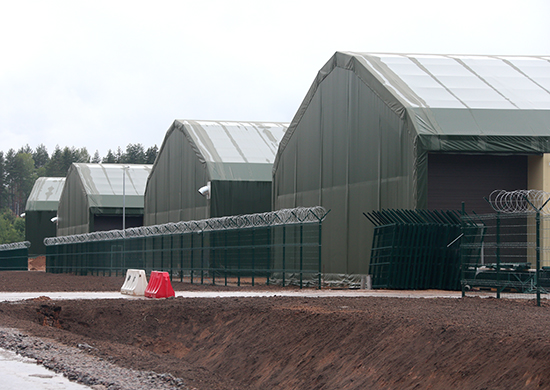
B0ltai.org appended a July 2014 report detailing Spetsstroy work on seven bases for Iskander-M SRBMs, supposed to be done that month.  The 7-billion-ruble contract to prepare these installations for the Iskander-M centered primarily on erecting 56 “tent-mobile shelters.”

But only 21 were completed on schedule — in Luga (26 рбр, 6А, ЗВО), Molkino (1 рбр, 49А, ЮВО), and Birobidzhan (107 рбр, 35А, ВВО).  Others — in Mozdok (probably a battalion’s worth), Znamensk, and Totskoye-2 — were experiencing significant delays in design or construction.  One in Shuya was not due for completion until February of this year.  It’s likely four more bases will be outfitted under some future contract.

This information from Filamonov’s secretary’s email is not particularly revelatory.  The missile brigades are well-known.  But it’s embarrassing that only one-third of this work was finished on time, despite the priority given Iskander-M.  Recall this program is supposed to be 100 percent  procured by 2017.  Additional money will probably be needed to bring the effort back on schedule.

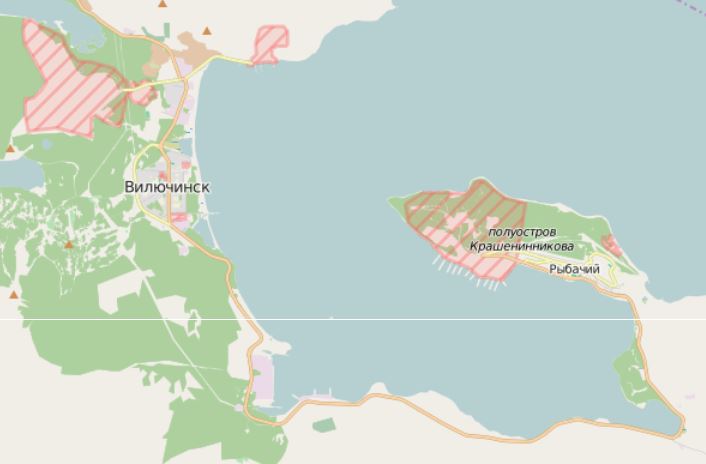
Anonymous International also posted a slightly redacted report on construction, or reconstruction, of 12 Pacific Fleet submarine facilities near Vilyuchinsk to support the basing and operations of proyekt 955 Borey-class SSBNs.  It vaguely outlines a three-phase plan to complete this work in 2014, 2015, and 2017.

Vilyuchinsk and Rybachiy

Vilyuchinsk and Rybachiy

The report refers without specifics to work on mooring areas, shore power, dredging, and 12th GU MO nuclear warhead storage buildings.  In the second phase, it mentions completing a 100-ton crane, missile and weapons handling areas, storage buildings, roads, service housing, and “social infrastructure.” Finally, the report describes “full completion of the Pacific Fleet submarine base” including pier, administrative, vehicle, missile, and weapons storage areas, and roads as well as the “full development” of the energy and water supply for nearby residential areas.

The report is a year old, but depicts a base not quite ready for new fourth generation SSBNs.  Apparently, Aleksandr Nevskiy (K-550) is coming anyway.  Three more Boreys will follow while work at Vilyuchinsk and Rybachiy continues.  As noted previously, the issue of maintaining Russia’s naval strategic nuclear force in the Pacific has been long and painful for the MOD and for the Glavk personally.

For Nakhimov’s Price

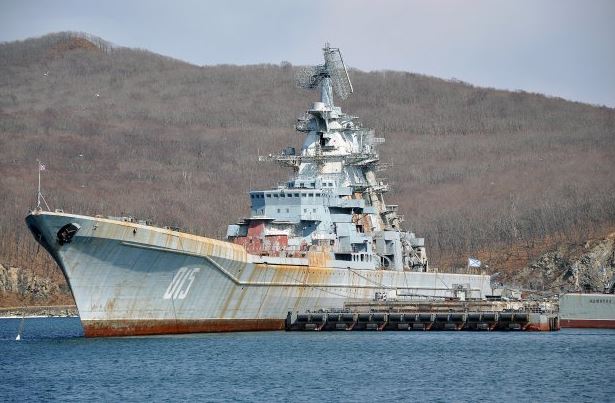
Admiral Nakhimov? (photo: Topwar.ru)

Admiral Nakhimov? (photo: Topwar.ru)

The photo above appears to be Kirov-class CGN Admiral Nakhimov (ex-Kalinin) having its superstructure dismantled at Sevmash.  Topwar.ru didn’t indicate how it came by the picture.

Blogger Aleksandr Shishkin recently offered his rationale (and that of other navy advocates) for repairing and modernizing Admiral Nakhimov.

As a shipbuilder, Shishkin says the “enemies of these monster-ships” think that the extraordinary expenditures required to renovate Nakhimov could be redirected to better use for the Russian military.  But he contends that Russia’s nuclear-powered guided missile cruisers have a disproportionate military-political effect when compared to other ways of spending this part of the MOD budget.

First, he makes a military firepower argument.

He argues that Nakhimov provides more “bang for the ruble” measured against new surface combatant construction.  He offers as an example the proyekt 20380 Steregushchiy-class corvettes of which five, with a total of 100 missiles, can be bought for Nakhimov’s price.  Two and one-half proyekt 22350 Gorshkov-class frigates can be bought for Nakhimov’s price.  Three Gorshkovs have 144 missiles. Or, for the cost of Nakhimov, one future proyekt 23560 (Lider) destroyer with approximately 136 launchers could be bought.

Shishkin projects 304 missiles on the renovated  Nakhimov — 224 SAMs and 80 cruise missiles.

That is, according to him, “twice-three times the quantity of similar and more powerful weaponry for the same money plus the possibility of using [the ship] anywhere in the world.”

Second, Shishkin argues for Nakhimov’s political effect.  Its return will keep Russia in a “firm second place” in the world navy “table of ranks” which carries a psychological impact “no one should underrate.”  Showing the flag promotes Russia as an alternative to the U.S. as the world’s lone superpower, according to him.

Nakhimov or no Nakhimov, many would argue China is the world’s second-ranked navy.

Third, the blogger maintains that reconstructing Nakhimov raises Russia’s “sense of self-worth” by showing that it can build [or rebuild] really large ships, not just patrol boats.

Fourth, he asserts that Nakhimov will be ready (2018-2019) earlier than new corvettes, frigates, and destroyers that won’t be delivered until the early 2020s.

Fifth, Shishkin says Sevmash’s work on a “first-rank” nuclear-powered ship like Nakhimov will prepare it to build aircraft carriers or to compete with Northern Wharf for destroyer contracts.

Shishkin notes that the renovation of Nakhimov costs 50 billion rubles ($1 billion), or 30 billion ($600 million) for the ship and 20 billion ($400 million) for new armaments and systems.  If this is the case, that makes Steregushchiys about $200 million, Gorshkovs about $400 million, and Liders about $1 billion per unit.

So none of this comes cheaply.

It’d be interesting to read an argument for Admiral Nakhimov addressing how the ship will figure in future Russian fleet operations and larger military strategy. How will it operate in defense of Moscow’s naval strategic nuclear forces, or in more likely contingencies short of this?

Admiral Lazarev (photo: Topwar.ru)

Admiral Lazarev (photo: Topwar.ru)

Admiral Ushakov and Admiral Lazarev remain in reserve in different states of decay and are very unlikely candidates for modernization.  Petr Velikiy will, at some future point, probably undergo the work currently being done to Nakhimov.

Ten “New” Chemical Defense Regiments

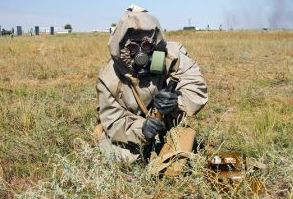
Russian Soldier in Chemical Defense Gear (photo: Mil.ru)

Russian Soldier in Chemical Defense Gear (photo: Mil.ru)

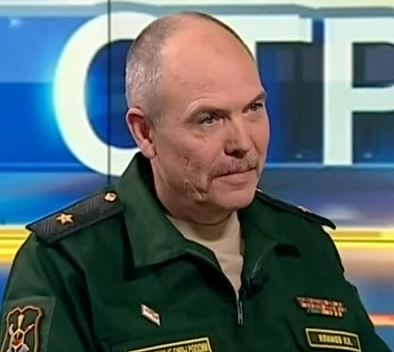
In late June, Mil.ru provided comments by the Deputy Chief of Radiological, Chemical, and Biological Defense (RKhBZ) Troops, General-Major Igor Klimov. He said:

“Development of the troops of RKhB defense is currently directed at supporting conditions for an adequate response to all possible threats — radiological, chemical, and biological.”

The RKhBZ Troops are capable of completing missions for the Armed Forces and the state as a whole, according to him.

General-Major Igor Klimov

General-Major Igor Klimov

But Klimov added:

“One should note that just in 2014 alone ten regiments of RKhBZ were formed in the composition of combined arms armies.”

At the same time, the TO&E structure of the four independent RKhBZ brigades of the military districts was “optimized.”  That means, of course, reduced, cut, slashed, etc.

Klimov added:

“In 2016-2020, the composition and TO&E of formations, military units and organizations of the RKhBZ Troops will improve with the goal of guaranteeing fulfillment of RKhBZ missions for Armed Forces groupings in armed conflicts and local wars, eliminating the effects of emergency situations, and conducting research in the applied sciences (chemistry, biology, biochemistry, genetics, biotechnology).”

Mil.ru also noted that RKhBZ formations, units, and organizations will undergo a transition to new org-shtat structures as they receive new types of weapons and equipment.

The ten “new” regiments look like this:

The shift from brigades is creating regiments that aren’t really “new.”  It’s a reshuffling of existing RKhBZ units to integrate them into Russia’s combined arms armies.  They will be army- rather than MD-level assets.  

The “new regiments” are rather sparse.  Most press indicates they will have about 300-600 personnel and 100-200 pieces of equipment each.  In Soviet times, a combined arms army had several RKhBZ battalions including recon, protection, decon, flamethrower, and smoke.

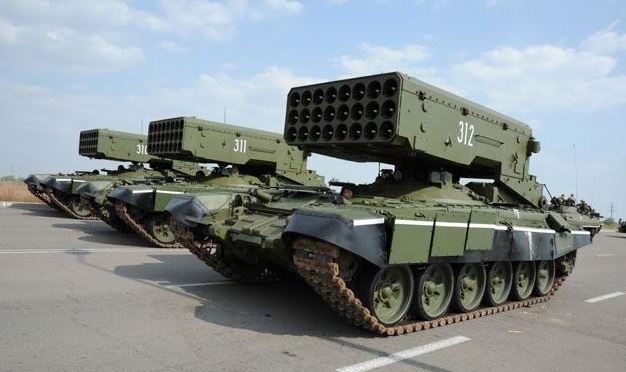
TOS-1A

TOS-1A

Perhaps RKhBZ is returning to army-level control because of the growing role of thermobaric rocket launchers like the TOS-1A in Russia’s fire support plans.

Better Talk About Your Problems

Army-2015 (photo: Mil.ru)

Army-2015 (photo: Mil.ru)

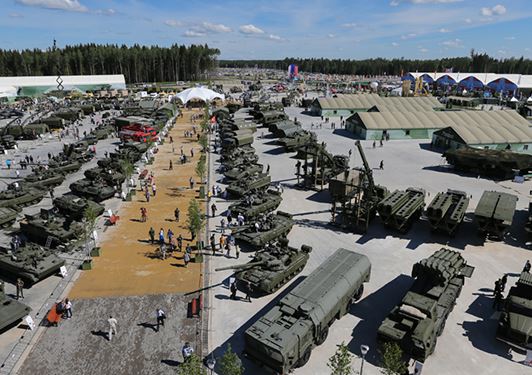
Last week the Russian MOD put on an extravaganza.  Army-2015 was a huge public exhibition of the latest and greatest Russian military technology and equipment.  It was a major patriotic event designed to boost the average Russian’s pride in his or her armed forces.

Army-2015 was not intended as a forum for discussing the Russian military’s deficiencies and difficulties.  However, the venerable BBC Russian Service interviewed four well-known commentators attending the show about this very issue. It’s a topic no longer easy to find in the Russian media.

The BBC turned first to State Duma Deputy Vyacheslav Tetekhin from the KPRF who pointed to the Pentagon and its penchant for airing the U.S. military’s problems to identify and resolve them.  Tetekhin said Russia very much lacks similar discussions in its legislature and military ranks.

Army-2015 (photo: Mil.ru)

Army-2015 (photo: Mil.ru)

The British broadcaster asked these observers to name weak points in Russia’s military which — in their opinion — need to be fixed immediately.  The experts listed five:

  • The development and production of modern armaments suffers from a lack of personnel and the “incompleteness of the material base.”
  • The size of the armed forces is insufficient, and manning is difficult because of a lack of men.
  • A lack of follow-through in reforms, arbitrariness in decisionmaking.
  • Insufficient modern weapons, including UAVs, and the slow pace of reequipping the army.
  • The need for large expenditures to continue reform — to stop it is impossible, but great resources are needed to complete it.

That “incompleteness of the material base” sounds like defense industry is missing skilled workers, part and component suppliers, and sub-contractors who traditionally supported big arms makers. Moscow was compensating for this with foreign purchases, but it is now preoccupied with arranging for domestic import substitution.

Tetekhin expressed his concern about who will design Russia’s future weapons systems.  The skill of those working in R&D today is “an order lower” than the previous generation, he says.

For Konstantin Sivkov, the main problem is that the armed forces aren’t large enough.  He says they need to be 50 percent bigger to defend the country. More modern weapons answering modern requirements are also needed.

Igor Korotchenko sees the lack of drones — tactical to strategic and strike variants — as Russia’s most important military shortcoming.  He also complained of changing priorities and arbitrary decisions made by new defense ministers, especially regarding arms purchases.  As a remedy, he calls for permanent deputy defense ministers and service CINCs.

They tried virtual life tenure for deputy defense ministers and CINCs in Soviet times.  Didn’t work out too well.  It was a true recipe for arbitrariness and stagnation.

Lastly, the BBC quotes Konstantin Bogdanov, who gives us the most thorough summation of where the RF Armed Forces are today.  It’s worth quoting verbatim:

“The first and main problem is the unfinished state of the military reform, launched at the end of the 2000s, and repeatedly changed in its particulars. Both under Serdyukov and under Shoygu.”

“The second problem is connected to the still not overcome so-called ‘procurement holiday of the 1990s.’  The fact is a significant part of equipment, which should have been withdrawn from the inventory at the start of the 2000s and replaced with new models, is being replaced only now.  Fifteen years at a minimum have been lost.”

“This led, in particular, to an entire range of industrial enterprises, to use a sports analogy, ‘getting out of shape.’  Over the course of a long time, they couldn’t support the delivery of necessary equipment and armaments with the required characteristics and production costs.”

“This situation is being corrected somewhat, but at the end of the 2000s it was completely outrageous.”

“The manning problem is connected with the demographic hole.  They have to drag people into the army, I wouldn’t say with a lasso, but with a very sweet cake — pay.”

“There is yet another problem — the need for large infrastructure outlays.”

“Abandoned military garrisons in the Arctic, the construction of new bases there.  But this is not just a problem in the Arctic, attention is just riveted on it.  […] Airfields are being reestablished, military bases reestablished, which were abandoned at the end of the 1990s.”

“This is enormous money, and how all this will look under difficult financial conditions is hard to say.  The army is eating lots of resources, but it has gone halfway and stopping here wouldn’t be right.”

Adding (and Subtracting) Contracts

General-Colonel Viktor Goremykin

General-Colonel Viktor Goremykin

Chief of the Main Directorate of Cadres (GUK) — head of personnel for the MOD, General-Colonel Viktor Goremykin was on-stage Friday, 3 April as the latest spokesman for contract service, i.e. the military’s professional enlisted recruitment program.

This is an interesting, if subtle, shift.  More often in the past, the General Staff’s Main Organization-Mobilization Directorate (GOMU) spoke to contract manning issues.  GUK has typically dealt more with officer promotions and assignments.

The GUK’s Goremykin was commissioned into the army, but his mid-career training came in counterintelligence at the FSK Academy (soon renamed the FSB Academy).  So perhaps he was a KGB “special section” guy or osobist from his earliest days as an officer.  His path is reminiscent of his immediate boss, Nikolay Pankov.

According to TASS, Goremykin told the assembled media that the MOD will very soon have 300,000 contractees, because it now has exactly 299,508.  He added that the military gained 80,000-90,000 men on contract service in 2013 and 2014, and has added 19,000 in 2015 thus far.

We can peel back the contract service onion as a result:

  • If, from this 299,508, we subtract 90,000 + 90,000 + 19,000, the Russian MOD had only 100,508 contractees as recently as 31 December 2012. Pankov claimed 186,000 contractees at the start of 2013.  The 85,492-man discrepancy represents contract attrition over the last 27 months, or an average loss of 3,166 contractees — an entire brigade of recruits — every 30 days.
  • As Mokrushin notes, General Staff Chief Valeriy Gerasimov said there were only 295,000 contractees in late December.  If 19,000 were added in 2015 but the total is only 299,508, then a net of only 4,508 was added due to the loss of 14,492 contractees during those months.  Call that five percent attrition, but annualized it’s 20 percent.
  • We were told in early November 2014 that the Russian military, for the first time, had more contractees than conscripts.  Since there were 305,000 conscripts at the time, ipso facto, contractees must have numbered at least 305,001.  You can add the November-December losses — 10,001 — to 14,492 and you get 24,493 lost in five months.  That’s 4,899 per month on average — call that two brigades of recruits lost — every 30 days.

Russian recruiting centers have to keep a torrid pace just to stay even with these losses.

But back to Goremykin.  He said the MOD’s goal for 2015 is to reach 352,000 contractees, and plans for the outyears haven’t changed — 425,000 by 2017, and 499,000 by 2020.

With possible attrition of 27,000 over the next nine months, the MOD will have to recruit 79,000 contractees to be at 352,000 by the end of 2015.

Goremykin indicated the MOD will continue allowing conscripts with higher education to serve two years as contractees instead of one as draftees.  The percentage choosing this option isn’t large, but it’s growing, according to him. The six-year service requirement to qualify for a military-backed mortgage may be dropped to five years just to encourage this category of contractees to re-up.

The GUK chief said there are plans to make the Russian Navy almost 100 percent contractee, starting with its submarine forces first, then most of its surface forces.

According to RIA Novosti, General-Colonel Goremykin also announced this year the MOD will make its entire contingent of “junior commanders” (NCOs) contractees.  It intends to do away with the longstanding practice of selecting and making some draftees into sergeants.  Goremykin added, “This is a task for this year.”

Two take aways:

  • As always, it’s difficult to trust the MOD’s numbers; they tell us about additions, but not subtractions.
  • As shorthand, we tend to call newly recruited and enlisted Russian contractees professionals when, in fact, they have just signed up to become professional.  Whether they do is a function of whether they stay, get trained, and become experienced.  One senior Russian commander has said he considers soldiers professionals when they’ve served two or more contracts (6+ years).

Not Enough Men or Transports

Il-76 Transport Landing (photo: Kommersant / Anatoliy Zhdanov)

Il-76 Transport Landing (photo: Kommersant / Anatoliy Zhdanov)

Another large-scale Russian military “surprise inspection” has concluded, and military commentator Ilya Kramnik has placed it, and other exercises, into perspective for Lenta.ru.

Interpreted as a prologue to war in Europe by some, the Kremlin-directed “surprise inspections” are the logical continuation of a process in recent years.  It is the process of developing strategic mobility through deployment exercises, according to Kramnik.

The latest six-day “surprise inspection” focused on deploying and redeploying forces in Russia’s Arctic regions, but President Vladimir Putin expanded it into a nation-wide exercise.

Kramnik focuses his analysis first on the Kaliningrad exclave.  Russia has practiced its defense of this region since the mid-2000s on an expanding scale. But the first large-scale drill in Kaliningrad, Kramnik says, was Zapad-2009.

Kaliningrad is where the pattern of special attention to troop mobility developed. In “surprise inspections,” military units from almost every armed service and branch were delivered by ground, rail, sea, or air transport to unfamiliar ranges in that region to conduct training missions.

The pattern has repeated in each of Russia’s “strategic directions.” Although Kramnik doesn’t describe it as such, it is, in effect, the establishment of expeditionary forces within the Russian military intended for internal transfer and use on any of Russia’s borders (or beyond them).  

If mobility questions play a key role in Kaliningrad, Kramnik continues, they are dominant when it comes to the Arctic.  All Arctic deployments depend on Navy and Air Forces transport capabilities.  Then he writes:

“It relies first and foremost on reestablishment of infrastructure which supports, if necessary, the redeployment [переброска] of troops by sea and by air and not requiring large numbers of personnel for daily service and security.  13 airfields, radar stations, repaired ports and other facilities allow forces to return quickly ‘in a threatening period.’  And to control the surrounding sea and air space a rather sufficiently compact grouping based here on a permanent basis.”

Kramnik concludes that Russia is confronting its weakness — armed forces not large enough to garrison its immense territory.  This increased attention to strategic maneuver is a means to compensate for an insufficient number of troops.  He takes a comment from Viktor Murakhovskiy:

“Today we don’t have a single self-sufficient grouping on any of our [strategic] directions.  This is the main reason for the great attention the Armed Forces leadership allocates to the potential for redeploying forces.”

Mobility, guaranteed by a developed railroad network, and in distant and isolated TVDs by the world’s second largest inventory of military-transport aviation, should support the potential for Russia, if necessary, to “swing the pendulum” — effectively maneuvering forces between different TVDs, Kramnik writes.  The capacity provided by the civilian airlines and fleet can also add to this.

But besides men, Russia also lacks enough transport aircraft.  

Kramnik writes that while attention has gone to constructing and reconstructing airfields and finding personnel to service them, the VTA’s order-of-battle is in critical condition, especially in terms of light and medium transports.  The average age of the An-26 inventory is nearly 35 years; the An-12 more than 45 years.

Events of the last year in Ukraine ended what were already difficult talks with Kyiv about building the An-70 and restarting production of the An-124.  Meanwhile, much of the Antonov Design Bureau’s competence has degraded, according to CAST Deputy Director Konstantin Makiyenko.

So today, Kramnik says, Russia has at its disposal only one serial VTA aircraft — the modernized Il-76, developed 40 years ago with serious limits on the weight and dimensions of military equipment it can deliver.  It will be supplemented by the Il-112 (light) and Il-214 (medium) transports, and by a “future aviation system transport aviation” or PAK TA.

The very same reported PAK TA that generated hysterical press here, then here, and here by promising to land an entire armored division of new Russian T-14 / Armata tanks overnight, anywhere in the world.  From an aircraft industry at pains to duplicate large but old designs like Antonov’s?  Obviously, a sudden outbreak of irrational Soviet-style giantism.

In the end, Kramnik concludes that VTA needs a high priority or Russia will have trouble moving combat capable groupings to the Arctic and Far East.  New aerial tankers are needed as well.