Does That Box Come With Electronics?

The latest Mistral story is more complex than what you’ve probably read so far.

Russian press services report a highly-placed military source claims Paris has “registered” Moscow’s demand for systems and equipment on Mistral that fully satisfy the Russian Navy’s requirements.

Media sources also say the negotiations foresee a state contract for the provision of two Mistrals, spare parts, instrumentation, and essential operator documentation, as well as equipment, services, and construction documentation needed to build two more Mistrals in Russia.

A source also told the wire services preparation for the acquisition of Mistral “is going logically and systematically” within the bounds of the negotiating process with the French side.

Newsru.com, by contrast, claims this is the Defense Ministry’s way of countering reports that Moscow has decided not to buy Mistral since France is trying sell Russia “empty boxes” for a billion euros. 

Newsru is referring to Vedomosti’s story from earlier this week saying the entire Mistral deal is under threat because the ships’ outfitting is unacceptable to Russia since it doesn’t include modern command, control, and communications systems, and is only a “basic variant” of the ship, a “box without electronics” essentially.

Newsru recaps Tuesday’s Vedomosti:

“. . . the preliminary agreement actually didn’t include the construction of two more ships in Russia, or crew training and the transfer of shipbuilding technologies.  As “Vedomosti” stated with reference to sources in the Presidential Administration and the RF Defense Ministry, the negotiations with the French have reached a dead end, and now resolution of the problem is being sought at the political level.”

On the issue of providing C3 systems (specifically, Senit 9 and SIC-21) on-board Mistral, Vedomosti implies it’s more about money than technology transfer.  Russia can either pay an extra 200 million euros for a full electronics fit, or try to argue at the political level for the ships at the price of 890 million euros which was supposedly on the protocol signed late last year by now-retired Vice-Admiral Nikolay Borisov and Deputy PM Igor Sechin.  Other sources have said Borisov and Sechin exceeded their mandate in agreeing to a price well over 1 billion euros.  We don’t really know what was on that protocol.

The point – overlooked by many including yours truly – is that there’s no real contract for Mistral yet, and it’s a long way off.  All there are so far are protocols, agreements, and understandings.  What was signed in January at Saint-Nazaire was an “intergovernmental agreement” for the possible construction of two Mistrals, not a specific contract covering that and the construction of two more in Russia.

Wednesday Interfaks.ru ran its review of the Mistral story concluding that the negotiating process is difficult, but the French have decided to meet Russia’s requirements.

Interfaks also published something else that might be useful when thinking about Mistral:

“Meanwhile in mid-March, Deputy Defense Minister Anatoliy Antonov, who’s overseeing international cooperation issues, told journalists in Paris that Russia doesn’t intend to force the signing of the contract for the purchase of the French ‘Mistral’ helicopter carriers until it’s determined that all technical parameters won’t impinge on the Defense Ministry’s interests.  ‘It’s early to talk about dates, too many technical details have to be decided.  The contract has to be adapted to our conditions.  Complex expert professional work in the verification of all parameters of a future agreement is going on,’ said the Deputy Minister.  And he noted talk about how all technical nuances are reflected and have been laid down in the contract.  ‘The negotiating process is complex, I would say difficult,’ said Antonov.  He added that, essentially, the negotiations have just begun.  ‘We have to discuss the entire complex of issues.  The task of acquiring ships and their technologies has been given to us.  That’s the most important thing,’ said the Deputy Minister.  In his opinion, an important part of the negotiating process is ‘the contract’s price.’  ‘It’s important to understand that on the issue of buying Mistral type ships agreements were reached at the level of the presidents of the two countries, and negotiators have all necessary authorities and instructions.  We have to work calmly and implement all agreements,’ said Antonov.  He noted that now it’s essential that all agreements ‘be put on paper and to reflect the political agreements of the two presidents in figures so that they meet the interests of the two countries.’”

A professional diplomat and negotiator is never going to say a process is easy, and this one isn’t.  But it does sound like there’s a draft contract, while price and exactly what the presidents agreed remains at issue.

More on the “Second Phase” Engine

Lenta.ru had an informative piece on the PAK FA’s “second phase” engine yesterday. 

It calls the “second phase” engine “Item 129” [Изделие 129].  Lenta also says the provision of the first “Item 129” engines will coincide with the first PAK FA or T-50 fighters entering the force in 2015.

It notes the “first phase” engine is “Item 117” or AL-41F1 [АЛ-41Ф1].

The AL-41F1 will be used in the prototypes and the first series models which will enter the Air Forces’ inventory in 2015.  It has 19,334 lb. dry thrust, and 33,047 lb. with afterburners.  It is equipped with a plasma ignition system, all-aspect thrust-vectoring control, and digital controls.

The Lenta piece says a less powerful variant of the AL-41F1 – the AL-41F1S or “Item 117S” – will be put on the Su-35S fighter.  The AL-41F1S has an older digital control system and a little less thrust.  

According to Lenta, not much is known yet about “Item 129.”  It was announced earlier it will have increased thrust and greater fuel efficiency than the AL-41F1.  “Item 129” will reportedly have 24,054 lb. dry thrust, and 39,566 lb. with afterburners.  The newer engine’s also likely to have a longer service life.  

Lenta adds a report from Sukhoy that it expects to finish prototype airframe testing either this year or next.  In 2013, the Defense Ministry’s supposed to get 10 experimental aircraft for combat employment testing.

“Second Phase” Engine for PAK FA

More on the “second phase” engine saga . . . managing director of NPO Saturn, Ilya Fedorov has told ITAR-TASS development of the so-called “second phase” engine for the PAK FA is running ahead of schedule.  

The completion of R&D [ОКР] and provision of the engine to Sukhoy and the Defense Ministry is planned for 2015.  Fedorov says:

“NPO Saturn entities and cooperating structures are now working on a rough draft of the engine.  Everything’s been agreed.  Work’s being conducted in Moscow, Rybinsk, and in other places.  We have firm certainty that the second phase engine will be done earlier than everyone expects.”

“Work on the future engine model is in a very advanced stage . . . .”

Fedorov adds it wouldn’t be profitable to drag out development and continue putting out “first phase” engines which are being used on the T-50 test aircraft.

What’d we learn?

Fedorov emphasized what’s out there now is definitely still “first phase.”  The “second phase” team is working from a “rough,” but agreed draft, and there’s advanced work on the model.  One supposes that’s possible.  Finally, Fedorov says he’s ahead of schedule, but makes no big promises, and the story emphasizes that the delivery plan is 2015.

The Price of Military Labor

Today Voyenno-promyshlennyy kuryer published what it says is the nearly complete version of new military pay and pension rates that will be reviewed by the Defense Ministry and other power ministries by 20 May, and passed on to the Duma not later than 22 June for approval.  There might, says VPK, be some changes and amendments as parliaments are want to make.  But expect the package to become law by early July at the latest.  The new pay rates will be implemented for the Defense Ministry, as long promised, on 1 January 2012, and a year later for other power ministries.

In the following graphic, VPK shows duty and rank pay for some military men.

Duty and Rank Pay

This is just a foretaste of the data presented.  Of course, duty pay is the more significant component.  It’s why some officers outside the TO&E, i.e. without duties, are hurting so badly — they don’t get this big chunk of pay.

But what it says is a sergeant who’s the upper grade of two for section commander gets 6,500 rubles for his rank and 15,000 rubles for his duty or position pay, or 21,500 rubles per month.  But let’s call this “base” pay onto which other supplements are added.  A general-colonel serving as a deputy defense minister would get 64,000 rubles in “base” pay per month.

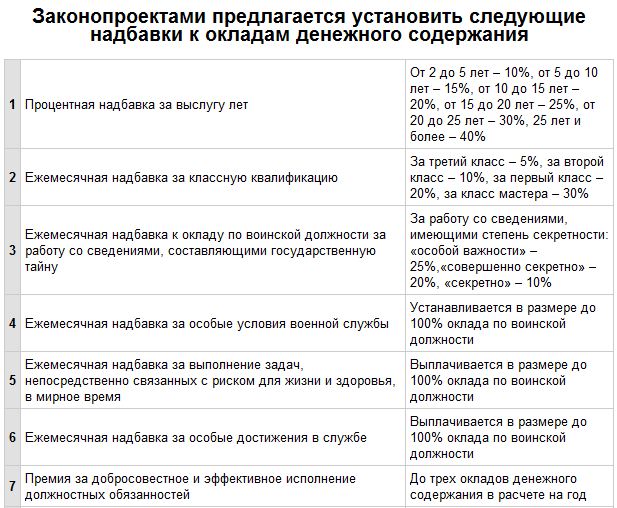
Supplements and coefficients are calculated for years served, class qualifications, work with state secrets, service under special [usually climatological] conditions, etc.  The following graphic shows part of the list.  It actually runs up to nine different supplements and coefficients.

Supplementary Pay

Supplements are sometimes calculated on duty pay; other times on combined duty and rank pay.  Let’s say our section commander sergeant has served 10 years, has a second class qualification, works with secret information, and serves with Russian troops in Tajikistan — he would add 4,300 and 2,150 and 1,500 and perhaps 15,000 to that “base” of 21,500.  His supplemented pay becomes 44,450 rubles per month — not bad, but this would likely be an exceptional case we’ve made just for illustration purposes.

Note that items 6 and 7 on the supplement chart are Defense Minister Serdyukov’s “premium” pay supplements for outstanding performance.  They allow officers to double their duty pay or even triple their combined duty and rank pay.  “Premium” pay was a stopgap to raise military salaries until a new, higher pay system could be devised.  But VPK makes it look like this will become a permanent feature of the new system.

The draft law sets out lots of other special payments and benefits to servicemen for this and that, relocation, death, injury, dismissal, etc.

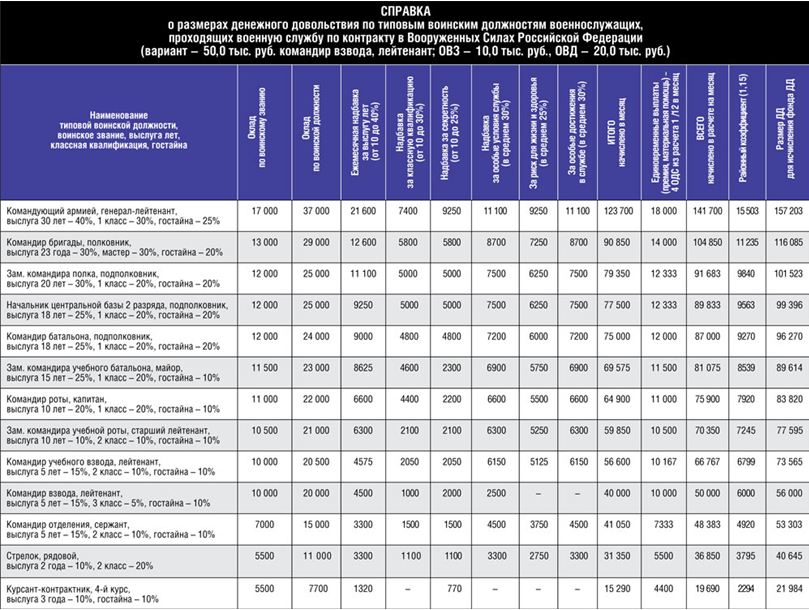
The following graphic provides some examples of what officers and soldiers will make.

Some Pay Examples

This shows the kind of lieutenant platoon commander that Medvedev, Putin, and Serdyukov have described earning over 50,000 rubles per month.  And our putative section commander sergeant . . . it lists him at about what we estimated 41,000 rubles or so, plus other supplements that take him over 50,000 too.

There’s an exemplar pension chart for those that are interested, and below is a snip of the 50-grade schedule the military uses.  If you view the entire chart, grade 50 is for a first deputy minister, there are two grades for MD commanders, and seven different ones for deputy army commanders, so on and so forth.

Grade Schedule

 What’s it all mean?  Again, this pay reform is a thing both necessary and long in coming.  It’s also going to be very expensive at a time when there’ll be lots of other outlays for the GPV, for contract enlisted, for military housing, for better military infrastructure, etc.  It won’t be easy.  But it seems to be a priority.  The difficulty is that it’s very hard to move forward on all military reform fronts at once.  We’ll have to watch to see which areas are treated with preference or, alternatively, neglected.

Another Trouble Brigade

Today’s Presidential ukaz on military personnel changes is attracting attention because it relieved and dismissed General-Lieutenant Vadim Volkovitsky from the service.  Of late Volkovitskiy was First Deputy CINC of the Air Forces (VVS), and Chief of the Main Staff. 

General-Lieutenant Volkovitskiy

He’s a career air defender who’s been a two-star for the last ten years.  He’ll be 55, statutory retirement age next Friday.  He commanded air and air defense troops in the Urals in 2006, and came to Moscow and the VVS headquarters in 2007.

We don’t really know why Volkovitskiy’s going out right on time, but it does seem President Medvedev and Defense Minister Serdyukov have made an effort to keep senior officers from serving forever.

God-Forsaken Pechenga

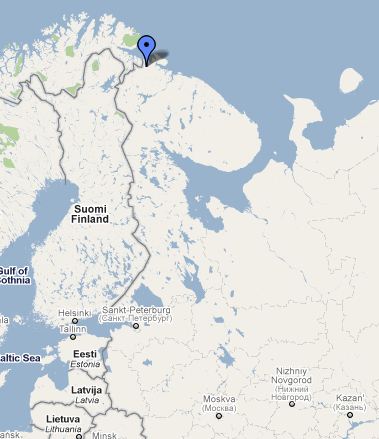
Far more interesting is the President relieving Colonel Vitaliy Leonidovich Razgonov, Commander of the 200th Independent Motorized Rifle Brigade based at god-forsaken Pechenga.  He’s only been commander there for 18 months. 

The 200th Brigade remains in its Cold War deployment along the Russian border with Norway.  It’s probably not what the Defense Ministry has in mind for its future Arctic brigade. 

This brigade has more than its share of trouble, and Colonel Razgonov’s apparent inability to control his men might — repeat might — have something to do with the change of command.  The ukaz, of course, gives no reason.

Just on Monday, Komsomolskaya pravda published on all of v / ch 08275’s problems.  The paper’s reporters say this command is unable to maintain elementary order.  The brigade’s officers complain that today’s young men are already so corrupted that the army can’t fix them, and that they don’t have any tools to deal with disorder among their men.  But KP says the soldiers don’t look disorderly during the day, but become that way at night when they’re unsupervised in the barracks.  The paper suggests the officers themselves are corrupt and disorderly at Pechenga.

Several weeks ago a conscript from Dagestan got three and a half years for killing an ethnic Russian junior sergeant in June 2010.  The command initially tried to make it look like an accident rather than murder.  Svpressa.ru suggests 4 or 5 men from Dagestan beat the victim.  The Soldiers’ Mothers Committee helped his family get the military prosecutors on the case.

Another conscript was beaten severely right on the brigade’s parade ground in early March.  According to IA Regnum, the young man — a graduate of the Murmansk School of Music — had two operations and his spleen was removed.

Last September a conscript shot and killed another conscript before shooting himself to death.  The parents of the shooter don’t believe this version of what happened, and have turned to the Soldiers’ Mothers Committee for help.

Last May, the chief of the brigade’s missile-artillery service stabbed his wife and six-year-old son to death.  He was subsequently diagnosed as a paranoid-schizophrenic.  This can happen anywhere, but it’s interesting it happened in a place already so afflicted with misfortune.  One wonders if there isn’t more to the story.

Where does this leave us?

It’s hard to say.  All the evidence of trouble is, so to say, circumstantial when it comes to Colonel Razgonov and whether he’s up to the job or has been derelict.  We don’t have enough information.  Maybe Razgonov himself asked to be relieved.  Who knows?  But it may be that someone in the chain, in the Defense Ministry or elsewhere, recognized a situation that needs to change.  The question now is will it?

VDV on Amphibs

By way of follow-up . . . late last May, VDV Commander, General-Lieutenant Vladimir Shamanov told the press his forces have embarked in Black Sea Fleet ships for joint training since the Georgian conflict.  Yesterday RIA Novosti reported on such a joint exercise.

More than 1,500 airborne troops and nearly 100 pieces of equipment are participating in tactical exercises with BSF ships near Novorossiysk.  The VDV are from the 108th Guards Airborne-Assault Regiment, 7th Airborne-Assault Division.

Specifically, the VDV spokesman said:

“On Wednesday nearly 30 airborne combat vehicles and other combat equipment loaded onto large landing ships of the Black Sea Fleet and debarked in a designated coastal area at the Rayevskiy range near Novorossiysk.”

Exercises will continue until tomorrow.  Reconnaissance company personnel will airdrop near Rayevskiy today.  The drop was delayed by bad weather, according to the VDV spokesman.  Two battalions conducted mountain combat training yesterday, and will conduct night firings today.

RIA Novosti didn’t indicate which BSF ships are carrying the VDV.  But Ropucha II-class LST Azov and Alligator-class LST Nikolay Filchenkov were active in the first days of this month during an inspection by Navy CINC, Admiral Vladimir Vysotskiy.  The ships worked with the BSF’s Naval Infantry Brigade at the Opuk training range.

GPV, Exports, and OPK Capacity

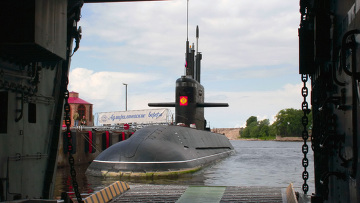
New Sub at Admiralty (photo: RIA Novosti)

This morning RIA Novosti reported on a familiar topic — the conflict between planned acquisition embodied in the State Program of Armaments, 2011-2020, and the Russian OPK’s capacity and capability to deliver it.  In this case, new diesel-electric submarines from St. Petersburg’s Admiralty Wharves.  Also familiar is one reason for the bind — a lingering priority on production for sale abroad.

A highly-placed OPK source tells the news agency that the GPV’s plan for conventional submarine deliveries might not be fulfilled due to Admiralty’s heavy load of orders.  The Russian Navy is reportedly supposed to get 20 new diesel-electric boats by 2020, and Russia also has ten foreign deliveries scheduled.  The OPK source notes that Admiralty has become a sole source for conventional subs, and he calls for shifting some sub production to Nizhniy Novgorod and Komsomolsk:

“In view of the large volume of new submarine construction for the Navy, and also for export, it’s essential to diversify production, utilizing, for example, the capacity of ‘Krasnoye Sormovo’ Shipbuilding Plant in Nizhniy Novgorod and the Amur Shipbuilding Plant in Komsomolsk-na-Amure.  Otherwise the state program in the diesel submarine construction area could be disrupted.”

RIA Novosti notes “Krasnoye Sormovo” built plenty of Soviet submarines, 280 in all, including 25 nuclear-powered ones.  Its last boat was a diesel-electric for China in 2005.  The plant also outfits Russian Navy and export subs with torpedo- and mast-related equipment.

The article also speculates that construction of French-designed Mistral helicopter carriers could be problematic if Admiralty is selected.  The shipyard is reportedly planning on new construction space on Kronshtadt for this reason.  The OPK source says Mistral would be Admiralty’s main concern, and occupy its main capacity and personnel.  So, he continues, it’s logical to send some orders (i.e. submarines) to other factories that have the capabilities.

Igor Korotchenko tells RIA Novosti “Krasnoye Sormovo” could provide extra buildingways if Admiralty can’t meet all its export contracts.  He says Admiralty is now building five subs under the GOZ, six for Vietnam, and:

“In the event new contracts are signed for sub construction with Venezuela and Indonesia there will be an obvious problem with inadequate buildingway space, and then a backup could be required.”

RIA Novosti notes rather dryly along the way that no Russian GPV has been fulfilled completely because of the country’s insufficient modern industrial capacity.

One wonders what, if any, work and investment would be required to bring “Krasnoye Sormovo” and Amur back into the sub-building business.

Popovkin to Roskosmos?

Vladimir Popovkin (photo: Sobakidendy-news.ru)

Friday Marker.ru reported rumors from its sources saying First Deputy Defense Minister, and GPV 2011-2020 architect, Vladimir Popovkin will relieve Anatoliy Perminov as Director of Roskosmos.  This is interesting because it supposedly features a little tandem tension between President Medvedev and Prime Minister Putin.

Marker.ru’s Ivan Cheberko writes that Perminov will resign at “his own request,” and become a presidential adviser for space issues.  For his part, Popovkin had hoped to replace Sergey Ivanov as Deputy Prime Minister with responsibility for the defense-industrial sector.  But Medvedev and Putin couldn’t agree on Ivanov’s fate, according to Cheberko’s report, and they proposed that Popovkin should head Roskosmos.

A source close to Perminov told Cheberko the Popovkin decision was made last week:

“The president and prime minister couldn’t determine Ivanov’s future, and they proposed Popovkin to head Roskosmos.  The Defense Minister has already signed the corresponding paperwork.”

Cheberko’s two independent missile-space sector sources say there have been three candidates for the Roskosmos job — Popovkin, Popovkin ally and deputy General-Lieutenant Oleg Frolov, and Roskosmos Deputy Director Vitaliy Davydov.  Frolov reportedly would have gotten the job if Popovkin took Ivanov’s spot.  Roskosmos rank-and-file lobbied for Davydov in hopes of avoiding changes Popovkin would make.  His views diverge from those of the agency’s current leadership, and he’s expected to make many personnel and organizational changes.  Among other things, Cheberko highlights Popovkin’s strong support for a new liquid-fueled heavy ICBM versus missile designer Yuriy Solomonov’s vocal public opposition to such a plan.

Unfortunately, Mr. Cheberko only dug so deep.  There’s a bit more to this story.

On the eve of the 18 March expanded collegium, Sergey Ivanov told the Federation Council the Defense Ministry was to blame for late placement of the State Defense Order (Гособоронзаказ, ГОЗ, or GOZ) this year.  Even prior, he had lots of sharp public criticism for Perminov, Roskosmos, and their failures.  Of course, Ivanov himself has long suffered at Putin’s hands over GLONASS, so he’s just letting stuff roll downhill, so to speak.

In his collegium speech, President Medvedev railed about problems with the GOZ last year, and demanded a “post-flight debriefing” to identify which industry and state officials are to blame.

Prime Minister Putin followed the collegium with a March 21 government session on the defense order at the Votkinsk missile plant.  Ivanov and Perminov were there, and probably Popovkin too.  The latter was very much on the defensive afterwards, asserting that GOZ-2010 was fulfilled “on the whole.”  And he blamed last summer’s heat wave and forest fires for disrupting defense production.

So where’s it leave us?

As Marker.ru implies, it appears Popovkin’s position isn’t too strong, and he could be headed out of the Defense Ministry after only 8 months on the job.  This would take away one of the louder proponents of buying arms and equipment abroad if necessary.  It begs the question who replaces Popovkin, and what does it mean.  Possibly someone closer to Serdyukov.  Never known for his skill as a political infighter, Sergey Ivanov actually comes out of this looking like a semi-adept bureaucratic warrior.  It’s interesting to imagine Medvedev and Putin discussing Ivanov’s fate when he was once thought the frontrunner in Operation Successor 2008.

Walking Back Contract Service (Part II)

Here are some particulars from Deputy Chief of the General Staff, GOMU Chief General-Colonel Vasiliy Smirnov’s press-conference on the spring draft — and contract service — last week.

After dropping his lower spring draft number (203,720) bombshell, Smirnov said an increase in contractees will accompany this reduction in conscripts.  The Defense Ministry will determine clear, strict criteria for selecting and training contractees, and will raise the prestige of their service (along with their pay and living conditions, of course). 

In other remarks to the press, Smirnov emphasized that conscript service will remain, and the Armed Forces will retain mixed manning (i.e. conscripts and contractees).

Smirnov listed the following priorities for contract manning:

“In 2011, we will man sergeant posts, Navy afloat personnel, Airborne Troops [VDV] formations and military units, formations deployed on the territory of the Chechen Republic, and also the most knowledge-intensive and high technology military specialties, which determine the combat capability of formations and military units, with servicemen on contract.”

Priorities for Contract Service

In the near term, according to Smirnov, the Defense Ministry will put contractees in all sergeant-squad leader billets and positions involving maintenance or operation of complex or new weapons systems and equipment.

He said training of professional sergeants in the Defense Ministry’s higher educational institutions began in six schools in 2009, expanded to 19 last year, and will be conducted in 24 in 2011.

In his Q&A with the media, Smirnov said there’s no plan to switch to large numbers of contractees immediately, but rather:

“The number of contractees will increase gradually, mainly because of the large-scale introduction of new types of armaments.”

So he linked the need for contractees to presumed future success in acquiring new equipment under GPV 2011-2020.

Smirnov told the media a pereattestatsiya was conducted last year, and only 174 thousand competent contractees remain.  He also noted (as indicated on his slide above) that Spetsnaz would also be a priority for contractees.  He said there are currently 55,000 contract sergeants in the training pipeline.

Smirnov defended the earlier contract effort in the mid-2000s, saying it was successfully fulfilled despite being only half financed at 76 billion rubles, and:

“The main Navy and VDV units and formations are half manned with contract servicemen.”

Not a stunning testament to the earlier program.

It’s interesting that Smirnov talked so much about contract NCOs when, less than two months ago, the Federal Targeted Program for Manning Sergeant Billets with Contractees, 2009-2015 was cut in half.  Financing was reduced from 243 to 152 billion rubles, and the number of contract sergeants to be trained from 107,000 to 65,000.  For stories on this, see KommersantNewsru.com, or Komsomolskaya pravda.  The sources in these reports also put the number of contractees remaining much lower than Smirnov’s 174,000; they say at or just above 100,000.

One finds it hard to fathom that the Defense Ministry can find 425,000 contractees when just a half dozen years ago it failed to recruit, train, and retain 133,000.  Thus far in these early pronouncements on reinvigorating contract service nothing’s been said about what or how it will be different this time.  The Defense Ministry will have to make such a case to its political masters, the public, and the men it’s trying to sign up at some point.

Some things, like the Defense Ministry’s other priorities, are already known.  A renewed contract service effort will have to compete with a new higher pay system for a larger number of officers starting next year.  And the Defense Ministry is also at the outset of a new and expensive GPV that’s supposed to provide modern weapons and equipment which demand long-term, professional enlisted personnel (aka contractees).  And there are overdue and unfinished agenda items like the provision of permanent and service housing to officers.

Yes, your author is skeptical that the renewed push for contractees can gain traction.  We have to remember this magical 425,000 number is somewhere off in the future.  There’s no promised delivery date.  And the entire issue began with the tacit recognition that, for many reasons, Russia can only conscript so much manpower.  Keeping fewer guys from being shaved and inducted pretty much against their will is always good politics on the cusp of a presidential election year.

Walking Back Contract Service (Part I)

Anatoliy Serdyukov’s 18 March pronouncement on relaunching contract service was another painful Defense Ministry policy reversal.  He said:

“One of the important directions of Armed Forces reform is improving the manning system.  The Russian Federation President approved the Defense Ministry’s proposal to have 220 thousand officer positions and 425 thousand servicemen serving on contract in the Armed Forces.  The given changes in  numerical strength are viewed as long-range and connected with keeping a missile army and four missile divisions in the Armed Forces order of battle, increasing the number of formations in the Ground Troops, and establishing the Air-Space Defense Troops.  It is planned to increase the share of contract-servicemen by creating attractive military service conditions.  In the near future, soldier and sergeant duties will be manned on a mixed [i.e. conscript and contract] basis.”

Serdyukov’s words in 2011 sound very much like former Defense Minister Ivanov’s when he launched contract service nine years ago.  We’ve come full circle.  Russia tried professional enlisted service, declared it a failure, and returns to it as something essential and unavoidable.  The inevitability of contract service springs from the insoluble problem of the draft.  Moscow can’t man its Armed Forces with the right number and kind of conscript soldiers.

Early last year, Serdyukov was careful in his criticism of contract service.  He consistently pointed to inadequate funding as the reason for failure.  He didn’t indict the concept.  The Defense Minister said contractees would be cut, and eventually brought back up to the level of 200 or 250 thousand.  The current target of 425 thousand indicates something’s changed significantly over the past year. 

For his part, General Staff Chief Nikolay Makarov categorically condemned contract service.  In early 2010, he said:

“We are not switching to a contract basis.  Many mistakes were allowed, and that task which was given—construction of a professional army—was not completed.  Therefore a decision was made that conscript service needed to remain in the army.  Moreover, we are increasing the draft , and decreasing the contract part.”

One can hear sand crunch under Makarov’s boot as he about faced in his Academy of Military Sciences speech last week:

“You know about the recent decisions of the Supreme CINC to have 425 thousand contractees and 220 thousand officers.  We will be implementing this literally starting today.”

“We understand that these Armed Forces are created for servicemen-contractees.  Only with their training can we have a well-prepared and professional army.”

So we understand that do we?  It’s not how Makarov understood things a year ago.

Let’s summarize where we are . . . a year ago, contract service was cast off and the Defense Ministry said henceforth it would rely on conscript manpower with far less training and experience than contractees that apparently didn’t meet its needs.  Serdyukov and Makarov declared the central military personnel policy of the 2000s — Putin’s years as Supreme CINC — to be a complete and utter disaster. 

Now barely 13 months later, these men have recognized the basic reality that there simply aren’t enough conscripts and they aren’t the kind of manpower that can operate a modernized Russian Army.  So the turn back to contractees.

But still questions remain.  How will Russia create these professionals?  How will it craft a contract service policy that works?  How will it differ from what was tried previously? 

So far the answers sound familiar.  Good pay, service conditions, housing . . .  will they be more successful getting these things for contractees this time around?  Can they afford them more?  What is different this time?