Tag Archives: GOZ

More Money Needed for Admiral Nakhimov

According to ITAR-TASS, Sevmash Director Nikolay Kalistratov says his plant will begin modernizing Kirov-class CGN Admiral Nakhimov (ex-Kalinin) next year.  Kalistratov also indicated the state is allocating money for Nakhimov’s large-scale repair:

“But the given volume is insufficient, an increase in the state defense order is required, and on this issue I’ve gotten the support of the board of directors.”

So Sevmash can’t or won’t do it for what the state is paying.  It’s something of an annual rite for Kalistratov.  He said the same thing last year, and even put the price tag at 20 billion rubles.  And it’s been proposed that Nakhimov could return to the Navy in 2012.  Not likely.

ITAR-TASS adds that Nakhimov’s been in this condition since 1999, waiting at the pier for repairs that haven’t been done for want of financing.  

Your present author’s no naval engineer, but common sense raises some serious issues. 

Not only would the ship’s two nuclear power plants need serious attention, but its once-impressive host of weapons systems would require extensive updating — new cruise missiles, ASW systems, SAMs, just for a start.  All the ship’s support systems would need renovation or replacement.  This would be great work not just for Sevmash, but for Russian system suppliers.  

But the Russian government, Defense Ministry, and Navy have to decide if the cost is worth taking money from other new naval construction, not to mention from higher priority military procurement efforts.  The answer to this question lies in how Nakhimov would be employed and, particularly, for how long.  The U.S. experience with modernizing and recommissioning the USS Iowa and USS New Jersey comes to mind.

There are lots of articles on what to do with Russian CGNs, but your author hasn’t waded through them.  Speak up if you’re interested in them.

Emblem of Procurement Problems

On Friday, amidst Krasnaya zvezda’s usual fare, there was interesting coverage of a high-level meeting to review the military’s UAV (BPLA or БПЛА) procurement program.

Technically, it was a session of the collegium of the Federal Service for the Defense Order (Rosoboronzakaz or Рособоронзаказ) with the agenda item “Results of Inspecting the Placement and Fulfillment of the State Defense Order (GOZ) in the Area of Development and Supply of Unmanned Aerial Vehicles.”

Rosoboronzakaz Director Aleksandr Sukhorukov, a former Serdyukov tax service deputy, conducted the session.  Also participating were newly-minted Deputy Defense Minister Tatyana Shevtsova, also a former Serdyukov tax service deputy, and Director of the Federal Agency for Supplies of Armaments, Military and Special Equipment, and Material Resources (Rosoboronpostavka), Nadezhda Sinikova, another of the Defense Minister’s long-time proteges.

The military paper noted that representatives of the government, ministries, and other federal executive organs, state customers from the Defense Ministry, FSB, FSO, MVD, and MChS, representatives of the Main Military Prosecutor, and OPK officials also attended.

One Yu. Stolyarov gave the main report.  He’s Chief of the Directorate of Oversight of the State Defense Order in the Area of General Armaments and Military Equipment, Aviation Equipment, Aerospace Defense Means and Armaments, Ships, and Naval Armaments and Military Equipment.  Quite a broad portfolio.  Krasnaya zvezda didn’t elaborate on what Mr. Stolyarov said, however.

Ground Troops CINC, General-Colonel Aleksandr Postnikov, VDV Chief of Staff and First Deputy Commander, General-Lieutenant Nikolay Ignatov, an OAO Tupolev deputy chief designer, and OAO ‘Vega’ Radiobuilding Concern General Director, V. Verba also spoke at the session.  Their remarks weren’t reported either.

Krasnaya zvezda reported that all presentations were thorough and constructive, and the collegium adopted some draft directive, but we don’t know what it said.  The paper, however, says the main theme of all presentations was the same:

“. . . in their TTKh (ТТХ – tactical-technical characteristics) domestic UAVs must not lag behind foreign ones and it’s essential to do everything to achieve this.  State money has to be spent with maximum effectiveness.  Troops and power structures need to be supplied with those UAVs that will be most effective on the battlefield, and in conducting special operations.”

What should we conclude from this?  Firstly, the meeting highlighted Shevtsova’s new oversight and auditing role in procurement.

Secondly, the Defense Ministry’s leaving the door open for domestic UAV producers, and so this seems to amount to just another warning to them.  It doesn’t seem to be anything like a decision to include Russian firms or exclude foreign ones, or vice versa.

It’s not surprising the Defense Ministry highlighted this particular program review.  Few procurement issues have caused Russia as much angst recently as UAVs. 

Georgia’s Israeli-supplied UAV capabilities, and Russia’s relative lack of them, highlighted this issue in 2008.  Moscow had to risk manned aircraft instead of employing unmanned ones on reconnaissance missions.  What’s worse, two years after the five-day war, there’s still no fix to the UAV problem.  And it will become more acute should unmanned aircraft become the backbone of future air power for the world’s leading militaries.  Russia’s clearly behind on UAVs, and questions remain about whether it should catch up, and whether it can.

The Russian defense establishment has spent months debating buying from foreign manufacturers, purchasing sample quantities abroad, or producing jointly to jumpstart or pressure domestic producers.  In late 2009, Air Forces CINC, General-Colonel Zelin flatly stated it would be ‘criminal’ to accept inferior Russian UAVs into the arms inventory.  The FSB reportedly said it would buy Israeli UAVs.  In March, Defense Minister Serdyukov admitted domestic UAVs ‘seriously lag’ behind world standards, and, in April, then Armaments Chief, now First Deputy Defense Minister Popovkin reported that Russia had spent 5 billion rubles on UAVs without result.

So UAVs joined the list of other systems – helicopter carriers, soldier systems, light armored vehicles, etc. – that could be bought abroad, but it doesn’t look like Moscow is ready to rely, at least entirely, on foreign producers for any of them.

Deputy Defense Minister Shevtsova

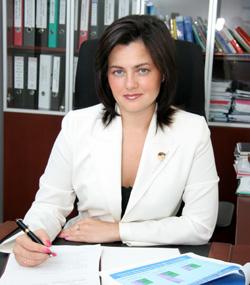
Tatyana Shevtsova at the FNS

Last Friday, Tatyana Shevtsova became the newest deputy defense minister – the ninth overall, seventh civilian, second female.  By all accounts, Shevtsova will oversee and audit Defense Ministry spending and other activities.  Kommersant calls her an ‘oversight and monitoring specialist.’  The Defense Ministry’s spokesman has said as much, according to Vedomosti (read it in Moscow Times as well).  Shevtsova’s another member of Defense Minister Serdyukov’s former team at the Federal Tax Service (FNS or ФНС).  Kommersant describes her as a ‘trusted individual’ who will help Serdyukov supervise all but the Defense Ministry’s purely military functions.  In particular, several commentators believe Shevtsova will track outsourced service and support activities paid for in the state defense order (GOZ).

The 41-year-old Shevtsova was born in Kozelsk, Kaluga Oblast, and graduated from the Leningrad Financial-Economic Institute in 1991.  She’s a candidate of economic sciences (Ph.D.). 

She started in the tax service in 1991 as an inspector in the central rayon of St. Petersburg, eventually heading the tax service’s St. Petersburg directorate.  Kommersant reminds that Serdyukov was a deputy director in the St. Petersburg directorate during Shevtsova’s time there in the early 2000s. 

Shevtsova went to Moscow to head the tax service’s large taxpayer department in early 2004.  In mid-2004, Serdyukov became Director of the FNS, and Shevtsova became one of his deputies. 

Shevtsova stayed at the tax service under Mikhail Mokretsov after Serdyukov left for the Defense Ministry in early 2007.  She was in charge of the oversight directorate and all nine inter-regional inspectorates for large taxpayers.

When Mokretsov and others members of Serdyukov’s FNS team departed for the Defense Ministry in mid-2010, Shevtsova did likewise, becoming an advisor.  According to one official who spoke to Kommersant, she spent the last few months ‘studying the situation’ in the Defense Ministry.

A former Defense Ministry official told Vedomosti Shevtsova is “a talented economist as well as an exacting official, whose subordinates at the Federal Tax Service were very afraid of her.”  She reportedly will turn ten Defense Ministry oversight bodies into a system.

Kommersant said Shevtsova will direct oversight organs for administrative, organizational, and financial activities as well as military housing.  The paper’s source says this could translate into oversight over everything except military command and control and operations.  The ninth deputy minister will reportedly gain some responsibilities once discharged by the chiefs of the ministry’s apparatus, Rear Services, and Housing and Construction Service.

Radio Svoboda was kind enough to interview Aleksandr Golts who concluded:

“It’s more or less obvious Anatoliy Eduardovich Serdyukov rapidly gathers his team in those areas important to him.  As we know, at present a so-called second civilian branch of the Defense Ministry is being formed.  Operational troop command and control, combat training remain with the Genshtab.  At the same time, a very strong area which will withdraw from the ministry a great number of functions connected with service and support of all Defense Ministry units and formations is being formed.  This is very complex work in the realm of the state defense order and the like.  Evidently, Ms. Shevtsova will work in this area.”

 Asked about her first steps, Golts commented:

 “If there will be first steps, we haven’t found out anything about them.  The Defense Ministry very precisely hides the most important directions of its activity from any public scrutiny.  Everything happens very quietly.”

Radio Svoboda also asked Viktor Baranets about ‘civilianization’ and the appointment of a reported 50 women to high posts under Serdyukov:

“They are already sarcastically joking  in the army about the ‘feminization’ of the Defense Ministry leadership.  A large number of women who’ve appeared in key Defense Ministry posts, at various times crossed paths with Serdyukov, and with Putin, and with Medvedev.  Of course, they’re Petersburg natives . . . .  There are unofficial reports that [Shevtsova] actively assisted Serdyukov in destroying Khodorkovskiy’s empire.”

Baranets’ sources in the Defense Ministry also say Shevtsova will be responsible for large sums of service and support funding being directed to contractors.  His general and colonel friends joke:

“We only have one vacant post left – deputy defense minister for corruption.  Because all the other jobs are filled.”

 Or anti-corruption one supposes . . . .

Igor Korotchenko told Vedomosti the Defense Ministry’s growing civilian component is designed to supervise the generals’ spending and accounting, especially in the GOZ.  Ruslan Pukhov calls the ‘invasion’ of former tax officials perfectly normal since Western defense ministries are full of civilian auditors who scrutinize massive military budgets.

Defense Ministry Claims More Money Needed for Armaments

General-Lieutenant Frolov

Speaking before the Duma yesterday, acting Armaments Chief, General-Lieutenant Oleg Frolov indicated the proposed 13-trillion-ruble State Armaments Program (GPV or ГПВ) for 2011-2020 is not enough to accomplish the Kremlin’s rearmament goals.  RIA Novosti reported the draft GPV will go the government’s Military-Industrial Commission (VPK or ВПК) by the end of this month. 

From the Space Troops like his boss Vladimir Popovkin, Frolov is the Defense Ministry’s Deputy Armaments Chief, and Chief of the Main Armaments Directorate. 

Frolov said 13 trillion rubles will guarantee development of strategic nuclear forces, air defense, and aviation, but the Ground Troops’ requirements for modern weapons will be underfinanced. 

He added that 28 trillion rubles would allow the Defense Ministry to cover the Ground Troops’ needs, and 36 trillion—almost three times the planned amount of the GPV—would fully finance programs for the Navy and Space Troops. 

First Deputy VPK Chairman, ex-general Vladislav Putilin responded that his commission hasn’t heard answers as to why the proposed 13-trillion-ruble allocation is insufficient for the military’s needs: 

“In the Defense Ministry’s opinion, the armed forces will degrade under an allocation of 13 trillion rubles out to 2020.  But we haven’t gotten explanations even though we’re asking:  show us these horror stories.” 

Putilin noted that the GPV is still a ‘working’ document at this point. 

At the same time, the Audit Chamber (a GAO-type organization) told the Duma the Defense Ministry is not succeeding in using its allocated funding.  Lenta.ru reported that, by varying measures, the Defense Ministry executed only 42-65 percent of the State Defense Order (GOZ, Gosoboronzakaz, ГОЗ, Гособоронзаказ) for last year.  Also of interest from yesterday, SIPRI released its estimate of Russian defense spending for 2009–$53 billion (about 1.6 trillion rubles), good enough for fifth place worldwide.  See also Grani.ru for coverage of the Defense Ministry’s difficulty spending the GOZ. 

Newsru.com captured this story appropriately as a Defense Ministry demand for more funding.  Prime Minister Putin and President  Medvedev have vowed repeatedly to increase new armaments, from the current level of 10 percent, to 30 and 70 percent of the inventory in 2015 and 2020 respectively.  What’s unknown is why at least one uniformed military man has decided to challenge the feasibility of his political masters’ long-term rearmament goals.

Putin Reports on OPK and Military Housing

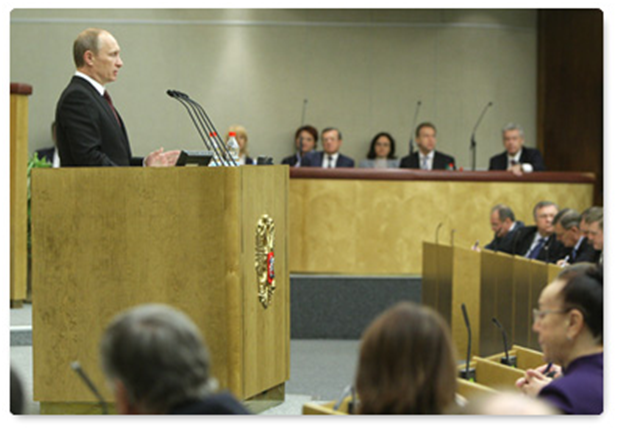
Putin Reports to the Duma

Yesterday Prime Minister Vladimir Putin reported on the government’s work over the last year to the State Duma.  His remarks focused on government efforts to handle ‘bread and butter’ economic and social issues during the 2009 crisis.

There was relatively little on military issues, except for some remarks on defense industry and military housing. 

He largely reiterated familiar themes like increasing modern weapons to 70-80 percent of the inventory; he congratulated those working on the fifth generation PAK FA and he emphasized development of a new strategic bomber.  Without being too specific, Putin suggested that OPK enterprises with heavy tax arrears might be getting some relief.

On housing Putin promised almost 52,000 military apartments this year.  But Duma deputies didn’t ask him about press reports that many of the 45,600 built last year remain empty because of construction defects, bureaucratic red tape, and even the fact that some were not really built in the first place.  Putin reiterated an earlier promise to house servicemen who didn’t get apartments in the first post-Soviet decade.  And he noted that privatization of service housing remains a possibility since the deadline has moved back.

First Putin’s description of the economic scene.

Putin said Russia’s GDP fell a record 7.9 percent, and industrial production declined 10.8 percent last year, but the government responded by greatly increasing budget expenditures—27 percent more than in 2008—even though revenue declined almost 21 percent.  Putin said the government used Russia’s accumulated reserves to finance the shortfall.  It spent 5 trillion rubles—1 trillion more than in 2008—on pay, pensions, social benefits, education, health, and housing, according to Putin.  He said 1.65 trillion rubles were invested in ‘developing the economy.’  Putin concluded that most of the government’s anticrisis program, the use of the budget, reserves, Central Bank resources, and state guarantees worked, and prevented the destruction of the real economy and the financial system.

Last year’s State Defense Order (GOZ) was one part of last year’s government spending program to counter the economic crisis.  Putin says the government spent 1.1 trillion rubles—150 billion more than in 2008.  He continued:

“During the crisis we also rendered targeted support to the defense-industrial complex and high-technology enterprises.  Last year’s gloomy forecasts by some politicians on the collapse of the defense-industrial complex were not borne out.”

“I know how many serious problems have accumulated here, we’ve been seriously occupied with this.  If you noticed, I’m always conducting special meetings on distinct sectors, there we deeply immerse ourselves in these problems.  Yet the volume of output of military production in 2009 increased by almost 13 percent—this during a general contraction!  The growth of production in shipbuilding generally was 31.6 percent, in the missile-space industry—16.5 percent, in aviation—9 percent.”

“Tests of fifth generation fighters are going successfully, and I want again to thank everyone who worked on this machine, who now gets it ‘on its wings.’ “

“Of course, we do not limits ourselves to just this.  Following the fighter we need to begin work on the future aviation system long-range aviation [PAK DA], this is new Russian strategic bomber, missile carrier.  We conducted a serious inventory in the defense-industrial complex and are embarking on formation of long-term programs of rearmament in all fundamental combat systems:  in command and control and intelligence systems, armored and naval equipment, highly-accurate weapons.  As a result, the share of modern weapons in the troops should increase to 70-80 percent, and this will indeed be  weapons of a new generation.”

“The question of restructuring the tax arrears of OPK enterprises has come from [Duma] deputies.  Enterprises have such a possibility.”

“In December 2009 the government issued a corresponding decree, calculated for 2010.  It talks about indebtedness which arose before 1 January 2009 (the KPRF raised these questions).”

 On military housing, Putin first addressed war veterans in line since before 2005.  He said 28,000 of these veterans have been housed, and he wants to house any who were left out or joined the queue later.  The government has directed 34.5 billion rubles at this, according to Putin.

Turning to more recent servicemen, Putin says:

“We have also not retreated from another most important task, another priority.  In 2009 the Defense Ministry delivered 45,600 new apartments to servicemen.  You know there has never been such a thing.  In 2010 another 51,900 apartments will be allocated.  That is, over two years—almost  one hundred thousand.  As a result, we will finally end the demand of armed forces servicemen for permanent housing, as we promised.”

“But we have another category of people whom we should not forget.  The question is about those who retired from military service in the 1990s or beginning of the 2000s, without receiving housing.  I remind you, in that time due to the inpossibility of solving this problem at the federal level, they sent them into municipal lines [for housing], where, unfortunately, things are moving slowly.  Or more precisely—practically not moving.”

“Of course, people are not to blame for the fact that at the time the government simply could not afford to meet its obligations to them.  And we were obliged to return to this issue.”

“It was originally planned to complete the provision of housing to such citizens in 2012-2013.  But I think we can do it earlier—to give retired military men housing in 2010-2011.  For this purpose we will ask you [Duma deputies] to direct an additional 34 billion rubles.”

“Incidentally, free housing privatization has been extended until 2013.  Now, veterans and servicemen can calmly arrange ownership of housing.”

Just to complete this picture, Deputy Defense Minister and Chief of Housing and Infrastructure, Grigoriy Naginskiy, recently admitted that only 21,061 of those 45,600 apartments from 2009 are actually occupied because of poor construction and problems formulating ‘social lease contracts.’  But Naginskiy promises that 99 percent of the 45,600 will be occupied before 1 June.  That’s quite a promise.  Viktor Baranets has written recently about builders’ efforts to ‘economize’ and squeeze out extra profits on military apartments.  Olga Bozhyeva has written about servicemen turning to the courts over housing issues, as well as ‘virtual’ Defense Ministry apartments that don’t exist.  The Main Military Prosecutor has actually investigated cases of this in Chekhov.

To round out the economic picture, Putin asserted that signs of recovery include a forecast of 3 percent or more GDP growth for 2010, and industrial production growth of 5.8 percent and real income growth of 7.4 percent for the first quarter of the year.

Rearmament Tempo Less Than 2 Percent Per Year

Vasiliy Burenok

Vasiliy Burenok told a round table at the ‘Army and Society’ exhibition in Moscow Friday that the current pace of Russian force modernization, not more than 2 percent, won’t support the transition to a ‘new profile’ military.

Burenok is Director of the Defense Ministry’s 46th Scientific-Research Institute (46 NII).  The 46 NII is a lead organization involved in formulating the State Armaments Program (GPV) and State Defense Order (GOZ).  It works on military-technical policy documents and program planning methodologies.  Burenok is a member of the Scientific-Technical Council of the RF Government’s Military-Industrial Commission (VPK).

Reviewing history a bit, Burenok told his audience, at the beginning of the 1990s, the rearmament rate was 5-7 percent annually.  But, between 1991 and 2000, financing for new arms and equipment declined more than 50 times, leaving only enough money to maintain existing weapons.

Burenok concludes to get the army to the ‘new profile’ it’s essential to introduce 9 percent new equipment every year, and for some services and combat arms, up to 11 percent.

This 9 to 11 percent is, of course, the difficult target President Medvedev set at the Defense Ministry Collegium.  Burenok indicated just how difficult–going from less than 2 to an 11 percent annual renewal rate.

Armaments Chief and Deputy Defense Minister Vladimir Popovkin also addressed the ‘Army and Society’ round table.  He said GPV 2011-2020 will go to the president for approval in June.  The new GPV will be accompanied by yet another new Federal Targeted Program for OPK Development.

Popovkin said a number of systems won’t be produced under the new GPV.  They include short-range tube artillery, and BTR-80, BMP-2, and BMP-3 combat vehicles that soldiers are afraid to ride in.

Update on Military Corruption, State Losses, and Crime

Main Military Prosecutor (GVP) Sergey Fridinskiy observed last week that it will only be possible to deal with corruption when not just the law enforcement organs, but also responsible officials in the military command hierarchy become involved in fighting it.

At last week’s coordinating conference on fighting corruption in the armed forces and other armed formations, Fridinskiy reported that, in January and February, military corruption cases increased by 10 percent over year ago figures, and material losses to the state in those first months of 2010 were 5 times greater than in 2009.  Inflation and an increased volume of arms purchases were cited as contributing to the spike. 

In 2009, corruption cases increased 5 percent in military units.  Fraud and forgery cases increased 50 percent, but misappropriation, embezzlement, bribery, misuse, and abuse of authority also grew. 

Fridinskiy said:

“For such crimes, 543 officers, including some higher officials, were convicted last year.  Last year military prosecutors uncovered nearly 7,500 violations of the law in this area, more than 2,000 responsible individuals were held to varying degrees of accountability in connection with 540 warnings delivered about unacceptable legal violations.”

Fridinskiy maintains that corruption doesn’t just have a negative economic impact, it also has an extremely demoralizing effect on military units.  He noted that the State Defense Order (GOZ) and the provision of social benefits to servicemen are trouble areas for military corruption.  He said:

“Placing a barrier against incidents of illegal and mismanaged expenditure of budget resources allocated for reequipping troops with new arms and military equipment, but also providing housing to servicemen, people discharged from military service, and family members is one of the complex, but principle tasks.”

Fridinskiy said a systemic fight against corruption was particularly important at a time of rising expenditures on the defense budget and rearmament.  He cited improved legislation, departmental regulations, reduced opportunities for misappropriation, guaranteed transparency and competition in tenders and state contracting as possible measures.  He continued:

“It’s also important to strengthen the role of control-auditing organs at all levels, to raise the level of inter-departmental  coordination, to conduct active propaganda work necessary to create an atmosphere where corruption is unacceptable.”

Fridinskiy reportedly proposed changing the existing GOZ system:

“We’re now working in the first place on putting systematic changes into the purchasing system so that prices will be down to earth, and not astronomical, so that it will be possible to organize this work in the bounds of current demand for purchases, and in order that not only the purchaser, but also those performing the work will bear responsibility for what they are doing.”

Representing the Defense Ministry, State Secretary and Deputy Defense Minister Nikolay Pankov reported that his department has created a special financial inspectorate sub-unit to exercise control on the use of its resources:

“Finance specialists, economists, mostly not from the armed forces, have been asked to join the financial inspectorate, and my presentation today concerned the effectiveness of the work of the financial inspectorate.  All the results that the financial inspectorate turn up are given to the organs of the military prosecutor.”

Recall, of course, that the Defense Ministry claimed it had a major anticorruption drive in progress this winter.  Maybe these are some of the results.

Attendees at GVP conference included representatives of the Federation Council, Duma, Military Collegium of the RF Supreme Court, Military-Investigative Directorate of the RF Prosecutor’s Investigative Committee, Ministry of Defense, MVD’s Main Command of Internal Troops, Ministry of Emergency Situations, and the FSB’s Border Service and Department [once Directorate?] of Military Counterintelligence.

Chief of the GVP’s Oversight Directorate Aleksandr Nikitin  repeated an earlier publicized statistic on a 16 percent reduction in military crime last year.  Nikitin credited widespread GVP preventative measures for the decline in crime.  He also noted the induction of more conscripts with higher education and supplementary performance pay for commanders as positive factors.  According to him, with the extra money, young commanders have started to pay more attention to ensuring order in their units.  Nikitin also says the overwhelming majority of the country’s military units generally function without crime or other incidents.

More on Carriers from Gorshkov Conference

Navy CINC Vysotskiy (photo: RIA Novosti)

RIA Novosti has more coverage of Navy CINC Vysotskiy’s carrier comments from yesterday.  Vysotskiy said there’s a plan to build and launch an aircraft carrier by 2020, and the technical proposal for it has to be developed and ready by the end of 2010.

“According to the plan, by year’s end we’ll receive the technical proposal for a future aircraft carrier with the basic tactical-technical characteristics.  Then development of the working documentation will begin.” 

He said experimental-design work (OKR) was already under way.

Vysotskiy noted that a Federal Goal Program (FTsP) was needed to construct an aircraft carrier, because financing to do it in the State Defense Order (GOZ) would be very complex.

Former Navy CINC, now advisor to the Defense Minister, Vladimir Masorin, remarked that carriers make it possible to influence the situation in the world, and its different regions.  He added that, if Russia wants to become a great naval power, it has to have carriers and they will have to be nuclear-powered.  He believes the main thing is preserving Russia’s scientific potential and carrier pilot skills:

“Aircraft carriers can’t be built in a short period.  We have to preserve our scientists, designers, and pilots.”

Chief of Staff’s and Shamanov’s VDV Year Enders

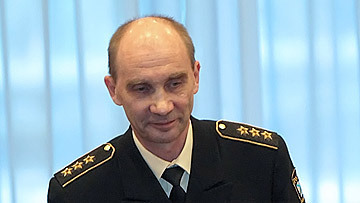
General-Lieutenant Nikolay Ignatov

In an interview today, the VDV’s Chief of Staff summarized 2009 and plans for 2010 in Russia’s airborne forces.  

General-Lieutenant Ignatov said 90 percent of the VDV was outfitted with individual soldier radios based on the Akveduk system in 2009, and the remainder will get it in 2010.  The Akveduk-5UNE is the basic UHF transceiver, and Akveduk-5UNVE and Akveduk-50UNVE are the individual radios.  

The VDV also took delivery of 100 modernized BMD-2, 18 Nona self-propelled artillery systems, and 600 KamAZ vehicles.  It got communications vehicles including 14 R-149 KShM and 23 radio stations mounted on KamAZ high mobility vehicles.  

Ignatov said 80 percent of the VDV’s fall 2009 conscripts have already completed their first jump.  In all, 10,000 conscripts are joining the VDV ranks from the fall draft.  Another VDV spokesman said the airborne made 189,000 jumps in 2009, 29,000 more than the year before.  

Stepping back a bit, in mid-December, VDV commander Shamanov told NVO that the airborne received 150 combat vehicles in 2009, including modernized BMD-2 and BMD-3.  He hopes to get more BMD-4M vehicles for field testing in 2010.  He wants 200 of them eventually.  Unlike the VVS, he emphasized that he likes domestically produced UAVs, thermal sights, and sniper rifles.  Shamanov noted that 15-20 percent of the VDV’s armored vehicles might be wheeled in the future, and he plans to obtain some GAZ-2330 Tigr vehicles for recce and Spetsnaz subunits.   

Shamanov essentially said the VDV intends to lobby for control of helicopter units, presumably from the VVS where they’ve been since 2002, to transport and support its air assault elements.  Specifically, he’s talking about the Mi-28N, Ka-52, Mi-8MTV, and Mi-26.  The Ground Troops would also like to get army aviation back; perhaps both are ganging up on VVS. 

On 10 December, Shamanov called for a simple, functional approach to equipping the VDV.  Unhappy with defense industries, he said he won’t buy anything that doesn’t suit the VDV.  He wants better stuff than he already has in his stockpiles.  As an example, he wondered when he’ll get a mine detector that works on rocky terrain.  So, to some degree, Shamanov has joined the list of military leaders lambasting defense industries for poor products.