Tag Archives: OPK

Bulava Postponed?

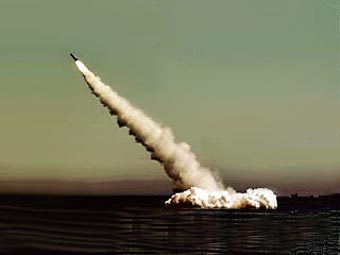
A Bulava Test

Interfaks reports an expected salvo launch of two Bulava SLBMs has been put off until next year, as Defense Minister Serdyukov said it might.  The press agency cites a well-placed Navy Main Staff source.  RIA Novosti, however, citing its own Navy Main Staff source, says the test was delayed by weather, but will occur today or tomorrow.  For its part, ITAR-TASS cites an OPK source who says the Bulava test firings are off until June because of White Sea ice.

The last Bulava test, a success, took place on October 28.  The Bulava / Yuriy Dolgorukiy weapons system might have been accepted into the inventory before year’s end following a successful salvo launch of two missiles.

BFM.ru talked recently to Aleksandr Golts and Vladimir Yevseyev about Bulava.  It notes the last planned launch of 2010 was also put off for ice.

Golts believes there’s a political motive for postponement.  He thinks the Defense Ministry can’t allow another failure and blow to its reputation and the image of Russian weapons.  And, by the time of the next test, the elections will be over, and Serdyukov may no longer be at the Defense Ministry.

Golts attributes Bulava’s problems to problems in the component base and the collapse of the Soviet sub-contractor chain.  The lack of serial production has made it impossible to guarantee quality component manufacturing.  Hence, something different seemed to go wrong in every test failure.

Golts doesn’t rule out the possibility that there simply aren’t enough missiles for testing (or for picking ones to test) because of the GOZ-2011 contracting dispute between the Defense Ministry and Bulava’s producer.

Yevseyev is a suspicious about postponing a shot for weather.  He calls the situation around Bulava ambiguous and unclear.  He says defects in the missiles might have been identified, and poor weather could be an excuse.

Like Golts, Yevseyev sees Bulava’s problems as symptomatic of larger defense industrial ones, and he doesn’t exclude a political motive:

“There’s a sharp decline in the quality of production, a partial loss of specific producers, technologies.  There’s aging of the machinery itself, the lack of qualified specialists who can work on it.  When the OPK’s been collapsing for so much time, it’s strange to hope it can produce such a complex technological product like a missile system.”

“It’s possible there’s a danger that, if there are unsuccessful tests in the period when we’re beginning Duma and presidential election campaigns, they’ll spoil the scene.  This is one of the possible reasons for the postponement.”

It seems understandable risk tolerance would be pretty low at this point given the history of the Bulava program, the bad publicity and angst generated by recent high-profile space failures, and the political season.  Perhaps it’s a case of better late, but better.
Innovation Locomotive or Brake?

Maksim Blant

Newsru.com economics commentator Maksim Blant wrote on an interesting subject this week:  is spending on the OPK an engine or drag for Russia’s innovation economy?

Blant has two primary arguments against military Keynesianism in Russia’s context.  First, more money for the OPK will further tighten an already taut market for certain labor.  Second, OPK spending’s multiplier effect will benefit raw materials producers more than consumers.

His article appears against a backdrop of questions about Russia’s ability to meet increasing pension obligations over the next 2-3 years without raising taxes, and former Finance Minister Kudrin’s contention that it could, but for the 20 trillion rubles going to the military’s rearmament program.

The problem, Blant concludes, is not that President Medvedev intends to rearm by depriving pensioners of their last bread crusts.  No, Medvedev defends rearmament as a means of stimulating growth in manufacturing, and turning the defense sector into an innovation development “locomotive.”

Blant allows that a majority of experts are inclined to agree that increased military spending can stimulate economic growth, and large defense industry orders can have a multiplier effect causing expansion in other sectors.  The argument is familiar.  State orders lead to job creation and greater consumer demand.  Defense enterprise orders to suppliers spur the process in other sectors.  The jolt causes the economy to turn around.

Blant says there are cases where military spending has brought an economy out of crisis, but asks will it work in Russia? 

He doubts creating jobs in the defense sector will increase consumer demand.  Even discounting how much procurement money will be stolen in the military or OPK, he says relatively little of the trillions will go for wages.  It would be easier to increase consumer demand by raising pensions.

Blant says this job creation effort will occur in the midst of a demographic crisis — not an excess, but rather a relative shortage of labor.  With state orders in hand, defense enterprises will compete against private businesses for engineers and skilled workers.  Faced with this, civilian producers can either raise wages and lose competitiveness, or “escape” to countries where the labor market isn’t so tight.  This, concludes Blant, makes the OPK not a “locomotive” of innovation development but rather its gravedigger.

Blant turns to the multiplier effect in adjacent sectors.  Yes, OPK money supports them, but raw materials suppliers and processors most of all.  Together the two sectors form a “closed loop,” only weakly connected to other industries.  In the end, he foresees a repeat of the 1980s, where the USSR’s defense sector, heavy machinebuilding, and raw materials producers sucked up the lion’s share of labor and other resources, leaving nothing for the consumer sector.

Farewell Russian Arms and Russian Army

Does it matter what old soldiers think?  It doesn’t seem to right now.  Maybe they’re just bitter old dudes whose time has passed. 

But they certainly provide interesting and frank commentary on the state of the OPK, the Armed Forces, and Serdyukov’s reforms at odds with official pronouncements from the Kremlin, White House, and Defense Ministry.

Former 58th Army Commander, retired General-Lieutenant Viktor Sobolev wrote recently for Pravda.  He reacted to a program on the army on NTV from October 9.  It apparently wasn’t posted on NTV’s site. 

Sobolev says this right up front:

“On the eve of elections, our president and Supreme Commander-in-Chief Dmitriy Medvedev and ‘national leader’ Vladimir Putin have been worried in turn by the condition of the country’s army and military-industrial complex and are assuring gullible Russian citizens that they will do everything so that our Armed Forces meet modern requirements and receive new types of armaments and military equipment in a timely manner.”

“The Russian mass media [SMI] under the government’s and president’s control have been actively used in making these assurances.”

The ex-general-lieutenant is critical of just about everyone:  Serdyukov and his “effective” managers, people who haven’t served in the army, former First Deputy Defense Minister Popovkin who wanted to buy more arms abroad, his successor Sukhorukov who dares insist that defense enterprises substantiate their prices, independent defense commentators like Litovkin and Pukhov, interest-hungry banks, corrupt middlemen.

He points only to Tactical Missile Armaments Corporation General Director Boris Obnosov in a positive light for recognizing that other countries won’t sell Russia their best weaponry. 

Still, Sobolev’s under a bit of a misimpression thinking that Moscow is really buying lots abroad.  In fact, a cynical observer might conclude the whole situation over the last year was designed to let Putin be the champion of the domestic defense sector vs. Medvedev the Westernizer.  But we digress . . . 

For Sobolev, this all sums to an OPK with a broken GOZ, that’s chronically underfinanced and losing its capability to produce modern arms and equipment. 

Again, the cynic might say this was already lost a number of years ago.

But, says Sobolev, when compared with the OPK:

“Even worse is the situation in the Armed Forces.  It’s believed we have a million-man army which Mr. Sukhorukov recalled on this program.  Let’s calculate it together.  According to TO&E, there are 150 thousand officers in the army, no warrants at all, they were liquidated.  According to civilian [but he still wears his uniform] GOMU Chief V. Smirnov, 184 thousand contractees are serving in the army and navy.  In all 334 thousand, the remaining 666 thousand are conscript servicemen.  But they simply couldn’t have called up so many.  Moreover, conscripts serve not only in the army and navy, of the number called up, up to 30% serve in the Internal Troops, Border Guards, MChS units, presidential regiment, and so forth.  This means in the army and navy huge undermanning exists, and it will only get bigger.  It’s planned to reduce the fall callup by 2 times.  More than 200 thousand citizens, according to Smirnov, are evading military service.  The spring callup stretches out to September, and the fall until March.  In the troops, they’re occupied with it constantly, in the course of the entire year, they take young soldiers into their ranks in small groups, organize individual training for them and try to man sub-units.  At the same time, the process of dismissal also goes on without interruption.  In these conditions, you can’t talk about any kind of quality manning of sub-units.  What kind of units of permanent combat readiness are these?”

“Therefore NATO’s military analysts note with satisfaction that, as a result of the reforms conducted, Russia’s Armed Forces aren’t capable of completing missions even in local conflicts, ‘The Russian Army does not have a sufficient quantity of transport resources for redeploying troops over great distances, does not have a sufficient quantity of aircraft and pilots who know how to fly in any weather, no unified information system.  There are not enough soldiers in the army . . .’”

“In NATO, they understand the Russian Army’s fallen apart, but how about our country’s leadership?”

Whoa. 

Sobolev’s no crank, and he’s not to be taken lightly.  Born and schooled in southern Russia, he probably has combat experience whereas the current General Staff Chief and Ground Troops CINC probably don’t.  Sobolev served as Deputy Commander of the OGV(s) in Chechnya in 2002, before taking over the NCMD’s 58th Army in 2003.  He ended his career as the chief military advisor in Russia’s Indian embassy in late 2010.

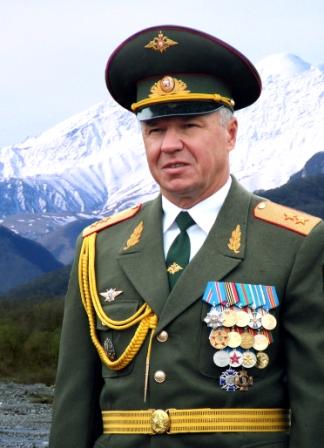
General-Lieutenant Sobolev

A more recent photo shows him looking just about as fit in retirement at age 61.

One wonders if a conservative like Sobolev realizes how much his thinking coincides with that of more liberal critics he seems to detest.

Suit, Countersuit Over GOZ

Kurganmashzavod (photo: Nakanune.ru)

This story should be of particular interest to those following the VDV, Ground Troops, and their combat vehicles.  The specific problems of KMZ illustrate general dilemmas of the GOZ.  The GOZ money trail is slippery.  And it explains why modern, or at least new, weapons and equipment aren’t produced or delivered, and the GOZ is only partially fulfilled. 

RIA Novosti (via Vedomosti) reports the Defense Ministry filed suits against Kurganmashzavod (KMZ), of “Tractor Plants” Concern, for breaking GOZ contracts.  KMZ, in turn, entered three countersuits seeking 1.5 billion rubles from the Defense Ministry for violating its contracts.

KMZ claims the Defense Ministry stopped accepting its products in fall 2010, causing the factory to fail to meet its obligations.  RIA Novosti reports First Deputy Defense Minister Aleksandr Sukhorukov said KMZ would be fined 3 billion rubles for breaking its 2010 contract to produce the BMP-3.  Two billion has also been cited.  The first hearing will be next week.

Nakanune.ru indicates KMZ had no GOZ contracts for 2011, during which the plant counted on 12 billion rubles worth of production.  Instead, it produced only 4.7 billion worth for the first eight months of the year.

In May, Main Military Prosecutor Sergey Fridinskiy pointed to KMZ as a prototypical failure of the GOZ.  The factory got an advance of 350 million rubles but, instead of sending money to its sub-contractors, it used it on internal needs.

Academy of Military Sciences Professor and PIR-Center Conventional Arms Program Director Vadim Kozyulin says:

“I understand that the enterprise’s leadership could have its own reasons.  The plant has many problems which could look more important and pressing from a local viewpoint.  But some way or other the resources to fill the order for the supply of armored equipment for the VDV came in, but went for something else.”

Kozyulin says they have the same problem in other enterprises, “but ‘Kurganmashzavod’ fell right under the chop.”  He says it won’t go well for KMZ, and the Defense Ministry may refuse to give the factory future orders. 

Nakanune also cites CAST analyst Dmitriy Vasiliyev who agrees this isn’t just KMZ’s problem, but a problem of the Gosoboronzakaz as a whole.  Igor Korotchenko suggests KMZ has little chance of winning its case, and needs to seek an out-of-court settlement.  But perhaps it’s too late already. 

It may be that KMZ is being made into a convenient example because others want to take it over.  It is an area of the OPK that could stand some consolidation.

Kozyulin suggests troubled KMZ should merge with Uralvagonzavod (UVZ).  UVZ and Russian Machines are apparently after KMZ parent “Tractor Plants” Concern.  They’ve approached Vnezhekonombank, which owns 100 percent of its shares, about managing “Tractor Plants” Concern, but the choice of a managing firm has been put off until 2012.

It certainly sounds like KMZ is headed downhill.  The dueling law suits, the untangling of KMZ’s management, and, at some point, the reorganization and restoration of its production capability will take time.  This means possibly years of delays in filling armored vehicle orders for the VDV and Ground Troops.

You may recall United Russia member Igor Barinov excoriated KMZ earlier this year for its poor handling of GOZ funds.  VDV Commander, General-Lieutenant Vladimir Shamanov also blamed KMZ for delays in getting the first BMD-4Ms for his troops. 

Serdyukov and Baranets

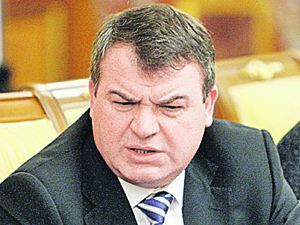
Anatoliy Serdyukov (photo: Vladimir Belengurin)

Komsomolskaya pravda’s Viktor Baranets got to prompt Defense Minister Anatoliy Serdyukov for a few statements on various topics in today’s paper.  It doesn’t seem like he really got to ask questions.

Serdyukov claims all but about 3% of GOZ-2011 has been placed, and 100% advances to the defense sector for 2012 will make for a smooth year of orders and production.  He “dodges the bullet” on not ordering Kalashnikovs.  He returns to the possibility of giving serving officers and contractees money to rent their own apartments, but this never worked well in the past.

Serdyukov says the first phase of military reform involved changing the Armed Forces’ org-shtat (TO&E) structure.  Now, he says, the second phase has begun, and it’s connected with rearming the troops.

On the state defense order (GOZ), Serdyukov says:

“During the formation of the Gosoboronzakaz, we had two issues with the defense sector — the price and quality of armaments.  We got them to open up their production “cost history.”  That is, they showed us everything transparently.  We needed to understand what they were getting and from where.  After long arguments, a compromise was found in the end.  We settled on quality criteria.  The Gosoboronzakaz is almost completely placed.  Of 580 billion rubles a little more than 20 billion was left ‘to settle.’  But we’ve also drawn conclusions from the lessons of this year.  Now the next Gosoboronzakaz will be formed in the Defense Ministry before December with such calculation that they will begin to fulfill it in January.  At the same time, we’re trying to make the Gosoboronzakaz 100% paid in advance to the defense sector.  Not another country in the world has such comfortable conditions for its VPK.”

Serdyukov says the Defense Ministry is still working on MPs, their regs, missions, training, structure, and size.  They’ll be responsible for discipline and order in garrisons and investigations.

The Defense Minister opines that Russia’s Israeli UAVs aren’t bad, but they are looking at Italian ones while domestic development continues.

Serdyukov confirmed that two new factories for producing the S-400 system will be built.  They are designed, and, he hopes, will begin production by 2015.

On tanks, the Defense Minister says they’ve taken the position that they can modernize T-72s to the level of a T-90 or better for 38 million rubles.  He believes it’s cost effective.

On the AK-74, Serdyukov claims they aren’t rejecting it, but they have depots overflowing with 17 million automatic rifles.  He says they’ll be used or modernized, some will be sold, and others transferred to other power ministries.

Serdyukov believes the draft military pay law now in the Duma will raise pensions by 50 or 60 percent.  Active military pay will be as advertised:  a lieutenant is supposed to get 50,000 or more rubles a month.  Contract enlisted will start at 25,000 or more depending on their duties.

Serdyukov hopes the problem of housing for retired servicemen will be concluded in 2013.  Then he can focus on service housing for contractees.  He proposes paying contractees to rent apartments while the Defense Ministry acquires or builds service housing.  “Apartment money” is a possibility but it has to be thought out.

The Military’s Most Authoritative

Russkiy reporter published its 2011 list of the 100 “most authoritative” Russian people — ten each in society, business, bureaucracy, academe, education, medicine, law, military, culture, and sports.

Avtoritetnyy, of course, isn’t just a cognate; it can mean influential, competent, trusted, reputable, respected, expert, etc.

You can read about last year’s picks in the military field here.  This year’s military list includes:

  • Deputy Defense Minister Anatoliy Antonov, for knowing how to talk to foreigners.
  • Western MD Commander, General-Colonel Arkadiy Bakhin, for housing officers.
  • Sukhoy test pilot Sergey Bogdan, for testing the fifth generation fighter.
  • General Staff Chief, Army General Nikolay Makarov, for disbanding the “Arbat Military District.”
  • State Secretary, Deputy Defense Minister Nikolay Pankov, for reforming military education.
  • President, General Director of RSK MiG, Chairman of the Board of Sukhoy, Mikhail Pogosyan, for developing the latest Russian weaponry.
  • Head of the Veteran-Military Chiefs Club, Marshal of the Soviet Union Sergey Sokolov, for 100 years in the ranks.
  • General Director, “Tactical Missile Armaments” Corporation, Boris Obnosov, for fast, accurate missiles.
  • Air Forces Senior Lieutenant Igor Sulim, for courage.
  • President, Academy of Military Sciences, Army General Makhmut Gareyev, for asserting the results of the Second World War.

It’s an interesting and eclectic list.  Clearly, many would dispute the names.  Some would say Pankov wrecked the military education system; others would say he implemented unavoidable reductions and consolidations.  Picking Makarov for breaking up the “Arbat Military District,” and sending more officers out to serve with the troops is also controversial, but he’s done something essential and long overdue.

Sokolov’s honored for his longevity. 

Obnosov’s interviewed in the lead article.  He talks about attracting and retaining young scientists and engineers in the defense sector, and about the OPK’s attempt to reach an understanding with the Defense Ministry on price formation.

Sulim’s a surprise, and a rather bold choice.

Only Makarov, Pogosyan, and Gareyev repeat from last year’s list.

RR picked Deputy Defense Minister, Army General Dmitriy Bulgakov as its goat of the year for the spate of deadly army arsenal explosions. 

The big “loser” Bulgakov’s in the same boat as some of the “winners.” 

He found himself in charge of a long-neglected and untenable situation, and he’s tried to fix it.  But many people will object and argue about his methods, the results, and consequences.

Su-34 Completes State Testing

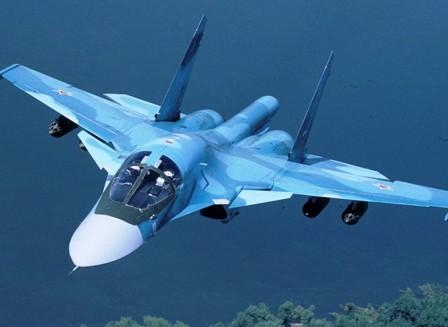
Su-34

This week an aviation industry source told Interfaks-AVN that the Su-34 fighter-bomber completed state joint testing, and Air Forces CINC, General-Colonel Zelin signed off recommending state acceptance of the aircraft.  The Russian government is preparing the paperwork to this effect for release in 2012.

AVN also said the Su-34 will undergo additional special testing “conducted with the goal of broadening the Su-34’s combat potential.”  The report noted, in testing thus far, the aircraft employed 20 different weapons – including practically all Russian laser-, television-, and satellite-guided precision munitions.

One wonders if this “broadening combat potential” relates to outfitting the Su-34 with cruise missiles.  Lenta.ru’s Vasiliy Sychev recalled General-Colonel Zelin’s words:

“In its maneuver capabilities and missions it can conduct, it is close to Long-Range Aviation’s aircraft inventory.  If it carries a cruise missile, it belongs in a different class.”

According to Izvestiya’s Ilya Kramnik, there are 16 Su-34s in the inventory at present.  They first arrived in 2006.  The VVS are supposed to add six in 2011, get 12 in 2012, and reach 70 in 2015 and 120 by 2020, according to Zelin’s announcement at MAKS in August. 

Let’s recall a couple past promises . . . when Sergey Ivanov was Defense Minister, there were supposed to be 50 Su-34s by 2010, and 200 by 2015.

Kramnik writes that 120 Su-34s will be 70 percent of the fighter-bomber inventory, and some 50 modernized Su-24s will make up the balance.  Right now, there are about 160 Su-24M and 40 Su-24M2 in the force with their average ages in the 25-27 year range.  It sounds like about 10 of these aircraft can be modernized each year.

Lenta reviewed a little Su-34 history.  Conceived in the 1980s as a generation 4+ modification of the Su-27, it had its first prototype flight in 1990 as the T-10V-1.  It’s survived to this day, and been through many convolutions.

Henceforth the Su-34 will have a modernized AL-31F engine, the AL-31FM1 or AL-31F-M1.  See Aviaport.ru on it.  The Su-34 will carry new air-to-air and air-to-surface missiles on its 12 hardpoints.  It has new electronics, a Sh141 phased array radar, aerial refueling capability, and an updated L-150 “Pastel” radar warning system.  It also features an auxiliary power unit so it can use airfields without ground support equipment.

Lenta says the factory in Novosibirsk (NAPO) is modernizing its production lines to the tune of 2 billion rubles with some of the money reportedly coming from the state program of OPK modernization, about which we’ve heard little.  Putin talked about 3 trillion rubles for this over 2011-2020 back in April.

NAPO will give half its capacity to the Su-34, and will allegedly be capable of assembling 20 of them simultaneously, while cutting the time for repairs on other aircraft in half.

The news outlet lauds the Su-34 (rather obviously) as a new aircraft rather than a modernization of an aged one.  But then again one could argue it’s not completely new given that it’s been around, in one form or another, since the 1980s.

Kramnik, citing Konstantin Makiyenko, writes that a multirole fighter like the  Su-30 could perform the Su-34’s missions, but there’s some desire to send NAPO orders.  And the VVS, for their part, will take everything new that the aviation industry can give them.

GOZ War Winding Down?

Vedomosti’s Aleksey Nikolskiy sees a possible end to the conflict between the Defense Ministry and industry over the production of strategic nuclear systems.  His OSK source claims a multiyear Defense Ministry contract with Sevmash for proyekt 955 Borey-class SSBNs will be concluded in the coming week.  This would reportedly leave OSK with just one contract remaining to be completed.

Conclusion of a 40-billion-ruble contract for three proyekt 11356M frigates was announced Wednesday.

Vedomosti’s source said the Defense Ministry and OSK also finished a deal for proyekt 885 Yasen-class SSNs several days ago.  The paper once again cites Konstantin Makiyenko’s 500 billion ruble price tag for the new SSBNs and SSNs.

An industry source tells Vedomosti that all MIT’s ballistic missile contracts are complete.

While deals for renovating Russia’s strategic forces are apparently done at last, not all contracts for conventional armaments are finished, particularly those involving Rostekhnologii and its enterprises, according to the director of one of them.

What’s this mean?

The conclusion of submarine / SLBM / ICBM production contracts would be a relief to both sides since their absence has been the biggest GOZ news story.  If all this is done, or almost done, one would expect a major government or Defense Ministry press announcement soon.

If the submarine deals are worth 500 billion rubles, that is, once again, apparently closer to Defense Minister Serdyukov’s price than to OSK’s.

The proyekt 11356M frigates are updated Krivaks (or Talwars for India), and they aren’t exactly cheap.

The issue of incomplete contracts with Rostekhnologii’s enterprises is significant given the size and breadth of their work on weapons and military equipment.  People will ask which enterprises and systems are in question.  It also contradicts Serdyukov’s recent claims that only OSK deals needed to be inked, and implies there are lingering problems and issues in areas other than shipbuilding.

Makarov’s Press-Conference (Part II)

Krasnaya zvezda provided a summary of General Staff Chief Nikolay Makarov’s press-conference yesterday.  The rest of us are still parsing and digesting.  Let’s look at more complete press reporting to do justice to Makarov’s remarks.

Gazeta.ru cited RIA Novosti in adding to Makarov’s comparison of French and Russian artillery systems:

“In France, we were shown the work of an artillery battalion which was ready to fire 30 seconds after a march.  Our analogous norm is 15 minutes.  The difference between one minute and 15 minutes is huge.  I think over this time an entire artillery battalion could be destroyed.”

But Gazeta noted Makarov said Moscow doesn’t intend to buy the French Caesar howitzer.

Gazeta, citing Interfaks this time, expanded on this comment on buying Western military technologies:

“We need to understand what to get, and what to acquire, but to acquire the technologies, and to produce on Russian territory.  Some technologies certainly have to be bought in the West.”

Igor Korotchenko explained to Vesti FM what Makarov and the Defense Ministry will or won’t buy:

“If suddenly for some reasons those models which industry proposes don’t correspond to declared requirements, the Defense Ministry will toughen its demands.  But on the whole the mainline remains – reliance on the domestic defense-industrial complex.  Makarov has spoken clearly about this.”

“Meanwhile, we’ll buy some leading technologies which will be required in Russia’s armed forces in the West.  In principle, these announcements are fully anticipated, they correspond to that policy that both Defense Minister Anatoliy Serdyukov and General Staff Chief Makarov have conducted since 2008.”

Gazeta and Novyye izvestiya contrasted Makarov’s criticism of Russian tanks with Putin’s praise for them.  Both news outlets see President Medvedev, Serdyukov, and Makarov lining up to make tougher demands on the OPK while Prime Minister Putin defends it. 

They cited RIA Novosti this way with Makarov’s comments:

“The T-90 turret calls for our serious respect, it doesn’t lag the leading foreign analogs, and in a number of characteristics exceeds them.”

“The T-90S still has a number of flaws which need to be fixed soon.”

“Experimental-design work to perfect this tank will continue.”

At Nizhniy Tagil, Putin sympathized with tank builders as they described their latest developments, saying:

“This is just what the Defense Ministry always complains about.”

Rounding out the tank news, Nezavisimaya gazeta’s Viktor Litovkin talked about the Defense Ministry’s continuing refusal to buy modernized versions of old tanks. 

He says it wants a new class of armored vehicles on a common tracked or wheeled chassis to simplify operation and maintenance, and different combat modules as needed – BMP, tank, reconnaissance, self-propelled artillery, or ATGM launcher – mounted on the same basic platform. 

Litovkin suspects, though, that this good idea could be ruined by “interdepartmental contradictions,” and a lack of leadership vision. 

He concludes that, while Makarov was critical of their product, Putin was promising Russia’s tank builders 64 billion rubles in government support.

Makarov’s Press-Conference (Part I)

General Staff Chief Nikolay Makarov apparently held a lengthy press-conference today covering many topics.  He’s still advocating buying weapons abroad (when necessary), despite Prime Minister Putin’s strong support of the domestic OPK against the military’s demands.

ITAR-TASS quotes Makarov on the pending Navy headquarters move to Piter:

“Concerning a decision by the Supreme CINC [President Medvedev] to revoke the transfer of the Navy Main Staff to St. Petersburg, there has been no such decision.  We are now working on this issue.”

The General Staff Chief seemed to say there won’t be any diminution of the role or place occupied by service Glavkomaty, according to the news service.  He said the Main Commands of the services of the Armed Forces are part of the military branch of command and control which he heads.

ITAR-TASS quotes Makarov on buying arms and equipment abroad:

“We will need to buy something that isn’t produced with the quality we require.”

He compared domestic Msta-S and longer-range French Caesar howitzers:

“In France, we were shown the work of an artillery battalion which was ready to fire 30 seconds after a march.  Our analogous norm is 15 minutes.  The difference between one minute and 15 minutes is huge.”

“Therefore, we have to acquire something in order not to lag behind, but on the condition of arranging joint production in Russia.”

Interfaks quoted him on buying armor abroad:

“Some technologies certainly have to be bought in the West.”

The Defense Ministry, he says, has no desire to buy arms and equipment abroad if Russia has analogs or more modern models.  But Russia will find it hard to compete with Western firms that are cooperating with each other.  Makarov cited Renault’s APC which uses a Volvo engine.  “Our producers need to make a revolutionary leap,” Makarov concluded.

The General Staff Chief was ambivalent about the T-90 tank, according to ITAR-TASS:

“I visited the Nizhniy Tagil exhibition and got familiar with our T-90 tank.  The tank they showed us, particularly its turret, calls for serious respect.  But we have questions remaining about many drawbacks.”

“. . . the experimental-design work the factory is conducting will allow them to realize those requirements the Russian military is placing on this new product.”

ITAR-TASS also picked up Makarov’s remarks on the Tsentr-2011 exercises:

“We want to work out common approaches to employing armed forces within the ODKB [CSTO] framework.”

“Besides militaries, all other power structures, which are understood as part of the state’s military organization, in the ODKB countries will participate in these exercises.  As far as Russia goes, we want to check the country’s military organization fully by conducting a series of mobilization measures, including also industry.”

“Starting today, we’ve started into mobilization deployment of a number of formations and units according to independent plans.”