Tag Archives: Ruslan Pukhov

Old Weapons Good Enough, or Worn Out?

In Tuesday’s Gzt.ru, Denis Telmanov writes that Vostok-2010 features arms and military equipment that is 20, or sometimes 30 years old.  Neither the Defense Ministry nor independent experts see anything terrible about this, though they worry it could become physically worn out.

Telmanov says the exercise relies on old weapons systems like the Mi-24, Tu-22M3, and the Petr Velikiy.  The latter was laid down in 1986, and didn’t join the fleet until 12 years later.  The overwhelming majority of Pacific Fleet ships in the exercise were also laid down in the 1980s, and are at least 20-plus years old.  Even the vaunted Su-34 first flew in 1990, but didn’t go into operational use until 2007.  The remaining arms and equipment were developed in the 1960s and 1970s, and produced at the end of 1980s and early 1990s.

This state of affairs allows the Defense Ministry to show that the Russian military can fight successfully with the equipment it has.  The military’s press service chief wouldn’t comment for Gzt.ru on the age of systems taking part in Vostok-2010, except to say they’re the same as those on combat duty in formations and units in the rest of the Armed Forces.

The spokesman said:

“Today the army uses the equipment that it has.  And one of the missions of the exercise is to show how effectively established missions can be fulfilled in the new TO&E structure with this equipment.  The effectiveness of military equipment really doesn’t depend so much on its age, as on skill in using it and on how it corresponds to the established missions.  The course of the exercise still shows that the equipment is fully combat ready and allows troops to fulfill these missions put before them completely.  But it’s understood that this in no way diminishes the importance of the planned modernization and introduction of new equipment which will enable troops to act even more effectively.”

He cited EW equipment and the Su-34 as new systems being used in Vostok-2010.

Gzt.ru goes on to remind readers that, for over a year, President Medvedev and Defense Minister Serdyukov have taken pains to tell Russians the majority of the country’s armaments are obsolete or worn out.  Serdyukov said the share of modern military equipment in the inventory was only 10 percent.  That’s when he and Medvedev launched the campaign to increase this figure to 30 percent by 2015 and 70 percent by 2020.

CAST Director Ruslan Pukhov says the absence of serious military threats makes the next ten years a good time to do this:

“. . . Russia has a window of opportunity the next 10 years, and it isn’t threatened by war.  It’s necessary to use these 10 years to bring the armed forces into a condition in which they can repulse any threats which arise.”

Pukhov says the Black Sea and Baltic Fleets should be modernized first, Iskanders deployed to deter Georgia, and S-400s in the Far East to counter North Korean missiles [recall General Staff Chief Makarov’s claim last year that S-400s were there?].

Mikhail Barabanov of Moscow Defense Brief says the problem is not age, but physical wear:

“40-year-old ships and 30-year-old tanks are now almost gone.  In reality, the problem of old equipment in our Armed Forces is not so much its age as the amount of equipment wear and tear.  That leads to breakdowns.  For example, in the Vostok-2010 exercise the guided missile cruiser Moskva didn’t succeed in launching its Vulcan [SS-N-27??] anti-ship missiles.  As a result, missile boats with Moskit missiles destroyed the target.”

Nevertheless, Barabanov remains confident that, even with aging weapons, Russia’s military is superior to neighboring armies, including China’s:

“On the whole, the equipment level of Russian units in the Far East is generally adequate to perform defensive missions, although not at the highest level.  It’s another issue that the equipment is badly worn out.”

Barabanov is not against buying new equipment of older designs:

“Even if industry’s existing models can be criticized for deficiencies from the standpoint of modern requirements, the fact remains they will be physically new, with a full service life, and allow for significantly increasing the combat readiness of troops.”

Telmanov ends by reminding readers of President Medvedev’s late 2009 pledge to provide the military 30 land-based  and naval ballistic missiles, 5 Iskander missile systems, nearly 300 pieces of armored equipment, 30 helicopters, 28 aircraft, 3 nuclear submarines, a corvette, and 11 satellite systems in 2010.
Moscow Considering Italian Light Armored Vehicles?

Russkiy Newsweek yesterday said a source close to the Defense Ministry claims Moscow is considering buying Italian IVECO M65 vehicles, also known  as the LMV (Light Multirole Vehicle).  The source said negotiations are in the final stage, and LMVs are reportedly being tested in Russia, but opinions on their suitability for Russian conditions are varied.

Another problem–the LMV is basically an analogue of Russia’s Tigr, produced by Arzamas Machinebuilding Plant, a company belonging ultimately to Oleg Deripaska.  The LMV is 1.5 or 2 times more expensive than Tigr and carries fewer personnel.  But it is considered more explosion resistant.  Deripaska’s people dispute this, however, saying it depends on how close the vehicles are to the explosion.

Russkiy Newsweek says the LMV was shown to Putin last year, and Medvedev this year.  It adds LMV to a list of proposed or actual Russian arms buys abroad, including British sniper rifles, Israeli UAVs, and French Mistral helicopter carriers.  The possibility that United Shipbuilding Corporation (OSK or ОСК) chairman and Deputy PM Igor Sechin (a long-time Kremlin insider and Putin crony) could still derail the Mistral deal is raised, but somehow this seems unlikely now for many reasons.  Why wreck a lucrative deal when you can get a piece of it instead?

The article concludes noting that this is the logical continuation of a new Russian military-technical policy–Russia can no longer be considered a closed market and soon Russian companies will have to compete with foreign producers for this internal market, according to CAST’s Ruslan Pukhov.

But there’s more to this story than that . . . some foreign samples are always good if you can get them, some palms might get greased in the process too.  It’s not a bad idea to scare the domestic defense industries, but are they really in a condition to compete with foreign producers?  Rather than stimulate them to get better and more efficient, they could just collapse in the face of a real competition for sales.  And it really goes against everything Russian to rely on foreigners, especially when they’re part of an allegedly hostile NATO.  But mucking about in NATO’s Old European rear area isn’t bad for stirring a little alliance discord.  Just weeks ago too the Russian press had stories featuring President Medvedev with the Tigr and the VDV seems pretty committed to the vehicle.  Let’s just say many factors are in play, which will be the critical ones?

Pukhov Criticizes Serdyukov’s Reforms

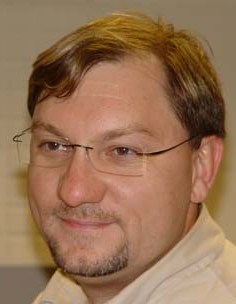
Ruslan Pukhov (photo: Radio Rossii)

In today’s Komsomolskaya pravda, Viktor Baranets interviews Ruslan Pukhov, Director of the Center for Analysis of Strategies and Technologies, and Member of the Defense Ministry’s Public Council.  Pukhov provides a fairly balanced assessment of Defense Minister Serdyukov’s reforms, one year on.

Pukhov believes Serdyukov managed to reorganize and shake up the Defense Ministry apparatus, and partially achieved more rational use of the military’s budget money.  He says the main thing is the breakthrough on the ‘organizational measures’ of military reform.  He calls the ‘new profile’ the deepest organizational change for Moscow since 1945, citing its large-scale relocation of troops and equipment, cutting of personnel and obsolete armaments, reorganization of military education, and civilianization of many military jobs.  Pukhov concludes the administrative tasks of the reform are largely complete.

However, Pukhov also agrees with Baranets that the reforms have created a structural shell that has to be brought to life, made effective, and combat capable.  This will be harder than what’s been done so far.  Pukhov says there are few who doubt the army needed a radical, not just a cosmetic, reform, and the five-day August 2008 war proved it.

Pukhov thinks the reforms have created a new army, fundamentally different from the Soviet or previous Russian Army.  In scale, they can only be compared with the military reform of Peter the Great.  If it’s possible to reproach the Russian leadership for anything, it’s for dragging the process out with half measures which turned into a permanent degradation of the army, according to Pukhov.

Asked about Serdyukov’s greatest achievement and greatest failure, Pukhov says the former is having the political and administrative will to complete the first phase of reform.  But the greatest failure is Serdyukov’s inability to win the support of the entire officer corps, and this has put part of the officer corps against him.  Bureaucratic and poorly explained changes have often demoralized personnel, and poorly thought out personnel cuts have created discontent in the ranks, from contractee to general.  Military discontent with the methods of conducting the reform could discredit the reform itself, and make it too difficult for the political leadership to continue supporting Serdyukov, although for now Kremlin is satisfied with Serdyukov and his role as the army’s ‘surgeon.’

Pukhov says many of the measures have been extremely painful, affecting the fate of hundreds of thousands of servicemen, and often been implemented in a typical Russian fashion he describes as ‘up the ass.’  The Defense Ministry’s ‘secret-bureaucratic’ approach itself has had an effect here as well.

After practically calling Serdyukov’s the army’s proctologist-in-chief, Pukhov cuts him some slack, saying he didn’t personally plan and implement the largest part of the ‘orgshtat measures.’  They were done by military specialists in the Defense Ministry, General Staff, and service and district staffs, by men who’ve served out there themselves and are now engaged in transferring their colleagues, cutting some, putting some outside the TO&E, ‘optimizing,’ and so forth.  But Pukhov notes, all this could be done humanely, with respect toward the men and their professional experience.

Pukhov agrees with Baranets that a ‘soulless’ style of dealing with people, a lack of concern about human capital, and disregard for the human factor is traditional in the army.  And, unfortunately, it permeates the entire military system, according to Pukhov.  And a significant portion of the officer corps has become victim to such an approach during these rapid reforms.

Pukhov ends with some criticism for the top military leadership which often says it has come all the way from the bottom ranks, like those being ‘optimized’ today.  But what’s happening, including the aforementioned ‘excesses’ of reform, in Pukhov’s view, should make one think that there are some unhealthy morale-psychological tendencies in the army, which started long before Serdyukov, and can’t be considered normal.  Perhaps, for the success of reforms, the leadership should focus on the human aspect and recognize that the army, first and foremost, is people, and not pieces of iron.

So it sounds a little like Pukhov is saying the civilian Serdyukov didn’t realize how military men would implement his changes in their own organization, and what the human costs would be.  Again, it sounds like he wants to cut Serdyukov some slack, and share the blame for the pain caused with others around him wearing uniforms with big stars.  This tends to overlook the reality that many of those with the stars who objected were sent packing by someone.