Category Archives: Civil-Military Relations

Why They’re Empty

Well, mostly empty.  To its credit, Defense Ministry daily Krasnaya zvezda has tackled the issue of why Russian servicemen aren’t racing to take ownership and occupy permanent apartments offered to them.

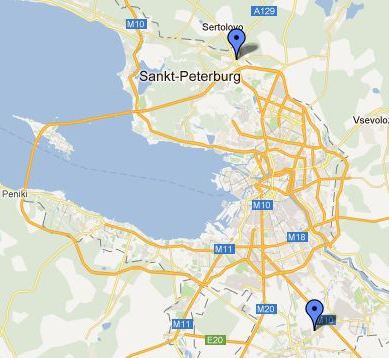
KZ looked at two major military housing projects outside St. Petersburg — Slavyanka and Osinovaya Roshcha — which between them have over 100 buildings and almost 9,000 apartments.  The paper says only 40 percent of these apartments have been accepted, and only 20 percent occupied.

Slavyanka South and Osinovaya Roshcha North of St. Petersburg

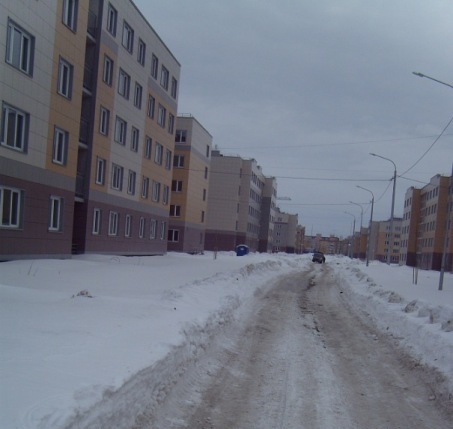
Slavyanka’s construction was complete one year ago, but its streets are empty and one very rarely sees pedestrians.  Its school just opened, but residents are still waiting for day care and have to drive preschool children elsewhere.  The builders claim there are relatively few defects, and they are repaired quickly.

A Street in Slavyanka Last March

Osinovaya Roshcha was built on Defense Ministry land — a former military town, and its apartments were turned over about six months ago.  Like Slavyanka, the dwellings in this development don’t suffer from too many problems.
 
KZ says now on average about 150 apartments are being accepted every week in Slavyanka and Osinovaya Roshcha.  But this is still a slow pace.  Servicemen aren’t in a hurry to relocate because of the undeveloped infrastructure in both locations. 
 
There is no walking access to grocery stores, pharmacies, post offices, or bank branches.  The nonresidential first floors of buildings haven’t been sold or leased to businesses.  Neither the developer nor rayon administration can make arrangements for these commercial spaces because the property belongs to the Defense Ministry.
 
In Osinovaya Roshcha, it’s already clear there will be a major parking problem once the mikrorayon is fully settled.  Some parking was planned but hasn’t been built.  Also, the area depends on narrow two-lane Priozerskoye shosse as a main road.
 
KZ says the biggest headache in Osinovaya Roshcha, however, are nonworking elevators.  Some buildings are 17 stories, and current residents can count on having an operational elevator only one day per week.  The paper describes a Catch-22.  People don’t move in because elevators aren’t working, but there aren’t enough residents there to pay communal fees to cover the work of crews who fix the elevators.
 
The wait for day care centers keeps many families from moving.  They are supposed to open this month in Osinovaya Roshcha.  Older kids go to school in two shifts at an old building while they wait for a new one. 
 

KZ sums up:

“Judging by everything, people don’t intend to give up distant garrisons until life in the new mikrorayony is smoothed out and all essential infrastructure develops.” 

All in all, Internet photos seem to support KZ’s description of Slavyanka and Osinovaya Roshcha as generally well-constructed, livable communities.  
 

Will Serdyukov Go?

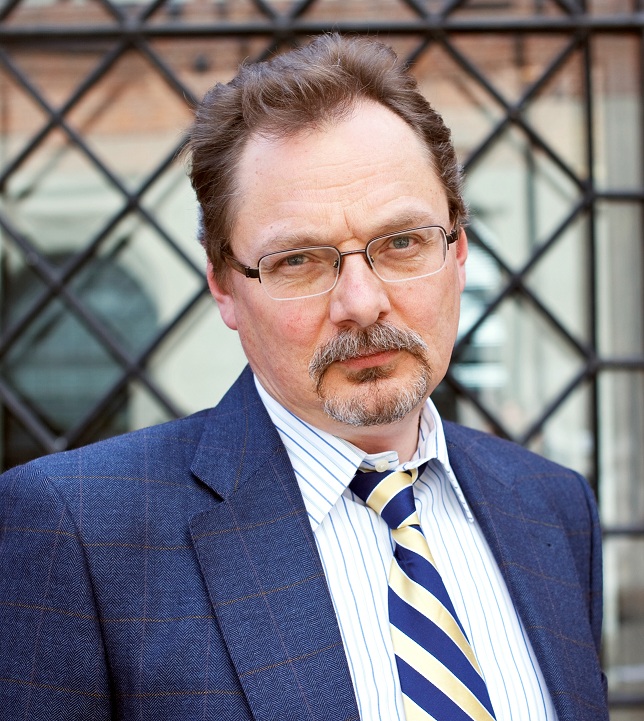
Pavel Baev

Back to a familiar topic . . . is it possible or likely Defense Minister Anatoliy Serdyukov will resign or be dismissed from his post prior to the March 4 presidential election?  It is, of course, a topic that won’t quit.  At least not for the next two months. 

Pavel Baev discussed this with BFM.ru over the holiday. 
 
We looked at Baev’s view of Serdyukov’s reforms back in the spring.  He was neither sanguine about them nor forgiving of mistakes made.
 
We also looked earlier at a couple considerations of whether Serdyukov might leave or be forced out of the Defense Ministry. 
 
In August, Mikhail Rostovskiy thought Serdyukov’s position pretty secure, and this author postulated, with once-and-future president Vladimir Putin secure in the Kremlin again, Anatoliy Eduardovich might find relief from the defense portfolio in a job both cushier and more to his liking.
 
In April, Aleksey Makarkin also thought Serdyukov was pretty safe.
 
It’s obvious that the aftermath of the December 4 Duma elections changed a lot of things.
 
Now Oslo-based Professor Baev thinks Serdyukov could be sacrificed in the election run-up for nothing other than loyal performance of the tasks Putin set him to in February 2007.
 
Baev says Putin believes his regime faces an old-fashioned Cold War-style political threat.  Various Western “circles” (NATO, NGOs, CIA) think the regime’s exhausted itself.  Any possible replacement would be welcome to them.
 
Then we get to the essence of Baev’s argument — the fact that the Defense Minister has generated great dissatisfaction and irritation among Russia’s defense factory directors.  Without a serious go-between in the Military-Industrial Commission, Serdyukov’s become the focus of their ire.  They blame him and his subordinates for rejecting Russian weapons and equipment, and claim they’ve hurt Russia’s reputation as an arms exporter.
 
His case in point is the complaint from railcar and armor producer Uralvagonzavod during Putin’s December 15 “direct broadcast” Q and A with citizens.  A caller asked Putin to take Serdyukov and General Staff Chief Makarov by the neck, and replace the former with a “clearheaded Defense Minister.”
 

Baev’s interviewer asks whether Serdyukov will keep his current seat under Putin 2.0:

“. . . I think that the Defense Minister will be replaced even before the election.  The Armed Forces and military enterprises are a large and serious part of the electorate.  It was possible to extinguish accumulated irritation with the promise of money since after long promises they raised pay for officers, although not as substantially as was said.  It’s also possible to give money to OPK enterprises and sacrifice an unliked minister.”

But a resignation won’t be enough:

“I don’t think so because the problems have gone too far.  It’s hardly possible to put the protest mood just on one minister.  Everyone understands perfectly that it’s not the minister who started all this and carried all this out, no one suspects Serdyukov of being a confirmed reformer, having a program, or being a man motivated by a sense of his own mission.  He is a manager, an executive, and extremely stubborn, but he didn’t start this, and that’s clear.  And I don’t think Serdyukov will hold onto the minister’s chair.  The problems and conflicts have become so acute that it’s becoming costly to him.  I think they’ve had enough of him.”

Baev concludes that another civilian should take over the Defense Ministry, and continue separating its intertwined military and civilian functions.  He doubts Serdyukov’s replacement will reverse anything, but simply move forward on the problems reforms have created.

Serdyukov’s departure seems like more of a possibility now than before the Duma elections.  As Baev suggests, Putin could sacrifice his Defense Minister to appease his numerous unhappy defense industrial constituents.  Serdyukov’s fate may hinge on how badly Putin needs a boost for March 4. 

The Defense Minister’s 5-year anniversary comes next month and provides an opportunity for a change short of dismissal.  This author gets the impression Serdyukov’s energy for his difficult job has declined lately.

As for Uralvagonzavod, its workers are unlikely to quit sniping at the Defense Minister.  They, along with other military vehicle makers, have reportedly learned their defense order for 2012 has been drastically cut in favor of procurement in 3-5 years.

The Sociological Center

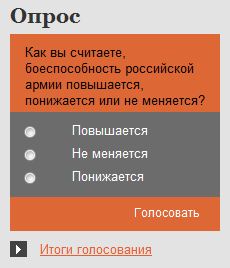
Is the Russian Army's Combat Capability Increasing?

A nice find on Mil.ru . . . the Defense Ministry website has the Internet poll above on its front page.  If you click on Voting Results, you go to the results of all surveys conducted by the Defense Ministry’s Sociological Center.

To this particular question, 78 percent of respondents said its combat capability is decreasing.

Stepping back a bit, clicking on Sociological Center goes to a narrative explaining a little about it.  Its purpose is monitoring social processes in the military to work out scientifically-founded proposals on the morale-psychological support of military organizational development, training, and employment of the Armed Forces.  It also provides information support to commanders, staffs, and personnel officers.  The Center is charged with collecting data about the socio-economic circumstances of servicemen and their families.

The military opinion surveying effort has been around for a while.  During the first big push for contract service beginning in 2003, Defense Ministry pollsters actively asked contractees, or prospective ones, what attracted or discouraged them from signing up.

We’re not told how or when these survey questions were asked.  They’re likely Internet polls rather than more scientific random sampling. 

But one still admires the brutal honesty of publishing these results.  They don’t accord with what Defense Minister Anatoliy Serdyukov wants to see or hear three years after launching military reform.  They indicate how far the Russians have to go to turn around the perception, if not the reality, of life in the Armed Forces.  At the same time, getting feedback is a critical step in correcting their problems.

Your author has regrouped the survey results on various questions thematically.  In the interests of brevity, only the answer with the highest percentage is shown.

Let’s start with other combat capability-related questions:

  • How do you evaluate the Russian Army’s current combat capability?  72 percent said low.
  • Is three months sufficient to train a military specialist?  82 percent said no.
  • What effect is the humanization of service having on combat readiness?  71 percent said it is causing it to decline.
  • Are you satisfied by the media’s presentation of Armed Forces exercises?  75 percent said no.
  • How do you evaluate the present level of combat training?  74 percent said poor.
  • Can the Armed Forces reliably guarantee Russia’s security?  81 percent said no.
  • Is there now a military threat to Russia from other countries?  79 percent said yes.

Some very general questions:

  • Do you approve of the Russian Army’s activity?  62 percent said no.
  • How do you feel when you talk about the Armed Forces?  52 percent said negative.
  • Is it necessary for the media to discuss negative events in the Armed Forces?  75 percent said yes.
  • How does the media portray the activities of the Armed Forces?  64 percent said not objectively.
  • Do you agree that “A powerful army is a powerful Russia?”  80 percent said yes.

On conscription:

  • Should draft evaders be punished?  68 percent said yes.
  • How do you feel about draft evasion?  59 percent said negative.
  • Does military service promote striving for a healthy way of life?  56 percent said yes.
  • Would you want a close relative to serve in the army?  68 percent said no.

On law and order in the ranks:

  • Who should control the military police?  52 percent said the Defense Ministry.
  • Do officers have enough powers to keep order?  84 percent said no.
  • How do you assess measures to counter corruption in the army?  66 percent said they have little effect.
  • Is “dedovshchina” an acute problem?  62 percent said yes.

On personnel, pay, and benefits:

  • Should Order No. 400 premium pay continue or be discontinued?  80 percent said discontinue it.
  • How do you feel about rotating officers’ duty stations?  51 percent are negative.
  • How has Order No. 400 affected corruption in the army?  88 percent said it’s caused it to grow.
  • Is there a “cadre famine” in the Armed Forces?  83 percent said yes.
  • How do you evaluate the consequences of Order No. 400?  89 percent are negative.
  • Where should priests be located?  42 percent said in battalions.
  • Will priests help in forming healthy moral relations in the military collective?  55 percent said no.
  • How do you evaluate the effect of the military mortgage system?  74 percent said low.
  • Will higher pay in 2012 raise the social status of servicemen?  58 percent said no.
  • Will requalifying military arsenal workers increase safety?  65 percent said no.
  • Do military families live better or worse than people in your region?  77 percent said worse.
  • Are social guarantees for servicemen sufficient?  86 percent said no.
  • Has the prestige of the Armed Forces increased in the course of military reform?  59 percent said it remains at the previous level.

The responses on the army’s capabilities weren’t new.  One is surprised, however, at how negative respondents were on premium pay, how little they expect from higher officer pay, and the lack of any improved perception of the prestige of military service.

Perspective on the Military Vote

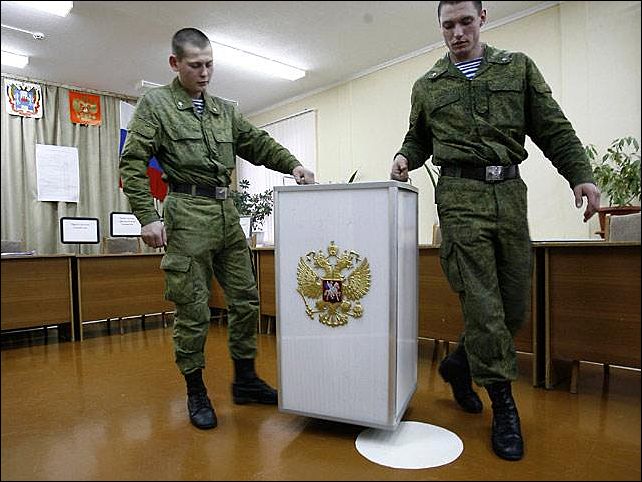
Carrying the Ballot Box

A little context for Kommersant’s report on Defense Minister Serdyukov informing the once-and-future president that 97 percent of servicemen voted in the December 4 Duma election, and United Russia garnered 80 percent of those votes.

The Defense Minister allegedly told Prime Minister Vladimir Putin 80 percent of servicemen and their family members picked United Russia (against 67 percent in 2007).  Some remote units reportedly even delivered 99 percent for Putin’s party. 

For the official opposition, the LDPR got 8.6, KPRF 6.3, and Just Russia 3.4 percent.  Their shares dropped from four years ago.

The TsIK says it doesn’t know how the Defense Ministry comes by such figures since most officers and soldiers vote in normal precincts.  And the military department hasn’t commented on any voting report by Serdyukov.

If this is accurate, we can conclude that Serdyukov delivered the military vote. 

Nezavisimaya gazeta’s Vladimir Mukhin wrote that United Russia had very similar results in the 2007 Duma election.

In 2003, NG’s Mukhin said the Defense Ministry put the “military electorate” at 5-6 million voters.  It’s probably less today.

United Russia reportedly got only 52 percent of the military vote in 2003, and Rodina 12, LDPR 11, and KPRF 6 percent each.

In 1999, UR’s precursor Unity (or Medved) took 48 percent, KPRF 18, the Zhirinovskiy (LDPR) bloc 14, and Fatherland-All Russia 7 percent.

What are we to conclude?  The process of nailing down the military vote has gotten smoother over time, coinciding with Putin’s and United Russia’s dominance of Russian politics.  It looks like the army has a habit of supporting whoever’s in power.  But now it looks just a little out of step with society — voting 80 percent for the party of power versus 49 percent countrywide.  But how the army votes and what it thinks may also be two different things.

VVKO Faces West

How Will They Represent VKO on the Space Troops Flag?

VVKO faces west.  And north . . . ok, northwest.  Makes sense, that’s the direction those hypersonic missiles are coming from, right?  Maybe, maybe not.

Mil.ru, as is its wont, printed a little item on military preparations for the December 4 Duma election.

It indicates 80 percent of 53,000 servicemen and civilian personnel of the new Troops of Aerospace Defense (VVKO) will vote [i.e. are based] in the Western MD (ZVO). 

The press-release says more than 150 of 171 polling places (88 percent) for VVKO bases, garrisons, and military towns are located in the ZVO.

Space Troops weren’t very big, and they’ve gotten much bigger by swallowing as-yet unclear parts of the OSK VKO (the former KSpN or Moscow PVO District) and other Air Forces’ PVO units into the new VVKO.  OSK VKO, in particular, was a large, westward-leaning formation.

Still it’s surprising VVKO’s center of gravity has shifted so drastically to the west.  One would have thought there’d be a substantial chunk of VVKO-controlled PVO in the Far East, or northeast, too.

Its Own Duma Election

A site dedicated to all things Russian Navy called Flot.com has an interesting Internet poll.

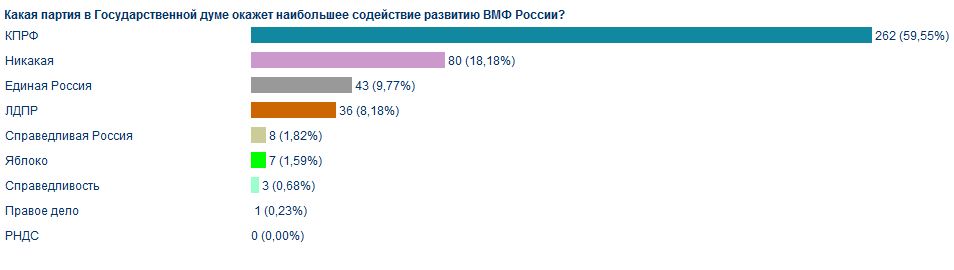
The site asks visitors to vote for the party they feel will provide the greatest assistance in developing the Russian Navy.  Click the image below to see the results as of today.

Looking for the Pro-Navy Party

Pardon one for concluding this is pretty compelling.
 
Sixty percent of those responding say the KPRF will be most supportive of the Navy’s development.
 
Bucking Russia’s electoral law, Flot.com still permits an “against all” option.  So 18 percent say no party will provide the greatest assistance in the development of the VMF.
 
United Russia comes in third at about 10 percent.
 
And to think the “party of power” organized a GPV in which the largest portion will go to the Navy.
 
A pretty damning indictment.
 
Yes, it’s an Internet poll, and it’s influenced by its clientele.
 
No offense to a good site is intended, but Flot.com’s visitors could be older, and still more Soviet than Russian.  Who knows?  But they’re also knowledgable and interested in their subject.  Hence, they represent an elite, tough, and skeptical audience. 
 
The GPV notwithstanding, the yedinorossy have failed to convince them they’ll fix the Navy’s problems.
 

The Ayderkhanov Case (Part II)

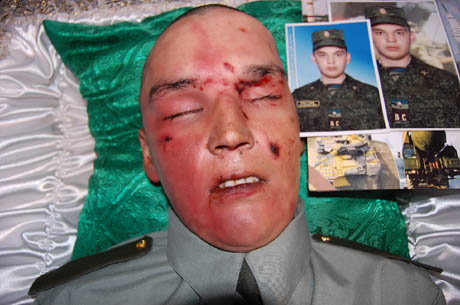
According to Newsru.com, Aleksandr Vlasov concluded the traumas on Ayderkhanov’s body were inflicted while he was still alive, and the GVP’s statements about hitting the tree are a fiction without objective confirmation. 

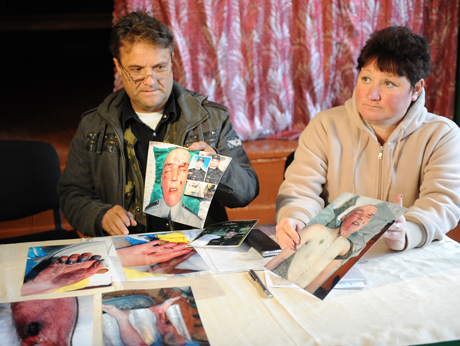
Meanwhile, Ayderkhanov’s relatives organized a round-the-clock vigil at his grave to prevent anyone from stealing his body [i.e. the evidence].  Apparently, some people came looking for his grave on October 18, according to IA Rosbalt.

Ayderkhanov’s aunt told Radio Svoboda that he was full of life and not the type to commit suicide.  Nor was he likely to have conflicts with other soldiers.  She described what happened to her nephew as not just a beating,  but torture.  She said she knew the Yelan garrison had a bad record of conscript abuse.

Post-Mortem Photos

Ura.ru writes that this is the third army tragedy in the last six years for Ayderkhanov’s home village Araslanovo and its 800 inhabitants.  The grandson of a local reportedly hung himself while serving in 2005, and another boy ran away from his unit and was found frozen to death in 2008.

In late September, 500 people from Araslanovo (as well as nearby Shemakha, Mezhevaya, Tashkinovo and Skaz) signed an appeal asking President Medvedev to get to bottom of Ayderkhanov’s murder, and accusing his officers of concealing it.  The appeal asks if someone can really commit suicide after such savage punishment?  It notes Ayderkhanov wanted to serve, and even considered staying in the army as a contractee. 

The appeal asks when disorder in the Armed Forces will end, and claims everyone knows such a state of affairs exists not just in Ayderkhanov’s unit but in many others as well.  Finally, the appeal says the people of these villages are stopping the fall draft until order’s established in Ayderkhanov’s unit, and those guilty of beating and killing him are punished.

Despite some sympathy with the cause, the local military commissar has warned that draft evaders will be punished.

According to Ura, some locals believe Ayderkhanov was killed because he was Tatar.  Others who previously served in V / Ch 55062 say the unit was rife with nationalism, dedovshchina, and extortion.

It’s interesting and sad (perhaps not surprising though) that no wider social or political outrage — similar to what occurred in 2006 after the Andrey Sychev case — has developed over Ayderkhanov.

The Ayderkhanov Case (Part I)

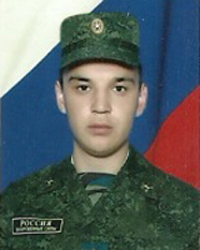
Ruslan Ayderkhanov

Here’s what looks like a case where the beating death of a conscript is being passed off as another suicide in the ranks.  We addressed this here, and the tragic Ayderkhanov case broke into the news just 11 days later.  This sad story deserved attention sooner than your author was able to give it.

Thursday Newsru.com reported Ayderkhanov’s body has been exhumed for additional medical examination to determine the cause and circumstances of his death.  Official examiners as well as one independent expert, Aleksandr Vlasov, will take part in the process which, according to RIA Novosti, should take two weeks.

Newsru recapped the basic facts.  On August 31, the 20-year-old Ayderkhanov went missing from V / Ch 55062, part of the Yelan garrison, located in Poroshino, Chelyabinsk Oblast.  His body was found hanging from a tree in nearby woods on September 3.

The military authorities were quick to label this an obvious suicide, but his relatives were suspicious about injuries all over Ayderkhanov’s body.  He had teeth knocked out, a broken leg, a missing eye, a knife wound in his chest, and burns, bruises, and abrasions.

The Yelan garrison’s military prosecutor opened an Article 110 “Incitement to Suicide” investigation, but just as quickly announced there were no facts indicating violence or the “violation of the regulations on mutual relations” [i.e. abuse] against Ayderkhanov.  The prosecutor concluded the soldier was simply depressed about the death of his mother last winter. 

The Main Military Prosecutor stated categorically there was no evidence of a beating, and any injuries on Ayderkhanov’s body were from banging against the tree on which he hung himself.  The GVP categorically rejected the idea of exhuming and examining the body again.

Radio Svoboda quoted GVP directorate chief Aleksandr Nikitin:

“There is evidence that his death was not a result of violent actions.”

RIA Novosti continued from Nikitin:

“A close examination of the place of death and Ayderkhanov’s body was conducted.  The investigation established that there are not any traces of violence which could have caused the serviceman’s death on the body.”

Ruslan Ayderkhanov

Nakanune.ru quoted a Central MD spokesman:

“According to preliminary data, no facts of nonregulation relations have appeared.  But if the guilt of officials is proven, they will be punished in the most strict way.”

According to Radio Svoboda, after the GVP proved no help, Chelyabinsk’s human rights ombudsman approached Aleksandr Vlasov.  Vlasov has stated his professional opinion that Ayderkhanov was struck at least 18 times while he was still alive.

Part II tomorrow.

Army’s Protest Mood (Follow Up)

You may recall Prime Minister Putin’s February trip to Kaliningrad, where he heard complaints about the lack of apartments and low pensions for ex-servicemen.  Today Besttoday.ru publicized video of the once-and-future president’s meeting with Kaliningrad veterans’ organization representative General-Major Kosenkov. 

Who knows where this clip’s been until now.  But, at the time, Putin’s handlers apparently decided it wouldn’t be good PR, and kept it under wraps.

The video’s become a minor sensation because it shows Putin dismissively ripping an appeal from former officers and soldiers.  Besttoday shows both a more inflammatory short clip, ending with Putin tearing the paper, and the longer clip above where Putin talks about raising pensions this year. 

As one blogger sees it:

“For the edification of those still expecting something from Putin.  You think someone is reading your complaint letters, petitions, etc.?  Then watch the video closely once more.”

“Enough with sitting by the TV and listening to cheap stories!!!”

A little context is needed . . . Kosenkov doesn’t associate himself with the paper he shows Putin.  It’s just an example, a warning about what’s being said and circulated.  We don’t even know exactly what it said.

Kosenkov represents a domesticated, acceptable group deserving of an audience with the prime minister.  Hence, the former general-major doesn’t bat an eye when Putin tears the paper.  But perhaps Putin’s just a little too quick to take offense at this appeal.  He didn’t have to look at it, or he could’ve just put it down without reacting.

At any rate, the Russian blogosphere is abuzz today because tearing the paper exemplifies and personifies Putin’s disdain for his uncontrolled, noncompliant opponents who are impudent enough to offend him with their manifestoes, placards, demonstrations, and disobedience.

But back to the army writ large . . . yes, parts of it are oozing some discontent, but they still generally don’t fall into the same category as political opponents of Putin’s quasi-authoritarian regime.  They just don’t have much in common with anti-Putin forces.

And Putin’s delivering on his promise to raise military pensions.  The new pay law just passed its third Duma reading.  It reportedly contains, on average, a 60 percent increase for retired servicemen.  This is supposed to take the average military pension from about 10,000 rubles per month (about the same as the average labor pension) to about 17,000.  And retirees have been promised semiannual indexation for inflation in the new pay law.

But one could point out that the new pay system will increase active duty pay by 200 and 300 percent, and will divide former and current servicemen financially, socially, and politically.  But suffice it to say that Vladimir Mukhin’s original article on “candy for the military electorate” was on-the-money.  

Parts of a couple quotes he provided bear repeating:

“‘In 2000, when Vladimir Putin became President, military pensions were on average three times more than civilian ones.  Now they are much lower.  Who stopped the current authorities from keeping our pensions at the previous level?'”

“‘[Increased defense expenditures] will lead to increased problems in the economy.  Or is there a possibility that militarization [i.e. rearmament] simply won’t occur, and this means the military’s negative attitude in society will exacerbate further.'”

The GRU and Other Siloviki

Yesterday a couple articles proved too interesting to pass up.  The first continued the theme of reorganization and reform in the GRU.  The second discussed generational change in the siloviki, and the GRU’s and the army’s place within the state security elite.

Stoletie.ru published an item on the “sad” reform of the GRU.  The article relays a couple lesser known stories of GRU history.  It covers most of the familiar story on General-Colonel Shlyakhturov [some lifted verbatim from elsewhere], but it includes a couple new details.

The author, Sergey Serov (ironically, same surname as the Beria henchman who headed the KGB, then the GRU before losing his post in the wake of the Penkovskiy case), claims with some merit:

“By the end of the 1980s, the GRU objectively had become the largest intelligence service in the world and one of the best informed.”

“But surprisingly, at the same time, it didn’t formally and doesn’t appear as a special service.  The Main Intelligence Directorate was and remains a purely army element, to which laws on special services don’t apply.  And the most outstanding GRU officer is less protected on a legal and social plane than a conscript serving in the FSB or SVR.”

“According to the current TO&E, the duty of director of the world’s largest intelligence service is a general-colonel.  And the Foreign Intelligence Service Director’s first deputies are also general-colonels.  Don’t even talk about pay, it’s not equivalent.  Also, agents like Anna Chapman in military intelligence, in contrast to foreign intelligence, have never been and could never be detected.  The GRU grew and got stronger in the years of global confrontation when large military actions by the USSR Armed Forces could have happened, and sometimes did, any place on Earth.”

“Why does a country which doesn’t have global interests requiring a military defense have the world’s largest military intelligence?  The question, sadly, sounds rhetorical today.”

“The reduction of the GRU’s intelligence and combat potential began even before General-Colonel Aleksandr Shlyakhturov.  As veterans of this intelligence service say, practically all foreign residencies were mothballed or completely eliminated, except those working in countries adjacent to Russia.  Really, why have an intelligence network in Latin America, Africa or Southeast Asia, if our country isn’t planning any kind of military action there even in the distant future?  For lack of need and with economizing in mind, they eliminated the largest intelligence center at Vietnam’s Cam Ranh.”

“But if you sort it out calmly, then it’s clear that Spetsnaz objectively became “a fifth wheel on the wagon” of the Main Intelligence Directorate.  And sending it under a foreign directorate had become unavoidable.  The problem is the fact that the Ground Troops, themselves being cut and reformed absolutely thoughtlessly, turned out unready to accept the Spetsnaz brigades, and now don’t know what to do with them.  So the future fate of Spetsnaz still has not been determined.”

“Today many assess the GRU reforms as the very destruction of an intelligence service.  I can’t believe the changes occurring fully correspond to Russia’s new foreign policy priorities.  If there are only friends around us now, how is it possible to suspect them of plots?”

Andrey Soldatov published the second article in Yezhednevnyy zhurnal

Soldatov contends a serious rift between the FSB’s generals and its rank-and-file officers developed over the rewards of service in the 2000s.  The former ensured riches for themselves, leaving the latter and those not serving in Moscow out in the cold.

More significantly for our purposes, Soldatov talks about serious divisions between Russia’s special services:

“In its turn, relations between the army and the FSB were decisively spoiled when the FSB was ordered to reinforce control over the army situation (the new Kvachkov affair, apparently, became one of the results).  In response, people close to Serdyukov started to become openly indignant at the special service’s interference in the affairs of the Armed Forces, and the idea of establishing a military internal investigations service which could replace osobisty in the units was given voice.”

So, Soldatov seems to ask, what does once-and-future President Putin do in his third term and beyond now that the siloviki, the security service chiefs he’s relied on, are near or over 60 and ready for retirement:

“Nikolay Patrushev, head of the Security Council, was born in 1951, FSO Director Yevgeniy Murov in 1945, Mikhail Fradkov (SVR) in 1950, Aleksandr Shlyakhturov (GRU) a 1947 birth, Aleksandr Tsarenko (GUSP) born in 1948, Viktor Ivanov, head of the FSKN in 1950 and, finally, Aleksandr Bortnikov, FSB Director, in November of this year will be 60.”

Soldatov suggests soon-to-be former President Medvedev knew someone like Shlyakhturov, and possibly other siloviki chiefs, would be willing to make unpopular cuts and reforms in his own fiefdom in return for a guarantee of a few extra years of service.

Soldatov’s point is to remind readers (once again) that the siloviki are far from monolithic.  They are divided along agency lines and within agencies.  Their biggest fights are among themselves.  But Soldatov also finishes with a warning that the mid-level siloviki are so passive, so resigned to their fate, that this could be dangerous when the country faces a real crisis.