Category Archives: Defense Industry

Keep Close to Shore

“In essence, after many years of interruption, we are beginning a large shipbuilding program:  by 2020, 4.7 trillion rubles will be directed at reequipping Russia’s Navy.  The aim is clear — it is creating a modern fleet, capable of carrying out all missions — from nuclear deterrence to presence on the world’s oceans, to the security of our economic interests and Russia’s bioresources.”

That’s how Prime Minister Putin put it at Monday’s party conference in Cherepovets.  But Nezavisimaya gazeta and Vedomosti had sharp and pithy criticism for him and for the naval construction program.

NG concluded military voters might be cheered up, but the paper wants to know what the naval construction program is exactly.  Is it the one that’s buying Mistrals that may not be needed from France?  With what and how will the Navy be equipped?

Apparently not aircraft carriers.  And not other large warships either.  They’re built in Russia, but for sale to India and China.  NG continues:

“Our own fleet is being populated piecemeal.  And, as a rule, we’re talking about a mosquito fleet.  Which, of course, is not capable of completing missions ‘from nuclear deterrence to presence on the world’s oceans.'”

The editorial cites former Black Sea Fleet Commander Vladimir Komoyedov who complains about the retirement of the Kara-class CG Ochakov, and claims nothing new is being developed.  It quotes Aleksandr Pokrovskiy who says the Baltic Fleet’s new Steregushchiy and Soobrazitelnyy corvettes are not participating in exercises because they’re only 50 percent combat ready.

So, asks NG, what kind of modern fleet are we talking about?  About past shipbuilding programs, it says:

“They were concrete and understandable — how many and what types of ships must be built.  Today politicians prefer to talk not about this, but about large-scale financial investment in the future fleet.  And in the very distant future at that.  From the point of view of the 2011 and 2012 election campaigns, it could be, that this is correct.  But from the point of view of the country’s security — hardly.”

Vedomosti takes its turn:

“. . . the idea of turning Russia into a great naval power has agitated the minds of the leaders of the Russian state for more than 300 years already.  The question is how acute this mission is in the 21st century and how Putin’s new slogans correspond to programs already adopted.”
 
“But the thing is not just the quality of the state program [of armaments], but also its strategic aims, which the government’s leader lays out.  We’d like the prime minister to formulate precisely what level of Navy presence in the world’s oceans and what he has in mind for its participation in the defense of bioresources.  Security of mineral and biological resources is an affair for civilian services and maritime border guards . . . .”
The business daily goes on to say corvettes, frigates, and landing ships are capable of completing “understandable and necessary missions.”  Still, it
says:
 
“Many experts consider extravagant the purchase of the Mistrals (four ships cost 2.35 billion euros), intended to support amphibious operations at a great distance from native shores.  Some admirals and VPK directors called for development of aircraft carrier groups.  Similar projects, the cost of which stretches to tens of billions of euros, will cause curtailment of construction of ships needed for the fleet, overloading and technological breakdowns in Russian shipyards.  In any case, Russia’s main problems have to be resolved on land.”
Sound advice given that the procurement problems of the Ground Troops and Air Forces, not to mention the RVSN, are just as serious and urgent as the Navy’s (if not more so).
 

The GOZ This Week

Putin at the Conference (photo: RIA Novosti / Aleksey Nikolskiy)

At United Russia’s interregional conference in Cherepovets on Monday, Prime Minister Putin reported on the Defense Ministry’s failure to conclude all its GOZ contracts by his most recent September 1 deadline.  Putin said, despite Defense Minister Serdyukov’s assurances that only OSK contracts need to be finished, agreements with MIT and OAK are still not finalized.

According to RIA Novosti and the stenogram, Putin told the United Russia audience:

“Unfortunately, full agreement between the Defense Ministry and producers by 1 September didn’t happen, as we arranged.  Disagreements continue there in several areas.”

“I want to direct the attention of all sides to this process:  firstly, we have a colossal amount of money being allocated for strengthening the country’s defense capability.  We’ve generally never allocated such money, well, in Soviet times, when they threw everything at the defense sector, there were comparable figures, but in recent history never, — 20 trillion to 2020.  We are constrained in other places – very many – either to stop or cut our expenditures, but we need to do this to guarantee our defense capability.  But we don’t need to absorb these billions and trillions, we need to provide items quantitatively and qualitatively.”

“At the same time, of course, the profitability of enterprises should also be guaranteed.  The obvious fact is a minimum of 15 percent.  It’s necessary to get this profitability so there are resources for development, for worthy wages for the workers.  I hope that soon, in the course of a week, this process will be concluded in shipbuilding, in missiles, and in aviation.”

“In 2012, orders, advances and other payments should be sent in full measure to enterprises not later than March.  I’m counting on this very much.”

Vedomosti’s source close to the Defense Ministry admitted a week won’t be enough to close contracts worth 500 billion rubles with Sevmash and tens of billions with MIT.

Kommersant’s source familiar with the course of negotiations with MIT confirmed that the process isn’t complete.  Another source said a contract for Yak-130 trainers is almost complete, but one for MiG-29K fighters isn’t.  Konstantin Makiyenko told Vedomosti the MiG-29K doesn’t matter since the Kuznetsov aircraft carrier is headed for repairs.

Most striking is Putin’s call, a plea almost, not to “absorb” the GPV’s 20 trillion rubles without supplying the new weapons and equipment the army needs.  He’s well aware the situation could be like water in sand.

The GOZ Last Week (Part II)

We looked at last week’s news.  What’s it mean?  There wasn’t a lot of commentary about it, but there were two very good pieces.

To backtrack a little, if it looks like Defense Minister Anatoliy Serdyukov might be (just might be)  getting an upper hand on forcing defense producers to his prices instead of vice versa, then the commentaries give insight into what is happening (or may happen) if Serdyukov succeeds in driving hard bargains with the OPK.

Moskovskiy komsomolets’ Olga Bozhyeva asked a general who worked on the GOZ to comment on this year’s situation:

“The Defense Ministry now lacks an organ with responsibility for contracting work, beginning with formation of initial prices and ending with accepting the results.  In the past, the chief of armament’s apparatus performed these functions, currently it’s been transformed into a department with unintelligible functions.  Tax organ officials who’ve come into the Defense Ministry’s key financial posts can’t connect the price of a product with the characteristics of the model being produced and its contribution to the country’s security.  In the Defense Ministry in recent years, three basic methods of calculating the cost of a product have been introduced, but not one of them factors in the substantive part of the work.  They are all built on the principle:  I have a certain amount of money, I want to give you this much of it.  But putting it to concrete use no longer interests anyone.  And it turns out that the methods of calculating prices in the Defense Ministry and in VPK enterprises are different.  The people speak different languages . . . .”

Bozhyeva concludes:

“In a market economy, you have to survive somehow.  Here is not America, where work for the Pentagon brings a good profit.  With us, it only allows you to survive.  And that is if they allow it.  But they don’t let everyone.”

“Here not long ago the Defense Minister got indignant, for example, that shipbuilders [Sevmash] had become so brazen that they also put the cost of kindergartens and other “social benefits” into the price of a missile-carrier [SSBN].”

“I’m not a taxman, evidently, since I don’t understand:  but where can they put it?  Let’s take Severodvinsk here.  It is completely dependent on “Sevmashpredpriyatiye.”  Like it or not, the kindergartens, schools, hospitals, clinics, housing – the factory has to maintain all of it.  And, naturally, they put the upkeep into their production cost.  How can it be otherwise?  If there aren’t kindergartens – there aren’t missile-carriers.”

Editorializing in Nezavisimaya gazeta, Viktor Litovkin writes:

“What are the causes of such an ‘inability to agree?’  In the fact, in my view, that it’s impossible to marry purely administrative approaches to the imposition of concrete military department prices on defense enterprises with largely market relationships which exist for the defense sector today.  With achieving that degree of Gosoboronzakaz profitability in which enterprises have the chance not just to survive, but also develop.  Several defense NII and factory directors, undoubtedly following the example of MIT General Designer Yuriy Solomonov, have already even stopped ‘fearing’ to publicize their disagreements with the Defense Ministry in front of journalists.  General Director of NII Instrument-building named for Tikhomirov, Yuriy Belyy told me ‘in the ordering structures of the military department people have come, who, to put it mildly, don’t understand anything about production and price formation’ (this, by the way, also means Anatoliy Serdyukov. – ‘NVO’ No. 25).  ‘Still they always demand the reduction of invoiced expenditures, reduction of profits, of labor input.  And often arbitrarily disregard prices on final goods.’  This, in his words, is happening all over the defense sector.”

“’If we had the GOZ alone, the enterprise would have died long ago,’ Yuriy Belyy told me.  ‘There are practically no resources remaining for development after GOZ fulfillment.  It isn’t understood that wages take according to some kind of averaging principle.  Invoicing expenses also.  So goes the practical strangulation of the defense sector.  In the country’s leadership they say that the OPK’s profitability is the locomotive of industry, should be not less than 15%, but in fact it’s not more than 5-7%.  And, the main thing, not understood, is with whom to talk in the Defense Ministry.  Completely incompetent people have arrived.  Their mission is not the development of industry, not increasing the country’s defense capability, their mission is to save money by any means.’”

“An enterprise producing a final product, like ‘Dolgorukiy,’ which buys metals, nuclear reactors, various components at market prices from the monopoly producers of these products, can’t give away the good created by its workers lower or a little, one-two percent, higher than its own cost, or lower than its profitability level.  It can’t buy new machine tools, technology, reequip its production line, train and select new highly-qualified personnel, provide them housing . . . .  It can’t not think about tomorrow.”

“And from the other side, if it’s possible to pay the French one and a half billion Euros for ‘Mistrals’ we need or don’t need, then why does ‘Sevmash’ have to give away a strategic submarine extremely essential to the Navy and Russia for free?!”

The GOZ Last Week (Part I)

Let’s start with the news.  In short, Defense Minister Serdyukov told the press all GOZ-2011 contracts, except ones with OSK, were signed.  But most news outlets concluded he failed to meet Prime Minister Putin’s August 31 deadline for finishing the contracting process.

ITAR-TASS reported the Defense Ministry signed its fourth contract with OSK on August 29.  It was with Baltic Shipbuilding Factory “Yantar” for three Proyekt 11356M frigates.  Kommersant reported others are with Admiralty for three Proyekt 636 diesel-electric submarines and with Zvezda Shipyard in the Far East for nuclear submarine (probably OSCAR II-class) repairs and modernization.

But the largest and most important contracts with Sevmash for Proyekt 955 Borey-class SSBN and Proyekt 885 Yasen-class SSN production are still not signed.  The contract is supposed to cover two of the former and one of the latter that are already (or almost) complete.  Kommersant says the contracting delay means a fourth 955 and second 885 won’t be laid down until sometime in 2012.

ITAR-TASS concluded there are still differences over pricing although there is progress in the negotiations.  The wire service writes that Sevmash refuses to make concessions taking below a minimum profitability level, while the Defense Ministry calls price increases unjustifiable, and says it will only pay for concrete items regardless of the producer’s profitability.

On September 1, ITAR-TASS reported Serdyukov’s announcement that, on the whole, the Prime Minister’s order to conclude all GOZ contracts had been fulfilled.  It provided some choppy, weaseling quotes from Serdyukov:

“We are reprogramming for other requirements – precision weapons mainly, aviation, air defense . . . some suppliers because of some obstacles can’t provide their products.  . . . now we’re making changes – on the order of 30 billion [rubles].  . . . in essence, this is a formality  . . . .  Essentially, we’ve been through the entire agreed part.  The signing itself occurred yesterday-day before yesterday.  Only the United Shipbuilding Corporation contract remains.  Perhaps that’s all.”

Kommersant added Serdyukov’s comment that:

“We, unfortunately, can’t accept the figures which industry gives us.  For the most part, they are simply unjustified.”

Kommersant’s sources maintain, in addition to OSK, contracting with OAK and MIT remains incomplete, and no one’s willing to guess when this still-difficult process will end.

On September 2, Kommersant’s source said part of MIT’s contracts are done, but it would be premature to say the process is complete.

ITAR-TASS added that Sevmash’s contract is now supposed to be signed in mid-September.  The factory reportedly will agree to current prices for its submarines in exchange for some kind of “coefficient” to offset their rising costs starting in 2013.  The wire service also claimed there are now 6 of 13 OSK contracts signed.  And it put the cost of a Borey-class SSBN at a somewhat hard-to-believe 23 billion rubles.  OAK and MIT sources also told ITAR-TASS their contracts aren’t complete.

Vedomosti cited Konstantin Makiyenko on long-term submarine production costing 500 billion rubles.  If that’s eight Borey– and eight Yasen-class boats, it’s a $17 billion contract, basically $1 billion per submarine.  Thirty billion rubles a boat is a lot closer to 23 billion than the 47 or 112 billion that Serdyukov complained about in July.

Despite indications to the contrary, one has to wonder if Serdyukov isn’t very slowly winning his battle with the OPK.  But ultimately, it’s hard to say before we see what gets delivered, when, and how good it is.

Serdyukov’s New First Deputy

Aleksandr Sukhorukov

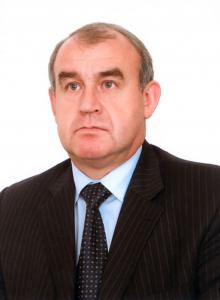
As rumored in mid-summer, President Medvedev announced today former KGB and FSB officer Aleksandr Sukhorukov, most recently Director of the Federal Service for the Defense Order (Rosoboronzakaz), will be First Deputy Minister of Defense.

According to ITAR-TASS, Defense Minister Serdyukov introduced the 55-year-old Sukhorukov during a working meeting with Medvedev in Stavropol.

Medvedev and Serdyukov noted Sukhorukov will be responsible for arms procurement and the beleaguered state defense order.

He’ll be sitting in the hot seat right away.  Medvedev told him:

“. . . this is a very delicate process:  on one side, you need to understand the realm of the Armed Forces, the field of modern military technology, on the other, you need to build relationships with suppliers correctly.  But it’s not always simple to do, the current history of concluding contracts shows this.” 

RIA Novosti elaborated:

“Last night, RF Prime Minister Vladimir Putin’s deadline for concluding all Gosoboronzakaz-2011 contracts expired.  On Thursday, the media reported that this task was not completed.”

Sukhorukov takes the post vacated by Vladimir Popovkin, who took over the Russian space agency Roskosmos.

Sukhorukov was with Serdyukov at the Federal Tax Service.  He followed the Serdyukov team to the Defense Ministry, becoming Deputy Director of Rosoboronzakaz in mid-2008, and Director a year later.  But he kept a low public profile at that agency.

He was born November 11, 1955 in Kasli, Chelyabinsk Oblast.  He graduated from the Chelyabinsk Higher Tank Command School in 1977, and later a KGB Higher School.  He apparently worked for the KGB in the Armed Forces, retiring as an FSB lieutenant colonel in 1996.   

From 1996 to 2004, he was deputy director, then director for the Finance Ministry’s northwest regional center for hard currency and export control.  He was a deputy director and director of a territorial directorate (probably northwest again) of the Federal Service for Finance-Budget Oversight in 2004-2006. 

In 2006-2007, he worked for then-Federal Tax Service Director Anatoliy Serdyukov as Chief of the Organizational-Inspectors Directorate.

In 2007, Sukhorukov followed Serdyukov to the Defense Ministry as an advisor.  He became Chief (not surprisingly) of its Organizational-Inspectors Directorate.  Serdyukov made reference to this directorate in his 2010 year-ender when he described how he checks on implementation of his policies. 

But, in late 2007, Sukhorukov jumped ship to the government, becoming assistant to then-Prime Minister (and Serdyukov’s father-in-law) Viktor Zubkov, and then Director, Department for Control and Verification of Fulfillment of RF Government Decisions.

In mid-2008, he arrived at Rosoboronzakaz.

You can find bio data here, here, and here.

In the Russian context, Sukhorukov seems like someone who knows how to find out if people are getting things done, and presumably what to do to them if they’re not (shoot them, send them to work in the fresh air, or fire them).  He seems very much a Putin man, an archetypal silovik.

He doesn’t, however, seem like someone who can help people figure out how to get things done.  Perhaps the Defense Ministry could have used someone with not just investigative, accounting, or legal experience, but maybe with an engineering, industrial, scientific, or technical background in the OPK.

It’d be interesting to know what Sukhorukov did in the army / KGB / FSB . . . he might have been a run-of-the-mill osobist, a “special section” guy monitoring some unit’s reliability and loyalty, or helping secure its secrets.  But he might have served in a defense plant, or been detailed to work in anti-corruption efforts.

Latest on GOZ Woes (Part II)

To review this week . . . Prime Minister Putin’s current deadline for completing GOZ contracts is August 31, but it’s unlikely to be met, even by loyal Deputy PM and OSK Board Chairman Igor Sechin.  Deputy Finance Minister Siluanov said Defense Ministry contracts are being made on credits and government-backed financing rather than cash.  Putin said the price tag for GOZ-2011 is 750 billion rubles, but 30 percent of projected procurement still isn’t covered by contracts as the final third of the year begins.

How did the government, Defense Ministry, and OPK arrive at an August 31 deadline that’s unlikely to be met?

The latest round of this year’s GOZ woes started in early July when MIT General Designer Yuriy Solomonov told Kommersant that GOZ-2011 was already broken, and Russia’s strategic missile inventory is not being renewed as necessary.  He said there’s no contract for the RS-24 / Yars ICBM, and the late arrival of money makes it impossible to salvage 2011.

President Dmitriy Medvedev responded by calling Defense Minister Anatoliy Serdyukov on the carpet.  According to RIA Novosti, he told him:

“Sort out the situation.  If there’s information that the state defense order is broken, it’s true, organizational conclusions are needed in connection with those who are responsible for this, regardless of position or rank.”

“If the situation is otherwise, we need to look into those who are sowing panic.  You know how according to law in wartime they dealt with panickers — they shot them.  I’m allowing you to dismiss them, do you hear me?”

RIA Novosti reported Serdyukov’s opinion on the “wild growth” in the price of military products, especially from MIT and Sevmash.  He said MIT is asking 3.9 billion and 5.6 billion rubles respectively for Topol-M and Yars ICBMs.  Serdyukov put GOZ-2011 at 581 billion rubles [different from Putin’s figure!], and added that only 108 billion, or 18.5 percent, was not yet under contract.  He said everything would be done in 10 days.

At virtually the same time, Deputy PM and VPK Chairman, Sergey Ivanov told ITAR-TASS 230 billion rubles were not yet contracted out.  OSK piled on Serdyukov, claiming contracts for 40 percent of the Navy’s share of the GOZ weren’t finalized.

In late July, it looked like Northern Wharf (which reportedly produces 75 percent of Russia’s surface ships, and is not part of OSK) might be made into an example for other “GOZ breakers.”  While prosecutors talked vaguely about the misuse of GOZ money, the shipbuilder’s representatives apparently mounted a vigorous defense, asserting that the enterprise has been right on time, even though it’s underfinanced by the Defense Ministry.

Main Military Prosecutor Sergey Fridinskiy said prosecutors uncovered 1,500 GOZ-related legal violations during the preceding 18 months.  He indicated there were 30 criminal convictions, and state losses amounted to millions of rubles in these cases.  The most egregious example  was the theft of over 260 million rubles given to OSK’s Zvezdochka shipyard to repair Kirov-class CGN Petr Velikiy.  Fridinskiy indicated the enterprise director and his close associates apparently had 40 million of the money in their own names.  Recall Fridinskiy earlier said 20 percent of defense procurement funding is stolen.

According to Rossiyskaya gazeta, Defense Minister Serdyukov claimed he was on the verge of signing contracts with MIT for Topol-M and Yars production.  Once again, he said all contracting would be finished in two weeks.

In mid-August, OSK enterprises Sevmash, Admiralty Wharves, and Zvezdochka said they would soon be forced to cease work unless the Defense Ministry signed contracts with them.  Putin, Sechin, and Serdyukov met and launched a special interdepartmental commission to set prices for the Navy’s remaining 40 billion rubles in GOZ contracts.  And, according to Kommersant, everyone was once again reassured that all contracts would be completed in two weeks.

And it’s not just all ICBMs, ships, and submarines . . . Kommersant wrote that the Defense Ministry eschewed contracts for 24 or more MiG-29K and more than 60 Yak-130 trainers at MAKS-2011.

So what does the mid-year GOZ picture look like? 

The president and prime minister have fumed and set a series of deadlines, not met thus far.  And the defense minister and deputy prime ministers have assured them they would meet each deadline in turn. 

More interesting, and somewhat unnoticed, is the fact that the prime minister and defense minister (among others) seem to be consistently working from different sets of numbers on the size of the GOZ, and how much has been placed under contract.  The GOZ hasn’t captured this kind of leadership attention at any time in the past 20 years.

Producers are being honest when they say late state contracts mean they can’t do anything (or at least what the Defense Ministry wants them to) in what remains of the year.

Picking up the pieces of GOZ-2011, and trying to put GOZ-2012 on a better footing will occupy the rest of this year.

Lost in everything is what will the Russian military get eventually by way of new hardware, and when will they get it?  And how good will it be?

Bulava Success

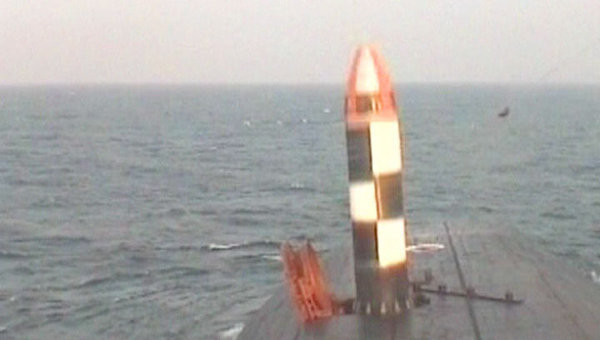
Bulava Launch (photo: RIA Novosti / Avrora)

Cheap post with a pretty picture thanks to RIA Novosti.  This was a maximum range test, from the White Sea to a target area in the Pacific Ocean.  It was the 16th test overall, and the second this year.  It makes nine announced successes out of 16.  And that’s four in a row.

If, as it appears, the designers and manufacturers have finally slicked the Bulava’s earlier problems, now Moscow will have to crank up the Bulava SLBM and Borey-class SSBN production lines.

That is a different kind of problem, a problem of the GOZ and the OPK.

Latest on GOZ Woes (Part I)

So much has swirled around the state defense order (Gosoboronzakaz or GOZ) this year that it makes one avoid the topic.  But here’s a shot at making amends for neglecting it. 

Perhaps this information will just precede the next wave of GOZ news, likely to break before the end of August.  The current deadline for putting out GOZ contracts is August 31 (who knows when the weapons and other military equipment being bought will actually be delivered?).

You may recall Prime Minister Vladimir Putin set August 31 as the most recent “last deadline” for placing all GOZ-2011 contracts back in late July.  At that time, Putin pretty much put all blame on the Defense Ministry.  Defense Minister Serdyukov said he would complete the contracting, and report to the President and Prime Minister by the deadline.  The report is supposed to be a joint one reflecting the positions of all players involved in the GOZ.

This very day, BFM.ru reports that Deputy PM Igor Sechin says he’ll be two more weeks negotiating OSK shipbuilding contracts with the Defense Ministry.  He claims three of 13 remaining contracts are being signed today.  Prices for the remaining ten will apparently be specified and agreed over the next 14 days.

According to ITAR-TASS, a VPK source indicated the Defense Ministry still needs to contract with Sevmash for delivery of one Proyekt 885 (Yasen-class) and two Proyekt 955 (Borey-class) submarines this year.  The source said work continues despite the lack of a signed contract.

ARMS-TASS, however, provided the best insight into the current state of play on the GOZ.  The news agency cited Deputy Finance Minister Anton Siluanov on a Putin-led government conference on the GOZ early this week.  Siluanov concluded the Defense Ministry will soon sign its contracts and send out advance payments.  Additionally, he criticized the delays for “breaking budgetary discipline,” and added that defense contracts are being signed on credit schemes and state guarantee mechanisms [i.e. not cash].

ARMS-TASS also quoted Putin at length:

“Naturally, the priority in buying equipment, armaments is, of course, domestic equipment, but it should still be modern, wanted, promising and acceptable to the customer, to the Defense Ministry, but taking account of prices for the state.”

“An unprecedented amount of monetary resources — 750 billion rubles — has been allocated for the purchase and modernization of equipment and armaments, for RDT&E on defense subjects.”

“In modern Russia such money has never been allocated so that in a year there’s 750 billion rubles — this is not some kind of percentage, this is half again as much as in 2010.”

“The government is counting on all this enormous money being effectively used to improve the quality of the work of defense industry and state customers.”

“Meanwhile, according to data which I have, more than 30 percent of the total volume of the GOZ still doesn’t have contracts.”

There’s quite a lot in those statements.  Probably as much substantive as Putin’s said publicly about GOZ problems.

Tomorrow we’ll do Part II on the latest woes.  Then maybe we’ll look at 2011 — the year of the GOZ.  And possibly even a look at the GOZ since 2000 or so.

Bulava Test on Saturday

Yesterday RIA Novosti’s source in the state testing commission said Borey-class SSBN Yuriy Dolgorukiy will test fire a Bulava on August 27.  The launch was originally scheduled for last Saturday when a malfunction occurred on the submarine.  The news agency’s Defense Ministry source stressed that, although not impossible, conducting the test on August 20 was deemed “inexpedient.”  The defect in the power supply to one of Dolgorukiy’s systems has been fully corrected, and the submarine is ready for sea.  The state commission source said this launch — the 16th overall, and the second in 2011 — will be a maximum range test.

Failure to Launch

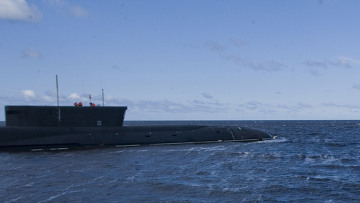
SSBN Yuriy Dolgorukiy (photo: RIA Novosti / Sergey Guneyev)

Not the same as a failed launch, of course . . .

Interfaks reports proyekt 955 Borey-class SSBN Yuriy Dolgorukiy cancelled a Bulava test launch on Saturday.  According to Sevmash, the power supply to one of Dolgorukiy’s systems malfunctioned.  The submarine returned to the factory to investigate.  The Interfaks source said the state commission supervising Bulava testing indicated the launch would be put off until late this week.

The source emphasized there aren’t issues with the Bulava, which was fully ready for launch.  Interfaks recalled the 15th launch scheduled for last December was delayed until June because Dolgorukiy wasn’t ready, although the official reason was White Sea icing.  The June launch from the submerged Dolgorukiy was successful.

In Moskovskiy komsomolets, Olga Bozhyeva’s source says the problem was a sensor in a system needed to prepare the missile for launch.  They postponed until later Saturday, but, when they couldn’t fix it, the SSBN returned to port Sunday morning.  The source says the state commission will probably delay the next launch attempt until September.

RIA Novosti provided a more official spin on the cancelled test.  It emphasized there was no unsuccessful launch.  The news agency’s state commission source stressed that, when submarines go to sea for system testing, the commission makes its decisions based on many factors and conditions.  And the source stated the Bulava flight test program will be completed in the established time frame.