Category Archives: Force Modernization

Shamanov on the VDV’s GOZ

General-Lieutenant Shamanov (photo: RIA Novosti / Petr Chernov)

Last Thursday VDV Commander, General-Lieutenant Vladimir Shamanov returned to a bit of media spotlight for the first time since returning to duty following serious injuries in a collision with a truck last fall.

Shamanov said the VDV’s part of the state defense order (GOZ) isn’t necessarily proceeding well.  But he claims the BMD-4M was ordered.  He lobbied for a piece of the Arctic defense mission.  And he repeated past calls for his own helicopters.

RIA Novosti and ITAR-TASS reported Shamanov saying he’s satisfied “on the whole” that the rearmament of the VDV:

“. . . is going according to the strict parameters which were established.  First of all, this concerns the modernization of BMD-1 and BMD-2 and ‘Nona’ self-propelled artillery with automation means.”

But he added:

“The issue of fulfilling the 2011 state defense order for 10 BMD-4M and for 10 standardized ‘Rakushka’ armored personnel carriers, built on a BMD-4M base, is not completely resolved.  The thing is Kurganmashzavod didn’t give a guarantee it would produce them.  Presently, Kurganmashzavod’s financial situation is causing concern.  There are no guarantees that, if all the money comes, the order will be met.” 

Last year Shamanov said the firm was developing and producing the first BMD-4M models on its own to the tune of 200 million rubles.

Still he hopes the problem with fulfilling the 2011 GOZ for the VDV will be resolved soon.  He said there are negotiations, and the problem should be resolved in week or two.

The VDV Commander indicated he’s sending the Genshtab a proposal under which his branch would participate in defending Russia’s Arctic shelf jointly with the Ground Troops.

He told journalists he gave his deputy, General-Major Aleksandr Lentsov,  the task of developing options for VDV units to work with the Ground Troops and Navy in the Arctic.  Shamanov invited the commanders of Naval Infantry brigades and Ground Troops’ air-assault brigades to the VDV’s operational conference in Ryazan the week before last.

Shamanov opined that establishment of an inter-service grouping for the Arctic is “fully possible” but how it might happen remains a topic of discussion.

The press services said Shamanov resurfaced his previous calls for a helicopter regiment co-located with the VDV brigade in Ulyanovsk or division in Pskov.  He said he plans to submit two variants of such a proposal to the Genshtab when it is finished.  

Press sources said he requested the same thing at this time last year.  The Ground Troops-dominated Genshtab apparently frowns on an idea that would eat resources and possibly duplicate the capabilities of the army’s own air-assault brigades.  For his part, maybe Shamanov benefits by repeatedly laying down a marker indicating that the VDV lacks something he considers essential.
Kicking the Defense Ministry and OPK

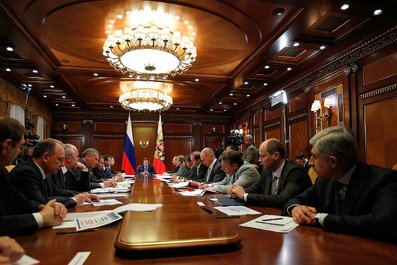
President's Meeting on the OPK

President Medvedev is irritated as ever that the Defense Ministry and OPK aren’t moving out smartly to rearm and reequip the Armed Forces.  He’s trying to kick them into gear, but can he get results where his predecessors either didn’t care or simply failed?

According to Kremlin.ru, Medvedev met this afternoon in Gorki with a host of government officials and industrial chiefs.  They included, inter alia, Sergey Ivanov, Anatoliy Serdyukov, Vladimir Popovkin, Nikolay Makarov, Denis Manturov, Yuriy Borisov, Sergey Chemezov, Sergey Nikulin, Mikhail Pogosyan, and Roman Trotsenko.

Medvedev’s opening monologue enumerated what’s been done for defense industry — providing a full state defense order and financial support, creating integrated development and production structures [OSK, OAK], etc..

Then the President says:

“However, despite all adopted measures, the state of defense production cannot be called good, all attending understand this.  There are objective reasons:  the deterioration of enterprises’ basic capital is nearly 70 percent (on average), in some enterprises it’s all much worse.  We still have not even managed to establish effective mechanisms to attract innovation and off-budget resources to the defense-industrial complex.”

Medvedev goes on to say that all relevant documents, including the GPV 2011-2020, have been signed, but the assembled group still needs to think about how to implement the GPV.  He reviews how he talked at the Defense Ministry Collegium in March about balancing producer and buyer interests, about justifiable and understandable prices.

But in many areas, says Medvedev, this has already become moot, and he intends to increase responsibility for the fulfillment of these obligations.

First, he wants a Federal Goal Program for OPK Development in 2011-2020.  Its focus is to be “real readiness” of the OPK to produce actual weapons and equipment.

Second, he wants the Defense Ministry to finish placing GOZ-2011 completely by the end of May, and advance payments issued to producers in accordance with the 2011 and 2012-2013 plans.

Work to date, he says, is going poorly and slowly.  He reminds the assembled that he told them about the failure of previous state armament programs:

“Today I want to hear from all present why this happened:  both from government leaders, and from industry leaders, who was punished for this and how.  Report proposals to me, if they still aren’t implemented, with positions, with the types of responsibility, completely concretely.  If such  proposals aren’t reported, it means [industrial] sector leaders and government leaders have to answer for it.”

It’s unacceptable, he says, that high-level decisions have been made, money allocated, but a product isn’t supplied.  He recalls his late 2009 Poslaniye in which he said 30 land- and sea-based ballistic missiles, 5 Iskander missile systems, nearly 300 armored vehicles, 30 helicopters, 28 combat aircraft, 3 nuclear submarines, one corvette, and 11 satellites would be delivered in 2010.  

Everyone here, says Medvedev, agreed with this, so why wasn’t it done.  He is, he says, waiting for an answer, and:

“. . . we have to answer for the duties we’ve taken on ourselves, we look simply in this sense absolutely unacceptable.”

Medvedev finishes by saying he knows military production is profitable, and it’s possible to attract strategic investors.  He says he wants to talk about how to stimulate investment.  The goal for the day is concrete reports on what’s been done on the level of those responsible for organizing work and correcting the situation in defense industry.

Where’s this leave things?

Not exactly throwing down the gauntlet, just another warning that he’s getting serious.  But it’s doubtful the government or defense industry will take Medvedev seriously until he fires a minister, other high-ranking official, or an important enterprise director.  And it’ll probably take more than a couple dismissals to get anyone’s attention.  Medvedev is running out of time on this account (as well as others).  Those he’d like to make responsible or punish will just take the tongue-lashings and wait him out.

Su-35S to Start State Testing

In their excitement about new armaments, many observers have a hard time keeping book on the latest weapons, forcing yours truly to follow a few important systems like the Su-35S.  Some even say the Su-35S is already in the inventory, but a close look at press reporting shows otherwise.

The media reported the first series production Su-35S flew at KnAAPO in Komsomolsk-na-Amure yesterday.  After these factory trials, this aircraft will be delivered to the Defense Ministry.

Sukhoy has successfully completed preliminary testing on the Su-35S prototype.  Preliminary testing confirmed that its on-board systems meet technical requirements, checked its reliability and controllability, its engines, and navigation system.

According to ITAR-TASS, a Sukhoy spokesman said:

“The Su-35S has been presented for state joint testing [ГСИ or GSI].  The first step in the framework of the fighter’s state joint testing will be receipt of the preliminary finding of the customer – Russia’s Air Forces on the aircraft’s correspondence to main requirements with the aim of providing it to Air Forces’ operational units.”

Now recall that late last August Sukhoy said the Su-35S was completing preliminary testing and would start state testing in the fall.  Fall has become the following spring, and Sukhoy announces again that the Su-35S is ready to start GSI.

The Russians advertise the Su-35S as a 4++ generation fighter, using fifth generation technologies to give it an advantage over similar aircraft.

The Defense Ministry gave Sukhoy a contract to deliver 48 Su-35S by 2015, but Voyenno-promyshlennyy kuryer, among others, says the military department will probably buy 48 more in 2015-2020.  VPK goes further:

“According to some assessments, the Russian Air Forces need 150-200 Su-35S.  The Defense Ministry now intends to buy 60 fifth generation T-50 fighters in all.”

So VPK suggests some think the Su-35S should be a primary fighter rather than just a gap filler for PAK FA.

Pavel Baev on Politics and the Military

Last week BFM.ru interviewed Pavel Baev of Peace Research Institute Oslo about Russia’s military reforms.  Baev’s view of the reality of ongoing reforms is captured in one word — catastrophic. 

Now Baev doesn’t get everything exactly.  Some military policy changes — like the one-year draft and a new, higher military pay system — were made some time ago, not necessarily for the 2012 presidential election. 

But he’s right about lots of other things.  Some decisions made in Defense Minister Serdyukov’s reforms haven’t meshed, or even been antithetical.  Decisions like higher pay have become, like it or not, part of the electoral picture, and the leadership has to follow through.

Baev believes the army might not be combat capable due to personnel cuts.  He allows for the possibility that Serdyukov might be sacrificed by his political masters.  The Kremlin and White House are using pay and apartments to keep serving officers politically quiescent.  But Baev thinks these aren’t enough; at some point, the army will insist on having its combat capability restored.  He hints later that the state and inclinations of the army were factors in the recent Arab revolutions that overturned long-time rulers.

The interviewer asks Baev to reconcile Prime Minister Putin’s Duma session last week in which he emphasized using the defense budget at home to create good, high technology jobs in Russia with President Medvedev’s [and Putin’s] statements about the failure of the state defense order:

“It seems to me that on the whole in the realm of military reform, and the Gosoboronzakaz in particular, there are very many concealed problems which Putin generally didn’t talk about.  The speech [Putin’s Duma speech], in large measure, on the whole was very unproblematic.  Somehow everything was more about achievements, future developments, very little about problems.  In the military arena, many problems have accumulated, and in the course of military reform not a few new ones were created.  The situation is very complicated, and attempts to correct the situation somehow largely lead to problems becoming even more acute, particularly problems with personnel.”

Baev went on to say that the Gosoboronzakaz and the problems of buying new military equipment have reached a critical point because of the aging of current weapons systems.  There is, he says, an undercover battle over what to buy and, especially, what should be bought abroad.  The situation around Mistral has become so complicated and political that it’s now more a “special operation” than an export contract.

Baev says the Russian Navy didn’t really want such ships, but went with the idea when it was foisted on them.  The real struggle and lobbying over Mistral concerns which shipyard in Russia will build units 3 and 4, according to Baev.  He suggests the whole deal might have been French President Sarkozy’s way of placing a bet on President Medvedev to be Russia’s future leader, and organizing the “political climate” in Europe toward this end.  But right now, of course, the Mistral deal looks very uncertain.

BFM.ru asked Baev for his interim assessment of the military reforms begun in late 2008:

“Purely catastrophic.  In every reform, there’s such a moment when the old thing is no longer working, and the new one isn’t working yet.  At this critical moment for any reform, we have a situation when nothing is working; where to move — either forward along the path of reforms or to try to work back, — is in large measure a political question.  Just in the area of Armed Forces personnel policy, an unknown number of things have been botched.  The initiatives advanced, — cutting the officer corps, contract service, sergeant training, cutting the conscription term — each of them has its own basis, but they’re absolutely mismatched.  That is, we now have a situation with military personnel when the army is in fact not combat capable.”

Asked about military pay raises planned for next year, Baev says:

“I think the main sense of this initiative is still to lift the officer corps’ very obvious dissatisfaction with all these reforms.  Great potential dissatisfaction has built up in the army, it is focused more or less on the minister, which, they most likely will sacrifice.  But this isn’t enough to lift this dissatisfaction, but the promised money plus the long ago promised apartments, and they are still gradually giving them out, — this is somewhat capable of  damping down this dissatisfaction.  And the fact that they are promising lieutenants, — for young officers it sounds completely improbable, and, most likely, they are prepared to wait for such money.”

“It’s perfectly obvious that very many political initiatives are aimed at this critical electoral sector — to lift the tension now, to make so that the army sits quietly in its barracks, not speaking out, waiting for its money and apartments, — and everything.  These are purely short-term things, which can help get through a complex electoral period.  It seems no one particularly looks after this [military] sector, inasmuch as, generally, for officers money is money, but they are people of service.  If even in addition they pay the money, service doesn’t go because they aren’t succeeding in reforming the Armed Forces so that they become combat capable, then this is a more serious source of dissatisfaction than simply a lack of money.”

“. . . the Armed Forces are the only area where genuinely serious and deep reforms are going on.  But with reforms, problems always take on a new character, change.  Here some kind of forward dynamic is occurring, it isn’t going in circles.  But the lack of resolution of these problems in the absence of political will is very evident, and all political will is going now to electoral projects which aren’t clear how they will be implemented because it’s not clear to anyone who in the end will be Supreme CINC, that is also a question of no small importance for the Armed Forces.”

Baev sees a lesson for Russia and the Russian Army in the Arab revolutions:

“But it’s clear that several conclusion flow from the Arab revolutions, and not just in relation to missile systems, but in the fact that the army is a serious political force.  This is more the conclusion of events not in Libya, but of the situation in Egypt.  And attempts somehow to neutralize the politicization of the army grow more from here [Egypt], than from Libya, where the army was in a pitiful condition, from here [Libya] also, in large measure, there is a civil war.  If there were a powerful army there, such a thing [civil war] wouldn’t have occurred.”

He finishes by talking about obsession with ultra-modern weapons when existing systems are perfect for today’s armed warfare.  His discussion leads to an open question about the fit between Russia’s military doctrine and its future armament plans:

“Therefore, the conversation about how we realistically need to outfit the Russian Armed Forces depends largely on whom we intend to fight, where we intend to employ these Armed Forces, against what kind of potential enemies, — answers to all these questions don’t exist, the doctrine doesn’t provide these answers.  It’s essential to replace weapons systems which have already outlived their time, but whether it’s necessary to replace them with the most super modern systems, — this is still a question.”

More on the “Second Phase” Engine

Lenta.ru had an informative piece on the PAK FA’s “second phase” engine yesterday. 

It calls the “second phase” engine “Item 129” [Изделие 129].  Lenta also says the provision of the first “Item 129” engines will coincide with the first PAK FA or T-50 fighters entering the force in 2015.

It notes the “first phase” engine is “Item 117” or AL-41F1 [АЛ-41Ф1].

The AL-41F1 will be used in the prototypes and the first series models which will enter the Air Forces’ inventory in 2015.  It has 19,334 lb. dry thrust, and 33,047 lb. with afterburners.  It is equipped with a plasma ignition system, all-aspect thrust-vectoring control, and digital controls.

The Lenta piece says a less powerful variant of the AL-41F1 – the AL-41F1S or “Item 117S” – will be put on the Su-35S fighter.  The AL-41F1S has an older digital control system and a little less thrust.  

According to Lenta, not much is known yet about “Item 129.”  It was announced earlier it will have increased thrust and greater fuel efficiency than the AL-41F1.  “Item 129” will reportedly have 24,054 lb. dry thrust, and 39,566 lb. with afterburners.  The newer engine’s also likely to have a longer service life.  

Lenta adds a report from Sukhoy that it expects to finish prototype airframe testing either this year or next.  In 2013, the Defense Ministry’s supposed to get 10 experimental aircraft for combat employment testing.

“Second Phase” Engine for PAK FA

More on the “second phase” engine saga . . . managing director of NPO Saturn, Ilya Fedorov has told ITAR-TASS development of the so-called “second phase” engine for the PAK FA is running ahead of schedule.  

The completion of R&D [ОКР] and provision of the engine to Sukhoy and the Defense Ministry is planned for 2015.  Fedorov says:

“NPO Saturn entities and cooperating structures are now working on a rough draft of the engine.  Everything’s been agreed.  Work’s being conducted in Moscow, Rybinsk, and in other places.  We have firm certainty that the second phase engine will be done earlier than everyone expects.”

“Work on the future engine model is in a very advanced stage . . . .”

Fedorov adds it wouldn’t be profitable to drag out development and continue putting out “first phase” engines which are being used on the T-50 test aircraft.

What’d we learn?

Fedorov emphasized what’s out there now is definitely still “first phase.”  The “second phase” team is working from a “rough,” but agreed draft, and there’s advanced work on the model.  One supposes that’s possible.  Finally, Fedorov says he’s ahead of schedule, but makes no big promises, and the story emphasizes that the delivery plan is 2015.

GPV, Exports, and OPK Capacity

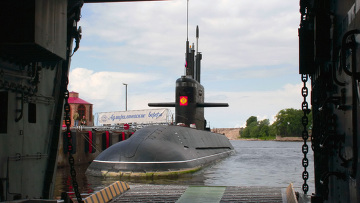
New Sub at Admiralty (photo: RIA Novosti)

This morning RIA Novosti reported on a familiar topic — the conflict between planned acquisition embodied in the State Program of Armaments, 2011-2020, and the Russian OPK’s capacity and capability to deliver it.  In this case, new diesel-electric submarines from St. Petersburg’s Admiralty Wharves.  Also familiar is one reason for the bind — a lingering priority on production for sale abroad.

A highly-placed OPK source tells the news agency that the GPV’s plan for conventional submarine deliveries might not be fulfilled due to Admiralty’s heavy load of orders.  The Russian Navy is reportedly supposed to get 20 new diesel-electric boats by 2020, and Russia also has ten foreign deliveries scheduled.  The OPK source notes that Admiralty has become a sole source for conventional subs, and he calls for shifting some sub production to Nizhniy Novgorod and Komsomolsk:

“In view of the large volume of new submarine construction for the Navy, and also for export, it’s essential to diversify production, utilizing, for example, the capacity of ‘Krasnoye Sormovo’ Shipbuilding Plant in Nizhniy Novgorod and the Amur Shipbuilding Plant in Komsomolsk-na-Amure.  Otherwise the state program in the diesel submarine construction area could be disrupted.”

RIA Novosti notes “Krasnoye Sormovo” built plenty of Soviet submarines, 280 in all, including 25 nuclear-powered ones.  Its last boat was a diesel-electric for China in 2005.  The plant also outfits Russian Navy and export subs with torpedo- and mast-related equipment.

The article also speculates that construction of French-designed Mistral helicopter carriers could be problematic if Admiralty is selected.  The shipyard is reportedly planning on new construction space on Kronshtadt for this reason.  The OPK source says Mistral would be Admiralty’s main concern, and occupy its main capacity and personnel.  So, he continues, it’s logical to send some orders (i.e. submarines) to other factories that have the capabilities.

Igor Korotchenko tells RIA Novosti “Krasnoye Sormovo” could provide extra buildingways if Admiralty can’t meet all its export contracts.  He says Admiralty is now building five subs under the GOZ, six for Vietnam, and:

“In the event new contracts are signed for sub construction with Venezuela and Indonesia there will be an obvious problem with inadequate buildingway space, and then a backup could be required.”

RIA Novosti notes rather dryly along the way that no Russian GPV has been fulfilled completely because of the country’s insufficient modern industrial capacity.

One wonders what, if any, work and investment would be required to bring “Krasnoye Sormovo” and Amur back into the sub-building business.

Postnikov on the Army and OPK (Part II)

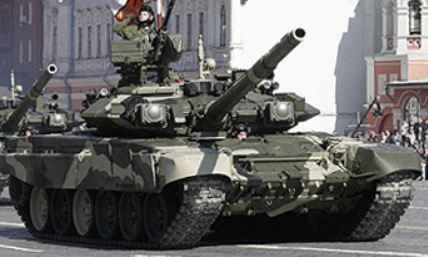
T-90 on Red Square

Continuing with reaction to Ground Troops CINC, General-Colonel Postnikov last week . . .

Speaking to a RIA Novosti press conference, Director of the Ministry of Industry and Trade’s (Minpromtorg) Defense-Industrial Complex Development Department, Igor Karavayev answered Postnikov this way:

“Unfortunately, we are encountering unwarranted criticism of the tactical-technical characteristics of Russian military equipment lately.  Allegedly, it doesn’t match its international counterparts.  An objective evaluation of the characteristics and tests conducted, but also the pace at which our exports are growing, attest to the contrary.”  

He said more than a few countries buy Russian tanks, and the T-90A got a positive evaluation from testing in difficult climatic conditions, including in Saudi Arabia, India, and Malaysia.  In Saudi Arabia, according to Karavayev, the T-90A was the only tank to destroy more than 60 percent of its targets after a road march.  Karavayev continues:

“The tests conducted in Saudi Arabia as part of an open tender fully and completely contradict the Glavkom’s [Postnikov’s] assertions.”

This T-90 modification supposedly has a new turret, a 1,000-hp engine, an improved thermal sight, new active defense measures, and a number of other improvements.  Karavayev flatly said neither the German Leopard, French LeClerc, nor American Abrams is equal to the T-90: 

“So to talk about how our tanks are worse than Western equivalents is not completely reliable information.”

“The price Postnikov quoted exceeds by approximately one and a half times the price at which the producer is ready to supply the vehicle [tank] to the troops.  This situation requires additional professional discussion.”

So that’s about 78 million vice 118 million rubles per T-90.

Izvestiya talked to Uralvagonzavod’s chief armor designer, Vladimir Nevolin, who said:

“The main complaints against the T-90 today are connected with its insufficient survivability.  Its deficiency is the placement of people, weapons, and fuel in one compartment.  In any case of armor penetration, the igniting of fuel is unavoidable.  Even with a fire suppression system, such a possibility isn’t excluded.  Therefore, the development of modern armored equipment is going the way of separating people from the fuel and munitions.  Moreover, the employment of remotely-controlled armaments is essential.  These principles were implemented in our future product – “item 195.”  For example, on it, the tank turret no longer had the crew.  But it turns out no one needed such a project.”

Vesti FM asked Igor Korotchenko whether Postnikov’s claim that Russian arms aren’t up to snuff is true.  He said there are objective problems with Russian-designed weapons, and some planned for introduction are really obsolete.  But, according to Korotchenko, the Defense Ministry’s main criticism is that Russian combat vehicles don’t meet survivability requirements.

At the same time, Korotchenko says Russia can’t fall into dependence on the West.  New armor has to be financed and put into serial production.  Limited purchases of Western military technology and licenses for the newest thermal sights and munitions are acceptable in his view, he says Russia’s national technological base for producing major weapons needs to be protected.

Finally, it was Viktor Baranets’ turn in Komsomolskaya pravda.

Baranets noted Postnikov complained quite openly about Russia’s weapons for a military leader of his rank.  And he opined that Moscow is not only competitive, but superior in some military systems.  But Baranets claims the T-90 cost has doubled from 60 million rubles two years ago due to higher electricity and metal prices as well as adding expensive French or Israeli thermal sights.  Nevertheless, says Baranets, Postnikov exaggerated about buying Leopards for the price of a T-90.

Baranets also interviewed Mikhail Barabanov.

Barabanov says the T-90 really is the 17th modification of the T-72, initially called the T-72BU, but T-90 sounded more modern, at least in 1992.  The T-90A has grown old, but could still be updated with a new turret, gun, and weapons control system.  The 118-million-ruble pricetag comes from a small production run, and it’s steep for a tank that’s not the most modern.

Barabanov says for 118 million you could only buy 3 1980s-vintage Leopard-2A4 from the Bundswehr reserve.  And such tanks don’t have any particular advantage over T-90.  A new Leopard-2A6 is more than $4 million, but with service, training, spares and munitions, it can’t be obtained for less than $10 million.

Baranets asks Barabanov if the share of modern ground armaments really be brought up to 70 percent by 2020.  The latter says:

“It’s realistic given fulfillment of the State Program of Armaments.  But its [the GPV’s] fulfillment depends first and foremost on the country’s capacity for high economic growth rates.”

Postnikov on the Army and OPK (Part I)

Ground Troops CINC, General-Colonel Aleksandr Postnikov really stirred up the hornet’s nest on Tuesday.  Russia’s defense sector – its OPK or oboronki – feeling offended recently, is abuzz about his comments.  Postnikov told a session of the Federation Council’s Defense and Security Committee:

“Those models of weapons that industry produces, including armor, artillery and infantry weapons, don’t correspond to NATO’s or even China’s models in their characteristics.”

The military hadn’t criticized the domestic OPK’s heavy armor and artillery systems to this point.

Insulting Russian tanks is the particular point here.  According to Newsru.com, Postnikov apparently called the much-praised, newest T-90 in actuality just the 17th modification of the Soviet T-72.  And, at the current cost of 118 million rubles per tank, he suggested:

“It would be simpler for us to buy three ‘Leopards’ [German tanks] for this money.”

Newsru.com counters that Rosoboroneksport is proud of the T-90, its sales, and continued interest abroad, but admits it is weak against third generation ATGMs, modern sub-munitions, and “top attack” weapons.  The news outlet also notes that the Russian Defense Ministry has eschewed procurement of the T-95 and BMPT.

In its editorial entitled “Import Generals,” Vedomosti takes Postnikov to task, saying it’s not sure whether he means new or used Leopards, but the German tanks probably come in at $7.5 million a piece at least, against the T-90 at $4 million [i.e. only part of one Leopard for 118 million rubles].  And, says Vedomosti, comparing Russian tanks to Chinese ones is lamer still on Postnikov’s part.

According to the business daily, these criticisms of Russian armaments usually come with calls to buy the same systems abroad.  But the 2008 war with Georgia showed Russia’s deficiencies lay in soldier systems, comms, recce, C2, and some types of infantry weapons rather than in armor.  When Russia doesn’t make something like Mistral or it has inferior technology like UAVs, it’s understandable to buy foreign, but when it’s something like armor, it raises a lot of issues, according to Vedomosti.  Uralvagonzavod certainly needs tank orders.  The idea of large-scale foreign purchases is utopian, says Mikhail Barabanov.  The paper believes thoughts of buying Leopard tanks and Mistral mean Russia’s generalitet has plans beyond local wars.

BFM.ru says Postnikov put the Ground Troops’ modern arms and equipment at only 12 percent of its inventory at present with, again, the goal of 70 percent in 2020.  At the end of this year, the army will get its first brigade complement of the newest automated C2 (ASU) system [i.e. presumably YeSU TZ]:

“In November of this year, we plan to conduct research on the newest  ASU and hand down our verdict.”

According to BFM.ru, he said NATO and China already have analogous systems:

“But for us it is still the future.”

Nezavisimaya gazeta focused on Postnikov’s comments on Ground Troops brigades.  He said he now has 70, but plans for 109 by 2020, including “future type” brigades:

“There will be 42 brigades of the future type, in all there will be 47 military formations of the future type, including military bases abroad which will be built on the same principle.”

The Glavkom didn’t say how the new brigades will be different from the old.

Parsing what he’s talking about is a little tough.  At the end of 2008, the army talked about having 39 combined arms, 21 missile and artillery, 12 signal, 7 air defense, and 2 EW brigades for a total of 81, rather than Postnikov’s current 70.  One might guess a dozen arms storage bases in Siberia and the Far East could be fleshed out into maneuver brigades.  But where does the manpower come from?  Maybe some of the 70,000 officers cut and now being returned to the ranks by Defense Minister Serdyukov. 

Postnikov elaborated some on heavy, medium, and light brigades.  Heavy will have tanks and tracked armor.  NG concludes there won’t be a new tank.  Tanks in storage will get new electronics and Arena active defense systems.  According to Postnikov, medium brigades will get [among other things?] the Bumerang amphibious BTR now in development.  This, says NG, is the first time anyone’s heard Bumerang.  But if it isn’t successfully developed or produced in sufficient numbers by 2020, the army will just buy armored vehicles abroad since there’s already ample precedent for this.

Light brigades will have vehicles like the Tigr or the Italian LMV (Lynx), licensed production of which could begin in Russia this year.  One special Arctic brigade will be created at Pechenga. 

Several media outlets quoted Postnikov to the effect that there’s no plan to change 1-year conscription, but he noted:

“In the transition to one year military service, military men received only a headache.”

There’s lots more reaction to Postnikov’s statements, but it’s too much for one day.

Israeli and Russian UAVs for Ground Troops

Yesterday Aviaport.ru wrote that Defense Minister Anatoliy Serdyukov, his First Deputies, Vladimir Popovkin and Nikolay Makarov, Air Forces CINC, Aleksandr Zelin, and industry representatives attended a demonstration of Russian and Israeli UAVs at Kubinka on 10 March. 

The systems shown included the Israeli mini Bird Eye 400 and medium-range Searcher MkII, and also an unnamed Russian mini selected in comparative testing last fall. 

Aviaport.ru says Russian systems were only on static display, but Israeli ones were actively demonstrated.  The Searcher MkII performed a six-hour continuous flight in the vicinity of Kubinka at an altitude of  five km, relaying imagery to its ground station in real time.

Israeli drones arrived in Russia last year, and operators and technicians were trained, but they are only just starting to be used.  A Defense Ministry source tells Aviaport.ru these UAVs are already receiving high marks from the military.

UAV.ru’s editor-in-chief Denis Fedutinov thinks new pilotless aircraft will be based at the 924th Combat Training and Personnel Retraining Center.  The Center’s personnel previously used only Russian-made UAVs, the most modern of which was the 1980s-vintage Pchela.  Fedutinov says:

“Compared with them [Pchela], the impression of Israeli systems will be like switching from a Zhiguli to a Mercedes.”

Nevertheless, according to Fedutinov, the “door isn’t closed” for Russian developers.  The tests of the mini-UAV last year showed an increase in quality of Russian systems, and there was a promise to buy several dozen Russian systems for experimental use in the Ground Troops.  

The tactical-class segment still isn’t occupied, and there are two Russian contenders — VEGA’s Tipchak and Kronshtadt’s Dozor-100.  The latter is reportedly preferred given Popovkin’s negative comments about the former.

Fedutinov thinks when it comes to larger systems there’s still a possibility for cooperation with the Israelis, and there is Russian interest in the Heron system.  But decisions on this issue are essentially political.

After meeting his French counterpart in Paris — mainly about the Mistral acquisition, Defense Minister Serdyukov declared his interest in procuring all types of UAVs, from reconnaissance to strike variants, according to ITAR-TASS.  Serdyukov stated:

“At present, we’re studying the line-up of Israeli pilotless aircraft in detail.  As is known, ‘Helicopters of Russia’ has agreed with the Israelis on establishing an SP [joint venture] to produce such systems.”

Serdyukov added that a UAV operator training center will be set up soon:

“Where this center will be located isn’t decided yet.  These systems will be part of the Ground Troops.”

He said the Defense Ministry wants to buy all types, from light to heavy UAVs.  Russia is also interested in the foreign practice of using satellites to control unmanned reconnaissance and strike aircraft, Serdyukov said.