Category Archives: Force Modernization

Third S-400 Regiment for Moscow Oblast

S-400s at Elektrostal and Dubrovki, Zvenigorod Could be Next

S-400s at Elektrostal and Dubrovki, Zvenigorod Could be Next

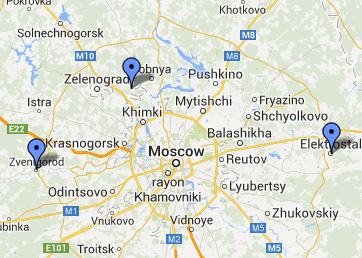
The VVKO’s spokesman told RIA Novosti this week that the next — the sixth — S-400 SAM regiment (or “regimental set” of two launch battalions) will be deployed in Moscow Oblast before the end of 2013.

S-400s are already located east and north of Moscow at Elektrostal and Dubrovki, respectively.  Dubrovki was reported as Dmitrov (actually further north) by Russian media in the past.

Zvenigorod to the west was first mentioned as a deployment location in 2011.  It was supposed to be the third S-400 location before the end of that year.

Russian reportedly operates five S-400 regiments at the present time — Elektrostal and Dubrovki, and one each in the Baltic Fleet (Gvardeysk, Kaliningrad), Nakhodka in the Far East, and the Southern MD.

Find a better version of the map above here.

A Swedish Defense Debate

Two Swedish observers recently engaged in an exchange of opinion pieces regarding the connection between a supposedly more muscular and threatening Russia on the one hand, and an allegedly feckless Swedish defense policy on the other.

Here we are, of course, more interested in their divergent views of Russian military power rather than in (as they are principally and rightly concerned) its affect on Sweden’s defense.

Stefan Hedlund

Stefan Hedlund

Uppsala University professor Stefan Hedlund wrote first.  His article appeared originally in Svenska Dagbladet.

Hedlund concludes the Swedish legislature is radically changing its long-held view of Russia as relatively benign to one of Moscow as a growing threat to Sweden’s national security.  Proponents of this view, he says, point most often to Russia’s militarization and its increasingly autocratic political system.

However, he says President Vladimir Putin himself basically admitted the government’s 20-trillion-ruble State Armaments Program is failing.  Failing because the OPK, on the whole, cannot produce weapons and equipment of requisite quality, in necessary quantities, according to specified deadlines.

He cites the Bulava and Yuriy Dolgorukiy.

Just one good example among many he could have picked.

Then Hedlund concludes:

“Perhaps it was simply naive to think that the Russian military industry could pick up where it left off two decades ago, after standing at a virtual standstill, and all of a sudden produce weapons system [sic] at high international standards.”

He turns to politics, and the fragmentation of the Russian political elite just beneath Putin.

He sees it this way:

“These political developments don’t add up to the picture of an every [sic] more strong-fisted leader [Putin] who hasn’t ruled out waging war on his neighbours.  It is much more probable that Russia will be paralyzed by infighting for a long time to come, and an ever degrading economic outlook will mean the government may have to retrace it steps on promises to keep up salary developments and shore up pensions.  There might simply not be money left for the military.”

Hedlund hits key elements of the problem with Russia’s alleged militarization:  the OPK’s inability to deliver arms and a clearly evident Finance Ministry rearguard action to rein in military procurement spending.

Finally, Hedlund concludes it’s essential to discuss Sweden’s defense policy problems “without muddling it up with incorrect perceptions about the development [sic] in Russia.”

Political science PhD candidate Annelie Gregor responded to Hedlund with this essay.  Ms. Gregor neglected to add that she is, apparently, an employee of the Swedish Armed Forces.

Annelie Gregor

Annelie Gregor

Gregor argues Hedlund claims Russia is not in the midst of a military build-up and is turning away from authoritarian rule.

This is not at all what Hedlund said. 

Hedlund maintains Russia’s militarization isn’t effective and Putin’s autocratic style masks concerns about domestic politics that are more important to him than building up the armed forces or attacking a non-contiguous Nordic country.

Gregor’s first point about the recent surprise readiness evaluation in the Far East simply has to be ignored.  Not because of her primarily, but because of how others have futzed it up. 

She says it “involved” 160,000 troops.  Others have said Russia “mobilized” or “deployed” this number.  The entire manpower contingent of the Far East Military District (probably some 160,000 men) certainly wasn’t “involved” in those exercises, and those troops certainly weren’t “mobilized” or “deployed.”  They already actively serve in the region where the exercise took place. 

It is true to say recent Russian exercises have featured some re-deployments and equipment movements from other districts, but they are limited to what Russia’s strategic mobility resources can manage.

Difficult as it is to believe, Gregor cites Russia’s performance in the five-day war with Georgia as evidence of a threat to Sweden.

The same Russian Armed Forces that were caught off guard, and initially acquitted themselves so poorly that a major military reform program started immediately afterwards to improve their readiness and capabilities.

As more evidence, Gregor recalls this spring when “two Tu-22M3 Backfire heavy bombers simulated a large scale aerial bombing on Sweden.”

Two Backfires with nuclear-armed cruise missiles would be more than enough to ruin Sweden’s day.  But one notes they are not “heavy bombers” nor do two constitute anything “large scale.”  The incident was, perhaps, more about flying time and asserting Moscow’s right to use international airspace.

Gregor then argues with Hedlund about whether revenues from oil, gas, and arms sales will be adequate to support Russia’s “militarization” in the future.

This part of Hedlund’s article was, unfortunately, not translated.

One contends, however, that if Hedlund said the Russian defense budget will decline as its oil earnings decline, he’s right.  In fact, one could go further and say the budget is irrelevant.  What does matter is what Moscow actually buys or gets for it.  

The Russians are getting more training (because they can buy more fuel), but they aren’t getting new weapons on the schedule they originally laid down.  

And corruption remains a huge tax on the budget, just check on the criminal cases against former Defense Minister Serdyukov’s former deputies. 

And it’s obvious to serious observers that arms sale profits don’t go to the big white building on the Arbat.  They go to Rosoboroneksport which is connected more to high-level political infighting than to the Defense Ministry.

Hedlund never said Russia is turning from authoritarian rule as Gregor alleges.  Hers is a classic “straw man” fallacy.

Hedlund responded to Gregor’s response.

He argues Moscow’s “increasingly bellicose [anti-Western and anti-NATO] rhetoric is for domestic consumption” and its “aggressive actions, such as simulated nuclear strikes on Warsaw, indicate weakness and a desperate clamoring for attention.”

Anti-U.S. and anti-NATO speech will probably always be popular in Russia.  Simulated nuclear strikes are warnings to Europeans of the consequences of cooperation with the U.S. in missile defense (or anything else for that matter).

Hedlund says he’s done anything but argue that Russia is turning from authoritarian rule.  He concludes:

“What I have argued is that there is a very large difference between present-day Russia and a truly militarized authoritarian regime that would constitute a true danger.”

Eloquently put.  Putin’s regime is a clumsy, capricious, and ineffective brand of authoritarianism.  It recalls the late years of the Tsars more than Hitler’s Germany or Stalin’s USSR.  Dangerous to a degree, but not an existential danger.

Perhaps there’ll be yet another installment in this debate.

Iskander-M “Brigade Set” Delivery

Some significant news from late June and early July, largely (or entirely) overlooked by Western observers . . .

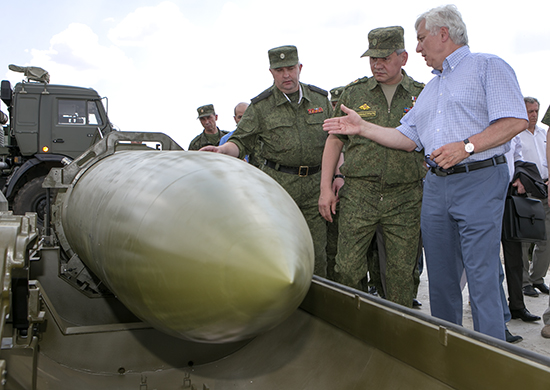
Designer Kashin Shows Shoygu the Iskander-M (photo: Mil.ru)

Designer Kashin Shows Shoygu the Iskander-M (photo: Mil.ru)

Defense Minister Sergey Shoygu presided over the first delivery of a “brigade set” of Iskander-M (SS-26 / Stone) short-range ballistic missile systems at Kapustin Yar on 28 June.

According to Mil.ru, uniformed and civilian Defense Ministry officials, industry representatives, and journalists were present for the test range ceremony.

The delivery followed the MOD’s announcement last month that Iskander-M system components will no longer be supplied separately to the army, only in “brigade sets.”  The military department also reported a “long-term” contract for deliveries of the missile system until 2017 was concluded with the producer.

A complete “brigade set” includes missiles, launchers, transport-loaders, command-staff, data processing, check-out, and maintenance vehicles, and training systems.

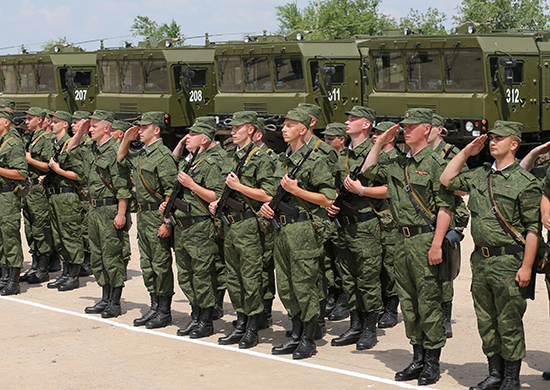
Missile Troops at Attention in Front of Iskander-M Launchers (photo: Mil.ru)

Missile Troops at Attention in Front of Iskander-M Launchers (photo: Mil.ru)

Shoygu reiterated that the MOD intends to reequip all ten Ground Forces missile brigades with Iskander-M before the end of 2017.  Ten brigades should deploy at least 120 missiles, not including reloads.  The Iskander-M is the only weapons system to be 100 percent procured before 2020, according to the MOD’s recently publicized Action Plan.

At Kapustin Yar, Iskander-M designer Valeriy Kashin of the Kolomna Machine-Building Design Bureau told reporters the military will receive another “brigade set” before year’s end, according to Nezavisimaya gazeta and Komsomolskaya pravda.

But completing the military’s order in less than five years could prove difficult for Russia’s defense industries.

NG reported Kashin said enterprises working on the Iskander-M have to “intensify” their activities several fold to meet the MOD deadline.  Seventeen specialized manufacturers are scheduled to upgrade and retool under a 40 billion ruble ($1.2 billion) investment effort.

However, actual reconstruction of production lines will not begin until 2014, according to online daily Vzglyad.

Shoygu told those in attendance at Kapustin Yar the most important step now is establishing the “essential infrastructure” for the deployment of new arms and equipment. He reemphasized this in a 1 July MOD videoconference by calling for special attention to synchronizing the delivery of weapons with the construction of bases and other support infrastructure where they will be deployed (and with the training of those who will operate them).

The defense minister stated that the MOD currently awaits completion of military construction projects worth 314 billion rubles ($9.7 billion). He said he wants the backlog eliminated before November.

An NVO correspondent present at Kapustin Yar reports that the just delivered Iskander-M brigade’s new facilities will be complete in September.

The newest Iskander-M brigade is likely intended for the Southern Military District, which presently only has one battalion of the new missiles. 

Shoygu is right to focus on arranging the appropriate infrastructure for Russia’s new armaments because it has traditionally neglected support and lifecycle investments in its military equipment.

Clean Slate

It took a brave man to tell the State Duma what department chief Aleksandr Piskunov said in the Audit Chamber’s annual legislative report in February.  Voyenno-promyshlennyy kuryer published excerpts of his remarks.

Piskunov’s a government official.  Not a powerful voice, but an authoritative one in his specialty.

Auditor Aleksandr Piskunov

Auditor Aleksandr Piskunov

To say he’s well-equipped for his work is an understatement. 

Sixty-one or 62 years old, Piskunov graduated from the RVSN’s Dzherzhinskiy Military Academy with a radio engineering degree.  He served on active duty to the rank of general-major, spending many years at the Plesetsk cosmodrome.  He later trained in the RF Government’s Financial Academy and a business school in London.  He has a PhD in economics.

Piskunov served in both the RSFSR Supreme Soviet and State Duma in the early 1990s, and was deputy chairman of the Defense Committee for each body.  He also chaired the Defense Ministry’s Military-Technical Policy Committee.  In the mid-1990s, he moved to the staff (apparat) of the RF Government and was deputy chairman of its Committee on Military-Industrial Issues.

He returned to the Duma briefly in 1999, and became deputy chairman of its “Regions of Russia” faction.

He went to the Audit Chamber in 2001, and is currently in his third term of service.

Piskunov thinks Russia can’t produce new, better, or more weapons and military equipment without modernizing its badly neglected defense industrial base.  But he has pretty much nothing but scorn for the current management of the state defense order.  And he sees little but failure in the GPV over the last 20 years.  In particular, Piskunov calls for incorporating life cycle costs into the GPV.  Ultimately, however, he says auditors and accountants can’t fix the GOZ or GPV, but lawmakers could.

Enough preamble.  Here’s VPK’s excerpt of Piskunov’s remarks.

“STRICT CONTROL OF FULFILLING THE ARMAMENTS PROGRAM IS NEEDED”

“I represent a department that performs strategic audits in the Audit Chamber.  We’ve done a lot of work in evaluating the condition of practically all 1,350 enterprises of the defense-industrial complex, their financial stability and real contribution to equipping the Armed Forces.”

“We looked at how balanced the program of defense-industrial complex modernization and State Program of Armaments were.  A gap of 700 billion rubles was observed.  At the same time, 1 trillion 200 billion is built into the budget to guarantee compensation to enterprise directors who go to commercial banks for credits.”

“Similar credit practices are leading to the growth of OPK enterprises with an unstable financial situation.  More than 30 percent are like this.  Only 20 percent come close to world standards in technical equipping.  More than half are in a condition where their restoration is already senseless — it would be better to build from a clean slate.”

“In preparing the law on the state defense order we tried to correct this situation.”

“From my point of view, our system of administering the state defense order is uncompetitive.  The adopted law preserved the situation under which  management amounts to a lag in the state defense order.”

“The deputy prime minister, responsible for the defense-industrial complex, reported that the state defense order was fulfilled by 99 percent as in past years.  But almost one hundred percent fulfillment of state defense orders over the last 20 years has not prevented the failure of all arms programs or fulfilling them at 30, 40, 50 percent.”

“Dmitriy Rogozin himself noted that fulfillment happened because of the appearance of realization.  During the execution of the arms program 7,200 changes were introduced into it, that is the real result is being slanted to agree with this fact.”

“Meanwhile Rogozin recognized that the arms program has gotten old.  The task of preparing a new State Program of Armaments stands before him.  So the problem of forming a legislative basis and management of the State Program of Armaments is more acute than ever.”

“Our opponents in government, having considered it inexpedient to include the management of the acquisition program life cycle in the GOZ law, said it was necessary to include this management in the law on the State Program of Armaments.”

“To me it seems necessary in this instance to hold them to their word — to propose that the government prepare a draft law on the State Program of Armaments.  It’s possible this will allow us to compensate for not realizing it in the GOZ law, and meet the president’s demand to create essential management of the life cycle of weapons systems.  But today the state of affairs is seriously complicated by the fact that the life cycle is really torn into several parts in the Defense Ministry itself.”

“Those who’ve served understand:  you can’t modernize armaments without the experience of using them.  Who really tracks all this life cycle?  It would be logical if Rosoboronpostavka were occupied with this, but it is located at the junction of the functional orderer — a service of the Armed Forces and a contracting firm.  It would be more appropriate to subordinate this department to the government.  It’s perfectly clear that the main risks are connected not to corruption, but to the low qualifications of the orderer.  Someone needs to “hang” over the orderer from the point of view of its responsibility for how both the program and the contract as a unitary whole are being executed.  Juridical responsibility is not rebuilt only through the contract.”

“The level of project management in our ‘defense sector,’ unfortunately, is also very low, especially the quality management system.  We are all witness to what is happening now in space.”

“It’s frightening that it’s impossible to create new equipment without metrics.  We lost the project management culture and stopped training specialists in military academies and schools.  The very best on this plane is OOO ‘KB Sukhoy’ and it used the American experience-plan for metrics on developmental aircraft.  The Americans seized and simply closed the issue — this project is no longer being supported.  To rewrite project documentation now in some kind of domestic variant is complex, therefore the development of these systems is essential.”

“The participation of commercial banks in providing credit for the state defense order is an important question.  Now in the government they are discussing how these 23 trillion will go — through commercial banks, for free or for money?  It’s understood that banks simply don’t work that way.  There is a precedent — the government resolution on the Mariinka, the Bolshoy [theaters], the M-4 [highway].  If you calculate it, then 20 percent received from 23 trillion over these years, it’s necessary to take an additional amount from the taxpayers or cut the defense order by this sum.”

“Not less sensitive is the issue of intermediaries.  If the Defense Ministry and government don’t put transactions under the strictest control, then there are all the calculations on the defense order, life cycle and cooperation levels, we will mess up this program of armaments also.  This, undoubtedly, is one of the most dangerous questions for the Defense Ministry — too large lobbyist forces participating, too large sums going.”

“Questions of managing the life cycle and control of finances are the most fundamental.  The treasury is incapable of resolving this task.”

Gerasimov Speaks

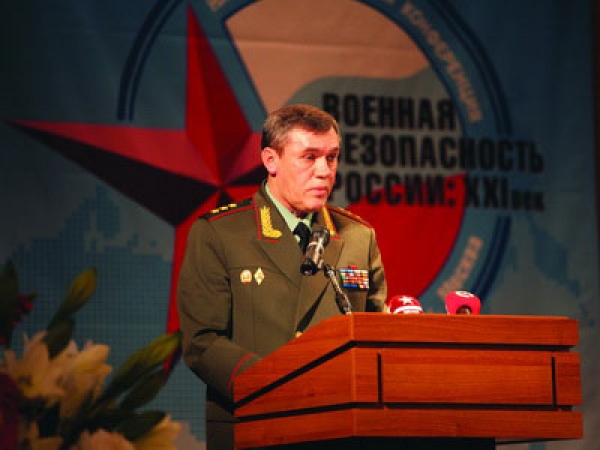
Gerasimov on RF Defense Priorities

Gerasimov on RF Defense Priorities

On Thursday, General Staff Chief and First Deputy Defense Minister, General-Colonel Valeriy Gerasimov spoke about RF defense priorities at a conference on Russia’s military security in the 21st century.  The meeting was organized by Duma and Federation Council defense committees.

Gerasimov largely repeated earlier official statements, but added a few comments that might be significant for what they left out.

Strategic nuclear forces are, of course, Russia’s priority.  He mentioned acquiring Topol-M, Yars, and SSBNs, modernizing Tu-160 and Tu-95MS bombers, and getting satellite systems for VVKO, according to Krasnaya zvezda’s recap of his remarks.

For conventional forces, among other things, Gerasimov said VTA will get 200 new transports, and the Ground Troops and VDV new heavy, medium, and light armor using the Armata, Kurganets, and Bumerang platforms, respectively.

The VKO system for protecting important state and industrial facilities will be formed in 2016-2020.  Mobile S-500 brigades will have this mission.  Troop air defense will be the responsibility of SAM brigades equipped with the S-300V and Buk-M3.

All Ground Troops missile brigades will have the Iskander.

The new NGSh declared that, since the 2008 decision to make “cardinal changes” in the Armed Forces, the share of new types of arms in the army has increased from six to 16 percent.

He apparently didn’t say anything about a new strategic bomber or surface combatants beyond frigates.

On the possibility of Russia being dragged into armed conflicts by 2030, Gerasimov said the level of existing and potential military danger will increase because of competition for energy resources and trade.  He nodded to net-centric and information warfare saying they are a new fourth dimension for conflict.

Gerasimov addressed non-military warfare:

“The role of non-military means of achieving political and strategic aims, which in a number of cases significantly surpass military means in effectiveness, has grown.”

“They expand clandestine military measures, and include informational confrontation measures, the actions of special operations forces, the use of the population’s protest potential.”

Also on Thursday, Gerasimov was asked about President Putin reducing the requirement for six months of military training to four before conscripts can be sent into combat.

According to RIA Novosti, the NGSh essentially said no one should worry about this because contractees would be used in combat.  Russia now has three brigades fully manned by contractees in the North Caucasus. 

He linked the reduction to the current one-year draft, and more intense training that prepares draftees for combat in four months.  He also claimed outsourcing has relieved them of “non-core” functions.  This despite the fact that outsourcing has fallen from favor along with former Defense Minister Serdyukov. 

What Gerasimov didn’t say is that there’s no legal bar to using a Russian soldier with four months of service in a combat operation.

RIA Novosti printed criticism of the conference, and of Gerasimov by implication, from former United Russia party and Duma Defense Committee member Mikhail Nenashev: 

“Everything we heard at this event had already been said a million times before in different auditoriums:  all participants shrugged their shoulders as if to say where do they get these reports?  There was no content, no line of thought, just some lecture.  Therefore it was a ‘check the box’ conference.”

“So, unfortunately, it wasn’t an event for the level of the 21st century.  These were conversations like in some garrison house of officers.”

GPV 2016-2025

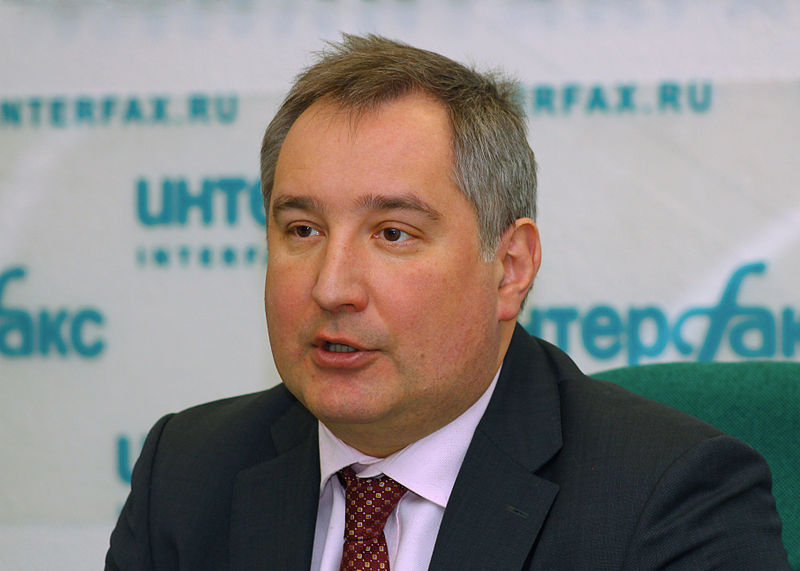
Dmitriy Rogozin

Dmitriy Rogozin

Last week Rossiyskaya gazeta’s Sergey Ptichkin reviewed Dmitriy Rogozin’s comments on the formation of the next state armaments program, GPV 2016-2025.  Rogozin is Deputy Prime Minister and Chairman of the Military-Industrial Commission (VPK) attached to the RF Government.

Rogozin indicated the next GPV will be very different from the current one, according to Ptichkin.

Rogozin said fulfillment of GPV 2016-2025 will be tracked with a new automated system GAS-GOZ, or the State Automated System of the State Defense Order (or perhaps State Automated Defense Order System?).  It’s supposed to allow for “quickly reacting to the smallest failures” in the GOZ.

The Future Research Fund (FPI or ФПИ, the emerging Russian DARPA) will effectively develop the most promising military and civilian technologies in 2016-2025.

Systems now in RDT&E are supposed to be in serial production.  There may be some weapons based on “new physical principles.”

The PAK DA, a new strategic bomber, should be developed and produced during this GPV.  The fifth generation fighter, PAK FA, will be in production.

There will be new missiles, from operational-tactical to strategic, hypersonic ones too.

It’s “not excluded” that aviation-carrying formations (aircraft carriers) will appear in the Navy.

Rogozin said the “active inclusion of the Military-Industrial Commission in developing the future GPV” is a first, and will allow for avoiding “many problems and collisions” along the way.

Rogozin criticized the “former Defense Ministry leadership” for refusing to accept the BTR-90, not ordering the BMD-4, not taking delivery of assembled BMP-3s, and not testing Obyekt 195 (a future tank) after GPV 2011-2020 was already finalized.  Instead, rushed orders for developing and producing the wheeled Bumerang, light tracked Kurganets-25, and heavy tracked Armata ensued. 

These armored vehicles are supposed to enter the force in a year or two, but this seems unlikely.  They will probably become part of GPV 2016-2025.

Rogozin promised the next GPV will be the most balanced, most well-calculated, most innovative, and, at the same time, most realistic.

It’s very early to talk about the next GPV.  Traditionally, this is a sign things aren’t going well in the GOZ or the current GPV.  The overlap in consecutive GPVs makes it difficult (perhaps impossible) for anyone — citizens, lawmakers, bureaucrats, military men, and, defense industrialists — to understand exactly what’s been procured (or not) under each GPV.  This state of confusion probably serves the interests of some of the same  groups.  Rogozin makes it sound as if defense industry, rather than the military, will drive the train this time around.

Su-34 Growing Pains

Su-34 (photo: Izvestiya / Dinar Shakirov)

Su-34 (photo: Izvestiya / Dinar Shakirov)

Early this month, Izvestiya’s Aleksey Mikhaylov and Dmitriy Balburov published on “growing pains” in Russia’s procurement of the Su-34 strike fighter.  The aircraft is “not combat capable” according to them.

A few English-language sites mentioned their story, but didn’t render it completely or accurately.

According Izvestiya, the Defense Minister may soon sign out a report on  defects in the Su-34 that interfere with its “full combat employment.”  Each of the 16 Su-34s received over six years reportedly has its own “individual problems.”

The authors say the Defense Ministry already won an 80-million-ruble suit against the Novosibirsk Aviation Plant named for Chkalov over undelivered aircraft.  They insinuate this Defense Ministry report could be the basis for more litigation against the airplane’s manufacturer.

A Su-34 pilot told Izvestiya radar and targeting-navigation system problems interfere with flight training in the aircraft.  Malfunctions, he says, are the result of both programming problems and technical flaws.  A maintenance officer said each aircraft has “its own characteristics,” for example, an auxiliary motor located in different places on different borts.

Two Su-34s delivered to Lipetsk in 2006 are allegedly non-operational, and sit at the airfield for show.  However, the best airframes are the last three borts sent to Baltimor / Voronezh last summer, a VVS Glavkomat officer told the authors.

OPK representatives expressed surprise at the military’s complaints, noting that the early production run of any aircraft entails problems.  Some blamed a low level of training among VVS pilots and technicians for difficulties with the Su-34.

The Izvestiya report seems at odds with the recent announcement that delivery of a second Su-34 squadron is beginning.  In fact, the media reports five more aircraft arrived at Voronezh from Novosibirsk just days ago.  Practically the same day, Defense Minister Shoygu visited the city, airfield, and other VVS institutions.  It may be that his predecessor Serdyukov was inclined to criticize the OPK and the Su-34’s quality.  So maybe Shoygu won’t approve the Su-34 report.  But that doesn’t necessarily mean there aren’t real problems with the aircraft.

Stories of the Year

RIA Novosti has its list of the main military events of 2012.

No surprise number 1 is the Oboronservis scandal, the fall of former Defense Minister Serdyukov, and appointment of successor Sergey Shoygu.

The rest:

  • 16 accidents in munition destruction leaving 12 dead and 23 injured.
  • Retirement of the CO of the Strizhi flight demonstration group who allegedly demanded money from subordinates for the freedom to show up for duty or not.  Remember Senior Lieutenant Sulim at Lipetsk?
  • Vityazi flight group doesn’t participate in Farnborough.
  • Ex-Gorshkov carrier still not delivered to India due to power plant problems.
  • Rearmament of RVSN with Yars and Topol-M ICBMs.  See Karakayev’s remarks the other day.
  • Acceptance of Dolgorukiy, Nevskiy, Bulava, and Severodvinsk all put off until 2013.
  • Delayed space vehicle launches, but fewer failures than in 2011.
  • The death of Ruslan Ayderkhanov.  A surprise pick.  Remember the army and medical examiners say he killed himself even though he was beaten and abused before he died.
  • The contract for five Borey SSBNs, and Prime Minister / President Putin’s role in getting the Defense Ministry and industry to agree on a price.
  • The collapse of Moscow’s $4.2 billion arms deal with Iraq amid talk of corruption.
  • Losing another Indian helicopter tender to the U.S.
  • Russia’s conference on EuroMD.

Russia 2030

Global Trends 2030:  Alternative Worlds

Global Trends 2030: Alternative Worlds

The NIC has released its latest Global Trends publication.  Hat tip to Newsru.com and Igor Korotchenko for taking note of it.  As usual, and rightly, the document focuses more on “megatrends,” and less on individual countries.  Nevertheless, here are excepts of its forecast for Russia.

Under the “Changing Calculations of Key Players,” the NIC says:

Russia’s strategic calculations will depend to a great extent on whether Russian leaders decide to increase Russia’s integration into the international system and mitigate the threat of future armed conflict or whether they choose to continue Russia’s relative isolation and mistrust of others, exacerbating interstate tensions. Russia has serious concerns regarding the threat posed by a rapidly expanding China, particularly Beijing’s growing appetite for natural resources which could eventually encroach upon the Russian Far East and Siberia. Russian leaders believe that they need to be wary of the potential for the US and NATO to intervene in a conflict involving Russia and one of the former Soviet republics.”

The section on military trends has the following:

Nuclear Disfavor vs. Nuclear Renaissance. Nuclear ambitions in the US and Russia over the last 20 years have evolved in opposite directions. Reducing the role of nuclear weapons in US security strategy is a US objective, while Russia is pursuing new concepts and capabilities for expanding the role of nuclear weapons in its security strategy.”

The following appears in a textbox entitled “Russia:  Potential Global Futures.”

“Russia’s role in the world during the next two decades will be shaped by the rising challenges it faces at home as well as in the global environment. Russia’s economy is its Achilles’ heel. Its budget is heavily dependent on energy revenue; efforts to modernize the economy have made little progress; and its aging of the workforce will be a drag on economic growth.”

“Russia’s population is projected to decline from almost 143 million in 2010 to about 130 million in 2030. Although Russia’s fertility rate is similar to that of many European countries and aging populations are also a drag of European economies, life expectancy is about 15 years lower for Russians than for Europeans: since 2007 the size of the Russian workforce has been declining and it will continue to do so for the next two decades.”

“However, Russia’s greatest demographic challenge could well be integrating its rapidly growing ethnic Muslim population in the face of a shrinking ethnic Russian population. There are now about 20 million Muslims in Russia, comprising about 14 percent of the population. By 2030, that share is projected to grow to about 19 percent. Russia’s changing ethnic mix already appears to be a source of growing social tensions.”

“To enhance its economic outlook, Russia will need to improve the environment for foreign investment and create opportunities for Russian exports of manufactured goods. Russia’s entry into World Trade Organization (WTO ) should provide a boost to these efforts and help Moscow to diversify the economy: by one estimate Russia’s membership in the WTO could provide a substantial boost to the economy, adding 3 percent to GDP in the short term and 11 percent over the longer term.”

“Russia’s relations with the West and China are also likely to be a critical factor in determining whether Russia moves toward becoming a more stable, constructive global player during the next two decades. We see three possibilities:”

1. Russia could become more of a partner with others, most probably, in a marriage of convenience, not of values. Russia’s centuries-long ambivalence about its relationship with the West and outside is still at the heart of the struggle over Russia’s strategic direction.”

2. Russia might continue in a more or less ambivalent relationship with the other powers, but over the next 20 years this path would likely be a more troublesome one for international cooperation if Russia rebuilds its military strength and must contend with an increasingly powerful China.”

3. Russia could become a very troublesome country, trying to use its military advantage over its neighbors to intimidate and dominate. This outcome would be most likely if a Russian leader were facing rising public discontent over sagging living standards and darkening economic prospects and is looking to rally nationalist sentiments by becoming much more assertive in the Near Abroad.”

There’s not a lot new here.  But it can’t go without comment.

Are the Russians really not integrated into the “international system?”  Or do they obstruct because they don’t like the outcomes of the “system’s” operation?  Moscow will probably never (at least not for a long, long time) agree with Western views on mitigating a future armed conflict, especially in a former Soviet republic.  Russia always evinces more worry about the U.S. and NATO despite the claim of its “serious concerns” about a threat from China.

One can’t be sure what’s meant by “pursuing new concepts and capabilities” for nuclear warfighting.  The Russians are active developing their strategic nuclear forces for two reasons.  First, conventional force problems.  Second, U.S. ballistic missile defense.  Both require ensuring their deterrent is viable, now and somewhat down the road.

Yes, it’s the economy stupid (and demographics too).  It’s hard for anyone to say what will happen with Russia’s economy, but the latter’s pretty much destiny at this point.  Russia will need more than a better foreign investment climate and WTO to improve its long-term economic prospects.  If years of windfall hydrocarbon revenues don’t do it, perhaps open politics, impartial rule-of-law, and serious anti-corruption efforts might be the path to a modernized, diversified, and stronger economy.

Are Russia’s external relations with the West and China critical in its  behavior as a “global player?”  Or does that behavior stem more from the country’s internal evolution or lack thereof?

The three possibilities look pretty familiar — pretty good Russia, not as good Russia, and bad Russia.  We’ve had the first and second mostly, and a taste of the third occasionally, over the last 20 years.  And elements of one and two, or two and three, can occur at the same time.

Overall, the Russian discussion in Global Trends 2030 is disappointing.

Gerasimov Says No Sharp Course Change

General-Colonel Gerasimov (photo: RIA Novosti / Sergey Pyatikov)

General-Colonel Gerasimov (photo: RIA Novosti / Sergey Pyatikov)

Gazeta.ru pieced together RIA Novosti clips of General Staff Chief Valeriy Gerasimov’s session with foreign military attaches yesterday.

Gerasimov said army reforms begun by former Defense Minister Anatoliy Serdyukov will be “corrected,” not radically altered:

“Anticipating your questions on the possibility of a sharp course change in military organizational development, I would note there won’t be one.  In 2008, the Russian Federation President clearly indicated development tasks for our army, they will be fulfilled.  Naturally, some issues are being subjected to certain correction accounting for deficiencies revealed.”

“Organizational development” is primarily (but not entirely) TO&E and force structure.

Gazeta reports Gerasimov said mixed conscript and contract manning will be preserved, and the one-year conscript service term won’t be increased as some would like.

The new NGSh said the Defense Ministry is creating its own element to track fulfillment of the state defense order (GOZ):

“And by the minister’s decision, a structure will be created in the Defense Ministry which allows for controlling not only the completion of contracts, but work in all phases of the production cycle.”

Serdyukov’s Defense Ministry had various organs with this responsibility, including Rosoboronzakaz, Rosoboronpostavka, etc.  How will the new structure be better?

Gazeta closes with expert opinions on the fate of reforms introduced by Serdyukov.  Igor Korotchenko says:

“We didn’t have Anatoliy Serdyukov’s reform, but a reform the main parameters of which were set by the president.  That is the military reform course will continue fully with the exception of some cases of deficiencies revealed in the military education system, military medicine, and the reinforcement of control procedures over the activity of those structures involved in armed forces outsourcing.”

Ever-skeptical Aleksandr Khramchikhin doesn’t think there was a coherent course to be changed:

“In the army reform, there wasn’t a clear plan of action, one won’t appear under the new defense minister.”

“I don’t think Shoygu’s Defense Ministry will try to correct the course of reform or introduce some fixes.  There is nothing to correct.  Serdyukov’s reform had no kind of course, it went by the trial and error method.  There are grounds to believe that Shoygu will act according to the same principle.”

There’s a long list of policies commentators think will or might be changed, but little so far officially.  A new category to replace Serdyukov’s Reforms is needed.  Maybe Shoygu’s Nuanced Corrections?