Category Archives: Serdyukov’s Reforms

Defense Ministry Reversal on Spetsnaz

The latest painful walk back started this week on the issue of returning just-moved Spetsnaz brigades from the Ground Troops to the General Staff’s Main Intelligence Directorate (GRU), at least presumably. 

This is not a done deal, and it’s certainly not entirely clear Spetsnaz will go back to the GRU.  The special operations men might go back to the General Staff in some form separate and distinct from the GRU, and answering directly to the Genshtab.

Spetsnaz weren’t gone long enough for anyone to decide that giving them to the Ground Troops and MD / OSK commanders wasn’t a good idea in a military sense.  No, this sudden shift is most likely the product of bureaucratic and political infighting.  And it seems like a blow to those close to the Defense Minister, and, to some extent, to Anatoliy Serdyukov himself.

In all this, one recalls past rumors about carving up the GRU.  The FSB and SVR wanted its agent operations.  And the FSB and Ground Troops wanted its Spetsnaz as part of a large, unified special operations force.  Kvachkov and Popovskikh called for Spetsnaz to be its own separate service branch.

At any rate, the story’s details . . .

On Tuesday, Moskovskiy komsomolets reported that the Defense Ministry intends to return Spetsnaz brigades to Main Intelligence Directorate (GRU) control just several months after giving them to the Ground Troops.  The idea of giving them to the army was recognized as a failure, according to the paper.

Spetsnaz officers at the time said it was a crazy idea that wouldn’t bring any positive results.  Just exactly whose concept it was is unknown to the public, but, according to MK, former Ground Troops Glavkom Army General Vladimir Boldyrev lobbied for the change to shore up his position after the five-day war with Georgia, and then-GRU Chief Valentin Korabelnikov wasn’t able to defend his Spetsnaz, and had to give them up.

MK implies the GRU focused on preserving its strategic intelligence operations [i.e. agent networks], and even leaders of its Spetsnaz directorate changed over to agent operations.  The “Senezh” Spetsnaz training center was taken from the GRU and subordinated to the General Staff.  According to MK, the Genshtab appointed former FSB Group A General Medoyev to head “Senezh.”  He was replaced within weeks by General Aleksandr Miroshnichenko, also a Group A or “Alpha” veteran. 

Your present author notes Medoyev’s replacement by Miroshnichenko was published in the presidential decree on military personnel from 26 October.  Medoyev was relieved and dismissed from the service by a decree from 1 October.  Both men were listed only as “assistant to the Defense Minister.”

A Genshtab source tells MK:

“The plan to transfer army Spetsnaz to the ground pounders was recognized as a failure.  For a year, no one managed them [the Spetsnaz], they left everything hanging.  Now on General Staff Chief Makarov’s desk there’s a document on their resubordination [to whom?].  It’s true it still isn’t signed.”

The same GRU Spetsnaz leaders who gave their brigades to the ground pounders are seeking a place in the new Spetsnaz leadership.  One can only imagine what the structure will become with these men participating in it.  A GRU source tells MK:

“Take, for example, General Russkov, whose service term expired long ago, he’s 57, but still in the ranks.  And, probably, not because he’s an outstanding military man.  How many promising young guys did they dismiss, but such “dinosaurs” are still serving.  And he’s the very one who provided the rationale for the intelligence directorate not needing Spetsnaz.  After all our brigades were resubordinated, he became an agent operator.  And his deputies and assistants, Colonels Mertvishchev, Shpilchin, and Sobol, who didn’t do anything to keep Spetsnaz in the GRU structure, are actively vying for the leadership of the new Genshtab structure which is being established.”

Argumenty nedeli’s less-nuanced version of the story followed MK’sArgumenty claims sending Spetsnaz back to the GRU will correct one of the biggest mistakes made by the Defense Ministry’s team of “effective managers.”  Its Genshtab source says the GRU might form a Special Operations Directorate [of course, the Genshtab might form its own instead].  The decision on moving Spetsnaz was made “at the very top,” and it weakens the position of Ground Troops Glavkom General-Colonel Aleksandr Postnikov.  Argumenty finishes its somewhat rambling version of the story by saying ex-FSB men – specifically “Senezh” Chief Miroshnichenko – will control the army Spetsnaz.
Rosoboronpostavka Understaffed, Ineffective?

This author has written several times that Rosoboronpostavka – the Federal Agency for Supplies of Armaments, Military, Special Equipment and Material Resources – is supposed to be key to making the GOZ and GPV work.  It’s supposed to take responsibility for negotiating, contracting and taking deliveries out of the hands of military men, so they aren’t tempted by bribes and kickbacks from manufacturers, and can concentrate on the specific requirements for weapons and equipment that needs to be made and bought.

In mid-2010, erstwhile Putin ally Viktor Cherkesov (who once warned of infighting and corruption among high-ranking security service veterans) was unceremoniously booted from Rosoboronpostavka.  President Dmitriy Medvedev criticized the agency (and Cherkesov) for not accomplishing much, and he moved it under the Defense Ministry, declaring that it would become a reinvigorated part of the effort to rearm the Armed Forces during the next decade.

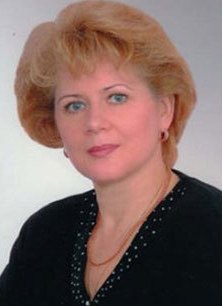
Nadezhda Sinikova

With great fanfare, Defense Minister Serdyukov’s confidant, Nadezhda Sinikova took over at Rosoboronpostavka.  This all fit pretty well with Serdyukov’s general intent – to establish strict control over the Defense Ministry’s “financial flows,” and to civilianize Defense Ministry functions that aren’t clearly military in nature.

It’s seemed that Sinikova’s Rosoboronpostavka has remained stillborn, much like it was prior to mid-2010.  At least, nothing was heard from or about it until a 3 March article in Rosbalt.ru.  Now we have to be wary — Cherkesov’s wife, Natalya Chaplina is Rosbalt’s General Director.  Be that as it may, the article seems pretty solid.

According to Rosbalt.ru, Rosstat published data on salaries in the federal executive organs, and experts were surprised the highest average paychecks — 135,000 rubles per month or more than 1.6 million rubles per year — are in Rosoboronpostavka, an organization not even really functioning.  The average 12-month federal salary is 728,000 rubles, about 60,000 per month.
 
Rosoboronpostavka is working only in a technical sense.  The different power ministries and departments haven’t hurried to hand over authority to conclude contracts for them, and they’ve tried to sabotage the agency’s work, according to Igor Korotchenko. 

Rosoboronpostavka’s supposed to have 1,100 professional employees, 980 in the Moscow headquarters.  A source close to Rosoboronpostavka claims that, prior to mid-2010, not more than 10 people worked for the agency, and it didn’t have its own office.  They worked in a room in Rosoboroneksport on Moscow’s Ozerkovskiy Embankment. 

The Rosstat data says Rosoboronpostavka has the lowest staffing level of any executive structure, only 15.5 percent or 152 people against an authorized level of 980.
 
Before the mid-2010 changes, Rosoboronpostavka salaries had been 50-70,000 per month; the director got 70,000 and he reported to Prime Minister Putin.  Now, with its status downgraded and reporting to the Defense Minister, the agency’s pay has increased several times.
 
Experts think the pay’s kept high because the country’s leadership wants to deter corruption in the state defense order (GOZ), but deputy editor-in-chief  the journal “Armaments and Economics,” Professor Sergey Vikulov says this high pay comes “from the naive belief of our leaders that high pay will deter bureaucrats from bribery.” 

One notes Vikulov’s journal is the professional publication of the 46th TsNII, not exactly an objective voice since it used to form the GOZ (and probably collect the bribes) pretty autonomously before Rosoboronpostavka was established.
 
Korotchenko believes even bureaucrats who earn millions will be tempted to “saw off” part of the billion-ruble contracts they oversee.  He goes on to say  corruption in the Defense Ministry directorates occupied with the GOZ and the OPK already caused the failure of the two previous state programs of armaments (GPVs).
 
Rosbalt.ru also claims the Audit Chamber has said GOZ-2009 was only 50 percent completed.  Then it cites NG‘s (Mukhin’s) 70 percent fulfillment figure for GOZ-2010.

Although one expert hopes higher pay at the agency is tied to greater productivity in processing contracts, a Rosbalt.ru source says as before only a small number of contracts are being completed.  The expert is just about ready to give up searching for a logical explanation for the lack of elementary order in Russia’s management structures. 

But Korotchenko thinks it might be early to judge Rosoboronpostavka, since it’s still establishing itself.  Perhaps at the end of this year or the beginning of next, it will take over all power ministry arms and equipment procurement contracting, he says.

VVS Taking VMF’s Land-Based Fighters and Bombers

Vesti.ru has rebroadcast Interfaks information from a Main Navy Staff source who says, on 1 April, Naval Aviation (VMA) will begin transferring its land-based fighter and bomber aircraft to the Air Forces (VVS).

By year’s end, the VVS will get the Navy’s remaining Su-27 fighters, MiG-31 fighter-interceptors, long-range Tu-22 [sic] supersonic bombers, and also part of the VMA’s transport aircraft.

Russian Naval Aviation Tu-22M3

The Interfaks report will probably get garbled into all aircraft, or all land-based aircraft, going to VVS, which is not the case, as it makes its way into other Russian and English language news stories.

VMA will retain control of its Il-38, Tu-142, and Be-12 ASW aircraft, and its deck-based aircraft, the Su-33 fighter and Ka-27 helicopters, according to the Interfaks source. 

According to the Vesti.ru article, missile-carrying naval aviation has deteriorated since the Soviet collapse, and only the Northern and Pacific Fleets have long-range ASW aircraft which, it claims, amount to only 25 Il-38 and 15 Tu-142.  It says the Baltic Fleet has no ASW aircraft, and the Black Sea Fleet only four old Be-12 likely to be completely worn out by 2015.

The article notes that the Su-33, Su-25UTG trainer, multipurpose Ka-27 and Ka-29 combat-transport helicopters will remain in the air wing of heavy aircraft-carrying cruiser Fleet Admiral of the Soviet Union Kuznetsov.  There are reported plans to procure 26 MiG-29K fighters for Kuznetsov.

Here’s a nicely done, data-filled Russian language Wiki article on Russian Naval Aviation.

VMA lost something else recently.  A BMW-X5 used by VMA Chief, General-Colonel Igor Khozhin was stolen in Moscow on Friday, according to Interfaks.

ITAR-TASS also reported Friday that more than 80 RVSN aircraft — An-72, An-26, and Mi-8 helicopters — will also be going over to the VVS starting on 1 April.

Would the Army Oppose Siloviki Loyal to Putin?

Medvedev and Putin (photo: Reuters)

An unnamed FSB veteran thinks it would.

Monday New Times published a piece on the state of the tandem and political prospects over the next year leading up to the elections which will determine who will be Russia’s president until 2018.

The article’s authors ask whether Medvedev and Putin, frightened by North African events, might be determined to preserve the status quo by any means.  Or perhaps the president and prime minister face an inevitable clash.  The authors have consulted unnamed experts and present their findings.  Scenario No. 2 is Apocalypse Tomorrow.  The mood of the siloviki – in this case, rank-and-file men with uniforms, ranks, and guns – is key to Scenario No. 2 – the tandem blown up.  The authors ask “how would the siloviki conduct themselves if Medvedev decided to fire the premier and his entire government?  On whom would the experts bet?”

The authors asked former USSR intelligence and special service veterans of coup d’etats to sketch out what we’d see in the event of Apocalypse Tomorrow.  They sketch out some of the things Putin and the government would do in addition to calling for the support of the siloviki.

In the end, the article examines the possibility that Putin might agree to go, with the right personal and financial guarantees in place.  His situation is not, after all, exactly like Mubarak’s or Qaddafi’s.

The article ends like this:

“’Putin can hardly count on the silovik bloc if the matter gets to mass bloodshed,’ even a highly placed employee of the FSB’s Spetsnaz Center, which today joins in its structure Directorate A (formerly Group A) and Directorate V (formerly Group Vympel).  ‘His sole full-blooded reserve capable of entering the fray is the Internal Troops [VV], and mainly the VV Spetsnaz’ – the so-called maroon berets.  ‘They are the ones in 1993, after one of the Vympel groups refused to participate in suppressing the civilian population, who fulfilled the given mission’ (this means preventing the storming of the Ostankino television center – New Times).  ‘As far as the FSB Spetsnaz goes, after so many years of ‘reforming’ silovik sub-units, officers will scarcely be zealous in putting down civilians.  Quite the opposite.  It wasn’t for this that they risked their lives in the Caucasus.’  The weakest link, in the opinion of the same expert, is the army:  ‘Among the troops there’s a lot of negative information and dissatisfaction with the reforms that are being introduced.  Promises that a lieutenant will soon receive 50 thousand rubles just remain promises, the apartment issue isn’t resolved.  After the mass dismissal of officers – just in the past year 140 thousand completely young ‘reservists’ were put out in the streets – they will easily return to the ranks [i.e. Serdyukov’s reversal increasing the officer ranks by 70,000], but now they know who their enemy is.  Plus the disbanding of the GRU Spetsnaz.  As a result, the opposition will have something to oppose the Internal Troops.  So the generals will think a thousand times before giving the order to open fire, and if there is the slightest suspicion about the illegitimacy of the mission received, they’ll do everything to sabotage it.’”

“The experts polled by New Times come together on one thing:  a bloody scenario has a greater than 50% probability in one case:  if the premier and his closest silovik circle seriously fear for their lives and property and don’t get a security guarantee.  And now before their eyes there’s even a living example:  going peacefully into retirement Mubarak has a chance to preserve part of his billions frozen in Switzerland, Qaddafi shooting at his own people no longer has such a chance.”

Interesting scenarios, but there are a couple things your present author isn’t so sure about.  Firstly, two things not factored in that could be significant are:  the mood of the average militiaman [i.e. cop] who are very numerous and are also being ‘reformed,’ and the unhappiness among military retirees and older vets demonstrated recently in their Moscow assembly and last year on Poklonnaya gora.  One’s not sure, though, if they’re more supportive of Medvedev or Putin.  Given the choice, they’d probably shoot both.  Secondly, is Medvedev really the type to enter that kind of standoff (or any standoff actually) while holding very few, if any, good cards to play?  At the same time, one is cautious about assuming rational actors.  It’s perfectly conceivable the Russians could blunder and miscalculate their way into Apocalypse Tomorrow.

Meanwhile, Ancentr.ru was following a similar tack earlier this week . . . it looked at the recent personnel decisions regarding General-Lieutenant Valeriy Yevnevich which moved him from the GUBP to Deputy Chief of the General Staff and then to Assistant to the Defense Minister (ostensibly, to advise on peacekeeping activities).  The website thinks this interesting since Yevnevich is a ‘political’ general who as Taman division commander supported President Yeltsin in the 1993 battle with his opponents.  And, it says, such a decisive and staunch supporter of ‘democracy’ as Yevnevich could be useful to vlasti in a responsible post given the general growth in political tension in society, including also a “rise in disloyalty in the army.”  For example, he could command special VDV or other sub-units in an emergency to ensure their loyalty to the regime.  Ancentr.ru goes on to detail other reports from NVO’s Vladimir Mukhin about the level of discontent in the army’s ranks as well as ex-General Staff Chief and Security Council staff member Yuriy Baluyevskiy’s possible role as leader of a military backlash against Defense Minister Serdyukov’s reforms.

Navy Still Not Moving to Piter (Yet)

A highly placed Defense Ministry source tells RIA Novosti there’s no final decision on moving the Navy Main Staff (NMS) from Moscow to St. Petersburg.  It’s been, of course, 3-1/2 years since the issue was first raised.

The press agency source says:

“There are two approaches.  The first is the Navy Main Staff remains in Moscow, and here the efficiency of resolving issues and tasks with the RF Defense Ministry wins and the second is the Navy Main Staff, with significantly reduced personnel, transfers to Saint Petersburg, where the scientific and shipbuilding base of the fleet is concentrated.”

According to this source, the pluses and minuses of both approaches are being calculated in the final phase of forming the command and control system of the Armed Forces.  The question of the NMS location is approached from the point of view that even temporary weakening in the command and control system for naval strategic nuclear forces (MSYaS or МСЯС) is unacceptable:

“The focus is placed on the effectiveness of the functioning of this system.  Whether the Navy Main Staff as just one attribute [of this system] transfers authoritative functions to St. Petersburg or remains in Moscow is not so important.  It’s important that the deployment location should be defended in a corresponding manner and not allow confusion in the general system of Armed Forces command and control.”

There is, according to the source, no doubt it’s essential to preserve the unitary structure of strategic nuclear forces command and control in the future:

“It follows that the Navy command in the form of the Navy Main Staff or, let’s say, a Navy department [департамент] is essential for coordinating the strategy of using the Navy in cooperation with the new regional commands [OSKs].”

He adds that, while OSKs West, South, Center, and East are complete, it still remains to distribute precisely the command and control functions for general purpose forces and strategic nuclear forces.

RIA Novosti’s interlocutor makes all this sound like the main issue may be less the move itself, and more one of figuring out the relationship and responsibilities of the now stronger and more significant MDs / OSKs and the somewhat diminished service main commands (Glavkomaty).  Perhaps the Navy Glavkomat is arguing with OSK West and OSK East over what is part of the strategic Navy, or supports strategic naval operations.

And Interfaks also has an item today saying that the Defense Ministry has ordered the NMS to prepare to move to St. Petersburg.  This came from an informed source in the Navy Glavkomat.  The written order contains no precise date for the move, but the source thinks the “active phase” of relocating will begin in July.

“New Profile” in Transbaykal

Nezavisimoye voyennoye obozreniye’s Viktor Litovkin wrote recently about his Defenders’ Day press pool visit to the 212th District Training Center (OUTs or ОУЦ) in Peschanka, and to the 29th Combined Arms Army in Chita.  Formerly part of the Siberian MD, they’re now in the Eastern MD or OSK East.  Litovkin set out to see how the military’s “new profile” has been implemented in the four years since he last traveled to Transbaykal.

Litovkin said the army’s future “junior specialists,” i.e. better trained conscript sergeants, aren’t just using simulators, and there’s lots of live action on OUTs ranges and training grounds.

Simulators at Peschanka (photo: V. Litovkin)

The majority of trainees were in training for a minimum of 8 hours a day, not including individual training and PT time.

OUTs Chief, General-Major Sergey Sudakov is new himself, but says much has changed at the center.  He says they’ve gotten new simulators, training buildings and barracks have been renovated, and the mess hall’s been outsourced so conscript-trainees no longer have to pull KP.

Four years ago, the Siberian MD listed 5,970 personnel without housing, but now only 120.  Those without apartments have been taken off the local books, and all their data’s been sent to the Defense Ministry’s Housing Support Department in Moscow. 

Now, however, there are rasporyazhentsy (распоряженцы), those officers, warrants, or sergeants at their commanders’ disposition, in all, more than 200 waiting for permanent apartments outside Transbaykal.  But only 2-3 per month are getting a “letter of happiness” from Moscow saying they’ve been allocated housing, and, in many cases, it’s not in the location they wanted.

The rasporyazhentsy were once commanders and chiefs but now they muster every morning to get orders from their former subordinates.  They don’t get anything serious to do.  They pull assistant duty officer for a unit once a week, or carry out a major’s orders for less than half their old pay.

Medic Senior Sergeant Zhanna Litvinenko is a rasporyazhenitsa who’s waited two years for an apartment in Rostov-na-Donu or Krasnodar Kray.  While waiting to return to “mainland” Russia, she lives on “bare pay,” without supplements, of 16,900 rubles, of which 3,200 pays for her dorm room.

Litovkin visited the officers’ dormitory to see what’s changed since 2007.  He describes familiar noisy corridors with common toilets, showers, and kitchens for officers and their families.  The building’s been renovated, old wooden window frames and the boiler have been replaced, kitchens updated, and showers divided so men and women don’t have to use them on alternating days.

One Captain Rinat Abubekirov and his wife say the load on officers has grown sharply now that there are fewer of them.  The tank training regiment had 140 officers previously, now 98, in a company, there were 7, now 5, and the number of additional duties is unchanged.  A company commander is now a captain, rather than a major as in the past.  Abubekirov has been an O-3 for five years, and no one can tell him when he might make O-4.

Litvinenko and the Abubekirovs in the Officers' Dorm (photo: V. Litovkin)

Training their conscript charges has changed.  Instead of six months, they now have three to do it.  The trainees’ education level varies greatly now — from higher education to some who didn’t finish high school.  Many conscripts arrived in poor health, and the severe Transbaykal winter doesn’t help either.  Minus forty isn’t rare, and -30° (-22° F) is the norm.  They are just not physically or psychologically prepared.  Nevertheless, OUTs Commander Sudakov says fewer are sick this winter than last.

Then, Litovkin turns to the Chita-based 29th Combined Arms Army commanded by General-Major Aleksandr Romanchuk, where the NVO editor says he sees “solid changes.”  All its units are fully manned and permanently combat ready.  In what’s become a fairly common refrain, Romanchuk believes his army’s combat potential exceeds that of its predecessor [the Siberian MD]. He said he and his deputy spent a month at the General Staff Academy learning the new automated command and control system.  He said his best subordinates can earn 100,000 rubles per month in bonuses.

Litovkin says there are questions about the introduction of new equipment in Romanchuk’s command.  It would be good if its tanks and combat vehicles could be replaced quicker.  There are no UAVs or PGMs.  The army relies on T-72B1, BMP-2, Strela-10 and towed air defense guns, and self-propelled Akatsiya and Msta-B artillery.

Litovkin concludes that, while no one believes Mongolia or China will threaten Russia’s borders today or tomorrow, this army needs to train in a real way, with equipment from the 21st century, not the last one.

But this, he continues, is not even the greatest problem.  He was told at every level that it’s simply not possible to make yesterday’s schoolboy into a good specialist in a year.  The commander of the 29th CAA’s 200th Artillery Brigade, Colonel Dmitriy Kozlovskiy, told Litovkin this spring he’ll lose 70 percent of his personnel.  New gun commanders, gunners, radiomen, and reconnaissance, topographic, and meteorological specialists will arrive and in less than a month they’ll need to work like crews, platoons, and batteries, like a unified combat mechanism.  They will learn and leave the army, and the process will begin again.

Sounds like a Russian O-6’s plea for professional enlisted and NCOs . . . .

Litovkin finishes with a story from Romanchuk.  He tells of a tank gunner conscript who hit his target [a 1 — an excellent in Russian training terms] on his 39th day of service.  He said he just did everything as he was taught, and as he did on the simulators.  In times past, according to Romanchuk, tank gunners got to fire live rounds only after serving six months, and this guy scored a 1 on his 39th day.  But Litovkin asked how his buddies did.  Romanchuk answered 2s and 3s.

Corruption and the GPV

This morning’s press included various accounts of statements from Igor Korotchenko or in the name of the Defense Ministry’s Public Council, on which Korotchenko serves, about mitigating the impact of corruption on the State Program of Armaments (GPV), 2011-2020.

RIA Novosti quoted Korotchenko to the effect that the rearmament program will only be successful with strict financial accounting and effective measures against corruption in the State Defense Order (GOZ or гособоронзаказ).

He said Defense Minister Serdyukov is taking steps to ensure that resources are used as intended, including the establishment of a Military Products Price Formation Department and the resubordination of the Federal Arms, Military, Special Equipment and Material Resources Supply Agency (Rosoboronpostavka) to the Defense Ministry.  But the latter step was done over six months ago, and not much has been heard about it since.

Novyye izvestiya and Novyy region quoted the Public Council’s statement:

“But for the army to receive all this [equipment in the GPV], money is simply not enough – it’s necessary to make things so that Defense Ministry generals, who to this point were occupied simultaneously with orders and purchases of weapons, don’t get access to money, are occupied only with formulating lists of everything needed for the conduct of modern war, but the function of monitoring prices and purchases should be transferred to other departments.  Otherwise, government resources allocated to the GPV will get ‘sawed off,’ placing this program in jeopardy.”

Those are, of course, the jobs of the new Price Formation Department and Rosoboronpostavka.  Serdyukov’s tax service veterans are supposed to free the payments system from graft, and use their experience to uncover complex theft schemes.  Military prosecutors are also expected to be more active here.  Main Military Prosecutor (GVP) Sergey Fridinskiy told Novyy region about prosecutors’ work in uncovering the theft of 6.5 billion rubles’ worth of military budget.  He claimed his prosecutors have stopped 240,000 violations, suspended 12,000 illegal actions, held 40,000 people to account, and returned 4 billion rubles to the treasury.  But it’s not clear what time period he’s talking about.

RIA Novosti recounted Korotchenko’s comments about preventing corruption in military RDT&E:

“Special control needs to be provided on scientific-research work and justification of expenditures on it, but also on the development of new types of armaments, since it’s precisely here that opportunities for different types of financial machinations and abuse exist.”

Of course, reminds RIA Novosti, RDT&E only amounts to 10 percent of the GPV.  Bigger chances for theft exist in procurement, which is supposed to be 78-80 percent of the rearmament plan.

According to Novyye izvestiya, on the procurement side, Korotchenko says, in past years, a minimum of 45-50 percent of money for arms simply ended up in someone’s pocket.  For this reason:

“For the very same money, Russia buys 14 tanks a year, and India 100.  This led the country’s leadership to the kind of thinking reflected in the Defense Minister’s authority to reorganize the entire purchasing scheme.  This time [the new GPV] 19 trillion rubles are at stake.  Can you imagine with what interest the ‘market players’ are waiting for them?  But the state machinery is running: many OPK directors are already being removed, in the case of the director of one of the system-forming design bureaus, suspected of stealing money from a state order through offshore shell companies, an investigation is being conducted, and other criminal cases in orders-purchases from previous years are also possible.”

The nongovernmental National Anticorruption Committee says the average kickback in civilian contracting is 30 percent, but, in defense, it’s 60 to 70 percent.  Because arms prices are secret [and hard to determine anyway], no one knows how much this is.  But common sense says this makes everything cost nearly twice what it should.

Mukhin on the Army’s Protest Mood

According to Nezavisimaya gazeta’s Vladimir Mukhin, Defense Minister Serdyukov has lost the confidence of his bosses, as well as his carte blanche to reform the Armed Forces.  NG’s Kremlin source claims Serdyukov’s initiatives will be vetted at higher levels (i.e. the Sovbez and President) in the future.  But can there really be any initiatives left at this point?  Isn’t it all either implementation or reversal at this point?

President Medvedev’s press-secretary quickly denied that responsibility for military reform is being transferred elsewhere, and insisted it remains with the Supreme Commander-in-Chief and his Defense Minister (but what about Putin?).  She called Mukhin’s report a “lie,” and said only Medvedev and Serdyukov answer for Armed Forces reform, while others just “contribute to it.”

Mukhin covers Putin’s trip to Kaliningrad about military housing where he was told about discontent among military retirees and he promised a 50-70 percent increase in their pensions.  General-Lieutenant Netkachev blames Putin for letting military pensions slip from three times to barely equal to a normal labor pension.

Mukhin’s final interlocutor cites Finance Minister Kudrin on the cost of these political promises to the military increasing Russia’s defense burden from 3 to 4.5 percent of its GDP.

It’s worth including all of Mukhin’s article:

“Election Candy for the Military Electorate.  The Party of Power Struggles for the Votes of Veterans and Servicemen.”

“The fundamental steps connected with reforming the army will now be implemented not by the military department itself, but by the Security Council (SB), where the main director of this work will be the Deputy Secretary of the SB, ex-Chief of the General Staff Yuriy Baluyevskiy.  A Kremlin source has told ‘NG’ such information.  It notes that in its responsibilities, the Sovbez is charged with supervising the general work of the government and power structures in creating a positive image of the main activities of military organizational development, especially in the social sphere for officers and retirees and their family members.”
 
“So it is that the carte blanche given to Anatoliy Serdyukov several years ago by Vladimir Putin for a radical reorganization of the country’s Armed Forces is now canceled.  Further reforms will be agreed at a higher level and, of course, with the participation of Dmitriy Medvedev’s team.  As an SB source notes, Prime Minister and United Russia leader Vladimir Putin agreed to such steps for two reasons.  First, the image of the country’s military-political leadership was recently severely shaken, and the protest mood among a large number of serving military personnel and retirees is growing.  Taking into account the experience of the Arab revolutions, the tandem, apparently, decided to secure itself.  Secondly, the electoral battle has pushed the party of power to correct steps in the army’s reform and especially in social issues.”

“Vladimir Putin’s 23 February trip to Kaliningrad, where he, along with General Staff Chief Nikolay Makarov, Deputy Defense Minister Grigoriy Naginskiy, and other government officials met about the housing problems of servicemen and where he met with residents as UR leader, was evidently connected to these factors.  These meetings happened at the same moment when on Poklonnaya Gora in the capital, the Union of Airborne of Russia (SDR) demanded the Defense Minister’s resignation, when on the Arbat [location of the Defense Ministry’s buildings] under the flags of [the political party] ‘Yabloko,’ military retirees demonstrated demanding doubled pensions, when on Pushkin Square in Moscow and Lenin Square in St. Petersburg communist-veterans demanded a solution to the housing problems of servicemen.  Television didn’t show these and other protest actions, occurring in many regions, at all.  On the other hand, all central television channels broadcast Putin’s visit to Kaliningrad.”

“Against this background, ‘Finans’ magazine published its latest list of [ruble] billionaires in Russia, where under number 163 current Deputy Defense Minister and United Russia activist Gregoriy Naginskiy was noted.  On the list, he is noted as founder of the engineering firm ‘Titan-2’ which is involved in construction.  His personal wealth is estimated at 20.7 billion rubles.  We note that in the Defense Ministry Naginskiy is also in charge of construction issues.”

“At a meeting with Putin, one of the leaders of the Kaliningrad veterans movement, former chief of the 11th Army’s political department, General-Major Boris Kosenkov handed the Premier a ‘little extremist manifesto’ being disseminated among veterans in Kaliningrad.  At the same time, talking about low pensions for retirees, the general stressed that ‘a very tense situation is being created in our veterans’ organization structures and political parties are even using this problem in the election campaign.’  As is well-known, there’s no such thing as a former political worker, and the veteran precisely seized the moment to enlighten the Premier about the mood among military pensioners.  Vladimir Putin had no choice but to agree with the fact that ‘really the situation with pension support for servicemen doesn’t correspond to the principles on which it was formed in previous years.  And according to recent data, for about 40% of military pensioners (or, maybe, even a little more), the pension is already either equal, or even a little less than a labor pension.’  Putin immediately promised that the ‘increase in military pensions will be substantial.  It will be an increase of about 1.5 times, about in the range of 70%.’”

“‘Let them, of course, raise pensions.  But now this looks like pure PR,’ believes General-Lieutenant Yuriy Netkachev, advisor to the Association of Social Defense for Veterans of ‘Rus’ Special Sub-Units.  ‘In 2000, when Vladimir Putin became President, military pensions were on average three times more than civilian ones.  Now they are much lower.  Who stopped the current authorities from keeping our pensions at the previous level?'”

“Academy of Military Sciences Correspondent-Member Colonel Eduard Rodyukov draws attention to another fact.  ‘In Kaliningrad, Putin promised to allocate another 150 billion rubles to solve all the housing problems of servicemen and military pensioners.  President Dmitriy Medvedev has once again pledged that from 2012 the salaries of officers will increase several times. In Finance Minister Aleksey Kudrin’s opinion, all these transformations, as well as realization of rearmament programs, which the President and Prime Minister proudly proclaim, will require increased defense spending of at least 1.5% of the country’s gross domestic product.  That is the total expenditures in the military budget next year will be 4.5% of GDP.  For comparison:  in the U.S. about 3.5% of GDP is spent on defense.’  Rodyukov draws attention to the fact that in Russia wars are not foreseen in the near future.  But spending on defense will be very great.  ‘This will lead to increased problems in the economy.  Or is there a possibility that militarization simply won’t occur, and this means the military’s negative attitude in society will exacerbate further.’ Rodyukov supposes.”

Cross-Referenced Polls

FOM against VTsIOM on the army’s current condition:

Army’s condition            FOM    VTsIOM
“Very good, good”        8 percent 13 percent
“Average”      40 percent 44 percent
“Poor, very poor”      35 percent 29 percent

And Levada against VTsIOM on the army’s capability to defend against an external threat:

Capable of defending           Levada   VTsIOM
“Definitely yes, most likely yes”        59 percent 55 percent
“Most likely no, definitely no”        28 percent 30 percent

VTsIOM Defenders’ Day Poll

Some more polling results for the 23 February holiday.

VTsIOM polled 1,600 people in 138 inhabited areas of 46 regions, with a margin of error of 3.4 percent.

Some questions are similar to FOM’s and Levada’s.

How do you assess the Russian Army’s current condition?

VTsIOM doesn’t aggregate, so we will.  “Very good, good” is 13 percent this year.  “Average” is 44 percent.  And “Poor, very poor” is 29 percent.

Do you think the army is capable of defending Russia against a real military threat from other countries?

“Definitely yes, most likely yes” is 55 percent this year.  It’s interesting that the “definitely yes” answer is down to only 12 percent vs. 31 percent three years ago.  “Most likely no, definitely no” is 30 percent this year.

VTsIOM also asked for opinions about Defense Minister Serdyukov’s reforms.

Are you aware of large-scale army reforms affecting various categories of servicemen and aspects of service?

Thirteen percent say they know a lot about this.  Fifty-seven percent have heard about reforms, but don’t know what they’re about.  And 25 percent hadn’t heard about them at all until this poll.

What kind of effect will the reforms have on the army’s capability?

Nineteen percent think “positive, capability will increase.”  Thirteen percent said “negative, capability will decrease.”  Twenty-three percent believe “no effect, capability won’t change.”  And 46 percent found it “difficult to answer” one way or the other.