Category Archives: Serdyukov’s Reforms

Serdyukov’s New First Deputy

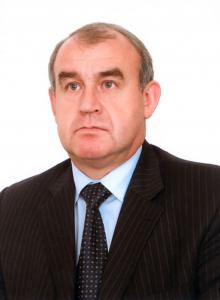
Aleksandr Sukhorukov

As rumored in mid-summer, President Medvedev announced today former KGB and FSB officer Aleksandr Sukhorukov, most recently Director of the Federal Service for the Defense Order (Rosoboronzakaz), will be First Deputy Minister of Defense.

According to ITAR-TASS, Defense Minister Serdyukov introduced the 55-year-old Sukhorukov during a working meeting with Medvedev in Stavropol.

Medvedev and Serdyukov noted Sukhorukov will be responsible for arms procurement and the beleaguered state defense order.

He’ll be sitting in the hot seat right away.  Medvedev told him:

“. . . this is a very delicate process:  on one side, you need to understand the realm of the Armed Forces, the field of modern military technology, on the other, you need to build relationships with suppliers correctly.  But it’s not always simple to do, the current history of concluding contracts shows this.” 

RIA Novosti elaborated:

“Last night, RF Prime Minister Vladimir Putin’s deadline for concluding all Gosoboronzakaz-2011 contracts expired.  On Thursday, the media reported that this task was not completed.”

Sukhorukov takes the post vacated by Vladimir Popovkin, who took over the Russian space agency Roskosmos.

Sukhorukov was with Serdyukov at the Federal Tax Service.  He followed the Serdyukov team to the Defense Ministry, becoming Deputy Director of Rosoboronzakaz in mid-2008, and Director a year later.  But he kept a low public profile at that agency.

He was born November 11, 1955 in Kasli, Chelyabinsk Oblast.  He graduated from the Chelyabinsk Higher Tank Command School in 1977, and later a KGB Higher School.  He apparently worked for the KGB in the Armed Forces, retiring as an FSB lieutenant colonel in 1996.   

From 1996 to 2004, he was deputy director, then director for the Finance Ministry’s northwest regional center for hard currency and export control.  He was a deputy director and director of a territorial directorate (probably northwest again) of the Federal Service for Finance-Budget Oversight in 2004-2006. 

In 2006-2007, he worked for then-Federal Tax Service Director Anatoliy Serdyukov as Chief of the Organizational-Inspectors Directorate.

In 2007, Sukhorukov followed Serdyukov to the Defense Ministry as an advisor.  He became Chief (not surprisingly) of its Organizational-Inspectors Directorate.  Serdyukov made reference to this directorate in his 2010 year-ender when he described how he checks on implementation of his policies. 

But, in late 2007, Sukhorukov jumped ship to the government, becoming assistant to then-Prime Minister (and Serdyukov’s father-in-law) Viktor Zubkov, and then Director, Department for Control and Verification of Fulfillment of RF Government Decisions.

In mid-2008, he arrived at Rosoboronzakaz.

You can find bio data here, here, and here.

In the Russian context, Sukhorukov seems like someone who knows how to find out if people are getting things done, and presumably what to do to them if they’re not (shoot them, send them to work in the fresh air, or fire them).  He seems very much a Putin man, an archetypal silovik.

He doesn’t, however, seem like someone who can help people figure out how to get things done.  Perhaps the Defense Ministry could have used someone with not just investigative, accounting, or legal experience, but maybe with an engineering, industrial, scientific, or technical background in the OPK.

It’d be interesting to know what Sukhorukov did in the army / KGB / FSB . . . he might have been a run-of-the-mill osobist, a “special section” guy monitoring some unit’s reliability and loyalty, or helping secure its secrets.  But he might have served in a defense plant, or been detailed to work in anti-corruption efforts.
Unlikely Sacrifice

Writing in Moskovskiy komsomolets, Mikhail Rostovskiy examines the possibility that the government might be shaken up, or ministers turned into political human sacrifices in the runup to the December 4 Duma election.

We’ve been on this topic before when Aleksey Makarkin tiptoed around it, examining only the possibility that Defense Minister Serdyukov or Health and Social Development Minister Tatyana Golikova might be sacrificed to appease angry Russian voters.

About Serdyukov’s chances, Rostovskiy writes:

“Victim No. 4.  They say that Defense Minister Anatoliy Serdyukov is not liked very much by his subordinates.  On the other hand, they value him very much up above.  Here they believe that Serdyukov is achieving what his predecessor Sergey Ivanov couldn’t manage.  They say, for example, that under the current minister the real battle to introduce elementary administrative and financial order in the army began.  Therefore I would rate Anatoliy Serdyukov’s chances of surviving a ritual ministerial sacrifice as high.”

Is Serdyukov better than Ivanov?  Vote here.

Just to round it out, here’s Rostovskiy’s full list, from most to least likely to be sacrificed:

  1. Minister of Education and Science Andrey Fursenko
  2. Minister of Health and Social Development Tatyana Golikova
  3. Minister of Transportation Igor Levitin
  4. Minister of Defense Anatoliy Serdyukov
  5. Minister of Sports Vitaliy Mutko
  6. Minister of Internal Affairs Rashid Nurgaliyev
  7. Minister of Finance Aleksey Kudrin

What issues have brought Serdyukov political heat?

Most recently, the prime minister and government — Deputy PM, VPK Chairman, and Serdyukov predecessor Sergey Ivanov in particular — really want to tag the current defense minister with the GOZ-2011 mess.

The dustup between Serdyukov and the commander of the VDV training center at Seltsy last fall became a political faux pas for Anatoliy Eduardovich.

Last summer’s fires around military bases, and seemingly perpetual ammo dump explosions were and are weak points for the defense minister.

The bottom line is Serdyukov was always and remains part of Team Putin.  He’ll see his fifth anniversary on the job early next year.  What happens to him after the presidential election depends (obviously) on the outcome of the election.  But he will probably find himself with a bigger, better, possibly somewhat less troublesome portfolio.

Some Cracks in Air Forces’ Stonewall (Part II)

Returning to the latest on Igor Sulim . . . in a late July Nezavisimoye voyennoye obozreniye article, Oleg Vladykin summarized the GVP’s various recent press releases about rising crime in the Armed Forces.  He provided insight into how senior officers view Sulim and premium pay extortion at Lipetsk.

A colonel, a deputy formation commander speaking anonymously told Vladykin:

“Almost the entire service of many senior officers came to twenty years in which they constantly humiliated, deprived the army whenever possible, and generally kept it in a miserable state.  But at the same time they used it regularly.  Senior officers carried all this gloom on their shoulders.  And here now, as if in gratitude, they promise to raise their pay three times!  Colonels will receive the same as junior managers in some public company, whose peaceful labor the army successfully defended in spite of everything.  Many have only a year or two left to serve, then dismissal in connection with reaching the age limit.  And what then?  And then also an increased, but still laughable pension.  It will be two times less than a lieutenant’s pay.  Therefore, senior comrades confidently tell younger officers:  ‘Boys, you still have everything ahead of you.  Somehow, you’ll manage to make a more or less decent living.  We here won’t…’  You know the majority understand this.  And those like Senior Lieutenant Sulim from the Lipetsk Center are the exceptions.  I’m not judging them, no, but I’m sure that after 1 January the prosecutors won’t easily locate those who’ll agree to talk about their contributions to their senior colleagues.”

Vladykin says he can’t agree with this argument, but it’s impossible not to note some logic in it.  He concludes:

“The psychology of men in shoulderboards has changed very powerfully in the course of recent Armed Forces transformations.”

In his Moskovskiy komsomolets blog Friday, Sulim highlighted an article posted on Lipetsk’s Gorod48.ru.  The article reviewed the shady, semi-criminal past of Hero of the Russian Federation, General-Major Aleksandr Kharchevskiy.

Then Sulim asks (rhetorically) how Kharchevskiy can be silent, and how could he not know about the criminal activities of his deputy, of his cousin, or of his subordinates who extorted money from their subordinates.  He sums it up:

“It’s shameful and disgusting that in the space of twenty years they’ve turned an elite flying unit into an elite business for stuffing pockets, hiding all this under a mask of love for the Motherland and swearing on officer’s honor.”

Perhaps there’s some kind of behind-the-scenes three-way struggle between the Defense Ministry, Air Forces, and military prosecutors over premium pay extortion.  Or maybe it’s a negotiation to agree on how, and how far, to pursue the Lipetsk case and ones like it.

But the Defense Ministry seems paralyzed.  The unit checks ordered by Serdyukov rather improbably failed to turn up similar crimes in services or branches besides the Air Forces.  As the colonel quoted above says, the Defense Ministry may believe the scandal will die down after the new, higher military pay system goes into effect.

The cracks in the Air Forces’ stonewall on the Sulim case are only tiny fissures.  Those immediately involved in extorting money and pressuring officers at Lipetsk are finally in trouble with the law, but no one above that immediate level.  As an institution, the VVS appears unworried for now.

The prosecutors apparently can’t even name the officers they “hold accountable” in the VVS Glavkomat.  This isn’t to belittle Sergey Fridinskiy, his organization, and their efforts.  He and his prosecutors sometimes seem to be the only people looking honestly at the state of the Russian military.  There are clearly only so many battles they can fight. 

And preoccupied as they are with their own positions, skirmishes, and the fast-approaching election season, Russia’s political and government leaders aren’t likely to devote more time or attention to untangling what’s happened at Lipetsk.

Some Cracks in Air Forces’ Stonewall (Part I)

An update on the Igor Sulim case . . . on Tuesday, Moskovskiy komsomolets’ Olga Bozhyeva reported there may finally be some pressure on the alleged extortionists.  Colonel Kovalskiy and one Captain Artemyev decided (in fine Russian tradition) to go the hospital to avoid arrest, but a former 4th squadron chief of staff and Kovalskiy relative, Mikhail Zakurdayev was arrested on July 30. 

Bozhyeva wrote about related crimes at Lipetsk including forgery and extortion from civilian workers receiving premiums to the tune of 10 million rubles.

She reported that, despite the Defense Ministry’s promise to check all units, systemic extortion of premium pay was only found in Lipetsk, Sevastopol, Syzran, and Michurinsk.

The case at the Syzran generated some media attention starting on July 29.  The press reported the chief of the helicopter pilot training center, Colonel Nikolay Yartsev, and a former training regiment commander have allegedly been “taxing” pilots five percent of their premium pay, taking a total of four million rubles from 43 officers last year.  The Saratov garrison commander has opened a criminal case against them.

According to Bozhyeva, military prosecutors say the command in Lipetsk is still creating obstacles instead of establishing order in the ranks.  It transferred a primary witness and Sulim ally — Major Anton Smirnov — to Chelyabinsk.  Another officer whose wife complained in a letter to the president was removed from flight duty for “poor morale.” 

Bozhyeva ends with an excerpt from Sulim’s blog where he says officers are quizzed several times a day on the most obscure military topics.  Failing the tests justifies not paying their premium pay.

According to RIA Novosti, on Wednesday, Sergey Fridinskiy announced that unnamed VVS Glavkomat officers have been held to account for violating the rights of Lipetsk pilots facing extortion from their own commanders. 

The Main Military Prosecutor apparently responded to queries from Duma deputies interceding on behalf of Senior Lieutenant Sulim.  Fridinskiy indicated his prosecutors checked on Sulim’s complaint that his rights were violated during the initial [Air Forces] investigation. 

The head prosecutor claimed, as a result of these checks, several criminal cases were launched, and steps were taken to prevent further violations.  The GVP also announced that:

“The officials, including those in the VVS Glavkomat, who committed them have been brought to account on the GVP’s demand.”

The GVP found that, in the investigation, no active steps were taken, and conditions were created for continued illegal activity by dishonest officers.  They obstructed the investigation, and pressured officers prepared to cooperate with investigators.

According to RIA Novosti, Sulim’s main antagonists, Colonels Kovalskiy and Sidorenko, were removed from duty, but continued to have regular, unfettered access to the base.  But the pilots and navigators who gave evidence were removed from flight duty and given menial duties.  Several times the command’s given Sulim tasks without informing him to provide the basis for reprimands for not fulfilling assigned duties.

The Duma deputies who went to Fridinskiy think the Lipetsk command’s dragging out the case and using “administrative resources” to pressure those who spoke out.  The deputies believe the Tambov garrison military prosecutor isn’t interested in closing the case, and to them, this means higher-ranking officials will have to be made accountable.

More tomorrow.

Latest on Sulim and Premium Pay Extortion

The Tambov military garrison prosecutor has told Kommersant charges have been lodged against Sergey Sidorenko, deputy commander of a unit at the elite Lipetsk pilot training center.  Sidorenko and others allegedly extorted 3 million rubles of premium pay from other officers at Lipetsk since the beginning of 2010.

According to Senior Lieutentant Igor Sulim, who wrote about the situation at Lipetsk in his blog in May, the training center’s chief of staff, Colonel Eduard Kovalskiy and his deputy Sergey Tereshin organized the scheme, and Sidorenko carried it out.  Sulim maintains the entire leadership of the unit [center?] and local law enforcement knew about the extortion racket.

After Sulim went public, investigators substantiated his accusations, and the Defense Ministry reportedly began to check premium pay distribution in other military units.

Last week, Main Military Prosecutor Sergey Fridinskiy acknowledged that extortion in the distribution of supplementary pay in army units is ubiquitous, “beginning in company sub-units and ending with higher staffs.”  He continued:

“Criminal cases on the facts of extortion are being investigated in practically every district and fleet.”  

He also criticized the Air Forces for pressuring the victims:

“Instead of conducting rapid checks and adopting severe measures toward bribe-takers, VVS Glavkomat officials, essentially, began pressuring the personnel for bringing situation out of the shadows.”

For his part, Sulim says:

“The center’s leadership headed by General Aleksandr Kharchevskiy is trying to dissociate itself from this story.  Kharchevskiy, for example, announces he didn’t know anything about extortion from pilots.  At the same time, he tries to sully me, publicly calling me first deranged, then a homosexual.  Meanwhile, they’ve hardly let me fly since May 14, and this means soon essentially I’ll have to learn to fly again.”

During the Defense Ministry’s check for similar problems elsewhere, the only other situation to receive press attention was a case involving some Black Sea Fleet aviation units.  See Komsomolskaya pravda and Novyy region.

Out With Central Apparatus Generals?

This morning’s Rossiyskaya gazeta repeated a lot of what’s known about the retiring generals’ troyka.  More interesting, however, are other statements and language it used to describe what’s going on in the Defense Ministry.

The article is subtitled, “Cadre Purge Begun in the Defense Ministry.”  An odd choice of words for something that’s been going on for some time, and is supposed to be routine and unsensational.

About Friday’s latest Armed Forces cadre ukaz, RG reports:

“In the Defense Ministry, they don’t conceal the fact that these aren’t the last cadre decisions which will affect highly-placed military leaders, particularly from the military department’s central apparatus.”

The paper repeats the rumor about possible uniformed opponents of Serdyukov’s (or Makarov’s) military reforms being shown the door as well as the contrary points and official denials.  Again, no sensation; all this was hashed over a week ago.

RG ends this way:

“Meanwhile, in the Defense Ministry they don’t exclude new dismissals.  The thing is right now in the Russian Army certification [аттестация] of all command personnel is going on, and, according to its decision, they will propose that a number of military leaders, who’ve served in Moscow more than five years, serve in more distant military districts.”

“As a source in the military department told RG’s correspondent, the majority of dismissal reports appear at once when they suggest a man change his duty in the capital for an equivalent one somewhere in Russia’s sticks.”

Yes, we know generals often prefer to retire in Moscow, get valuable permanent apartments in the capital, and enable their well-connected wives to keep lucrative employment rather than spend a few extra years serving in a possibly terminal post in Khabarovsk, etc. 

What we’re getting at here (again) is either (a) there really is something to Moskovskiy komsomolets’ report about drastically cutting uniformed officers in the central apparatus, or (b) RG was being lazy and reran a worn-out story using some loosely chosen verbiage.

More on the Retiring General Troyka

In yesterday’s Nezavisimaya gazeta, Sergey Konovalov followed up the story of the retiring generals — Andrey Tretyak, Sergey Skokov, and Oleg Ivanov.

Konovalov held to the main line of his earlier report.  He maintains the retirement of these Defense Ministry central apparatus officers has been “frozen.”  Without addressing the various explanations and denials in the media, he asks why three promising generals would want out early.  Finally, he repeats his earlier contention that the resignations could be a sign of “military opposition” to Defense Minister Serdyukov’s reforms.

Konovalov cites a highly-placed Defense Ministry source saying:

“Soon representatives of the Presidential Administration’s cadre organs will talk with the generals who requested discharge to find out the real reasons why young, promising leaders are retiring from the army.”

A law enforcement source tells NG that the Main Military Prosecutor has long questioned the Defense Ministry’s cadre policy:

“Competent officers are dismissed, meanwhile every kind of lawbreaker who’s had a run-in with military justice gets moved up to higher duties.” 

One general told NG that General-Lieutenant Sergey Surovikin — slated to head Russia’s new military police force — got one year of probation for trying to sell a pistol while attending the Frunze Military Academy.  The paper then lists some other, less prominent, cases of officers with shady or criminal backgrounds who’ve advanced through the ranks to higher posts.
 
NG’s sources claim the Defense Ministry’s cadre policy will soon undergo an analysis and evaluation by the PA’s cadre department.

The Defense Ministry’s PR blitz (as well as independent reporting) in the wake of the resignations blunted Konovalov’s assertion that the generals were quitting over disagreements with military reforms.  This article answered his question from earlier — his sources say the PA will investigate recent Defense Ministry personnel moves.  But one wonders how much time and attention President Medvedev’s people can devote to this with an agenda already full of political and domestic policy issues.

Not Decembrists

Returning to the three generals’ resignations . . . the Defense Ministry press-service came out quickly denying any “scandalous” general officer discharges. 

The press-service said General-Lieutenant Andrey Tretyak, General-Lieutenant Sergey Skokov, and General-Major Oleg Ivanov requested discharges for health reasons at different times.  But it also indicated the Central Attestation Commission (TsAK, or ЦАК) is reassigning generals to duties in the military districts under Defense Minister Serdyukov’s policy of rotating officers through different posts, and away from Moscow in particular.

A Defense Ministry source told ITAR-TASS the generals’ discharges are not part of any mass dismissal of officers from the Defense Ministry’s central apparatus.

The press was skeptical about three young and vigorous generals suddenly seeking a medical discharge, and it focused on their intent to avoid undesirable reassignments.  Newsru.com and Moskovskiy komsomolets reported in this vein. 

A Defense Ministry source told news agencies one in three requests for early retirement involves officers who are being reassigned from Moscow to a military district post.  The source claimed these cases are usually incorrectly characterized as opposition to military reforms.  Tretyak himself told Interfaks his resignation is not connected with Armed Forces reforms or disagreements with the leadership.

Then Deputy Defense Minister Nikolay Pankov talked to Rossiyskaya gazeta, giving a version of events varying from the press-service’s initial report of  discharges for health reasons.

Pankov told the paper Skokov and Ivanov were offered several good options including troop command duties or General Staff Academy positions, but chose retirement.  In Tretyak’s case, health was the issue, according to Pankov.  And Pankov called any thought of them leaving over dissatisfaction with army reform “farfetched,” or dissatisfaction with General Staff Chief Makarov “utter stupidity.”

What did military commentators say?

In IA Regnum and Gazeta.ru, Anatoliy Tsyganok said the generals’ resignations show things aren’t quite right in the Defense Ministry, but also called reports of problems with Makarov a falsehood.  He said the incident shows it’s not just military retirees who bring attention to poorly thought out reforms.  At the same time, he doesn’t get the focus on Makarov when he just implements Serdyukov’s plans.

Also in Gazeta.ru, Aleksandr Khramchikhin asks where this ‘opposition’ to reform has been:

“But where were they earlier?  Reform’s already been going on for three years.”

Svpressa.ru wrote that no Decembrists remain in the army.  It quoted Konstantin Sivkov:

“The thing is in the Defense Ministry and Genshtab generally there are no longer any people capable of standing up for their opinion, if it diverges from the leadership’s viewpoint.  They still existed several years ago.  Recall General Rodionov, Ivashov.  They slowly disposed of them.  The only ones remaining are those who loyally hang on the words of the minister and Genshtab chief.  A negative selection has occurred.  And what remains . . .  Only those that agree with everything.”

Viktor Baranets told Vesti FM:

“The Genshtab chief proposed to all three figures that they leave Moscow, smell the powder a little, become greater practitioners.  My sources don’t deny that all of the generals’ troyka requesting retirement had relations with Makarov that weren’t very simple.  But all issues were decided behind closed doors, without cursing and throwing down reports [retirement requests] on the table.”

General Resignation

Tomorrow’s Nezavisimaya gazeta reports Defense Ministry sources claim several young, promising generals have tendered their resignations because of problems with General Staff Chief, Army General Nikolay Makarov.  NG says they include Deputy General Staff Chief and Main Operations Directorate Chief, General-Lieutenant Andrey Tretyak, First Deputy Ground Troops CINC and Main Staff Chief, General-Lieutenant Sergey Skokov, and Genshtab Electronic Warfare Directorate Chief, General-Major Oleg Ivanov, and others.

The paper describes these guys as the Russian Army’s future leaders.  So why do they want to quit?  The reasons, unfortunately, haven’t been advertised (yet).

NG points out that, if Tretyak leaves, the GOU (the cerebral cortex of the “brain of the army”) will have its third chief in four years.  Skokov has been a key man working on automated C2 (YeSU TZ or ЕСУ ТЗ).  A “highly-placed” anonymous officer says it’s because of their disagreement with army reform steps taken by Makarov.  And explicitly not because of any problem with Defense Minister Serdyukov, whom they regard as an effective manager. 

They feel the Armed Forces, during Makarov’s tenure, have been in a provisional, experimental state, living on projects and according to unconfirmed directives (basic instructions and combat regs).  And after three years of “development,” the Genshtab Chief still can’t determine their final shape.  There are no confirmed decisions on service or branch TO&E structures, or their basing areas.  NG’s anonymous contact says the condition of the troops, and their “fantastic” combat training about which Makarov likes to talk, is “a fiction, which could be the topic of a separate conversation.”

The source implies time, money, and other resources have been wasted trying to develop automated C2 for old-fashioned, World War II-type operations.  And this is why Skokov requested his discharge.

NG’s sources believe this “scandal” will have political consequences.  The paper wonders whether President Medvedev will choose to get involved.  A source claims Deputy Defense Minister Nikolay Pankov is supposed to meet with the generals who want to quit, and discuss their problems with Makarov “from the point of view of the state’s interests.”

Soviet Fathers and Russian Sons

The story of Igor Sulim and the premium pay scandal is like the 19th century one about Russian society’s generation gap.  With liberals and nihilists reversed.

In Sulim’s story, the fathers are old senior and mid-grade officers who span Soviet and Russian worlds.  They have no problem taking whatever’s not nailed down.  The sons are post-Soviet junior officers, reared on the Internet, familiar with Western-style justice and rule-of-law, and ready to demand an end to corruption (that costs them money).

Perhaps your author reads too much into this.  Or just maybe there’s some truth in this description.  Let’s review some new details first.

The investigation into Senior Lieutenant Sulim’s accusations is a very slow roll.  Rolling the victims.  Here’s an update on the action (or inaction?).

Sulim posted his first video on May 31.  Gorod48.ru wrote about it.

Sulim explained why he felt he had to complain to Defense Minister Serdyukov and go public about corruption in his unit despite the military’s “corporate ethic” against it.  He said he exhausted other avenues and had no other resource at his disposal.  He didn’t intend to be a one-man campaign against corruption but he’s getting support, and hearing similar stories, from others.  And he thanks his fellow officers supporting him despite the difficulties and pressure they face.

He concludes speaking out is his civic duty.  Russians should unite around one idea and struggle together so Russia doesn’t lose its greatness and remains a great power.  And so the next generation doesn’t hate the current one for being silent and patient, believing nothing will ever change.  It’s not revolution or spilled blood he wants, but the path of civilized development.

On June 2, Moskovskiye novosti wrote that Sulim predicted a disciplinary reprimand and deprivation of his premium pay would come his way for going over his superior officers (and, in fact, both came pretty quickly).  The “army Navalnyy” and other officers are being pressured in every way by the authorities, and the entire Lipetsk center’s been deprived of premium pay to turn other officers against Sulim.  He was removed from flight status.  Public Chamber member Anatoliy Kucherena reported over half of 150 personnel he met said they were aware of the corrupt pay scheme at the base.

On June 3, Nezavisimoye voyennoye obozreniye addressed the basic flaw in Serdyukov’s Order 400 and premium pay:

“Here is the misfortune — the essentially socialist army was not ready for these market relations.  Indoctrinated on the principle that everyone in the line is equal before the commander and in battle, before life and death, everyone to an equal degree responsible for his country and its security, officers became accustomed to distinguishing one from another only by stars on the shoulderboards and by position, where the difference in pay between lieutenant and colonel, a general even, was minimal:  a couple — four thousand rubles.  And here suddenly it became colossal — several times.  And, of course, when not everyone started receiving such premiums for the very same service-work, but just those chosen by still incomprehensible principles, a Bolshevist idea immediately arose — take it and divide it up.”

“But it was impossible not to understand to what the revolutionary introduction of market relations and big money for different categories of  servicemen could lead.  But has pay become a schism in combat units?  There’s no unambiguous answer.”

“What’s the result?  To what is the Senior Lieutenant Sulim phenomenon leading?  Most likely just to changes in the various fates of various officers and various military units.  But over some kind of time everything will remain as before.  If Orders No. 400, 400A and 155 aren’t be suspended and changed.  If from 1 January next year, the difference in pay and premiums for the very same service-work aren’t so monstrously striking.  It’s not worth destroying the monolithic army line with the almighty ruble.  This could bring serious consequences in a real battle.”

Sulim gave Ogonek an interview.  Sulim said his father was not happy about him going public, but Sulim stressed it was his own personal decision.  General-Major Sulim’s being pressed to keep his son’s mouth shut.

Ogonek asked Sulim if he isn’t afraid of sharing MVD Major Dymovskiy’s fate:

“His colleagues, as I understand it, didn’t support Dymovskiy.  There are more and more of us now.  If I had been alone, perhaps, I would have repeated his fate.  But my colleagues are supporting me so, everyone is ready to go only forward.”

By mid-June, Sulim’s antagonists — Colonels Kovalskiy and Sidorenko — were both relieved of duty, but his supporters — Majors Kubarev and Smirnov — had been hauled before an Air Forces attestation commission in Moscow, called cowards for not refusing to pay kickbacks, and all but told they would be transferred from their elite Lipetsk duty, according to Komsomolskaya pravda.  The paper points out Kubarev is a Su-34 pilot qualified for aerial refueling, and Smirnov was regiment’s top pilot last year.

In Moskovskiy komsomolets, Olga Bozhyeva wrote that Sulim’s reprimand was for violating the law’s prohibition on “discussing and criticizing the orders of a commander.”  The authorities apparently didn’t go after him for revealing some of the stupid things said and written by Deputy VVS CINC General-Major Viktor Bondarev.  Instead, they focused on his criticism of the Defense Ministry’s anticorruption orders posted on his blog.  For its part, MK posted new audio clips indicating that the even the local FSB is in on getting kickbacks at Lipetsk, and this didn’t happen just in the 3rd Squadron, but all over the center.  Bozhyeva asks, if this happens in an elite formation like Lipetsk, what happens in less prestigious units?

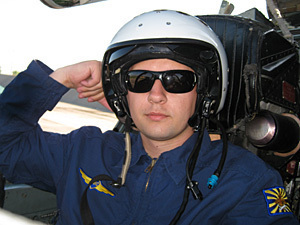
Senior Lieutenant Igor Sulim

There is lots on Sulim’s blog.  Most recently, he wrote about meeting with VVS Deputy CINC, General-Lieutenant Sadofyev, who asked him why he had to “create a scandal.”  Of course, Sulim’s made the point many times that he tried to go through the chain, through channels, and to do it without blood, and quietly.  But Sadofyev and the older generation really don’t get it. 

The new Russian generation of sons might make even congenitally pessimistic observers of Russia a little hopeful.  The authorities could be playing an ultimately futile game of whack a mole with an entire generation of  Dymovskiys and Matveyevs and Sulims.