Category Archives: Training and Exercises

Combat Readiness Percentages

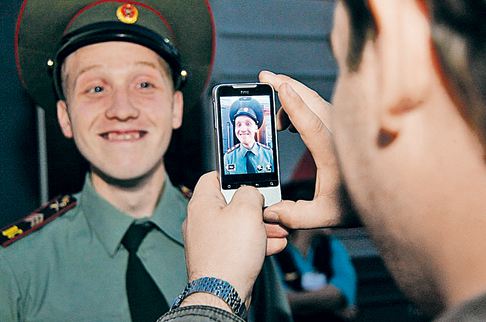
Conscript on His Mobilnik (photo: Reuters

Conscript on His Mobilnik (photo: Reuters)

Nezavisimaya gazeta’s editorial has the title above.  It’s sub-titled “An Unprejudiced Look at Military Reform.”

Here’s what it says.

“One of the most serious accusations against the former defense minister and former chief of the General Staff is the low combat readiness of armed forces units and sub-units caused by the military reform they conducted.  And the basic argument is the fact that only 15 of 35 combined arms brigades of permanent combat readiness are manned at 100%, the rest have personnel deficits from 20 to 30%.”

“There’s some truth in this.  If you figure the number of servicemen in the force structure — 220 thousand officers, 186 thousand contractees, 320 thousand conscripts and 50-60 thousand VUZ cadets — then the million required by the president’s decree has in no way been gathered.  But the main cause of this is by no means military reform, but the demographic situation in the country for which neither Serdyukov nor Makarov can answer.  And increasing conscript service, as proposed by some [Duma] deputies, can’t patch this hole.  And only those who contrary to Suvorovist science trained to fight the old way with numbers, and not skill, can talk about combat readiness relying just on arithmetical calculations.”

“Many concepts are part of combat readiness.  And not just manning.  Among its components, in particular, are the presence of modern combat equipment and combat support systems in the force, high operational-tactical qualifications of officers, their combat experience, skill and training of personnel…  The military reform of Serdyukov and Makarov, it seems, managed to deal with the last indicator.  We’ll cite just one fact — the average flying time of Russian Air Forces pilots reached 125 hours per pilot in 2012.  And squadron commanders flew 175 hours, and at Vyazma air base — more than 215 hours.  If you remember just several years ago our pilots had an average flying time of 30-40 hours, some of them generally 5-7 hours a year, and they got lost in the sky over the Baltic, then who would dare say that our military aviation is suffering from a lack of combat readiness.”

“The picture is approximately the same in the Ground Troops where soldiers and officers literally don’t leave the training grounds, conducting integrated tactical and operational-tactical exercises jointly with the Air Forces and Air Defense, with the Naval Infantry — if they’re on maritime axes.  They can’t complain about low combat readiness even in the Navy, whose ships, earlier tied to the piers, today ply the waters of the world’s oceans year-round, joining in the struggle against pirates in the Gulf of Aden.  They don’t complain of boredom in the VDV where over the past year more than 65 exercises of varying scale and intensity have been conducted, together with 1,150 combat training events, including more than 800 section- and 270 platoon-level combat firings, 73 company and 14 battalion tactical exercises.  Including with USA spetsnaz on American territory.  Additionally, the blue berets completed several tens of thousands of parachute jumps…  If these are not indicators of combat readiness, then what kind of percentages can you talk about?!”

“One more indicator of combat readiness is the evaluation of strategic nuclear deterrence forces which President Vladimir Putin recently carried out.  Launches of ground, naval and air-launched missiles were conducted then with high accuracy.  And the Supremo directed them from the Unified Central Command Post created in the framework of the reform this very year.”

“Yes, the reform according to the prescriptions of the ex-minister and the ex-NGSh has many deficiencies and mistakes.  ‘NG’ and ‘NVO’ wrote about them not once or twice.  We hope the new Defense Ministry leadership will rectify and correct them.  But not one more or less serious army dared test the combat readiness of our country’s armed forces after August 2008.  And no percentages can refute this fact.”

Yes, Serdyukov and Makarov are to blame for the mistakes of army reform.  Primarily for moving too fast across too broad a front without without adequately understanding the situation and consequences of their actions.  In some sense, this was their task — to break the logjam on military reform.  And that some people in Serdyukov’s team were venal didn’t help matters.

But NG’s right to argue they aren’t to blame for undermanning that leaves only 15 maneuver brigades at full personnel strength.  That’s a number not different from Putin’s first and second terms, the 1990s, or the late Soviet period.

NG’s also right to point to higher levels of training activity as an unalloyed good thing from Moscow’s perspective.  It’s a start.  It’s a function of having money and fuel, and a political leadership willing to allocate them.  But it’s only a necessary condition for building a modern army.  Sizeable Russian forces are probably ready to leave garrison when ordered.

The sufficient condition goes deeper.  Are those formations and units armed, equipped, supported, as well as trained to execute the missions their leadership envisions (and ones it doesn’t)?  It’s simply much harder to tell if they are ready for battle, if they will be capable in combat.  Much depends on the situation and scenario into which they’re thrown.  If, as NG alludes, Georgia should test the Russian Army’s readiness, it would perform better than in 2008.  It would probably do better in a new North Caucasus counterinsurgency.  But these cases are on the low intensity side of the warfare spectrum.  But perhaps they’re the most likely places where the Armed Forces would be employed.

But let there be no mistake, training activity doesn’t equal combat readiness, and combat readiness doesn’t equal combat capability.  It is significant and necessary, yes, but not sufficient.  One has to know a lot more about the condition of the forces and what goes on in those exercises.
A Conscript’s Year

A Picture for Ufimtsev’s Demob Album

Young Komsomolskaya pravda (Chelyabinsk) journalist Sergey Ufimtsev returned from conscript service in May.  He recently published a cheerful, humorous account of time as a soldier.  He doesn’t regret his wasted year in the army.  But he describes an army that Serdyukov’s (and Putin’s) reforms have not changed substantially.  At least not his remote unit, and probably many others as well.

Ufimtsev drew his ill-fitting uniform items and was sent to Ussuriysk in the Far East.  He describes skimpy rations which left him hungry again an hour later.

Officers left Ufimtsev and other new soldiers largely in the hands of senior conscripts, the dedy.  They still exist despite the fact that one-year conscription was supposed to eliminate them.  Ufimtsev says dedy took their new uniforms and cigarettes, and threatened them at times.  But they weren’t really so bad.  He actually learned from the soldiers who’d been around for six months.

The non-Russians, Tuvans and Dagestanis, in the unit and their petty exactions were worse.  Even officers feared them, according to Ufimtsev.

He goes on to describe training in his air defense battalion.  He got bloody blisters from endless close-order drill, and finally received his unloaded AK-74, which he cleaned often but never fired.  It was kept with others under seven locks in the weapons storage room.

This is why Serdyukov didn’t want to buy new automatic weapons for the army.  It already has massive stockpiles of unused ones.

Ufimtsev says he and his cohorts were kept busy with non-military work.  Money to hire civilians into housekeeping jobs apparently hadn’t reached his unit.  His battery commander took most of their meager monthly personal allowance (about $13) to go to “the needs of the sub-unit.”  The soldiers, mostly farm boys or technical school graduates, wore lice-infested underwear and got to bathe once per month.  The situation improved some when a new major took command, according to Ufimtsev.

Ufimtsev’s article drew so many comments that it’s possible only to summarize.

A few readers were critical of today’s youth.  One called them dolts, who cry to mom and dad, and wimps, not defenders of the fatherland.  Another says real men should be silent about the privations of army life.

Many readers drew the obvious conclusion that the author’s experience shows Russia needs an all-volunteer army.

One reader said, in a couple of months at home, he could train soldiers better for less.  He asks, “What’s the sense in such an army?”  Several commentators remarked that generals’ complaints about a lack of money for recruiting career military professionals is a lie.

One reader put it in the context of Yevgeniya Vasilyeva and the Oboronservis scandal that brought down Anatoliy Serdyukov:

“No, they won’t do away with conscription.  There’s no money.  They lost their conscience in their 13-room apartments and can’t find it.  But then they never will.  They have to decide which of 120 diamond rings to wear today.  Therefore, there’s no money for a professional army, and there won’t be.  And so there will be an army of slaves — it’s so expedient and cheap.”

Defense News

Some Russian defense news from August 6, 2012 (and a bit earlier too) . . .

Militaryparitet.com picked up the VVS CINC in Interfax.ru talking about the   Su-35 flight test program, and serial production beginning in 2014, or even next year.  PAK FA, he said, will be produced from, or after the start of, 2015.

Preliminaries for Rubezh-2012 (photo: Mil.ru)

Mil.ru and KZ published on the beginning of Rubezh-2012 — the ODKB’s Collective Rapid Deployment Force exercise at Chebarkul.  Vladimir Mukhin, however, writes in today’s NG about “fault lines” in collective defense.  He contrasts the alliance’s exercise activity with its inaction against real Central Asian instability.

Coastal rocket and artillery units have been busy.  Mil.ru showed the DP-62 Damba MLRS firing from the beach on Kamchatka, and TsAMTO covered a Western MD press-release about Northern Fleet launches of  Rubezh and Redut coastal antiship missiles.

KZ today issued its take on the Navy CINC’s comments during Ekho Moskvy’s Voyennyy sovet program last week.  It’s always interesting to compare the KZ summary with Ekho’s transcript.

Mil.ru reports the well-nigh forgotten future professional sergeants in training at Ryazan will graduate in November.  It says 130 will head off for new assignments.

Recall this grew out of the failed 2003-2007 contract service program, and utilized space available due to the drastic reduction in officer training.  Izvestiya provided a late 2010 look into how few men showed up and lasted at Ryazan.  In early 2011, the Defense Ministry slashed the funding and largely euthanized the stillborn effort.  One waits to see how it’ll find 425,000 contractees in the future.

Defense News

Some Russian defense news from Tuesday, April 24 . . .

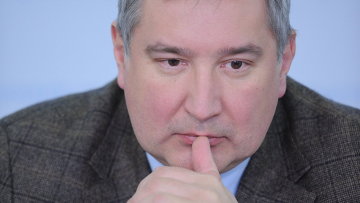
Dmitriy Rogozin (photo: RIA Novosti / Aleksey Druzhinin)

Deputy Prime Minister Dmitriy Rogozin generated a good bit of news during his visit to the Urals last week.  It’s hard to keep up with him.  In a sense, it’d be a real shame if he’s not in the next government.

Krasnaya zvezda published a wrap of his remarks.

Rogozin indicated Russia will demand the best new weapons from its OPK, not “metal hulks” that are soon scrapped.  He laid out his reasons for not buying foreign armaments.  And, he says, Russia doesn’t want to be China, blindly copying foreign models.  But he said his country still wants ideas and technology, if not a lot of hardware, from abroad.

Rogozin blames Russia’s space launch woes of the weakness of its “element” or component base.

RIA Novosti reported his assessment that Russian military electronics lag foreign developments by 5-12 years.  Russia doubled its investment in electronics last year according to Rogozin.

But back to KZ . . . it gave this interesting Rogozin quote:

“Russia must no longer be a hydrocarbon partner, it’s time for us to become an industrial power [hasn’t this time passed?].  We could have become such a power in the last century.  Now it’s important to overcome the gap in Russia’s history.  If business won’t participate in the country’s development, then we won’t achieve anything.”

In some non-Rogozin stories . . .

Militaryparitet.com cited a blog citing Interfaks to the effect that Kurganmashzavod will not be asked to renew production of BMP-3s for the army despite earlier indications it would.  The item notes the President’s polpred in the Urals saying the army has also declined to buy the BMD-4M.

Mil.ru wrote about Ka-52 helo training at Chernigovka army air base in Primorskiy Kray.  More than half the base’s pilots already practiced on the Ka-52 at the Torzhok training center.  Chernigovka will be completely reequipped with the new helo this year, according to the Defense Ministry website.  The “intensity” of flight exercises at the base doubled over the last year and increased 45 percent in the first three months of 2012.

Mil.ru also mentioned the completion of LRA training in the Far East.  There were 40 bomber flights and ten cruise missile launches on the Litovka range according to the Defense Ministry.

Vzglyad citing Interfaks reported on Irkut’s president saying the company will make a combat version of the Yak-130 trainer.  It will have greater thrust and be intended for Russia and for export.

Last, an update on the Belevitin corruption case.  Former GVMU chief, Aleksandr Belevitin faces malfeasance and bribery charges that could net him a total of 22 years in prison.  Pretty harsh by Russian standards.  The state is also seeking 51 million rubles in damages from him.  His defense is still examining the prosecutor’s case against him.  Recall the state believes he and his deputy took bribes in return for procuring overpriced MRI machines from a foreign firm.

Defense News

Some Russian defense news from Monday, April 16, 2012 . . .

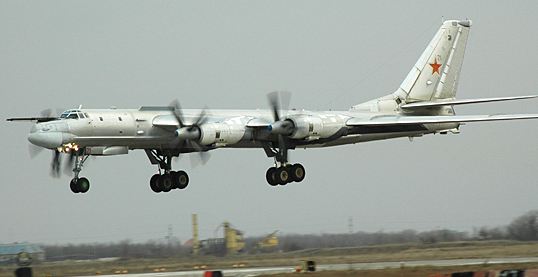
Bear Bomber Landing

Mil.ru covered the start of Far East LRA command-staff training (KShT).  Crews from Belaya, Tiksi, Seryshevo, and Kamennyy Ruchey will fly on the Litovka range in Primorskiy Kray.

Tu-95MS, Tu-22M3, and Il-78 aircraft will rebase, patrol, and conduct aerial refuelings and cruise missile launches until April 20.

Krasnaya zvezda described a recent Western MD comex.  Signals Troops built an autonomous multilevel network of nodes connecting open and secure comms for Ground Troops’ brigades and regiments, Baltic and Northern Fleets, and Air Forces and Air Defense throughout the region.

The defense daily said these forces were connected in a single, online information space.  Training ended with a videoconference.  About 7,000 troops and 1,500 pieces of equipment participated.

Mil.ru noted the arrival of 152mm Msta-S SP howitzers in the Southern MD.  They are replacing 20 2S3 Akatsiya howitzers.

There’s a lot of media attention to the renewal of arms and equipment in Russia’s South.  You can find one comprehensive review here.

RIA Novosti picked up Aviastar-SP’s announcement that it’s renovating six An-124 / Ruslan transports for the Air Forces by 2014.

This modernization will give them newer engines and bring the aircraft to the An-124-100 level.

Zelin’s Update (Part III)

In the middle part of General-Colonel Zelin’s incredibly long NVO interview, he reacts to Defense Minister Serdyukov’s high command changes and other structural realignments over the last couple years.  He also shares thoughts on the state of VVS training.

Zelin speaks to interviewer Viktor Litovkin like a 58-year-old three-star who’s surprised to have stayed at his post as long as he has.  He speaks like he isn’t concerned about being retired.

Asked what he and his Main Staff do now that the VVS operate under the four MD / OSK commanders, Zelin responds that plans to create an automated C2 system (ASU) haven’t quite gotten there.  He talks and is online with the district commanders often.  But, he says:

“The main thing is combat training remains with the VVS Main Command. Organizational development (stroitelstvo or строительство) of the service and combat training.  And without combat training what kind of employment can there be?”

There were, he continues, arguments and unresolved issues:

“But during the decisionmaking I proved my point of view, my vision of present problems, sometimes they had to agree, sometimes they had to listen on several issues, but, since now decisions have been made, we have to fulfill them.  To get to work.”

But he grouses a bit more.  He sounds like a man with responsibility who lacks authority.

The ASU isn’t working, but service central command posts (TsKP or ЦКП) were eliminated.  Regardless, Zelin says he has to organize and control training.  Every day 70-80 units have aircraft flying, and they have to be tracked.  They can’t just be given a mission and forgotten.

Asked about the newly-established Aerospace Defense (VKO) Troops, Zelin claims interestingly, that only PVO brigades in Russia’s central industrial region — the old Moscow AD District, KSpN, or OSK VKO — went over to them.  He says MD / OSK commanders got the rest, and he equips and trains them for regional commands to operate.  His view seems to be VKO is limited to strategic and theater MD.  You can’t, he opines, have PVO without air defense aviation integrated into it.  According to Zelin, a single national system of air defense, including Troop Air Defense, is needed, but a decision’s been made and it’s left but to fulfill it.

Before talking more about training, Zelin reiterates that a single system of net-centric strategic C2 and decisionmaking is the goal, but they aren’t quite there.

He seems envious of the large-scale, largely automated airspace control systems he’s seen in the U.S., Europe, and Japan.

On training and flight hours, Zelin says he’s got no problems with material support (i.e. POL), but problems addressing aircraft service life support [ресурсное обеспечение].  He states frankly he worries about maintenance provided (or not) by civilianized, outsourced Oboronservis affiliate Aviaremont.  There is plenty of money for maintenance, but those responsible aren’t getting it done.  While the Glavkomat has heartache about aircraft serviceability:

“Our other structures for some reason are responsible only for financial flows.”

Zelin was asked earlier if 130 flight hours was the VVS goal.  He says last year pilots got 340,000 hours, or 90 per pilot.  That makes roughly 3,800 pilots, if they’re shared evenly (they’re not).  Eighty percent of young pilots got not less than 100. In some cases, it was harder and they got a little more than 50.  Zelin adds this is still better than the 1990s.

Army Polls

Happy Defender’s Day!

Taking a break from Putin’s defense manifesto, let’s look at this year’s opinion polls on the army’s big holiday.

Levada’s poll is not so interesting this year.  Responses to its questions generally fell within the 3.4 percent margin of error of last year’s survey

But the number of respondents who thought drafted family members should find a way to avoid serving fell from 41 to 36 percent this year. 

People also indicated a slightly greater belief that dedovshchina is more prevalent in the army.  This year 19 percent think it happens everywhere  against 13 percent in 2011.  Those believing it occurs in a small number of military units dipped from 27 to 23 percent this year.

VTsIOM’s results were actually a little more interesting.

The agency reported again this year that 55 percent of respondents felt the Russian Army is capable of defending the country against a military threat.  But on the current training of troops, 30 percent saw positive tendencies, 30 percent negative tendencies, and 29 percent said they don’t see any changes.

A surprising 68 percent, according to VTsIOM, believe the level of outfitting of Russian forces with modern arms and equipment is average or higher.  Still, 72 percent feel equipping the army with more modern weapons is needed to increase combat readiness (?!).

Some 68 percent of respondents were aware, to one degree or another, of Russia’s military reforms.  Sixty-seven percent consider them essential.

VTsIOM, unfortunately, didn’t publish its exact questions and responses to each; it just aggregates its results in a verbal description.

But it did show us one full question.  Are the transformations introduced into the Armed Forces essential or not essential for increasing the army’s combat capability?  The answers:

  • Essential but insufficient — 55 percent.
  • Essential and sufficient — 12 percent.
  • Not essential, better to end them — 8 percent.
  • Hard to answer — 24 percent.

Longer Combat Duty

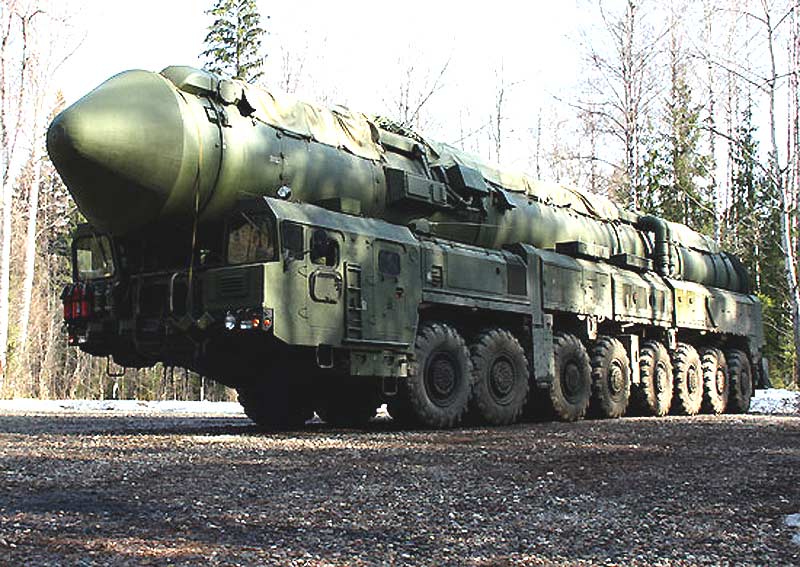
Yars in the Field

Seems like standard stuff but there might be something here.  It could be the U.S.-Russian deadlock over missile defense.  It might (somewhat ironically) be the increasing age of Russia’s mobile ICBMs.  There are probably additional or alternative explanations.

Krasnaya zvezda and Mil.ru have dedicated print recently to Russian mobile ICBMs spending more time on their combat patrol routes.

On January 18, KZ wrote that Topol, Topol-M, and Yars units from central Russia and Siberia are in the midst of exercises to implement the highest states of combat readiness and to carry out combat duty on combat patrol routes (in field positions).  Troops are conducting a number of training tasks — system calibration, engineering preparation of field positions, CCD (maskirovka), and combat security.  They also have to react to training “injects” from higher commands.

The Defense Ministry’s daily said units would be deployed to field positions for a longer period, from January 16 to February 3.  It indicated all divisions and units will also institute a new type of training this winter — a “complex practical exercise” in implementing combat readiness.

RIA Novosti’s account indicated this annual training is routine, just with more time spent in the field.

In a December 28 review of the year in RVSN, KZ reported turgidly:

“90 percent of field training measures were conducted with missile launcher regiments and battalions departing for combat patrol routes.  In the summer training period, a test of the order of conducting combat duty in the highest combat readiness states with an increased duration of mobile ground missile regiments on combat patrol routes was conducted.  This allowed for ensuring the readiness of missile launcher regiments for maneuvering actions.  All missile regiments were evaluated positively in the results of the tactical exercises.”

In mid-November, Mil.ru summarized RVSN Commander General-Lieutenant Karakayev’s comments:

“Division, unit, and sub-unit combat training was maintained at a level ensuring their capability to conduct military actions under various conditions of the situation.  A test of the order of conducting combat duty in the highest states of combat readiness with an increased duration of mobile missile regiments on combat patrol routes was conducted.”

“The training of multi-axle chassis mechanic-drivers ensured accident-free operation of nuclear weapons.  Despite the fact that currently more than 70% of missile systems are beyond the limit of their warranty periods, the technical condition, the reliability characteristics of the armaments and military equipment guaranteed maintenance of the required level of combat readiness of missile systems.”

You can find additional relevant info on RVSN combat duty and patrols here.

Meeting on Gogolevskiy Boulevard

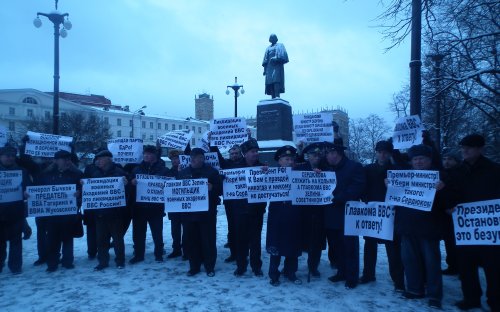
Protesters and Placards (photo: KPRF.ru)

Thursday about 50 military men gathered near Gogol’s statue in the park across from the Defense Ministry to protest the closure of the Air Forces Academy named for Professor N. Ye. Zhukovskiy and Yu. A. Gagarin. 

These largely middle-aged protesters held placards saying “Air Forces CINC Zelin is the Gravedigger of Air Forces Academies!” or “Prime Minister:  Get Rid of Defense Minister Serdyukov!” or “General Bychkov is a Traitor to VVA Gagarin and VVIA Zhukovskiy!”
 
Recall the Zhukovskiy and Gagarin academies — the former for engineers, the latter for pilots and staff officers — were melded in 2008 in the latest and most painful drawdown of an enormous leftover Soviet-era military educational establishment. 
 
The functions of these mid-career academies are being transferred to the new, consolidated Air Forces Military Training-Scientific Center (VUNTs VVS) in Voronezh.
 
The KPRF organized the protest, and it said about 100 attended.  KPRF.ru and Nakanune.ru recapped the event.
 

KPRF Duma member Vyacheslav Tetekin told Novyy region destroying these academies damages VVS combat readiness since the majority of their 1,600 (perhaps not much lower than the total number of flyable VVS aircraft) instructors and professors won’t go to Voronezh to train future senior officers.

Tetekin argued there are already protests against aircraft noise in Voronezh, and he’ll ask fellow KPRF member and Duma Defense Committee chairman Vladimir Komoyedov to address the prime minister and president on the fate of Zhukovskiy and Gagarin.

Apparently now retired, General-Lieutenant Ivan Naydenov — a former deputy chief of the academy — claimed Defense Minister Serdyukov just wants the institution’s valuable real estate.  Naydenov said only 29 younger instructors have gone to Voronezh.  He put the total staff at only 700, in contrast to Tetekin’s 1,600.

Naydenov has recorded and posted this appeal to save VVA im. Gagarin.

No one will mistake this little event on Gogolevskiy for what took place on Bolotnaya or Sakharov Square.  Nor will anyone confuse the characters in this drama with demonstrators against Duma election fraud.  Or a scarcely-noticed gathering of older military men with the resonance of the first large-scale political protest in years. 

Nevertheless, older Russian officers have taken to picketing about their grievances more frequently of late.  The personal toll in their situation is lamentable.  But cuts and consolidations Serdyukov has made in Russian military education were very deep and difficult simply because they were so long overdue.

Without a doubt, some of those choosing dismissal over moving will add to the queue for military apartments in Moscow and its suburbs.

Kuznetsov Air Ops

Colonel Nikolay Deriglazov

We’re gradually reaching the end of the slow news season . . . here’s a picture and a couple videos.

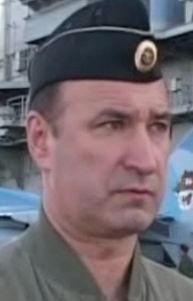
Colonel Deriglazov commands the Su-33 squadron aboard Fleet Admiral of the Soviet Union Kuznetsov.  He speaks about flying off the Russian carrier in the video below.

Hat tip to Militaryparitet.com for highlighting this Vesti.ru report on Kuznetsov pilots in action.  The video shows an officer (an LSO-type) at the “visual landing post.”  Some Russian carrier pilots have 160 landings to their credit, according to Vesti.

The Defense Ministry’s TV Zvezda had this video as well.

The Kuznetsov group remained in port (or at least at anchorage near) Tartus, Syria today, as RIA Novosti reported.