Two More Perspectives on Serdyukov Flap

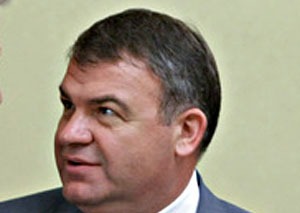
Defense Minister Serdyukov (photo: RIA Novosti)

A couple more interesting ones today . . . .

Calls for Serdyukov to resign seen as an effort to stop the ‘revolution from above’ . . . journalist Mikhail Leontyev told United Russia’s website:

“Serdyukov is a very severe man.  He’s conducting a very severe reform.  The very logic and mission of reform is merciless in relation to many people.  Serdyukov himself and others understand this, but this is not a reason not to renovate the army.  Reform is being conducted from аbove and by a man who’s a stranger to the army.  Moreover such a task was set from the beginning so it would be exactly like this.  Because they won’t ever do anything to ‘their own.’  In essence, the system is resisting.  Many would want to stop military reform at the current stage but this is stupidity.  Therefore a rumor beneficial to a large number of people is launched that they’re removing Serdyukov.”

Serdyukov almost a victim of his own success when it comes to making military officers focus exclusively on military affairs . . . Aleksandr Golts writes in today’s Yezhednevnyy zhurnal:

“The entire business, in my view, consists in the fact that a new revolution is ripening in the armed forces today.  They are removing officers, almost to the very top, from the heavy responsibility of distributing finances.  Unit commanders and district commanders alike henceforth don’t need to answer for the work of a boiler or cafeteria, or for guaranteeing electricity to the district’s troops.  Civilian departments — Oboronservis, Rosoboronpostavka and the like — will be occupied with supporting the troops with all essentials — from ammunition to the most complex armaments.  Military reformers set as their goal to put an end forever to commanders as ‘big business managers.’  In the course of decades, the commander was hardly evaluated by senior chiefs according to how he trained his unit for action on the battlefield.  They evaluated him according to whether he succeeded in building the cafeteria or bathhouse ‘efficiently,’ that is without allocating the necessary resources.  All this submerged commanders in tangles of corrupt relationships.  Besides lumber and bricks, the officer could pay his debts with the help of a natural resource which was at his disposal — a free work force.  If in Soviet times this system was somewhat limited by party control, then in the 1990s, when the state didn’t have any money at all to support its gigantic military machine, military units were practically condemned to self-support.  As a result, now officers have come to be brigade commanders and deputy army commanders who know perfectly how to ‘operate,’ but not to command.  This is not their fault, but their misfortune.  And the Defense Ministry is creating a special system for retraining senior and higher officer personnel [to learn or relearn their strictly military business].”

“But far from all military leaders are inspired by the prospect of perfecting troop command and control, and combat training methods day and night, meanwhile having at their disposal only that money that came to their personal bank card from their salary.  Many long ago became accustomed to side profits which now seem like their base pay.  In the minister’s innovations, they see the main threat to their interests.  And, as we’re seeing, they aren’t standing on ceremony.”

No, they aren’t standing on ceremony.  They’re using the opportunity to come after the guy who dared threaten their profitable arrangements.  Who knows how widespread this kind of corruption is, but it certainly exists and those benefiting don’t want it to end.  Similarly, one can only guess to what extent Serdyukov’s been successful instituting his civilian control over Defense Ministry financial flows.  And no one should assume the civilian hands on these flows will be any cleaner.
Political Tinge of the Serdyukov Flap

In this morning’s Nezavisimaya gazeta, Vladimir Mukhin says the Serdyukov flap has taken a political tinge.  NG’s Kremlin sources claim President Dmitriy Medvedev is “very worried about the developing situation.”

Mukhin says there won’t be any public lashing a la Mayor Luzhkov, but Medvedev called Serdyukov last week and categorically directed him “to carry out deliberate, well-considered work to create a positive image of the military reform which the country’s leadership is organizing and conducting.”

He concludes it’s clear Defense Minister Serdyukov has already reacted to the call from the Kremlin and begun “to work on the mistakes.” 

On Friday, Serdyukov unexpectedly met with the Defense Ministry’s ‘heavenly group,’ the superannuated retired generals and marshals in its General Inspectors’ Service (SGI or СГИ).  Mukhin says until now Serdyukov hasn’t paid them their due or used their experience in his reforms.  But all of a sudden he gathered them to inform them about how well his changes are going, and announced he’s forming a Defense Ministry organ to work with veterans and veterans organizations. 

And, of course, veterans – specifically airborne vets, but not only them – were the group most offended by what transpired between Serdyukov and Colonel Krasov at the Seltsy airborne training center.

Mukhin turns to retired General-Lieutenant Yuriy Netkachev for a comment:

“Elections are coming, and successes in military reform aren’t apparent.  The social situation of servicemen and military pensioners especially is worsening.  In this case, any incident similar to what happened in Seltsy could be a detonator for mass protest acts by a large number of veterans’ social organizations.  The party of power can’t allow such a thing on the eve of elections.  The opposition has already been using the dissatisfaction of the airborne veterans.  And therefore we will very soon be witness to a mass PR campaign on behalf of the head of the military department and his steps to form a new profile for the army and fleet.”

He didn’t, but Mukhin could have quoted former Soviet General Staff Chief, now SGI member, Army General Mikhail Moiseyev who supported Serdyukov and obediently told ITAR-TASS there’s no other way except to reform the Russian Army:

“We no longer need 192 divisions, it’s better to have a smaller quantity of permanent readiness brigades which will define the army’s combat readiness.”

That, of course, is a real no-brainer, and surely there must be aspects of Serdyukov’s reforms Moiseyev doesn’t agree with.  We’d like to hear about them.

Moiseyev also thinks Serdyukov is going to establish an assistant to the commander of each MD and fleet commander for work with veterans.

LRA Command-Staff Exercise

Today Russian Long-Range Aviation (LRA or ДА) began a large three-day command-staff exercise (CSX or КШУ) under Air Forces CINC General-Colonel Aleksandr Zelin’s direction.  The CSX involves units from Siberia, the Far East, but also Lipetsk, and 40 aircraft including the Tu-160, Tu-22M3, Tu-95MS, Il-78, A-50, MiG-29, MiG-31, and Su-27SM.  They will operate both from their home and temporary bases, and fly over central Russia, the Far East, and extreme northern parts of the Russian Federation.  A-50 crews will control the airspace for the exercise.  Il-78 tankers will conduct mid-air refueling, and ranges at Pemboy near Vorkuta and at Nogotay in Irkutsk Oblast will be used for missile launches and other weapons training.

Larger Significance of the Serdyukov Flap

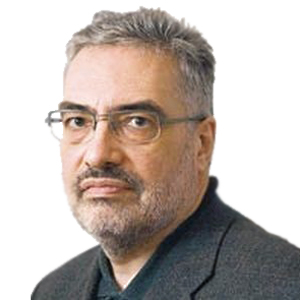
Pavel Felgengauer

You’ll find bits of the following by Pavel Felgengauer in various English language articles, but not his full argument as laid out here.

Writing in Novaya gazeta this week, military commentator Pavel Felgengauer concludes that Defense Minister Anatoliy Serdyukov remains in place, but the army’s problems are growing.  He says:

“Today a dangerous situation of general decay in discipline and order is taking shape which could lead to a loss of control over the armed forces.”

The slow disintegration of the Soviet Armed Forces required Serdyukov to take immediate, radical, and often not well thought out reforms, according to Felgengauer.  Mass officer and warrant officer dismissals have put 70 thousand outside the TO&E “at the command’s disposition,” essentially just waiting for dismissal.  Only 10,000 are junior officers whom the Defense Ministry owes little by way of benefits.

A bit of explanation that Felgengauer doesn’t give you.  We haven’t had any independent observer put this number so high.  These 70,000 are waiting for housing because, by law, surplus officers can’t be discharged until they get permanent apartments.  But they aren’t living on much while they wait.  Because they don’t have duty posts, they get only rank pay, not various monthly supplements that officers in active positions get.  Rank pay might be only 30 percent of what they received when they were in the TO&E.

But back to Felgengauer.  He turns next to NCOs.  He says experts say, with a million-man army and 150,000 officers, the Russian Armed Forces need 200,000 or 300,000 sergeants.  But in Serdyukov’s ‘new profile’ TO&E, there are billets for only 90,000 contractee-specialists and NCOs together.

And these are the guys who’re supposed to help the shrunken officer corps keep order in the ranks.

Felgengauer then recites the Main Military Prosecutor’s announcement that barracks violence is up 50 percent in 2010.  He says incidents of open ‘hooliganism,’ criminal violence, and inter-ethnic conflict are all rising.  And only a declining number of officers is there to hold all this together – with the help of an inadequate NCO corps.  This is why, says Felgengauer, the Soviet officer corps relied on dedovshchina as a lever to keep order among the troops.  He may be suggesting Russian officers are doing the same thing now.

He concludes many are dissatisfied with this state of affairs, and they all focus blame on Serdyukov, somewhat unfairly, according to Felgengauer.  Criticism is focused on the man who actually tried to fix Russia’s decaying defense department, and not his predecessors who drove it to ruin.

Of course, one could ask Felgengauer isn’t this the fate of all reformers?  Maybe those being reformed were happy with the decaying and ineffective bureaucracy and forces that were comfortable, and perhaps profitable, for them.

Felgengauer returns to the issue of attempts to train NCOs.  Instead of officers, military schools are supposed to prepare sergeants instead.  But only the erstwhile Ryazan Higher Airborne Command School is actually doing it, and, ironically, this is where the storm over Serdyukov arose.

Felgengauer concludes that Putin and Medvedev agreed with Serdyukov’s reforms, and so they aren’t ready to dismiss him now.  But the problems and tensions surrounding the Defense Ministry are growing.

In a kind of postscript, Felgengauer sees the decision for military police as something of a ridiculous answer to disorder in the army.  First, they will be selected from the ranks of the most disgruntled – the dismissed officers.  The concept behind using some ‘dissatisfied-dismissed’ to keep order among other dissatisfied is just a little inscrutable.  And, in the best case, it’ll take over a year to change all the laws and regulations to allow military police to operate.  Will Serdyukov and his reforms remain intact by then?

New Air Forces Commander in Far East

Colonel Dronov

On Monday, the Defense Ministry announced Colonel Sergey Vladimirovich Dronov as the new Chief of Air Forces and Air Defense in the Far East.  His predecessor, General-Lieutenant Valeriy Ivanov, has a new post in the Operational-Strategic Command of Air-Space Defense (OSK VKO or ОСК ВКО).

The 48-year-old Dronov was born in rural eastern Ukraine.  In 1983, he graduated from the Yeysk Higher Military Aviation School for Pilots, and began his service as a fighter-bomber pilot in the former Belorussian Military District.  So he’s an aviator, no surprise.

According to the Defense Ministry website, he served in aviation units in the North Caucasus and Siberia, and in command positions from flight commander to division commander.  He graduated from the mid-career Gagarin Air Forces Academy in 1992, and the General Staff Academy in 2007.

Dronov started his Far East service as commander of the Ussuriysk Composite Aviation Division in 2008.  In August 2009, he was assigned as deputy commander of the Air Forces and Air Defense Army (AVVSPVO) in the Far East.

The Defense Ministry reached down to replace an O-8 with an O-6.  This may be part of its continuing effort to reduce its top-heavy rank structure.  Recall Defense Minister Serdyukov’s description of the ‘bloated egg’ in rank distribution.  But Dronov will probably be promoted to general-major soon.

It’ll be interesting to see how other appointments play out.  Dronov just took over the existing Khabarovsk-based 11th AVVSPVO.  That’s an easy one.  But presumably, with the cut to four MDs, two of the current five AVVSPVOs might disappear.  The 6th AVVSPVO in St. Petersburg might meld into the Moscow-based Special Designation Command (КСпН) in the new Western MD.  And the 14th in Novosibirsk could be subsumed by the Yekaterinburg-based 5th  in the Central MD.  Look for more air and air defense command appointments.

Shamanov Sides with Serdyukov

General-Lieutenant Shamanov

VDV Commander Vladimir Shamanov knows which side his bread’s buttered on.  Talking to the press yesterday, Shamanov supported the boss in the storm over his alleged obscenity and грубость at the VDV’s Seltsy training center.

In short, Tverskaya, 13 reported the airborne chief doesn’t believe the story about Defense Minister Serdyukov.  He denies the boss ordered Colonel Krasov dismissed as head of the airborne commissioning school.

According to Shamanov, Serdyukov expressed doubts about constructing the Church of the Prophet Elijah opposite the airborne training school, since cadets aren’t there for long.  The Defense Minister suggested [politely one is sure] that they move the church to a populated area adjacent to the training center where the congregation can take care of it [but aren’t the VDV cadets and officers the congregation?].  Shamanov concludes:

“All the rest is cock and bull.”

Apparently answering the Union of Russian Airborne Troops’ appeal to the President and Patriarch, Shamanov told ITAR-TASS and RIA Novosti he’s satisfied with the course of army reforms, and doesn’t see any reason to worry about the fate of his service branch:

“The plans that will be presented to the Supreme CINC for approval indicate that the VDV’s composition will remain as before.  Also two more district-level airborne formations [соединение] should come into service raising the troops’ potential overall.”

As if to assure people the VDV won’t march on the Kremlin, Shamanov added that the situation in his branch is “normal,” and his troops are occupied with combat training as usual.

Tverskaya, 13 reported Shamanov saying for the umpteenth time that his branch will remain independent [i.e. not be subordinated to the Ground Troops] under Serdyukov’s ‘new profile’ reforms.  He added that the VDV will get the BMD-4M according to the ‘concept’ of GPV 2020.

We should recall that Serdyukov may have helped Shamanov on some occasions, and certainly did in one instance.  The Defense Minister at least acquiesced in Shamanov’s return to lead the VDV in May 2009.  And last September, he helped Shamanov out of his own scandal when he tried to order a detachment from the VDV’s 45th Independent Reconnaissance Regiment to detain an investigator looking into his son-in-law, a well-known criminal figure.  Shamanov only got a reprimand for this incident.  He could easily have been dismissed.  Serdyukov likely retained him because the airborne general is a useful ally.

In today’s Tverskaya, 13, Deputy Defense Minister Naginskiy offered an impassioned defense of Serdyukov.  Naginskiy was on the Seltsy inspection with the Defense Minister.

Naginskiy said they saw facilities unfinished since 2008.  But he doesn’t exactly deny the press reports:

“Nothing terrible happened there.  I think if people standing 120 meters behind us heard something, filled it in, and put it on the Internet, they are dishonest.  I can say there was no boorishness or cursing, but there were raised voices, when on the territory of a unit entrusted to you someone is selling things and someone is building for 180 million rubles, undoubtedly, this calls forth natural indignation and, as it should, a conversation in raised voices.”

Naginskiy goes on, questioning why they need a church at Seltsy when troops go there to train and then return to Ryazan, but:

“I’m in absolute solidarity with the Defense Minister — what I saw there brought indignation.  There were no orders to move the church.”

This morning Nezavisimaya gazeta’s Viktor Litovkin reported some comments from Colonel Krasov himself: 

“In particular, Serdyukov expressed dissatisfaction over the incomplete repair of the cafeteria and engineering networks.  The conversation was very emotional both from Krasov’s side [speaking of himself in the third person] and from Serdyukov’s side.  However, this was a businesslike dialog.  The Ryazan school has already eliminated deficiencies revealed during the military minister’s visit.”

That certainly sounds like some type of unpleasantness transpired.  Litovkin says it’s strange neither Shamanov nor Krasov remembered [or mentioned] any obscenities.  But nevertheless he concludes:

“If this is ‘cock and bull’ as General Shamanov says, or simply ‘businesslike dialog,’ as Colonel Krasov asserts, then it’s no longer worth worrying about the battle against dedovshchina and nonregulation relations in the armed forces.”

It isn’t worth it because the abuse of subordinates apparently begins from the Defense Ministry’s very top, and won’t ever be rooted out.

Litovkin finishes saying the VDV have nothing to gain from fighting with Serdyukov, and are just trying to silence the whole incident.  There will be other defense ministers, but the VDV will always exist.

Izvestiya’s Dmitriy Litovkin says his Defense Ministry sources say there were no demands to raze the church.  He claims Serdyukov may have wanted to move it outside the base’s gates to ease access for its parishioners.  He finds the whole situation odd since there are 200 churches on Russian military property, and next year the army will begin training military chaplains.

Kremlin Source Denies Serdyukov Resignation

According to Moscow News , an unnamed Kremlin source denies Prime Minister Putin asked for Defense Minister Serdyukov’s resignation in the wake of the storm over his harsh words for the chief of the VDV’s Ryazan Higher Command School on 30 September.

The report of Putin asking for Serdyukov to resign originally appeared in Argumeny nedeli.  And it’s being echoed elsewhere.

Titillating, yes, but virtually certainly just a rumor.  Even if Putin’s the power behind President Medvedev’s ceremonial throne, the former president probably wouldn’t try to fire a run-of-the-mill minister, much less Serdyukov, without thoroughly coordinating with Medvedev first. 

The Defense Ministry, like the other power ministries, is part of Putin’s cabinet, but it also reports directly to the President, unlike ordinary ministries. 

Of course, we remember Putin’s the one who put Serdyukov in charge of the Arbat MD in the first place.  It’s at least conceivable he could suggest to Serdyukov that maybe it’s time for him to go.

VDV Ain’t No Choir Boys

Poking Fun at Serdyukov and VDV (photo: Tden.ru / Leonid Shakhov)

The picture’s worth 1,000 words.  VDV figuring out how to get at Defense Minister Serdyukov:

“Army cursing, it’s his weakest point.”

“Damn if it isn’t.  It’s insulting somehow being abused in civilian.”

Could the VDV really be so offended by a little cussing?  Not likely since they’re pros themselves.  Why are they acting like they haven’t heard and said it all.

Serdyukov Reportedly Offends VDV

It took a couple of weeks for the story to leak out, but it did, largely thanks to Russian bloggers. 

Defense Minister Anatoliy Serdyukov reportedly insulted Colonel Andrey Krasov, chief of the VDV’s Ryazan Higher Command School (now officially a filial of the Combined Arms Academy).  Monday’s Kommersant summed it up well.  Serdyukov flew to Ryazan on 30 September and visited the school’s Seltsy training center.  Getting off his helicopter, he reportedly launched into an obscene and humiliating public tirade against Krasov (who also happens to be a Hero of the Russian Federation) over the small wooden Church of the Prophet Elijah located on the grounds.

Serdyukov ordered the church dismantled, and Colonel Krasov dismissed.  The latter tried to explain that the church was built with money from sponsors, and that it will be used for training chaplains starting next year.  But, according to a retired VDV general’s account, Serdyukov wouldn’t have any of it, saying or telling his minions:

“Don’t give money to this VDV center.  We generally need to cut this school back.  Remove this impudent colonel.”

So Serdyukov comes off badly, and Colonel Krasov sounds as mild as a choir boy.  Who knows if we’ll ever know exactly how it happened.

In any case, the VDV was apparently already seething about the bureaucratic downgrading of its alma mater, and the Union of Russian Airborne Troops has asked President Medvedev and Patriarch Kirill to intercede on behalf of Colonel Krasov.  The Union’s chairman, former VDV Commander and failed putschist, Vladimir Achalov wrote the appeal:

“Anatoliy Serdyukov insulted Colonel Andrey Krasov with unprintable language, degrading his professional and personal worth in front of his subordinates.  The religious senses of the airborne were also insulted for building the church with their own resources.  And this is the fourth military church Anatoliy Serdyukov has ordered dismantled.”

“The insult to Hero of Russia Andrey Krasov is an insult to all defenders of our Motherland.  We reserve the right to act in defense of the honor and dignity of servicemen.”

There’s been no official reaction to all this from the Defense Ministry, but it’s become quite a storm.  Most major print and Internet media have covered it.

Deputy Defense Minister Nikolay Pankov met with Airborne Union representatives on Monday to smooth the whole thing over, according to Kommersant.

A Ryazan church official gave the paper the church’s view that the military has no relationship to the Church of the Prophet Elijah, and said Patriarch Kirill has already met with Medvedev on this, and decided the church won’t come down.

This situation is reminiscent of Serdyukov’s first foray as Defense Minister inspecting the St. Petersburg Nakhimov School in March 2007.  Appalled by its condition, he sacked its chief —  respected former submariner Aleksandr Bukin — on the spot, and was criticized later for mistreating a decorated admiral whose duty post  suffered from a chronic lack of resources.  But Serdyukov seemed to learn from the PR, both good and bad, and we haven’t seen anything similar in public since.

At Seltsy, maybe Serdyukov just lost his self-control.  Maybe there’s sub-text or details here we don’t know.  The whole thing could be overblown to make Serdyukov look bad.  But who’d benefit from that?  The VDV?  The Defense Minister’s really handled that branch of service with kid gloves in the process of his reforms.  Maybe, at its root, it’s a traditional civil-military dust-up — maybe this civilian Defense Minister and uniformed military men don’t understand or respect each other very much.

Military Not Ready for Winter

Regional Development Minister Viktor Basargin apparently doesn’t want to share any of the blame this winter.

At a government meeting today, Basargin said he’s worried about whether military towns are capable of preparing for winter in the necessary fashion.  ITAR-TASS quoted him:

“This year problems with preparation for winter have already arisen in 95 percent of military towns.”

He said there are places like St. Petersburg providing positive examples, but “in a number of regions the military is hiding the true state of affairs from the administration.”

He indicated this could lead to recurrences of last winter’s situation with the frozen ‘Steppe’ garrison in Transbaykal.

Basargin added:

“Minregion and the MVD have taken this situation under firm control, I have reported to the chairman of the government [Putin] about it.  The decision was singular:  all military towns have to perform all procedures mandatory for civilian populated areas.  I ask administrators in all areas to give this special attention.”

So Basargin’s decided in advance he won’t take the heat (or lack of it) and the blame this year.  It’s all shifted squarely, and early, onto the Defense Ministry.  One finds it a little odd that Basargin and Minregion would call Serdyukov out so publicly over this.  Maybe they really see disaster looming.

It’s clear military base infrastructure, especially that which Serdyukov wants to do away with, isn’t getting much attention and there are lots of other demands on the military’s money.  To be fair, a lot of garrisons were in a really bad state and grossly neglected long before Serdyukov arrived.  There are, however, several things he’s done which make the situation worse.  The shift to brigades and renovation of the MD structure have caused shuffling that could leave some officers, families, military pensioners, or troops out in the cold.  Especially in the most severe climate regions.  And cuts in support troops and services, and their privatization, probably isn’t going smoothly in remote (and cold) areas.  This could cause disruptions in winter logistics.

We’ll see how the winter goes.