Tag Archives: Dedovshchina

Military Police, Open Up!

On 12 March, Krasnaya zvezda profiled what might be the armed forces’ first military police department (OVP) in the Astrakhan military garrison, under the Navy’s Caspian Flotilla.

A Statute and Instruction cover the authority and operations of Russia’s military police (MPs).  The KZ article says their formal functions reinforcing discipline, providing security, conducting antiterrorism measures, and controlling traffic.

Russian military police are a long time coming and far from all are happy about the idea.  Instituting an MP force was first debated in the mid-1990s, but it didn’t happen.  The major sticking point was whether the military police would answer to, or be independent of, the Defense Ministry.

As recently as very late 2005, Deputy Defense Minister Nikolay Pankov didn’t support the idea, but hardly a month later, after the notorious Sychev abuse case, then-President Putin and then-Defense Minister Ivanov came out for establishing a military police force, primarily to halt violent crime and abuse in the barracks.  But the concept fell by the wayside after several months of debate.

Just as suddenly as the thought of military police disappeared, it resurfaced last fall.  The force was to be established on 1 December with a strength of 5,000 personnel, and military police units were to work jointly with local military komendaturas [commandant’s offices] for the first year before subsuming them.

As in the 1990s, the idea encountered considerable opposition primarily from the RF Human Rights Ombudsman Vladimir Lukin and Main Military Prosecutor Sergey Fridinskiy.  Lukin supports military police but only if they are independent of the Defense Ministry.  He has said military officials don’t need one more bureaucratic apparatus.  For his part, Fridinskiy said:

“We need to think clearly about all aspects of this issue, including those connected with legal and financial support. Moreover, where will we find such a number of qualified people?  In our country’s conditions, it’s not a certainty that military police will bring positive changes.  Where is the guarantee that we won’t get the very same excesses that they always talk about in connection with the [civilian] police–we aren’t selecting different people, it’s all the same contingent.”

Fridinskiy seems to be worried about military prosecutors tripping over MPs, or MPs fouling the work of his prosecutors.  He definitely doesn’t entertain the idea that they could work well together. 

There were press rumors over the winter that Defense Minister Serdyukov had decided to scrap the plan to institute MPs, but defense spokesmen denied the reports.  And at least the very first OVP has appeared and gotten some publicity.

The Astrakhan garrison’s OVP chief is an O-4 who once served as head of the security department for an armaments storage base, and chief of the garrison’s guardhouse.  His KZ interviewer says the OVP Chief knows all the ins and outs of garrison service firsthand.

The OVP Chief says the composition of an OVP is determined by the size, locations, and characteristics of the garrison it serves.  His OVP has a security and convoy section, investigation section, and an MP platoon, and he describes its initial capabilities as modest.

The security and convoy section guards and transports prisoners to the prosecutor’s and military-investigative organs, to disciplinary battalions, or investigative detention.  The investigative section prepares cases against soldiers accused of disciplinary offenses.  The MP platoon is responsible for patrol service, preventing crime, and maintaining discipline within the garrison.

The article indicates the OVP will spend a lot of its efforts on searching for AWOL soldiers.  The OVP Chief indicated that komendaturas and military commissariats haven’t been able to concentrate on this job in the past for lack of resources.  Russian AWOLs are known as ‘sochintsy’ from the abbreviation SOCh, or those ‘willfully leaving the unit.’

The Astrakhan OVP Chief recognizes that liaison and relations with unit commanders, local civilian law enforcement, and municipal authorities will be key for him to do his job.  More likely and problematic, however, is the possibility of crossed wires with military prosecutors or the local branch of the military-investigative directorate.  There are already lots of investigators out there investigating military incidents.  The investigative authority of the MPs was a contentious issue in the debate over them.

Russia’s 5,000-strong MP force is a modest start for a million-man army, and the success of the effort can’t be judged until it’s possible to see how many, or how few, OVPs are established.  Past initiatives in military law enforcement aren’t particularly encouraging.

For example, the 2005 effort to reestablish the guardhouse–administrative confinement–in order to do away with the army’s five disciplinary battalions (disbats)–the idea was abandoned when Serdyukov arrived because it required sending men guilty of more serious offenses into the civilian penal system where, unlike the disbat, they would get a permanent criminal record.  The guardhouse effort also went unrealized because it was costly; 98 old guardhouses needed to be rebuilt and 44 new ones were proposed.  And so the disbat lives.  Similarly, the Defense Ministry may discover it doesn’t want to pay to create a lot of OVPs.

Only time will tell how far or wide MPs will be implemented.
Serdyukov’s Post-Collegium TV Interview

After last Friday’s Defense Ministry collegium, Serdyukov was interviewed on Rossiya 24.

He probably fielded more pointed questions than normal, but he easily navigated them.  At times, he answered partially and the interviewer didn’t follow up with the next logical question.

Asked about officers dismissed in 2009, he said the armed forces shed 65,000 of them, who retired on age or health grounds, requested dismissal, or violated their contracts.  There was no mention of those put in limbo outside the TO&E, without duty posts and only their rank pay to live on.  These are the officers who can’t formally be dismissed because they don’t have housing, and are living at their ‘commander’s disposal.’  There was also no mention of how many warrant officers were put out in 2009.

Serdyukov said some officers accepted civilianized posts, and 4,000 received job retraining–a pretty small number against the large need for it.

The Defense Minister said dedovshchina was officially down 15 percent, and he doesn’t want only platoon and company commanders punished when it happens in their units.  He wants to see all levels of command take more responsibility for the problem.  Not sure what he’s insinuating, but it could be a warning to higher ups that they could suffer too when big time violence cases hit the news and make the Arbat military district look bad.

Serdyukov talked about higher officer training and appraisals, mentioning the assembly for 550 officers from the military districts and army commands.  He said we tried to make them understand what it is we’re trying to do.  But many lacked the knowledge and necessary skills–presumably to continue in the service.  See today’s Nezavisimaya gazeta.  Viktor Litovkin writes about generals and senior officers dismissed under Serdyukov.  Military district and fleet staffs which used to number 500-700 officers have been cut to 300.  Trimming the ‘bloated egg’ is generally a good idea, but as Litovkin says, it really depends on the quality of those left behind.

Back to Serdyukov’s interview . . . in cutting the military educational establishment from 65 to 10 mega-institutions, he said fewer officers will be needed but the quality of their training must be improved.  The 10 left standing have or will have their faculty members assessed for fitness to serve and they’ll get facility improvements.

On contract service which General Staff Chief Makarov has pronounced dead, Serdyukov said:

“The results of the program were not satisfactory.  In reality, we underestimated the situation somewhat, as regards who should switch to contract service and on what terms, or with what pay.”

“. . . the next program should be revised in an attempt after all to think it out regarding what specific positions should be filled by contract service personnel.  Of course, this applies to complex skills, where expensive equipment is operated.”

Nevertheless, he noted that he expects the contract sergeant program [albeit small-scale and apparently no longer funded] to succeed.

He said the army borrowed from foreign military experience in deciding on the shift from divisions to brigades.  He said the latter’s potential is virtually the same or even greater in some cases than that of the former.

Serdyukov said the Defense Ministry has reported to the Supreme CINC on its view of how it would like to reequip over the next 5-10 years.  He repeated that cuts to R&D and maintenance had allowed for bigger buys of new arms in 2008 and 2009.

He admitted Bulava hasn’t been successful, but he expects this system to be put right and completed.

He addressed possible foreign arms purchases:

“. . . in some areas we are lagging behind quite badly.  This relates not just to the Navy but also other services.  We are buying things in single numbers right now.  They are things like UAVs, all kinds of sights, night vision equipment–it is a very broad spectrum where we are specifically lagging.”

Despite reports that Moscow would be negotiating only with Paris on Mistral, Serdyukov claimed Russia is talking to the Netherlands and Spain.  He denied it was no more than a glorified cruise ship, saying it could perform many roles and had many different capabilities.

Russians Don’t Want to Serve in the Army

Three polls are better than one.  Three different opinion polls find Russians prefer their sons and brothers not serve in the army by a margin ranging from fully one-half to nearly two-thirds of those queried.  Press reporting on these polls didn’t do them justice, so here’s another take on them.

Look first at Levada-Tsentr, the most independent and well-respected Russian polling firm.  Levada’s published numbers on yes-or-no to army service date back to 1998, when 84 percent said they’d prefer their relatives not serve in the armed forces.  This no-to-service number declined to 77 percent in 2004, and to 53 percent in 2008, before increasing again to 57 percent of respondents indicating a preference against service this year.  The corresponding yes-to-service numbers start from a low of 13 percent in 1998, rising to 35 in 2007, 36 in 2008, and 34 percent this year.

So, in late January-early February 2010, 57 percent said don’t serve, 34 percent said serve.  Presumably, 9 percent just didn’t answer either way even though that wasn’t a choice in Levada’s survey.

Levada also asked, ‘if not, why not?’  Respondents could choose from multiple ‘why not’ reasons.  ‘Dedovshchina, nonregulation relations, violence in the army’ was the top ‘why not’ answer with 40 percent in 1998 and still 37 percent in 2010.  It’s interesting that the 2006 number spiked to 49 percent, probably because the poll came right after the notorious Sychev abuse case broke.

Levada’s next top 5 ‘why not’ answers:

  • ‘Death/injury in Chechen type conflicts’
  • ‘Denial of rights and humiliation of servicemen by officers, commanders’
  • ‘Difficult living conditions, poor food, health dangers’
  • ‘Moral decay, drunkenness, drug abuse’
  • ‘Collapse of the army, irresponsible policy of the authorities in relation to the army’

The number of those picking these declined by nearly, or more than, half over the 12-year period, 1998-2010.  But dedovshchina, hazing, abuse, violence, whatever you call it, persisted.

Since 1998, Levada has also asked whether Russians prefer conscript or contract service, and they’ve consistently answered contract, but the gap has narrowed since the mid-2000s to 54 percent for contract and 39 for conscript in 2010.

Similarly, for three years, Levada asked Russians whether a family member should serve, or seek a way to avoid serving, if drafted.  This one’s pretty much a toss-up this year, with 46 percent saying serve, and 42 percent saying find a way to avoid serving.

Levada also published two years of responses on whether Russia should preserve a million-man army or cut it and use the savings to equip the army with the newest weapons.  The gap on this question went wider this year with 36 percent favoring the million-man army and 50 percent the smaller, better equipped one.

Levada always asks about threats to Russia and the army’s ability to defend the country.

On threats to Russia from other countries, the poll tends to go up or down by 10 percent from year to year, but has still been pretty consistent over the last decade.  In 2010, 47 percent said there are definitely or likely threats to Russia (48 percent said this in 2000).  This year 42 percent said there are most likely or definitely not threats to Russia (vs. 45 percent in 2000).

On the army’s ability to defend Russia, the number also goes up or down by 10 percent from year to year.  In 2010, 63 percent said definitely or most likely yes it can defend Russia.  This figure was 60 percent in 2000, and 73 percent in 2008 and 2009 (perhaps still high from victory in the war with Georgia).  So it seems the number returned more to the norm this year.  Those who said it definitely or most likely can’t defend Russia was just 22 percent this year.  It had been 38 percent in 2005, and 31 percent in 2000.

But back to the mainline question on serving or not serving in the army . . . .

The All-Russian Center for the Study of Public Opinion (VTsIOM or ВЦИОМ) asks the same basic question as Levada—effectively, would you want your son or brother to serve in the army?  It’s the same question because Levada and his close associates went on their own when the Russian government moved to assert control over this inconvenient organization in 2003.

In VTsIOM’s mid-February poll, 50 percent said no-to-service and 36 percent yes-to-service.  Unlike the yes-no on Levada’s survey, VTsIOM allows for ‘I find it difficult to answer’ and 14 percent indicated that (but in Levada’s poll 9 percent didn’t answer, so there’s not a great difference here).  VTsIOM also breaks its responses out by sex.  Women were not surprisingly less likely to say yes-to-service than men and somewhat more likely to say no-to-service. 

VTsIOM also cross-referenced responses to its yes-or-no-to-service question by the respondent’s evaluation of the Russian Army’s condition.  So, of those who said the Russian Army’s condition is ‘very poor,’ 67 percent also said no-to-service.  But 54 percent of those who said its condition is ‘very good’ still favored no-to-service.

VTsIOM’s ‘if not, why not’ data is a little different from Levada’s.  It only gives data for 2000, 2002, and 2010.  Like Levada, in 2010, the number one reason was ‘Dedovshchina, nonregulation relations, violence in the army,’ but with 75 percent of respondents picking it in this closed, multiple choice question.  Otherwise, its list of top ‘why not’ answers tracked closely with Levada’s.

VTsIOM also collected data on responses by geographic region and educational attainment, though it didn’t fully publish it.  For instance, Russians in Siberia and the Volga basin are more likely to say yes-to-service than the average Russian, according to VTsIOM.  Poorly educated [undefined] respondents said yes-to-service slightly more than half the time.

Educated [undefined] Russians said no-to-service at a 57 percent clip.  And southerners and northwesterners said no at 56 and 55 percent respectively.

Early last October, SuperJob.ru conducted a poll on the issue of service.  But it limited its respondents to Russians with sons, and its question to whether they would want their sons to serve in the army.  SuperJob.ru also broke out respondents whose sons have already served (6 percent) and it also allowed for a ‘I find it hard to answer’ option (11 percent).  That said, this poll’s responses were 63 percent no-to-service and 20 percent yes-to-service.

SuperJob.ru also broke out its data by sex, age groups, and educational attainment.  The age group data was interesting for the 45-55 and the above 55 groups.  Respondents in those groups reported that their  sons had already served at the rates of 22 and 23 percent respectively.  This is a good indication of the general rates at which young Russian men serve (about one-fifth) or manage to avoid serving (about four-fifths) one way or the other.

Russians with higher education were more likely to say yes-to-service (25 percent) and those with only secondary or technical degrees were more likely to say no-to-service (66 percent).

Some of what SuperJob.ru’s respondents said:

‘Yes, I would’ – 20 percent.

  • ‘All men in our family served, and he is no exception.’
  • ‘I myself am an officer.’
  • ‘Why not?’
  • ‘A good school for life.’
  • ‘Let the lad grow.’
  • ‘Yes, I would.  But in my region, so there’s a chance to see him more often.  And on the condition that there’s access to the Internet and mobile phones.  Even more desirable would be if there they taught some kind of profession:  telephone operator, driver, draftsman, etc.’
  • ‘Of course, this is the obligation of every man.’
  • ‘Avoiding army service is shame for a man.’
  • ‘My first son didn’t serve, and should have.’
  • ‘Who can’t survive the army won’t survive in life.’

‘No, I wouldn’t’ – 63 percent.

  • ‘My husband and I gave 30 years to the service, and now don’t have anything.  And we raised two sons without the state’s help.  And now when they are grown, it turns out, they have a debt to the state!  When will the state pay its debts to us?  Enough, we’ve already served ten years for each child.’
  • ‘My brother served, after which he said he would never send his son to the army.’
  • ‘I’m afraid for my child.’
  • ‘I served 25 years myself.  Today year-long service in the army is wasted time for a man with higher education, even during [financial] crisis conditions.’
  • ‘I prefer to get a higher education in a VUZ with a military faculty.’
  • ‘Service needs to be on contract.’
  • ‘What we have is not an army.’
  • ‘There’s still no order in the ranks of our army even among officer personnel, so I wouldn’t want my sons to serve.’
  • ‘I’m afraid for his life and health.’
  • ‘To lose a year of your life is too expensive a present for Russia.’
  • ‘Why put a moral invalid in my family?’

‘I find it hard to answer’ – 11 percent.

  • ‘I want my son to go through training for life, but I don’t want this experience to consist only of beatings.’
  • ‘My son is still young.  And I don’t know what will be in 12 years when he will have to go into the army.  It could be they won’t be conscripting any longer and everything will be volunteer, but it could be, to the contrary, they could ‘shave’ everybody no matter what.’
  • ‘Every young man needs to go through this school to feel like a man and, if necessary, stand up for his country.  However, when kids come back from the army with ruined health, even in peacetime, you begin to think, is this necessary?’

One-Year Conscription Hasn’t Stopped Dedovshchina

General-Lieutenant Chirkin (photo: IA Regnum)

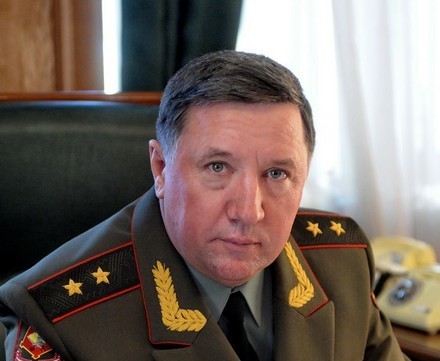
On Thursday, SibVO Commander, General-Lieutenant Vladimir Chirkin told reporters:

“The military expected a dramatic decrease in this type of offenses, but, regrettably, hazing remains an acute problem. The conscripts, who now have to serve 12 months, regard themselves as ‘old timers’ after serving 6 months, and the same thing continues.  Apparently, this virus is transmissible.”

“We now know that we should search for the causes of bullying not in the duration of service but, it seems, deeper.  We now have to work harder with detachment commanders.  This year issues of discipline will be even more important for us than those of combat readiness.”

Chirkin said several high-profile abuse cases are currently under investigation in the SibVO.

Introduced in 2008, the one-year draft was intended to reduce conflict between conscripts from different draft campaigns.  The ‘dedy’ or ‘grandfathers’ about to demobilize would often abuse, haze, or otherwise mistreat brand-new inductees.  But as Veronika Marchenko from Mother’s Right says, it hasn’t been enough to stop dedovshchina:

“In the army then and now they beat people on the third day of service, in two weeks, and in the first months.”

Marchenko believes ending conscription completely is the only way to curb dedovshchina, but that’s not likely now with the virtually complete failure of professionalization through contract service.

You’ll Be Missed, Mr. Kanshin

Aleksandr Kanshin

Press reports yesterday and today say that Mr. Kanshin and his commission have been dropped from the composition of Russia’s Public Chamber (OP) in 2010.

Kanshin is the ex-zampolit and board chairman of the MEGAPIR empire–the National Association of Armed Forces Reserve Officer Organizations, who for several years chaired the OP’s Commission on the Affairs of Veterans, Servicemen, and Family Members.

Kanshin and his commission served as a loyal, but objective and critical, voice when it came to the Defense Ministry and its policies.  His loss, and especially the loss of the commission altogether, is quite a blow against independent information on what’s occurring inside the armed forces.  It means one less critic the Arbat military district will have to fend off.

It will be interesting to see who and why someone got rid of them.  Also, what will come of Kanshin; he’ll probably stay engaged on military and defense issues, but probably without the same kind of access and platform for his views.

Mr. Kanshin particularly followed premilitary fitness and training, manpower, conscription, ‘social protection’ issues, the OPK, and dedovshchina and hazing problems.  He frequently visited the MDs.

Kamenka Officers Go Down for Hazing Incident

The 138th Motorized Rifle Brigade (MRB) at Kamenka (V/Ch 02511) in the LenVO has always had a pretty bad rep for hazing cases.  A Defense Ministry source told Fontanka.ru that 8 Kamenka officers have been removed from duty over the latest incident.  They include platoon, company, battalion, and brigade commanders, the battalion and brigade chiefs of staff, and deputy brigade commanders for armaments and socialization work.  They have reportedly been dismissed from the service as well, although the Defense Ministry has not confirmed this.  In early October, a conscript and contract serviceman were beaten by three drunken sergeants in the unit.  They turned to the Soldiers’ Mothers of Petersburg for assistance.  Initial press reports said 16 soldiers in all were beaten by the sergeants.  See Forum.msk for more.  This was probably just the last straw after a long line of incidents in this troubled brigade.