Tag Archives: Procurement

Of Foreign Arms and Furniture

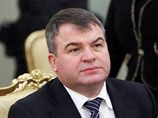
Defense Minister Serdyukov

Defense Minister Serdyukov is looking at a mini-scandal over a tender for new office furniture for the military’s headquarters.  The 14 April tender called for 125 pieces of furniture worth 18.3 million rubles to be delivered in 15 days, but also included agonizingly detailed specifications for each item, leading Russian furniture industry representatives to conclude a specific supplier has been picked in advance.  Moreover, the list of acceptable models, fabrics, and materials makes them assume the furniture will be Italian-made.

Of course, Defense Minister Serdyukov knows the furniture business.  He started in it in 1985, working his way from a department manager of a Lenmebeltorg store to general director of the St. Petersburg ‘Furniture Market’ company, before entering the federal tax service in 2000.  And for his past employment, he’s still derided as mebelshchik—‘furniture man.’

For now the mini-scandal is confined to more liberal papers and websites, and hasn’t resonated in other media.  It is a handy opportunity to take a shot at Serdyukov, but, ironically, it results from the Defense Ministry’s effort to be more transparent about defense procurement by publishing tenders. 

Still, none of this makes the story is insignificant.  It’s emblematic and may foreshadow more serious criticism to come in the burgeoning area of arms imports.  If this is how the management operates when the issue is minor, not affecting anything the least important or serious, how will it operate when turning abroad to buy Mistral, UAVs, armored vehicles, submarines, sniper rifles, or soldier systems?  A little malfeasance, or even just the appearance of something wrong, can spoil even the most sensible policy.

At any rate, more to the story itself . . .  Svpressa.ru says Russia’s furniture manufacturers are offended that the Defense Ministry leadership decided to furnish its offices with Italian cabinets and tables.  

Aleksandr Gordeyev, director of the ‘TNP Furniture World’ factory group, says:

“We regard the striving of such a large and influential state structure to buy furniture abroad as a sign of disrespect toward Russian furniture makers.  Why then all these declarations and announcements of the authorities about the need to support the domestic manufacturer, that is the most real sector, the real taxpayer, particularly in the crisis period?”

Rbcdaily.ru says domestic furniture makers are launching their own organization—the “All-Russian Furniture Union”—to represent 200 manufacturers in 40 regions.  Its first step will be an appeal to Prime Minister Putin on the unacceptability of placing state orders with foreign producers.

According to Novyye izvestiya, the appeal says:

“At this moment, when Russian furniture manufacturers are struggling with the consequences of the difficult economic crisis, the decision of the state’s representatives to make a unilateral financial gesture to foreign competitors looks, at the very least, illogical.”

Gordeyev continues:

“We aren’t insisting on having some kind of preference over foreign competitors, but rights and chances need to be equal for all.  But in effect, in essence, they aren’t even allowing Russian producers access to the competition.”

He tells Rbcdaily.ru, “In Russia, there is a big real sector ready to fulfill similar orders, however, all the big orders from state structures go past us.”  The Defense Ministry’s order is a month’s production for a medium sized furniture factory.

Novyye izvestiya points out that Russian furniture is the equal of Italian models and the Russian furniture market was bigger than Italy’s, at least before the economic downturn.

It also points out, in fairness, that it inspected the tender at http://www.zakupki.gov.ru/ and saw nothing specifically about Italian manufacture, but concluded that, since many of the specs insisted on certain models and fabrics, what domestic furniture makers are saying is not exactly far from the truth.

Andrey Radukhin, General Director of the RF Association of Furniture and Woodworking Industry, said:

“A serious specified supplier made these specifications and, most likely, the furniture is already in Moscow.  It’s a shame such an order passes over our office furniture producers.  Their labor utilization is a minimum of 30 percent, to at most 50.”

Another industry figure told Novyye izvestiya, it would take a Russian firm 3 months rather than 15 days, as specified in the tender, to make the furniture order to specification.

Then he added:

“No one in Italy could take such an order for half a month.  This was all arranged for a specific supplier, most likely, Italian.”

Gordeyev and another industry source were quoted in Newsru.com to the effect that the Defense Ministry’s order must be for the delivery of furniture already made and in-stock.  Russian producers could not meet such a specific order on short notice, so this effectively froze them out of the competition.

Viktor Ilyukhin, head of the KPRF faction in the Duma, told Svpressa.ru:

“Furniture-mania turns out to be characteristic of many ministries, not just the Defense Ministry.  So acts the Internal Affairs Ministry as well as the Finance Ministry:  expensive cars, offices, furniture, hotels, service staff.”

“I’m not surprised at the situation around the military department.  Our Defense Minister Serdyukov has the mentality of a businessman, a big bureaucrat, who is accustomed to good service, luxury, expensive furniture.  He brought this style to the armed forces.  In fact, the armed forces have become a platform for big business.”

“Today practically all military unit and sub-unit commanders are occupied with business.  This gets done proceeding from the Defense Minister’s guidelines:  sell everything you don’t need.  It’s a misfortune for Russia that such a Minister heads the Defense Ministry.”

“Among the military there is great dissatisfaction with Serdyukov’s policy.  Only because of this one thing, the country’s political leadership should think carefully where Serdyukov should be.  Whatever brilliant ideas he’s put forward, his proposals won’t be accepted because of his insignificance and lack of authority in the military.”

“Today the army needs a sufficient quantity of modern military equipment and arms, in management, [it needs] discipline and organization.  Finally, as never it needs to resolve issues of social protection of servicemen.  Today military men are socially protected less than civilians and government officials.  Minister Serdyukov needs to concentrate here on these areas.  And not on buying Italian tables and chairs.”

Gennadiy Gudkov, deputy chairman of the Just Russia faction in the Duma, commented:

“The Defense Ministry tender, in my view is a direct violation of the law on state procurement. I recall the law prohibits excessive detail in the order which narrows the boundaries of the tender.  Only general requirements should appear in the technical specifications.”

“I have seen similar tenders for the purchase of luxury cars that were tailored specifically for one model of Mercedes. All this says that no tender is really being conducted, that there, possibly, we may have a serious corruption incident in the form of a large kickback.  If I were the Prosecutor General and the SKP [Prosecutor’s Investigative Committee], I would conduct an anticorruption analysis of this tender.

“If I were Serdyukov, I would launch a serious investigation, because this tender, by the highest standard, casts a shadow personally on the Defense Minister.”

The editor-in-chief of Kompaniya writes:

“A greedy man with poor taste would not spend 18.3 million budget rubles for 125 pieces of furniture for the offices of the Motherland’s defenders (approximately 146,000 rubles each).  Behind a solid-beech table with natural olive-wood veneer with a top upholstered with natural dark-green buffalo leather sits an intelligent and refined man.  Such a man, for example, as Defense Minister Anatoliy Serdyukov, who’s proposed a new variant of army reform.  The Minister plans to optimize the military’s service time, liberating them from noncore housekeeping functions.  Soldiers will receive weekends off, and contractees—officer’s pay.  Anatoliy Serdyukov’s words are like ‘drinking honey’ in a kitchen ‘of solid maple and cherry veneer with an individually soldered stained-glass ‘Beatrice’ by Arte del Vetro (Italy).’  But it won’t happen.  Generals and bureaucrats still don’t share such things as ‘the beautiful life’ and it doesn’t due to hope for more than ‘serving.’”
Update on Military Corruption, State Losses, and Crime

Main Military Prosecutor (GVP) Sergey Fridinskiy observed last week that it will only be possible to deal with corruption when not just the law enforcement organs, but also responsible officials in the military command hierarchy become involved in fighting it.

At last week’s coordinating conference on fighting corruption in the armed forces and other armed formations, Fridinskiy reported that, in January and February, military corruption cases increased by 10 percent over year ago figures, and material losses to the state in those first months of 2010 were 5 times greater than in 2009.  Inflation and an increased volume of arms purchases were cited as contributing to the spike. 

In 2009, corruption cases increased 5 percent in military units.  Fraud and forgery cases increased 50 percent, but misappropriation, embezzlement, bribery, misuse, and abuse of authority also grew. 

Fridinskiy said:

“For such crimes, 543 officers, including some higher officials, were convicted last year.  Last year military prosecutors uncovered nearly 7,500 violations of the law in this area, more than 2,000 responsible individuals were held to varying degrees of accountability in connection with 540 warnings delivered about unacceptable legal violations.”

Fridinskiy maintains that corruption doesn’t just have a negative economic impact, it also has an extremely demoralizing effect on military units.  He noted that the State Defense Order (GOZ) and the provision of social benefits to servicemen are trouble areas for military corruption.  He said:

“Placing a barrier against incidents of illegal and mismanaged expenditure of budget resources allocated for reequipping troops with new arms and military equipment, but also providing housing to servicemen, people discharged from military service, and family members is one of the complex, but principle tasks.”

Fridinskiy said a systemic fight against corruption was particularly important at a time of rising expenditures on the defense budget and rearmament.  He cited improved legislation, departmental regulations, reduced opportunities for misappropriation, guaranteed transparency and competition in tenders and state contracting as possible measures.  He continued:

“It’s also important to strengthen the role of control-auditing organs at all levels, to raise the level of inter-departmental  coordination, to conduct active propaganda work necessary to create an atmosphere where corruption is unacceptable.”

Fridinskiy reportedly proposed changing the existing GOZ system:

“We’re now working in the first place on putting systematic changes into the purchasing system so that prices will be down to earth, and not astronomical, so that it will be possible to organize this work in the bounds of current demand for purchases, and in order that not only the purchaser, but also those performing the work will bear responsibility for what they are doing.”

Representing the Defense Ministry, State Secretary and Deputy Defense Minister Nikolay Pankov reported that his department has created a special financial inspectorate sub-unit to exercise control on the use of its resources:

“Finance specialists, economists, mostly not from the armed forces, have been asked to join the financial inspectorate, and my presentation today concerned the effectiveness of the work of the financial inspectorate.  All the results that the financial inspectorate turn up are given to the organs of the military prosecutor.”

Recall, of course, that the Defense Ministry claimed it had a major anticorruption drive in progress this winter.  Maybe these are some of the results.

Attendees at GVP conference included representatives of the Federation Council, Duma, Military Collegium of the RF Supreme Court, Military-Investigative Directorate of the RF Prosecutor’s Investigative Committee, Ministry of Defense, MVD’s Main Command of Internal Troops, Ministry of Emergency Situations, and the FSB’s Border Service and Department [once Directorate?] of Military Counterintelligence.

Chief of the GVP’s Oversight Directorate Aleksandr Nikitin  repeated an earlier publicized statistic on a 16 percent reduction in military crime last year.  Nikitin credited widespread GVP preventative measures for the decline in crime.  He also noted the induction of more conscripts with higher education and supplementary performance pay for commanders as positive factors.  According to him, with the extra money, young commanders have started to pay more attention to ensuring order in their units.  Nikitin also says the overwhelming majority of the country’s military units generally function without crime or other incidents.

Pantsir-S1 and the Priority on Arms Exports

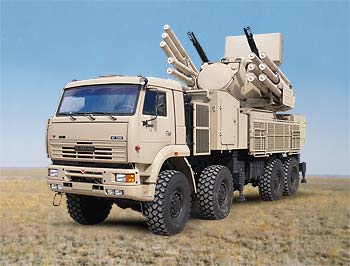
KBP's Pantsir-S1

Recent announcements about deliveries of the Pantsir-S1 highlighted the priority still enjoyed by arms exports over domestic procurement of weapons systems for the Russian Armed Forces.

On 18 March, the Russian Air Forces took delivery of their first 10 Pantsir-S1 antiaircraft missile-gun systems (ZRPK) from the Tula-based Design Bureau of Instrument-building (KBP).  These Pantsir-S1 systems will march on Red Square during the coming 9 May Victory Day parade, before heading to the Elektrostal-based 606th Guards Air Defense Missile Regiment that also has the S-400.  Some of the regiment’s Pantsir-S1s will participate in live-fire exercises at Ashuluk in April.

The Pantsir-S1 will replace the 1970s-era Tunguska-M1 in Russian air defense units.  A short- and medium-range missile-gun system, it provides point defense for civilian or military assets like S-400 SAMs.  VVS Deputy CINC for Air Defense, General-Lieutenant Sergey Razygrayev has said three Pantsir-S1 systems will be deployed around each S-400 launcher.

The Pantsir-S1 has 2 twin-barrel 30-mm 2A38M antiaircraft guns and 12 57E6-E SAMs.  It is reportedly effective against targets with a reflective surface of 2-3 square centimeters and speeds to 1,000 meters per second, at a maximum range of 20 kilometers and altitude of 15 kilometers.

The Pantsir-S1 can be mounted on various vehicles and ships, and General-Lieutenant Razygrayev has said it will become a standard air defense system for each of Russia’s armed services and combat arms in the future.

When the VVS got its 10 Pantsir-S1 systems, the KBP deputy general director announced that the Air Forces will receive more than 20 units in coming years.  An unnamed source told ITAR-TASS, the VVS would get 25 Pantsir-S1 by 2012.

Development of the Pantsir-S1 dates back to the early and mid-1990s.

The United Arab Emirates (UAE) signed a contract to buy 50 Pantsir-S1s for $734 million in 2000. Syria also contracted for 36 systems.  Ex-Defense Minister, now Deputy PM for the OPK Sergey Ivanov said in early 2008 that 24 systems would go to customers in 2008, from a total order book of 64 for the Pantsir-S1 (of course, 50 + 36 should be 86, not 64).  But the Pantsir-S1 didn’t finish development and testing until some time in 2008, and entered production later in 2008 or in 2009.

Pantsir-S1 deliveries to the UAE and Syria reportedly began in 2009, and the system is already supposedly operational in the UAE.  An OPK source told Interfaks that the first stage of Pantsir-S1 deliveries to these two countries had been successfully completed.

This month Moscow announced the sale of 38 Pantsir-S1s to Algeria for $500 million.  The systems are supposed to be delivered this year and next.  The Russians are reportedly close to a Pantsir-S1 export deal with Libya, and Saudi Arabia, India, and Belarus have been mentioned as other potential buyers of the system.

So these are pretty lucrative sales for KBP, roughly $13-15 million per unit.

Now back to the Russian Armed Forces which have only 10 newly-received Pantsir-S1 themselves.

In late 2007, the commander of Troop Air Defense for the Russian Ground Troops gave his opinion that Pantsir-S1 needed improvements before it could enter his inventory, specifically he wanted its size reduced and better performance against certain types of targets.  For its part, the VVS had been looking, and waiting, for Pantsir-S1 since at least 2002.  AVN reported in late 2008 that the VVS wants to buy more than 100 of the systems.

Even if the Defense Ministry paid $15 million (unlikely), 100 is still a modest buy of $1.5 billion against annual military procurement of about $40 billion these days.  But one can guess that the military is haggling with KBP over the price it’ll pay for the Pantsir-S1.  And this purchase has to fit with other defense procurement and KBP’s production for its foreign buyers.

Chief of Staff’s and Shamanov’s VDV Year Enders

General-Lieutenant Nikolay Ignatov

In an interview today, the VDV’s Chief of Staff summarized 2009 and plans for 2010 in Russia’s airborne forces.  

General-Lieutenant Ignatov said 90 percent of the VDV was outfitted with individual soldier radios based on the Akveduk system in 2009, and the remainder will get it in 2010.  The Akveduk-5UNE is the basic UHF transceiver, and Akveduk-5UNVE and Akveduk-50UNVE are the individual radios.  

The VDV also took delivery of 100 modernized BMD-2, 18 Nona self-propelled artillery systems, and 600 KamAZ vehicles.  It got communications vehicles including 14 R-149 KShM and 23 radio stations mounted on KamAZ high mobility vehicles.  

Ignatov said 80 percent of the VDV’s fall 2009 conscripts have already completed their first jump.  In all, 10,000 conscripts are joining the VDV ranks from the fall draft.  Another VDV spokesman said the airborne made 189,000 jumps in 2009, 29,000 more than the year before.  

Stepping back a bit, in mid-December, VDV commander Shamanov told NVO that the airborne received 150 combat vehicles in 2009, including modernized BMD-2 and BMD-3.  He hopes to get more BMD-4M vehicles for field testing in 2010.  He wants 200 of them eventually.  Unlike the VVS, he emphasized that he likes domestically produced UAVs, thermal sights, and sniper rifles.  Shamanov noted that 15-20 percent of the VDV’s armored vehicles might be wheeled in the future, and he plans to obtain some GAZ-2330 Tigr vehicles for recce and Spetsnaz subunits.   

Shamanov essentially said the VDV intends to lobby for control of helicopter units, presumably from the VVS where they’ve been since 2002, to transport and support its air assault elements.  Specifically, he’s talking about the Mi-28N, Ka-52, Mi-8MTV, and Mi-26.  The Ground Troops would also like to get army aviation back; perhaps both are ganging up on VVS. 

On 10 December, Shamanov called for a simple, functional approach to equipping the VDV.  Unhappy with defense industries, he said he won’t buy anything that doesn’t suit the VDV.  He wants better stuff than he already has in his stockpiles.  As an example, he wondered when he’ll get a mine detector that works on rocky terrain.  So, to some degree, Shamanov has joined the list of military leaders lambasting defense industries for poor products.