Category Archives: Air Forces

Fifth Generation Helicopter

Andrey Shibitov

In a 13 May news conference, OAO Helicopters of Russia Executive Director Andrey Shibitov described the company’s work on a concept for a fifth generation helicopter.  His comments to the press came in advance of HeliRussia-2010 beginning today in Moscow. 

Shibitov said:

“We are actively working on the concept of a fifth generation combat helicopter.  Wind tunnel testing of two aerodynamic designs coaxial [Kamov] and traditional [Mil] has begun.  Initial results have been received.  Which of the two designs we’ll pick will become clear in the first quarter of 2011.”

According to Gzt.ru, Shibitov claimed OAO Helicopters is willing to invest $1 billion in its development, and is looking for state investment beyond that amount.

Neither OAO Helicopters nor the Defense Ministry is talking specifics about the new helicopter, but former VVS CINC Aleksandr Kornukov stated the obvious when he told Gzt.ru a fifth generation helicopter needs to be quiet and stealthy.  According to Newsru.com, Kornukov also stated a preference for two pilots in a side-by-side configuration.

In Gzt.ru, former army aviation commander, retired General-Colonel Vitaliy Pavlov said noise isn’t so significant since Mil’s X-shaped tail rotor already reduced noise on the Mi-28 by 15 percent (in comparison with its Mi-24 predecessor), but he added that reworking the engine could further reduce noise.  Pavlov doesn’t see great importance in increasing flight speed.  He sees the coaxial Kamov design as more reliable, but Mil’s traditional rotor system as more stable.  He also likes the maneuverability of Kamov’s helicopters, but he still thinks it’ll be a difficult choice between the two producers.

Also in Gzt.ru, Defense Ministry critic, retired General-Colonel Leonid Ivashov said the fifth generation helicopter could be stillborn:

“If there isn’t a state order for this aircraft, it will wither.  We’re grasping at all fifth generation aircraft, fifth generation helicopters, but for some reason none of this is coming to the troops, today we have helicopters from the 1970s in the army.  So the country’s leadership shouldn’t just rejoice at new equipment in various air shows, but also buy it for the troops.”

Then Ivashov’s deputy at the Academy of Geopolitical Problems, Konstantin Sivkov, takes over, citing his definition of a fifth generation helicopter—increased range, ‘fire and forget’ weapons, capability to engage fixed-wing aircraft, low radar detectability, and speed up to 500-600 km/h.  Sivkov sees noise reduction as secondary since radar can detect helicopters at a 150-200 km range.

Sivkov thinks, under favorable conditions—steady financing, cooperative work by the design bureaus and factories—a new helicopter could be developed in 5 years, but, absent those conditions, development could take 20 or 30 years.

Dmitriy Litovkin in Izvestiya covers a lot of the same information on the pre-design research and wind tunnel blowdown of the prototypes.  He says the so-called Ka-90’s ‘dual-contour’ jet engine could develop speeds over 800 km/h, and he cites a system development timeframe of 5-8 years.  According to him, work is focusing on canted blades with thrust vectoring as well as a new blade design.

He believes one of the designs will win out, but there could be a third hybrid design.  But he thinks there’s little time to waste since the U.S. is already testing new designs, albeit unsuccessfully thus far. 

Writing in Nezavisimoye voyennoye obozreniye, Viktor Litovkin notes three named prototypes–Mi-X1, Ka-90, and Ka-92. 

Shibitov also talked to the press about OAO Helicopters’ record state defense order from army aviation in 2010.  He said:

“A year ago I said it was a shame the Defense Minister wasn’t buying new helicopters.  Beginning this year, I can’t say this.  Finally conscious, sensible purchases of military equipment have begun.”

“We got a record order from the Defense Ministry for purchases of combat, strike, and reconnaissance helicopters in the basic and supplementary order.  Unfortunately, we can’t fulfill the supplementary order because other commercial projects are being completed.”

“From this year, we’re delivering volume for the Defense Ministry comparable with all export deliveries of combat and strike helicopters.  In the course of the coming five years this tempo will continue, and in the period to 2017-2020 the Russian Air Forces will renew its complement of combat, strike, and reconnaissance helicopters by 85-90 percent.”

Aviaport.ru indicated the armed forces will also receive their first Mi-35D, Mi-24D, and Ka-226T helicopters, previously produced only for foreign customers.  OAO Helicopters is reportedly looking at modernizing Ka-29 or Ka-32 helicopters for Mistral, but Ka-52 is another candidate for shipboard helicopter.

CAST’s Konstantin Makiyenko puts the armed forces helicopter inventory at 850, of which 90 percent is obsolete.  He estimates it’ll cost $8 billion to renew this force.

There is evidence of life in Russian military helicopter procurement.  Talking about the GOZ, President Medvedev said 30 would be bought this year, and Defense Minister Serdyukov claimed the army got 41 during 2009.  In late 2008, VVS CINC Zelin said the plan was to obtain 100 new helicopters over 4 years, so these numbers would be in that range.
Is Alarm About Aerospace Defense Warranted?

In today’s Nezavisimaya gazeta, Viktor Litovkin tries to reconcile Kornukov’s and Sitnov’s extremely pessimistic views on the state and future of Russian aerospace defense with the optimistic ones of Colonel Sigalov, whom Ekho Moskvy interviewed on Saturday.  He’s commander of the 5th VKO Brigade based in Moscow Oblast, responsible for defending the capital.

Litovkin notes the retired generals’ roles as defense industry lobbyists, their defense of business interests, and efforts to acquire new orders.  And for his part, the colonel could never imagine or admit a chance that his troops won’t be able to carry out their missions.  What kind of commander would he be?

But the situation in the realm of air defense, and even more in anti-missile defense, is very complicated.  Yes, the troops of Sigalov’s brigade are ready to open fire on air-breathing enemy forces with 10 minutes warning.  But repulsing strikes from space is much more complex.  The troops simply lack the weapons systems to do it.  And this threat doesn’t exist yet.

So is there a contradiction or not?  Litovkin reminds that military men judge not just the current potential of probable enemies, but their ‘technical-technological possibilities’ as well.  And these are alarming.  According to Litovkin, many leading countries are working on ‘the problems of space weapons’ (although he mentions just China’s ASAT capability and the U.S. X-37B orbiter). 

And Russia has no response yet beyond the much talked about S-500 system, which, says Litovkin, lives now on paper only, and two (and maybe six more by some time in 2011) S-400 battalions around Moscow.  Litovkin claims the Defense Ministry will not order more S-400s after that.  Recall Almaz-Antey chief Ashurbeyli complaining on 30 April that the Defense Ministry has not signed contracts for S-400 production in 2012.

Litovkin says this might have caused genuine alarm in the two retired generals.  He speculates there could be more delays in producing missiles for the S-400 as well as for the S-500, which will need to operate against targets in near space.  Finally, he notes that, although the military doctrine contains an understanding of VKO, there’s still no Defense Ministry organization responsible for it.

On balance, it sounds like Litovkin believes Kornukov’s and Sitnov’s concerns are genuine, rather than commercially motivated.

Yuriy Gavrilov, writing in Rossiyskaya gazeta, concludes that recent talk about VKO means that Russia has to take immediate measures, or allow the distance between itself and the U.S. to increase each year.  He gives a little useful history.  Yeltsin’s 1993 decree said to create VKO, but the establishment of OSK VKO and VKO brigades amounted to little beyond changing the names of existing units, without changing their command, control, subordination, or weapons systems. 

Kornukov mentioned VKO relies on S-300s, MiG-29s, and Su-27s, and the few deployed S-400s, which still need work and rely on a single suitable missile.  All of which means, while waiting for the S-500, Russia has no real system for intercepting medium- and short-range ballistic missiles at an altitude up to 200 kilometers, or hypersonic cruise missiles.

Gavrilov quotes Sitnov:

“To develop modern systems that cover air and space, to develop new satellites for reconnaissance, and comms relay, missile attack warning, a super-modern component base, new materials, powders, new developments in the area of command and control are required.”

But that’s not all.  Gavrilov says VKO also needs one master, but aviation and PVO belong to the Air Forces, while anti-missile defense, missile attack warning systems, and control of Russia’s orbital grouping belong to the Space Troops.  Kornukov and Sitnov argue for giving it all to the VVS.

And Gavrilov says time is short.  By 2030, hypersonic and air-space vehicles, sixth generation UAVs, as well as weapons ‘based on new physical principles’ will already be in foreign inventories.

Aerospace Defense in Disarray

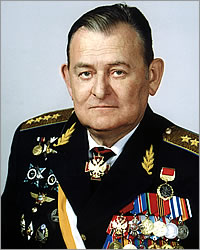
Retired Army General Kornukov

While Russian air and aerospace defenders were meeting in Tver last week, former Air Forces (VVS) CINC, Army General Anatoliy Kornukov gave Interfaks his opinions in a Moscow news conference.  

Kornukov is a member of a group calling themselves the ‘Extradepartmental Expert Council on the Problems of RF Aerospace Defense.’  He also advises the General Director of Almaz-Antey. 

He called aerospace threats the greatest danger for Russia’s security.  He said: 

“An attack from space decides everything now, strikes from space can be delivered to any point on Earth.” 

Kornukov thinks Russia’s aerospace defense (VKO or ВКО) concept’s been thought over long enough, and: 

“Unfortunately, there are still few practical decisions and concrete results.  New air defense systems are being developed very slowly.” 

“We, unfortunately, created a time lag of 20-30 years behind our possible enemy.” 

The ex-CINC says, although the VKO concept was approved in 2006, little has changed: 

“Years pass, but everything stays the same.  And to say that we’re ready for something now would be an exaggeration.  We can now resist an air attack from the standpoint of remaining S-300 systems.  As well as with those residual Su-27 and MiG-29 aircraft, the majority of which lack engines and spare parts.  The picture is simply terrible.” 

He also noted that new systems are progressing slowly, and are entering the armed forces’ inventory even more slowly.  He believes the Operational-Strategic Command of Aerospace Defense (OSK VKO or ОСК ВКО–the old Moscow Air and Air Defense District) can only destroy 1 in 5 targets: 

“If the reliability earlier was 96 or 98 percent, then now the effectiveness [of systems in the inventory] is in the range of 15-20 percent.  What’s meant is how many aircraft of 100 could get through without being countered.  Now about 80.” 

Kornukov recommends establishing VKO under the VVS, and under PVO specifically.  For example, he’d like the Moscow-based OSK VKO to control its own missile-space defense (RKO or РКО) formations and units.  He says: 

“Once all missile-space defense was in one set of hands–the PVO CINC.  He answered for PVO and for RKO.  Now the thinking is inexplicable:  each is dying by itself.  There’s not a person defined as responsible even for air defense.” 

“I think the correct decision would be for everything  to be located in one set of hands, and one person answering for the condition, training, employment [of PVO means]. 

He reminded the audience that, once the province of PVO, control of anti-missile defense went first to the RVSN, and now resides with the Space Troops.  Olga Bozhyeva reported that Kornukov wants RKO, specifically the 3rd Missile Attack Warning System Army to come to the Air Forces, and the latter should change its name to reflect its aerospace orientation.  He doesn’t like the idea of creating a new armed service called aerospace troops that would control PVO.  

Asked about Russia’s ability to defend against potential missile attacks from North Korea or Iran, Kornukov called the country’s capability to counter these threats ‘limited.’  He said, although the S-400 can cope with air-breathing threats, Moscow has no means for countering ‘operational’ (i.e. intermediate-range) missiles. 

Other members of the ‘Extradepartmental Expert Council’ had their say as well.  Former chief of PVO’s equipment ordering directorate General-Major Kolganov said: 

“. . . the VKO concept developed several years ago is not supported today organizationally or financially.  There is no targeted program for its realization.” 

Former Armaments Chief General-Colonel Anatoliy Sitnov says: 

“. . . in Russia they remembered about VKO only after the U.S. began to test the X-37 orbital glider.   . . . everyone’s occupied with a general assimilation of budget resources, and not at all with the development of new strategic technologies for modern space systems, reconnaissance, [and] missile attack warning satellites . . . .  This can’t come from a private businessman.  He comes to grab some budget money and sell what’s been made for scrap.” 

“We lost 300 super-technologies, primarily in aviation and air defense.  In particular, in the production of supergraphite, which is used in nose cones for missiles . . . .” 

Sitnov also criticizes poor organization for VKO: 

“There is no one to be in command, no one to command and control forces and means, no one to commission new air defense systems.” 

“It is time to move from words to deeds, to take purposeful directions and targeted programs for developing new aerospace defense systems.” 

“But we are waiting for someone to come and help us.  No one will.” 

Kornukov is an old PVO guy–albeit an Air Defense Aviation pilot; he was the first CINC of the VVS after it subsumed PVO.  Maybe he, and the others, are just shilling for Almaz-Antey to get even more from the State Defense Order.  Or perhaps their assessments are sincere.

Fifth Generation Fighter Update

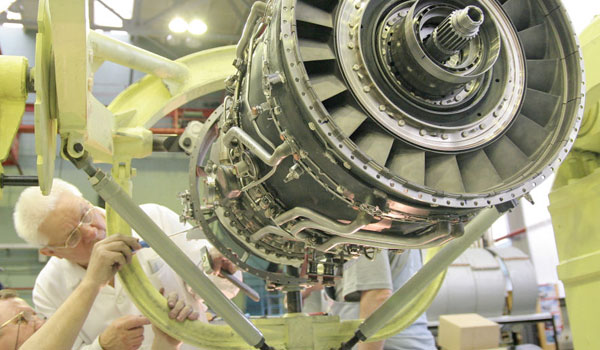
On 26 April, ITAR-TASS reported what is now termed the ‘second phase’ engine for the fifth generation fighter could be ready in 5-6 years, according to NPO Saturn’s managing director Ilya Fedorov.  In his words:

“The RDT&E on the components for making the engine is now being conducted.  It is going on not just at Saturn.  Salyut and the Petersburg Factory named for Klimov are also conducting scientific-research work.”

Fedorov seemed confident the ‘second phase’ fifth generation engine could fly in 5-6 years, depending mostly on what decision the Defense Ministry makes.

Obviously, Saturn wants and needs the work now.

Sukhoy says the fifth generation fighter’s first test phase, consisting of six flights, was successfully completed.  The aircraft’s reliability and controls, engine operation, and other basic systems were tested at a range of speeds and altitudes.

ITAR-TASS reminds that engine signature reduction measures are supposed to provide the new fighter an unprecedentedly low level of radar, optical, and infrared detectability, allowing the plane to raise significantly its combat effectiveness against air and ground targets.

Recall that Saturn put its 117 or 117S engine–a modernized AL-31F like on the Su-35–on PAK FA as its ‘first phase’ engine.  Everything else is up for debate.  As previously written, the Defense Ministry could decide to forego a truly new engine for a while. 

Meanwhile, talk about future fighter engine work isn’t really helping sort out the competition between ODK/Saturn and Salyut, or the general shakeout in a Russian industry with many players and interested parties.

Early last month Sukhoy General Director Mikhail Pogosyan said the PAK FA would be commissioned with ‘first phase’ engines, and ‘second phase’ ones would require another 10-12 years of development.  He doesn’t sound like a fan of new engines, and obviously wants to get his airframes on the assembly line and out the factory doors.

Specifically, Pogosyan said:

“We need to determine how much financing there will be for the phase two engines, how many of them there will be, and many other issues need to be resolved.”

Shamanov Wants Aviation Back

VDV Commander General-Lieutenant Vladimir Shamanov told ITAR-TASS today that the airborne troops need their organic light transport aviation back because its absence is complicating their training.  He says:

“The results of the air-assault training of the VDV in the first quarter of this year show that the transfer of light aviation to the Air Forces is stalling the system.”

As an example of this, Shamanov said light aviation fulfilled only 60 percent of planned jump training at the VDV’s Omsk Training Center.  He said its commander has asked to continue jumps until 7 May.

Shamanov said the VVS ban on Saturday, Sunday, and Monday flights was making the VDV a hostage.  He continues:

“We’ve already had cases.  The VVS command allocated one helicopter each for jumps by our Spetsnaz and communications regiments near Moscow.  However in practice it turned out that the regiment having clear priority, the Spetsnaz regiment, could use the helicopter coming from Levashovo in Leningrad Oblast for jumps in all for only a half day out of five for purely aviation reasons, at the same time as the second, communications regiment, with the other helicopter coming from Ryazan, jumped for a full week.”

“We’ve sent the Genshtab our proposals to create organic sub-units of light aviation in the VDV.  Unfortunately, there’s no hope for them since no answer has been received from the  Genshtab, but we will continue to assert our position.” 

A VDV spokesman said last year, when they still belonged to the VDV, An-2s supported 140,000 jumps in combat training, and the VVS’ Il-76 medium military transport aircraft only 35,000.

The VDV’s light transport force had 7 squadrons of Mi-8 helicopters and An-2 and An-3 aircraft and three airfields until the General Staff Chief’s 1 January directive transferred them to the VVS.

Shamanov also repeated his past calls for each of his three air-assault formations to have its own regiment of 20 combat and 40 transport helicopters.  He said a proposal to this effect is being prepared.  An interlocutor told ITAR-TASS:

“Having organic helicopter regiments in the VDV’s air-assault formations undoubtedly would raise their air-mobility, fire power, responsiveness of command and control in combat conditions, and in the course of combat training.  So the formation commander, who gets a helicopter regiment, could independently, when he considers it necessary, without turning to the VVS command, decide to have air-assault training for personnel including helicopter jumps.”  

Recall the early January Genshtab directive that transferred all aviation units in other services and arms, with the exception of RVSN, to the VVS. 

Shamanov’s complaint and appeal for a change is interesting.  He isn’t one to be afraid to demand special treatment.  He warded off the change from divisions to brigades in 2009.  

Shamanov last publicly lobbied for an upgraded VDV rotary wing component, both attack and transport helicopters, in late 2009.  The Ground Troops would also like army aviation, which they lost to the VVS in 2002, returned to them.  ITAR-TASS noted that former Ground Troops CINC Army General Boldyrev said as much last September.  He wanted helicopter regiments for air-assault brigades that belong to the military districts.

The organic aviation issue will be another place to watch for a possible policy about-face.

5th Generation Engine Delayed?

Work at NPO Saturn

Marker.ru yesterday wrote about NPO Saturn, FGUP Salyut, OAK, ODK, the Defense Ministry, and development of a fifth generation engine for Russia’s fighter aircraft.

Salyut believes it has basically defeated Saturn in the Defense Ministry’s tender to produce a fifth generation engine for the PAK FA, but Salyut fears development will be given instead to the newly created ODK, the United Engine-building Corporation.

Meanwhile, in OAK–the United Aircraft-building Corporation, they think the Defense Ministry may be considering not making a new engine for the first PAK FA model, and instead concentrating engineering resources on development of a 5th generation engine for future modifications of the new fighter. 

Salyut believes it decisively beat Saturn in the tender’s first phase, but the Defense Ministry has not announced the second and conclusive phase possibly because, according to Salyut’s Dmitriy Yeliseyev, the issue of creating the fifth generation engine was automatically decided when Saturn joined ODK.  But Salyut will insist on completing the tender process to decide who will be lead designer for the 5th generation fighter’s engines.

Yeliseyev says:

“We understand that general direction of the work to create an engine for PAK FA will be under ODK, but we also believe the tender is needed to even decide who will develop the gas generator for the future engine, and basically decide who will drive work on the engine for PAK FA.”

Salyut is now focused on modernizing the fourth generation AL-31 engine.  But test models of PAK FA have Saturn’s 117 engine, a modification of the AL-31.

OAK representative Konstantin Lantratov says the fifth generation engine has fundamentally new requirements, particularly in the areas of radar and infrared signature reduction.  OAK believes the Defense Ministry is not announcing the conclusive phase of the tender to build PAK FA’s engines because it’s waiting for the aircraft’s test results with its current engines.

Marker.ru asks is it necessary to make a 5th generation engine right now?  Wouldn’t it be better to concentrate work on producing engines for aircraft that will follow the PAK FA?  If a new engine starts development today, it will be ready in 5-7 years, about the time modernized or other variants of the PAK FA will be appearing [of course, this assumes the original PAK FA is successful and operational pretty quickly].

OAK’s Lantratov seems to think the Defense Ministry should decide now, if it wants to pay for new engines, and is willing to risk paying and not getting the right results.

Marker.ru consults CAST’s Konstantin Makiyenko . . . he thinks the Defense Ministry has no reason to hurry.  ‘Deeply modernized’ fourth generation engines from Saturn and Salyut are meeting VVS and PAK FA requirements, at least during the test phase.

He thinks a real 5th generation engine is 10 years away.  The need for more powerful engines will arise as other variants (2-seat, strike, naval, etc.) of the PAK FA appear.  Over their life cycles, aircraft get heavier and thrust has to keep pace, so more powerful engines would need to appear around 2020 anyway.

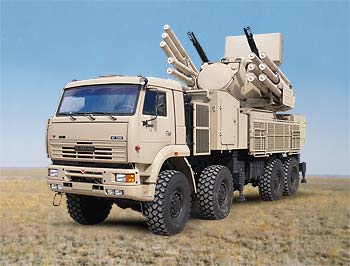
Ten Pantsir-S1s for Russia, or for UAE or Syria?

We all miss things, right?

In Friday’s NVO, Viktor Myasnikov published an insightful article on Pantsir-S1.  He hints that maybe the ten Pantsir-S1s ceremoniously delivered to the VVS aren’t actually for Russia’s VVS.  More interestingly, he provides numbers on the quantity really needed to rearm the Russian Armed Forces by 2020—500 for the VVS and 500 for the Ground Troops’ VPVO.

“‘Pantsir’ is one of the most talked about combat vehicles of the last 20 years.  Everything about it’s been heard, many have seen it at exhibitions, but it only began to come to the troops in recent days.  In the long years of design work (which began in 1990), testing, and disrupted contracts, ‘Pantsir’ received the honorary epithet ‘longsuffering.’”

“Now they’re talking about it again in superlative terms.  One could get the impression this is some panacea against all means of aerospace attack.  Actually, this is a close-range—up to 20 km—air defense system.  It exceeds hand-held ‘Igla’ and ‘Strela’ SAMs, but doesn’t approach the level of ‘Tor.’  And ‘Pantsir’s’ place in the order of battle has been designated perfectly concretely—it will replace ‘Tunguska,’ which in its time replaced ‘Shilka.’  True, it will really only replace ‘Tunguska’ when it gets on a tracked chassis.  For now this is a wheeled rear area variant designated to cover important targets—airfields, bases, air defense positions . . .”

“Initially ‘Pantsir’ was planned for tracked transport in as much as it needed to take the place of ‘Tunguska’ in tank columns to cover them against helicopters and other low flying enemy aircraft.  But the concept began to change due to underfinancing.  And a cheaper variant ‘Pantsir’ put on wheels, became positional as the last line of air defense for rear area targets.”

“The uniqueness of ‘Pantsir’ in the arms market is guaranteed by the fact that U.S., NATO, and Israeli armed forces are not threatened by cruise missiles, planned munitions and UAVs of the potential enemy [many would differ with this assertion].  It [Russia?  Arab states?] doesn’t have them in the necessary amount and won’t have them in the coming years.”

“In accordance with the State Program of Armaments to 2015 it’s planned to deliver 20 of such systems to the RF Armed Forces.  10 have already been received.”

“At the same time the Russian Air Forces’ demand is specified as a minimum of 100 systems of this type.  Incidentally, other specialists believe it’s essential to buy 200-250 systems by 2015 and 400-500 by 2020.  Besides that, the Ground Troops could buy 500-600 vehicles by 2020 for replacing ‘Tunguskas.’  They certainly could, of course, they could, but who will provide them?”

“Besides this, there’s no trusting official announcements that all overdue export contracts for the supply of ‘Pantsirs’ to the UAE and Syria have been fulfilled [actually it’s pretty clear supplies are just starting].  Therefore it’s strange that 10 vehicles suddenly turn out to be withdrawn from the export orders.  Suspicions immediately arise that the buyer has refused them or not accepted them due to complaints about quality.  Meanwhile, some anonymous sources from Tula defense industrial enterprises maintain that everything’s normal with the quality, but the vehicles are just taking a pre-sales run on normal asphalt road conditions.  After the [9 May Victory Day] parade the ‘Pantsirs’ will be repainted desert camouflage and handed over to the foreign buyer.  There’s no need to show them to anyone until the next parade.”

“There are suspicions that the ‘KamAZes’ for these ‘Pantsirs’ are not quite serial models.  ‘Cause in their build-out they are too close to the one in which Vladimir Chagin wins ‘Dakar.’  Would it make sense to have imported turbocharged engines on them?  Such capability of automotive equipment for covering stationary S-400 SAMs is a little unnecessary.  But it’s exactly right for the Middle Eastern or North African desert.”

“But there is another side to this.  It’s been announced that these 10 ‘Pantsirs’ will participate in joint exercises of Russia, Belorussia and Kazakhstan.  And also before the handover to the troops at the ‘Shcheglovskiy val’ enterprise an archpriest blessed them.  Such a ritual wouldn’t be arranged for a buyer from a Muslim state.”

Pantsir-S1 and the Priority on Arms Exports

KBP's Pantsir-S1

Recent announcements about deliveries of the Pantsir-S1 highlighted the priority still enjoyed by arms exports over domestic procurement of weapons systems for the Russian Armed Forces.

On 18 March, the Russian Air Forces took delivery of their first 10 Pantsir-S1 antiaircraft missile-gun systems (ZRPK) from the Tula-based Design Bureau of Instrument-building (KBP).  These Pantsir-S1 systems will march on Red Square during the coming 9 May Victory Day parade, before heading to the Elektrostal-based 606th Guards Air Defense Missile Regiment that also has the S-400.  Some of the regiment’s Pantsir-S1s will participate in live-fire exercises at Ashuluk in April.

The Pantsir-S1 will replace the 1970s-era Tunguska-M1 in Russian air defense units.  A short- and medium-range missile-gun system, it provides point defense for civilian or military assets like S-400 SAMs.  VVS Deputy CINC for Air Defense, General-Lieutenant Sergey Razygrayev has said three Pantsir-S1 systems will be deployed around each S-400 launcher.

The Pantsir-S1 has 2 twin-barrel 30-mm 2A38M antiaircraft guns and 12 57E6-E SAMs.  It is reportedly effective against targets with a reflective surface of 2-3 square centimeters and speeds to 1,000 meters per second, at a maximum range of 20 kilometers and altitude of 15 kilometers.

The Pantsir-S1 can be mounted on various vehicles and ships, and General-Lieutenant Razygrayev has said it will become a standard air defense system for each of Russia’s armed services and combat arms in the future.

When the VVS got its 10 Pantsir-S1 systems, the KBP deputy general director announced that the Air Forces will receive more than 20 units in coming years.  An unnamed source told ITAR-TASS, the VVS would get 25 Pantsir-S1 by 2012.

Development of the Pantsir-S1 dates back to the early and mid-1990s.

The United Arab Emirates (UAE) signed a contract to buy 50 Pantsir-S1s for $734 million in 2000. Syria also contracted for 36 systems.  Ex-Defense Minister, now Deputy PM for the OPK Sergey Ivanov said in early 2008 that 24 systems would go to customers in 2008, from a total order book of 64 for the Pantsir-S1 (of course, 50 + 36 should be 86, not 64).  But the Pantsir-S1 didn’t finish development and testing until some time in 2008, and entered production later in 2008 or in 2009.

Pantsir-S1 deliveries to the UAE and Syria reportedly began in 2009, and the system is already supposedly operational in the UAE.  An OPK source told Interfaks that the first stage of Pantsir-S1 deliveries to these two countries had been successfully completed.

This month Moscow announced the sale of 38 Pantsir-S1s to Algeria for $500 million.  The systems are supposed to be delivered this year and next.  The Russians are reportedly close to a Pantsir-S1 export deal with Libya, and Saudi Arabia, India, and Belarus have been mentioned as other potential buyers of the system.

So these are pretty lucrative sales for KBP, roughly $13-15 million per unit.

Now back to the Russian Armed Forces which have only 10 newly-received Pantsir-S1 themselves.

In late 2007, the commander of Troop Air Defense for the Russian Ground Troops gave his opinion that Pantsir-S1 needed improvements before it could enter his inventory, specifically he wanted its size reduced and better performance against certain types of targets.  For its part, the VVS had been looking, and waiting, for Pantsir-S1 since at least 2002.  AVN reported in late 2008 that the VVS wants to buy more than 100 of the systems.

Even if the Defense Ministry paid $15 million (unlikely), 100 is still a modest buy of $1.5 billion against annual military procurement of about $40 billion these days.  But one can guess that the military is haggling with KBP over the price it’ll pay for the Pantsir-S1.  And this purchase has to fit with other defense procurement and KBP’s production for its foreign buyers.

Winter War 2010

The Russian press has noted the 6 March article in leading Finnish daily Helsingin Sanomat describing how a Russo-Finnish war might play out in 2010.  With the conveniently provided English, one can read for oneself.  But here’s a capsule version.

The imaginary war scenario begins with a Russian cruise missile strike on the Finnish Broadcasting Company compound.  Under the State of Defense Law, mobilization begins and the Chief of Defense becomes Commander-in-Chief of the Finnish Defense Forces.  Russian fighter aircraft engage Finnish F/A-18 Hornets around Helsinki.  Finnish government entities evacuate to safer locations.  Russia’s motorized offensive presses across the Karelian isthmus, trying to reach the Finnish capital in two days.  The Finns respond with antitank weapons and German-made Leopard tanks.  Russian airborne are dropped in Helsinki to disrupt rear areas; fierce urban warfare ensues. Civilian casualties mount and noncombatants flee for Sweden.  The Russians and Finns are engage each other on the electronic front [but few details are fleshed out].

The war is decided in the air.  Russian air power overwhelms Finland’s 100 combat-capable aircraft.  But it’s no quick victory for Moscow, and the Finns receive lots of international support [it makes them feel much better to be sure].

There’s obviously a lot to question in the conjecture above.

Rossiyskaya gazeta from 19 March indicated that there’s buzz about the article in Russia and Finland, and people mostly want to know why such a ‘provocation’ has been published.  So RG asked the Finnish paper’s editor to comment, and he replied:

“In the last two months we’ve written a lot about the Winter War and its results.  And this article was part of that series of publications.  I want to note that in this material a fictional war scenario is presented.  Its purpose was to show how such a situation would develop if such a conflict broke out like at the start of the Winter War.”

“I’m not prepared to talk about what kind of war scenarios exist in the Finnish military.  This is exclusively their business.  We just published our view of an imaginary war.”

“It’s not possible here to say that we, in any case, wanted somehow to harm the relations of Finns toward Russia with our publication.  I don’t think it’s possible to do this with one article.  Or just the same draw Finland closer to NATO membership.  Therefore I ask you not to find any kind of secret designs in our publication.”

“I want to note that our material cannot be put in the same row with reporting on a Russian attack on Georgia from Georgian television station ‘Imedi.’  The aim of the story of our Caucasian colleagues was to shake up the country’s population.  In our material, we immediately indicated that the published war scenario was completely fictional.”

On 17 March, Argumenty nedeli criticized the author of the war scenario for not explaining why Russia and Finland would end up in a war.  Even in the Cold War, Finland was a better friend to Moscow than some of its socialist allies.

According to Argumenty nedeli’s defense correspondent Yaroslav Vyatkin, Helsinki lived pretty well off trade with the USSR from the 1950s to the 1980s.  But in the 1990s, an anti-Russian mood came over Finnish society.  Finland forgot about its role as bridge between East and West, and reoriented its economy toward the EU.  Some social movements actively agitated for Finland to join NATO.  Vyatkin believes the U.S. has stoked these sentiments in hopes of broadening NATO’s northern flank.

But, according to Vyatkin, Finns who want NATO membership don’t understand that the alliance can’t defend them, whatever it promises.  But he has confidence in the rational and calm Finns to make the right choice when it comes to Russia and NATO.

Then Vyatkin takes a closer look at the article’s military propositions and Finnish forces–about 90 Leopard and 65 T-72 tanks, about 200 BMPs and 800 BTRs.  BUK-M1 air defense systems around Helsinki (which it stopped procuring due to reported unhappiness with their poor resistance to jamming).  Vyatkin says the Finns’ F/A-18s and Hawk trainers would just meet a glorious death in close combat with A-50 controlled Su-27, MiG-29, and MiG-31B fighters. He thinks, though not strong, the Baltic Fleet is more than a match for the Finnish Navy.  However, he acknowledges that only the 138th Independent Motorized Rifle Brigade and 76th Airborne-Assault Division are adjacent and immediately available for action against Finland.

Vyatkin tails off by noting that, although brave, and not badly trained and equipped, the Finns lose, but Russians and Finns won’t be fighting anyway.

Vyatkin’s assessment seems a bit overconfident.  Russia’s Genshtab surely wouldn’t be this sure of easily subduing the Finns, especially or hopefully not after what was nearly, in many ways, a debacle against the Georgians in South Ossetia two years ago.

Svobodnaya pressa talked to Leonid Ivashov’s assistant at the ‘Academy of Geopolitical Problems,’ Konstantin Sivkov, about the new Winter War scenario.  Sivkov calls it nonsense, saying it sounds like someone confused Russia with the U.S., since backward Russia’s not capable of such operations. He adds that he really doesn’t want to comment on such stupidity.  Sivkov’s hard-pressed to come up with any conceivable reason why Moscow would want to go to war with Helsinki.  So, he chalks this all, like the ‘Imedi’ incident, up to an effort to cast Russia in the role of an enemy, and to prepare for Western aggression against Moscow.

In early March, Voyenno-promyshlennyy kuryer published an article on northern Europe and NATO written by a candidate of military sciences, corresponding member of the Russian Academy of Rocket and Artillery Sciences and the chief of the scientific-research department of the Defense Ministry’s Military History Institute.  The authors examined the possible negative consequences of Sweden and Finland joining NATO.  They concluded that Finland has been a true military neutral, but domestic political debate and swings in public opinion on joining NATO have become more pronounced since the late 1990s.  Some Finnish leaders have favored NATO, while others have argued for orienting more toward the U.N. or EU instead of joining NATO, which would, in their view, only add to international tension.  The authors note that, despite its formal military neutrality, Helsinki has taken practical steps toward more integration with NATO, including going over to NATO arms standards, conducting joint maneuvers with NATO, and using Partnership for Peace to promote military compatibility.

Regarding the ‘Atlanticization’ of northern Europe, they conclude that the region’s military-political configuration and balance of forces would change radically if Sweden and Finland joined NATO.  For Moscow, they recommend not only following the situation closely, but adopting a more clearly ‘multivariate and weighted’ line in relation to these countries.  It is noted that, even if they joined NATO, they might not agree to host foreign troops.

Finally, the authors say that Finnish military policy could have particular significance for northern European security in coming years.

NATO Exercise in Baltic Region

People apparently love this issue, almost as much as information and netcentric warfare . . . .  So, give the people want they want.

Today’s Kommersant says, “They’ve Decided to Have Maneuvers on Russia’s Doorstep.”

The NATO leadership has decided to exercise in the airspace over Lithuania, Latvia, and Estonia, with forces from those countries plus the U.S., France, and Poland.  Kommersant calls it a symbolic start to a large-scale program with the Baltic member-states that will continue through this year.

The staff of NATO’s joint air forces command is quoted as calling the exercises ‘routine’ and having a strictly ‘organizational character.’  But they will also be “a demonstration of alliance solidarity with the countries of the Baltic region that have joined it.”

Participants intend to give special attention to increased coordination between NATO air forces and to patrolling air space.  It will give NATO a great opportunity to use regional air forces and evaluate their readiness.

The Baltic Region Training Event scheduled for 17-20 March was developed at the end of 2008.  France will use its Mirage 2000C, Lithuania its L-39 Albatros, Poland F-16, and the U.S. tanker aircraft.  Latvia and Estonia will provide ground control.  Fighters will land at Tallinn airport for refueling and simulated maintenance.

Kommersant says the issue of serious exercises with the Baltic members came up after Russia’s short war with Georgia in August 2008.  Baltic concerns were reinforced after Moscow’s Zapad-2009 exercise with Belorussia.  According to the paper, Baltic leaders saw in this exercise work on various scenarios for seizing the Baltic countries.  It notes that Russia’s possible purchase of France’s Mistral has also caused a stir in the Baltics and Poland.  Leaders of the former Soviet republics have asked the U.S. to press Paris not to sell it, according to Kommersant.

Washington and Brussels have heard Baltic concerns and planned a series of political and military steps to calm them.  Kommersant names the agreement to place Patriot air defense missiles in Morong, Poland, 75 km from Kaliningrad’s border in April as one of the steps.  NATO’s Parliamentary Assembly will meet in Riga in May.  Also noted is the June amphibious exercise in Estonia in which 500 U.S. Marines will participate.  Kommersant says Estonian officers will command the exercise.

The steps will culminate this fall in a joint ground exercise involving 2,000 U.S., Lithuanian, Latvian, and Estonian troops as well as transport ships.

Newsru.com added a comment from Fedor Lukyanov, chief editor of the foreign affairs journal ‘Russia in Global Politics.’  He noted that the Baltics don’t trust NATO completely, and European members of the alliance most of all, and suspect that they won’t risk relations with Russia in a crisis.  The fact that these will be the first on-the-ground exercises in the Baltics since the countries joined the alliance 6 years ago just serves as extra confirmation of this.