Category Archives: Manpower

VVKO Faces West

How Will They Represent VKO on the Space Troops Flag?

VVKO faces west.  And north . . . ok, northwest.  Makes sense, that’s the direction those hypersonic missiles are coming from, right?  Maybe, maybe not.

Mil.ru, as is its wont, printed a little item on military preparations for the December 4 Duma election.

It indicates 80 percent of 53,000 servicemen and civilian personnel of the new Troops of Aerospace Defense (VVKO) will vote [i.e. are based] in the Western MD (ZVO). 

The press-release says more than 150 of 171 polling places (88 percent) for VVKO bases, garrisons, and military towns are located in the ZVO.

Space Troops weren’t very big, and they’ve gotten much bigger by swallowing as-yet unclear parts of the OSK VKO (the former KSpN or Moscow PVO District) and other Air Forces’ PVO units into the new VVKO.  OSK VKO, in particular, was a large, westward-leaning formation.

Still it’s surprising VVKO’s center of gravity has shifted so drastically to the west.  One would have thought there’d be a substantial chunk of VVKO-controlled PVO in the Far East, or northeast, too.

Makarov Reports to Public Chamber

Makarov Briefs the Public Chamber

According to Mil.ru, General Staff Chief, Army General Nikolay Makarov reported to the Public Chamber today as part of its hearings on “The New Profile of the Russian Army:  Results, Problems, Prospects.”  Here’s a sampling of what he discussed.

According to ITAR-TASS, Makarov said there are 186,400 contract servicemen today, and there will be 425,000 in 2016.  Recruiters will work throughout Russia starting next year.  Prospective contractees will train for three months before signing contracts.  Minimum pay will be 23,000 rubles.  Makarov said 2012 will be a test year, and from 2013, 50,000 contractees will be signed up each year.

RIA Novosti printed Makarov’s stark assessment of Russia’s conscript manpower.  The General Staff Chief said, of all men liable to conscription, only 11.7 percent can be called up, and 60 percent of them are excluded for health reasons.  So, he concludes:

“Therefore we are practically faced with the fact that there is almost no one to callup into the Armed Forces.”

He said Russia’s current mobilization reserve consists of 700,000 ex-conscripts. 

Makarov suggested increasing the prestige of military service through a veteran’s preference system.  Former soldiers and officers would enjoy a priority in hiring for government service, according to RIA Novosti.

ITAR-TASS quoted Makarov on cuts in military command and control organs.  He indicated they’ve been cut by a factor of four — from 51,000 to 13,435 personnel, and this process continues.  One-third of C2 organs were disbanded, and the rest reduced in size several times. 

He indicated that, when the Defense Ministry’s central apparatus numbered 51,000, it occupied more than 20 buildings in Moscow.  The apparat is now in a single building.  Other buildings were sold off.  But Makarov assured his audience the effectiveness of C2 hasn’t declined because of the reductions.

Regarding the new pay system for officers, RIA Novosti wrote that Makarov said higher pay basically implements the old Order No. 400 on premium pay, but officers will still have the chance to receive extra “stimulus” pay under the new system.

ITAR-TASS printed Makarov’s figures on efforts to get rid of old ammunition.  According to the General Staff Chief, at the start of the year, Russia had 119.5 million tons of old munitions to destroy, but now only 7 million.  Less than one percent could be dismantled; the vast majority had to be blown up.  Makarov indicated the number of ammunition storage sites will drop from 161 at present to about 30.

Makarov defended his past criticism of domestic weapons and equipment by giving more examples where foreign systems are superior to Russian ones (i.e. tanks, MLRS, satellites), according to ITAR-TASS.  The general argued for increasing the range and service life of systems as well as providing better protection for soldiers operating them.

RIA Novosti reported Makarov intends to continue pushing for lower prices on arms and equipment the military’s buying.  He intimated there will be a “specialized department” for negotiating with producers.  He claimed shipbuilding contracts with OSK were concluded on the Defense Ministry’s terms.  He added that the military has given Almaz-Antey two years to build two new factories to produce the S-500, according to RIA Novosti.

ITAR-TASS relayed Makarov’s remarks on Russia’s airfields.  Makarov indicated Russia has cut from 357 military airfields down to 26 that he describes as meeting world standards.  Russia has eight air bases. 

He said pilot flight hours are at 90 per year.  He said it’s planned to increase them to 130 next year, and then to 220 at some point.

ITAR-TASS and RIA Novosti carried the General Staff Chief’s comments about threats on Russia’s borders: 

“Under certain conditions, local and regional conflicts can grow into mass ones with the employment of nuclear weapons.”

“The conflict which could occur in connection with the withdrawal of American troops [from Afghanistan] could lead to a local, regional and even large-scale one.  And we have to be ready for it.”

A Rock and a Hard Place

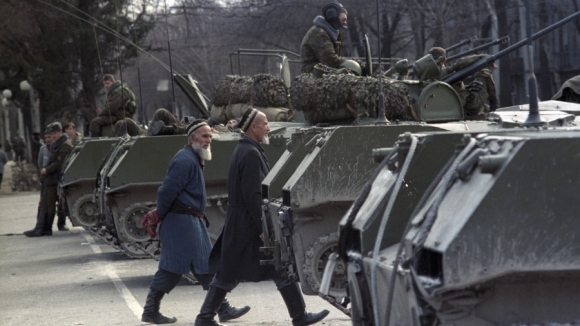
Russians in Tajikistan (photo: RIA Novosti / Vladimir Fedorenko)

Conscripts or contractees?  It’s difficult for the Russian Army to get the right kind of conscripts, where it needs them.  But, over time, it hasn’t been any easier to obtain long-term contract enlisted either. 

Last week, Izvestiya wrote about army plans to replace conscripts currently serving in its 201st Military Base in Tajikistan with contractees. 

An officer in the formation told the paper it’s too costly to keep 3,000 conscripts in Tajikistan, and, by the end of 2012, the Russian Army will replace half with contractees.  A GOMU source tells the paper replacing all 3,000 at once is “unrealistic.”  Contractees will reportedly serve on three-year deals getting 30,000 rubles per month.

The situation for Russians in Tajikistan, the officer says, is strained, and Tajik authorities regularly detain conscripts for one reason or another.  As an example, he cites the case of a conscript driver who killed three Tajiks last January.  Thus, he concludes, it would be easier with “professionals” – contractees —  who “know what they’re doing, and can be responsible for their actions.”

But there’s no reason to think contractees will avoid trouble any better than conscripts.  The first contract experiment proved that.  Contractees are more costly and just as difficult to control, if not more than their conscripted brother-soldiers.

According to Izvestiya, the 201st now has 5,500 personnel, including the 3,000 conscripts.

An old Krasnaya zvezda report says, in early 2007 – at the height of the first, failed attempt at introducing contract service – the military base had 7,000 servicemen in all, about 60 or 65 percent contractees.  Its two maneuver units had 50 percent or fewer in their ranks.

Back then, the Defense Ministry daily said the military was all set to send conscripts in place of hired soldiers.  It was hard to convince older, experienced men to go to Tajikistan because of the difficult living conditions and prospects for serving on contract in Russia.

As Izvestiya’s interlocutor intimated, relations between Moscow and Dushanbe are a bit strained right now, prompting some to wonder out loud if manning the 201st won’t become a moot issue.

Farewell Russian Arms and Russian Army

Does it matter what old soldiers think?  It doesn’t seem to right now.  Maybe they’re just bitter old dudes whose time has passed. 

But they certainly provide interesting and frank commentary on the state of the OPK, the Armed Forces, and Serdyukov’s reforms at odds with official pronouncements from the Kremlin, White House, and Defense Ministry.

Former 58th Army Commander, retired General-Lieutenant Viktor Sobolev wrote recently for Pravda.  He reacted to a program on the army on NTV from October 9.  It apparently wasn’t posted on NTV’s site. 

Sobolev says this right up front:

“On the eve of elections, our president and Supreme Commander-in-Chief Dmitriy Medvedev and ‘national leader’ Vladimir Putin have been worried in turn by the condition of the country’s army and military-industrial complex and are assuring gullible Russian citizens that they will do everything so that our Armed Forces meet modern requirements and receive new types of armaments and military equipment in a timely manner.”

“The Russian mass media [SMI] under the government’s and president’s control have been actively used in making these assurances.”

The ex-general-lieutenant is critical of just about everyone:  Serdyukov and his “effective” managers, people who haven’t served in the army, former First Deputy Defense Minister Popovkin who wanted to buy more arms abroad, his successor Sukhorukov who dares insist that defense enterprises substantiate their prices, independent defense commentators like Litovkin and Pukhov, interest-hungry banks, corrupt middlemen.

He points only to Tactical Missile Armaments Corporation General Director Boris Obnosov in a positive light for recognizing that other countries won’t sell Russia their best weaponry. 

Still, Sobolev’s under a bit of a misimpression thinking that Moscow is really buying lots abroad.  In fact, a cynical observer might conclude the whole situation over the last year was designed to let Putin be the champion of the domestic defense sector vs. Medvedev the Westernizer.  But we digress . . . 

For Sobolev, this all sums to an OPK with a broken GOZ, that’s chronically underfinanced and losing its capability to produce modern arms and equipment. 

Again, the cynic might say this was already lost a number of years ago.

But, says Sobolev, when compared with the OPK:

“Even worse is the situation in the Armed Forces.  It’s believed we have a million-man army which Mr. Sukhorukov recalled on this program.  Let’s calculate it together.  According to TO&E, there are 150 thousand officers in the army, no warrants at all, they were liquidated.  According to civilian [but he still wears his uniform] GOMU Chief V. Smirnov, 184 thousand contractees are serving in the army and navy.  In all 334 thousand, the remaining 666 thousand are conscript servicemen.  But they simply couldn’t have called up so many.  Moreover, conscripts serve not only in the army and navy, of the number called up, up to 30% serve in the Internal Troops, Border Guards, MChS units, presidential regiment, and so forth.  This means in the army and navy huge undermanning exists, and it will only get bigger.  It’s planned to reduce the fall callup by 2 times.  More than 200 thousand citizens, according to Smirnov, are evading military service.  The spring callup stretches out to September, and the fall until March.  In the troops, they’re occupied with it constantly, in the course of the entire year, they take young soldiers into their ranks in small groups, organize individual training for them and try to man sub-units.  At the same time, the process of dismissal also goes on without interruption.  In these conditions, you can’t talk about any kind of quality manning of sub-units.  What kind of units of permanent combat readiness are these?”

“Therefore NATO’s military analysts note with satisfaction that, as a result of the reforms conducted, Russia’s Armed Forces aren’t capable of completing missions even in local conflicts, ‘The Russian Army does not have a sufficient quantity of transport resources for redeploying troops over great distances, does not have a sufficient quantity of aircraft and pilots who know how to fly in any weather, no unified information system.  There are not enough soldiers in the army . . .’”

“In NATO, they understand the Russian Army’s fallen apart, but how about our country’s leadership?”

Whoa. 

Sobolev’s no crank, and he’s not to be taken lightly.  Born and schooled in southern Russia, he probably has combat experience whereas the current General Staff Chief and Ground Troops CINC probably don’t.  Sobolev served as Deputy Commander of the OGV(s) in Chechnya in 2002, before taking over the NCMD’s 58th Army in 2003.  He ended his career as the chief military advisor in Russia’s Indian embassy in late 2010.

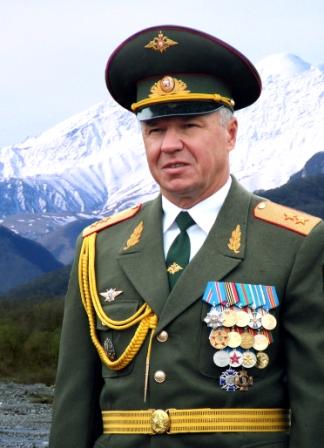
General-Lieutenant Sobolev

A more recent photo shows him looking just about as fit in retirement at age 61.

One wonders if a conservative like Sobolev realizes how much his thinking coincides with that of more liberal critics he seems to detest.

Possible Mikhalkov Replacement

Aleksey Nemov

Interfaks reports 35-year-old former Olympic gymnastic champion, Aleksey Nemov is the frontrunner to chair the Defense Ministry’s Public Council.  The agency cites Valentina Melnikova, head of the Committee of Soldiers’ Mothers of Russia and herself a member of Public Council’s presidium.

Nemov’s possible appointment first surfaced on July 23.  He’s reportedly a United Russia member.  Melnikova said the Defense Ministry proposed Nemov to the presidium, but the Council is also considering other candidates.  She said a final decision on a new chairman will come at the Council’s September meeting, according to Obshchaya gazeta.  She considers Nemov a sufficiently well-known and worthy candidate for the job.

Nemov would replace flamboyant and outspoken film director Nikita Mikhalkov who resigned abruptly in May when the Defense Ministry took back his migalka – the flashing light and siren enabling officials, the wealthy, and the well-connected to drive through and around Moscow’s monstrous traffic jams.

Mikhalkov claimed he quit to protest the way in which the last two Victory Day parades were conducted (participation by NATO troops, president and prime minister seated while observing, etc.), changes in military education and training, and his self-professed inability to influence the situation in the army.

Forum.msk concludes, if Nemov becomes the next head of the Defense Ministry’s Public Council, he’s appropriately named.  His surname comes from немой (mute, silent, or dumb).

For the Public Council’s current composition, see this Krasnaya zvezda from last December.  For its original, early 2007 makeup, see Nezavisimoye voyennoye obozreniye.

Three-Month Combat Training

Three-and-a-half years after it started phasing in one-year service, the Russian Army’s condensing combat training into three months so it can put draftees in line units for their remaining months.  One wonders what they’ve tried to this point, or if they’re just now addressing the implications of the shortened draft term.

Twelve weeks of basic training is about the norm by world standards for draftee armies.  But the Russians have compressed what they previously taught over a longer period, so the question is how well conscripts absorb, retain, and employ their lessons.

Officially, Russia’s three-month accelerated combat training program is experimental.  Krasnaya zvezda reports, since June, the 19th Independent Motorized Rifle Brigade in North Ossetia, has been trying a new program to take new draftees and turn them into professionals, ready to serve in combat sub-units [подразделения], in three months.

The army daily claims these new conscripts focus exclusively on the combat training course, which now reportedly includes 1.5-2 times more “practical exercises” than in the past.  The course covers 90 days (536 hours).  It retains the traditional first month of individual training, and the last two consist of training and coordination [слаживание] of sections, platoons, and companies (batteries).  The course ends with several days of test exercises, sub-unit combat firings, and company-tactical exercises.

The brigade’s deputy commander says:

“In the new program, theory has been practically thrown out, the stress is on the practical part.  In connection with cutting the conscript service term to one year, the task of preparing, in three months, a coordinated sub-unit, ready to fulfill missions in various conditions, stands before us.”

The choice of the 19th IMRB wasn’t accidental.  As KZ notes, the formation saw action in the five-day war with Georgia.  It has a “reinforced company-tactical group” of BMP-3s fueled for a 500-kilometer roadmarch ready to depart garrison within 30 minutes, according to KZ.

KZ then describes how outsourcing repair and support work has enabled draftees to focus entirely on combat training.

This week, Mil.ru updated the experiment.  It said the brigade is currently finishing platoon coordination and beginning company coordination, which will continue until mid-August.  The Defense Ministry says the Ground Troops’ Main Combat Training Directorate is monitoring the accelerated program.  In late August, it will oversee the company tactical exercises, and determine their capabilities for action under combat conditions.  Conclusions about the three-month combat training program will come in September.

Writing in Nezavisimaya gazeta yesterday, Vladimir Mukhin questions whether it’s possible to train professionals in three months.  He notes the Southern MD was supposed to be 70 percent contractee-manned by now, according to the Defense Ministry old contract service plan.  Parents of green soldiers feel like their sons are serving in a “hot spot,” according to Mukhin.  Conscripts from this formation died in the Georgian conflict.  The onus is on the political leadership, says Mukhin, rather than military commanders to explain why units here aren’t manned with professionals.

Mukhin quotes former Ground Troops’ Chief, General-Colonel Yuriy Bukreyev:

“If a conscript soldier has basic military training, then it’s possible to give him the skills to employ him in combat conditions in the North Caucasus.  I’m giving the same conclusion from the Soviet Afghan experience again, when I headed the staff of the Turkestan Military District.  But then soldiers served two years.  At first, they were in training sub-units, they underwent additional mountain training in special training centers.  Only afterwards, that is when they’d served in the troops a year or more, were they sent to Afghanistan.  Today conditions are a little different.  The conscript soldier’s service term’s been shortened to 12 months.  And this means the intensity of combat training should increase.  The Ground Troops’ Glavokomat is just conducting an experiment in training first-year soldiers to carry out missions under the conditions of an armed conflict.  We’d like to hope that raw soldiers won’t be drawn into resolving such missions.  Professional sub-units would appear more effective here.  But, unfortunately, in our Armed Forces reliable conditions for the mass recruitment of contractees into the troops still haven’t been established.”

Making Soldiers in the Southern MD

Nezavisimoye voyennoye obozreniye’s Oleg Vladykin participated in a press-tour of the Southern MD (OSK South), and last Friday he published his take on what he saw.

Deputy District Commander, General-Lieutenant Igor Turchenyuk set the scene, telling assembled journalists about establishing the YuVO last year:

“A substantial — more than two times — growth in the combat potential of the grouping of troops and forces deployed on YuVO territory is the result of the transformations which have been carried out.”

Turchenyuk said the YuVO conducted more than 200 command-staff and tactical exercises, including jointly with air and naval forces, during the winter training period.  This was reportedly seven times greater than comparable training in the old North Caucasus MD.  

Turchenyuk claims the intensity of everyday combat training has increased noticeably, doubling fuel and ammunition expenditure.  Outsourcing food and laundry services and arms and equipment maintenance made this possible.  By eliminating extraneous duties, a more intense 40-hour week has added more than 300 hours of training time to the year.   

Turchenyuk’s main point:

“As a result, we got the chance to prepare a real professional serviceman-specialist even under the conditions of a one-year training cycle.”

And Vladykin’s:

“Of course, it’s hard to argue with figures.  Therefore, I really wanted to confirm with my own eyes how conscript servicemen are being turned into real professionals.”

Vladykin and the others were taken first to the 34th Independent Motorized Rifle Brigade (Mountain), built from scratch on President Putin’s order.  The 34th was established as an elite, model formation as good as any “show” unit elsewhere in the Armed Forces.

But, says Vladykin, not everything turned out as imagined, especially with the formation’s manning. 

The brigade found 5,000 contractees to train as professional mountain infantry, but today, with the cut in contractees, more than half the brigade’s manpower are conscripts.  After seeing some training, Vladykin concludes:

“I won’t say that all soldiers looked like high-class mountain infantry.  But since I know most participants in the exercises have served a little over half a year, I’m ready to acknowledge: they’re not badly trained.”

Next up was the 22nd Independent Brigade of Special Designation (Spetsnaz).  Its professionalism needs to be even higher, but this brigade is currently 60 percent draftee.  Vladykin wonders out loud whether they will be able to carry out the brigade’s missions, and whether it’s possible to grow a real soldier from a conscript.

Lastly, in the 19th Independent Motorized Rifle Brigade, practically all soldiers and junior commanders (NCOs) are conscripts.  Here, says Vladykin, they learned the difference between draftees and contractees in battles in two Chechen campaigns and in South Ossetia.

Its officers reserve judgement about the efficacy of outsourcing rear service functions.  Conscript drivers learn vehicle maintenance from contracted civilian mechanics who won’t be with them in combat.

The brigade’s chief of staff describes how a reinforced company tactical group meets the formation’s permanent (one-hour) readiness requirement in the volatile North Caucasus.  Another officer says duty officers have returned to the barracks to keep order at night.  The officers here don’t fully trust their conscript soldiers and sergeants.

Vladykin doesn’t provide a larger bottom line.  It seems to be that the YuVO may be turning draftees into soldiers, but not true professionals.  For all the figures about the district’s higher training tempo, Vladykin doesn’t seem too impressed.

Quoting Tolya

Tolya’s remarks to the press today made quite a few headlines, and left a few useful benchmarks for the future.  Defense Minister Serdyukov addressed procurement and manpower issues.  Here are his quotes from RIA Novosti and ITAR-TASS.

Tanks for Nothin’

“We met the designers who proposed their preliminary work to us.  60 percent of what was proposed is old work.  Therefore, we still declined these proposals.”

“Now it’s more expedient to modernize our country’s tank inventory than to buy new ones, for example the T-90.”

Cold Water on Carriers

“We have no plans to build aircraft carriers.”

“Only after this [a preliminary design of what this ship might look like], the Genshtab together with the Navy will make a decision on the need for such a ship.”

SSBNs Aren’t Automobiles

“‘Bulava’ flew, this is good news.  We understand precisely that it’s possible to launch serial production of the missile on this variant.”

“We got the result, now it’s possible to load SSBN ‘Yuriy Dolgorukiy’ with ‘Bulava.'”

“We’d like to do this [test Bulava from Aleksandr Nevskiy], but we understand that to plan this precisely is impossible.  A nuclear submarine isn’t an automobile.”

Bullish on Arms Deliveries

“Deliveries of strategic missiles ‘Topol-M,’ ‘Yars,’ ‘Avangard’ will increase three times, ‘Bulava’ and ‘Sineva’ missiles for strategic submarines one and a half times, aircraft four times, helicopters almost five times, air defense systems almost two and a half times [in 2011-2015 compared with 2006-2010].”

Not Going Below a Million Men

“There are no such plans, there are no questions of cutting manpower.  We’re striving for the entire army under the million number, and it isn’t planned to cut this figure.”

“On account of this [increasing contractees from 2014], we’ll manage without fail to get through the demographic hole which is anticipated in 2014.”

Two Arctic Brigades

“The Genshtab is now developing plans to establish two of these formations.  In the plans, deployment places, armaments, manning, and the infrastructure of these brigades need to be specified.”

“It’s possible this will be Murmansk, Arkhangelsk, or another place.”

Life in the Disbat

Komsomolskaya pravda’s Viktor Sokirko had an interesting article today about life in a disbat — a disciplinary battalion.  It features a rather idyllic video showing some of the inmate-soldiers’ daily activities.

Sokirko says only two disbats remain, and he was invited inside one to see a “prison in shoulderboards.”  The 28th Independent Disciplinary Battalion looks like other units with barracks, parade grounds, etc.  But it also has barbed wire, guard dogs, and a security company.

The acting commander says he has 162 men under guard, although he could accommodate 800.

Most are inside for “nonregulation relations” or dedovshchina.  There’s also theft, extortion, AWOL, and less often, desertion.

One Russian conscript from Abkhazia is serving 6 months for refusing to scrub the barrack floor.  He adopted the “law of the mountains,” and refused to do “women’s work.”  Another, a sergeant, got two years for rupturing the spleen of a soldier who cursed him for sending him to clean the latrine.

The acting commander says his charges aren’t beaten or thrown into pits, but simply forced to march in formation and live strictly according to regulations (including learning every line).  And there’s cleaning the barracks.

If they don’t toe the line, there’s the guardhouse, and no one wants to go there, so even the proud and independent Caucasians follow orders.  More than half the inmates — 96 — are North Caucasians.  The article claims only 2 percent of the Russian Army is drafted there, but half the men in the disbat are Caucasians.

The commander says there’s no special treatment in the disbat:

“Here everyone scrubs the toilets, and eats lard.  The friendship of peoples in miniature.”

Inmates don’t get a permanent record from time in the disbat, and the command claims only 5 percent of its former inmates become criminals subsequently.

Interestingly, Rossiyskaya gazeta wrote about the disbat in 2009.  It said there were still 5 disbats with about 1,200 inmates in all.  It noted, while they don’t get a record, their disbat time doesn’t count, and they still have to complete their conscription term.  RG said 40 percent were serving time for AWOL, about the same for dedovshchina, and the rest for other crimes.

Sergey Ivanov had proposed the guardhouse as a replacement for the disbat.  Disciplinary cases would go to the guardhouse, and any soldier committing a crime not covered in the regs would be handled in civil court and prisons.  But Anatoliy Serdyukov didn’t support the plan to build and rebuild guardhouses.  Of course, he also claimed the disbat provided a better chance to get a guy back on track.

Below One Million?

Dropping Russia’s military manpower level below one million?  Talk about a watershed.  This might be spurious information, but coming from Dmitriy Litovkin, the report has to be taken seriously.  In fine Russian tradition, it could be a trial balloon to elicit public and elite reactions.

In yesterday’s Izvestiya, Litovkin reported that, over the course of two years, the Russian Army will become smaller by 150,000 men, according to a Defense Ministry source.

The impetus for this is the Finance Ministry’s.  Aleksey Kudrin’s been ordered to fight the budget deficit, and he’s got defense and security spending in his sights. 

The source says concrete proposals to cut military expenditures were prepared for a special government conference in early June.  As a result, the government adopted an “additional reduction” of 150,000 servicemen.  This would reportedly save 10 billion rubles in 2010 [sic], and almost 50 billion rubles in 2014.  The article says military staffs have already been cut 40 percent as a result of army reform. 

Litovkin notes Defense Minister Serdyukov has previously called one million the “optimal” manning figure — ostensibly 150,000 officers, 100,000-120,000 contract sergeants, and conscripts for the balance.

But it wasn’t so long ago that the Defense Ministry declared the need for an increase of 70,000 officers, and raising the number of contract NCOs and soldiers to 480,000.  It’s not clear how these new cuts are supposed to jibe with increases proposed earlier this year.  The Supreme CINC [together with his tandem partner] will have to decide.

Litovkin enumerates Defense Minister Serdyukov’s competing costly initiatives — higher officer pay, outsourcing nonmilitary tasks, etc.  According to this, outsourcing alone has already brought 380,000 [!?] civilians into military support positions and this number is supposed to increase.  Litovkin doesn’t close the loop on this, but he seems to imply the high cost of these efforts requires cuts in manpower.

This is all exciting and interesting and occasions a couple thoughts.

One.  The new “optimal” number for the Armed Forces must be 850,000.  Liberal Russian politicians, military analysts, and observers have long argued for this, or an even more radical cut.  But one million has had mystical power.  Russian conservatives will vociferously object that the country’s borders are too extensive to be defended by a single man short of one million, as if even one [or for that matter two] million could do it, or as if sheer manpower’s the best way to parry modern military threats.

Two.  Though not mentioned by Litovkin, isn’t it possible Moscow’s decided to make a virtue of necessity and recognize that demographic and draft problems have left them well short of a fully-manned force of one million anyway?  This could be a small step in the direction of becoming (or at least looking) more like just another European army.

Three.  The inevitable downsides.  Keeping more officers had been intended to deal with the outplacement cost (apartments) and other negative fallout of cutting the officer corps in half, not to mention simply having more officers around to deal with unruly nonprofessional soldiers in the ranks.  And another round of personnel reductions is likely to delay any resumed movement toward a long-term professional enlisted force.

Just the latest fro in the game of Russian defense policy to-and-fro.