Tag Archives: OPK

More Money in GPV-2020

ITAR-TASS yesterday cited a Military-Industrial Commission (VPK) source who said the volume of financing for the State Armaments Program 2011-2020 (GPV-2020) will be 13 trillion rubles (roughly $430 billion).  The source said this amount includes purchases of new arms and equipment, development of new types, soldier gear, and other army necessities.  He said the Finance and Economic Development Ministries are familiar with the amount and have not objected.

As background, ITAR-TASS reminded that this money is supposed to get Russia to not less than 30 percent modern armaments by 2015, and not less than 70 percent by 2020, according to Prime Minister Putin’s goals.

Deputy Defense Minister, Armaments Chief Vladimir Popovkin has said the RF Security Council will review GPV-2020 in June, and it will be the basis for developing a new Federal Targeted Program for OPK development.

So, 13 trillion rubles over the 10-year period is 1.3 trillion rubles in procurement per annum (undeflated, of course).  At face value, this is a significant increase over the old GPV 2007-2015, which was reportedly funded at 5 trillion rubles for 9 years, or about 550 billion rubles in military purchasing per annum.

But it’s not so easy.  First, the cascading and overlapping way the GPVs are done (how did the last years of the old one mesh with the first years of the new one?) would make it well-nigh impossible to judge what was actually bought, even if it were clear how much money was disbursed when and what was bought with it.  But none of those things are clear to outside observers, and probably not clear even to officers and officials inside the system.

German Armor

Serdyukov Wants Troops to Ride Inside

Reports about Russia looking abroad for light armored vehicles and not buying BTR-80s and BMP-3s in GVP 2011-2020 came into better focus this week . . .

On Tuesday Defense Minister Serdyukov announced Russia will buy armor for vehicles and light armored equipment from Germany.  In his meeting with representatives of public organizations, he said:

“The RF Defense Ministry will proceed from the need to guarantee the protection of personnel.”

“We have forced KamAZ and other Russian companies to enter into contacts with foreign firms.  They’ve already begun to make contact in order to buy light armor and use it in reconnaissance vehicles, BTRs, BMPs and other transport means.”

Kommersant talked to KamAZ officials who didn’t know anything about buying armor for vehicles abroad.

Serdyukov said, in particular, they were talking about purchasing light armor from one German company (reportedly Rheinmetall).

ITAR-TASS said Serdyukov was referring to poor protection of personnel inside Russian armored vehicles when he warned:

“We, of course, won’t buy Russian vehicles and armored equipment in the condition they are in.”

“We want Russian industry to produce what we need and what the times demand, so that they (OPK enterprises) will modernize their production and create quality equipment.”

In Stoletiye.ru, Sergey Ptichkin writes that Rostekhnologiya’s Sergey Chemezov and FSVTS’ Mikhail Dmitriyev have concluded that the purchase of foreign arms for the Russian Army is a ‘done deal’ at this point.  Dmitriyev said in particular that the political decision to buy Mistral has been made, and the contract will be signed this fall.

Ptichkin concludes:

“In connection with this, by all appearances, a large number of domestic military programs are being rolled up.  Billions are needed to support the import of ships and weapons.”

Chemezov also said, reluctantly, that Russian armor really doesn’t meet the Defense Ministry’s sharply increased requirements, therefore purchases from Germany are justified.  Ptichkin wonders what Rostekhnologiya’s [Chemezov’s] specialty steel holding will do if Germany supplies Russia’s defense industries.

Media sources alluded to past statements by Deputy Defense Minister, Chief of Armaments, Vladimir Popovkin to the effect that foreign purchases would only be to ‘patch holes’ in the Russian Army and OPK.  They imply that either arms imports have expanded beyond ‘hole patching,’ or the ‘holes’ are bigger than originally thought.

Nezavisimaya gazeta writes that buying armor abroad will be catastrophic for Russian metallurgy.  Without part of the GOZ, they reportedly won’t be able to modernize.  Uralsib metals analyst Nikolay Sosnovskiy said, without state orders, enterprises which still produce something won’t be able to survive.  He said buying foreign armor for BTRs and BMPs will lead to buying it for tanks, which is much more costly.  Sosnovskiy says armor orders were ‘second tier’ for the past 20 years, so no one was working on new types.  On the other hand, Aleksandr Khramchikhin thinks the competition posed by foreign armor will force the Russian industry to improve.

Despite this little uproar, it seems unlikely that the Defense Ministry or Russian government are suddenly ardent fans of free trade in all things.  Moscow’s economic management remains more paternalistic and state-directed than that.  Rather purchases abroad are probably viewed as the only way to:  (a) rearm Russian forces quickly with badly needed high-quality arms and equipment; and (b) shake the OPK enough to get it started on the road to competitiveness.

Electronic Warfare Chief Interviewed

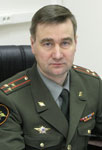
Colonel Oleg Ivanov

 On Radioelectronic Warfare (REB or РЭБ) Specialists’ Day, Krasnaya zvezda interviewed the Chief of REB Troops, Colonel Oleg Anatolyevich Ivanov, about trends and developments in his branch of service.

Ivanov says the growth of information technology for military command and control has given rise to a new kind of confrontation–achieving C2 supremacy and it can exert a decisive influence on a war.  And REB has ‘priority significance’ in this area.  The basic mission of REB is gaining and holding C2 supremacy in combat actions.

Ivanov notes also REB Troops’ role in information protection.  He says they exert control over the military radio transmission network and radio discipline has been pretty good; the number of violations are down.

Ivanov says formations (brigades), units, and sub-units participated in Kavkaz-2009 and Zapad-2009 to create a complex radioelectronic situation for the networks of the exercise participants.  Combined arms units learned to fulfill their missions in conditions of active radioelectronic jamming.  REB units and sub-units worked out their radioelectronic suppression missions against the probable enemy’s targets as well as the radioelectronic defense of their own troops.  REB Troops received positive evaluations.

Asked about defense industry support to the REB Troops, Ivanov says 120 enterprises are involved, and they are largely divided, as in Soviet times, into two practically independent directions–those that work on REB systems and equipment against troop C2 on the one hand, and against weapons C2 on the other.  Sozvezdiye leads the former, and Rostekhnologiya’s ‘Electronic Technologies’ the latter.  He notes that Vega, OSK, and some independent enterprises are players also.

Not surprisingly, Ivanov says to accelerate the development of new EW systems ‘structural integration’ of these OPK enterprises is needed.  And a lead organization to make scientific-technical decisions is needed too.  Coordination of efforts will optimize the use of time and resources for creating new systems and equipment.

But Ivanov doesn’t say who his favorite to be the industry lead is.

Ivanov says Russian EW means are equal to the best foreign counterparts.  They can neutralize and block the most dangerous armaments (particularly, highly-accurate weapons) in real time.  Automated jamming stations from the 1980s and 1990s are serving well with modernization and are meeting current requirements [does this mean there’s been nothing new in the interval?].  But Ivanov says fundamentally new and unique multifunctional systems are being created along with incremental improvements in older systems.  He can’t say more owing to their secret nature.  He thinks it’s possible, however, to say they represent technological breakthroughs.

Ivanov calls EW comparable in effect to the employment of modern highly-accurate weapons, and, by some indicators, even superior to them.

KZ asks Ivanov about personnel issues, particularly one-year conscripts and young officers.

He responds that the issue of training specialists is very acute.  The rapid introduction of new equipment leads to the need for mass retraining of specialists, not just soldiers and sergeants, but officers too.  Officers might get a two-week retraining course, but a soldier takes several months and then only half a year remains for him to serve.

So all personnel are tested in the Inter-Service Training Center to evaluate their capabilities for assimilating the training program, then divided into training groups.  Next, REB Troops are trying to keep trained specialists as contractees.  Lastly, efforts are made to simplify and automate systems to ease demands on personnel.  But practice shows that making a high-class specialist in a year is very difficult, but an acceptable level of skill is possible if servicemen are focused on combat training as prescribed in their programs [i.e. not busy shoveling snow or building the commander’s dacha].

Turning to officers, Ivanov says Russian EW officers have lots of opportunities in the civilian sector, so manning the officer ranks is an ‘issue of special discussion.’  The problem, he says, isn’t as acute as the late 1990s, owing to a rise in status of officers in recent years.  But he doesn’t sound exactly convinced on this score himself.

Summing up the future for REB Troops, Ivanov concludes they have great possibilities, and coming qualitative changes in the development of EW forces and means must support its growth into a specific fundamental type of combat action which in many ways will determine the course and outcome of a battle.

Putin Reports on OPK and Military Housing

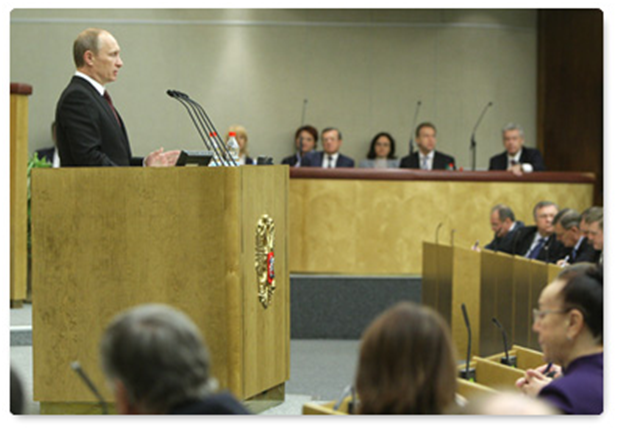
Putin Reports to the Duma

Yesterday Prime Minister Vladimir Putin reported on the government’s work over the last year to the State Duma.  His remarks focused on government efforts to handle ‘bread and butter’ economic and social issues during the 2009 crisis.

There was relatively little on military issues, except for some remarks on defense industry and military housing. 

He largely reiterated familiar themes like increasing modern weapons to 70-80 percent of the inventory; he congratulated those working on the fifth generation PAK FA and he emphasized development of a new strategic bomber.  Without being too specific, Putin suggested that OPK enterprises with heavy tax arrears might be getting some relief.

On housing Putin promised almost 52,000 military apartments this year.  But Duma deputies didn’t ask him about press reports that many of the 45,600 built last year remain empty because of construction defects, bureaucratic red tape, and even the fact that some were not really built in the first place.  Putin reiterated an earlier promise to house servicemen who didn’t get apartments in the first post-Soviet decade.  And he noted that privatization of service housing remains a possibility since the deadline has moved back.

First Putin’s description of the economic scene.

Putin said Russia’s GDP fell a record 7.9 percent, and industrial production declined 10.8 percent last year, but the government responded by greatly increasing budget expenditures—27 percent more than in 2008—even though revenue declined almost 21 percent.  Putin said the government used Russia’s accumulated reserves to finance the shortfall.  It spent 5 trillion rubles—1 trillion more than in 2008—on pay, pensions, social benefits, education, health, and housing, according to Putin.  He said 1.65 trillion rubles were invested in ‘developing the economy.’  Putin concluded that most of the government’s anticrisis program, the use of the budget, reserves, Central Bank resources, and state guarantees worked, and prevented the destruction of the real economy and the financial system.

Last year’s State Defense Order (GOZ) was one part of last year’s government spending program to counter the economic crisis.  Putin says the government spent 1.1 trillion rubles—150 billion more than in 2008.  He continued:

“During the crisis we also rendered targeted support to the defense-industrial complex and high-technology enterprises.  Last year’s gloomy forecasts by some politicians on the collapse of the defense-industrial complex were not borne out.”

“I know how many serious problems have accumulated here, we’ve been seriously occupied with this.  If you noticed, I’m always conducting special meetings on distinct sectors, there we deeply immerse ourselves in these problems.  Yet the volume of output of military production in 2009 increased by almost 13 percent—this during a general contraction!  The growth of production in shipbuilding generally was 31.6 percent, in the missile-space industry—16.5 percent, in aviation—9 percent.”

“Tests of fifth generation fighters are going successfully, and I want again to thank everyone who worked on this machine, who now gets it ‘on its wings.’ “

“Of course, we do not limits ourselves to just this.  Following the fighter we need to begin work on the future aviation system long-range aviation [PAK DA], this is new Russian strategic bomber, missile carrier.  We conducted a serious inventory in the defense-industrial complex and are embarking on formation of long-term programs of rearmament in all fundamental combat systems:  in command and control and intelligence systems, armored and naval equipment, highly-accurate weapons.  As a result, the share of modern weapons in the troops should increase to 70-80 percent, and this will indeed be  weapons of a new generation.”

“The question of restructuring the tax arrears of OPK enterprises has come from [Duma] deputies.  Enterprises have such a possibility.”

“In December 2009 the government issued a corresponding decree, calculated for 2010.  It talks about indebtedness which arose before 1 January 2009 (the KPRF raised these questions).”

 On military housing, Putin first addressed war veterans in line since before 2005.  He said 28,000 of these veterans have been housed, and he wants to house any who were left out or joined the queue later.  The government has directed 34.5 billion rubles at this, according to Putin.

Turning to more recent servicemen, Putin says:

“We have also not retreated from another most important task, another priority.  In 2009 the Defense Ministry delivered 45,600 new apartments to servicemen.  You know there has never been such a thing.  In 2010 another 51,900 apartments will be allocated.  That is, over two years—almost  one hundred thousand.  As a result, we will finally end the demand of armed forces servicemen for permanent housing, as we promised.”

“But we have another category of people whom we should not forget.  The question is about those who retired from military service in the 1990s or beginning of the 2000s, without receiving housing.  I remind you, in that time due to the inpossibility of solving this problem at the federal level, they sent them into municipal lines [for housing], where, unfortunately, things are moving slowly.  Or more precisely—practically not moving.”

“Of course, people are not to blame for the fact that at the time the government simply could not afford to meet its obligations to them.  And we were obliged to return to this issue.”

“It was originally planned to complete the provision of housing to such citizens in 2012-2013.  But I think we can do it earlier—to give retired military men housing in 2010-2011.  For this purpose we will ask you [Duma deputies] to direct an additional 34 billion rubles.”

“Incidentally, free housing privatization has been extended until 2013.  Now, veterans and servicemen can calmly arrange ownership of housing.”

Just to complete this picture, Deputy Defense Minister and Chief of Housing and Infrastructure, Grigoriy Naginskiy, recently admitted that only 21,061 of those 45,600 apartments from 2009 are actually occupied because of poor construction and problems formulating ‘social lease contracts.’  But Naginskiy promises that 99 percent of the 45,600 will be occupied before 1 June.  That’s quite a promise.  Viktor Baranets has written recently about builders’ efforts to ‘economize’ and squeeze out extra profits on military apartments.  Olga Bozhyeva has written about servicemen turning to the courts over housing issues, as well as ‘virtual’ Defense Ministry apartments that don’t exist.  The Main Military Prosecutor has actually investigated cases of this in Chekhov.

To round out the economic picture, Putin asserted that signs of recovery include a forecast of 3 percent or more GDP growth for 2010, and industrial production growth of 5.8 percent and real income growth of 7.4 percent for the first quarter of the year.

Rearmament Tempo Less Than 2 Percent Per Year

Vasiliy Burenok

Vasiliy Burenok told a round table at the ‘Army and Society’ exhibition in Moscow Friday that the current pace of Russian force modernization, not more than 2 percent, won’t support the transition to a ‘new profile’ military.

Burenok is Director of the Defense Ministry’s 46th Scientific-Research Institute (46 NII).  The 46 NII is a lead organization involved in formulating the State Armaments Program (GPV) and State Defense Order (GOZ).  It works on military-technical policy documents and program planning methodologies.  Burenok is a member of the Scientific-Technical Council of the RF Government’s Military-Industrial Commission (VPK).

Reviewing history a bit, Burenok told his audience, at the beginning of the 1990s, the rearmament rate was 5-7 percent annually.  But, between 1991 and 2000, financing for new arms and equipment declined more than 50 times, leaving only enough money to maintain existing weapons.

Burenok concludes to get the army to the ‘new profile’ it’s essential to introduce 9 percent new equipment every year, and for some services and combat arms, up to 11 percent.

This 9 to 11 percent is, of course, the difficult target President Medvedev set at the Defense Ministry Collegium.  Burenok indicated just how difficult–going from less than 2 to an 11 percent annual renewal rate.

Armaments Chief and Deputy Defense Minister Vladimir Popovkin also addressed the ‘Army and Society’ round table.  He said GPV 2011-2020 will go to the president for approval in June.  The new GPV will be accompanied by yet another new Federal Targeted Program for OPK Development.

Popovkin said a number of systems won’t be produced under the new GPV.  They include short-range tube artillery, and BTR-80, BMP-2, and BMP-3 combat vehicles that soldiers are afraid to ride in.

Ten Pantsir-S1s for Russia, or for UAE or Syria?

We all miss things, right?

In Friday’s NVO, Viktor Myasnikov published an insightful article on Pantsir-S1.  He hints that maybe the ten Pantsir-S1s ceremoniously delivered to the VVS aren’t actually for Russia’s VVS.  More interestingly, he provides numbers on the quantity really needed to rearm the Russian Armed Forces by 2020—500 for the VVS and 500 for the Ground Troops’ VPVO.

“‘Pantsir’ is one of the most talked about combat vehicles of the last 20 years.  Everything about it’s been heard, many have seen it at exhibitions, but it only began to come to the troops in recent days.  In the long years of design work (which began in 1990), testing, and disrupted contracts, ‘Pantsir’ received the honorary epithet ‘longsuffering.’”

“Now they’re talking about it again in superlative terms.  One could get the impression this is some panacea against all means of aerospace attack.  Actually, this is a close-range—up to 20 km—air defense system.  It exceeds hand-held ‘Igla’ and ‘Strela’ SAMs, but doesn’t approach the level of ‘Tor.’  And ‘Pantsir’s’ place in the order of battle has been designated perfectly concretely—it will replace ‘Tunguska,’ which in its time replaced ‘Shilka.’  True, it will really only replace ‘Tunguska’ when it gets on a tracked chassis.  For now this is a wheeled rear area variant designated to cover important targets—airfields, bases, air defense positions . . .”

“Initially ‘Pantsir’ was planned for tracked transport in as much as it needed to take the place of ‘Tunguska’ in tank columns to cover them against helicopters and other low flying enemy aircraft.  But the concept began to change due to underfinancing.  And a cheaper variant ‘Pantsir’ put on wheels, became positional as the last line of air defense for rear area targets.”

“The uniqueness of ‘Pantsir’ in the arms market is guaranteed by the fact that U.S., NATO, and Israeli armed forces are not threatened by cruise missiles, planned munitions and UAVs of the potential enemy [many would differ with this assertion].  It [Russia?  Arab states?] doesn’t have them in the necessary amount and won’t have them in the coming years.”

“In accordance with the State Program of Armaments to 2015 it’s planned to deliver 20 of such systems to the RF Armed Forces.  10 have already been received.”

“At the same time the Russian Air Forces’ demand is specified as a minimum of 100 systems of this type.  Incidentally, other specialists believe it’s essential to buy 200-250 systems by 2015 and 400-500 by 2020.  Besides that, the Ground Troops could buy 500-600 vehicles by 2020 for replacing ‘Tunguskas.’  They certainly could, of course, they could, but who will provide them?”

“Besides this, there’s no trusting official announcements that all overdue export contracts for the supply of ‘Pantsirs’ to the UAE and Syria have been fulfilled [actually it’s pretty clear supplies are just starting].  Therefore it’s strange that 10 vehicles suddenly turn out to be withdrawn from the export orders.  Suspicions immediately arise that the buyer has refused them or not accepted them due to complaints about quality.  Meanwhile, some anonymous sources from Tula defense industrial enterprises maintain that everything’s normal with the quality, but the vehicles are just taking a pre-sales run on normal asphalt road conditions.  After the [9 May Victory Day] parade the ‘Pantsirs’ will be repainted desert camouflage and handed over to the foreign buyer.  There’s no need to show them to anyone until the next parade.”

“There are suspicions that the ‘KamAZes’ for these ‘Pantsirs’ are not quite serial models.  ‘Cause in their build-out they are too close to the one in which Vladimir Chagin wins ‘Dakar.’  Would it make sense to have imported turbocharged engines on them?  Such capability of automotive equipment for covering stationary S-400 SAMs is a little unnecessary.  But it’s exactly right for the Middle Eastern or North African desert.”

“But there is another side to this.  It’s been announced that these 10 ‘Pantsirs’ will participate in joint exercises of Russia, Belorussia and Kazakhstan.  And also before the handover to the troops at the ‘Shcheglovskiy val’ enterprise an archpriest blessed them.  Such a ritual wouldn’t be arranged for a buyer from a Muslim state.”

Limited Productive Capacity, High Demand for Arms and Equipment

Surprisingly little attention, beyond routine press service reports, went to last Tuesday’s (16 February) government conference on the State Armaments Program, 2011-2020 (GPV-2020).  RIAN and older media reporting indicates the GPV-2020 will be adopted next month.

Prime Minister Putin told the attendees, “We are talking about the time frames and kinds of weapons systems we need to provide to our army and fleet, that have to be put into the arms inventory.”  Noting that nuclear deterrence forces, space, and air defense would be emphasized, Putin also said:

“We have to satisfy, as I already said, the troops’ need for modern communications, command and control, reconnaissance and, of course, complete the fifth generation aircraft, new combatant designs for the Navy.”

He reiterated earlier declarations that modern armaments in the forces must be 30 percent by 2015, and 70 percent by 2020.

Other Putin sound bytes:

“We have to provide essential financial resources for this task.  The Finance Ministry, the Economic Development Ministry have made the necessary calculations, and today we’ll need to analyze them.  Right off I want to note that we can’t allow any inflated estimates, ineffective expenditures.”

“The State Armaments Program has to give long-term guidance for developing the defense-industrial complex itself.  This must enable our enterprises to embark on a corresponding modernization.”

“We’ve conducted a whole series of meetings on these issues, but the Defense Ministry must provide the corresponding technical parameters.  We have to support the technological equipping of our defense-industrial complex exactly under these parameters.”

Finally, Putin indicated defense orders will go to enterprises that will be in a condition to produce truly competitive systems in terms of combat power, range, and protection.

Participants in the conference also reportedly discussed a new draft Federal Targeted Program (FTP or ФЦП) on the Development of the OPK.

On 15 February, Putin met with Industry Minister Khristenko and Director of the Federal Service for Military-Technical Cooperation (FSMTС or ФСВТС) Mikhail Dmitriyev.  Khristenko told Putin last year OPK enterprises received 148 billion rubles in state support (6 billion in credits, 60 billion in capital injections, 76 billion in state-guaranteed credits, and 6 billion in subsidized interest rates on export credits).  According to Khristenko, this support allowed the OPK to increase its production 10 percent.

Unnamed Defense Ministry sources said the 76 billion rubles in state-guaranteed credits are difficult to use, and not all were used.  The 60 billion rubles in capital injections were basically a direct budgetary grant, and, according to one aviation plant manager, 20 billion of it went (get this!) to compensate RSK MiG and other producers for the fiasco with their 34 faulty MiG-29s sold to, and returned by, Algeria.

FSMTC Director Dmitriyev told Putin the volume of Russia’s current arms export contracts is $34 billion, and exports will be $9-10 billion over the next two years.

Aleksey Nikolskiy writing for Vedomosti indicated Dmitriyev said several enterprises have orders for some systems scheduled out to 2017, and some foreign customers have raised the issue of quicker deliveries.  He argued that additional production capacity is needed, but Putin proposed only to review the issue of synchronizing domestic and export orders for arms.  He said, “We have to understand in what time frame we can and have to produce for ourselves and our foreign partners.”

A source close to Rosoboroneksport said the issue concerned limitations in production capacity for the S-300PMU2 and S-400 air defense systems, the Su-35 fighter, and surface-to-surface missiles that don’t allow for simultaneously meeting the demands of foreign customers and the Russian Armed Forces.  Vedomosti noted that VVS CINC Zelin already complained about limited productive capacity for the S-400.  A similar jam exists with the Su-35, which is supposed to enter the VVS and some foreign air forces by the end of 2011.  A Defense Ministry source said there’s a proposal to build two new factories for air defense systems, and to enlarge existing enterprises producing critical equipment, and the government might soon adopt the proposal.

Konstantin Makiyenko of CAST (ЦАСТ) told Vedomosti, for the past 2 years, Rosoboroneksport has received more orders than what it has supplied abroad, and the lack of sufficient productive capacity has become the main limiting factor on the growth of arms exports.  He says either increase the capacity or the army will have to wait for arms it doesn’t need too much, but air defense systems and fighters don’t fall into the category of things not urgently needed.

As Mikhail Rastopshin and others have been so kind to note, there have been a raft of OPK development and armaments programs over the years, but they don’t seem to get completed, each melding into the next albeit under a longer deadline.   In early 2009, Dmitriy Litovkin estimated no more than 20 percent of any arms program has ever been accomplished, even during the years of high oil revenues.

And you can’t do an armaments program without OPK development, and Russia’s defense-industrial base has been increasingly poorly positioned to support the arms program in recent years, according to Rastopshin and others.  And don’t forget about declining RDT&E.  Hard times for research institutes and design bureaus could mean that, rather than modern or futuristic weapons based on ‘new physical principles,’ new units of obsolete designs could be produced under an armaments program.

Here’s a telling reminder.  The  much-vaunted 2003 Urgent Tasks of the Development of the Russian Armed Forces document called for modern weapons at the level of 35 percent in 2010, 40-45 percent in 2015, and 100 percent by 2020-2025.  And now Moscow’s talking 30 percent by 2015 and only 70 percent by 2020.

As recently as 2006, the Russian military claimed 20 percent of its weapons inventory was modern.  But in March 2009, Defense Minister Serdyukov admitted the starting point was actually lower:

“. . . the bulk of [arms and equipment] are physically and morally obsolete. Natural loss is not being compensated by procurement.  As a result, the proportion of modern arms and military equipment is around 10 percent.”

This was when President Medvedev said large-scale rearmament would begin in 2011.

Nevertheless, in his November 2009 address to the Federal Assembly, Medvedev said:

“One of the most difficult yet fundamental tasks is reequipping the troops with new systems and models of armaments and military hardware.  There is no need to discuss some abstract notions here: one needs to obtain these weapons.  Next year, more than 30 land and sea-based ballistic missiles, five Iskander missile systems, about 300 modern armored vehicles, 30 helicopters, 28 warplanes, three nuclear submarines, and one corvette-class combatant must be delivered to the troops, as well as 11 spacecraft.  All this has to be done.”

A pretty daunting list when foreign customers are asking for their weapons too.

Retired Officer Rails Against Army’s ‘Sergeantization’

One retired Colonel A. A. Karasev, deputy of the Saratov city duma and chairman of the Saratov branch of the Union of Soviet Officers, has written in KPRF.ru about communists and former servicemen picketing Prime Minister Putin’s reception office in Saratov on 17 February.

According to him, they demonstrated their concern about ruinous army reforms and carried signs saying “Putin!  Return Serdyukov to the Furniture Store.”  And, of course, they addressed an open letter to Putin.

Their letter said they’d taken to the streets before what used to be Soviet Army and Navy Day to make their woes, pains, and demands known to the head of government, and to defend the army, OPK, veterans, and their families from the outrages committed by bureaucrats and Duma deputies.

Their particulars included:

  • The U.S.-Russian balance of strategic forces is broken.  The leadership’s rush to a new strategic arms agreement is only reducing Russia’s security.
  • The OPK continues to be destroyed.  Defense factories in Saratov have closed.  Remaining plants get financing only in late spring or summer each year.
  • The Defense Ministry has not thought out its reforms of the army in the American mold.  The combat possibilities of Russia’s brigades are less than those of the formations and units of the ‘probable enemy’ [they really think the U.S. and Russia will go head-to-head?].
  • ‘Sergeantization’ [i.e. officer cuts and efforts to create professional NCOs] of the army means its enfeeblement.  There isn’t a sergeant with an intermediate specialized education [i.e. vocational high school diploma] who can replace an officer from a higher command or engineering school.  Promising contract-sergeants 20-30,000 ruble pay after training only adds extra tension to their relations with officers.
  • Military pensions have fallen to the level of pay for the least qualified workers, and below the subsistence minimum in many cases.
  • Military wives have not received social guarantees to compensate for their inability to work in many garrisons.

They want all these problems rectified, of course, but want to start with firing Serdyukov and his team.

The tension over what they’ve termed ‘sergeantization’ is interesting. 

In the Defense Ministry’s view, officers who’ve been cut, or turned into sergeants themselves, either weren’t needed or weren’t performing officer work or supervising troops.  So officers have been cut, and those that remain will really be officers with real units to command.  Some of them will get premium pay to reward them for now, and, from 2012, much higher base pay, for example, maybe 60,000 rubles for a lieutenant.  Meanwhile, as the Defense Ministry sees it, there won’t be any problem with newly-minted professional sergeants entering the ranks and earning higher pay [which still won’t approach that of officers].

The KPRF has an alternate scenario for the future.  It sees many officers, who were needed, put out of the service and replaced by some poorly trained contract sergeants who will earn more than before.  Two-thirds of officers don’t get premium pay for now, and the KPRF is probably skeptical that greatly increased pay for all remaining officers will be actually be delivered in 2012.  The future it sees has a mass of officers and sergeants, not differentiated by much of anything, including pay.  While the officer-NCO interaction was long ago worked out in Western armies, it’s still a troubling vision for an army in the throes of major structural changes and lacking a professional NCO tradition.

Sitnov on Serdyukov’s Reforms

General-Colonel Anatoliy Sitnov

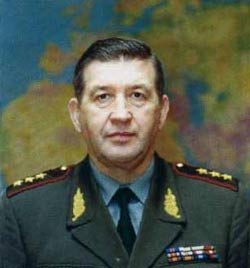
Yesterday’s Segodnya.ru published a speech (or an excerpt) given by former Armaments Chief, retired General-Colonel Sitnov.  He now serves as deputy director of RUIE’s (РСПП) Commission on the OPK.  Not heretofore a prominent critic, he offers a fairly withering critique of Defense Minister Serdyukov’s reforms.

He first offers up Milyutin as an example of someone who made an army reform match its purpose.  According to Sitnov, Milyutin’s reform of the army enabled it to defend Russia from rapidly growing military powers in the West.  He says Milyutin also devised the mobilization system since it was impossible for Russia to maintain a permanent army large enough to cover its expanses.

Then Sitnov fast forwards.  His first major complaint is cutting the officer corps from 355,000 to 150,000.  He believes this was done because the country’s authorities fear it.  He criticizes the Defense Ministry’s remaking of the army on the ‘American principle.’  Sitnov says Russia is now trying to defend an enormous country with brigades that are no more than ‘patrol forces.’  He alleges Russia’s brigades can fight for only one day since they lack rear services, reconnaissance, maintenance, staffs, and command and control systems.  He argues that Russia long ago settled on the division as its basic military unit to cover its open spaces.

Sitnov concludes the Russian Army is unready to fight 5th generation wars.  He says America is already fighting 4th generation wars, employing automated systems that integrate units and highly intelligent weapons.  But 5th generation war features automated command and control, robot systems, and the use and control of systems with automated means of guidance, targeting, and destruction.

And this, he continues, is just the technical part.  He rhetorically asks whether an army can perform its missions when the country has no agriculture, industry, science, education, system of state administration or strategy for its development (ouch!).  The army reflects society and, in Russia’s case, society’s imbalances are reflected in its army.

Sitnov spins off into a geopolitical monologue.  He sounds like other ex-generals of the Soviet generation.  If the U.S. continues to occupy positions on Russia’s periphery, Russia’s territorial integrity will become an issue in 10-15 years.  Foreign pressure on Russia to share its empty spaces and resources, like Baykal’s fresh water, will intensify.

Lastly, Sitnov believes it would be naive to think Serdyukov took the decisions on army reform; rather he thinks Serdyukov was just the instrument picked for a policy of purging the army.  Now he says, parallel with the army purge, there is a campaign against the MVD.

Sitnov’s criticism of brigades makes some sense, but defending the MVD?  Also, most observers probably would agree that Serdyukov was simply sent to fix the army, once and for all, and the leadership didn’t worry too much about how.

Industry More Important Than Army

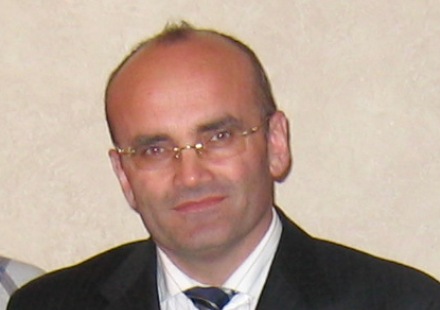
Konstantin Makiyenko (photo: Dmitriy Lebedev/Kommersant)

Commenting in today’s Vedomosti, Konstantin Makiyenko of Moscow’s Center for the Analysis of Strategies and Technologies (ЦАСТ), also a member of the Duma Defense Committee’s Scientific-Expert Council, addresses the recent tendency of Russian military leaders, especially Air Forces and Navy, to criticize and even reject the OPK’s homegrown products.

He notes VVS CINC Zelin’s publicly expressed dissatisfaction with the pace of work on the S-500, and the Navy’s ‘slap in the face’ to Russian shipbuilding over consideration of the Mistral and German conventional subs.  He claims the oboronki themselves sensed Defense Minister Serdyukov’s bias against them and rushed to confess their problems.

And Makiyenko concludes the criticism is well-founded, as many OPK enterprises and companies are in pitiful shape, and the management of a number them leaves a lot to be desired.  However, he asserts, the OPK’s post-Soviet decline is not as great as that of the armed forces.  And restoring Russia’s ‘normal’ military potential is a higher priority task than preserving or adding to the OPK’s scientific-industrial potential.

Makiyenko believes Russia’s place as the number 2 or 3 arms exporter in the world indicates the OPK’s real potential.  Even more so since the economic conditions in which the OPK operates are worse than those of its competitors.  So, for all its problems, the OPK is still number 2 or 3 in the world, according to Makiyenko, while the army, nuclear weapons aside, is capable only of defeating the lilliputian armies of the former Soviet republics.

Makiyenko believes the degradation of the Soviet Armed Forces was occurring as early as the 1970s, while the Soviet OPK was reaching the peak of its capabilities at the end of the Soviet epoch.  It had practically overcome any lag with the U.S. and was building competitive products.  So, Makiyenko concludes, the OPK, rather than the Soviet Army, was the advanced guard in the last stage of the Cold War.  And Russia’s arms market successes would have been impossible without the Soviet OPK legacy.

Makiyenko suggests that the OPK should have priority over the army because, not only can it play a role in national development, but, with some effort, it can be restored in 5-10 years, while if it is [completely?] lost, it could take one or two generations to rebuild.  And even if Serdyukov builds the best army in the world, it won’t be able to provide for the country’s security without the basis of national defense–Russian industry.

So, without orders from its own army, without financing for basic research or RDT&E for the last 15 years, the OPK isn’t always able to meet demands for low priced, high technology goods on tight schedules to help Serdyukov rearm the armed forces quickly and effectively.  But this is no reason to call oboronki thieves and junk dealers.  Makiyenko calls for a long-term perspective and systematic evaluation of the situation instead of nearsightedness.

This is all well and good.  Makiyenko’s a smart guy and makes valid points, and he’s done an admirable job of defending the OPK.  But let’s remember that he tends to shill for arms sales.  Russian weapons sold abroad have had more than their share of problems in recent years.  And the Soviet technology in them grows older and older.  Also, there appears to be no cogent program for fixing the OPK anywhere in sight.  Nor is there even any clear analysis of how buying arms abroad will affect the OPK.