Tag Archives: PAK FA

Fifth Generation Fighter Update

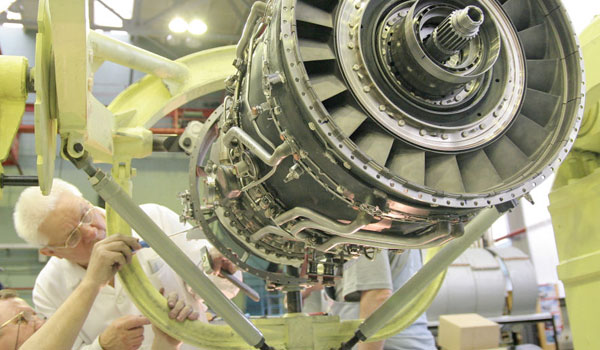
On 26 April, ITAR-TASS reported what is now termed the ‘second phase’ engine for the fifth generation fighter could be ready in 5-6 years, according to NPO Saturn’s managing director Ilya Fedorov.  In his words:

“The RDT&E on the components for making the engine is now being conducted.  It is going on not just at Saturn.  Salyut and the Petersburg Factory named for Klimov are also conducting scientific-research work.”

Fedorov seemed confident the ‘second phase’ fifth generation engine could fly in 5-6 years, depending mostly on what decision the Defense Ministry makes.

Obviously, Saturn wants and needs the work now.

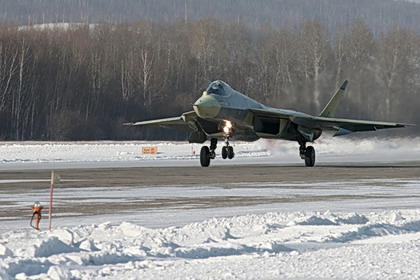
Sukhoy says the fifth generation fighter’s first test phase, consisting of six flights, was successfully completed.  The aircraft’s reliability and controls, engine operation, and other basic systems were tested at a range of speeds and altitudes.

ITAR-TASS reminds that engine signature reduction measures are supposed to provide the new fighter an unprecedentedly low level of radar, optical, and infrared detectability, allowing the plane to raise significantly its combat effectiveness against air and ground targets.

Recall that Saturn put its 117 or 117S engine–a modernized AL-31F like on the Su-35–on PAK FA as its ‘first phase’ engine.  Everything else is up for debate.  As previously written, the Defense Ministry could decide to forego a truly new engine for a while. 

Meanwhile, talk about future fighter engine work isn’t really helping sort out the competition between ODK/Saturn and Salyut, or the general shakeout in a Russian industry with many players and interested parties.

Early last month Sukhoy General Director Mikhail Pogosyan said the PAK FA would be commissioned with ‘first phase’ engines, and ‘second phase’ ones would require another 10-12 years of development.  He doesn’t sound like a fan of new engines, and obviously wants to get his airframes on the assembly line and out the factory doors.

Specifically, Pogosyan said:

“We need to determine how much financing there will be for the phase two engines, how many of them there will be, and many other issues need to be resolved.”

Putin Reports on OPK and Military Housing

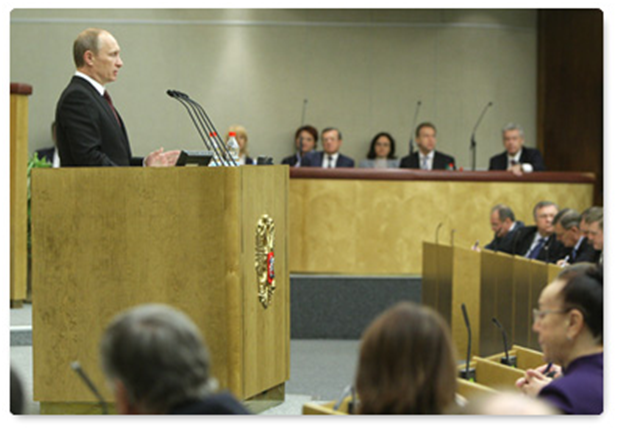
Putin Reports to the Duma

Yesterday Prime Minister Vladimir Putin reported on the government’s work over the last year to the State Duma.  His remarks focused on government efforts to handle ‘bread and butter’ economic and social issues during the 2009 crisis.

There was relatively little on military issues, except for some remarks on defense industry and military housing. 

He largely reiterated familiar themes like increasing modern weapons to 70-80 percent of the inventory; he congratulated those working on the fifth generation PAK FA and he emphasized development of a new strategic bomber.  Without being too specific, Putin suggested that OPK enterprises with heavy tax arrears might be getting some relief.

On housing Putin promised almost 52,000 military apartments this year.  But Duma deputies didn’t ask him about press reports that many of the 45,600 built last year remain empty because of construction defects, bureaucratic red tape, and even the fact that some were not really built in the first place.  Putin reiterated an earlier promise to house servicemen who didn’t get apartments in the first post-Soviet decade.  And he noted that privatization of service housing remains a possibility since the deadline has moved back.

First Putin’s description of the economic scene.

Putin said Russia’s GDP fell a record 7.9 percent, and industrial production declined 10.8 percent last year, but the government responded by greatly increasing budget expenditures—27 percent more than in 2008—even though revenue declined almost 21 percent.  Putin said the government used Russia’s accumulated reserves to finance the shortfall.  It spent 5 trillion rubles—1 trillion more than in 2008—on pay, pensions, social benefits, education, health, and housing, according to Putin.  He said 1.65 trillion rubles were invested in ‘developing the economy.’  Putin concluded that most of the government’s anticrisis program, the use of the budget, reserves, Central Bank resources, and state guarantees worked, and prevented the destruction of the real economy and the financial system.

Last year’s State Defense Order (GOZ) was one part of last year’s government spending program to counter the economic crisis.  Putin says the government spent 1.1 trillion rubles—150 billion more than in 2008.  He continued:

“During the crisis we also rendered targeted support to the defense-industrial complex and high-technology enterprises.  Last year’s gloomy forecasts by some politicians on the collapse of the defense-industrial complex were not borne out.”

“I know how many serious problems have accumulated here, we’ve been seriously occupied with this.  If you noticed, I’m always conducting special meetings on distinct sectors, there we deeply immerse ourselves in these problems.  Yet the volume of output of military production in 2009 increased by almost 13 percent—this during a general contraction!  The growth of production in shipbuilding generally was 31.6 percent, in the missile-space industry—16.5 percent, in aviation—9 percent.”

“Tests of fifth generation fighters are going successfully, and I want again to thank everyone who worked on this machine, who now gets it ‘on its wings.’ “

“Of course, we do not limits ourselves to just this.  Following the fighter we need to begin work on the future aviation system long-range aviation [PAK DA], this is new Russian strategic bomber, missile carrier.  We conducted a serious inventory in the defense-industrial complex and are embarking on formation of long-term programs of rearmament in all fundamental combat systems:  in command and control and intelligence systems, armored and naval equipment, highly-accurate weapons.  As a result, the share of modern weapons in the troops should increase to 70-80 percent, and this will indeed be  weapons of a new generation.”

“The question of restructuring the tax arrears of OPK enterprises has come from [Duma] deputies.  Enterprises have such a possibility.”

“In December 2009 the government issued a corresponding decree, calculated for 2010.  It talks about indebtedness which arose before 1 January 2009 (the KPRF raised these questions).”

 On military housing, Putin first addressed war veterans in line since before 2005.  He said 28,000 of these veterans have been housed, and he wants to house any who were left out or joined the queue later.  The government has directed 34.5 billion rubles at this, according to Putin.

Turning to more recent servicemen, Putin says:

“We have also not retreated from another most important task, another priority.  In 2009 the Defense Ministry delivered 45,600 new apartments to servicemen.  You know there has never been such a thing.  In 2010 another 51,900 apartments will be allocated.  That is, over two years—almost  one hundred thousand.  As a result, we will finally end the demand of armed forces servicemen for permanent housing, as we promised.”

“But we have another category of people whom we should not forget.  The question is about those who retired from military service in the 1990s or beginning of the 2000s, without receiving housing.  I remind you, in that time due to the inpossibility of solving this problem at the federal level, they sent them into municipal lines [for housing], where, unfortunately, things are moving slowly.  Or more precisely—practically not moving.”

“Of course, people are not to blame for the fact that at the time the government simply could not afford to meet its obligations to them.  And we were obliged to return to this issue.”

“It was originally planned to complete the provision of housing to such citizens in 2012-2013.  But I think we can do it earlier—to give retired military men housing in 2010-2011.  For this purpose we will ask you [Duma deputies] to direct an additional 34 billion rubles.”

“Incidentally, free housing privatization has been extended until 2013.  Now, veterans and servicemen can calmly arrange ownership of housing.”

Just to complete this picture, Deputy Defense Minister and Chief of Housing and Infrastructure, Grigoriy Naginskiy, recently admitted that only 21,061 of those 45,600 apartments from 2009 are actually occupied because of poor construction and problems formulating ‘social lease contracts.’  But Naginskiy promises that 99 percent of the 45,600 will be occupied before 1 June.  That’s quite a promise.  Viktor Baranets has written recently about builders’ efforts to ‘economize’ and squeeze out extra profits on military apartments.  Olga Bozhyeva has written about servicemen turning to the courts over housing issues, as well as ‘virtual’ Defense Ministry apartments that don’t exist.  The Main Military Prosecutor has actually investigated cases of this in Chekhov.

To round out the economic picture, Putin asserted that signs of recovery include a forecast of 3 percent or more GDP growth for 2010, and industrial production growth of 5.8 percent and real income growth of 7.4 percent for the first quarter of the year.

5th Generation Engine Delayed?

Work at NPO Saturn

Marker.ru yesterday wrote about NPO Saturn, FGUP Salyut, OAK, ODK, the Defense Ministry, and development of a fifth generation engine for Russia’s fighter aircraft.

Salyut believes it has basically defeated Saturn in the Defense Ministry’s tender to produce a fifth generation engine for the PAK FA, but Salyut fears development will be given instead to the newly created ODK, the United Engine-building Corporation.

Meanwhile, in OAK–the United Aircraft-building Corporation, they think the Defense Ministry may be considering not making a new engine for the first PAK FA model, and instead concentrating engineering resources on development of a 5th generation engine for future modifications of the new fighter. 

Salyut believes it decisively beat Saturn in the tender’s first phase, but the Defense Ministry has not announced the second and conclusive phase possibly because, according to Salyut’s Dmitriy Yeliseyev, the issue of creating the fifth generation engine was automatically decided when Saturn joined ODK.  But Salyut will insist on completing the tender process to decide who will be lead designer for the 5th generation fighter’s engines.

Yeliseyev says:

“We understand that general direction of the work to create an engine for PAK FA will be under ODK, but we also believe the tender is needed to even decide who will develop the gas generator for the future engine, and basically decide who will drive work on the engine for PAK FA.”

Salyut is now focused on modernizing the fourth generation AL-31 engine.  But test models of PAK FA have Saturn’s 117 engine, a modification of the AL-31.

OAK representative Konstantin Lantratov says the fifth generation engine has fundamentally new requirements, particularly in the areas of radar and infrared signature reduction.  OAK believes the Defense Ministry is not announcing the conclusive phase of the tender to build PAK FA’s engines because it’s waiting for the aircraft’s test results with its current engines.

Marker.ru asks is it necessary to make a 5th generation engine right now?  Wouldn’t it be better to concentrate work on producing engines for aircraft that will follow the PAK FA?  If a new engine starts development today, it will be ready in 5-7 years, about the time modernized or other variants of the PAK FA will be appearing [of course, this assumes the original PAK FA is successful and operational pretty quickly].

OAK’s Lantratov seems to think the Defense Ministry should decide now, if it wants to pay for new engines, and is willing to risk paying and not getting the right results.

Marker.ru consults CAST’s Konstantin Makiyenko . . . he thinks the Defense Ministry has no reason to hurry.  ‘Deeply modernized’ fourth generation engines from Saturn and Salyut are meeting VVS and PAK FA requirements, at least during the test phase.

He thinks a real 5th generation engine is 10 years away.  The need for more powerful engines will arise as other variants (2-seat, strike, naval, etc.) of the PAK FA appear.  Over their life cycles, aircraft get heavier and thrust has to keep pace, so more powerful engines would need to appear around 2020 anyway.

Makarov Meets the Press

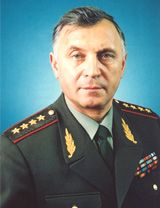
Chief of the General Staff Nikolay Makarov

General Staff Chief Nikolay Makarov spoke at length to the press yesterday. In no particular order, here are some of the impressions and reports that followed in his wake.

RBCdaily quoted Makarov on the possible Mistral purchase:  “Ships of the Mistral type have very great multifunctionality, and they surpass our ships in all parameters by three times.”  He went on to say that Russian shipbuilders would only be able to produce helicopter carriers of this quality in 5-10 years.  Aleksandr Khramchikhin commented that, in the first place, Russia doesn’t currently have comparable ships and, in the second, it will take 50 years.

Makarov said the final decision on buying the Mistral had not been made.

According to Rossiyskaya gazeta, Makarov said the Russian Army went to brigades vice divisions to avoid the previous need to flesh out units with reservists and take days to bring them to combat readiness.  ‘Modular’ battalions by contrast are permanently ready for battle in an hour.

Makarov didn’t rule out establishment of some type of ‘rapid reaction forces,’ though these are closest in nature to today’s VDV.  And this wouldn’t mean VDV would simply change its name. And other services need rapid reaction capabilities too for action in the air, on the sea, etc.  Aren’t permanently ready brigades rapid reaction forces already?

On the Navy headquarters move to St. Petersburg, Makarov claimed Moscow is overflowing with army and navy leadership [but haven’t they just cut 200,000 officers and lots of excess command structures to create a personnel pyramid?].  And with today’s networks the fleet can be commanded from thousands of kilometers away from the Genshtab and other main commands.

Makarov doesn’t foresee any change to the one-year conscription policy, but there may be changes in NCO acquisition.  Instead of six months training in MD training centers, they may only get 3, so they can serve 9 months in troop units.  Makarov thinks they’ll cut back on conscript sergeants once their professional ones start to appear.

Moskovskiy komsomolets quoted Makarov on the new strategic arms agreement with the U.S. to the effect that it’s 97 percent complete, and it only remains to agree on the relationship between offensive and defensive weapons, and there will not be anything in the treaty to Russia’s detriment in this regard.

On Mistral, Makarov said, after study, we’ve concluded we need this type of ship, which can be an amphibious assault ship, hospital, command ship, and helicopter carrier.

On the Navy and Piter, MK notes Makarov wanted to avoid Baluyevskiy’s fate and didn’t contradict his superiors.  He expounded on his vision (perhaps dream) of Russian netcentric warfare:

“Earlier it was like this:  the closer to subordinates, the more reliable the command and control.  Now all leading countries, including us also, are going to netcentric command and control systems.  This allows completely remote means of reconnaissance, command and control, electronic warfare, fire, command posts–all spread over an enormous distance, but located in a single information-communications space and capable of solving tasks in real time.”

On a related note, Makarov said the new Sozvezdiye tactical level command and control system will be part of the netcentric structure toward the end of the year.

Gazeta’s coverage focused on Makarov’s comments about establishing the personnel pyramid, i.e. going from armed forces with about 500,000 officers and warrants to one of 150,000 officers and 720,000 soldiers in the space of a year.  It also noted Makarov’s remark that brigade commanders in their training assembly at the General Staff Academy are learning new warfare and command and control principles.

Izvestiya quoted Makarov at length on the Navy Main Staff’s move to Piter.

“Presently all command and control organs are concentrated in Moscow, but we want these command and control organs to be as close as possible to the troops they control [didn’t he also call this the old way of doing business?].  The dispersal of command and control and fire means at great distances doesn’t have any great significance, what’s important is maintaining uninterrupted and clear command and control of troops and weapons.  Therefore, the transfer of the Navy Main Staff to St. Petersburg won’t place any kind of extra burden on the command and control system, with the exception perhaps, only in the initial period of its functioning in a new place.”

Viktor Baranets in Komsomolskaya pravda focused on Makarov’s words on the U.S. and Iran, noting his statements that the U.S. has a plan to strike Iran, and, if it occurs, it’ll be terrible for Iran, the region, and the U.S.

Krasnaya zvezda covered the Iran issue.  It noted that Russia’s need for ready units forced the shift to brigades.  It also covered Makarov’s comment that the Voronezh conference agreed on changes needed in the Sozvezdiye C2 system, and that it would be received this July and fielded in November.  KZ also quoted Makarov at length on the capabilities of the 5th generation fighter aircraft.

KZ also indicated that Makarov noted the U.S. as an example where units and commands are often separated by great distances when he talked about the Navy Main Staff and Piter.

Generally, it seems those invited to this press availability only asked Makarov ‘soft ball’ questions.

Golts Looks Under the Hood of PAK FA

PAK FA in First Test Flight (photo: RIA Novosti)

In today’s Yezhednevnyy zhurnal, Aleksandr Golts turns his skeptical eye toward the PAK FA, Russia’s 5th generation fighter aircraft which just took its first test flight.

Golts says, looking a little like the F-22 and even more than the Su-27, PAK FA called forth a storm, a waterfall of success reports.  He notes that Prime Minister Putin cited it as proof of the wisdom of creating the United Aircraft-building Corporation [UAC or OAK] four years ago. 

Those in charge of the project are breathing easier.  After the Bulava SLBM failures, getting the new fighter off the ground was a matter of principle, especially since the leadership promised that it would fly every year since 2005.  Golts believes the Bulava failures combined with the 5th gen fighter delays caused people to discuss whether Russia could modernize, and whether it could develop high-tech products.  One thing Bulava and PAK FA have in common is that both are truly Russian projects, ones that are being implemented without dependence on significant leftover Soviet-era resources.  Their results could enable observers to question whether the OPK is being managed correctly, whether it was smart for Putin, [Sergey] Ivanov, and Chemezov to herd hundreds of enterprises into several gigantic OPK kolkhozy. 

Golts says some aviation industry leaders worried that OAK was created, not to concentrate resources to build PAK FA, but for Moscow bureaucrats to get their hands on profits from foreign aircraft orders [doesn’t ROE do this already?].  And Golts reminds that around 2000 then-Minister of Industry Ilya Klebanov said PAK FA development would cost $1.5 billion, but as we’ve learned the pricetag was closer to $10 billion over ten years. 

And it had to fly no matter what, and so it did.  But what actually flew, Golts asks.  One thing for sure, the first new airframe in 25 years.  And that’s it.  Everything else–speed, max and min ceilings, radars, weapons systems–all remain to be seen. 

As for the engines, Golts says we just don’t know.  Years ago the engine producers fought it out to be the designer and builder.  NPO ‘Saturn’ won out.  And, according to Golts, its director started to lie.  Putin and Ivanov both recognize that the engine problems will take some time to work out.  But on the day of PAK FA’s first test, the managing director of ‘Saturn,’ who directs the PAK FA program for the United Engine-building Corporation [ODK], claimed the new fighter has the newest engine, not an improved version of the Su-35’s engine, as the press and specialists have written. 

So what Putin and Ivanov worried about was secretly resolved by NPO ‘Saturn’ and the new engine is ready.  This is great news for Air Forces CINC Zelin.  Just four months ago he said that the PAK FA engine couldn’t be foreseen in the near future.  He said it would fly with a ‘Saturn’ engine, the 117S, a ‘deeply modernized’ version of the AL-31F. 

So, according to Golts, either ‘Saturn’ decided to pawn off on the Motherland an engine it demonstrated four years ago or, worse, having pocketed the contract, it simply decided to put old engines in a new aircraft. 

Golts concludes honestly that he can’t say whether PAK FA will be a true 5th generation aircraft, but it has taken off in a thick fog of lies.  And here’s the distinction between it and Bulava; there’s no way to hide Bulava’s failures since the U.S. gets the telemetry and people in other countries can see evidence of an unsuccessful test launch.  There aren’t the same limits on lying about PAK FA. 

So PAK FA is a “cat in a sack.”  You can’t say much for sure about the cat, but don’t worry, it’s a 5th generation sack.

Fifth Generation Fighter Maiden Flight Today