Tag Archives: Procurement

Government Hour (Part II)

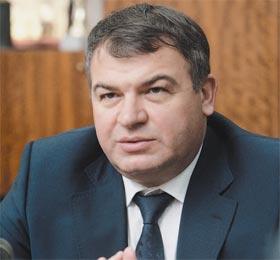
There was plenty of interesting media coverage of the Defense Minister’s meeting with the Duma on Wednesday, and plenty of criticism of what he said or didn’t say.  Plenty worth covering in a Part II, especially regarding Serdyukov’s effort to shift the blame for another failing GOZ.

Radio Svoboda quoted KPRF deputy Vladimir Ulas putting all the blame for the army’s current state right at Anatoliy Serdyukov’s feet:

“The public clearly understands that the situation in the Armed Forces is far from favorable.  Constant scandals which rock this department, the morale-psychological situation in which personnel, first and foremost, the officer corps, find themselves, both the material condition, and the lack of modern armaments – all these problems are completely real.  I also hoped to hear answers to questions, how the Defense Ministry intends to solve them, from the minister.  But, to my greatest regret, the biggest, in my view, problem of today’s Armed Forces is the absolutely dense incompetence of the military leadership.  With people like Serdyukov still heading our Armed Forces, and he, unfortunately, is far from the only one, hoping for some kind of positive shifts is absolutely senseless.”

There was plenty more to be said about problems with the GOZ, the OPK, and the VPK and Defense Ministry blaming each other for what looks like a failing GOZ-2011.

KPRF deputy Anatoliy Lokot told Nakanune.ru:

“I have the impression that these sessions are ‘closed’ to hide the bitterness of the questions and negative results of the work of Military-Industrial Commission (VPK) and Defense Ministry leaders.”

United Russia’s Igor Barinov reiterated what he said he told President Medvedev a year ago:

“I noted then that the lack of competition and incomprehensible system of price formation in the VPK is a deadend path.  We’re reaping the fruits of this now.  Judge yourself:  one, well, a maximum of two enterprises produce this or that type of our armament or military equipment.  Meanwhile, enterprises getting money from the federal budget dispose of it as they wish.  Prices simply come from the ceiling.  No one bears any responsibility for quality.  No one invests money in improving types of military equipment, in the end it goes that even in infantry weapons we’ve fallen behind.  Our legendary automatic weapon Kalashnikov, the value of which everyone recognized before, now lags the best Western types in tactical-technical characteristics.  And so it is in almost every area, with rare exceptions in the areas of missiles and some aircraft.”

“The Defense Ministry announced it won’t buy airborne combat vehicles [BMDs] and infantry combat vehicles [BMPs] from ‘Kurganmashzavod.’  This enterprise was one of the guilty in breaking the Gosoboronzakaz.  And here’s the thing in this.  ‘Kurganmashzavod’ is part of the United ‘Tractor Plants’ Corporation.  Budget money is shared out with ‘Kurganmashzavod’ in a targeted way for the purchase of equipment, but the corporation’s directors dispose of it according to their discretion, and, naturally, BMP and BMD production is the last thing of concern for the owners of this holding company.”

“If they understand that they can be deprived of budget resources, then this enterprise will be forced to invest in quality, and in cutting defects, and in the improvement of product types.  In addition, strict supervision is needed.  Money was allocated but no one asked anyone about this money, and the result was zero.”

The KPRF’s Lokot also dwelled on the GOZ:

“It’s obvious that if the Gosoboronzakaz isn’t formed in the first half of the year, then nothing will be accomplished in the remaining part of the time since money will only begin coming in at the end of the year.  Serdyukov acknowledged that today 13.4% of all contracts in the plan have been formed.  Some time ago, Sergey Ivanov gave us other numbers.  But I think that this number juggling was caused by competition between the Defense Minister and the Military-Industrial Commission.  Ivanov lumps all the blame on the Defense Ministry, Serdyukov – on the defense-industrial complex.  He even began his [Duma] speech with this, saying that the military-industrial complex is guilty of everything.  They have poor qualifications, technology losses, poor production and so forth.  But really at a minimum the Defense Ministry itself bears 50% percent of the responsibility for such a situation.”

“I have given the example of Novosibirsk proving the obvious guilt of the Defense Ministry in breaking the order.  One of the enterprises – the Lenin Factory, which puts out very important products for infantry weapons, became a victim of Defense Ministry officials.  In January this year, Serdyukov opened a state order tender with his signature, but closed it in March.  Now half the year is gone, and there are no results.  The enterprise isn’t working, products aren’t coming out, 211 million rubles spent on reequipping won’t bring any returns, and now they’re generally talking about cutting part of the work force.

“Right in Novosibirsk at the Comintern Factory the S-400 surface-to-air missile system is being produced on the enterprise’s own money, and not with government resources.  Serdyukov says:  ‘I don’t see anything terrible in this, let the enterprise do it on its own money.’  But where does it get its capital resources?  What world is Serdyukov living in?”

Vedomosti talked to a former Defense Ministry official who basically said the threat of arms purchases abroad really didn’t scare anyone.  And, according to him, although Serdyukov considers defense industry leaders lazy and prone to stealing, everyone understands imports can never replace domestic production.  Finally, a source close to the PA told the business daily that Serdyukov himself opposes the Mistral acquisition because of the large expenditures required to build its base infrastructure.

Mistral Endgame?

Mistral (photo: ITAR-TASS)

Maybe.  Maybe not. 

The Mistral contract endgame may in fact be upon us.  But some major players have warned (more than once) of a protracted negotiating process.

Kommersant reports Rosoboroneksport and DCNS signed a “contract” on June 10 for the first two Mistral units, according to a source familiar with the course of negotiations. 

After meeting President Medvedev at the G8 summit on May 26, French President Sarkozy said a “contract” would be signed in 15 days [that would have been June 10].  Now Sarkozy also said in late May that a Mistral “contract” would be signed on June 21 when Prime Minister Putin visits France.  Kommersant suggests this could be an official unveiling of whatever was signed on June 10.  But an RF government source said this isn’t planned, according to ITAR-TASS

As for the terms and price . . . the Russians were insisting that the Mistral come equipped with the SENIT 9 tactical combat information system and licensed rights for €980 million, but the French were saying no such tech transfer for €1.15 billion.  Also according to this story, the French don’t intend to provide SIC-21 in the Mistral package.

In contrast to Kommersant, RIA Novosti says what was signed last week was no more than a “protocol of intent” to sign a “contract.”  The news agency said the date and place for the “contract” signing remains up in the air, but it could be the international naval exhibition in St. Petersburg from June 29 to July 3.

It also says the price will be between €1 and €1.2 billion, and the French military still opposes giving SENIT 9 to Russia.

Rosoboroneksport’s press-service denied that a “contract” has been signed, and told media outlets the negotiations are in their concluding phase, and a Mistral contract is in the process of “technical formation.”

Utro.ru sums up what many may think about acquiring four units of Mistral:

“Military experts still don’t know precisely why Russian sailors need them, since all of two [sic] ships will scarcely substantially change the situation in the fleet.  It’s not excluded that Russia, first and foremost, wants the technologies the French use in constructing ‘Mistrals.’”

It’s also not excluded that perhaps some involved want the deal itself, commissions, bribes, and kickbacks, more than they want the ships.

Russia Not Likely to Buy Ukraina

Slava-class CG Ukraina

Will Russia buy the aging, semi-finished Slava-class CG Ukraina?  Probably not, unless the price is really right, i.e. basically zero.  It’s unlikely Russia will pay Ukraine to complete the cruiser because Russian shipyards have suggested towing it to Russia, refurbishing, and updating there. 

The questions are compelling only because of a recent video, varying reports about the ship and a possible deal, and what this all says about Moscow’s military procurement.

Military parity highlighted Podrobnosti.ua’s video.  Like the photo above, the video shows a major combatant in declining condition.

Nevertheless, according to recent ITAR-TASS, Ukraine’s Defense Minister is optimistic Kyiv and Moscow will finish Ukraina together.  And he claims the ship is 95 percent complete.

By way of review, Ukraina is a 1970s- or 1980s-vintage design being constructed as Fleet Admiral Lobov at Nikolayev’s [Mykolayiv’s] 61 Communards Shipbuilding Plant when the USSR collapsed.  Kyiv failed to find a foreign buyer for the ship, and reportedly spends $1 million every year maintaining it.  So that doesn’t mean a plethora of options or a very strong negotiating position for the Ukrainian side.

Talk of Russia buying Ukraina peaked last year in the wake of the base agreement extension between Moscow and Kyiv.  News outlets noted that the acting chief of the Russian Navy’s Technical Directorate inspected the cruiser and declared it 50 percent ready.  He said Ukraina would need 15 billion rubles for repairs and 35 billion for modernization — $1.7 billion in all.  The Navy’s 50 percent sounds a lot more like the 70 or 75 percent we’ve been hearing for many years than the Ukrainian Defense Minister’s 95 percent.

Reported pricetags for Ukraina, in its current shape, start at $70 or $80 million and run to ridiculous numbers.  In January, Argumenti.ru reported the Russian Defense Ministry would not pay scrap metal prices for Ukraina, but commented that Moscow would accept the ship as a gift.

Then there’s also the issue of whether the Russian Navy really needs it.  It’s an issue often forgotten in procurement debates.  Granted Ukraina is a something of a special case.  But it should also be a pretty easy decision.

Novyy region quoted a couple opinions last May.  Former Black Sea Fleet Commander Vladimir Komoyedov said:

“The ship hasn’t aged 15-20 years yet according to its capabilities.  However, it needs, of course, to be deployed in the ocean, in open theaters, and not in the Black Sea, not in the Baltic — there just isn’t sufficient space for it there.  The ships [Slava-class] are very good, not at all badly designed.  It can’t be said this cruiser belongs just to Ukraine alone.  Ukraine’s share of it, as far as I remember, is 17, a maximum of 20 percent.  Therefore the question’s about the purchase not of a full ship, but of a share — all the rest belongs to Russia.  The purchase issue has stood for a long time, and it needs to be resolved once and for all.  If such a decision is made, it’ll be the right one.  It’s better than the tin can Mistral by a factor of two.”

Defense analyst Aleksandr Khramchikhin, on the other hand, said:

“It’s very hard to understand who needs this ship now.  Undoubtedly, for our fleet which is shrinking into nothing, now such a cruiser has already become pointless.  We have to begin, so to speak, from below, and not from above, not with cruisers, but with frigates at least.  Moreover, these cruisers have a very narrow anti-aircraft carrier mission.  They were built exclusively for war with American carrier battle groups.  It doesn’t seem to me that this mission is all that acute for us now.  Therefore, it’s hard for me to comprehend why we need this ship, and where to put it if it is finished.”

All that said, the Russians might buy Ukraina anyway.  If they do, it’ll indicate a new State Program of Armaments gone awry in its first year.

Popovkin Details the GPV

Yesterday First Deputy Defense Minister Vladimir Popovkin gave RIA Novosti more details on Russia’s procurement plans under the State Program of Armaments (GPV), 2011-2020.  He said 78-80 percent of the 19-trillion-ruble Armed Forces portion of the GPV will go to procurement.   

Popovkin said Russia plans to develop a new liquid-fueled heavy ICBM to carry up to ten warheads, and having a service life of up to 35 years.  Former RVSN Commander General-Lieutenant Andrey Shvaychenko talked about a new liquid heavy as far back as late 2009, and the issue’s been debated in the Russian military press since. 

Popovkin said the Defense Ministry plans to accept the Bulava SLBM and the first two Borey-class SSBNs this year.  There will be 4-5 Bulava launches this year.  Recall to date only 7 of 14 Bulava tests have been successful.  Addressing the missile’s past failures, Popovkin said there were many deviations from the design documentation during production.  He also said Russia plans to build eight SSBNs to carry Bulava by 2020.  He was unclear if this includes the first two Borey-class boats.

Popovkin said work on a new strategic bomber is ongoing, and he claimed a technical design will be complete in 2015.  He said this work isn’t being rushed.

Popovkin told RIA Novosti  the Air Forces will receive more than 600 new aircraft and 1,000 new helicopters by 2020.  In 2011, Su-27SM, Su-30M2, Su-35S, Yak-130, and Su-34 aircraft are to be procured.  More than 100 helicopters, including Mi-26 transports and Mi-28N and Ka-52 combat helicopters will be acquired this year, according to Popovkin. 

Popovkin said a contract for the first ten experimental PAK FA (T-50) aircraft will be signed in 2013, with serial production of 60 aircraft beginning in 2016.

The GPV includes the purchase of ten S-500 air defense systems.  Popovkin said this system will begin testing in 2015, initially with missiles from the S-400.  Fifty-six S-400 units will also be purchased by 2020.  This sounds like seven 8-launcher battalions.   

Popovkin said the GPV will buy 100 ships – including 20 submarines, 35 corvettes, and 15 frigates – for the Navy.  He didn’t specify types for the other 30 ships, and it’s unclear if new SSBNs are included in these numbers.  Popovkin reconfirmed Russia’s plan to buy two and build two Mistral amphibious ships.  Recall also the Black Sea Fleet alone is supposed to get 18 new ships including proyekt 636 diesel-electric submarines, proyekt 11356 and 22350 frigates, and proyekt 11711 LSTs.

Popovkin also mentioned plans to buy a limited number of French FELIN soldier systems, with the intent of Russia producing its own version by 2020.  He looks for it to equal the advertised capabilities of U.S. and German equivalents.

Solomonov on Need for Increased Missile Production

MIT General Designer Yuriy Solomonov told Interfaks yesterday Russia needs to increase intercontinental ballistic missile production in the coming years to preserve its strategic nuclear forces (SYaS or СЯС).  See a more complete version of his remarks at Arms-expo.ru.  He said:

“We have two years at our disposition to be in a condition, proceeding from implementation of the production preparation program, to get all cooperation ready for the possibility of manufacturing a large quantity of products.  Many times more than have been made previously.”

He said Russia has produced 6-10 missiles per year over the last ten years.  And he acknowledged that plans for increased production volume may not be fulfilled:

“All this rests, with respect to corporate enterprises, on resolving the task of allocating them investment.  And the regulatory-technical base — the way officials interpret it — doesn’t allow for resolving this task.  If it isn’t resolved, it’s possible to say unequivocally that the task of significantly increasing the volume of products delivered by 2013 won’t be fulfilled either.”

So he’s saying the reluctant state will need to invest in Votkinsk and its component suppliers?

Solomonov notes that the Votkinsk plant, manufacturer of the Topol-M and RS-24 ICBMs, produced up to 120 Pioner (SS-20) medium-range missiles a year between 1980 and 1987.  He says:

“It follows from this that the production capabilities of the factory undoubtedly allow it to realize, proceeding from this potential, production of a substantially larger quantity of missiles than in the preceding ten years.”

Inflation, GOZ, and GPV

RIA Novosti military commentator Ilya Kramnik has some thoughts on this issue.  Inflation has disrupted Russian rearmament efforts for years, and this year it’s likely to remain in the 9 percent range, or higher.  But, besides inflation, Kramnik notes, the way arms prices are formed and tenders are conducted also create higher prices and complicate the process of obtaining new weapons and equipment.

Kramnik attributes delay in adopting the GPV to the problem of reaching agreement on constantly rising prices for arms and military equipment.  These price increases, he notes, actually outstrip the official inflation rate and devalue the much-touted growth in the military’s budget.

A just-signed law (402-FZ) modifies the budget code and the law on the State Defense Order (GOZ), allowing this year’s GOZ to be financed without an adopted State Program of Armaments (GPV).  The law is also supposed to limit price increases on the OPK’s products.

According to Kramnik, in 2007, the Russian government ordered a 25 percent limit on profits from arms production, based on prices registered with the Federal Tariff Service.  This didn’t work too well.  The T-90 tank’s price tag increased from 42 to more than 70 million rubles, and the cost of the Steregushchiy (proyekt 20380) corvette rose from 1.8 to 5 billion rubles during its construction.

However, increased costs aren’t always attributable to more complex and expensive systems, or to inflation, or to small production runs.  Prices for military equipment are formed through “informal means” or personal ties between those who order and those who produce it.  Kramnik doesn’t utter the word corruption, but that’s what these informal ties lead to. 

At any rate, this is why the Defense Ministry’s been divided into military and civilian parts — to break the link between uniformed buyers and factory directors.  But who’s to say civilians can’t take the military’s place in a corrupt relationship?  To his credit, Kramnik concludes:

“We’ll see soon enough how much this series of measures will slow the growth of prices for military equipment in Russia.”

Kramnik also notes serious problems with GOZ tenders and the government procurement law.  Competitive tenders have to be conducted even when there’s only one supplier, leading to time wasted, and to the rise of middle-man firms that pass orders to sub-contractors who actually do the work.  To fix this, changes in the state purchase law (94-FZ) are needed, but haven’t come in many years.

And the problem of funding multi-year work still hasn’t been solved, and long-term, science-intensive project and RDT&E prices have to be renegotiated annually.

Kramnik sums up:

“All these ‘holes’ lead to budget money too often accumulating in vain in treasury accounts, or else too actively being ‘turned’ and ‘sawed off’ — the ineffective expenditure of state defense order resources in recent times has reached many tens of billions of rubles.  The coming year will become a real test for the reformed Defense Ministry — the degree of effectiveness of military budget expenditure will demonstrate how much Anatoliy Serdyukov and his team have managed to fulfill the tasks set before them.”

New Year’s Peep Show (Part II)

On with Krasnaya zvezda’s peep into the Defense Ministry’s organizational and force development document . . .

What about strategic nuclear forces in the future:

“Their further development will support a guaranteed counter to forecast changes in the strategic balance of forces, connected in the first place with the deployment of a U.S. global anti-missile system, but also the growing potential of U.S. and NATO highly accurate weapons.”

The three-component structure of the SYaS (land, sea, and air) will be preserved.  And the plan repeats earlier assurances that the SYaS will be 70 percent modern by 2015, and 100 percent by 2020, as a result of the GPV.

Does the composition of the armed forces meet today’s threats?

The document says, despite everything, the threat of aggression against Russia has receded, and there’s no need to maintain a multimillion-man army.  But it sounds like they’re still trying to convince people.  Then there’s this.

Russia can still mobilize.  The document offers reassurance that, in wartime, storage bases can outfit a significant number of new formations and units.  The districts have preserved a mobilization base, and mobilization deployment plans.  This comes after the Defense Ministry has spent a good bit of time and effort denigrating the old system of hollow cadre-level units.  Who is manning storage bases and cadre units after recent downsizing, cuts, and consolidations?

The document re-runs the rationale for four MDs / OSKs.  It calls the MD an inter-service strategic territorial large formation [объединение].  The old MD system didn’t correspond to existing military threats.  To repulse aggression, a large formation of the troops and forces of several districts and fleets is needed.  On strategic axes, there were no organs to unite ground, air, and naval forces.  In a crisis, temporary, uncoordinated inter-service command and control organs were established.  The army lacked commanders capable of planning and conducting operations in TVDs.  Old MDs didn’t correspond to air defense boundaries.  New MD / OSK commanders are personally responsible for security in their regions, and uniting forces under them has shortened their response times and increased their striking power.

What about command and control?  There’s an emerging two-pipe system — the military plans for the use and development of the armed forces on the one hand, and civilians plan for their support on the other.  The new three-level command system works like this — main commands of services, armies, and brigades answer for tactical issues, and the General Staff, OSKs, and armies answer for operational issues.  The army-level command looks like an important hinge in this scheme.  In days past, their staffs were never very large.  The General Staff has lost duplicative functions and become a full-fledged strategic planning organ.

Where is the line drawn between the main commands of the services and the OSKs:

“The main commands of the services concentrate their efforts on the organizational development of the services, the organization of combat training, junior specialist [i.e. conscript] training, planning of peacekeeping activity and support in special aspects.”

“The unified strategic command of the military district is becoming the inter-service command and control organ, dedicated to planning and controlling all armies, brigades and military units in the inter-service troop grouping on the strategic axis, with the exception of those in the composition of strategic nuclear forces.”

Now any MD / OSK commander worth his salt will want to train and exercise the forces he’ll fight with.  He may impinge on the diminished role of the main commands to the extent that he does it.

KZ’s review of the document finishes up talking about combat possibilities and combat potential.  It claims that, far from just cutting, the TO&E of formations and units has been optimized and their combat possibilities increased.  The example given is the new Western MD vs. the old Leningrad MD.  It says the combat potential of the former is 13 times greater than the latter.  Not exactly tough since the latter didn’t have a single combined arms army.  Finally, it says resources reclaimed by cutting units give a “chance for real rearming of the army and fleet, and not endless modernization and repair of obsolete and worn-out armaments and military equipment.”

New Year’s Peep Show (Part I)

Yes, the season of little or no news continues . . . but there’s always something to write. 

On 29 December, Krasnaya zvezda provided a little holiday treat — a year-ending issue filled with official views on a variety of topics:

  • Priorities of Armed Forces Organizational Development.
  • Armed Forces Manning.
  • State Program of Armaments.
  • Global Political-Military Situation.
  • Improving the Military VUZ System.
  • State of Military Discipline.
  • Transition to a Unitary System of Armed Forces Material-Technical Support.
  • Provision of Housing to Servicemen.

A cornucopia of data for discerning and careful readers.

Caught up in the joy of the holidays, many probably overlooked these articles.

Let’s have a look at the first one — Priorities of Armed Forces Organizational Development.

What’s interesting is we’re given a little peep show into a much more interesting, detailed, and lengthy document — “The Concept of Organizational and Force Development of the Armed Forces of the Russian Federation in the Period to 2020” — approved by President Dmitriy Medvedev on 19 April 2010, with absolutely no fanfare.

What we don’t know is how this little peek inside the document was edited.  We don’t know what was emphasized, or left out, and why.

A couple preliminaries.  First, the title in the vernacular is “строительства и развития Вооружённых Сил.”  We really don’t want to say “Construction and Development” or “Building and Development” or something like that.  We’re not talking a suburban Moscow water park here.  By the same token, “Organizational Development and Development” sounds dumb. 

What we’re really talking here is force structure planning and force development.  The emergence of this planning document isn’t surprising given that they got a new national security concept in 2009, and a new military doctrine in early 2010.  This article also makes the point that, besides this ten-year military organizational development plan, there are also five- and one-year plans.

We’re going to move quickly today.  So pay attention.

The priorities are:  strategic deterrence (SYaS and VKO); building inter-service groupings on strategic axes (as in OSKs); building a new command and control system; reequipping in line with GPV-2020; a new education and training system for officers and sergeants; and resolving ever-present issues of social defense [i.e. pay and benefits] of servicemen.

What does it mean for each service?

  • For the Ground Troops, get organized on the axes and prepare to be mobile. 
  • For the Air Forces, emphasize supporting the Ground Troops and Navy.  Improve VTA and airfields for strategic mobility.
  • For Navy, support personnel and combat readiness of naval SYaS.  Series construction of multipurpose nuclear submarines and surface ships.
  • For RVSN, preserve the structure of ground SYaS.  Complete rearmament with fifth generation missiles.
  • For Space Troops, deploy formations with future missile attack warning and space monitoring systems.  Complete the full orbital grouping with future satellite systems.
  • For VDV, improve training, especially inter-service training.  Reequip with armaments, military equipment, and specialized equipment.

Sounds like Ground Troops have to make do with the weapons and equipment they have.

Stay tuned for Part II.

Government Credit for Two New Almaz-Antey Factories

In a 29 December interview on Vesti’s Rossiya-24 program, Deputy Prime Minister Sergey Ivanov addressed modernization, development, arms sales, and defense industry.  He said international demand for Russian air defense systems has led the government to take a decision to extend credit for Almaz-Antey to build two new factories.

As written in an earlier post about shortfalls in productive capacity in the OPK, this possibility has been under discussion since at least last February.

Military Parity picked up additional RIA Novosti coverage of Ivanov’s remarks:

“This year we decided on additional support to ‘Almaz-Antey’ and the allocation of credit for the construction of two more factories.”

Ivanov explained that most of Almaz-Antey’s production is going to satisfy the Russian Army’s requirements, and:

“Now they don’t have production capacity for large volume exports.  But this good, if it’s possible to call it that, is in great demand on the international market.”

A bit from the video . . . Ivanov’s interviewer asks about the state of military-technical cooperation (i.e. arms sales), and aviation’s role in it.  Ivanov says it got along “not badly” in 2010.  Arms sales exceeded $10 billion for the first time.  This, he says, attests to the competitiveness of, and demand for, Russian equipment, and so, in many areas, the defense sector isn’t doing badly.  Aviation represents more than a third of arms sales, or more than $4 billion.  He thinks military transport aviation sales have a good future, and, of course, buyers stand in line for Almaz-Antey’s PVO systems.  Thus, with internal and external demand, the need for two completely new factories.

Of course, saying they’ve decided for two factories is not the same as actually building them and starting new production lines.

Serdyukov’s Year-Ender

Anatoliy Serdyukov (photo: Izvestiya / Vladimir Suvorov)

ДОРОГИЕ ЧИТАТЕЛИ ! ! !

С НОВЫМ ГОДОМ ! ! !

Thanks for reading and commenting this year.

This one could have been entitled, The Army’s Great Scourge or Reform Isn’t Utopia or We Straightened Them Out.  Great quotes, but you’ll have to read to the bottom.

Defense Minister Anatoliy Serdyukov’s year-ending interview in Monday’s Izvestiya is a good read.  The paper asked some harder-hitting questions than Serdyukov normally gets.  And, though they aren’t necessarily new, his answers are pretty direct and revealing.  There are problems with a lot of them though.

Let’s look first at what Serdyukov said, then we’ll look at the deeper meaning of his answers.

Asked about this year’s command and control changes, the Defense Minister says:

“The most important thing is that we already changed the entire troop command and control system.  From one side, we tried to minimize the command and control levels; from the other side, to equip them technically.  Now the next task is before us – to tie it all into a single system so that every district commander answers not just for the ground, but also for the air, and air defense, and naval component.  The next step is we are trying to conduct exercises in such coordination between districts.  I think 2011 is key for us on this plane.”

On the decision to move to four unified strategic commands (OSKs) and cutting levels of command, Serdyukov said:

“This is the General Staff’s idea.  Before going to the president with such a proposal, we discussed this initiative since the end of 2007.  At the same time, we had conferences at various levels, consulted with experts, important military leaders, and studied international experience again – both American and NATO.  We tried to analyze the situation from every angle and arrived at the fact that this is really useful for various reasons.” 

“First and foremost, the transition to the OSK should be reflected in the controllability of the army.  A simple example:  at the beginning of the transformations, an order from me to a battalion commander had to go through 17 levels.  So you understand this influenced the speed of their transmission, and the content of the information itself.  Now we have three levels in all. If one wanted, it would be possible to calculate how much was saved both on communications nodes, and on communications systems themselves, and in speed.  And as a result – the army’s combat capability rose 50 percent.”

Asked about what will happen in combat situations now that more civilians occupy military support jobs, the Defense Minister says:

“Several factors converge into one point here, therefore, we came to the conclusion that we could and should divide directions of responsibilities – operational and support.  It’s not an accident that the Defense Minister has a first deputy – the Chief of the General Staff and a first deputy – a civilian who handles the direction connected with supporting the operational component.  Everything’s been thought out, and there won’t be any kind of failures.  Neither peacetime, nor wartime frightens us.”

On General Staff Chief Makarov’s assessment that the commander’s slovenliness caused 150 conscripts to get ill in Kemerovo, Serdyukov takes the opportunity to describe the pains he’s taken in establishing systems to monitor the implementation of military reform:

“Unfortunately, we are getting started.  Actually, when we launch any process, we try to organize the monitoring system and incentive system in the final result.  But this doesn’t always work.  We’ve established a series of structures for monitoring.  They are, for example, the financial inspectorate, which checks the use of budget resources.  Then the personnel inspectorate – occupied with the activity of every officer and civilian specialist.  There is the military inspectorate, which checks those measures which should go on in this or any military institution.  There is an organizational-inspector directorate occupied with checking fulfillment of all directives, orders, decrees, laws, etc.  This is that system of monitoring which gives the capability to influence internal army processes, and to move them.  Naturally, an entire system of regulations exists where the duties of every colleague, every sub-unit are strictly prescribed as is the corresponding period for fulfilling the orders.”

Asked about indicators of the fulfillment rate for Defense Ministry orders:

“All orders are being fulfilled.  The question is different:  are they on schedule?  And for the last half year, the picture generally doesn’t look bad.  The schedules we are establishing are holding on the whole.  Inside the ministry, we changed our entire workflow, accordingly this entailed a cut in signatories on this or that issue or project.  We are introducing electronic workflow which allows us at any stage to check how this or that directive or order is being fulfilled.”

“But there are also breakdowns.  Recently we had a collegium in Khabarovsk.  We listened to the report of an army commander who should have implemented 87 different measures, but implemented all of two.  What kind of combat readiness and discipline can you speak of if an officer doesn’t fulfill his own duties?”

“When we embarked on reform, both I personally, and many of my colleagues strove to understand:  what kind of problems really could be blocking the army’s development – housing, lack of money, lack of equipment, of soldiers?  Now there’s everything.  If you serve, then according to order 400 the money is very respectable.  We are providing housing.  There’s one hundred percent in equipment.  Almost one hundred percent – give or take one-two percent – in servicemen.  There you have it:  if you chose this profession, then serve.  But here we are stumbling over weak managerial discipline – the army’s great scourge.  And even here we’re trying, from one side, to stimulate work, and from the other – to severely demand fulfillment of service duties.”

Is Russia buying weapons abroad because the systems are really needed or is it being done out of political considerations:

“There is a certain requirement for foreign military equipment, because in a series of types of armaments, we, unfortunately, will fall behind.  Our models don’t meet the demands presented by the times.  It’s important also to understand how to formulate the tactical-technical tasks and characteristics of this or that essential production.  Therefore, we’re also trying to familiarize ourselves with those modern models of equipment and armaments which our partners have.  For this, in fact, we are buying equipment in small amounts – as in the case of UAVs.”

“However, besides equipment, it’s also necessary to have trained personnel, and a command and control system.  We don’t have many models of armaments, but to work on their development, spend time and money on their adoption is simply irrational, it’s simpler to buy, to study, and later begin to develop our own production.  Those Israeli drones gave a serious impetus to developing domestic industry.  Not long ago, the president was at the test range and there we showed him Russian models that are sufficiently reliable.  They are fully suited to us.”

“We don’t have ships like the Mistral.  We never built them.  But to try to catch up now is senseless.  We plan to buy the license and technical documentation for their production.  Moreover, there’s an agreement that, starting with the third ship, we’ll build the helicopter carriers in Russia.”

Doesn’t such an approach hurt Russia’s defense industry?  Wouldn’t it be better to finance and support our own enterprises:

“In the new state program of armaments, for four years, we laid out 600 billion rubles which will be allocated according to a new credit system for enterprises under a government guarantee.  Now  discussion is going quite actively on the subject of how this should happen, with what credit requirements and conditions.  This is one of the forms of financing which has a relationship not so much to support of enterprises as to the system of paying the state defense order itself.  It allows for transferring the load from the second half of the GPV to the first and vice versa.  Or to take off the peak load, meanwhile working out forms of active participation in financing by the Ministry of Finance and the banking system.  Incidentally, the reaction is fully positive, we already have trials with the largest banks – with Sberbank and VTB.”

On inter-ethnic conflicts in units and the possibility of creating nationality-based units:

“This isn’t today’s or yesterday’s problem.  If the commander fulfills his duties completely, then time and energy for conflicts simply won’t remain.  If they’re occupied with physical training for a minimum of four hours a day in every unit , and the remaining time is combat training, as it’s stipulated, then no kind of misunderstandings will arise.  It’s not important where you’re from, which nationality, and religion, if you just fall in your rack after exercises.  The problem again is in the commanders.  Some of them are simply estranged from working with personnel – they see that there are many physically strong, willful guys in the unit, and give over control of the barracks to them.  But those ones become abusers.”

What happens with commanders like these:

“We’ll dismiss them, get others.  An officer must be physically and morally very well prepared and engender only respect.”

Has the army rid itself of dedovshchina with the move to one-year service:

“We now are trying to get away from this term.  There is no longer such a phenomenon.  There is simply hooliganism, crude violation of the law.  If a man served three months, what kind of ‘ded’ is he?  The roots of dedovshchina are much deeper than commonly believed.  In Soviet times, when people served three-five years, then it was the rule:  a man just called up, and a man looking at demob in six months, have different training.  Here then is this phenomenon, really, and its origin.  Now this is pure hooliganism, legally punishable crime which we have fought and will fight without compromise.  Here it’s important that the commander in the sub-unit should fulfill his duties completely.  Then there can’t be any kind of conflicts by definition.”

Asked about accidents with munitions dismantlement over the last year, and how is the problem being resolved now, Serdyukov says:

“The problem is very serious.  For long years, munitions were stockpiled to excess, calculated for a multimillion-man army.  Besides, in the last twenty years, virtually no attention was given to combat training and firings, but the norms of munitions stockpiling remained as before.  As a result, so much ended up in excess that we have work for several years.  To dismantle them by industrial methods is quite complex – there aren’t enough enterprises.  Besides, this is very expensive and not safer than destruction.”

“Therefore, we’re now preparing special teams, certifying equipment, and selecting officers.  They mainly need to be combat engineers.  We’re picking ranges.  We’ve figured where, in what volume, and what we need to blow up, and worked out safe techniques.  We need at a minimum two, maybe three years of such work.  Yes, this will create some temporary discomfort and difficulties.  But it’s impossible to not do this.  If the entire arsenal at Ulyanovsk had blown up, the trouble would have been much more serious.”

Asked about demographic problems, a potential shortage of conscripts, and possibly cutting more deferments, the Defense Minister answered:

“We won’t revoke anything.  As far as demographic problems go, it goes without saying that they exist and we will take them into account.  How do we solve this problem?  I think if the country’s financial situation allows, then we will still try to return the issue of a contract army.  No one has revoked this program, we didn’t realize it because of a lack of resources.  We haven’t  rejected the idea itself.”

Serdyukov tells his interviewers flat out, there’s no longer opposition to his reforms in the army.  What happened to his opponents:

“We straightened them out.  Of course, this was difficult, especially at first.  Now a team of like-minded people has been laid down which itself is generating reform ideas.  Something’s already started to come from it.  People see this and understand:  reform is not utopia, but completely concrete matters.”

After four difficult years in the Defense Ministry, where does Serdyukov see himself:

“I still haven’t finished my service, so I can’t begin to talk about what’s been achieved and what hasn’t.  We’re now in a transitional phase.  There’s not a single direction of the ministry’s activity that modernization, the transition to a new profile wouldn’t affect.  We are working everywhere – in all spheres:  armaments, scientific-research activity, education, organization of daily service, military-technical cooperation.  I can’t say now what we’ll succeed in, and in which direction we’ll lag.  It seems to me that everything’s going pretty well.  We’re on schedule, there’s no deviating.”

Let’s deconstruct some of this shall we? 

Serdyukov and company seem to be obsessed with eliminating layers.  You know sometimes redundancy is good, and prevents making mistakes.  In a net-centric army, every layer sees the picture, but doesn’t necessarily have it for action.  It’s very hard to believe Serdyukov’s claim that just cutting command levels increased combat capability 50 percent when you look at everything that’s factored into the Russian definition of combat capability. 

Yes, we know operational and support stovepipes have been created.  But Serdyukov completely dodges the question of what happens when the combat tooth depends on a civilian tail.  There are obviously answers to this, but the Russians aren’t accustomed to this.  He brushes it off saying there just simply won’t be any failures.  That’s reassuring.

 On the soldiers in Kemerovo and slovenliness, Serdyukov goes a bit non-sequitur.  It’s great hearing about his monitoring system and the implementation of orders, etc.  One wonders, however, if electronic workflow in the Defense Ministry was as important as many things that needed to happen in the troops this year.  But then it gets really interesting.  We start to hear in Serdyukov’s words some of the animus he has for officers.  Why did he ever have such an army commander as the one he vilifies?  He really lays into officers, saying he’s given them everything they need now, they just need to do their jobs.

Serdyukov really avoids the question on buying arms abroad and hurting domestic producers.  He monologues about some convoluted credit provision scheme for paying out the GOZ.  This issue of real money for producers to make weapons and equipment is significant.  Even with the GOZ and a new GPV in place, all anyone can talk about is extending credit to the OPK in 2011.  Hmmm, interesting.

He blames commanders again for inter-ethnic conflicts in the army.  If they were doing their jobs, it couldn’t happen.  If they just wore the boys out properly, it wouldn’t occur.  There is some truth in this, yes, but it’s more complex than just that.  But saying any more might have taken the Defense Minister into a social and political minefield.

On dedovshchina, again Serdyukov blames officers for not taking care of the problem.  Serdyukov’s insistence on just talking about hooliganism makes some sense, yes, but there is still dedovshchina going on.  And, by the way, dedovshchina was never just purely hazing, making the juniors do the crappy jobs; it always had more violence, abuse, and crime in it than Serdyukov is willing to allow.

Serdyukov doesn’t say how he’s addressing the real civil-military relations problem he’s got in Chelyabinsk with regard to the explosions at Chebarkul.  But at least it’s a little like the problems his counterparts face in normal countries, and one has to credit him for taking on a lingering military problem all his predecessors simply ignored.

Wow, is Serdyukov cocky on vanquishing his opponents in the military!  He ought to watch it, it could come back on him.  But as we’ve seen, large-scale, public political demonstrations are going to come from other sources (i.e. the soccer fan bunt or pogrom).  The purely military ones (i.e. the Russian Airborne Union, etc.) tend to be more farcical.  But veterans and even serving officers could provide critical mass in a bigger social protest.  And there’s always the chance that some disaffected Kvachkov could fire a grenade at the Defense Minister’s limo.  Yes, yes, I can hear you — this is just by way of playing out one scenario on what could happen in the future.

One has to respect Serdyukov’s reticence to judge his legacy right now.  It may be possible he’ll leave the big marble building on the Arbat one day thinking how much he’s changed everything, thinking he’s a 21st century Dmitriy Milyutin.  And he may be, at least in comparison with any other choice.  He is making essential changes, and some progress.  More than this analyst thought he would back in early 2007.  But, on close inspection of the military, we may discover that less will actually have changed and improved than we think right now.

How much longer will Serdyukov continue in this burn-out job?  He’s pretty stoic, but he’s definitely more frayed than 4 years ago.  The issue probably comes down to the larger context of the Putin-Medvedev tandem and team — changes in high-level personnel could be more difficult now with every passing day.  Perhaps Serdyukov will remain through a fifth year, and the seating of the next Russian president.

It’s a great interview.  We got some real insight into the Defense Minister’s thinking.  Never could have gotten this 20 or 30 years ago.