Category Archives: Defense Industry

T-50 Flight Aborts at MAKS Today

The T-50 or PAK FA aborted its demonstration flight at Zhukovskiy today when its right engine malfunctioned as it started down the runway.  The pilot stopped the flight, deploying his brake chutes.  The aircraft was traveling about 100 kmph when the malfunction occurred.  The cause is being investigated.

Here’s RIA Novosti and other video of what occurred.


Kommersant reports its sources say the problem was a malfunction in the power plant’s automatic controls which allowed an uncontrolled supply of fuel to the engine.  The incident could have had more serious consequences if the aircraft had actually taken off.

Passion for the S-300PS

Friday’s Nezavisimoye voyennoye obozreniye editorial assures readers the end of S-300PS production — combined with a lack of contracts for the S-400 — won’t bring the apocalypse or, at least, a threat to Russia’s administrative and industrial heartland.

Like others, NVO is wrestling with the meaning of former Almaz-Antey General Director Igor Ashurbeyli’s most recent words.

Despite the sturm und drang over the S-300’s demise elsewhere in the media, NVO takes the rational tack.  There’s nothing new in Ashurbeyli’s statements.  Everything’s normal, it says.  Almaz-Antey could have upgraded the S-300P Favorit forever, but proposed S-500 development instead.  It’s natural and sensible to draw S-300 production down to a close.

And, after all, the S-400 is entering service, and the Vityaz and S-500 are in development.  The medium-range Vityaz will replace the S-300PS.  Morfey’s in development for short-range protection of the most important targets.  And Ashurbeyli says “it’s proposed” that the S-500 will be complete in 2015.

Here, NVO’s editors shift to a less optimistic, perhaps a more realistic tack:

“It’s true, we all know that in our country it’s always a great distance from plans to their fulfillment.  In that great distance, sometimes not just ruts and potholes arise, but even chasms.  Here not everything with full-blooded use of the S-400 system is clear and obvious.  According to the reports of both Ashurbeyli and the VVS CINC General Zelin, there are big problems with the long-range missile, and also at Moscow factory “Avangard,” where this serial production goes on, according to media accounts, there are no orders for it.  It could be because it’s not in shape.  And the “400,” on which great hopes rest today, as a transitional system from the S-300PS to Vityaz and the S-500, doesn’t justify these expectations?  It isn’t excluded that it’s for exactly this reason that the Defense Ministry no longer wants to order it?  Why spend money and buy something that doesn’t meet the tactical-technical requirements which the customers laid down for the system?  Here the generals wouldn’t lack common sense.”

But, says NVO, they could go forward with the S-400’s short- and medium-range missiles, couldn’t they?  Delays in the S-400 contract threaten to cause failures in establishing the country’s defenses.

With a two-year production cycle, and no contracts in 2011, it’s naive to expect the appearance of new systems in 2013, according to NVO’s editors.  What’s more, there’s no absolute certainty that Vityaz and Morfey will succeed in this time frame, or that some kind of real basis for developing the S-500 will be laid.

NVO concludes:

“And so here passions for the “300” are understandable.  But it’s only desired that they shouldn’t take on an alarmist character.  It isn’t necessary to frighten anyone.”

Ashurbeyli Interviewed (Part II)

The rest of former Almaz-Antey chief Igor Ashurbeyli’s interview with RIA Novosti . . .

Asked about the future of PVO, PRO, and VKO, Ashurbeyli says he sees the role of ground-based systems declining, and future “fire means” — after the S-500 — will be air-based.  Part of them, he claims, are already in RDT&E.

Returning more to the present, the former Almaz-Antey head says the Defense Ministry asks the impossible of weapons developers.  They have to sign contracts they know they can’t complete in the stipulated time frames, otherwise they’d have no work.

Ashurbeyli goes on to explain Almaz-Antey’s current production quandary.  The S-300 has been made only for export over the last 15 years.  One foreign order has just been filled, and only one remains.  So Ashurbeyli sees a gap between S-300 and S-400 production, and he predicts a decline in the factory’s operations in 2013 or even late 2012.

The lead-time for producing S-400 components is 24 months.  So, without budget advances today, there won’t be anything to produce in 2013.  In 2011, Ashurbeyli says, not a single supplementary S-400 production contract has been signed.

Ashurbeyli sounds a lot like former MIT head and solid-fuel ICBM maker Yuriy Solomonov who announced in early July that the 2011 state defense order is already broken.  Is it a coincidence both men were unseated from their general director and chief designer duties?

Ashurbeyli says:

“At the same time, the load on the plant today is far from full and the absence of contracts doesn’t allow for further renewing equipment and technology.  We have to understand that the S-400 is made on the very same equipment as the S-300.”

In response to another question, Ashurbeyli makes his case for consolidating the structure of aerospace defense industries.  He calls for a unified industrial corporation, a Concern VKO, to execute the Defense Ministry’s orders, and it’s needed, he continues, when a unified VKO is established [before 2012].  Organized like OAK or OSK, Concern VKO would bring in VKO-related weapons developers who aren’t part of Concern PVO Almaz-Antey. 

Ashurbeyli says this fall he’ll propose his view on how to integrate these enterprises and how to build the future VKO system to the country’s leadership.

So, where does this leave us?  If Ashurbeyli’s description is realistic, there’s no shortage of Almaz-Antey production capacity and no real need for new plants.  The problem is the lack of orders from the Defense Ministry.  For all the hype about increased defense spending and 20-trillion-ruble GPV 2011-2020, the absence of orders could be due to the military’s lack of cash or its difficulty arranging bank financing.  Or, despite Defense Minister Serdyukov’s talk about streamlining the GOZ, it could be that bureaucratic sclerosis (or corruption) is hindering the issuance of new contracts.

T-50 at MAKS-2011

A little Russia Today video of the T-50’s public debut on Wednesday at MAKS that someone was kind enough to upload . . .


The demonstration flight was made with Prime Minister Putin and other officials in attendance.  Novyye izvestiya said RIA Novosti reported the T-50 prototype wouldn’t perform the most complex maneuvers since it’s still in flight testing.

The press indicated one of the two prototypes will make a daily 15-minute flight at MAKS, but the aircraft isn’t on ground display.

RIA Novosti reported Sukhoy’s information that the two T-50, or PAK FA, prototypes have completed 84 flights.  Two more prototypes will join testing this year.

ITAR-TASS said air frame testing will finish in late 2012, and in 2013, ten T-50s will go to the Lipetsk Center for Combat Employment and Flight Crew Retraining.  VVS CINC Aleksandr Zelin noted only that his service will receive its first model for testing in 2013. 

Press reports say serial production is scheduled to begin in 2014-2015, with the Defense Ministry buying more than 50, 60, or even 150 of the fifth generation fighter in all.  ITAR-TASS noted that the plane’s state acceptance is planned for 2016.

General Director and Designer of Tactical Missile Weapons Corporation, Boris Obnosov told Interfaks his company is working on a new 200-km interceptor [air-to-air] missile for the PAK FA.  Test missiles reportedly will come this year, and series production next.  This Aviaport.ru article talks a little about weapons being designed for PAK FA.

Ashurbeyli Interviewed (Part I)

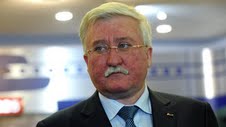
Igor Ashurbeyli (photo: RIA Novosti / Sergey Pyatakov)

Former Almaz-Antey General Director Igor Ashurbeyli gave RIA Novosti a long interview published on Monday.  Ashurbeyli was replaced at Almaz-Antey in early 2011, and he’s now a co-chair of the “Extradepartmental Expert Council on Aerospace Defense.”

He’s an accessible figure, having had extended sessions with the media in 2010 and 2009.  And his view of things has been pretty consistent.

This most recent Ashurbeyli interview spawned a number of sound bites saying that the former lead designer (among other things): 

  • called for establishing an overarching VKO industrial concern; 
  • offered the S-500 for European missile defense; and
  • said S-300 production has ended.

He actually had a lot more to say that might be worth a look.

Asked about Moscow’s anti-missile defense, Ashurbeyli replied that the service life of some Russian strategic interceptor missiles expired, while others [53T6 or Gazelle missiles] had their nuclear warheads removed per the decision of former President Yeltsin. 

Then Ashurbeyli gets to his point — the need for a new anti-missile defense (PRO) led to work on the mobile S-500 system.  Under the contract, it’s supposed to be accepted into the arsenal in 2015.  A schematic draft is complete, and technical design is being conducted.

On air defense, he says the S-300 and S-400 cover Moscow, but the service life of S-300PS systems will expire in the next year or two, and the new Vityaz system won’t be ready to take its place in the PVO network.

Ashurbeyli adds that Vityaz is expected in 2014-2015, but delays are possible due to problems with the new missile.

But, insists the former Almaz-Antey chief, there have never been any technical problem with the long-range missile for the S-400.  He says the problems have involved financing, preparing prototypes, and targets.  More targets and an updated target complex were needed.  And he foresees possibly the same problems with Vityaz testing.

Ashurbeyli tells his interviewer Vityaz, unlike the S-400, has just one base missile.  It will cover the same missions as the S-300PS and S-300PM.  The latter were last manufactured in 1994, and several dozen of the “freshest” will still have life for the next 7-10 years.  Most were updated to the Favorit (S-300PMU2) level but they aren’t new.  So, Ashurbeyli concludes, Russia needs to produce enough Vityaz to replace fully its S-300PS and S-300PM inventory.

The interviewer says relatively less has been written about Morfey.  Ashurbeyli obliges.  Morfey, he says, is a super short-range system and part of Russia’s echeloned defense.  While Vityaz is a medium-range system, and Pantsir and Tor are short-range weapons, Morfey is super short-range.  If developed as envisioned, Morfey will be unique.  It will have an omnidirectional cupola-type radar instead of a rotating one.

In sum, Ashurbeyli believes Morfey, Vityaz, S-400, and S-500 will be sufficient for the ground-based component of VKO for 20-25 years.  The tasks for Morfey and Vityaz were set in 2007 when the VPK decided to develop a single fifth generation surface-to-air PVO-PRO system.  The more complex S-500, he notes, will be longer in development.

More later.

News on New Almaz-Antey Plants

According to TsAMTO, the press-service of OAO Concern PVO ‘Almaz-Antey’ says the firm will sell supplemental stock this month, and some of the extra working capital will be used to finance construction of two new surface-to-air missile assembly plants.  Hat tip to VPK.name for highlighting the story.

Specifically, Almaz-Antey intends to spend more than 3.5 billion rubles to finance the new factories.  Four and a half billion rubles in federal budget money was already allocated to this effort in 2010 in exchange for additional government shares in the company.  And Almaz-Antey is also using government-backed credit in the expansion. 

The assembly facilities will be in Nizhniy Novgorod and Kirov.  They are supposed to be complete in 2015.

Some World-Class Competitors

Despite problems with its state defense order and defense-industrial complex, Russia clearly has world-class defense producers.  This is apparent not just from their arms exports, but it’s also evident in their defense-related revenue.

Eight Russian companies just made the Defense News list of the Top 100 defense corporations worldwide.  They are Almaz-Antey, Helicopters of Russia, Sukhoy, Irkut, United Engine-building, Tactical Missiles, KB Instrument-building, and RTI Sistemy.

With 2010 defense revenue of nearly $4 billion, Almaz-Antey has appeared in the list since 2005 (Antey appeared alone prior to that).  Yet its revenue’s only about half that of Thales, a fourth of EADS, perhaps reflecting that those companies are more diversified in their defense and non-defense business. 

Helicopters of Russia vaulted into the middle of the Top 100 list with 2010 defense revenue of nearly $2 billion (a gain of 134.1% over 2009).  Consolidation of its helo design and manufacturing capabilities seems to have put Russia on the map (or at least on the Top 100).  Still, Helicopters of Russia has about half the defense revenue of Textron, and half as much diversification in its business.  The difference is more pronounced when comparing to United Technologies.

Sukhoy and Irkut need no introduction, but it’s a little surprising that their defense revenue was lower than Helicopters of Russia.

United Engine-building (ODK) is an interesting case.  Not huge defense revenue, but more diversified than other Russian corporations in the Top 100.

A number of Russian companies have fallen out of the Top 100 over the years.  They include submarine and shipbuilders Sevmash, Admiralty Wharves, and Northern Wharf (the United Shipbuilding Corporation — OSK — hasn’t appeared in their place), RSK MiG, Uralvagonzavod, and Aerospace Equipment.  It’s hard to say why they’ve fallen off; it could be their financial reporting — still sketchy at times — has made it hard to evaluate their revenue claims. 

Still, eight Russian companies in the Top 100 is a long way from 1999 when only Rosvooruzheniye (remember it?) made the list.

The Russian firms in the Top 100 are strong weapons and military equipment exporters, but the lesson for them from abroad seems to be that greater diversification and more civilian business makes a defense company more profitable.

Su-35 Update

Su-35-2 No. 902

Militaryparitet was kind enough to highlight the June issue of Vzlet (Взлёт) and current information on the Su-35S.  The Defense Ministry contracted with Sukhoy for 48 Su-35S during MAKS-2009.

Vzlet says the first Su-35S arrived at the Akhtubinsk State Flight-Test Center on May 28 to begin state joint testing (GSI or ГСИ).

The Su-35S-1 was assembled this spring, and made its first flight from the factory airfield on May 3.  It made seven acceptance flight tests by mid-May.

GSI will determine its preliminary correspondence to basic requirements, and its potential for serial production for combat units.

Prototypes Su-35-1 (No. 901) and Su-35-2 (No. 902) first flew in 2008, and these export versions completed factory testing, fully meeting stability and maneuverability requirements, power plant parameters, and basic onboard system operations, according to Vzlet.

The Su-35S has a digital information-command system, Irbis long-range phased array radar (capable of tracking 30, and attacking 8 air targets, as well as tracking 4, and attacking 2 ground targets), and thrust-vectored 117S engines.

Interfaks reports KnAAPO has built two Su-35S, and a third flew in May.   KnAAPO will build three more for GSI in the second half of this year, a source told the news agency.

Back in April, Periscope2 cited a Kanwa military source in Moscow who claims some Su-35S will go to the 6968th Air Base in Komsomolsk-na-Amure.  Basing them close to the factory will simplify maintenance.  The source also says the first Su-35S will be received in 2012.

This winter the VVS was still saying 48 Su-35S will be put into two or three regiments, but a number of sources have said more will be purchased.

Irkut Offers Up Su-30MK

Su-30MK (photo: http://www.sukhoi.org)

On Monday, Irkut company officials announced the aircraft producer is in negotiations to sell the Defense Ministry up to 40 Su-30MK fighters.  They believe they’ll finalize the contract in 2012.

The officials say the base contract will be for 28 aircraft, with an option for 12.

Vedomosti says a source close to Rosoboroneksport says the fighters go for $50 million a piece, or $2 billion for 40.

Neither the Air Forces nor government holding company OAK reacted to Irkut’s announcement, according to Izvestiya.

Irkut President Aleksey Fedorov told Interfaks the manufacturer sees declining demand for the Su-30MK family, and wants to cease production over the next ten years.  At that time, it will be producing only the Yak-130 trainer for the military.  Irkut intends to concentrate its efforts and investment on building the MS-21 regional passenger jet.

Fedorov told Izvestiya the Su-30MK export model will be “Russified” for 1.5 billion rubles – the onboard computers and displays will change from English to Russian, and some French and Israeli components will be swapped out for Russian ones.  The Russian variant may be called the Su-30SM.

There’s been talk about a small procurement of Su-30MK, or Su-30M2, since MAKS-2009, and two Su-30 fighters arrived at a unit in the Far East last month, according to ITAR-TASS.  The Far East Air Forces and Air Defense Army’s Chief of Aviation, Colonel Aleksandr Maksimtsev said Su-30 deliveries will continue.

A number of commentators have argued for buying the Su-30 for the Air Forces instead of waiting for the Su-35.  CAST’s Konstantin Makiyenko told Izvestiya:

“The Su-35 still isn’t completely finished, and it’s unclear when it’ll be accepted into the inventory.  Therefore, a fully developed export product which has completed all RDT&E will be taken and accepted into the inventory.  This is, indisputably, a smart decision.”

ITAR-TASS wrote that the Russian Air Forces didn’t acquire the Su-30 for financial reasons.  But Izvestiya noted more than 270, in various configurations, have been sold since 1997, with buyers including India, Algeria, Venezuela, Vietnam, China, Malaysia, and Uganda.

Severodvinsk Trials and GOZ Tribulations

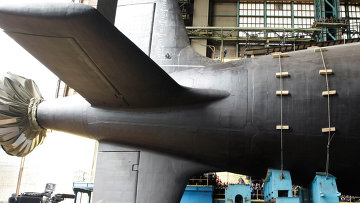
Severodvinsk (photo: RIA Novosti / Vladimir Rodionov)

Your typical good news, bad news story . . . happily for the Russian Navy, the Severodvinsk is nearing its first at-sea testing, but the new submarine has also been held up as a prime example of outrageous price increases in this year’s state defense order.  Final delivery of this SSN, as well as the first two Borey-class SSBNs, represents a big part of troubled GOZ-2011.

RIA Novosti reports new fourth generation Yasen-class (proyekt 885) SSN Severodvinsk will soon head into the White Sea for two months of underway testing, according to Malakhit Design Bureau General Director Vladimir Pyalov.  He added that, after this at-sea period, the final phase of state testing will take place.  

A very precise Mr. Pyalov says Severodvinsk is currently 98.9 percent complete.  He thinks the Navy will accept the new boat before year’s end and, in all, six of these multipurpose submarines will be built.  The second proyekt 885 Kazan is slated for delivery in 2015. 

RIA Novosti says proyekt 885 is a double-hulled, single-shaft boat with a reduced acoustic signature.  The conning tower has a streamlined, oval shape.  The boat is divided into ten compartments. 

For the first time, according to RIA Novosti, Russian designers put the submarine’s torpedo tubes amidships to allow for a new bow-mounted sonar system.  Proyekt 885 has eight vertical launch tubes for supersonic cruise missiles.  It has new communications and navigation systems as well as a fundamentally new nuclear power plant, according to the news agency’s report.  The new submarine is said to be first in noise reduction and stealth among attack submarines worldwide.

But the Severodvinsk couldn’t evade detection in the furor over breakdowns in the state defense order.

Earlier this month, RIA Novosti reported on disputes between the United Shipbuilding Corporation (OSK), submarine-builder Sevmash, and the Defense Ministry over naval construction in this year’s GOZ.  In particular, the military accuses the builder of doubling its prices for proyekt 955 Yuriy Dolgorukiy and proyekt 885 Severodvinsk.

An OSK spokesman defended Sevmash saying the cost of its work on Severodvinsk is only 30 percent of the total price, with the balance being the cost of armaments and components supplied by several dozen enterprises.  He blamed inflation in the industrial sector and the economy more generally.

Summarizing his discussion of submarines with OSK, RIA Novosti reports, Defense Minister Serdyukov said:

“They are giving us an increase in prices on new orders, and, naturally, we don’t agree with this.”

But, he added he’s convinced the Defense Ministry will persuade the producer to lower its prices.

Izvestiya mentioned that Severodvinsk was originally intended for a production run of 30 submarines, now reduced to six more than 20 years later.  As recently as March, the Navy still publicly hoped for ten.

Serdyukov told the paper:

“. . . it’s incomprehensible what the price of the ship [sic] consists of, if the cost of the lead boat was 47 billion rubles ($1.7 billion), but the next, exactly the same is now 112 billion ($4 billion).”

“Of course, the price will grow if, in the cost of one ship [sic], they include all accompanying expenditures on other enterprise projects in no way connected with it, like maintaining kindergartens, infrastructure, etc.”

“We’re prepared to pay, but on the condition that the price formation process will be transparent.  As practice shows, if all articles in the contracts are “decoded,” then it seems it’s possible with confidence to deduct up to 30% from the final cost of a finished product.”

These must be bitter words for an enterprise that went many, many years without completing its trademark product — a nuclear-powered submarine.

A Sevmash source says the cost of submarine construction is directly related to higher prices for materials, energy, and integration:

“The entire range of equipment for a submarine is supplied by monopolistic companies trying to dictate their prices.”