Category Archives: Force Modernization

A Fuller Picture of the GOZ

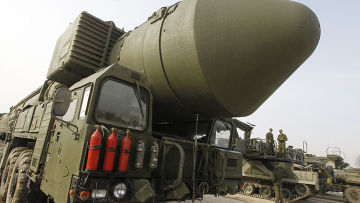
Yars ICBM (photo: RIA Novosti / Ilya Pitalev)

It’s been customary for some time to get press information on what the Russian military expects to acquire each year.  Rare, however, are occasions when we receive a report on what they procured to compare with the plan from the year before.

This year is one of those occasions.

Why is anybody’s guess.  But the release of this information — which came from the new armaments tsar First Deputy Defense Minister Aleksandr Sukhorukov — could be a Defense Ministry weapon in its running skirmish with the OPK.  Information on how the defense sector performed could bolster the ministry’s somewhat beleaguered position on what it buys, from whom, and for how much.

RIA Novosti covered Sukhorukov’s remarks on GOZ-2011 yesterday.

According to him, in 2011, the military received 30 Topol-M and Yars ICBMs, two special designation satellites, 21 aircraft, 82 helicopters, one proyekt 22380 Steregushchiy-class corvette, and 8,500 KamAZ and Ural vehicles.

The price for GOZ-2011 was about 550 billion rubles.

Now, for comparison, in mid-March, Lenta.ru recapped Defense Minister Serdyukov’s statement to RIA Novosti on 2011 procurement plans.  He said the military planned to obtain 36 ballistic missiles, two SSBNs, 20 strategic ALCMs, five satellites, 35 aircraft, 109 helicopters, three SSNs, one surface ship, and 21 SAM systems.  The media outlet itself noted the submarine plans sounded garbled since two SSBNs and an SSN were more likely.

So what was acquired very roughly approximates what was anticipated.  And these are just high-profile systems rather than an exhaustive list.  As indicated at the outset, it’s a fuller picture not a full one.  There could be an official assessment later of what percentage of GOZ-2011 was completed.   

Sukhorukov also said late last year a contract for Bulava SLBM production out to 2020 was signed, but no acceptance date for the missile or the first Borey-class SSBN was established.

He added that 84 contracts worth 42 billion (8 percent of the money) were not fulfilled, and the Yasen-class SSN schedule was not met.  And defect claims reached 7,100, up from 6,800 in 2010.

Serdyukov Year-Ender (Part III)

A good day to finish old business . . . this covers the second half of Defense Minister Anatoliy Serdyukov’s Rossiyskaya gazeta interview.  Serdyukov, while remaining on message, seems tired or uninspired in giving this interview.  He reviews old ground rather than breaking any new.

Serdyukov talks about coming to grips with large existing stockpiles of tanks, BMPs, BTRs, guns, and automatic rifles, and indicates he’s waiting for the defense sector to propose some fundamentally new systems.  In regard to Kalashnikovs, the Defense Ministry is open to new developments from private firms but isn’t eschewing future AK purchases from its traditional supplier either.

On Mistral, Serdyukov tells RG the French will decide where it’s best to produce units 3 and 4, and Sevmash is the likely place.  But he wants them to come in cheaper than number 1 and 2 being built in France.  He expects Russia to acquire leading edge shipbuilding techniques in the process.

Serdyukov shows a flash of interest when asked about conclusions from Russia’s recent space launch failures:

“One conclusion — we have to change our approach to military acceptance.  And we’re occupied with this.  Next year we want to reformat it.  There’s already understanding about what has to be done in training units for military acceptance specialists, their incentives, and technical equipping.”

“Generally, this is a serious question.  We haven’t devoted the due attention to military acceptance because of various obstacles.  Now we are smoothing out the situation.  Not so long ago the prime minister had a conference, and Vladimir Vladimirovich Putin gave a whole series of instructions on price formation and tracking contracts.  Acceptance and production quality was one issue.  Today this task is being worked, and we are preparing proposals by the end of the year [2011].”

Serdyukov says voyenpredy can be civilians, but they should be former military men with lots of practical experience.

The last significant point in the second half of Serdyukov’s interview is his call for differentiated training for new professional sergeants — 3 or 4 months for those in motorized rifle units and 2 years or more for EW or communications specialists, for example.  The comparison he gives is training equivalent to technical secondary school or old school for warrant officers.  He indicates he’s not afraid future NCOs will become “eternal students.”

Serdyukov Year-Ender (Part I)

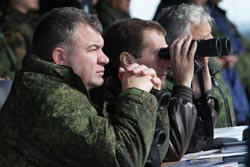
Serdyukov Watches Troops with President Medvedev

Defense Minister Anatoliy Serdyukov gave a two-part interview to Rossiyskaya gazeta this week.  It covers some contentious issues, but the questions aren’t exactly hard-hitters, and there’s no follow-up on his answers.  Nevertheless, Serdyukov as always puts out a steady and consistent message on what he, the government, and military are trying to accomplish.  Much of the first part of his interview concerned this year’s GOZ problems and the Defense Ministry’s difficulties coming to terms with defense sector enterprises.

Serdyukov says he’s been occupied for two years with reaching agreement on prices, deadlines, and quality for arms and other military equipment.  But, he says, now producers have no reason to complain because they’re receiving 80-100 percent advance payments for their work.  Some contracts for ships, aircraft, and strategic missiles are long-term ones extending to 2017-2020.  He adds:

“The fact is we are completely forecasting the entire future activity of a company for many years to come.  This allows for planning for expenses and receipts, training personnel, introducing new technologies, reequipping the production base.”

Regarding the tussle over OPK prices, Serdyukov says he’s told enterprises to give the Defense Ministry their production cost [себестоимость], and the military department will make production profitable for them.  Producers can have a profit margin of 20-25 or even 30-35 percent, but, he says, component suppliers will be limited to a one-percent mark-up.

Many producers (Sevmash for one) blame their suppliers for their own high costs, but it seems likely that limiting sub-contractors to a 1 percent profit is a formula for failure.

But Serdyukov has one condition for profits of 30-35 percent over the cost of production:

“The difference [10 percent?] has to go toward the technical reequipping of the enterprise, the purchase of new technologies and licenses.  And this will lead to lower costs or improved technical characteristics and combat potential of this or that weapon in the future.”

Later Serdyukov noted the Defense Ministry will compensate producers for annual inflation but production cost and timeframe will remain fixed. 

Then questions turned to the issue of foreign weapons.  Serdyukov said the Defense Ministry can’t buy Russian arms that aren’t up to world standards in price and quality.  Russia, he said, is interested in foreign systems so it can understand where it lags or has already fallen behind.  He described cooperative ties with foreign producers, buying licenses, and organizing joint production of entire systems or components in Russia as a way to get domestic industry up to date.  Serdyukov said foreign characteristics and prices are always part of the discussion of price formation with OPK enterprises.

Serdyukov told RG he doesn’t believe the Russian defense sector’s potential has dissipated despite the economic and financial difficulties of the last 15 years.  But now, with a 10-year GPV in hand, Russia has to restore the volume of defense production to the level of the 1980s.

He said foreign purchases were mainly small numbers of samples for the Defense Ministry to investigate.  It bought Iveco armored vehicles for explosive testing, after which Russia proposed to produce them jointly with Italy in Voronezh.

First Get Some Rockets

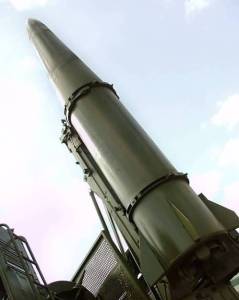
Iskander

How do you rattle your rockets?  First get some rockets. 

President Dmitriy Medvedev’s address last week underscored the extent to which Russian foreign and defense policies are hampered by the condition of the OPK and its shortage of production capacity.

Medvedev’s description of Russian steps in response to U.S. and NATO missile defense in Europe certainly didn’t surprise anyone, though it may have forced them to conclude the U.S.-Russian “reset” is wearing thin.

To refresh the memory, the first four were (1) put the Kaliningrad BMEW radar into service; (2) reinforce the defense of SYaS with VVKO; (3) equip strategic ballistic missile warheads with capabilities to overcome MD; and (4) develop measures to disrupt MD command and control.

Then fifth, repeating several previous assertions to this effect, Medvedev said:

“If the enumerated measures are insufficient, the Russian Federation will deploy in the country’s west and south modern strike weapons systems which guarantee the destruction of MD’s European component.  One such step will be deployment of the ‘Iskander’ missile system in the Kaliningrad special region.”

And, ultimately, of course, Medvedev also noted the dispute over MD could lead Russia to withdraw from new START.

Russianforces.org was first to write that Medvedev’s enumerated steps represented nothing more militarily than what Moscow already intends to do, with or without U.S. missile defense in Europe.

Kommersant recalled the difficulty of making threats with the Iskanders:

“The problem is by virtue of its limited range (several hundred kilometers) ‘Iskander’ missiles can only threaten [Russia’s] neighboring states, but in no way the U.S. MD system as a whole, and on this plane, they have little influence on the strategic balance as such.  Moreover, the Russian military has promised to begin deploying ‘Iskanders’ massively since 2007, but since then the deadlines for their delivery to the army has been postponed more than once.  The army now has a single brigade of ‘Iskanders’ – the 26th Neman [Brigade], which is deployed near Luga.  This is 12 launchers.  There is also a 630th Independent Battalion in the Southern Military District.  In GPV-2020, ten brigades more are promised.”

So, Iskander deployments, including probably in Kaliningrad, will happen anyway, regardless of MD, when Moscow is able to produce the missiles.

Interfaks-AVN quoted Ruslan Pukhov on the missile production capacity issue.  If Russia wants to deploy Iskander in Kaliningrad or Belarus or Krasnodar Kray as a response to European MD, then:

“. . . it’s essential to build a new factory to produce these missiles since the factory in Votkinsk can’t handle an extra mission.”

“Productivity suffers because of the great ‘heterogeneity’ of missiles [Iskander, Bulava, Topol-M, Yars].  Therefore, if we want our response to MD on our borders to be done expeditiously, and not delayed, we need a new factory.”

Vesti FM also covered his remarks:

“’Iskander’ is produced at the Votkinsk plant.  The ‘Bulava,’ and ‘Topol-M,’ and multi-headed ‘Yars,’ are also produced there.  Therefore, such heterogeneity in missiles leads to the fact that they are produced at an extremely low tempo.”

The 500-km Iskander (SS-26 / STONE), always advertised with significant capabilities to defeat MD, was accepted in 2006.  But the Russian Army didn’t  complete formation of the Western MD Iskander brigade or Southern MD battalion until the middle of last month, according to ITAR-TASS.  The army expects to get a full brigade of 12 launchers each year until 2020. 

But Iskanders still aren’t rolling off the line like sausages.  This spring Prime Minister Putin promised to double missile output, including from Votkinsk, starting in 2013, and pledged billions of rubles to support producers.  In early 2010, Kommersant wrote about Votkinsk overloaded with orders, trying to modernize shops to produce Iskander.

Votkinsk and Iskander are, by the way, not the only defense-industrial problem relative to countering MD.  Nezavisimaya gazeta pointed out VVKO will need lots of new S-400 and S-500 systems (and factories to produce them) to protect Russia’s SYaS.  But we digress . . . .

What do defense commentators think about Medvedev’s statement and Iskanders? 

Vladimir Dvorkin calls them a far-fetched threat:

“There are no scenarios in which they could be used.  If Russia used them in an initial preventative strike, then this would signify the beginning of a war with NATO on which Russia would never embark.”

Aleksey Arbatov says relatively short-range missiles don’t scare the Americans, but could spoil relations with Poland and Romania.

Aleksandr Golts says the slow pace of Iskander production makes it not a very serious threat.  He notes Putin’s restraint on threats over MD:

“Being a rational man, he perfectly understands that an attempt to create such a threat will get an immediate response, which, considering the West’s potential, will create a much bigger problem for Russia.  That is, there’ll be a repetition on another scale of the history with the deployment of Soviet medium-range missiles in Europe.”

One supposes rather than driving a wedge between the U.S. and MD-host countries, Russian threats might reaffirm the wisdom of having a tangible U.S. presence on their territory.

Lastly, Leonid Ivashov reacts to Medvedev’s reminder that Russia could withdraw from new START:

“When President Medvedev says that we will withdraw from SNV [START], the Americans just smile.  They know perfectly well the state of our defense-industrial complex.”

Innovation Locomotive or Brake?

Maksim Blant

Newsru.com economics commentator Maksim Blant wrote on an interesting subject this week:  is spending on the OPK an engine or drag for Russia’s innovation economy?

Blant has two primary arguments against military Keynesianism in Russia’s context.  First, more money for the OPK will further tighten an already taut market for certain labor.  Second, OPK spending’s multiplier effect will benefit raw materials producers more than consumers.

His article appears against a backdrop of questions about Russia’s ability to meet increasing pension obligations over the next 2-3 years without raising taxes, and former Finance Minister Kudrin’s contention that it could, but for the 20 trillion rubles going to the military’s rearmament program.

The problem, Blant concludes, is not that President Medvedev intends to rearm by depriving pensioners of their last bread crusts.  No, Medvedev defends rearmament as a means of stimulating growth in manufacturing, and turning the defense sector into an innovation development “locomotive.”

Blant allows that a majority of experts are inclined to agree that increased military spending can stimulate economic growth, and large defense industry orders can have a multiplier effect causing expansion in other sectors.  The argument is familiar.  State orders lead to job creation and greater consumer demand.  Defense enterprise orders to suppliers spur the process in other sectors.  The jolt causes the economy to turn around.

Blant says there are cases where military spending has brought an economy out of crisis, but asks will it work in Russia? 

He doubts creating jobs in the defense sector will increase consumer demand.  Even discounting how much procurement money will be stolen in the military or OPK, he says relatively little of the trillions will go for wages.  It would be easier to increase consumer demand by raising pensions.

Blant says this job creation effort will occur in the midst of a demographic crisis — not an excess, but rather a relative shortage of labor.  With state orders in hand, defense enterprises will compete against private businesses for engineers and skilled workers.  Faced with this, civilian producers can either raise wages and lose competitiveness, or “escape” to countries where the labor market isn’t so tight.  This, concludes Blant, makes the OPK not a “locomotive” of innovation development but rather its gravedigger.

Blant turns to the multiplier effect in adjacent sectors.  Yes, OPK money supports them, but raw materials suppliers and processors most of all.  Together the two sectors form a “closed loop,” only weakly connected to other industries.  In the end, he foresees a repeat of the 1980s, where the USSR’s defense sector, heavy machinebuilding, and raw materials producers sucked up the lion’s share of labor and other resources, leaving nothing for the consumer sector.

PAK FA Update

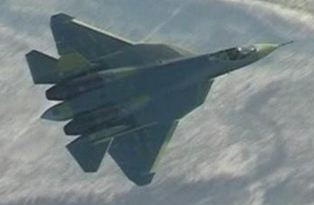
PAK FA

Sukhoy announced that its third PAK FA prototype conducted its first test flight today.  Operating from KnAAPO’s factory runway, the aircraft flew for more than an hour.

To run back a few milestones, the first PAK FA flew on January 29, 2010.  A second prototype joined it in March of this year.  PAK FA’s first public flight was August 17 at MAKS-2011.  And Sukhoy says the PAK FA has completed more than 100 test flights to date.  The hundredth flight apparently occurred early this month or in late October.

On November 11, ARMS-TASS reported that the third prototype will test the onboard phased array radar (AFAR)  system designed by the Tikhomirov NII of Instrument-building (NIIP).  Nezavisimoye voyennoye obozreniye published the same news, citing a Sukhoy spokesman.

Guns and Money (Part II)

Returning to KP, Baranets, and Pukhov on Russia’s defense budget . . . Pukhov continues trying to put Moscow’s spending in perspective.

The journalist says readers want to know how it is that the U.S. spends $600-700 billion a year on its army and Russia spends only $40-50 billion.

Pukhov says look at spending per soldier.  The figures work out neatly and they are dramatic.  Per soldier, the U.S. defense budget is $400,000.  Per soldier, Russia’s is $40,000 [probably much, much less in reality].  Pukhov concludes:

 “And it’s completely clear that it’s necessary to reduce this gap to a less dramatic magnitude.  Otherwise our Armed Forces will remain the poor army of a poor country.”

Pukhov tells Baranets and his audience that Russia occupies fifth place in world military expenditures after the U.S., China, U.K., and Japan.  But, Pukhov says Russia isn’t the U.K. or Japan:

“The problem is the defense missions facing Russia are much larger scale . . . .”

He points to Russia’s size and a nuclear arsenal comparable only to the United States.  So, according to him, it’s obvious Moscow’s military spending is insufficient and its army underfinanced.  

Baranets asks, are the condition of Russia’s economy and its defense expenditures properly correlated?  Or has it gone overboard with money for the army?  Pukhov responds:

“Russia’s current military expenditures and plans for increasing them in the next 10 years, including the State Program of Armaments to 2020 (GPV-2020) aren’t excessive, on the other hand, they represent the most essential minimum.  I recall that, according to the Defense Ministry’s own calculations, a minimum of 36 trillion rubles were needed for an optimal technical reequipping of the troops by 2020.  But the adopted GPV-2020 promises a sum smaller by almost half.  This really allows us to patch only the most obvious holes in the army’s technical equipping.”

Baranets finishes up asking if European MD is affecting the military budget.  Pukhov replies that development of Russian strat forces is already in the budget and GPV-2020, and MD doesn’t present a threat to them until after 2020.

Less argument with the end of Pukhov’s interview.  Just a couple points.  Look back here to see what General-Lieutenant Frolov said 36 trillion would do.  “Optimal” must mean complete rearmament.  But others claim they can’t do it for even that amount.  Still, Putin, Medvedev, Serdyukov, and Makarov are consistently saying they are buying 70 percent rearmament by 2020 for 19 trillion.

Makarov Reports to Public Chamber

Makarov Briefs the Public Chamber

According to Mil.ru, General Staff Chief, Army General Nikolay Makarov reported to the Public Chamber today as part of its hearings on “The New Profile of the Russian Army:  Results, Problems, Prospects.”  Here’s a sampling of what he discussed.

According to ITAR-TASS, Makarov said there are 186,400 contract servicemen today, and there will be 425,000 in 2016.  Recruiters will work throughout Russia starting next year.  Prospective contractees will train for three months before signing contracts.  Minimum pay will be 23,000 rubles.  Makarov said 2012 will be a test year, and from 2013, 50,000 contractees will be signed up each year.

RIA Novosti printed Makarov’s stark assessment of Russia’s conscript manpower.  The General Staff Chief said, of all men liable to conscription, only 11.7 percent can be called up, and 60 percent of them are excluded for health reasons.  So, he concludes:

“Therefore we are practically faced with the fact that there is almost no one to callup into the Armed Forces.”

He said Russia’s current mobilization reserve consists of 700,000 ex-conscripts. 

Makarov suggested increasing the prestige of military service through a veteran’s preference system.  Former soldiers and officers would enjoy a priority in hiring for government service, according to RIA Novosti.

ITAR-TASS quoted Makarov on cuts in military command and control organs.  He indicated they’ve been cut by a factor of four — from 51,000 to 13,435 personnel, and this process continues.  One-third of C2 organs were disbanded, and the rest reduced in size several times. 

He indicated that, when the Defense Ministry’s central apparatus numbered 51,000, it occupied more than 20 buildings in Moscow.  The apparat is now in a single building.  Other buildings were sold off.  But Makarov assured his audience the effectiveness of C2 hasn’t declined because of the reductions.

Regarding the new pay system for officers, RIA Novosti wrote that Makarov said higher pay basically implements the old Order No. 400 on premium pay, but officers will still have the chance to receive extra “stimulus” pay under the new system.

ITAR-TASS printed Makarov’s figures on efforts to get rid of old ammunition.  According to the General Staff Chief, at the start of the year, Russia had 119.5 million tons of old munitions to destroy, but now only 7 million.  Less than one percent could be dismantled; the vast majority had to be blown up.  Makarov indicated the number of ammunition storage sites will drop from 161 at present to about 30.

Makarov defended his past criticism of domestic weapons and equipment by giving more examples where foreign systems are superior to Russian ones (i.e. tanks, MLRS, satellites), according to ITAR-TASS.  The general argued for increasing the range and service life of systems as well as providing better protection for soldiers operating them.

RIA Novosti reported Makarov intends to continue pushing for lower prices on arms and equipment the military’s buying.  He intimated there will be a “specialized department” for negotiating with producers.  He claimed shipbuilding contracts with OSK were concluded on the Defense Ministry’s terms.  He added that the military has given Almaz-Antey two years to build two new factories to produce the S-500, according to RIA Novosti.

ITAR-TASS relayed Makarov’s remarks on Russia’s airfields.  Makarov indicated Russia has cut from 357 military airfields down to 26 that he describes as meeting world standards.  Russia has eight air bases. 

He said pilot flight hours are at 90 per year.  He said it’s planned to increase them to 130 next year, and then to 220 at some point.

ITAR-TASS and RIA Novosti carried the General Staff Chief’s comments about threats on Russia’s borders: 

“Under certain conditions, local and regional conflicts can grow into mass ones with the employment of nuclear weapons.”

“The conflict which could occur in connection with the withdrawal of American troops [from Afghanistan] could lead to a local, regional and even large-scale one.  And we have to be ready for it.”

Guns and Money (Part I)

Ruslan Pukhov

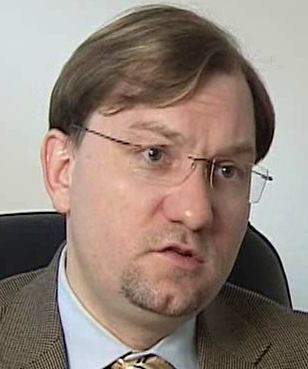
What does Russia need to spend on defense?  Komsomolskaya pravda’s Viktor Baranets engaged Center for the Analysis of Strategies and Technologies Director Ruslan Pukhov on the issue recently.

It takes a bit, but the interview gets interesting, and it’s worth hearing, one thinks.

Baranets asks, do military expenditures depend first and foremost on the economy?  On government policy?  On the treasury?  On the military power of one’s enemies?  Pukhov replies:

“In the first place, on the requirements for guaranteeing national security, and secondly on economic possibilities.  But if the country faces serious threats, then maintaining adequate military power becomes an absolute priority.  And then the resources for these purposes are allocated without looking at the economy.”

OK, that’s standard, but the big question is if . . . if it faces threats and if those threats are really serious.  And one might quibble, you can’t allocate what you don’t have (at least most countries can’t).

Baranets probes further.  People want to understand the 30% jump in military spending.  Have external threats grown?  Pukhov answers: 

“We have to maintain large Armed Forces because of the country’s huge size and its borders with military giants, like NATO and China.  Here the correlation of our military potentials has significance first and foremost.  That’s one.”

“And two.  The most important mission for Russia will remain the preservation of powerful, but expensive strategic nuclear forces and advisably — nuclear parity with the U.S.  It’s clear nuclear arms are the main guarantee of our security.  They make a big war between contemporary world powers impossible.  I’m convinced that, if not for the nuclear shield, the fate of Yugoslavia would have awaited Russia in the 1990s.  That is forcible dismemberment with the support of a NATO intervention.”

“Yet another factor:  Russia is faced with real threats to its security in the form of terrorism in the North Caucasus where an ethnic separatist rebellion has transformed into a general Caucasus Salafist underground, but also in the post-Soviet space — in the first place, in view of Georgia’s aggressive actions.”

“Going further:  our Armed Forces are extremely obsolete technically, they lag the current level of military technology development and need renewal.  For almost two decades after 1991 our Armed Forces were totally and chronically underfinanced, didn’t receive new armaments.  After this almost 20-year ‘buying holiday’ it’s necessary now to pay up, trying in the most compressed time to overcome the accumulated lag.”

“And, finally, everything enumerated above has to be overcome in conditions of the fact, unpleasant for the national self-consciousness, but, alas, indisputable, that Russia is a poor country.”

Baranets asks, how can Russia be poor?  Pukhov’s answer:

“We actually have many natural resources.  And this, incidentally, is yet another argument for having effective Armed Forces.  Natural riches have to be protected.  But by the size of the economy we aren’t even in the top five countries in the world, and the main thing is we seriously lag behind developed states.”

“So we have to conduct military organizational development under conditions of a shortage of resources and significantly bowing before many other countries of the world according to our level of economic development and national wealth.”

“All types of resources enumerated by you [Baranets] are in short supply for us.  Industry requires serious modernization, the scientific-technical base, established in the USSR, is practically used up, the quality of human resources is also not at a high point — the technical training school system has collapsed, so finding qualified workers is an integral problem.  Now we can already talk even about the collapse of secondary education — more often illiterate conscripts are coming into the army, and how can you trust them with complex equipment?”

Baranets says some experts think 1.5 or 2 trillion rubles as foreseen for defense in 2012 is too much when compared with what will be spent on science, education, and health.  One can even hear pronouncements like “the army is stripping the people.”  Pukhov reacts:

“I repeat:  Russia’s in a situation where it’s forced to hurry to catch up and reestablish that which dissipated, was squandered and left adrift in the area of national defense in the 1990s.  Essentially, we didn’t develop, but, to the contrary, we collapsed the army.  Now we need to reestablish the army, buy new equipment and armaments.  This isn’t the army ‘stripping the people.’  This is them ‘stripping’ the army for long years.  But there is generally an old true formula — people who don’t want to feed their own army will feed a foreign one.  Education, medicine and other sectors can be self-financed to a significant degree.  The Armed Forces can’t be self-financed in principle.”

Pukhov covers a lot of ground.  And he makes sense of some stuff.  But some points are debatable.  He’s one who wants to blame the 1990s for everything when then-President Putin was also guilty of neglecting the army in the 2000s.  Yugoslavia did a good job of “dismembering” itself before NATO and Russia intervened.  Instruments other than force exist for managing Russia’s problems in the North Caucasus and Georgia.  Is there a realistic threat of having to feed someone else’s army?  Wouldn’t a slower paced military build-up be more sustainable?   

Part II tomorrow.

Farewell Russian Arms and Russian Army

Does it matter what old soldiers think?  It doesn’t seem to right now.  Maybe they’re just bitter old dudes whose time has passed. 

But they certainly provide interesting and frank commentary on the state of the OPK, the Armed Forces, and Serdyukov’s reforms at odds with official pronouncements from the Kremlin, White House, and Defense Ministry.

Former 58th Army Commander, retired General-Lieutenant Viktor Sobolev wrote recently for Pravda.  He reacted to a program on the army on NTV from October 9.  It apparently wasn’t posted on NTV’s site. 

Sobolev says this right up front:

“On the eve of elections, our president and Supreme Commander-in-Chief Dmitriy Medvedev and ‘national leader’ Vladimir Putin have been worried in turn by the condition of the country’s army and military-industrial complex and are assuring gullible Russian citizens that they will do everything so that our Armed Forces meet modern requirements and receive new types of armaments and military equipment in a timely manner.”

“The Russian mass media [SMI] under the government’s and president’s control have been actively used in making these assurances.”

The ex-general-lieutenant is critical of just about everyone:  Serdyukov and his “effective” managers, people who haven’t served in the army, former First Deputy Defense Minister Popovkin who wanted to buy more arms abroad, his successor Sukhorukov who dares insist that defense enterprises substantiate their prices, independent defense commentators like Litovkin and Pukhov, interest-hungry banks, corrupt middlemen.

He points only to Tactical Missile Armaments Corporation General Director Boris Obnosov in a positive light for recognizing that other countries won’t sell Russia their best weaponry. 

Still, Sobolev’s under a bit of a misimpression thinking that Moscow is really buying lots abroad.  In fact, a cynical observer might conclude the whole situation over the last year was designed to let Putin be the champion of the domestic defense sector vs. Medvedev the Westernizer.  But we digress . . . 

For Sobolev, this all sums to an OPK with a broken GOZ, that’s chronically underfinanced and losing its capability to produce modern arms and equipment. 

Again, the cynic might say this was already lost a number of years ago.

But, says Sobolev, when compared with the OPK:

“Even worse is the situation in the Armed Forces.  It’s believed we have a million-man army which Mr. Sukhorukov recalled on this program.  Let’s calculate it together.  According to TO&E, there are 150 thousand officers in the army, no warrants at all, they were liquidated.  According to civilian [but he still wears his uniform] GOMU Chief V. Smirnov, 184 thousand contractees are serving in the army and navy.  In all 334 thousand, the remaining 666 thousand are conscript servicemen.  But they simply couldn’t have called up so many.  Moreover, conscripts serve not only in the army and navy, of the number called up, up to 30% serve in the Internal Troops, Border Guards, MChS units, presidential regiment, and so forth.  This means in the army and navy huge undermanning exists, and it will only get bigger.  It’s planned to reduce the fall callup by 2 times.  More than 200 thousand citizens, according to Smirnov, are evading military service.  The spring callup stretches out to September, and the fall until March.  In the troops, they’re occupied with it constantly, in the course of the entire year, they take young soldiers into their ranks in small groups, organize individual training for them and try to man sub-units.  At the same time, the process of dismissal also goes on without interruption.  In these conditions, you can’t talk about any kind of quality manning of sub-units.  What kind of units of permanent combat readiness are these?”

“Therefore NATO’s military analysts note with satisfaction that, as a result of the reforms conducted, Russia’s Armed Forces aren’t capable of completing missions even in local conflicts, ‘The Russian Army does not have a sufficient quantity of transport resources for redeploying troops over great distances, does not have a sufficient quantity of aircraft and pilots who know how to fly in any weather, no unified information system.  There are not enough soldiers in the army . . .’”

“In NATO, they understand the Russian Army’s fallen apart, but how about our country’s leadership?”

Whoa. 

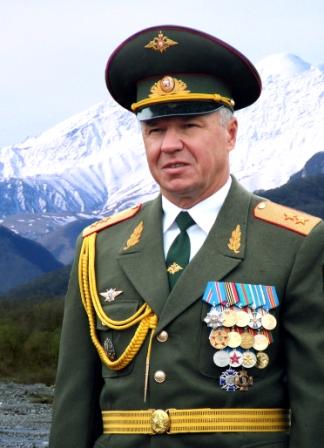
Sobolev’s no crank, and he’s not to be taken lightly.  Born and schooled in southern Russia, he probably has combat experience whereas the current General Staff Chief and Ground Troops CINC probably don’t.  Sobolev served as Deputy Commander of the OGV(s) in Chechnya in 2002, before taking over the NCMD’s 58th Army in 2003.  He ended his career as the chief military advisor in Russia’s Indian embassy in late 2010.

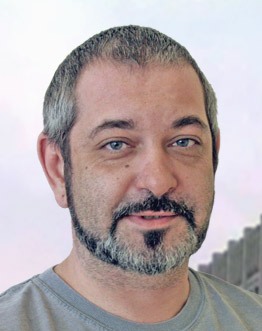
General-Lieutenant Sobolev

A more recent photo shows him looking just about as fit in retirement at age 61.

One wonders if a conservative like Sobolev realizes how much his thinking coincides with that of more liberal critics he seems to detest.