Category Archives: Force Modernization

Irkut Offers Up Su-30MK

Su-30MK (photo: http://www.sukhoi.org)

On Monday, Irkut company officials announced the aircraft producer is in negotiations to sell the Defense Ministry up to 40 Su-30MK fighters.  They believe they’ll finalize the contract in 2012.

The officials say the base contract will be for 28 aircraft, with an option for 12.

Vedomosti says a source close to Rosoboroneksport says the fighters go for $50 million a piece, or $2 billion for 40.

Neither the Air Forces nor government holding company OAK reacted to Irkut’s announcement, according to Izvestiya.

Irkut President Aleksey Fedorov told Interfaks the manufacturer sees declining demand for the Su-30MK family, and wants to cease production over the next ten years.  At that time, it will be producing only the Yak-130 trainer for the military.  Irkut intends to concentrate its efforts and investment on building the MS-21 regional passenger jet.

Fedorov told Izvestiya the Su-30MK export model will be “Russified” for 1.5 billion rubles – the onboard computers and displays will change from English to Russian, and some French and Israeli components will be swapped out for Russian ones.  The Russian variant may be called the Su-30SM.

There’s been talk about a small procurement of Su-30MK, or Su-30M2, since MAKS-2009, and two Su-30 fighters arrived at a unit in the Far East last month, according to ITAR-TASS.  The Far East Air Forces and Air Defense Army’s Chief of Aviation, Colonel Aleksandr Maksimtsev said Su-30 deliveries will continue.

A number of commentators have argued for buying the Su-30 for the Air Forces instead of waiting for the Su-35.  CAST’s Konstantin Makiyenko told Izvestiya:

“The Su-35 still isn’t completely finished, and it’s unclear when it’ll be accepted into the inventory.  Therefore, a fully developed export product which has completed all RDT&E will be taken and accepted into the inventory.  This is, indisputably, a smart decision.”

ITAR-TASS wrote that the Russian Air Forces didn’t acquire the Su-30 for financial reasons.  But Izvestiya noted more than 270, in various configurations, have been sold since 1997, with buyers including India, Algeria, Venezuela, Vietnam, China, Malaysia, and Uganda.

Naval Aviation Chief Interviewed

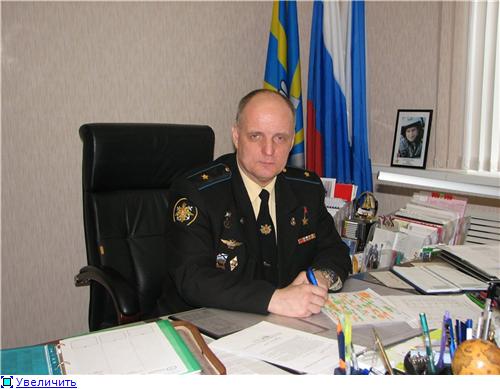
Hero of Russia, General-Major Igor Kozhin

On Sunday, RIA Novosti interviewed Naval Aviation Chief, General-Major Igor Kozhin on his branch’s 95th anniversary.

The news agency’s recap reminded that Naval Aviation lost its strike assets to the Air Forces on 1 April.  And, by year’s end, all remaining Su-27, MiG-31, Tu-22 and part of its transport aircraft will move to the VVS.  Only land-based ASW and carrier aviation will remain.

Asked about training, General-Major Kozhin focused on cost and retention.  He claimed training a pilot costs a rather exorbitant $1.5 to 2 million annually.  He indicated the need to keep older, experienced personnel — even in a civilian capacity — to train his younger pilots.

On upcoming training, Kozhin said his one regiment of 20 carrier-qualified pilots will conduct 100 takeoffs and landings from the Fleet Admiral of the Soviet Union Kuznetsov in August and September.

Kozhin said Kuznetsov is currently preparing for sea, and there’s no plan for capital repairs even though a replacement isn’t foreseen at this time.

He gave no hint of any impending carrier deployment as rumored earlier this year. 

RIA Novosti asked about renting the NITKA carrier trainer in Ukraine.  Kozhin answered by updating the construction of a similar facility at Yeysk, in Krasnodar Kray.  He said toward fall the takeoff and landing strip will be complete, then landing systems will be installed, and the ground-based carrier simulator will be functional in 2013.  He said the entire Naval Aviation training complex will be finished in 2015.

Finally, on new aircraft, Kozhin said the first four MiG-29K for Naval Aviation could apppear in 2012, but the Defense Ministry will have to sign the contract before mid-August.  Otherwise, the first delivery will be in 2013.  In all, a Navy buy of 20 is planned, but the factory is busy now filling India’s order for fighters for the ex-Gorshkov being renovated at Sevmash.

Second S-400 Regiment Delayed

The second S-400 regiment, or “regimental set,” hasn’t commenced combat duty at Dmitrov after all. 

This was supposed to happen on May 15, but didn’t.  According to RIA Novosti, a VVS spokesman said the official commencement of combat duty was postponed [again] from July 17 until the last ten days of this month.

The news agency says the ceremony will take place on Peremilovskaya Height, outside Dmitrov.  

Newly-minted VVS Main Staff Chief and First Deputy CINC, General-Major Viktor Bondarev said in June that a third S-400 regiment will become operational this fall.

Quoting Tolya

Tolya’s remarks to the press today made quite a few headlines, and left a few useful benchmarks for the future.  Defense Minister Serdyukov addressed procurement and manpower issues.  Here are his quotes from RIA Novosti and ITAR-TASS.

Tanks for Nothin’

“We met the designers who proposed their preliminary work to us.  60 percent of what was proposed is old work.  Therefore, we still declined these proposals.”

“Now it’s more expedient to modernize our country’s tank inventory than to buy new ones, for example the T-90.”

Cold Water on Carriers

“We have no plans to build aircraft carriers.”

“Only after this [a preliminary design of what this ship might look like], the Genshtab together with the Navy will make a decision on the need for such a ship.”

SSBNs Aren’t Automobiles

“‘Bulava’ flew, this is good news.  We understand precisely that it’s possible to launch serial production of the missile on this variant.”

“We got the result, now it’s possible to load SSBN ‘Yuriy Dolgorukiy’ with ‘Bulava.'”

“We’d like to do this [test Bulava from Aleksandr Nevskiy], but we understand that to plan this precisely is impossible.  A nuclear submarine isn’t an automobile.”

Bullish on Arms Deliveries

“Deliveries of strategic missiles ‘Topol-M,’ ‘Yars,’ ‘Avangard’ will increase three times, ‘Bulava’ and ‘Sineva’ missiles for strategic submarines one and a half times, aircraft four times, helicopters almost five times, air defense systems almost two and a half times [in 2011-2015 compared with 2006-2010].”

Not Going Below a Million Men

“There are no such plans, there are no questions of cutting manpower.  We’re striving for the entire army under the million number, and it isn’t planned to cut this figure.”

“On account of this [increasing contractees from 2014], we’ll manage without fail to get through the demographic hole which is anticipated in 2014.”

Two Arctic Brigades

“The Genshtab is now developing plans to establish two of these formations.  In the plans, deployment places, armaments, manning, and the infrastructure of these brigades need to be specified.”

“It’s possible this will be Murmansk, Arkhangelsk, or another place.”

No Funding for Domestic UAVs

Israeli Searcher Mk.2

RIA Novosti reports a highly-placed OPK representative says development of Russian UAVs hasn’t been financed for two years.  According to him, this is connected with the drawn-out work of Defense Ministry experts considering Israeli drones purchased two years ago.  The source continues:

“It’s obvious Russia’s Defense Ministry can’t figure out its future actions:  either continue to buy UAVs abroad, or finance our own development.”

It seems pretty clear to this author it’s the former, especially considering the following figures.

TsAMTO gave the news agency a rundown on Russia’s 2009 contract for Israeli UAVS:  two Bird Eye-400 ($4 million), eight I-View Mk150 ($37 million), and two Searcher Mk.2 ($12 million).  TsAMTO also says a $100 million contract for 36 unspecified UAVs was signed later.

RIA Novosti also notes, this March, the Defense-Industrial Corporation (Oboronprom) agreed on a $400 million contract with IAI to assemble Israeli UAVs in Russia.  Oboronprom’s Helicopters of Russia sub-unit is responsible for the Russian side of this joint venture.  At the time, Russian experts argued that comparable domestic UAVs were several times cheaper.  But Russian designers also acknowledged lagging in some technologies, particularly optical-infrared sensors and data transmission.

More than a year ago, then-Armaments Chief Vladimir Popovkin said 5 billion rubles had been spent on domestic UAV development without result.  Then months of comparing foreign and domestic models followed.  And now the money trail makes it pretty obvious the Defense Ministry (and big OPK players themselves) are intent on buying abroad.  Small Russian UAV makers are the short-run losers. 

This seems a smart choice for now.  It will be some time before  Russia successfully integrates foreign-designed UAVs into its military operations.  There doesn’t seem a compelling reason to aim for self-sufficiency in something that’s still a niche mission. 

What will happen depends on how Moscow handles its domestic developers.  Will they be able to apply foreign UAVs to their own work and make competitive models of their own?  Falling behind on pilotless technology is not exactly a negligible risk in the coming unmanned age.

PAK FA in 2019?

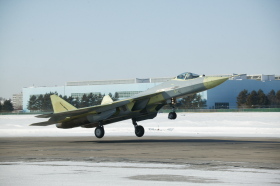
PAK FA

According to ARMS-TASS, Deputy Chief of Rostekhnologii Dmitriy Shugayev told the assembled press corps at the Paris Air Show that Russia’s PAK FA will need about eight years to reach serial production.

This sounds like a very different story from what we’ve heard thus far.  Most official pronouncements have talked about starting serial production in 2015 or 2016, and pretty much completing the run by 2020.

No reason or context was given for what seems a pessimistic appraisal of PAK FA’s timeline.  However, it might be connected to the challenge of getting “second phase” engines on the aircraft.

Government Hour (Part II)

There was plenty of interesting media coverage of the Defense Minister’s meeting with the Duma on Wednesday, and plenty of criticism of what he said or didn’t say.  Plenty worth covering in a Part II, especially regarding Serdyukov’s effort to shift the blame for another failing GOZ.

Radio Svoboda quoted KPRF deputy Vladimir Ulas putting all the blame for the army’s current state right at Anatoliy Serdyukov’s feet:

“The public clearly understands that the situation in the Armed Forces is far from favorable.  Constant scandals which rock this department, the morale-psychological situation in which personnel, first and foremost, the officer corps, find themselves, both the material condition, and the lack of modern armaments – all these problems are completely real.  I also hoped to hear answers to questions, how the Defense Ministry intends to solve them, from the minister.  But, to my greatest regret, the biggest, in my view, problem of today’s Armed Forces is the absolutely dense incompetence of the military leadership.  With people like Serdyukov still heading our Armed Forces, and he, unfortunately, is far from the only one, hoping for some kind of positive shifts is absolutely senseless.”

There was plenty more to be said about problems with the GOZ, the OPK, and the VPK and Defense Ministry blaming each other for what looks like a failing GOZ-2011.

KPRF deputy Anatoliy Lokot told Nakanune.ru:

“I have the impression that these sessions are ‘closed’ to hide the bitterness of the questions and negative results of the work of Military-Industrial Commission (VPK) and Defense Ministry leaders.”

United Russia’s Igor Barinov reiterated what he said he told President Medvedev a year ago:

“I noted then that the lack of competition and incomprehensible system of price formation in the VPK is a deadend path.  We’re reaping the fruits of this now.  Judge yourself:  one, well, a maximum of two enterprises produce this or that type of our armament or military equipment.  Meanwhile, enterprises getting money from the federal budget dispose of it as they wish.  Prices simply come from the ceiling.  No one bears any responsibility for quality.  No one invests money in improving types of military equipment, in the end it goes that even in infantry weapons we’ve fallen behind.  Our legendary automatic weapon Kalashnikov, the value of which everyone recognized before, now lags the best Western types in tactical-technical characteristics.  And so it is in almost every area, with rare exceptions in the areas of missiles and some aircraft.”

“The Defense Ministry announced it won’t buy airborne combat vehicles [BMDs] and infantry combat vehicles [BMPs] from ‘Kurganmashzavod.’  This enterprise was one of the guilty in breaking the Gosoboronzakaz.  And here’s the thing in this.  ‘Kurganmashzavod’ is part of the United ‘Tractor Plants’ Corporation.  Budget money is shared out with ‘Kurganmashzavod’ in a targeted way for the purchase of equipment, but the corporation’s directors dispose of it according to their discretion, and, naturally, BMP and BMD production is the last thing of concern for the owners of this holding company.”

“If they understand that they can be deprived of budget resources, then this enterprise will be forced to invest in quality, and in cutting defects, and in the improvement of product types.  In addition, strict supervision is needed.  Money was allocated but no one asked anyone about this money, and the result was zero.”

The KPRF’s Lokot also dwelled on the GOZ:

“It’s obvious that if the Gosoboronzakaz isn’t formed in the first half of the year, then nothing will be accomplished in the remaining part of the time since money will only begin coming in at the end of the year.  Serdyukov acknowledged that today 13.4% of all contracts in the plan have been formed.  Some time ago, Sergey Ivanov gave us other numbers.  But I think that this number juggling was caused by competition between the Defense Minister and the Military-Industrial Commission.  Ivanov lumps all the blame on the Defense Ministry, Serdyukov – on the defense-industrial complex.  He even began his [Duma] speech with this, saying that the military-industrial complex is guilty of everything.  They have poor qualifications, technology losses, poor production and so forth.  But really at a minimum the Defense Ministry itself bears 50% percent of the responsibility for such a situation.”

“I have given the example of Novosibirsk proving the obvious guilt of the Defense Ministry in breaking the order.  One of the enterprises – the Lenin Factory, which puts out very important products for infantry weapons, became a victim of Defense Ministry officials.  In January this year, Serdyukov opened a state order tender with his signature, but closed it in March.  Now half the year is gone, and there are no results.  The enterprise isn’t working, products aren’t coming out, 211 million rubles spent on reequipping won’t bring any returns, and now they’re generally talking about cutting part of the work force.

“Right in Novosibirsk at the Comintern Factory the S-400 surface-to-air missile system is being produced on the enterprise’s own money, and not with government resources.  Serdyukov says:  ‘I don’t see anything terrible in this, let the enterprise do it on its own money.’  But where does it get its capital resources?  What world is Serdyukov living in?”

Vedomosti talked to a former Defense Ministry official who basically said the threat of arms purchases abroad really didn’t scare anyone.  And, according to him, although Serdyukov considers defense industry leaders lazy and prone to stealing, everyone understands imports can never replace domestic production.  Finally, a source close to the PA told the business daily that Serdyukov himself opposes the Mistral acquisition because of the large expenditures required to build its base infrastructure.

New SAM for Troop Air Defense?

Last Thursday, a Ground Troops’ spokesman told ARMS-TASS the army is testing a new portable surface-to-air missile system (PZRK):

“Tests are being conducted at the 726th Training Center on a new portable surface-to-air missile system, the tactical-technical characteristics of which surpass those of other types in the armament of formations and units.”

The spokesman said it’s planned to complete experimental-design work (OKR) on the new system this year, and procure up to 250 of them under this year’s state defense order.  He said the systems will go into the SAM batteries of air defense battalions of independent motorized rifle and SAM brigades.  The new SAM will be deployed on mobile platforms that support automated remote launches.

The army representative also said:

“All together in the framework of the state defense order for 2011, it’s planned to buy more than 400 pieces of missile-artillery armament for Troop PVO units and to conduct capital repair with modernization of nearly 100 pieces of equipment.”

In his estimation, as a result of this, an increase in the combat capabilities of PVO troop groupings of up to 40 percent, according to a number of indicators, is expected.

Kachalkin on VTA Prospects

General-Lieutenant Viktor Kachalkin

This week marked Military-Transport Aviation’s 80th anniversary, and VTA (or ВТА) Commander, General-Lieutenant Viktor Kachalkin made a variety of comments regarding the branch’s future.

Now relatively little’s been said about this subject.  VVS CINC, General-Colonel Zelin insists VTA’s a priority, but hasn’t ventured numbers or dates for new aircraft.  His deputy, General-Lieutenant Sadofyev’s alluded vaguely to modernization of existing aircraft and acquisition of 50 percent new aircraft.  But nothing more specific.  If VTA is the red-haired stepchild of the Air Forces, at least the VDV loves VTA – loves to hate it, that is.  General-Lieutenant Shamanov and other VDV officers never tire of saying that shortfalls and shortcomings in air transport are turning their branch into no more than elite ground troops.

At any rate, on to what Kachalkin said . . . he hopes new An-70 and deeply modernized Il-76MD90A transport aircraft will enter the VTA inventory starting in 2014.  The latter is an updated Il-76MD with new PS-90A-76 engines.  It also goes by the name Il-476.  In the more distant future, VTA looks toward buying a new An-124-300 variant.  The VTA commander believes all this will translate into “dozens” of new aircraft by 2020.

Kachalkin also plans on the “deep modernization” of existing transports into Il-76MDM and An-124-100 variants.

In a Krasnaya zvezda interview, he sums it up this way:

“If the volumes of new aircraft and deep modernization of the existing aircraft inventory announced in the program [GPV-2020] are assessed, then the growth in VTA capabilities is obvious.”

Later he adds:

“Despite the fact that the service life of the greater part of the current VTA aviation inventory is figured at 2020-2030s, the percentage share of new aircraft will grow steadily.  In this context, the mobility of the Armed Forces will increase overall.”

In his KZ interview, Kachalkin mentioned the impact of the “new profile” on his base structure.  VTA now has only one first rank air base at Tver, which is home to multiple aviation groups using basing locations at Pskov, Orenburg, and Taganrog.  As recently as late 2009, the VTA commander spoke of first rank bases at Tver and Orenburg, and second rank ones at Pskov and Taganrog.

Kachalkin indicated an aviation group of not less than 15-20 VTA aircraft will take part in the upcoming Tsentr-2011 operational-strategic exercise.

A couple contradictory points worth noting were also made this week . . .

Deputy Air Forces CINC, General-Major Viktor Bondarev predicted An-70 purchases in 2012-2013, according to RIA Novosti.  The wire service also reminded readers that Defense Minister Serdyukov has said not before 2015-2016.  One guesses Kachalkin split the difference with 2014.

A Third S-400 Regiment

According to Interfaks, Air Forces Deputy CINC, General-Major Viktor Bondarev told journalists yesterday that another air defense regiment will be reequipped with the S-400 this fall. 

He didn’t mention a deployment location, or exactly when the regiment would go on combat duty.  This would be Russia’s third operational S-400 regiment.

The second regiment reportedly started combat duty on 15 May at Dmitrov, north of Moscow.

The first two regiments have four battalions between them, each battalion with 8 or more launchers.

In 2010, the Defense Ministry said it was buying 5 battalions of S-400s.  This seems to make sense with two battalions entering service in the first half of 2011, and two more possibly in the second half.  The first two S-400 battalions – at Elektrostal – were likely bought in 2006-2007. 

The plan is to buy 56 battalions worth of S-400s under GPV-2020.

It’s interesting to note that the previous, abandoned GPV-2015 (designed by Defense Minister, then Deputy Prime Minister, Sergey Ivanov) called for  acquiring 23 S-400 battalions by 2015.  The press often reports these 23 battalions as a pared-down 18, but the original goal was in fact 23.

So who’s really responsible for breaking the GPV (and GOZ)?