Category Archives: Force Modernization

Makarov Talks to Duma Defense Committee

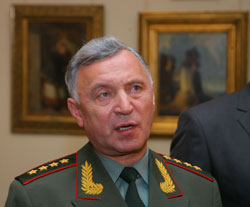
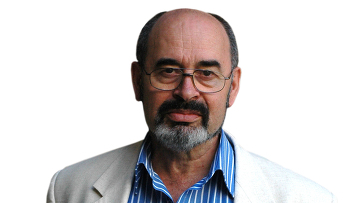
Nikolay Makarov (photo: Rossiyskaya gazeta)

Last Thursday, General Staff Chief, Army General Nikolay Makarov spoke to a closed session of the Duma’s Defense Committee about the situation in the armed forces.  A few committee members were kind enough to inform the press about some of the discussion.

Rossiyskaya gazeta said it’s no secret the Defense Ministry wants more money in its 2011 budget.  And the generals’ arguments are well-known — the army needs to reequip, relocate, and raise officer pay.  Additional financial means are needed for this.  Makarov didn’t avoid this issue, and he had a lot of supporters.  Deputy committee chairman Yuriy Savenko had this to say on the issue of budget and rearmament:

“Today there isn’t just not enough money for this.  We have to recognize that our military industry has sagged a lot over the last two decades.”

Makarov apparently commented on Bulava, seeing the recent successful launch as opening the way for its quickest acceptance into the Navy arsenal.  But he said first it has to complete three [not two] more tests.  The next won’t come earlier than November, and the first from Yuriy Dolgorukiy possibly before year’s end.

The General Staff Chief talked about the country’s new military-administrative divisions, claiming the reduction to 4 MDs isn’t causing major troop relocations, but rather allowing the army to stand-up additional combined arms, reconnaissance, and airborne brigades on its strategic axes.

He apparently mentioned the introduction of information management systems into the troops is a priority.

Nezavisimaya gazeta’s Viktor Litovkin reports Makarov said Russia will hold just one operational-strategic exercise, Tsentr-2011, next year, and, after it, the focus will be on tactical platoon and company exercises.  Litovkin says the issue isn’t money, but the time it takes to train units from platoon to brigade in what they need to demonstrate in a big exercise.  And training time is too short with one-year soldiers.  He reports the army’s decided to put all officers from new lieutenants to generals through tactical retraining and improvement courses.

KPRF Deputy, Vladimir Komoyedov — former Black Sea Fleet commander — commented a little on what he heard.  He said Makarov mainly touted what’s been achieved the last two years.  Komoyedov said he heard about conventional forces, but not much about strategic ones, and when he asked specifically about naval strategic forces, Makarov’s answer didn’t satisfy him.  Komoyedov spoke to Tverskaya, 13, but he quickly spun off into his own commentary, rather than Makarov’s.

Perhaps the most press went to Makarov’s announcement that the Defense Ministry will go forward with military police units in the armed forces after all.  They’ll reportedly number about 20,000 personnel.  MP sub-units will be present from brigade to military district, and they could be manned by servicemen dismissed in the course of Serdyukov’s reforms.

Finally, Komsomolskaya pravda says Makarov has told it about various changes in the army coming in the next five years.  Some are not all together surprising, but there are new twists on others:

  1. A two-pipe Defense Ministry — military and civilian, with the latter handling money, personnel, and support.
  2. Hired cleaners, maintenance people, and security guards for the barracks.
  3. Military pay via bank cards to make it more difficult for older soldiers to extort money from new conscripts.
  4. Contractees will get 30-35 thousand rubles per month.
  5. Conscription will stay at one year (there are 156,000 men with deferments and 130,000 evaders).
  6. Specialty training time for soldiers needs to be cut from 6 to 2-3 months.
  7. Tsentr-2011 will occur, but other exercises will focus on the company-level and lower.
  8. There will be 8 aviation centers [bases?], but 4 would be ideal.  Air defense aviation will have 2 months on duty, and 2 months at home.
  9. Glavkomaty of services and branches will be cut from 1,000 personnel to about 150 or 200.  Generals’ duties will go out to the new MDs.  All the ‘glavki’ will relocate into the Ground Troop headquarters on the Frunzenskaya embankment.
  10. The Genshtab will keep its hands on strategic submarines, bombers, and the RVSN.
  11. The VDV will not be cut, and will continue to report through the Genshtab.  They are likely to be reinforced with new brigades.
  12. The Navy will get 1-2 nuclear-powered submarines each year.  New aircraft carriers are in development.  The fleet gets 23% of the defense budget, the RVSN 25%.
More Testing for YeSU TZ

RIA Novosti reports that, starting tomorrow, the Defense Ministry will test its developmental Unified Tactical Level Command and Control System (YeSU TZ or ЕСУ ТЗ) on its range at Alabino in Moscow Oblast until 23 October. 

This is not the first time the system’s been tested, but a Ground Troops spokesman says:

“In the course of the exercises for the first time the capability of the given system to support the work of sub-unit [battalion and below] command and control organs equipped with its command and control stations [YeSU TZ] will be tested in the course of combined arms combat.”

As is often the case, the 5th Independent Taman Motorized Rifle Brigade will be used in the testing.  Command and control for the brigade will also employ “new technical means.”

Proposals and recommendations on the use of the automated system will be made for combat regulations based on the results of the exercise.  Mi-24 helicopters, Su-25 aircraft, and Russian-produced UAVs will also participate.

Litovkin on What the GPV Will Buy

Viktor Litovkin (photo: RIA Novosti)

Returning to procurement and the GPV . . . in this week’s Delovoy vtornik, NVO’s Viktor Litovkin also asks what will 19 trillion rubles be spent on. 

He says the answer isn’t simple.  During the last 20 years of ‘starvation rations,’ the armed forces got handfuls of essential combat equipment, and, meanwhile, a dangerous imbalance between strike and combat support systems was created.  And this was obvious against Georgia in 2008. 

Litovkin says this imbalance has to be corrected, meanwhile priorities like strategic nuclear forces can’t be forgotten – not just the offensive triad, but also the missile attack early warning system (SPRN), missile defense (PRO), and aerospace defense (VKO). 

Like Viktor Yesin of late, Litovkin asks how Russia will replace its aging strategic offensive arms to stay up to the limits of the Prague / New START agreement.  Half the Russian force is SS-18, SS-19, and SS-25 ICBMs which will be retired in 7-10 years.  Moscow needs to build 400 strategic systems to replace them.  He doesn’t even mention Delta III and IV SSBNs and their aging SLBMS.  And Russia has only the SS-27, RS-24 Yars, Sineva, and Bulava to replace them. 

Litovkin expects a very large amount of money to be spent not just on replacing strategic systems, but also reequipping the enterprises that produce them. 

He turns to his second priority – also demonstrated by the Georgian war – precision-guided weapons, which in turn depend on reconnaissance-information support and equipment in space, on long-range surveillance aircraft [AWACS], and UAVs. 

Priority three – automated command and control systems (ASU).  He cites Popovkin on linking all service C2 systems into one system over 2-3 years. 

Litovkin says you can’t forget about the Navy, but he mentions just the Borey-class SSBNs, and the need for a wide range of surface ships.  And he makes the point [made by many] that Mistral is all well and good, but it’ll have to have multipurpose combatants operating in its battle group.  They need to be built, and they won’t cost a small amount of money. 

One can’t forget aviation either.  Litovkin cites a $100 million per copy cost for 60 fifth generation fighters [that’s a significant 180-billion-ruble bite out of the GPV].  He notes Vega is working on an updated Russian AWACS (A-100).  And, like Korotchenko, he mentions transport aircraft, but also combat and support helicopters. 

And so, says Litovkin, the question arises – isn’t the country putting out a lot of money to rearm its army? 

Viktor Litovkin (photo: Ekho Moskvy)

Being bold, he says, not really.  He actually uses that accursed 22 trillion figure, which is procurement for all power ministries.  If he used 19 trillion, it would be 1.9 trillion or $63 billion per year for Russia against $636 billion for the U.S., $78 billion for China, $58 billion for the U.K., and $51 billion for Japan.  But he doesn’t say this is annual procurement, the GPV, against the total annual defense budget for these other countries.  A bit of comparing one piece of pie to a whole pie.  Nevertheless, he concludes this makes Russia far from champion when it comes to military expenditures. 

Litovkin’s last word is Russia will remain one of the G8 with a powerful, combat capable, and effective army, but without it, only a raw materials appendage of either the West or East. 

But one wonders, hasn’t Russia long been in the G8 without that kind of armed forces?  Doesn’t breaking away from the raw materials supplier role have more to do with developing an open, attractive, innovative, value-added, and competitive economy (and a political system and society to match) than with military power? 

What Will GPV 2011-2020 Buy?

Russian military procurement policy is an obvious focus of what you read here, and there’s lots to write about on this score lately – the GPV, defense budget, OPK modernization and innovation, etc.  It’s not possible to capture it all at once.  Here’s a start, and hopefully it will lead to broader insights later.

Writing for his latest project – the Center for the Analysis of the World Arms Trade (TsAMTO or ЦАМТО), Igor Korotchenko addressed what the new GPV might buy.  His article was picked up by VPK.name, and then a somewhat truncated version ran in Nezavisimoye voyennoye obozreniye.  He uses the 22 trillion ruble figure rather than the 19 trillion for the armed forces specifically.  Not that it matters since it’s a wag at best anyway.

In his first broad swipe, Korotchenko forecasts that Russia will buy 500 new aircraft, 1,000 helicopters, and 200 air defense systems among other arms and equipment over the 2011-2020 period.  He admits, even with a fairly generous procurement budget [if approved and fully disbursed every year], it will be impossible to buy everything each service and branch will need after 20 years of very small-scale procurement.

And this is exactly, of course, the point that Popovkin’s deputy, General-Lieutenant Oleg Frolov was making when he argued for 36 trillion . . . .

So, they can’t have everything and will have to prioritize.  Korotchenko gives it a whack, maybe not satisfactory, but it’s a start:

  • Strategic nuclear forces;
  • Precision-guided weapons;
  • Automated command and control systems (ASU);
  • Aircraft;
  • Air and missile defense (PVO / PRO).

Korotchenko doesn’t talk specifics about his first two priorities. On the third, he calls for a unitary military C2 system to enable Russian netcentric warfare.  On aircraft, he somewhat surprisingly emphasizes transport aircraft to move Russia’s million-man army between strategic axes as needed.  And Korotchenko lists PVO / PRO without further commentary.

He supports efforts to overcome Russia’s lag in UAVs, ships, individual protective equipment and soldier systems, and armored vehicles through cooperation with Israel, France, Germany, and Italy.

Then Korotchenko turns back to aircraft, saying they are the thing that will indicate what kind of armed forces Russia will have in 2020.  Based on what’s been said publicly, he counts:

  • An-124 Ruslan — 20
  • An-70 — 50
  • Il-476 — 50
  • Il-112B — ??
  • Su-35S — 48  
  • Su-27SM — 12
  • Su-30MK2 — 4
  • PAK FA — 60
  • Su-34 — 32, possibly 60-80 more
  • Su-25UBM / Su-25TM — 10, possibly 20 more
  • MiG-35 — 30
  • MiG-29SMT / MiG-29UB — 20-30
  • MiG-29K / MiG-29KUB –26, possibly 22 more
  • Yak-130UBS — 120
  • New airborne early warning aircraft — 2-3
  • Be-200PS — 8-10

In all, he summarizes, about 500-600 aircraft by 2020.

Korotchenko doesn’t talk money, so we’ll have to think about what this would cost.  In terms of what’s covered, he’s only talked only about RVSN and Air Forces’ requirements.  You can be sure the Ground Troops, Navy, VDV, and Space Troops have their own lists.  Maybe Korotchenko will address them.

Beyond what they say they need, there are two issues.  Can they buy it all, or at least how much of it?  And, second, can the OPK produce it?  Korotchenko doesn’t get us too far into any of this.

46 Percent More or 47 Percent Short?

On Sunday, Defense Minister Anatoliy Serdyukov apparently told Bloomberg that Russia plans to spend 19 trillion rubles on its State Armaments Program 2011-2020.  Recall not long ago Finance Minister Kudrin said a final number had been worked out with the Defense Ministry, but he didn’t release it.

Bloomberg let Serdyukov advertise the plan [repeat, plan — the money has to be allocated in every annual budget] to spend 19 trillion rubles over the next 10 years as 46 percent more than Kudrin’s original offer of 13 trillion.

Serdyukov didn’t describe 19 trillion as 47 percent short of what the uniformed military says it needs to rearm.  Recall Deputy Armaments Chief, General-Lieutenant Frolov told the press 36 trillion was required to rearm all services and branches fully.

In fairness, Serdyukov admitted:

“This is the minimum we need to equip our armed forces with modern weaponry.  We could ask for a bigger number, but we need to understand that the budget cannot afford such spending, so 19 trillion is a serious amount of money that will provide considerable orders for our defense industry.”

OK, good.  There are limits on what the military can have, and this shows civilian control over the armed forces.  But what about saying this “will provide considerable orders for our defense industry.”  Isn’t the point for the armed forces to get some, or most, of what they need from industry, not simply ensuring the OPK has defense orders?

The 19 trillion rubles is not trivial.  If (a very big if) . . . if this gets approved and executed every year, it’s almost 4 times the amount in GPV 2007-2015.  But we know the GPV is always rewritten before it’s completed, so it’s very difficult to say what has or hasn’t been, or can be accomplished with any given amount of funding.

With Russia borrowing abroad to plug deficits, it’s not surprising the amount wasn’t what the military wanted.  And the state of its economy over the next couple years will determine if it actually gets this planned amount for procurement.

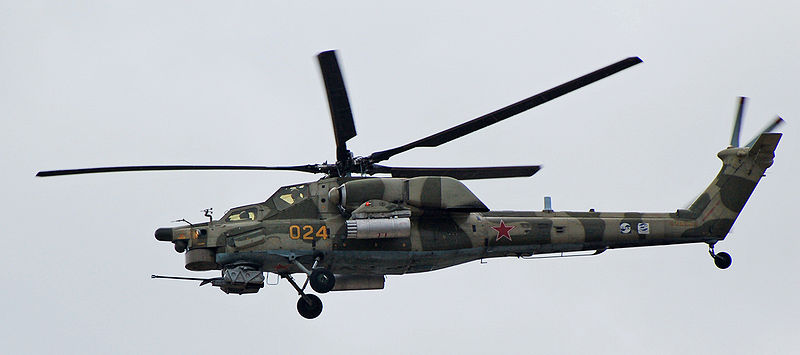
Russia is Priority for Mi-28N Deliveries

Mi-28N (photo: Denis Rossin)

Yesterday Rostov Helicopter Plant (‘Rosvertol’) General Director Boris Slyusar said the Russian Armed Forces are the priority for Mi-28N ‘Night Hunter’ deliveries, despite what he claims are many profitable offers from abroad.  According to ITAR-TASS, he said:

“We have many requests for the Mi-28N, but the RF Defense Ministry still doesn’t have these systems in sufficient quantity, and we will take its interests into account first.”

Slyusar didn’t give the number of Mi-28N helicopters in Russian forces, but he said the North Caucasus Military District (NCMD) has about 20 ‘Night Hunters,’ and there will be more.  He added:

“Our task is to create in the district’s [NCMD’s] troops in 2011 two groupings of Mi-28N.”

Who knows what he means by groupings.  Squadrons?  A second squadron or two additional squadrons?  The information on the number of Mi-28N delivered is unclear and contradictory.  In late 2009, Deputy Prime Minister Sergey Ivanov rather dubiously claimed Russia had already procured 27.

In May, a ‘Rosvertol’ marketing official said Russia would receive two squadrons of Mi-28N helicopters before 2011.  She said two Mi-28N went to the pilot training center at Torzhok in early 2008, and ten more — apparently for the NCMD’s Budennovsk-based 487th Helicopter Regiment — were delivered in 2009.  In mid-2009, ‘Helicopters of Russia’ General Director Andrey Shibitov also told Interfaks-AVN the Russian military had 12 Mi-28N helicopters.

So the question still stands:  a second squadron of maybe 10 helicopters, or two additional squadrons?  One thing’s certain, this goal’s been pushed from 2010 to 2011.

‘Rosvertol’ General Director Slyusar indicated his company sold 10 billion rubles of products in 2009,  and this year sales are more than 15 billion rubles.  Receipts from domestic and export sales are about equal.  By 2015, the company has an ambitious goal of $1 billion in sales.  Slyusar says the company is moving on this plan with modernization, equipment purchases, and people.

Air Forces News

A couple Air Forces items of interest today . . . .

A major live-fire exercise is taking place in the Far East today and tomorrow.  According to RIA Novosti, about 20 aircraft from the Far East Air Forces and Air Defense Army will fire more than 30 air-to-air missiles over the ‘Endurance Bay’ range on Sakhalin Island. 

A Defense Ministry spokesman said the aircraft are Dzemgi-based Su-27 fighters, and they’ll perform both day and night firings.  He emphasized that junior pilots will participate in the exercise.

There’s no readily available indication of the last time the Russian Air Forces conducted live-fire air-to-air training on this scale, so one presumes it’s been a while. 

Visiting Voronezh today, Air Forces CINC, General-Colonel Zelin said the city’s air base — soon to be one of Russia’s largest — will get four Su-34 bombers by year’s end.  The air base will be a first rank one, with 100 or more aircraft.

RIA Novosti reports the base’s expansion isn’t making nearby residents happy.  Those who object to it say its noise exceeds permissible levels, and causes headaches and sleeplessness.

On the Su-34s, Zelin said:

“I was recently at Novosibirsk aircraft plant.  One aircraft was already in flight test status.  The remainder are already in final assembly.”

State Tests of Su-35 Pending

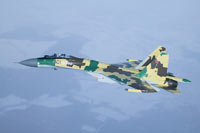
Su-35

Krasnaya zvezda on 13 August ran a brief item updating Su-35 developments.

Sukhoy is completing its preliminary testing of the Su-35 multirole fighter, and plans to present it for state testing this fall.  Sukhoy chief designer Igor Demin [Dyomin or Дёмин] told Interfaks-AVN to expect this in September or October.  He said there are two Su-35 prototypes currently in flight testing, and this number will increase to 6 for state testing.  The third Su-35 will reportedly fly at some point in the fourth quarter of this year.

Demin says the Su-35 is receiving lots of testing because it has many new systems and components.  Preliminary testing substantiated its advertised characteristics — low and high altitude maximum speeds of 1,400 and 2,500 kph respectively, and a ceiling of 19,000 meters.

Sukhoy has a mid-2009 state order for 48 Su-35 for delivery by 2015, and serial production of the fighter has been arranged at Sukhoy’s KnAAPO.  The first aircraft might be delivered in late 2010, and serial production will start next year.  Export deliveries are planned for 2012, according to this report.

The Su-35’s designers say this fighter will allow for a partial rearmament of the Air Forces, and facilitate assimilation of ‘new generation equipment.’  They describe the Su-35 as a deeply modernized, highly-maneuverable ‘4++’ generation aircraft, which already uses some 5th generation technologies.

According to this article, the Su-35 sports digital avionics and instrumentation, a new phased array radar capable of long-range target detection and tracking and engaging more targets simultaneously, and new engines with greater thrust and variable thrust vectoring.  Its radar signature has been reduced several times over 4th generation aircraft by using an electroconductive coverings for cabin lighting,  radar-absorbent materials, and a reduced number of antennas.

The Su-35 is reportedly designed for a service life of 6,000 flying hours, and its controllable-nozzle engines 4,000 hours.

According to ITAR-TASS, Sukhoy reported in July that Air Forces pilots were beginning to prepare to fly the Su-35S [supposedly the nomenclature for the domestic version] in state trials.

Infomercials aside, the Su-35 is intended to be a gap-filler for PAK FA, but no one can say how long the gap will be.  Long in development and repeated modernizations, it will likely be a solid aircraft, evolved as it is from pretty good stock.  There’s foreign interest, but, of course, no firm purchases yet.

Emblem of Procurement Problems

On Friday, amidst Krasnaya zvezda’s usual fare, there was interesting coverage of a high-level meeting to review the military’s UAV (BPLA or БПЛА) procurement program.

Technically, it was a session of the collegium of the Federal Service for the Defense Order (Rosoboronzakaz or Рособоронзаказ) with the agenda item “Results of Inspecting the Placement and Fulfillment of the State Defense Order (GOZ) in the Area of Development and Supply of Unmanned Aerial Vehicles.”

Rosoboronzakaz Director Aleksandr Sukhorukov, a former Serdyukov tax service deputy, conducted the session.  Also participating were newly-minted Deputy Defense Minister Tatyana Shevtsova, also a former Serdyukov tax service deputy, and Director of the Federal Agency for Supplies of Armaments, Military and Special Equipment, and Material Resources (Rosoboronpostavka), Nadezhda Sinikova, another of the Defense Minister’s long-time proteges.

The military paper noted that representatives of the government, ministries, and other federal executive organs, state customers from the Defense Ministry, FSB, FSO, MVD, and MChS, representatives of the Main Military Prosecutor, and OPK officials also attended.

One Yu. Stolyarov gave the main report.  He’s Chief of the Directorate of Oversight of the State Defense Order in the Area of General Armaments and Military Equipment, Aviation Equipment, Aerospace Defense Means and Armaments, Ships, and Naval Armaments and Military Equipment.  Quite a broad portfolio.  Krasnaya zvezda didn’t elaborate on what Mr. Stolyarov said, however.

Ground Troops CINC, General-Colonel Aleksandr Postnikov, VDV Chief of Staff and First Deputy Commander, General-Lieutenant Nikolay Ignatov, an OAO Tupolev deputy chief designer, and OAO ‘Vega’ Radiobuilding Concern General Director, V. Verba also spoke at the session.  Their remarks weren’t reported either.

Krasnaya zvezda reported that all presentations were thorough and constructive, and the collegium adopted some draft directive, but we don’t know what it said.  The paper, however, says the main theme of all presentations was the same:

“. . . in their TTKh (ТТХ – tactical-technical characteristics) domestic UAVs must not lag behind foreign ones and it’s essential to do everything to achieve this.  State money has to be spent with maximum effectiveness.  Troops and power structures need to be supplied with those UAVs that will be most effective on the battlefield, and in conducting special operations.”

What should we conclude from this?  Firstly, the meeting highlighted Shevtsova’s new oversight and auditing role in procurement.

Secondly, the Defense Ministry’s leaving the door open for domestic UAV producers, and so this seems to amount to just another warning to them.  It doesn’t seem to be anything like a decision to include Russian firms or exclude foreign ones, or vice versa.

It’s not surprising the Defense Ministry highlighted this particular program review.  Few procurement issues have caused Russia as much angst recently as UAVs. 

Georgia’s Israeli-supplied UAV capabilities, and Russia’s relative lack of them, highlighted this issue in 2008.  Moscow had to risk manned aircraft instead of employing unmanned ones on reconnaissance missions.  What’s worse, two years after the five-day war, there’s still no fix to the UAV problem.  And it will become more acute should unmanned aircraft become the backbone of future air power for the world’s leading militaries.  Russia’s clearly behind on UAVs, and questions remain about whether it should catch up, and whether it can.

The Russian defense establishment has spent months debating buying from foreign manufacturers, purchasing sample quantities abroad, or producing jointly to jumpstart or pressure domestic producers.  In late 2009, Air Forces CINC, General-Colonel Zelin flatly stated it would be ‘criminal’ to accept inferior Russian UAVs into the arms inventory.  The FSB reportedly said it would buy Israeli UAVs.  In March, Defense Minister Serdyukov admitted domestic UAVs ‘seriously lag’ behind world standards, and, in April, then Armaments Chief, now First Deputy Defense Minister Popovkin reported that Russia had spent 5 billion rubles on UAVs without result.

So UAVs joined the list of other systems – helicopter carriers, soldier systems, light armored vehicles, etc. – that could be bought abroad, but it doesn’t look like Moscow is ready to rely, at least entirely, on foreign producers for any of them.

Renewed Talk of Airborne Laser

Russian Airborne Laser Testbed (photo: testpilot.ru)

Work on the U.S. airborne laser has gotten the Russians talking again. 

On 19 August, an OPK source told Interfaks a laser system mounted on an Il-76 is under development, specifically to counter enemy reconnaissance systems.  It’s supposed to disrupt optoelectronic equipment operating in the infrared range in space, at sea, and on land.  The Interfaks source said this work’s been continuing for some time using a modified Il-76 (A-60), and the laser’s gone through a series of successful tests. 

Vesti.ru picked up the story from here.  It says Russia’s flying airborne laser laboratory took flight in 1981, and fired against an aerial target in April 1984.  However, work ceased in the early 1990s for lack of funds.  But now, Vesti.ru claims financing is going “according to plan.” 

Defense commentator Igor Korotchenko told Vesti.ru he doesn’t see the sense in the airborne laser, and doesn’t think it could be used in practice: 

“From a practical point of view, realization of such a program under conditions of defense budget limitations will look absolutely unwarranted and wasteful for the Russian budget.  Even if Russia gave itself such a task as developing an air-based laser, we have to understand that we’d have to fly this laser into U.S. airspace.  And try to destroy ballistic missiles there in the launch phase when they fire them at us.  It’s completely obvious that all our aircraft would be shot down.” 

Korotchenko goes on to say only the U.S. can afford a program like the airborne laser.  But regarding Russia: 

“. . . theoretically, of course, it’s possible to allow that such a flying laser system could be built, but if it’s senseless in a practical plan of combat employment, why take away resources from really important and necessary programs?” 

While reading Korotchenko, one needs to bear his long and close association with Almaz-Antey in mind.  Perhaps there’s fear lasers might detract from funding for more conventional air defense weapons.

According to Vesti.ru, many specialists think it’s just a matter of Russian prestige in keeping up with the Americans.  CAST’s Ruslan Pukhov doesn’t consider it a waste, however, saying that even the U.S. recognized Russian laser successes, and it would be stupid not to pursue more research.  Still others say it’d be better to spend money protecting Russian missiles from laser strikes during launch and boost phases. 

Newsru.com provided Pukhov’s comment:

“Several types of weapons need to fulfill the same function so that your system is more stable.  If suddenly the enemy found some kind of countermeasure to one type of weapon, or you didn’t manage to employ it for this or that reason, it’s always better to have a substitute.  Therefore, in my view, it’s stupid to renounce those types of weapons and those technologies where even your potential enemy assesses you extremely highly.”

Lenta.ru also added to this story.  According to it, the laser system will be for Russian forces; there’s no talk of exporting yet.  It says Russian Academy of Engineering Sciences official Yuriy Zaytsev first mentioned renewed work on an airborne laser in August 2009.  It provides some background on the Soviet laser weapons program in the 1960s and 1970s, through the A-60’s successful destruction of an aerial target in 1984.  It says, though there was no money in the 1990s, the design bureau continued to work on the laser program on an initiative basis.