Category Archives: Force Modernization

Karakayev Replaces Shvaychenko as RVSN Commander

Lots of action near the top of the Russian military pyramid today . . . 

General-Lieutenant Andrey Shvaychenko’s exceptionally brief tenure as RVSN Commander came to an abrupt and unexpected end.  He just turned 57 on June 18, and only commanded Russia’s land-based strategic forces for a little over 10 months.  His predecessor—Nikolay Solovtsov—served for 8 years. 

Already past retirement age for his two-star rank, President Medvedev and Defense Minister Serdyukov apparently decided to replace rather than promote him. 

The timing of Shvaychenko’s replacement is interesting and most likely not accidental, to say the least.  The Russians have swapped out a key figure just as they enter the process of ratifying a new strategic arms treaty with the United States. 

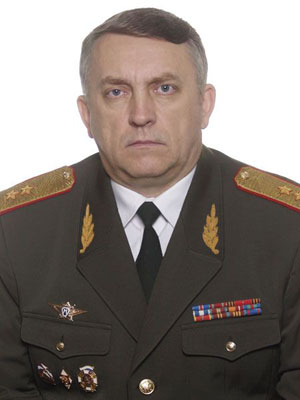
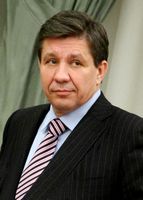
General-Lieutenant Sergey Viktorovich Karakayev replaces Shvaychenko.  Like his predecessor, he’s a two-star general, but 8 years younger.  He served as Chief of Staff, First Deputy Commander of the RVSN just since last October.  He occupied RVSN command positions up to and including missile division commander and Vladimir Missile Army commander in 2006-2008.  

General-Lieutenant Karakayev

Somewhat atypically, he served some time as a department chief in the Defense Ministry’s Main Personnel Directorate.  He completed studies in the civilian North-Western State Service Academy before finishing the General Staff Academy.  He holds a doctorate in military science.  His full biography is here

Kremlin.ru provided the following excerpt from today’s Gorki meeting between Medvedev, Serdyukov, and Karakayev: 

“This is a serious position.  The functioning of our nuclear shield depends on work in these duties.  And of course, I hope that you will do everything necessary, everything dependent on you to apply your knowledge, your experience for the good of the country, to create the right RVSN command and control system.” 

“Despite the fact that we are reducing our nuclear arsenal, this must not affect the combat core within the limits of that agreement which is currently operative for us, and within the limits of that agreement which is in ratification.” 

“Generally, it’s necessary to do everything so that our Rocket Troops of Strategic Designation will be fully combat ready and can fulfill their established missions.” 

Karakayev gave a customarily brief response: 

“Comrade Supreme Commander-in-Chief, I will not fail.” 

Pervyy kanal covered also covered the Gorki meeting, if you’d like some video.  

The change in the RVSN may be a result of the bumps and bruises of reaching internal agreement to go forward with the new strategic offensive arms treaty.  Or maybe not.  But something’s clearly wrong; a ten-month tenure is clearly far off the norm.  Medvedev’s short comments aren’t much to go on, but they seem to say (a) Shvaychenko wasn’t doing the job the way his masters wanted; (b) the masters want an improved strategic nuclear command and control system; (c) the new arms treaty doesn’t threaten Russia’s nuclear deterrence capability and, therefore, is a good deal for Moscow; and (d) the RVSN Commander needs to focus his attention on the optimal operation of whatever weapons systems provided him by the country’s leadership.  And Karakayev indicated in front of the cameras that he’s on-board with all this. 

Armaments Chief Vladimir Popovkin also replaced First Deputy Defense Minister, General-Colonel  Aleksandr Kolmakov.  Popovkin seems to have accommodated Serdyukov, and fit well into the Defense Minister’s ‘new profile.’  The ex-Space Troops general seems to be the type of official the civilian leadership wants in its more civilian Defense Ministry.  He will keep charge of the weapons portfolio, and training and readiness accounts overseen by Kolmakov will probably go back to the Genshtab.  But more on this one tomorrow.

Light Armor Acquisition Still Undecided

RIA Novosti reports the Defense Ministry is still undecided about purchasing European-made light armor for its military vehicles.  Defense Minister Serdyukov has said Russia might buy it from a German company.

Monday Deputy Defense Minister, Armaments Chief Vladimir Popovkin visited Italian firm IVECO’s display at Eurosatory-2010 in Paris.  IVECO uses German technology in fabricating light armor. 

Popovkin said:

“Issue of acquiring light armor and technology for its fabrication still isn’t decided.  Domestic scientific-research institutes still haven’t answered us about whether they’re ready and capable of making such armor.  If they make it, then we’ll use it, if they don’t, we’ll search for ways of getting Western technology for its subsequent production in Russia.”

Popovkin also indicated leading military producers are actively developing a new class of wheeled armored vehicles.  He said in the Russian Army’s modernization there are plans to establish light, medium, and heavy brigades.  Light brigades will have wheeled, medium wheeled and tracked, and heavy only tracked vehicles.  

A RIA Novosti source said:

“A lot depends on the deployment locations of these brigades and the combat missions they’ll be given.  This will be the determining factor for supplying brigades with this or that equipment.”

As an example, he mentioned IVECO’s development of a 29-ton wheeled tank with composite armor and a 120-mm main gun.

Defense Ministry Claims More Money Needed for Armaments

General-Lieutenant Frolov

Speaking before the Duma yesterday, acting Armaments Chief, General-Lieutenant Oleg Frolov indicated the proposed 13-trillion-ruble State Armaments Program (GPV or ГПВ) for 2011-2020 is not enough to accomplish the Kremlin’s rearmament goals.  RIA Novosti reported the draft GPV will go the government’s Military-Industrial Commission (VPK or ВПК) by the end of this month. 

From the Space Troops like his boss Vladimir Popovkin, Frolov is the Defense Ministry’s Deputy Armaments Chief, and Chief of the Main Armaments Directorate. 

Frolov said 13 trillion rubles will guarantee development of strategic nuclear forces, air defense, and aviation, but the Ground Troops’ requirements for modern weapons will be underfinanced. 

He added that 28 trillion rubles would allow the Defense Ministry to cover the Ground Troops’ needs, and 36 trillion—almost three times the planned amount of the GPV—would fully finance programs for the Navy and Space Troops. 

First Deputy VPK Chairman, ex-general Vladislav Putilin responded that his commission hasn’t heard answers as to why the proposed 13-trillion-ruble allocation is insufficient for the military’s needs: 

“In the Defense Ministry’s opinion, the armed forces will degrade under an allocation of 13 trillion rubles out to 2020.  But we haven’t gotten explanations even though we’re asking:  show us these horror stories.” 

Putilin noted that the GPV is still a ‘working’ document at this point. 

At the same time, the Audit Chamber (a GAO-type organization) told the Duma the Defense Ministry is not succeeding in using its allocated funding.  Lenta.ru reported that, by varying measures, the Defense Ministry executed only 42-65 percent of the State Defense Order (GOZ, Gosoboronzakaz, ГОЗ, Гособоронзаказ) for last year.  Also of interest from yesterday, SIPRI released its estimate of Russian defense spending for 2009–$53 billion (about 1.6 trillion rubles), good enough for fifth place worldwide.  See also Grani.ru for coverage of the Defense Ministry’s difficulty spending the GOZ. 

Newsru.com captured this story appropriately as a Defense Ministry demand for more funding.  Prime Minister Putin and President  Medvedev have vowed repeatedly to increase new armaments, from the current level of 10 percent, to 30 and 70 percent of the inventory in 2015 and 2020 respectively.  What’s unknown is why at least one uniformed military man has decided to challenge the feasibility of his political masters’ long-term rearmament goals.

Shamanov’s Press Conference

General-Lieutenant Shamanov

Ever-loquacious VDV Commander, General-Lieutenant Vladimir Shamanov held a wide-ranging press conference on Wednesday.  The Defense Ministry web site covered it hereITAR-TASS also published a number of short items on it. 

Shamanov detailed the work of five immediate deployment VDV battalions, lobbied again for a helicopter regiment, and discussed training issues and his procurement desires.  He joined the dogpile on top of the Russian OPK although he once seemed to defend it, and he credited Putin alone for the initiative to modernize the military’s arms and equipment.

He described his forces as combat ready, and manned and equipped at 100 percent.

Relative to combat readiness, Shamanov announced that the VDV has dedicated five battalions for immediate deployment which, if necessary, will be its first units sent into combat.  He said:

“By agreement with the General Staff, in the VDV we’ve dedicated five battalions for immediate deployment.  The uniqueness of service in these battalions is such that personnel from each of the battalions goes on leave for 45 days as a complete unit.  Therefore, at a minimum four battalions are always ready for combat deployment.  Today one of the sub-units of such a battalion from the 31st Airborne-Assault Brigade (Ulyanovsk) is fulfilling missions in Kyrgyzia [sic].”

Shamanov also gave voice to his desire, more modestly expressed than in April, for some aviation assets for VDV.  Speaking about the VDV’s future development, he said his troops must become airmobile.  To this end, he’s “given the Genshtab’s Main Operations Directorate [GOU] a request on the issue of forming a helicopter regiment in one of the three airborne-assault divisions [DShD or ДШД].”

Shamanov discussed VDV training at great length.  He started, of course, by speaking about jump training.  The parachute jump training plan was 70 percent fulfilled during the winter training period.  He blamed poor weather, saying troops often jumped in minus 30 degrees Celsius—the lowest acceptable temperature.  The plan for jumps from An-2 aircraft was fulfilled, but only 70 percent fulfilled from Il-76 aircraft.  He noted the VDV conducted its first-ever drop of a BMD-2 with its crew on-board, and said this hasn’t been done in 7 years, and then it was a BMD-1.  Use of the BMD-2 was significant, he said, because the BMD-2 represents 80 percent of VDV’s combat vehicle inventory.

Shamanov talked about large Spetsnaz assault group jump training in guided parachutes.  He said the use of guided parachutes allows reconnaissance troops to complete a horizontal flight of 20 kilometers, and:

“Our goal is to get so that such movements reach 40 kilometers, as they do in the Israeli Army.”

The VDV Commander noted that the multi-component Polet-K command and control system was tested for the first time in winter training.  He said: 

“It still isn’t the full suite envisioned in the future.  We are one-third through its introduction into the forces.  This process won’t happen in a year.”

Also for the first time, an artillery sub-unit of the 98th Airborne-Assault Division used Russian-made ‘Eleron’ UAVs for target designation on the Luga training grounds.  Shamanov said five ‘Eleron’ UAVs were employed in the training, and they conducted supplemental reconnaissance to a range of 10 kilometers in advance of fire missions.  This summer, 12 VDV crews will train on Israeli-made UAVs in Moscow Oblast.  Shamanov said:

“Unfortunately, our representatives did not go to Israel where they produce the ‘Hermes’ UAV which has been bought by Russia.”

Shamanov noted more attention to air defense training in the VDV this winter.  There were 40 firings of manportable ‘Strela-10’ and ‘Igla’ SAMs.

For the summer training period, Shamanov noted the VDV has 9,300 conscripts to get through three jumps in the course of 1.5 months.  The VDV will participate in ‘Vostok-2010’ and the CSTO’s ‘Cooperation-2010.’  There will be a VDV-level CSX (КШУ), as well as a CSX involving the 98th VDD (or ВДД).

Following the lessons of the Georgian war, the VDV is periodically training on the Navy’s large assault ships (BDK or БДК).  Shamanov says:

“In the winter training period we transported the 108th Regiment on large assault ships three times.  The exercises ended with a naval assault landing by a reinforced assault-landing battalion (ДШБ).

Last but not least, Shamanov commented on VDV procurement, and transport aircraft in particular:

“Work on the State Armaments Program for 2011-2020 is being completed.  According to our requests, in it there is the modernization of Il-76 aircraft, renewal of production and modernization of An-124 aircraft, the purchase of 30-40 An-70 aircraft.”

An-70

But the VDV Commander stressed these were his requests, and the final say isn’t his.  Utro.ru quoted him:

“In the development of the state [armaments] program, we gave our proposals, whether they’ll be realized in the confirmed version of the state program, I can’t say yet.”

Gzt.ru and Lenta.ru covered the An-70 and An-124 story in detail.

Shamanov said troop testing of the ‘Shakhin’ thermal sight for infantry weapons is complete.  He said:

“There has to be one approach for weapons—they have to be all-weather.  Not long ago the thermal sight ‘Shakhin’ went through troop testing.  After the testing we returned it to the designers for reworking.  We’ve given the task that our weapons work according to the aviation principle—turn your head and firing systems turn after it.”

He commented on air-dropping the BMD-4M, and added that, “The BMD-4M has every chance in the future, owing to its qualities, to be the forces’ main infantry combat vehicle.”

Although he seemed more like a supporter of Russian-made weapons six months ago, Shamanov now applauds Prime Minister Putin [not President Medvedev?] for searching for good weapons and equipment abroad.  Shamanov said the prospect of foreign competitors has forced “the domestic OPK to move,” as reported by Utro.ru.  He continued:

“Last year when industry was told that we’d look for alternatives abroad, they began to move.  In particular, the atmosphere around Mistral is creating a significant context for the domestic OPK.  When people declare that they’re ready to produce 21st century weapons but their equipment is from the 30s and 40s [of the 20th century], how can you talk about the 21st century?  Therefore, every official supports Vladimir Vladimirovich Putin’s initiative on the requirement to renew our armaments.  As long as this doesn’t happen, we’ll being shifting in place, and this won’t be just a lament of Yaroslav’s daughter [reference to the Prince Igor’s wife in the Lay of the Host of Igor after his defeat by the Turkic Polovtsy in 1185].”

At the same time, Shamanov concluded that GAZ and Izhevsk vehicles perform better for the VDV in the snow that equivalent Italian and Canadian ones.

Shamanov also said it’s essential to decide what to buy without any kind of lobbying, and for his part, he bases his decisions on saving soldiers’ lives and fulfilling missions.

Serdyukov Looks at IVECO Light Armored Vehicles

Defense Minister Serdyukov indicated today that, although Russia is interested in foreign light armored vehicles, it won’t buy any, and wants to produce its own.

During last week’s visit to Italy, IVECO put on a demonstration for Serdyukov at Moscow’s request.

According to RIA Novosti, Serdyukov said:

“The Defense Ministry is actively studying modern tendencies in arms employment.  Particularly in transporting personnel, medical personnel, and also reconnaissance in light armored vehicles.  The experience of Afghanistan and Iraq and our experience (in the regions), where explosions often occur, shows it’s essential to transport Defense Ministry sub-units in armored vehicles.”

Maybe Serdyukov should have said we already transport troops in armored vehicles, but we need to transport them in good, modern ones.

Serdyukov also noted that Germany is actively studying armor protection for troops, and Russia’s Defense Ministry is interested in similar production of its own.  He called Germany the leader in armor, and noted that German armor is mounted on Italian vehicles.  Serdyukov continued:

“We’re not talking about purchases of these vehicles in Italy or another country.  The main thing is to organize production of such equipment in Russia.”

Fifth Generation Helicopter

Andrey Shibitov

In a 13 May news conference, OAO Helicopters of Russia Executive Director Andrey Shibitov described the company’s work on a concept for a fifth generation helicopter.  His comments to the press came in advance of HeliRussia-2010 beginning today in Moscow. 

Shibitov said:

“We are actively working on the concept of a fifth generation combat helicopter.  Wind tunnel testing of two aerodynamic designs coaxial [Kamov] and traditional [Mil] has begun.  Initial results have been received.  Which of the two designs we’ll pick will become clear in the first quarter of 2011.”

According to Gzt.ru, Shibitov claimed OAO Helicopters is willing to invest $1 billion in its development, and is looking for state investment beyond that amount.

Neither OAO Helicopters nor the Defense Ministry is talking specifics about the new helicopter, but former VVS CINC Aleksandr Kornukov stated the obvious when he told Gzt.ru a fifth generation helicopter needs to be quiet and stealthy.  According to Newsru.com, Kornukov also stated a preference for two pilots in a side-by-side configuration.

In Gzt.ru, former army aviation commander, retired General-Colonel Vitaliy Pavlov said noise isn’t so significant since Mil’s X-shaped tail rotor already reduced noise on the Mi-28 by 15 percent (in comparison with its Mi-24 predecessor), but he added that reworking the engine could further reduce noise.  Pavlov doesn’t see great importance in increasing flight speed.  He sees the coaxial Kamov design as more reliable, but Mil’s traditional rotor system as more stable.  He also likes the maneuverability of Kamov’s helicopters, but he still thinks it’ll be a difficult choice between the two producers.

Also in Gzt.ru, Defense Ministry critic, retired General-Colonel Leonid Ivashov said the fifth generation helicopter could be stillborn:

“If there isn’t a state order for this aircraft, it will wither.  We’re grasping at all fifth generation aircraft, fifth generation helicopters, but for some reason none of this is coming to the troops, today we have helicopters from the 1970s in the army.  So the country’s leadership shouldn’t just rejoice at new equipment in various air shows, but also buy it for the troops.”

Then Ivashov’s deputy at the Academy of Geopolitical Problems, Konstantin Sivkov, takes over, citing his definition of a fifth generation helicopter—increased range, ‘fire and forget’ weapons, capability to engage fixed-wing aircraft, low radar detectability, and speed up to 500-600 km/h.  Sivkov sees noise reduction as secondary since radar can detect helicopters at a 150-200 km range.

Sivkov thinks, under favorable conditions—steady financing, cooperative work by the design bureaus and factories—a new helicopter could be developed in 5 years, but, absent those conditions, development could take 20 or 30 years.

Dmitriy Litovkin in Izvestiya covers a lot of the same information on the pre-design research and wind tunnel blowdown of the prototypes.  He says the so-called Ka-90’s ‘dual-contour’ jet engine could develop speeds over 800 km/h, and he cites a system development timeframe of 5-8 years.  According to him, work is focusing on canted blades with thrust vectoring as well as a new blade design.

He believes one of the designs will win out, but there could be a third hybrid design.  But he thinks there’s little time to waste since the U.S. is already testing new designs, albeit unsuccessfully thus far. 

Writing in Nezavisimoye voyennoye obozreniye, Viktor Litovkin notes three named prototypes–Mi-X1, Ka-90, and Ka-92. 

Shibitov also talked to the press about OAO Helicopters’ record state defense order from army aviation in 2010.  He said:

“A year ago I said it was a shame the Defense Minister wasn’t buying new helicopters.  Beginning this year, I can’t say this.  Finally conscious, sensible purchases of military equipment have begun.”

“We got a record order from the Defense Ministry for purchases of combat, strike, and reconnaissance helicopters in the basic and supplementary order.  Unfortunately, we can’t fulfill the supplementary order because other commercial projects are being completed.”

“From this year, we’re delivering volume for the Defense Ministry comparable with all export deliveries of combat and strike helicopters.  In the course of the coming five years this tempo will continue, and in the period to 2017-2020 the Russian Air Forces will renew its complement of combat, strike, and reconnaissance helicopters by 85-90 percent.”

Aviaport.ru indicated the armed forces will also receive their first Mi-35D, Mi-24D, and Ka-226T helicopters, previously produced only for foreign customers.  OAO Helicopters is reportedly looking at modernizing Ka-29 or Ka-32 helicopters for Mistral, but Ka-52 is another candidate for shipboard helicopter.

CAST’s Konstantin Makiyenko puts the armed forces helicopter inventory at 850, of which 90 percent is obsolete.  He estimates it’ll cost $8 billion to renew this force.

There is evidence of life in Russian military helicopter procurement.  Talking about the GOZ, President Medvedev said 30 would be bought this year, and Defense Minister Serdyukov claimed the army got 41 during 2009.  In late 2008, VVS CINC Zelin said the plan was to obtain 100 new helicopters over 4 years, so these numbers would be in that range.

Is Alarm About Aerospace Defense Warranted?

In today’s Nezavisimaya gazeta, Viktor Litovkin tries to reconcile Kornukov’s and Sitnov’s extremely pessimistic views on the state and future of Russian aerospace defense with the optimistic ones of Colonel Sigalov, whom Ekho Moskvy interviewed on Saturday.  He’s commander of the 5th VKO Brigade based in Moscow Oblast, responsible for defending the capital.

Litovkin notes the retired generals’ roles as defense industry lobbyists, their defense of business interests, and efforts to acquire new orders.  And for his part, the colonel could never imagine or admit a chance that his troops won’t be able to carry out their missions.  What kind of commander would he be?

But the situation in the realm of air defense, and even more in anti-missile defense, is very complicated.  Yes, the troops of Sigalov’s brigade are ready to open fire on air-breathing enemy forces with 10 minutes warning.  But repulsing strikes from space is much more complex.  The troops simply lack the weapons systems to do it.  And this threat doesn’t exist yet.

So is there a contradiction or not?  Litovkin reminds that military men judge not just the current potential of probable enemies, but their ‘technical-technological possibilities’ as well.  And these are alarming.  According to Litovkin, many leading countries are working on ‘the problems of space weapons’ (although he mentions just China’s ASAT capability and the U.S. X-37B orbiter). 

And Russia has no response yet beyond the much talked about S-500 system, which, says Litovkin, lives now on paper only, and two (and maybe six more by some time in 2011) S-400 battalions around Moscow.  Litovkin claims the Defense Ministry will not order more S-400s after that.  Recall Almaz-Antey chief Ashurbeyli complaining on 30 April that the Defense Ministry has not signed contracts for S-400 production in 2012.

Litovkin says this might have caused genuine alarm in the two retired generals.  He speculates there could be more delays in producing missiles for the S-400 as well as for the S-500, which will need to operate against targets in near space.  Finally, he notes that, although the military doctrine contains an understanding of VKO, there’s still no Defense Ministry organization responsible for it.

On balance, it sounds like Litovkin believes Kornukov’s and Sitnov’s concerns are genuine, rather than commercially motivated.

Yuriy Gavrilov, writing in Rossiyskaya gazeta, concludes that recent talk about VKO means that Russia has to take immediate measures, or allow the distance between itself and the U.S. to increase each year.  He gives a little useful history.  Yeltsin’s 1993 decree said to create VKO, but the establishment of OSK VKO and VKO brigades amounted to little beyond changing the names of existing units, without changing their command, control, subordination, or weapons systems. 

Kornukov mentioned VKO relies on S-300s, MiG-29s, and Su-27s, and the few deployed S-400s, which still need work and rely on a single suitable missile.  All of which means, while waiting for the S-500, Russia has no real system for intercepting medium- and short-range ballistic missiles at an altitude up to 200 kilometers, or hypersonic cruise missiles.

Gavrilov quotes Sitnov:

“To develop modern systems that cover air and space, to develop new satellites for reconnaissance, and comms relay, missile attack warning, a super-modern component base, new materials, powders, new developments in the area of command and control are required.”

But that’s not all.  Gavrilov says VKO also needs one master, but aviation and PVO belong to the Air Forces, while anti-missile defense, missile attack warning systems, and control of Russia’s orbital grouping belong to the Space Troops.  Kornukov and Sitnov argue for giving it all to the VVS.

And Gavrilov says time is short.  By 2030, hypersonic and air-space vehicles, sixth generation UAVs, as well as weapons ‘based on new physical principles’ will already be in foreign inventories.

Aerospace Defense in Disarray

Retired Army General Kornukov

While Russian air and aerospace defenders were meeting in Tver last week, former Air Forces (VVS) CINC, Army General Anatoliy Kornukov gave Interfaks his opinions in a Moscow news conference.  

Kornukov is a member of a group calling themselves the ‘Extradepartmental Expert Council on the Problems of RF Aerospace Defense.’  He also advises the General Director of Almaz-Antey. 

He called aerospace threats the greatest danger for Russia’s security.  He said: 

“An attack from space decides everything now, strikes from space can be delivered to any point on Earth.” 

Kornukov thinks Russia’s aerospace defense (VKO or ВКО) concept’s been thought over long enough, and: 

“Unfortunately, there are still few practical decisions and concrete results.  New air defense systems are being developed very slowly.” 

“We, unfortunately, created a time lag of 20-30 years behind our possible enemy.” 

The ex-CINC says, although the VKO concept was approved in 2006, little has changed: 

“Years pass, but everything stays the same.  And to say that we’re ready for something now would be an exaggeration.  We can now resist an air attack from the standpoint of remaining S-300 systems.  As well as with those residual Su-27 and MiG-29 aircraft, the majority of which lack engines and spare parts.  The picture is simply terrible.” 

He also noted that new systems are progressing slowly, and are entering the armed forces’ inventory even more slowly.  He believes the Operational-Strategic Command of Aerospace Defense (OSK VKO or ОСК ВКО–the old Moscow Air and Air Defense District) can only destroy 1 in 5 targets: 

“If the reliability earlier was 96 or 98 percent, then now the effectiveness [of systems in the inventory] is in the range of 15-20 percent.  What’s meant is how many aircraft of 100 could get through without being countered.  Now about 80.” 

Kornukov recommends establishing VKO under the VVS, and under PVO specifically.  For example, he’d like the Moscow-based OSK VKO to control its own missile-space defense (RKO or РКО) formations and units.  He says: 

“Once all missile-space defense was in one set of hands–the PVO CINC.  He answered for PVO and for RKO.  Now the thinking is inexplicable:  each is dying by itself.  There’s not a person defined as responsible even for air defense.” 

“I think the correct decision would be for everything  to be located in one set of hands, and one person answering for the condition, training, employment [of PVO means]. 

He reminded the audience that, once the province of PVO, control of anti-missile defense went first to the RVSN, and now resides with the Space Troops.  Olga Bozhyeva reported that Kornukov wants RKO, specifically the 3rd Missile Attack Warning System Army to come to the Air Forces, and the latter should change its name to reflect its aerospace orientation.  He doesn’t like the idea of creating a new armed service called aerospace troops that would control PVO.  

Asked about Russia’s ability to defend against potential missile attacks from North Korea or Iran, Kornukov called the country’s capability to counter these threats ‘limited.’  He said, although the S-400 can cope with air-breathing threats, Moscow has no means for countering ‘operational’ (i.e. intermediate-range) missiles. 

Other members of the ‘Extradepartmental Expert Council’ had their say as well.  Former chief of PVO’s equipment ordering directorate General-Major Kolganov said: 

“. . . the VKO concept developed several years ago is not supported today organizationally or financially.  There is no targeted program for its realization.” 

Former Armaments Chief General-Colonel Anatoliy Sitnov says: 

“. . . in Russia they remembered about VKO only after the U.S. began to test the X-37 orbital glider.   . . . everyone’s occupied with a general assimilation of budget resources, and not at all with the development of new strategic technologies for modern space systems, reconnaissance, [and] missile attack warning satellites . . . .  This can’t come from a private businessman.  He comes to grab some budget money and sell what’s been made for scrap.” 

“We lost 300 super-technologies, primarily in aviation and air defense.  In particular, in the production of supergraphite, which is used in nose cones for missiles . . . .” 

Sitnov also criticizes poor organization for VKO: 

“There is no one to be in command, no one to command and control forces and means, no one to commission new air defense systems.” 

“It is time to move from words to deeds, to take purposeful directions and targeted programs for developing new aerospace defense systems.” 

“But we are waiting for someone to come and help us.  No one will.” 

Kornukov is an old PVO guy–albeit an Air Defense Aviation pilot; he was the first CINC of the VVS after it subsumed PVO.  Maybe he, and the others, are just shilling for Almaz-Antey to get even more from the State Defense Order.  Or perhaps their assessments are sincere.

Defense Industry’s Last Warning

Popovkin in a Suit

Last Friday’s NVO printed an interesting editorial that discussed arms exporter irritation with Deputy Defense Minister, Armaments Chief [former Commander of Space Troops and ex-General-Colonel] Vladimir Popovkin for publicly admitting the Defense Ministry’s dissatisfaction with many of the OPK’s products.  The exporters are obviously upset that Popovkin’s comments have, and will, cost them sales abroad.  But NVO concludes a greater danger would be trying to silence anyone–high-ranking defense official or independent defense analyst–who dares point out the OPK’s problems in the hope of remedying them.

NVO’s sub-title for the article is “The OPK’s systemic crisis threatens a breakdown in the supply of combat equipment to the Russian Army and a lack of export contracts.”

The Greeks have apparently called off a purchase of 420 BMP-3s for $1.5 billion (let’s call it $3.6 million per vehicle).  The deal had been 2 years in the making, and it wasn’t the state of the Greek economy that caused the halt.  According to NVO, the money was already in the defense budget.  Rather it was Popovkin’s specific criticism of the BMP-3 that folded the deal.

Popovkin is quoted:

“We very much need to protect our soldiers.  Today everyone rides on top of the BMP because no one wants to ride in this ‘coffin.’  We need to make a different vehicle.”

Greek journalists published his remarks, and opposition politicians turned them into a scandal:  how can you buy unsuitable equipment that even the country that makes it won’t buy?

Popovkin also complained about the T-90 that the Indians are buying, the tank support combat vehicle (BMPT) that Rosoboroneksport recently demonstrated at an arms show in Kuala Lumpur, and other equipment which the army won’t buy for one reason or another, but which is put forth for export and actively advertised there.

According to NVO, the arms exporters are terribly offended because the [ex-] general cost them several lucrative contracts.  But, in NVO’s estimation, his speech is very necessary.  It says:

“. . . the truth about the condition of the Russian defense-industrial complex, about those processes occurring there, about the systemic crisis in it and the inability of its various directors, including even the government’s Military-Industrial Commission [VPK], to correct the existing situation, is not a secret at all.  It’s been talked about more than once.  On the most varied levels.  Including even presidential.”

NVO says this truth is very important; it could help the powers-that-be uncover the problem areas, fix them, and produce the modern equipment needed for the defense of the country’s interests.  Without an honest discussion, the deficiencies can’t be fixed.  But the Kremlin, government, the legislature, executive organs, or the regions won’t undertake any serious measures against negligent managers.  Despite constant talk of state arms programs, federal programs of technical reequipping of defense enterprises, in reality, with the exception of aviation and air defense firms, nothing is really happening.  It’s moving at a snail’s pace.  Or is it?

Foreign buyers send in 33 warranty claims for every 100 Russian weapons systems exported.  And the scandal with the Algerian MiGs didn’t teach the OPK anything.

It would be possible to silence critics and protect military-technical cooperation with foreign countries and keep the profits coming to the budget and the manufacturers.  But won’t the low quality of these systems, their inability to meet the demands of modern war, really be a negative advertisement?  Does someone really think if they quiet the generals, together with the Moscow media, military analysts and experts then they can sell some kind of half-finished military goods to a serious buyer?  Naive views worked out for illiterate dilettantes.

NVO figures there are two ways out:  either give up, lose export orders, and accept the situation or sharply improve the quality and effectiveness of Russian weapons, reduce prices and defects, and strive to be on the leading edge of technology.  In other words, saving defense industry is in the hands of defense industry itself.  And no one else.  

When it comes to combat vehicles, sniper rifles, UAVs, assault ships, night sights, and armor, the international division of labor in defense industry isn’t such a bad thing after all.  It brings Russia closer to the ‘probable enemies’ of the recent past.  But when it comes to nuclear-powered submarines and strategic missiles we still don’t know how to do them ourselves and no one’s going to sell us those.  And [unless Russia remembers how and gets its OPK in order] it will remember national security the same way it remembers the long forgotten past. 

This is NVO’s way of telling the Putin-Medvedev regime it would be foolish to shut down this feedback channel that tells it what needs fixing in the OPK.

Can Imports and Money Solve OPK Problems?

Ilya Kramnik (photo: RIA Novosti)

On 22 April, RIA Novosti military commentator Ilya Kramnik provided an essay on the army, the VPK [OPK], and post-Soviet realities.   He gives a convincing negative answer to the question posed above.  Like more money and budget, foreign imports won’t be enough by themselves to fix the Russian OPK’s structural problems which have to be addressed more directly at their roots.   

He has praise for Defense Minister Serdyukov for being willing to admit that the ‘emperor had no clothes’ to some degree.  Serdyukov’s management has recognized that the world has changed and changed the army’s missions accordingly. 

A recognition of one’s problems, however, is not the same thing as fixing them.  Serdyukov, the army, and the OPK face the same kind of modernization dilemmas that face Russian politicians, business, and society.  But thanks to Serdyukov, the armed forces are operating under a more realistic vision of what they are, or should be, building toward.

Kramnik believes imports are fine, but the OPK needs the capability to build the entire line of military equipment needed, if it has to.  To do that, it will have to remedy its capital problems, including human capital.  He concludes there’s still a way to go to get to a mobile, well-armed, and trained army, appropriate for the real threats facing the country.

Kramnik writes:

“In the past few days Defense Minister Anatoliy Serdyukov and his deputy Vladimir Popovkin again raised questions about the quality of the work of the country’s VPK [military-industrial complex].  These questions are not being mouthed for the first time, and are taking on a particular acuteness against the backdrop of announcements of planned purchases of military products abroad–both separate components and complete systems.”

“It’s difficult to say when the theme of the Russian VPK and armed forces’ dependence on foreign supplies first began to resound.  In a large sense, it was always acute–even the USSR didn’t have full independence from foreign supplies, in its heyday, trainer aircraft from Czechoslovakia, light helicopters (Soviet-designed) from Poland, large assault ships from the very same Poland, various types of boats and ships from the GDR, etc., were bought.”

“After the USSR’s collapse this dependence deepened because of the foreign status of many producers which had been an integral part of the Soviet VPK–from Dnepropetrovsk’s Yuzhmash to the Tashkent Aviation Production Conglomerate.  But the problem of the VPK’s growing dependence on producers in the ‘far abroad’ is the most acute and painful today.” 

“The list of purchases of military equipment abroad being realized by the Russian military and producers is already now quite broad:  different types of infantry weapons, communications systems, unmanned aerial vehicles, thermal sights, digital electronic equipment…” 

“Now being added to this list are multipurpose assault ships, and armor for vehicles and light armored equipment.” 

“Meanwhile from the Defense Ministry resound still louder complaints about the domestic VPK over the quality of the equipment it is producing.  Of the number of the largest scandals of this type the recently resonating complaints about domestically developed unmanned aerial vehicles, armored personnel carriers and infantry fighting vehicles must be noted.  Problems are also arising where there are no alternatives to domestic manufacturers, and can’t be in principle–in the development and production of ballistic missiles (“Bulava”).”

“What is happening with the country’s VPK, and what kind of ways out of the situation which has taken shape are there?” 

“The main cause of today’s situation is obvious:  from the beginning of the 1990s through the mid-2000s a large part of VPK enterprises together with the entire country was occupied with everything except strengthening defense capability and modernizing production.  The collapse of the USSR, with the consequent destruction of Soviet industrial infrastructure, disruption of production ties and scientific schools didn’t leave any chance for a better result.” 

“It follows to note that the disruption was systemic, and besides experts in the State Property Committee and other government organs of the 1990s, the authors of this process could, with complete justification, be considered the ‘captains of industry,’ many of whom in this period openly used enterprises entrusted to them for the purpose of ‘making money here and now,’ even through the ruin of production sold off for scrap.”    

“Against this background in the armed forces and those close to the military, but also in industrial circles, groups of ‘patriotic’ experts and analysts, rose like mushrooms after the rain, thoroughly glorifying the country’s army and VPK with chants of one and the same incantation:  ‘it has no analog in the world.’  The incantations rang out with respect to various military and technical wonders, and meanwhile not the slightest attempt was made to comprehend the changing world map, missions of industry and the armed forces.”       

“From the other side the ‘alarmists’ were entrenched and grievously moaned about the death and destruction of the army and military industry, keeping such an inadequate perception of the world as a whole.  Both sides supposed that Russia and its army would in the future conduct a precisely ‘Soviet’ type war against the entire capitalist world, or, at a minimum, against a Chinese invasion.”       

“Very few production associations, which were flagships of the domestic VPK, were able to preserve themselves as single entities in the Bacchanalia of destruction.  There is, first of all, the ‘Sukhoy’ firm, which knew how to turn the crown of Soviet scientific-design thinking–the family of aircraft on the T-10 (Su-27) platform–into the most commercially successful product on the combat aircraft market of the last 20 years.  There is ‘Almaz-Antey,’ whose air defense systems received not less recognition.  There is Nizhnyy Tagil’s UVZ which was saved thanks to the T-90.  There are some shipbuilders and several other companies that managed to ‘get’ the situation and survive.  But such successful ones turned out to be far from all.”        

“The renewal of defense development and the increase in the State Defense Order in the middle of the 2000s could not be and didn’t become a panacea.”       

“Firstly, a simple increase in monetary investment will not save a disrupted industry:  dead people don’t need money, neither do the seriously ill generally.”       

“Secondly, this money by itself could not resolve the row of problems of even successful enterprises–for example, the problem of a lack of personnel, caused not only by the outflow of workers ‘in the hungry 1990s,’ but also by a sharp decline in the young population, together with the fall in the quality of engineering-technical education, and the practically complete collapse of the system of specialized secondary education.”       

“But the biggest problem became the management of the armed forces and military industry in principle.  The armed forces command right up to recent times didn’t have any kind of clearly expressed views on the future profile of the Russian Army.  All the years of reforms right up to the arrival of Anatoliy Serdyukov in the post of Russia’s Defense Minister preserved in essence the truncated and frayed Soviet Army, whose model was becoming ever less and less adequate for the missions facing the country in the prevailing economic and political conditions.”

“Military industry against this background survived reorganization after reorganization, the overwhelming majority of which led to nightmarish overgrowth in bureaucratic components and an increase in the already huge gap in pay between specialists on the line and in the laboratory and the management.  This state of production efficiency contributed to the growth of military expenditures and the amount of ‘kickbacks’–most of all.  Responsibility for results was conveniently forgotten:  ‘captains of industry’ together with the armed forces leadership now, as a rule, won’t risk even dismissal, much less their freedom.”       

“A similar uncertainty led to uncertainty with the military order.  Plans and ideas floated and sank, development began and stopped, the vision of the army and its complex of armaments as some kind of organic system aimed at resolving such-and-such concrete missions was totally absent.  The sole exception on this score was the strategic nuclear forces, where a clear understanding of missions and ways of conducting them was preserved, and work was conducted–on supporting old RVSN missiles, on testing and adopting new ones, on repair and modernization of the Navy’s strategic missile submarines and Air Forces heavy bombers.” 

“Anatoliy Serdyukov’s reform, being the first systemic reform of the armed forces in the last decade, not directed at supporting a dead Soviet structure, but at arranging a new one, under concretely certain missions of fighting local and regional conflicts while preserving nuclear deterrence potential, did not create new problems.  It simply revealed old ones, aggravating them with the absolute ‘nonconcurrence’  of the new Defense Ministry leadership in the old system of relations of the army and VPK.”       

“This ‘nonconcurrence’ became a thorn in the side of very many, those problems earlier kept quiet behind the reckoning ‘well, you understand,’ suddenly stopped being kept quiet, and floated in all their ugliness before the eyes of an astonished public.”      

“For the public the foregoing was a big shock, since it all these years kept the point of view on the army and VPK as some ‘island of stability,’ preserving, in the face of all problems, the Soviet system of connections and ties, and, in general, Soviet possibilities.  Many understood the fact that this wasn’t so, but an open recognition of the changed situation by the leadership of the armed forces and the country, nonetheless, was unexpected.”       

“However such a recognition was necessary as a recognition of the fact that the world has changed.  The Russian Army is more incapable of realizing the West’s half-century nightmare–a three-day dash to the English Channel (we set aside the question of whether the Soviet Army was capable), however does Russia need this capability for defending its people, its sovereignty, its interests?”      

“It occurs that our country needs something different.  It needs a clearly expressed understanding of threats, developed with the participation of the military, politicians, and the public, which stand before the country and the capability to counter these threats.  It needs a compact, ‘quick reaction,’ innovative, directed military industry with minimal bureaucratic overhead, and an education system regularly supplying engineering and labor personnel who will receive pay greater than the managers of shops selling mobile phones and taxi drivers.  At a minimum.”      

“This industry needs to produce the entire line of types of equipment and hardware essential to the armed forces, even if using some quantity of imported components–in the end, even the USA doesn’t disdain the use of military imports, and it imports foreign military hardware worth $15-16 billion annually.”      

“It needs an army–mobile, trained, armed, conscious of its status, prestige, and many centuries of history.  It needs strategic forces which protect the country against wars with superior enemies, the calculation of which on our planet doesn’t even require three fingers.”      

“All this could become a reality only in the event that it’s made into a goal at the very highest level.  Still the reactions of the country’s leadership, and of the armed forces, at a minimum, demonstrate understanding of the problem.”