Putin Stresses Strategic Systems

Originally intended for another purpose, so it’s a tad dated.  Perhaps still useful to some . . .

Putin Talks Air Forces

Putin Talks Air Forces

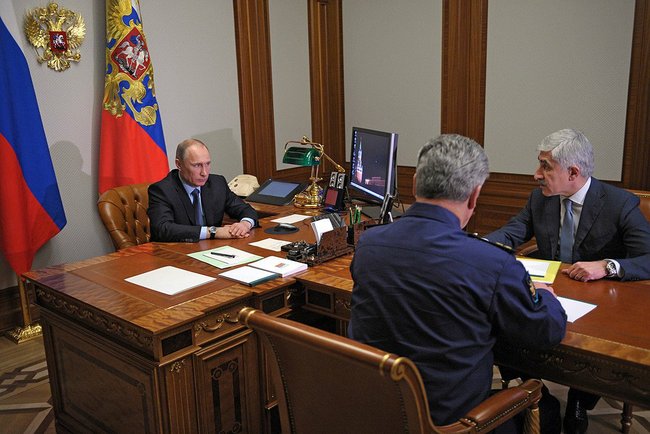
Russian President Vladimir Putin conducted six meetings on key arms programs from 27-29 November in Sochi.  He focused on strategic systems in his public remarks before the sessions.

Looking first at the RVSN, Putin called development of the “main component of the strategic nuclear forces” a priority.  He said two RVSN regiments received new mobile missile systems – 18 RS-24 Yars (SS-29) ICBMs — this year.  Putin added that the RVSN will field 22 new ICBMs – likely also RS-24 — in 2014.

Putin said the RVSN need to overcome “any missile defense system.”  Makeyev State Missile Center general designer Vladimir Degtyar responded by describing development of a missile with “increased throw weight” and better survivability, presumably a new liquid-fueled heavy missile.

The Russian president said it is “not necessary to say much about how important the naval part of the triad of strategic nuclear deterrence is for us.”  New Borey-class SSBNs Aleksandr Nevskiy and Vladimir Monomakh need to enter service next year as part of a contingent of eight new SSBNs by 2020, he said.  Not mentioning the failed launch of a Bulava SLBM in September, Putin tersely commented, “The armament [Bulava] should arrive in step with its launchers, these submarines.”

Putin called for “active” work on the new PAK DA strategic bomber, and modernization of existing Tu-160 and Tu-95MS bombers.  OAK chairman Mikhail Pogosyan replied that the Defense Ministry has given the corporation the technical task for PAK DA, and the company is preparing for R&D starting next year.  He said OAK is almost ready to submit modernized Tu-160 and Tu-95MS bombers for state testing.

Turning to aerospace defense, Putin said two ‘regimental sets’ of S-400 SAMs were fielded this year, and three should reach the forces in 2014.  Almaz-Antey general designer Pavel Sozinov told the Russian president that the S-500 SAM system is approaching the “finish line” with testing planned in 2014-15, and the new medium-range S-350E Vityaz should reach units in 2015-16.  The first production lines in new Almaz-Antey plants in Nizhny Novgorod and Kirov will begin operating in 2015, according to Sozinov.

Putin addressed well-known problems in Russia’s space sector, noting that failures have brought significant material losses.  Some military space projects are drifting despite stable financing, he added.  He noted that five military satellites have been placed in orbit, and five more will be in 2013.  Six satellites will be orbited next year, Putin said.

Concluding the meetings, Putin reminded assembled military and defense industry leaders that Russia’s defense budget has increased four-fold over ten years.  He said this money was allocated to guarantee the country’s defense capability for the long-term future, and established tasks must be completed on schedule.  He plans to hold another rearmament review in six months.

Reaction to Putin’s Armaments Conferences

Actually, one reaction . . . a succinct editorial from Vedomosti capturing many good points with few words.

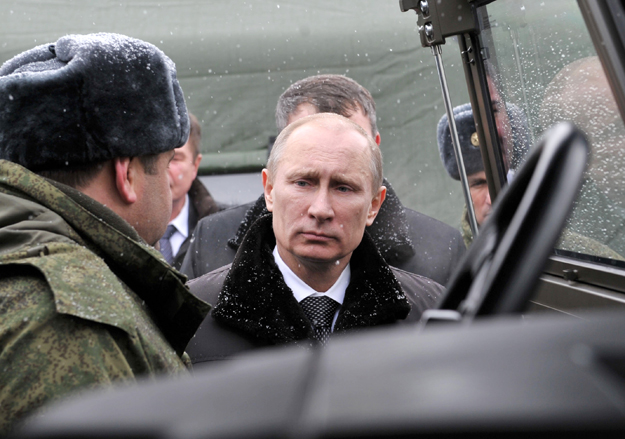
Vladimir Putin (photo: RIA Novosti / Aleksey Nikolskiy)

Vladimir Putin (photo: RIA Novosti / Aleksey Nikolskiy)

In Sochi last week, President Vladimir Putin conducted a whirlwind three-day series of meetings on Russia’s rearmament programs, giving his primary attention to strategic nuclear ones.

Here’s Vedomosti’s thinking on the sessions:

“Vladimir Putin conducted an intensive series of defense-industrial meetings.  During the trip to Olympic Sochi, the president in turn reviewed the problems of the development of aviation, the fleet, Space Defense Troops [sic] and the Missile Troops of Strategic Designation.  The fact that the discussion of military issues was raised to the highest level, signifies, probably, both the depth of the problems, and the priority of the subject.  The rational use of colossal resources was discussed:  expenditures on defense rose from 600 billion rubles in 2003 to 2.3 trillion rubles in 2013, and the general volume of the State Program of Armaments to 2020 is 20 trillion rubles.”

“These meetings affirmed:  Recent bureaucratic and staff [apparat] decisions, including appointment of a new minister of defense and a “military-industrial” deputy prime minister, did not solve the systemic problems of rearming the army and the quality of work of the domestic VPK.”

“The domestic VPK’s development is frozen, it needs foreign scientific and design developments — both dual-use and exclusively military, observes the director of the Center for the Analysis of Strategies and Technologies Ruslan Pukhov.  These demands can hardly be satisfied because of constant altercations with Europe and the USA on foreign policy issues.  Moreover, the objective requirement for technological cooperation will contradict Defense Minister Sergey Shoygu’s announced course of refusing imports of foreign armaments, combat equipment and support means (the purchase of the “Mistrals” is the exception proving the rule).  Of course, it is possible to hope that intelligence agents will acquire the needed technologies, as it was in Soviet times.”

“However, even this will not quite forestall the lag:  the institutes and specialists who provided the correct implementation of foreign technologies have been lost.”

“There is still a key question requiring a strategic decision at the highest level, — what is more important:  production of the maximum possible quantity of combat equipment or the training of professionals capable of using the most complex armaments, including foreign-produced ones.  For now, judging by Shoygu’s announcement on the preservation of conscript service, at the top they are inclined toward extensive development, toward employing unpaid labor, the use of which in the army turns into huge losses for households and the economy as a whole.”

“The personal participation of the president is essential in the resolution of conflicts between those who order and suppliers of armaments.  The latter in the absence of competition between various design bureaus and factories (it, as is well-known, existed in the time of the USSR and was one of the engines of the country’s technological development) have become monopolists, not interested in raising quality.  They are sure that the armed forces will buy their products, and know, that in case of disagreements with the military, the directors of state companies from among the closest associates of the first person will turn up on their side.”

Lots of thoughts and propositions for discussion and debate.

Serdyukov Suspected

Anatoliy Serdyukov’s no longer a witness; he’s a suspect.

The Investigative Committee of Russia (SKR) suspects the former defense minister of negligence leading to the loss of more than 56 million rubles.  He reportedly gave verbal orders to use budget money to finance a road to the Zhitnoye resort in Astrakhan Oblast, and to have railroad troops build it.  Soldiers were also reportedly employed in landscaping Zhitnoye, owned by Serdyukov’s brother-in-law Valeriy Puzikov.

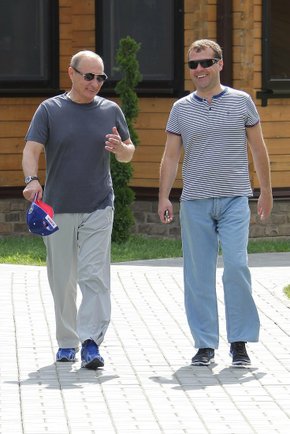
Putin and Medvedev at Zhitnoye in 2011 (photo: Press-Service of the President of Russia)

Putin and Medvedev at Zhitnoye in 2011 (photo: Press-Service of the President of Russia)

Serdyukov will appear on 3 December for questioning under Part 1, Article 293 of the RF Criminal Code, which reads:

“1.  Negligence, that is the non-fulfillment or unreliable fulfillment of his obligations by a responsible person as a result of an unconscientious or negligent attitude toward service, if this inflicts a great loss or material damage to the rights and legal interests of citizens or organizations or interests of society or the state protected by the law, -”

“Punishable by a fine in an amount up to one hundred twenty thousand rubles or in the amount of wages or other proceeds of the guilty party for a one year period, or mandatory work for a period up to three hundred sixty hours, or correctional labor for the period of one year, or arrest for a period up to three months.”

A command “from above” to pursue Serdyukov was required, and, apparently, it’s been given.

According to ITAR-TASS, SKR spokesman Vladimir Markin says a “final evaluation” of Serdyukov’s “illegal activity” will be made during the investigation.

Some observers believe, at a minimum, Serdyukov’s orders look like a more serious charge of “misuse of official authority” (Article 285).  But, as Nezavisimaya gazeta writes, most doubt prosecutors will lay a heavier accusation on Serdyukov.

Political commentator Gleb Pavlovskiy says making Serdyukov a suspect raises the bar for the next targets of anti-corruption investigations, but Pavlovskiy doesn’t think he’ll receive any real sentence:

“As regards Serdyukov, apparently, there’s a point of view that he must be punished somehow, but he mustn’t suffer because he was a politically loyal functionary.  The new accusation proceeds from the idea that Serdyukov is guilty for not preventing the growth of MOD corruption to a scandalous proportion, but he’s not guilty himself.”

Similarly, politician and analyst Vladimir Ryzhkov suggests a nominal conviction and sentence of community service hours might satisfy public opinion, and give President Putin an acceptable exit from a thorny problem.

Observer Igor Bunin adds:

“. . . Putin, when he decided it was necessary to sort things out with Serdyukov, followed two goals.  From one side, make the elite understand that it’s forbidden to cross certain lines, and from the other side — raise his own prestige.  But at the same time he understood that he depends on this elite, and it’s impossible to punish this once close person severely, he was in the very tight-knit group connected to Putin.”

Political scientist Pavel Salin, however, thinks Serdyukov’s fate may be the object of struggle between “hardliners” and moderates.  No longer satisfied with Putin as arbiter of the political system, “hardliners” want a conviction, while moderates want to limit blowback on the elite and the status quo, and to confine anti-corruption measures to lower levels.

Ryzhkov also wonders if something along these lines is changing:

“It seems Putin himself wants to toughen something up.  At least the simultaneous start of the criminal case against Serdyukov and the announcement of creation of the Kremlin’s agency for battling corruption [PA anti-corruption directorate] shows that, possibly, they are really at least trying something to toughen the struggle against corruption.”

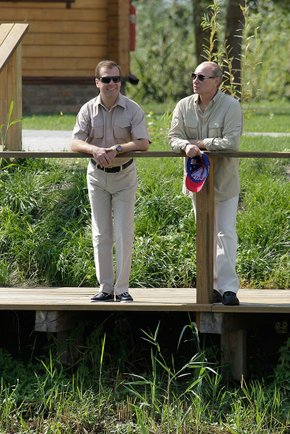
Zhitnoye in 2011 (photo: Press-Service of the President of Russia)

Zhitnoye in 2011 (photo: Press-Service of the President of Russia)

Speaking for his client, Serdyukov’s lawyer said he hasn’t been charged, and acknowledging any kind of guilt is “out of the question.”  Until now, he was a witness to property machinations involving Oboronservis and Slavyanka that occurred during his tenure as defense minister.

Just back on 15 November Serdyukov was named head of Rostekh’s obscure Federal Testing Research Center for Machinebuilding.

Wind Blows Hard Across Iturup

Recently saw a compelling piece in Smartnews.ru.

Had not heard of the site, but its text and photos vividly convey the plight of the inhabitants of Russia’s unneeded military towns.

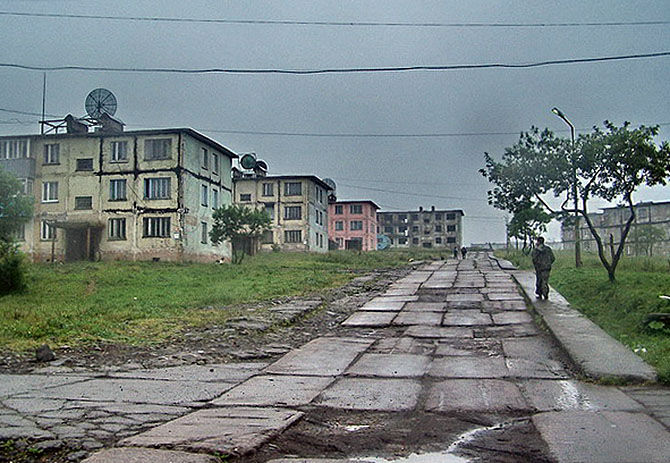
Military Settlement Gornyy on Iturup (photo: ovsiasha.livejournal.com)

Military Settlement Gornyy on Iturup (photo: ovsiasha.livejournal.com)

Five hundred residents of Gornyy, a military settlement on Iturup in the Kuril chain, have appealed for help to resettle them or fix their broken down homes.  Iturup is the northernmost of the four southern Kuril islands which Japan  claims as its Northern Territories.

Gornyy on Iturup Island

Gornyy on Iturup Island

Smartnews writes that the Ministry of Defense still controls Gornyy, but only in a formal sense.  In reality, it has “thrown away” these former colleagues.

Local authorities want to help, but don’t have a legal right.  They can’t spend money on territory still belonging to the MOD.  They aren’t allowed to replace drafty old windows in buildings under a regional initiative called “Warm Windows.”  The Sakhalin Oblast Duma has appealed to Defense Minister Sergey Shoygu on Gornyy’s behalf.

Forces deployed here, units of the 18th Machine Gun-Artillery Division, were withdrawn from the area, but residents remained with no one to maintain their apartment buildings.

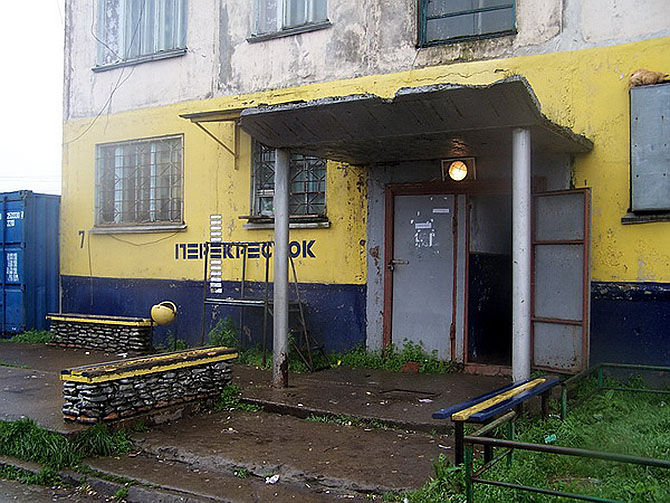
A Building in Gornyy (photo:  ovsiasha.livejournal.com)

A Building in Gornyy (photo: ovsiasha.livejournal.com)

Those who could left.  Those not expecting an apartment elsewhere from the MOD, or with nowhere to go otherwise, mostly military pensioners and their families, stayed behind.  Those with jobs work mainly at nearby Burevestnik airfield, built when the Japanese still controlled Iturup.  They will probably become unemployed when a new airport opens on the Sea of Okhotsk side of the island in the not-too-distant future.

One retiree says the once thriving settlement is now like a cemetery.  Some buildings are completely empty.  Their broken windows look like eyes.  The wind blows through neighboring apartments.  He continues:

“. . . we don’t have street cleaning or trash collection.  But mainly, there’s no future.  It’s hard on the morale, it’s simply dying — the feeling that you served at the very edge of the country, protected it, and now no one needs you.”

Officials don’t even come to Gornyy because you can’t pass through it.  It’s the most remote populated place on Iturup.  It’s 50 km to the rayon center (Kurilsk) and the MOD owns the road and isn’t in a hurry to maintain it.

An oblast Duma deputy says:

“It’s not easy living there for the military, I have complaints from several:  the boys have left, there is no one to register them [as legal residents in internal passports], no one can get medical insurance, or even vote in elections.  So people live, although there is some infrastructure there — a school, kindergarten, stores, but they don’t want to live there.”

Local authorities do what they can, arranging traveling medical care for people in Gornyy.

But ultimately, Smartnews writes, neither Gornyy nor Sakhalin can decide anything, the MOD needs to make a final determination on its property and clarify the fate of those living in the settlement.

Some former military in Gornyy, however, still hope the MOD will deploy an S-400 unit near their settlement and revitalize it.

Gornyy is an extreme case, but still similar to that of thousands of other military towns as well as many neglected and forgotten civilian settlements.

Long Road from Witness to Accused

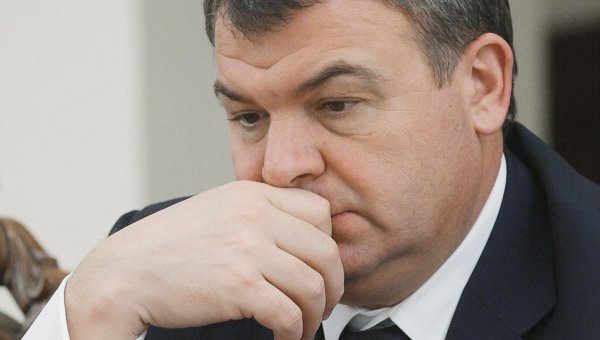
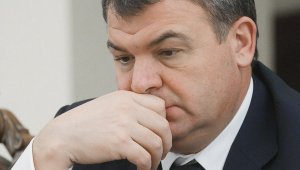
Serdyukov in a Contemplative Moment

Serdyukov in a Contemplative Moment

It’s time to update the legal situation of former Defense Minister, military reformer, and “witness” to enormous corruption right under his nose, Anatoliy Serdyukov.

On these pages, it’s been said there’s no way Serdyukov can escape the prosecutors and jail.  That assessment may have been hasty. 

It reflects a vain hope that even Russia, with it’s unbelievable corruption and light regard for the rule of law, will indict and convict someone too smart and too financially savvy not to know what his “women’s battalion” was doing with MOD property and shares in the quasi-military companies of Oboronservis.

Someone who clearly knew how various schemes involving his brother-in-law and military property would look if unearthed.

In Vladimir Putin’s Russia, politics and clan membership trumps law and everything else.  Serdyukov betrayed one of his benefactors by jilting his wife, Viktor Zubkov’s daughter, but remains free.  It must be Putin’s political calculation that keeps him out of prison.

Still, Serdyukov hasn’t been a cooperative witness; he’s practically been a suspect if we take the tone of what GVSU SKR investigators have told the media.

Last week Kommersant reviewed the facts regarding Serdyukov in an article on the GVSU SKR’s decision to prolong its investigation surrounding Zhitnoye until January 17.

The Oboronservis corruption investigations swirl around Serdyukov, but haven’t been directly connected to him.  They will continue until March.

The Zhitnoye case bears the most direct involvement by Serdyukov, according to Kommersant.  The paper believes it’s still fully possible he could turn from witness to accused in this case.

Zhitnoye in Winter

Zhitnoye in Winter

The affair might have ended in September when Serdyukov’s brother-in-law Valeriy Puzikov and one of his partners returned this property worth 150 million rubles to two “autonomous departments” of the MOD.  The MOD would have thus suffered no injury.  But investigators in the case argued Zhitnoye didn’t go directly back to the MOD whose budget paid for improvements at the Volga resort.  Road and bridge construction and landscaping at Zhitnoye cost the MOD 15.5 million rubles.
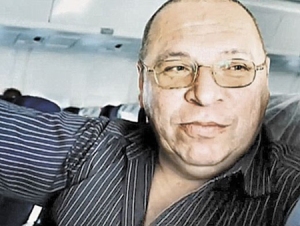
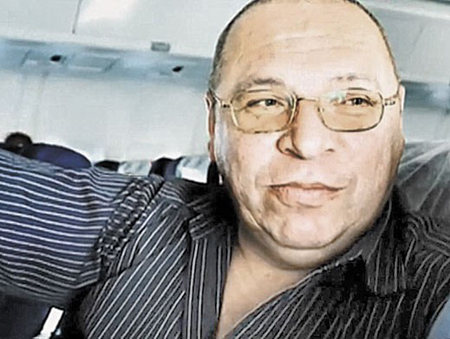
Serdyukov's Brother-in-Law Valeriy Puzikov

Serdyukov’s Brother-in-Law Valeriy Puzikov

Puzikov fled Russia in February, so we may never hear what he would say if questioned.

GVSU investigators say Serdyukov’s former deputies and his other underlings say he personally supervised work on Zhitnoye, but the GVSU’s case is still directed against “unidentified MOD officials.”  Serdyukov signed paperwork about Zhitnoye, and visited 17 times, but doesn’t recall other circumstances about the property, so he remains a witness.

On Serdyukov’s personal involvement, Kommersant writes:

“That fact is obvious because the beneficiary of the former official’s [Serdyukov’s] malfeasance was his close relative Valeriy Puzikov.”

“So it’s early to say that Anatoliy Serdyukov is no longer of interest in the military investigation. Moreover, sources close to the investigation led us to believe that evidence gathered on the case could completely influence a change in the ex-minister’s procedural status.  However, a political decision is required for this.”

For his part, Serdyukov’s lawyer says the MOD suffered no damages, and he calls the entire investigation a waste of time and resources.

The other two “Serdyukov dacha” cases weren’t mentioned in this latest round of news.

However, Rossiyskaya gazeta wrote last week about a St. Petersburg property that reportedly long interested Serdyukov — the gardener’s house on the grounds of the Tauride Palace.  Apparently, unknown persons acquired it for the MOD in 2008, then it was sold by Yevgeniya Vasilyeva’s people to a shadowy firm formed just months earlier for 384 million rubles.  There is suspicion the buyer was under Puzikov’s control.
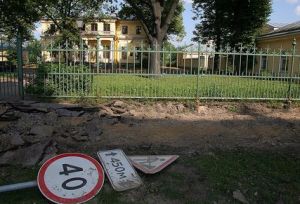
Gardener's House on Grounds of Tauride Palace (photo: Kommersant / Sergey Semenov)

Gardener’s House on Grounds of Tauride Palace (photo: Kommersant / Sergey Semenov)

Izvestiya reported that “power” ministry representatives (i.e. primarily of course the SKR) were called to the PA and ordered to stop broadcasting PR about investigations like those involving Serdyukov and Oboronservis, “which don’t have a chance of being cracked.”

The paper’s source in the PA said unwinding these scandals creates a “negative image” of the authorities in the public’s mind.  This official continued:

“While high-profile corruption cases will not be brought to court, they shouldn’t be so zealously publicized in the media.  No one has yet been punished, investigative actions go on, and the common man is already getting an impression about the impunity of criminals and powerlessness of the law enforcement organs.”

This conversation was conducted, first and foremost (but not exclusively), about Oboronservis, although not Serdyukov by name.

Another PA source said siloviki shouldn’t “air” criminal cases featuring highly-placed officials and serious damage to the nation’s budget.

Commenting on the Oboronservis scandals, MGU criminal law professor Vladimir Kommissarov describes not just criminal conspiracies but an entire “organized community” of corruption:

“There are surely forces not interested in the development of this criminal case — any criminal case of such a scale can attract other criminal cases.  It’s possible for one person to steal a million, but when we talk about dozens and hundreds of millions, then obviously not simply an organized group is at work, but an organized community.”

Izvestiya concludes that the state’s anti-corruption policy [such as it is] is based on the inevitability of punishment for offenders.  And this is what law enforcement is demanding from the PA.  Correspondingly, it should be possible to expect that all big corruption cases could end with real terms for all suspects.

But Serdyukov remains at most a suspect.  Perhaps investigators are starting to close in on him.  He didn’t really talk to them until March when confronted with property documents he had signed.

It still appears Serdyukov’s fate is controlled at the highest level.  Putin apparently told SKR chief Aleksandr Bastrykin early on that he didn’t want to send the former Defense Minister to jail.  But investigators are pressing forward.  If they change Serdyukov’s status from witness to accused, then perhaps Putin isn’t the complete master of this game.

New Deputy Defense Minister

General-Colonel Pavel Popov

General-Colonel Pavel Popov

On 7 November, President Vladimir Putin appointed General-Colonel Pavel Anatolyevich Popov to be a Deputy Minister of Defense.  Popov had been an assistant to Defense Minister Sergey Shoygu.

Popov’s the latest in a series of Ministry of Emergency Situations (MChS) generals to come to the Defense Ministry.  They all served alongside Shoygu for many years.

Popov’s page is up on Mil.ru.  But his bio is better on the MChS site.  The 56-year-old Popov was commissioned an army lieutenant in 1978.  He served in the GSFG and the Far East MD before switching to Civil Defense in 1990.  He headed a couple MChS regional centers as well as the Civil Defense Academy before becoming a deputy to Shoygu at MChS in 2008.

Popov specialized in C2 and developed the crisis command and control center at MChS, according to Izvestiya.  He’ll replace departed Dmitriy Chushkin, who had responsibility for C2 issues.

As Shoygu’s assistant, Popov was already responsible for standing up the new National Command and Control Center for State Defense (NTsUOG).

Overall, Shoygu now has two first deputies and eight deputies.

New SSBNs Won’t Serve as Multipurpose Submarines

Failed Bulava Launch on 6 September (photo: Northern Fleet Press Service)

Failed Bulava Launch on 6 September (photo: Northern Fleet Press Service)

The Russian Navy doesn’t intend to use its two newest Borey-class nuclear-powered ballistic missile submarines (SSBNs) without their Bulava missiles in a multipurpose role.  Not even temporarily.  At least according to one source.

On 1 November, a Navy Main Staff source told ITAR-TASS that operating the new SSBNs without 16 Bulava (SS-NX-30) submarine-launched ballistic missiles would be analogous to employing Tu-160 strategic bombers like fighter aircraft.

Earlier, however, RIA Novosti reported the Navy might accept the two Borey SSBNs for “experimental” use without Bulava missiles, citing a highly-placed General Staff source.

A submarine in such a status would not technically be in the order-of-battle.  Russia’s first Lada-class (proyekt 677) diesel submarine Sankt-Peterburg currently operates “experimentally” in the Northern Fleet.

The General Staff source said, without their primary armament, Borey hull 2 Aleksandr Nevskiy and hull 3 Vladimir Monomakh could serve temporarily as multipurpose submarines. Their crews could fulfill non-strategic combat training missions until problems with Bulava are resolved.

Both new SSBNs were ready for fleet acceptance before the end of 2013.  Vladimir Monomakh just completed sea trials in early October.

On 6 September, Defense Minister Shoygu stopped the acceptance process for both submarines after an unsuccessful Bulava test launch from Aleksandr Nevskiy. Before that failure, the missile had five consecutive successful launches in 2010-2011.

The Navy accepted the first Borey-class submarine, Yuriy Dolgorukiy, in early 2013.

Air Forces Half Out-of-Order

"OAK-Service" Initial Corporate Structure (photo: Kommersant)

“OAK-Servis” Initial Corporate Structure (photo: Kommersant)

Kommersant’s Ivan Safronov and Yelena Kiseleva wrote Monday (28 October) on the status of devolving Oboronservis’ Aviaremont into a subsidiary of the United Aircraft Corporation (OAK).  In the process, they indicated less than half of Russia’s combat airplanes are serviceable.

Aviaremont enterprises will become OAK-Servis subholdings.  The factories will repair aircraft for the Defense Ministry, and for other power ministries and agencies.  OAK and the MOD already have an 84-billion-ruble contract for repairs in place.  Meanwhile, Aviaremont owes the MOD 115 billion, which OAK has promised to make good.

OAK-Servis is supposed to provide life-cycle support for MOD (mainly VVS) airplanes.  And it will “correct an unfavorable situation in the condition of the current inventory of the Air Forces, which still aren’t guaranteeing the necessary level of technical combat readiness,” Kommersant writes.

OAK-Servis will establish service centers and 24-7 mobile repair teams, then, in 2015-2018, modernize capital equipment in its repair plants.  It will also grapple with a problem it can’t solve in the short-term, “the cessation of industrial output of components and systems used in the repair of old aircraft models and the rising price of spares and parts.”

But OAK believes it can ensure a profit for plants that once belonged to Aviaremont.  Ruslan Pukhov tells Kommersant less money in the next GPV means less procurement and more repairs and modernization after 2020.

Now for the interesting part . . .

In a sidebar, the authors describe the parlous state of technical readiness in the Air Forces.

All VVS units are supposed to be in “permanent readiness,” with not less than 80 percent of the airplanes in their established composition in a serviceable state.

But Safronov and Kiseleva report only 42 percent of VVS airplanes overall, and 49 percent of its combat airplanes, are serviceable.

The most serious situation with fitness for flying is found in Tu-160 and Tu-22 [Tu-22M3] bombers, the MiG-29 and MiG-25, An-22 transports, L-39 trainers, and others for which serviceability hovers around 20-25 percent.

In 2013, the VVS had 696 airplanes in need of repair, but as (or if) new ones reach the inventory toward 2020, the number in need of repair will reportedly decline to just 49.

The sidebar says, along with repairing MVD, FSB, and MChS platforms, OAK repair plants will also have to maintain and overhaul exported airplanes.

Recall for a moment the MOD’s Action Plan to 2020 . . . the section on equipping the armed forces indicated year-end VVS aircraft serviceability rates will be 55 percent in 2013, 75 percent in 2014, and 80 percent in 2015.

These numbers require pretty fast improvement.

766,055

That number — 766,055 — is how many officers and soldiers Russia’s Audit Chamber says were paid to serve in the armed forces on 1 January 2013, according to RIA Novosti.

This confirms what’s been said by various military commentators over the past year or so.  Several said about 750,000 or below 800,000.

The Audit Chamber is a quasi-independent and pretty reliable source, something akin to America’s GAO.

Walk this back . . . take 766,055 and subtract 220,000 officers, 186,000 contractees reported at the beginning of 2013, spring 2013 and fall 2012 draft contingents of 153,200 and 140,140, and you are left with 66,715.

That leftover number roughly corresponds to cadets in VVUZy.

Undermanning — below the statutory authorization of one million — has been confirmed officially.

This is the truest, most accurate manpower baseline we’re likely to see.

Lobby for PVO Strany

Military reorganizations never stop, they just continue at a barely perceptible pace.

Organizational changes start with a campaign for a realignment.  The campaign to form Aerospace Defense Troops (VVKO) started five or six years before they officially stood up on 1 December 2011.

A new campaign is beginning.  Some are arguing VVKO didn’t get everything they need.

Four KPRF Duma deputies who are members of the legislature’s Defense Committee propose upgrading the VVKO from a branch (род) to a service (вид).  That’s symbolic, but not most significant.

More importantly, they say VVKO should control all ground-based air defense assets currently operated by the Air Forces and commanders of Russia’s four military districts (MDs).

Izvestiya reported the story.

Changes the KPRF deputies envisage would almost turn today’s VVKO into a new Soviet PVO Strany — National Air Defense (sans interceptor aircraft) as it existed between 1954 and the 1980s.  Troop PVO (Ground Troops) and Navy PVO would remain separate.

The KPRF deputies argue the vast majority of PVO assets need to be under a unified command to provide effective air defense for Russia.

Vyacheslav Tetekin, former conscript SA-5 operator and Africa expert, said:

“In military affairs the most dangerous thing is when there is no responsibility:  there is no one to make decisions, and no one to bear responsibility.  Until the time when all PVO and VKO resources are transferred into an independent command, we can’t be sure our country is defended against strikes from space and from the air.”

His colleague Aleksandr Tarnayev, former communications officer and KGB military counterintelligence operative, suggested, rather absurdly, that none of this means big changes, just resubordinating units, and replacing emblems on gates.  Units don’t even have to move, unless they need to redeploy to main strike threat axes.

But it is certainly a big change for air defense units that have reported to MDs for the last couple years, or to the Air Forces for an even longer time.

Taking strategic- and operational-level air defense from MD commanders would reduce their capabilities as unified, combined arms warfighters in regional and local conflicts.

Military expert Viktor Murakhovskiy told Izvestiya the idea of VVKO as a service has been discussed before, and the change would cost trillions of rubles:

“This is the idea of creating a unified air defense system for the country like in Soviet times.  For this we would need to combine all VKO brigades and SAM brigades under a single command.  But we would need to understand that to create a seamless defensive field over the country’s entire territory requires a huge amount of money, and the question arises, are these outlays so necessary or is it better to direct them in a different course.”

Murakhovskiy begs a couple good questions.  Is there an existential national air defense threat that justifies taking funds from other pressing military needs?  Is a U.S. (and NATO?) strategic air operation against Russia possible or probable?

VPK editor-in-chief Mikhail Khodarenok told the paper he believes VVKO needs interceptors and there’s not enough money now to create such a full-fledged service:

“In the Soviet system of PVO, for interceptors alone there were 70 regiments — almost 3 thousand aircraft.  But if we divide current aircraft between the Air Forces and PVO, we get two absurd services.  In the future such a division is justified because the Air Forces’ mission is supporting troops, and PVO’s mission is protecting the country’s important administrative and industrial centers from air strikes.  But this is the future in 20-30 years.”

A Duma hearing on VVKO scheduled for 6 November won’t have much affect on the military’s structure.  But this is how major reorganizations have started in the past.  Just don’t look for results soon.