Realities of Rearmament

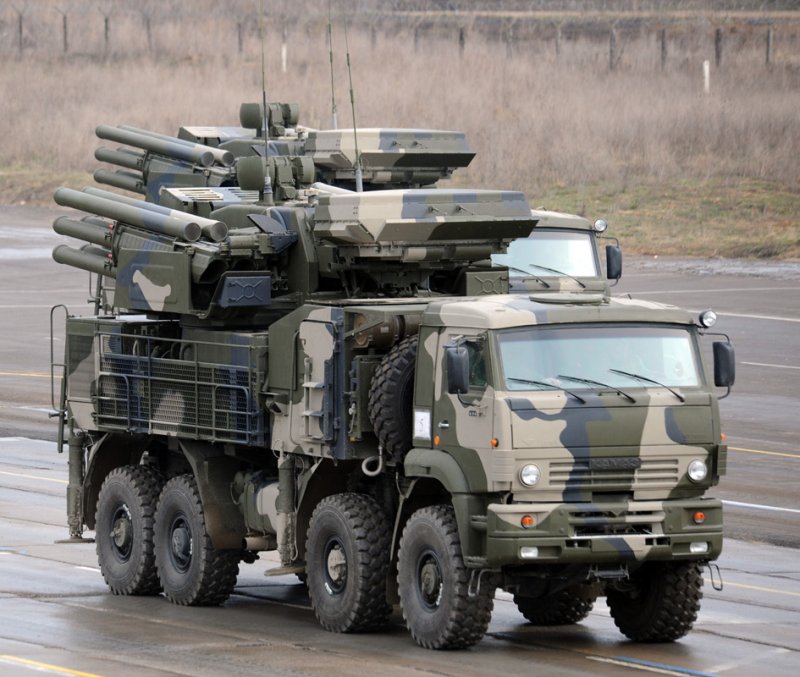
Pantsir-S (photo: Topwar.ru)

RIA Novosti yesterday quoted a VVKO spokesman who indicated a second battery of Pantsir-S anti-aircraft gun-missile systems will go into service this fall around Moscow.  For the record, he stated:

“At present, alongside an A-150 missile defense [PRO] division, two    S-400 anti-aircraft missile regiments in two-battalion configurations, deployed in Elektrostal and Dmitrov, provide Moscow with anti-air and anti-missile defense.  One of them already has a ‘Pantsir-S’ battery in its composition, in September-October, the second regiment will also receive the same battery complement.”

The spokesman added that, in August, the new Pantsir-S battery, along with its  S-400 regiment at Dmitrov, will be in Ashuluk to perform ‘test’ live firings against low-altitude targets.

Novosti has some video of the Pantsir as does a background piece by Arms-Expo.ru.

Let’s add things up as best we can.

First Deputy Defense Minister Sukhorukov has said the army will get 28 Pantsir-S systems in 2012.  The VVS CINC said there would be two more S-400 regiments (for a total of four) before the end of 2011.  But, there are, as the VVKO spokesman says, still only two.  The CINC also said the next six Pantsir-S systems would be for the Moscow area.  The first four went to Novorossiysk.

Recall there was some question whether ten delivered in 2010 were for Russian forces or some foreign customer.  Have we somehow lost track of six of those ten?

Now all these numbers are pretty low when there’s talk that 200, 600, or possibly (incredibly?!) as many as 1,000 Pantsir-S might really be required.

The case of the Pantsir-S is a good example of how, for all the worry about a massive Russian rearmament program, this rearming has been pretty slow thus far.

Putin, Aircraft, and the OPK

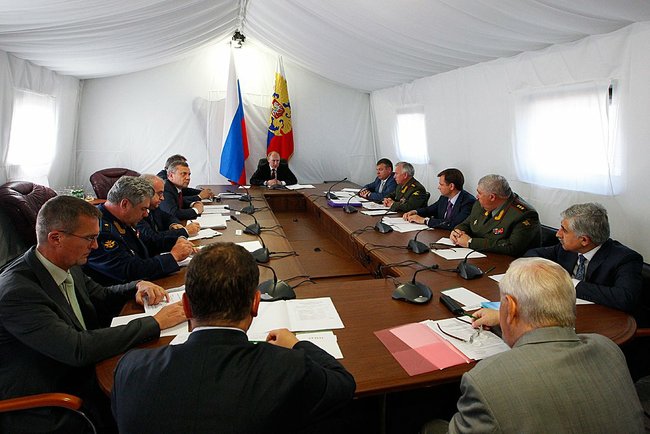
President Vladimir Putin met Thursday with Defense Ministry and aviation industry leaders to discuss military aircraft production.   Kremlin.ru covered his introductory remarks to the assembled group at the 393rd Air Base in Krasnodar Kray.
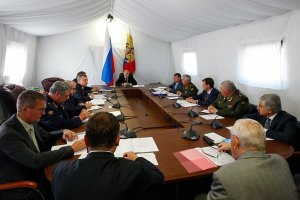
Putin Addresses the Meeting

Putin touched on PAK DA, UAVs, and damping down industry expectations of funding above and beyond GPV-2020.  To the OPK reps present, the president again stressed timely deliveries of high-quality equipment at reasonable prices.  He took a pretty hard line with the industry, saying it agreed with the GPV last year and there won’t be more than the 19 trillion rubles promised to buy arms and equipment for the Armed Forces.  It seemed odd he didn’t dwell at all on PAK FA development, or Su-34 or transport aircraft procurement.

Putin began by noting that most in attendance were at last year’s meeting on the OPK’s readiness to fulfill the Gosoboronzakaz.  He mentioned aviation’s “decisive role” in modern operations, and once again said that the military (in this case, the Air Forces) have to be prepared to complete missions beyond Russian Federation borders to fulfill Moscow’s alliance obligations.

Putin said the VVS will receive 4 trillion rubles, almost a quarter of the GPV money, for their rearmament by 2020.

He acknowledged that developing PAK DA would not be easy, but:

“If we don’t start promptly, I have the time frames for completing separate elements of this program in mind, we could miss the chance, because it’s impossible to extend the service life periods of existing equipment forever.”

He noted that essential modernization of Tu-160 and Tu-95MS strategic bombers has taken place, and a new ALCM is entering the inventory.

Putin next discussed UAVs and their growing role in combat operations.  He said Russia must develop them, and he plans to spend 400 billion rubles on pilotless aircraft by 2020.

On that pesky issue of buying drone technology abroad, Putin said pretty definitively:

“I turn your attention to the fact that it’s necessary and possible to use the groundwork of our foreign partners, but having this in mind, you well know:  no one will give us the most advanced things, the cutting edge.  We have to do it by ourselves, we need to use what we have at our disposal, and it’s necessary to use what was developed abroad, but we also have to make new advances ourselves.”

The president claimed 30 squadrons have already received new aircraft, and he repeated the familiar goal of providing the VVS 70 percent new equipment by 2020, including 600 new airplanes and 1,000 helicopters.

He mentioned work on Russia’s military airfield network.  During the last four years, four new airfields were built and 28 were reportedly modernized.  Work to the tune of 40 billion rubles is planned for nine more over the coming four years.

Putin took pains to emphasize that “everything” was agreed with the OPK last year.  The government will “support” enterprises and design bureaus as they modernize factories and facilities.  But, he again said, the demands will be severe.  Defense orders must be fulfilled fully, on time, with high quality, and at economically justified prices.  As earlier agreed with the Defense Ministry, profitability will be 15, 18, or even 20 percent.  And the military is supposedly paying Gosoboronzakaz contracts 100 percent in advance, he added.

Putin was particularly emphatic on his next point:

“There won’t be other money, greater than the amount allocated to 2020.  I’ve already talked about this 100 times.  At one recent conference, proposals were again heard to increase it.  We would be happy to increase it, perhaps, but there’s no money!”

He reminded participants most of them were present when Air Forces procurement plans were set, and most VVS contracts are long-term ones running out to 2015-2018.

Putin mentioned that long-term VVS procurement contracts are relying on government-guaranteed credits (i.e. not necessarily money out of this year’s budget).  Aircraft contracts for GOZ-2012 already amount to 2.5 billion rubles.

But isn’t that a very small amount?  The VVS will need to spend upwards of 450 billion a year for nine years to spend their 4 trillion, won’t they?  And 45 billion rubles for UAVs alone.  Ten billion will be spent on airfields annually through 2016. 

Defense News

Some Russian defense news from June 8, 2012 . . .

Kremlin.ru and other sites noted several designers of the prefab or modular Voronezh BMEW radar have received a 2011 State Prize for Science and Technology.  The new system can be deployed 3-4 times faster, costs four times less to operate, and requires six times fewer personnel to service than the previous generation of radars, according to press reports.  TsAMTO carried the story as well as a review of the state of Voronezh deployments.

Izvestiya reported details on a consolidation of Russia’s munitions producers.  It’s been predicted for many months.  The country’s 56 producers will be reorganized into 5 holdings, with Bazalt, Pribor, and Mashinostroitel leading three of them.  A Bazalt rep basically admits the sector’s a mess, and it’ll take several years to organize the industry.

But Bloomberg and other media reported U.S. defense firms are actually looking to Rosoboroneksport for the purchase of munitions from Russian producers.

Topwar.ru carried an Interfaks story saying Delta IV-class SSBN Novomoskovsk is nearing the end of a modernization to extend its service life to 2021.  The sub went to sea for some trials last week.  It is, by the way, the newest of the class.  Zvezdochka is also working on Verkhoturye, and both SSBNs will reportedly return to service by the end of 2012.  See this earlier-posted related item.

RIAN reported an OSK source claims the Navy will buy up to ten support ships per year starting in 2013 to rebuild Russia’s naval auxiliary fleet.

General Staff Chief Nikolay Makarov addressed the possibility of Finland joining NATO while in Helsinki.  He said this threatens Russia’s security.  But there were Western news service reports saying he said Finland’s military cooperation with NATO by itself is a threat to Moscow.  Voice of Russia covered the negative reactions of Finnish politicians as well as Russian commentators pointing out that the general’s view on another possible broadening of NATO is understandable.  VPK.name highlighted the story.

NVO interviewed new Ground Troops CINC, General-Colonel Vladimir Chirkin on his plans for army acquisition.  Chirkin said UAVs, reconnaissance systems like Strelets, Rys armored vehicles, S-300V4, Buk-M3, Tor-M2, and Verba SAMs, Iskander-M, Tornado-G (S), Msta-S, and Khrizantema-S missile and artillery systems, comms equipment, T-72B1(2), and BTR-82A will be procured out to 2015.  RIAN carried the abridged version.

Defense Policy Reset?

RF President Vladimir Putin last week held the first meeting of his third term to discuss military priorities with senior uniformed officers.

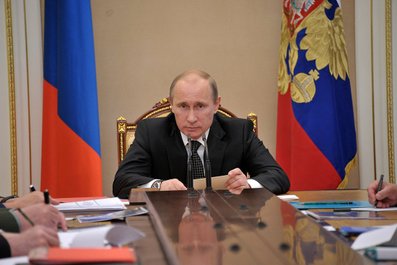
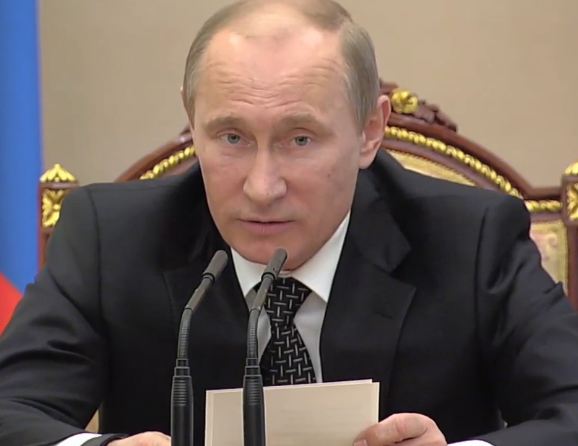
President Putin

He looked less impressive, and less in command of his brief in the video of his introductory remarks than on similar past occasions.

But he clearly laid out his main concerns for Russia’s top Armed Forces leaders:  training, Aerospace Defense Troops, rearmament, contract manning, pay, and housing.

He seemed confounded by the Defense Ministry’s failure to pay new, higher military salaries on time, and by the continuing lag in providing housing to servicemen.  He said his Control Directorate is investigating both situations.

Taking it from the top, Putin said the state of military training and exercises today is completely changed from past years when the Armed Forces were rarely active.  The president twice emphasized conducting joint exercises with Russia’s allies in the CSTO, CIS, and SCO.

His second priority is developing the newly created and reformed Aerospace Defense Troops.

His third is rearmament.  He repeated the familiar goal of replacing 30 percent of weapons and equipment with new generation systems over the next three years (2015), and 70, or in some cases 100, percent five years after that (2020).  And he added:

“I ask you to report promptly about all instances of breakdowns or incomplete deliveries, if you identify them.  Everyone participating in Gosoboronzakaz work must bear personal responsibility.”

The fourth priority is manning, and the earlier announced effort to increase professional soldiers in the ranks to 425,000.  This, he says, would increase their numbers two and a half times, reportedly from 170,000 today.  Putin made the customary comments about carefully screening and selecting enlisted troops, and giving them incentives to serve well.

Fifth and finally, Putin emphasized efforts to provide better social support for servicemen, specifically, this year’s increase raising military pay by up to three times, and his attempt to provide all military men permanent housing in 2013 and service housing by 2014.  He said:

“Sufficient resources have been allocated for this, the necessary amount has been reserved.”

“But I have to note that, to this point, there are many problems in the provision of housing and calculation of pay, unacceptable breakdowns and procrastination, open professional negligence by officials.  And even if on paper and in reports everything is normal, in fact in real life servicemen and their families at times encounter various kinds of bureaucratic procrastination, often with a formalistic indifferent approach.”

“I’ve directed the Russian Federation President’s Control Directorate to conduct a corresponding check in all these areas.  Unacceptable facts are being encountered, already in the first stages of this check this is clear:  this is both delays in the transmission of pay, and the impossibility of normally finalizing the paperwork for an apartment.  Fitting conclusions will be drawn according to the results of the check, and instructions will be formulated.  But today already I’m asking Defense Ministry representatives to report what measures are being adopted to correct the situation.  May is ending, and normal work with pay still hasn’t been smoothed out.  We already talked about these issues more than once.”

Where are outside observers left?

  • Training and exercises have increased as a function of more budget and fuel, but this didn’t happen until the late 2000s.
  • Aerospace Defense Troops are another structural reorganization, potentially a good one, not unlike other reorganizations since the 1990s.
  • Rearmament is a serious downfall.  Despite the Putin factor, nothing really happened on this score until late 2009.  It’s complicated by the difficulties of fixing a dilapidated OPK.  And, although there may be some favorable signs, success here remains to be seen.
  • Contract service is a second serious downfall.  Putin’s first effort to professionalize the army started in 2002.  The General Staff Chief declared it a dismal failure eight years later.  The Defense Minister revived it on an enlarged scale one year after that.  Demographic reality and draft problems leave Moscow no other choice.
  • Low military pay is a downfall.  It became more of a realistic priority with Serdyukov’s arrival in the Defense Ministry, but it was still five long years before the new, higher pay system was implemented.  And Putin admits how poorly it’s functioning.
  • Housing is also a downfall.  Despite progress since Putin first really addressed the issue in 2005, it’s still problematic.  And the president publicly moved back his timetable for a solution.

The downfall areas are problems requiring a long-term, sustained commitment to resolve.  Putin 2.0 is wrestling with the same military issues he identified back in 2000.  It’s still far from certain he can or will bring them to a successful conclusion.

This author believes there’s been progress on Russia’s military issues during the 12 years of Putin’s time as national leader.  But future economic or political challenges could derail progress toward rebuilding the country as a full-scope military power.

Is Putin resetting or rebooting defense policy?  Yes, at least jumpstarting it on key issues.  But a restarted or jumpstarted computer, car, or policy usually works (or doesn’t work) the same way it did before it stalled.  So this isn’t necessarily the path to a successful finish.  But no one ever said making and implementing policy was easy.

Face Recce

Last Wednesday afternoon, President Putin put his Supreme Glavk hat back on and met for a bit with uniformed military leaders on Armed Forces development, manning, training, and social support issues.

The nine-minute video of Putin’s introductory remarks provides a chance to catch up on the players.  There are, of course, many changes of late.

This photo lets us survey everyone (even if only the top of a head or partial face in some cases).

The Full Table

From the left, to Putin in the center, to the extreme right:

  • Rear-Admiral Sergey Alekminskiy, Caspian Flotilla Commander.
  • Rear-Admiral Aleksandr Fedotenkov, Black Sea Fleet Commander.
  • Rear-Admiral Sergey Avakyants, Pacific Fleet Commander.
  • General-Colonel Valeriy Gerasimov, Central Military District Commander.
  • General-Colonel Arkadiy Bakhin, Western Military District Commander.
  • General-Lieutenant Vladimir Shamanov, Airborne Troops (VDV) Commander.
  • Vice-Admiral Viktor Chirkov, Navy Commander-in-Chief.
  • General-Colonel Vladimir Chirkin, Ground Troops Commander-in-Chief.
  • Anatoliy Serdyukov, RF Defense Minister.
  • Vladimir Putin, RF President and Supreme Commander-in-Chief.
  • Army General Nikolay Makarov, General Staff Chief.
  • General-Major Viktor Bondarev, Air Forces Commander-in-Chief.
  • General-Lieutenant Sergey Karakayev, Strategic Missile Troops (RVSN) Commander.
  • General-Lieutenant Oleg Ostapenko, Aerospace Defense Troops Commander.
  • General-Colonel Aleksandr Galkin, Southern Military District Commander.
  • General-Lieutenant Anatoliy Sidorov, Eastern Military District First Deputy Commander.
  • Vice-Admiral Vladimir Korolev, Northern Fleet Commander.
  • Vice-Admiral Viktor Kravchuk, Deputy Baltic Fleet Commander.

Here are a few more looks at the table . . .

Makarov, Bondarev, Karakayev, and Ostapenko

Galkin and Sidorov

Korolev and Kravchuk

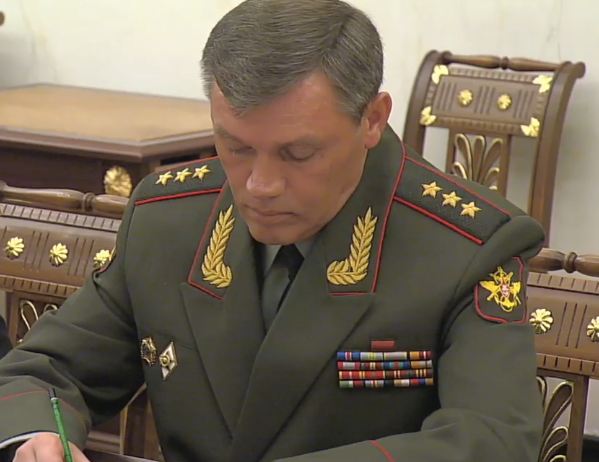
Gerasimov

Putin Recognizes Shamanov’s Promotion to General-Colonel

Not a New Face

In some sense, maybe it is a new face, or at least a reworked one.

We can’t leave this visite de visages (?!) without observations.

The Navy’s top ranks have been cleared.  Its new leaders are pretty junior.  With Chirkov moving up to CINC, Kravchuk is probably acting and set to become Baltic Fleet Commander.

The same thing might be said about the Air Forces with one-star Bondarev in charge.  He should be promoted quickly.  Recall he took a pretty hard line against Igor Sulim.

Gerasimov took over for Chirkin when he became Ground Troops CINC.

While other commanders have been held down in ranks, the MD commanders have crept up to three-stars.

Karakayev’s got to wonder when he’ll get his third.  Ostapenko probably knows Karakayev will get another before he does.

Sidorov is apparently filling in for Eastern MD Commander, Admiral Konstantin Sidenko at this session.

Not a Fish, But a Crawdad (Part II)

Topwar’s summation of the Kommersant story on Defense Minister Serdyukov’s retention brought many comments in its forum.  They came mainly from conservative critics of Serdyukov and President Putin.

It’s a tough slog for anyone suggesting Serdyukov has done things that were overdue and necessary.  Anatoliy Eduardovich is roundly criticized for destroying what existed, and not putting anything better in its place.  Worse, some call him a traitor serving “Western interests.”

S_mirnov writes only a real idiot, or one who values an apartment more than his country, could believe Serdyukov is the best man to guarantee officers housing.  To him, the reappointment of Serdyukov is akin to giving the Titanic’s captain a new ship and having him sail to the same destination with surviving passengers.

Sinandju concludes not sending Serdyukov into retirement is just another sign of what Putin’s oligarchic-bureaucratic government is all about.

Redpartyzan alleges there were more questions about Serdyukov’s performance in office than ministers who were not reappointed.

BigLexey says Serdyukov’s been kept around to be a scapegoat for the army’s problems at an appropriate time, so the president and prime minister won’t be blamed.

Kadet787 from Belarus shares a poem about Russia appointing as Defense Minister not a wolf or bear, but an ass who sells military property for half what its worth.

To Topwar’s suggestion that time might tell about Serdyukov’s continuing tenure, Older replies all of Taburetkin’s wonders have been seen and Putin and Medvedev have behaved strangely.

Then Teves from Germany asserts Serdyukov remains because he did what Putin wanted despite the illusions of “superpatriots.”

Borisst64 analyzes the situation like this:

“The aim of Serdyukov’s appointment was clear from the start – destroying the structure of the country’s VS [Armed Forces], if they leave him, it means severe decisions (cuts, relocations, etc.) will still be implemented. The logic is understandable, the people’s attitude toward Serdyukov is negative, still they are patient, and we’ll appoint a new one [Defense Minister] when everything is perfect and nothing threatens the [new Armed Forces] image.”

Olegych picks up the defense of the Defense Minister:

“Serdyukov is a normal, honest Defense Minister, cleaning up all the bullsh** accumulated for decades.  Dedovshchina, thievery, ruined bases and military units, the lack of arms and POL supplies, the absence of housing – that’s what was, and what would be left.  And if you poured trillions of rubles into the sad MO [Defense Ministry] structure that existed before him, the result would be poor.  In the context given, Serdyukov is not a fighter, but a finance officer, a controller of resources, of tightly planned and justified expenditures.  And here’s the entire answer to why he remains at his post.  He remains at his post because there are real and tangible results from his leadership:  housing acquired, new armaments introduced, increased pay, an increase in exercises and flights, the destruction of millions of tons of old and dangerous ammunition, untangling the flywheel of the Gosoboronzakaz.  Cutting the number of servicemen and training institutions is an essential and necessary step, because there are no resources to maintain them.”

For a bit, the discussion devolves to Putin, whether “the Tsar is good and the boyars bad,” and whether it’s OK to insult the president.  And, more interestingly, whether Putin will eventually lose support and give rise to more “bolotniki.”

There’s a final counter to Olegych when Drugar says:

“Why Serdyukov is again Defense Minister is obvious.  The only thing not understood is what servicemen and the army / fleet as a whole are waiting for.  Generally, judging by recent events, the army is turning into a commercial enterprise, this transformation of everything and all to a civilian basis has allowed turning the servicing of army structures into a fantastically profitable and absolutely unpunishable business!  It’s possible to steal billions, imagine how much it costs to feed, clothe soldiers, repair equipment, supply spare parts, build-repair, and the like.  But, if someone will say it, report, Mr. Serdyukov – a MILITARY SECRET, gentlemen, a military secret . . .  This is the finale, the culmination of the Putinist corruption scheme!  So in Russia they still never steal . . .  People have become mute and blind from propaganda and zombification, have lost the ability to think (!), they are accustomed to softened up facts from the state’s zombie box [television].  Pronouncing ‘that yes they’re all d*cks there in the end,’ every one will stay home and continue hoping Putin will steal, steal, but remember about the people . . .  In vain.”

No absolute answer why Serdyukov remains, but some interesting and reasonably educated opinions.

Not a Fish, But a Crawdad (Part I)

It’s nice when you send yourself on a sabbatical.  But it’s terrible when your first post of the month doesn’t come until the 24th.  Seriously, this author should be flogged for neglecting the reader.  And he isn’t exactly prepared to dive back into frenetic posting either.  Only to hang more text out here now and again.

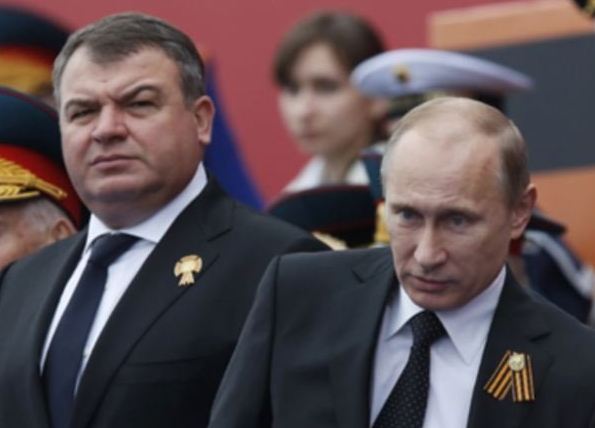
Serdyukov with Putin (photo: AFP)

This topic and title were stolen from Topwar.ru.  The site picked up on Kommersant’s examination of why Anatoliy Serdyukov was one of only five ministers to retain his post in the first Putin 2.0 government.

Kommersant claims Serdyukov came somewhat close to being retired in December when, at then-Prime Minister Putin’s behest, FSB Director Bortnikov searched out potential replacements.  Bortnikov looked at Rostekh’s Chemezov, Roskosmos’ Popovkin, and Deputy PM and OPK steward Rogozin.  The former pair convinced Putin of the “inexpedience” of making either of them Defense Minister in Serdyukov’s place.  Rogozin reportedly was willing, but, of course, already had a higher-ranking post.

Kommersant’s Ivan Safronov cited Aleksandr Kanshin and a Defense Ministry apparat source to the effect that Putin decided it’d be better to have Serdyukov see the military reform process through to its conclusion.

For its part, Topwar.ru also attributes Serdyukov’s “unsinkability” to a desire to avoid changing leadership in the midst of reform.  It also writes that Anatoliy Eduardovich turned out to be, at least in some ways, the best available and most willing candidate.  Topwar sums Serdyukov’s position up with this adage:

“When there aren’t any fish, even a crawdad is a fish.”

But Anatoliy Rak isn’t likely to replace Taburetkin as a nickname for the Defense Minister.

The most interesting part of Topwar’s account, however, may be the large number of commentaries, which we’ll look at in part II of this post.

Defense News

Some Russian defense news from Tuesday, April 24 . . .

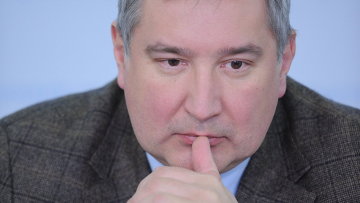
Dmitriy Rogozin (photo: RIA Novosti / Aleksey Druzhinin)

Deputy Prime Minister Dmitriy Rogozin generated a good bit of news during his visit to the Urals last week.  It’s hard to keep up with him.  In a sense, it’d be a real shame if he’s not in the next government.

Krasnaya zvezda published a wrap of his remarks.

Rogozin indicated Russia will demand the best new weapons from its OPK, not “metal hulks” that are soon scrapped.  He laid out his reasons for not buying foreign armaments.  And, he says, Russia doesn’t want to be China, blindly copying foreign models.  But he said his country still wants ideas and technology, if not a lot of hardware, from abroad.

Rogozin blames Russia’s space launch woes of the weakness of its “element” or component base.

RIA Novosti reported his assessment that Russian military electronics lag foreign developments by 5-12 years.  Russia doubled its investment in electronics last year according to Rogozin.

But back to KZ . . . it gave this interesting Rogozin quote:

“Russia must no longer be a hydrocarbon partner, it’s time for us to become an industrial power [hasn’t this time passed?].  We could have become such a power in the last century.  Now it’s important to overcome the gap in Russia’s history.  If business won’t participate in the country’s development, then we won’t achieve anything.”

In some non-Rogozin stories . . .

Militaryparitet.com cited a blog citing Interfaks to the effect that Kurganmashzavod will not be asked to renew production of BMP-3s for the army despite earlier indications it would.  The item notes the President’s polpred in the Urals saying the army has also declined to buy the BMD-4M.

Mil.ru wrote about Ka-52 helo training at Chernigovka army air base in Primorskiy Kray.  More than half the base’s pilots already practiced on the Ka-52 at the Torzhok training center.  Chernigovka will be completely reequipped with the new helo this year, according to the Defense Ministry website.  The “intensity” of flight exercises at the base doubled over the last year and increased 45 percent in the first three months of 2012.

Mil.ru also mentioned the completion of LRA training in the Far East.  There were 40 bomber flights and ten cruise missile launches on the Litovka range according to the Defense Ministry.

Vzglyad citing Interfaks reported on Irkut’s president saying the company will make a combat version of the Yak-130 trainer.  It will have greater thrust and be intended for Russia and for export.

Last, an update on the Belevitin corruption case.  Former GVMU chief, Aleksandr Belevitin faces malfeasance and bribery charges that could net him a total of 22 years in prison.  Pretty harsh by Russian standards.  The state is also seeking 51 million rubles in damages from him.  His defense is still examining the prosecutor’s case against him.  Recall the state believes he and his deputy took bribes in return for procuring overpriced MRI machines from a foreign firm.

Defense News

Some Russian defense news for April 19-20, 2012 . . .

Krasnaya zvezda covered First Deputy Defense Minister Aleksandr Sukhorukov’s briefing on the progress of GOZ-2012.  He said contracting is at 77 percent, ahead of the last two years (50 and 47 percent).  The Defense Ministry’s GOZ funding was trimmed by 25 billion rubles, from a planned 704 to 677 billion (isn’t that 27 billion?).  GOZ money will be advanced in full, and 53 percent of contracts will be “long term,” according to Sukhorukov.

Sukhorukov's Press Conference

Sukhorukov told the media this year the Armed Forces will receive 28 Pantsir-S1, 58 aircraft, and 124 helicopters.  He discussed supplemental contracts for Mi-35, Mi-28N, and Mi-8MTSh helicopters.  The total GPV purchase of helicopters will apparently be 1,124.

ITAR-TASS reported Borey-class SSBN Yuriy Dolgorukiy will be accepted not later than mid-June.  Unit 2 Aleksandr Nevskiy will be accepted in August according to Sukhorukov.

This item also indicated Borey contracting for this year was almost done, and that units 4-8 will have 20 launch tubes.

Sukhorukov had no other specifics on defense procurement this year.

In its coverage of the press-conference, Arms-Expo.ru asked if GOZ-2012 isn’t broken already, at least in the munitions sector.

Meanwhile, in other OPK-related news . . .

Topwar.ru writes that small arms maker Izhmash’s bankruptcy is “going according to plan.”  Rostekhnologii’s plan, that is.

VPK.name reported the chairman of Ukrainian engine manufacturer Motor Sich’s board claims Russia will sign a contract for its first An-70 transport this year.  The GPV may include up to 60 of these aircraft.

Defense News

Some Russian defense news from April 17-18, 2012 . . .

Militaryparitet.com provided a link to an interesting Livejournal site.  The latter’s apparently been scouring government tender offers, and located one worth 600 million rubles for work to upgrade Votkinsk for Yars ICBM production.

According to RIA Novosti, a Rosoboroneksport official says talks with China about selling the Su-35 are frozen because the PRC wants to buy only a limited number of the new fighters.

Interesting that France, Italy, etc. don’t use the same logic when Moscow talks about purchasing samples.

Vzglyad.ru covered the release of SIPRI’s global military expenditure report for 2011.  The U.S. spent 41 percent of the world’s total, China 8, Russia 4.

Deputy Defense Minister Nikolay Pankov talked to the Federation Council about military housing.  He told Senators 60,000 permanent and service apartments were ready to be occupied at the beginning of this year.  See TV Zvezda coverage.

At least for the camera, Pankov didn’t offer an explanation why such a large number were waiting to be occupied.

22nd Army Commander, General-Major Sergey Yudin’s traded his command for a staff job.  He’s now the Chief, OMU for the Western MD.  See Mil.ru.