Tag Archives: Borey

Failure to Launch

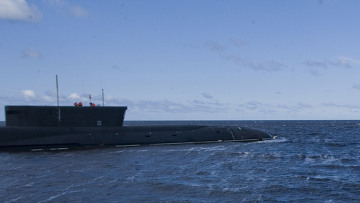
SSBN Yuriy Dolgorukiy (photo: RIA Novosti / Sergey Guneyev)

Not the same as a failed launch, of course . . .

Interfaks reports proyekt 955 Borey-class SSBN Yuriy Dolgorukiy cancelled a Bulava test launch on Saturday.  According to Sevmash, the power supply to one of Dolgorukiy’s systems malfunctioned.  The submarine returned to the factory to investigate.  The Interfaks source said the state commission supervising Bulava testing indicated the launch would be put off until late this week.

The source emphasized there aren’t issues with the Bulava, which was fully ready for launch.  Interfaks recalled the 15th launch scheduled for last December was delayed until June because Dolgorukiy wasn’t ready, although the official reason was White Sea icing.  The June launch from the submerged Dolgorukiy was successful.

In Moskovskiy komsomolets, Olga Bozhyeva’s source says the problem was a sensor in a system needed to prepare the missile for launch.  They postponed until later Saturday, but, when they couldn’t fix it, the SSBN returned to port Sunday morning.  The source says the state commission will probably delay the next launch attempt until September.

RIA Novosti provided a more official spin on the cancelled test.  It emphasized there was no unsuccessful launch.  The news agency’s state commission source stressed that, when submarines go to sea for system testing, the commission makes its decisions based on many factors and conditions.  And the source stated the Bulava flight test program will be completed in the established time frame.

Bulava Plans

Plans for Bulava SLBM testing may be shifting.  When last we checked, Navy CINC Vysotskiy said look for four more tests with a salvo launch this year or next, but an OPK source said expect a salvo test in late August or fall.  The latter sounds more like what we are reading today.  In sum, it seems someone’s in a hurry to give Bulava final approval.

This morning ITAR-TASS reported Borey-class SSBN Yuriy Dolgorukiy will conduct a maximum of two Bulava SLBM test launches, including a salvo launch, before the end of this year.  The news agency’s interlocutor said:

“It’s still planned to conduct the next, the 16th, flight test of one missile in the last ten days of August, and then – in fall or even in December – a salvo launch of two ‘Bulava’ missiles.  But another possibility isn’t ruled out – conducting a salvo launch of two missiles right off in August, omitting a single missile test.  Next week it will be known which possibility was finally selected.”   

The state commission told ITAR-TASS:

“Whatever the testing variant, in the event of a successful ‘Bulava’ salvo launch, a decision on accepting this missile system into our Navy’s arsenal will follow.”

ITAR-TASS also reported Borey number two Aleksandr Nevskiy has begun factory testing, and number three Vladimir Monomakh is 50 percent complete.

Severodvinsk Trials and GOZ Tribulations

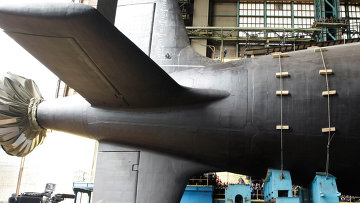
Severodvinsk (photo: RIA Novosti / Vladimir Rodionov)

Your typical good news, bad news story . . . happily for the Russian Navy, the Severodvinsk is nearing its first at-sea testing, but the new submarine has also been held up as a prime example of outrageous price increases in this year’s state defense order.  Final delivery of this SSN, as well as the first two Borey-class SSBNs, represents a big part of troubled GOZ-2011.

RIA Novosti reports new fourth generation Yasen-class (proyekt 885) SSN Severodvinsk will soon head into the White Sea for two months of underway testing, according to Malakhit Design Bureau General Director Vladimir Pyalov.  He added that, after this at-sea period, the final phase of state testing will take place.  

A very precise Mr. Pyalov says Severodvinsk is currently 98.9 percent complete.  He thinks the Navy will accept the new boat before year’s end and, in all, six of these multipurpose submarines will be built.  The second proyekt 885 Kazan is slated for delivery in 2015. 

RIA Novosti says proyekt 885 is a double-hulled, single-shaft boat with a reduced acoustic signature.  The conning tower has a streamlined, oval shape.  The boat is divided into ten compartments. 

For the first time, according to RIA Novosti, Russian designers put the submarine’s torpedo tubes amidships to allow for a new bow-mounted sonar system.  Proyekt 885 has eight vertical launch tubes for supersonic cruise missiles.  It has new communications and navigation systems as well as a fundamentally new nuclear power plant, according to the news agency’s report.  The new submarine is said to be first in noise reduction and stealth among attack submarines worldwide.

But the Severodvinsk couldn’t evade detection in the furor over breakdowns in the state defense order.

Earlier this month, RIA Novosti reported on disputes between the United Shipbuilding Corporation (OSK), submarine-builder Sevmash, and the Defense Ministry over naval construction in this year’s GOZ.  In particular, the military accuses the builder of doubling its prices for proyekt 955 Yuriy Dolgorukiy and proyekt 885 Severodvinsk.

An OSK spokesman defended Sevmash saying the cost of its work on Severodvinsk is only 30 percent of the total price, with the balance being the cost of armaments and components supplied by several dozen enterprises.  He blamed inflation in the industrial sector and the economy more generally.

Summarizing his discussion of submarines with OSK, RIA Novosti reports, Defense Minister Serdyukov said:

“They are giving us an increase in prices on new orders, and, naturally, we don’t agree with this.”

But, he added he’s convinced the Defense Ministry will persuade the producer to lower its prices.

Izvestiya mentioned that Severodvinsk was originally intended for a production run of 30 submarines, now reduced to six more than 20 years later.  As recently as March, the Navy still publicly hoped for ten.

Serdyukov told the paper:

“. . . it’s incomprehensible what the price of the ship [sic] consists of, if the cost of the lead boat was 47 billion rubles ($1.7 billion), but the next, exactly the same is now 112 billion ($4 billion).”

“Of course, the price will grow if, in the cost of one ship [sic], they include all accompanying expenditures on other enterprise projects in no way connected with it, like maintaining kindergartens, infrastructure, etc.”

“We’re prepared to pay, but on the condition that the price formation process will be transparent.  As practice shows, if all articles in the contracts are “decoded,” then it seems it’s possible with confidence to deduct up to 30% from the final cost of a finished product.”

These must be bitter words for an enterprise that went many, many years without completing its trademark product — a nuclear-powered submarine.

A Sevmash source says the cost of submarine construction is directly related to higher prices for materials, energy, and integration:

“The entire range of equipment for a submarine is supplied by monopolistic companies trying to dictate their prices.”

Bulava Launch Window

An OPK source told RIA Novosti yesterday a state commission on experimental flight testing has identified June 28-30 as the window for this year’s first Bulava SLBM test.  The commission will select a precise date within the next two days.  The source says Borey-class SSBN Yuriy Dolgorukiy will be the platform for the launch.

Dolgorukiy Returns to Sea

This morning ITAR-TASS reports that fourth generation Borey-class SSBN Yuriy Dolgorukiy is at sea for testing.  This is the boat’s first underway period of 2011. 

At the close of last year’s Arctic navigation season, Dolgorukiy returned to the hall at Sevmash, where it was prepared for the concluding phases of its state underway testing.  Sevmash says the submarine should be officially handed over to the Navy within the next few months.

Recall the Russian press reports that modified Typhoon SSBN Dmitriy Donskoy will be the launch platform for this year’s first Bulava SLBM test.

Yuriy Dolgorukiy Headed for Pacific Fleet

In Vladivostok yesterday, Defense Minister Anatoliy Serdyukov made the surprising announcement that the first Borey-class SSBN, Yuriy Dolgorukiy, will deploy to Russia’s Pacific Fleet, once it becomes operational with its complement of Bulava SLBMs. 

To be precise, Serdyukov said:

“The first Borey will enter the TOF [Pacific Ocean Fleet].  This is how it is in our plans.  . . . new barracks are already built for crews of new submarines.  Since 2007, we’ve been taking down old barracks and building new ones, renovating the social infrastructure 100 percent.”

Serdyukov made the comments while inspecting new construction in Vilyuchinsk for Pacific Fleet contractees.

Basing the first Borey away from where it was built, and away from Russia’s Northern Fleet, is a sharp break from the Soviet / Russian Navy tradition of keeping the first units of new classes — especially SSBNs — close to their point of origin at Sevmash.  A Pacific Fleet deployment could complicate service and support not only for Yuriy Dolgorukiy, but for its new missile system as well, and make this more costly too. 

The Defense Ministry seems to have decided it needs to retain a two-fleet naval strategic nuclear deterrent.  And putting the first Borey there seems essential given that the Pacific Fleet has only a handful of 30-year-old Delta III-class SSBNs at this point.  This decision may also reflect what’s been presented several times as an increased Russian military focus on the Asia-Pacific region.

Dolgorukiy, Bulava, Severodvinsk

Submarine-related news notes . . .

Russian press services have announced that the state commission on the Bulava has finished analyzing the results of the last two launches.  The next test will be in the second half of December, and the exact date will depend on White Sea weather conditions.

It’s pretty, but not absolutely, certain that new Borey-class SSBN Yuriy Dolgorukiy will be the launch platform.  The final decision on this will be made in the first ten days of December.  One supposes another shot from Dmitriy Donskoy remains a remote possibility.

If the pending launch is a success, the next phase of testing will begin in May 2011.

Regarding fourth generation (proyekt 885, Yasen) SSN Severodvinsk, the boat is still fitting out, and the Navy expects it to join the fleet in 2011.  Like DolgorukiySeverodvinsk was under construction for many years.  ITAR-TASS said this morning 6 of these submarines are now planned.

Short Takes

A Navy Main Staff source has told Interfaks that Borey-class SSBN Yuriy Dolgorukiy will launch its first Bulava SLBM on 17 December.

The RVSN has decided to implement testing for narcotics use among its personnel, according to ITAR-TASS.  It will begin next year.  The RVSN spokesman provided no explanation why his branch will institute drug testing. 

RIA Novosti reports Russia will have contract reservists from 2016.  GOMU Chief Vasiliy Smirnov tells the wire service conscripts will be asked if they want to stay in the reserves for pay.  Russia’s requirement for reserves should be lower in the future given the recent shift to smaller, higher readiness forces and away from cadre units that would need fleshing out with mobilized reservists.  This story’s been around for a while.  It’s not clear how much reservists would be paid, or what their commitment would be.  It hasn’t been easy for military commissariats to mobilize reservists even for infrequent exercises and training assemblies in the past.

Lenta.ua is reporting a Defense Aerospace story that the Indians have moved acceptance of the Admiral Gorshkov (Vikramaditya) carrier off from the beginning to the end of 2012 because the ship will need more work.

RIA Novosti cites military medical sources saying VDV Commander, General-Lieutenant Shamanov may not be discharged from the hospital until after 1 January.

IA Regnum reports the Chelyabinsk governor has complained to Defense Minister Serdyukov about the resumption of explosive ammunition disposal at Chebarkul, and also about Su-24 flights over Chelyabinsk.

RIA Novosti and Lifenews.ru report that a document creating a Russian DARPA may soon be put before President Medvedev.  The agency would be independent of the Defense Ministry, but conduct ‘breakthrough research in the interests of national security.’  The idea was first raised back in September.

Another Bulava Success

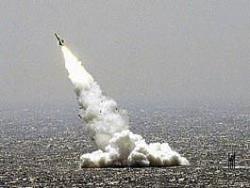
Bulava Launch (photo: ITAR-TASS)

At 0510 MSK today, Dmitriy Donskoy successfully launched the second Bulava SLBM of 2010 while submerged in the White Sea.  That makes two in a row, and 7 successes in 14 attempts overall. 

A government Military-Industrial Commission (VPK) source told ITAR-TASS the 15th test could occur in early December and will be the first from new Borey-class SSBN Yuriy Dolgorukiy.  The source attributed the successes to a tightening of control over the production and state acceptance processes.  He also warned it’s too early to relax:

“Two successful launches don’t signify that it’s possible to accept ‘Bulava’ into the arsenal.  A great deal will depend on testing in 2011.”

A member of the state commission that investigated the Bulava failures told RIA Novosti that these successes show Bulava had assembly problems.  And he said testing will continue in 2011.

RIA Novosti noted that, perhaps most significantly, this year’s Bulava tests came from a submerged boat.  In 12 tests prior to 2010, there had not been a single successful underwater launch.

Dizzy with Bulava’s Success?

Iosif Vissarionovich might have accused Bulava’s proponents of dizziness after the SLBM’s test firing on October 7.  There’s no mistaking it was a clear boost to a troubled program.  Success always trumps failure.  It may even turn out that all of Bulava’s design, production, and assembly problems are resolved.  But one would think the history and current state of the Bulava would call for more cautious, guarded optimism.  This successful test was necessary, but far from even close to sufficient to complete the program.

The biggest news story after this successful test was the report that, as a result, the Bulava SLBM and Borey-class SSBN weapons system might be accepted into the arms inventory as early as mid-2011.

A highly-placed Navy Main Staff source told Interfaks:

“Before the end of the year, another two test launches of the missile are planned, if they are as successful as today’s launch, then it’s legitimate to consider the issue of the quickest completion of tests of this strategic system.  I’m proposing that the acceptance of Bulava into the arms inventory could happen in the middle of next year.”

He follows adding that serial production of the SLBM and its deployment in proyekt 955 Borey-class SSBNs will ensue.

The Navy Main Staff source doesn’t go into exactly what ‘quickest completion’ entails, but others do.  Presumably, this means another test from Dmitriy Donskoy before the end of October and, if that’s a success, the first launch from Borey-class Yuriy Dolgorukiy before year’s end.

Vesti.ru conjectures that ‘quickest completion’ might mean a second, ‘insurance’ shot from Yuriy Dolgorukiy in early 2011, then a volley firing of two missiles in spring or early summer.  After this, if every test is a success, the weapons system would be accepted, serial production would begin, and Bulava would be deployed on Yuriy Dolgorukiy.  That’s if everything goes right.

An irrationally exuberant Defense Ministry source even told RIA Novosti:

“The successful launch of the missile gives a basis to suppose that the entire system ‘submarine plus missile’ will be accepted into the Russian Navy’s arms inventory by the end of the year or at the beginning of next.”

Former Armaments Chief Anatoliy Sitnov was pretty confident, telling Interfaks and ARMS-TASS that no specialists are expressing doubts about Bulava, and ‘broken links’ in its production process have been overcome.

Old RVSN general Viktor Yesin told Interfaks he agrees it’s possible to plan for completing Bulava testing by mid-2011.  But he retains some caution:

“The tests conducted instill hope that the two flight tests of the Bulava ballistic missile coming before the end of this year will be successful.  If this happens, it’ll be possible to confirm that the designers and producers overcame a period of failures in the creation of the new submarine-launched missile system.”

Yesin also notes that only the telemetry can say if all the Bulava’s systems were working normally.

Forum.msk’s Anatoliy Baranov is skeptical about making Bulava part of Russia’s strategic nuclear forces even if the next two tests are successful, and make the tally 8 successes in 15 attempts.  He says having a missile you want to produce doesn’t mean you can produce it quickly in the necessary quantity:

“Incidentally, no one has answered for the strategic decision which left the country practically without a naval component of strategic nuclear forces [SYaS].  Don’t believe that the resignation of MIT director Solomonov is a sufficient measure of responsibility considering the possible consequences of such a mistake, and the fact that today our naval strategic nuclear forces [MSYaS] already lag the strategic enemy by a factor of 5.  But even given the most successful confluence of circumstances, we will have a gap between old missiles and submarines going out of service and new ones coming into service because the possibilities of domestic industry in serial production of solid-fuel missiles are very limited.  The Votkinsk factory produces 5-6 solid-fuel ‘Topol-M1’ missiles, there aren’t other producers.  This means the production of new missiles of the ‘Bulava’ type puts an extra load on production which already can’t cope with the creation of new land-based missiles — see, straining the RVSN rearmament program even worse.  In the best case, the necessary complement of armaments for the 3 new ‘Borey’ class SSBNs will be produced in nearly 15 years.  This is a catastrophe.”

Andrey Ionin doesn’t agree with Sitnov above.  He told Gazeta.ru that the Defense Ministry shouldn’t be impatient:

“A state commission report on successful testing and a formal decision on accepting the system for regular use doesn’t change the fact that the problem of low quality in joint production has not been eliminated.”

Carnegie Center Moscow associate Petr Topychkanov says:

“Three successful tests in a row is not a reason to put a type into serial production.”

But, unlike Baranov, he points out that the production run for Bulava doesn’t have to be too big since there are, and will be, relatively few tubes to fill.

Pavel Felgengauer in Novaya gazeta is skeptical about how close the Bulava RVs came to their intended targets, but, more important for this discussion, he calls saying that Bulava is almost ready for deployment after this successful test a “dangerous adventure.”  He adds:

“And here is a ‘raw’ missile, not completely ready and the not tested ‘Yuriy Dolgorukiy,’ a crew which clearly hasn’t mastered its submarine — and missile launches right away.  Very bold to put it mildly.”

Viktor Baranets sums it up:

“A successful launch instills some optimism.  But it’s still a long time before accepting the missile into the arms inventory.  And of 13 launches only 6 (including yesterday’s) [October 7]  were recognized as successful.  Or ‘partially successful.’  But this is not cause to launch the missile into a serial run.  Higher ‘positive indicators’ are needed.  Our specialists and foreign ones believe the quantity of successful launches should be steadily above 90%.”