Category Archives: Command and Control

VKO Game On

Yes, it’s game on in the fight for control over Russia’s future unified aerospace (air-space) defense or VKO.

General Staff Chief Nikolay Makarov’s recent statements sound like he’s hard over on putting VKO under the General Staff’s immediate control.  But the Space Troops (KV) definitely aren’t out of the game, and even the Air Forces (VVS) – running third right now – are still in the competition to own VKO.

Say VKO falls under the General Staff, is it up to the job of running what will amount to a service or major command?  This at a time when it’s been cut back, and refocused on strategic planning?  And, entirely aside from organizing or reorganizing for VKO, there’s an issue how much a unified VKO will actually improve current Russian capabilities.  Acquiring new capabilities is a different problem altogether.

But let’s recall how we reached this point.  In late 2010, President Dmitriy Medvedev set the task of unifying the command and control of VKO under a single strategic command by 1 December 2011.  He cited this as his third major task for the military in his 18 March speech before the expanded Defense Ministry collegium:

“This year a unitary air-space defense system must be established.  It is necessary to unite existing anti-air and anti-missile defense, missile attack warning, and space monitoring systems under common command and control.  Moreover, this needs to be done not in the abstract, on paper or in electronic form, but in the context of the current situation, including the decision of the issue of our participation or nonparticipation in the system of European anti-missile defense which is being established.  It is necessary to form several large air bases, taking into account the deployment of units.  This will increase the mobility of sub-units, and allow for the establishment of military infrastructure echeloned along main strategic axes.”

Medvedev sounds like he’s saying he won’t be fooled by bureaucratic paper lash-ups or procedures.  He wants blood drawn — forces and systems taken from one command and given to the new VKO command, whatever its shape or subordination.  The real sticking point, of course, is anti-air defense assets now under the VVS.

Friday’s Rossiyskaya gazeta reported Army General Makarov and Defense Ministry Serdyukov are currently studying proposals on VKO.  But they’re keeping them within a small circle, and don’t intend to create public debate on the issue.  And the paper thinks the form and control of VKO will be revealed in the next months, if not weeks.

Let’s turn for a moment to what Makarov’s been saying.

Interfaks reported Saturday that the General Staff Chief said flatly:

“Air-space defense will be created in the General Staff, under the General Staff’s leadership, and the General Staff will command and control it.”

Vesti.ru said he dismissed the idea of the KV running VKO:

“The Space Troops are only one element of all the components of this air-space defense.”

Well, you can say that, but they also appear to have three of VKO’s four cited components.

At any rate, Makarov continued, saying VKO:

“. . . has to be multilayered, by altitude and by range, and has to integrate all forces and means that exist, but are very few of now.  We are counting on production taking off, beginning literally next year.”

He also noted:

“No one will take back those means which are now transferring to the districts [MD / OSKs].  This [VKO] will be implemented in Troop PVO.”

The chief of Ground Troops’ Air Defense (ПВО СВ) also said as much in late December.

None of this is very different from what Makarov’s said all along.

Rossiyskaya gazeta summed Makarov up this way on 15 December:

“The thing is various military structures are involved in securing the skies at present.  The Space Troops answer for orbital reconnaissance and the work of missile attack warning stations.  The Air and Air Defense Armies with the aid of radar companies and border posts inform staffs about approaching enemy aircraft.  The Special Designation Command covers the Moscow Air Defense Zone.  Air defense troops and fighter aviation cover other important facilities.”

“The system is built on the service [видовой] principle and is therefore uncoordinated.  We need to make it integrated and place it under the Genshtab’s command.”

Despite Makarov’s strong words, Rossiyskaya gazeta has been told that the leadership is still studying putting VKO under the KV’s control.  Especially since, as noted, it already has 3 of 4 of its components – PRO, SPRN, and KKP.  But, the paper thinks, no one is talking about putting SAMs (ZRK) or Air Defense Aviation (APVO) under the KV.  However, the KV might get independent radar brigades and some SAM units equipped with the S-300, S-400, and the future S-500.

On 24 March, the KV’s spokesman repeated earlier statements from its commander, General-Lieutenant Oleg Ostapenko, saying basic documents setting out the establishment of VKO on the basis of KV have been prepared and presented to the Defense Ministry and General Staff.

On 27 January, Ostapenko told RIA Novosti:

“There’s already a decision that the system of VKO will be built on the base of the Space Troops.”

It might also be worth noting Vedomosti’s Defense Ministry sources were, at least at one point, reporting that KV had the upper hand in the VKO sweepstakes.

Lastly, the VVS remains a possible home for VKO.  The Air Forces might not have much to recommend them over the Genshtab or KV, but they operate the existing VKO prototype in the Moscow region’s Special Designation Command (KSpN).
Defense Ministry Reversal on Spetsnaz

The latest painful walk back started this week on the issue of returning just-moved Spetsnaz brigades from the Ground Troops to the General Staff’s Main Intelligence Directorate (GRU), at least presumably. 

This is not a done deal, and it’s certainly not entirely clear Spetsnaz will go back to the GRU.  The special operations men might go back to the General Staff in some form separate and distinct from the GRU, and answering directly to the Genshtab.

Spetsnaz weren’t gone long enough for anyone to decide that giving them to the Ground Troops and MD / OSK commanders wasn’t a good idea in a military sense.  No, this sudden shift is most likely the product of bureaucratic and political infighting.  And it seems like a blow to those close to the Defense Minister, and, to some extent, to Anatoliy Serdyukov himself.

In all this, one recalls past rumors about carving up the GRU.  The FSB and SVR wanted its agent operations.  And the FSB and Ground Troops wanted its Spetsnaz as part of a large, unified special operations force.  Kvachkov and Popovskikh called for Spetsnaz to be its own separate service branch.

At any rate, the story’s details . . .

On Tuesday, Moskovskiy komsomolets reported that the Defense Ministry intends to return Spetsnaz brigades to Main Intelligence Directorate (GRU) control just several months after giving them to the Ground Troops.  The idea of giving them to the army was recognized as a failure, according to the paper.

Spetsnaz officers at the time said it was a crazy idea that wouldn’t bring any positive results.  Just exactly whose concept it was is unknown to the public, but, according to MK, former Ground Troops Glavkom Army General Vladimir Boldyrev lobbied for the change to shore up his position after the five-day war with Georgia, and then-GRU Chief Valentin Korabelnikov wasn’t able to defend his Spetsnaz, and had to give them up.

MK implies the GRU focused on preserving its strategic intelligence operations [i.e. agent networks], and even leaders of its Spetsnaz directorate changed over to agent operations.  The “Senezh” Spetsnaz training center was taken from the GRU and subordinated to the General Staff.  According to MK, the Genshtab appointed former FSB Group A General Medoyev to head “Senezh.”  He was replaced within weeks by General Aleksandr Miroshnichenko, also a Group A or “Alpha” veteran. 

Your present author notes Medoyev’s replacement by Miroshnichenko was published in the presidential decree on military personnel from 26 October.  Medoyev was relieved and dismissed from the service by a decree from 1 October.  Both men were listed only as “assistant to the Defense Minister.”

A Genshtab source tells MK:

“The plan to transfer army Spetsnaz to the ground pounders was recognized as a failure.  For a year, no one managed them [the Spetsnaz], they left everything hanging.  Now on General Staff Chief Makarov’s desk there’s a document on their resubordination [to whom?].  It’s true it still isn’t signed.”

The same GRU Spetsnaz leaders who gave their brigades to the ground pounders are seeking a place in the new Spetsnaz leadership.  One can only imagine what the structure will become with these men participating in it.  A GRU source tells MK:

“Take, for example, General Russkov, whose service term expired long ago, he’s 57, but still in the ranks.  And, probably, not because he’s an outstanding military man.  How many promising young guys did they dismiss, but such “dinosaurs” are still serving.  And he’s the very one who provided the rationale for the intelligence directorate not needing Spetsnaz.  After all our brigades were resubordinated, he became an agent operator.  And his deputies and assistants, Colonels Mertvishchev, Shpilchin, and Sobol, who didn’t do anything to keep Spetsnaz in the GRU structure, are actively vying for the leadership of the new Genshtab structure which is being established.”

Argumenty nedeli’s less-nuanced version of the story followed MK’sArgumenty claims sending Spetsnaz back to the GRU will correct one of the biggest mistakes made by the Defense Ministry’s team of “effective managers.”  Its Genshtab source says the GRU might form a Special Operations Directorate [of course, the Genshtab might form its own instead].  The decision on moving Spetsnaz was made “at the very top,” and it weakens the position of Ground Troops Glavkom General-Colonel Aleksandr Postnikov.  Argumenty finishes its somewhat rambling version of the story by saying ex-FSB men – specifically “Senezh” Chief Miroshnichenko – will control the army Spetsnaz.

Special Command of the Long-Range Zone

This morning’s Nezavisimaya gazeta picked up an Interfaks report from an “informed Navy Main Staff source” that Russia will establish a so-called “special command of the long-range zone” in the Indian Ocean by 2013.  Such a naval group would have antipiracy as its primary, but not its sole, mission.

The Main Staff representative said the new command would be formed from Black Sea Fleet ships, and would be patterned after the Soviet-era 5th and 8th Operational Squadrons.  It would bear full-time responsibility for securing Russian civilian shipping in the Horn of Africa.

NG says questions about the new eskadra’s material-technical support (MTO) and temporary ship basing are now being considered.  The Soviet Mediterranean (5th) Eskadra used a material-technical support point (PMTO) in Tartus, Syria that represents the Russian Navy’s only current overseas facility.  But the paper notes Tartus is too distant to support Indian Ocean operations.  The Indian Ocean (8th) Eskadra used Yemen’s Socotra Island.

NG adds that Pacific Fleet’s Udaloy-class DDG Admiral Vinogradov, a tanker, and naval tug put in at Port Victoria, Seychelles early this month for replenishment after four straight months at sea.  The paper’s report trails off rather weakly adding that the new command will increase the effectiveness of Russian antipiracy operations.

Trud covered the story too.  Its experts think the new naval grouping’s missions will be broader than antipiracy.  A new command wouldn’t have to rely on ships from different fleets arriving every 2-3 months.  The command might have three frigates, a tanker, and tug at a permanent base in the Horn of Africa or Gulf of Aden.

Former Baltic Fleet Commander, Admiral Vladimir Valuyev tells Trud the 8th Eskadra’s mission was monitoring U.S. Navy ship movements and showing support for regimes friendly to the USSR.  But the paper says its former port infrastructure on Socotra is now in ruins.

Trud’s own Main Staff source says Russia doesn’t plan to return to Socotra, and other basing options are being considered.  It doesn’t even have to be a foreign port since an anchorage in neutral waters could be outfitted sufficiently.  Trud says Valuyev is sure antipiracy is a convenient excuse for Russia to demonstrate a naval presence in the Africa-Middle East region where new post-revolutionary regimes are taking shape.

But maybe it’s also a way to show why Russia needs a Navy as well as what it can do.

Symbol of How Things Work (or Don’t)

Is Perminov About to Surrender This Chair?

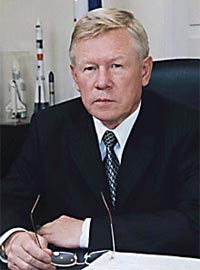
Your author couldn’t be accused of following military space issues and news too closely.  However, this piece from Ogonek [Огонёк] is pretty compelling stuff,  examining whether Anatoliy Perminov has been, or is about to be, “knocked out of orbit” as Chief of Roskosmos.

Ogonek is part of Kommersant, and has the same standards of quality and independence.  Much of what the article highlights is interesting and significant beyond the confines of space.  It is more widely illustrative of the way things work, or don’t, in Russia generally.  It makes Perminov sound somewhat symbolic of this.

Author Vladimir Tikhomirov begins by concluding the loss of four satellites recently isn’t the only reason for retiring Perminov, but Tikhomirov wants to look at the man and why he causes such controversy in the upper echelons of power.

As recently as 11 March, Perminov said his bosses will let him know when his time is up, but presumably they haven’t yet.  RIA Novosti also apparently published word from a “Kremlin source” who said Perminov’s contract won’t be renewed in April.  It’s said the 50th anniversary of Gagarin’s flight on 12 April might be celebrated with someone else heading Russia’s space agency.

Tikhomirov explores who Perminov is . . . a missile-general trained early to keep his mouth shut . . . to keep the dirt inside the RVSN or military izba . . . he doesn’t talk about extraneous or personal matters.  Born in Kirov Oblast in 1945, his father died early and he worked on a collective farm.  He was excited by Gagarin’s flight and practically his entire class went to military schools . . . he went to the Perm Higher Military Command-Engineering School.  He went from missile unit to missile unit with his wife and son.  The Soviet collapse found him finishing up at the General Staff Academy, and he became Chief of the Plesetsk Cosmodrome.  When Sergey Ivanov created Space Troops in 2001, Perminov became their first commander.  President Putin put him in charge of the entire space sector in 2004.

Then Tikhomirov talks about Roskosmos and Perminov’s predecessor.  In 1992, President Yeltsin civilianized a lot of the space industry, and he put Yuriy Koptev — a missile and rocket builder — in charge.  Koptev held his seat for 12 years until Putin became dissatisfied that Russia hadn’t built a single new satellite in 10 years (1994-2004).  Putin was upset when Roskosmos couldn’t support ground operations in Chechnya, and also when plans for the Angara rocket (that was supposed to free Russia from depending on Baykonur) didn’t pan out.

Perminov studied Koptev’s failures, and he pushed through a Federal Targeted Program (FTsP) on Space, 2006-2015.  A steady military hand was supposed to right things messed by civilians like Koptev, and others like RKK Energiya Director Nikolay Sevastyanov who reportedly dreamed of space shuttles, moon bases, and “air launching” rockets from An-124s.  Space research was pushed to the back.  It wasn’t Perminov’s style to risk such things.

Tikhomirov looks at Perminov’s record on fulfilling the Space FTsP.  Eleven of 13 planned fixed comms and broadcasting satellites are in orbit.  Under him, Roskosmos pretty much fulfilled its plan for mobile comms and satellite search-and-rescue, but various scientific launches were pushed off.  Tikhomirov gives him credit for making successful space launch deals for the Europeans and Americans.  Using Soyuz to ferry astronauts to the ISS brought in $753 million.

Then Tikhomirov points out the obvious.  Perminov’s other difficulties and failings are minor compared with GLONASS, which he’s described as Russian cosmonautics’ main achievement over the past 30 years.  Tikhomirov says the constellation has 22 functioning satellites with four in technical reserve and the last 3 launched at the bottom of the Pacific along with the Proton launch vehicle that carried them.  The Proton failure, says Tikhomirov, was especially embarrassing; it broke President Medvedev’s Poslaniye promise to have a fully functioning GLONASS grouping before the end of 2010.  And that’s when the rumors of Perminov’s imminent retirement started.

This wasn’t the first time for this rumor.  There was talk of his retirement in 2006 when there were launch failures and an out-of-order satellite cut central TV broadcasting to the Russian Far East.  These were losses costing billions of dollars.  But the Kremlin cut off the rumors; Perminov was needed.  Today, however, Tikhomirov says the Kremlin is sending different signals.

He says Medvedev’s assistant Sergey Prikhodko basically accused Perminov of failing to appreciate the gravity of the recent space failures.  A Perminov deputy and a chief designer at RKK Energiya were both fired.  Perminov himself got a reprimand.  Medvedev also instructed prosecutors to investigate the state of affairs, and the accounting books, at Roskosmos.

Tikhomirov says Roskosmos blames new products which weren’t tested sufficiently, but some employees say the agency tried to save by using Taiwanese microchips not intended for use in space.

Other interesting things turned up.  As reported elsewhere, Tikhomirov says sons of Roskosmos deputy chiefs are in the business of insuring its satellite launches.  GLONASS’ main designer has sent 40 percent of its state financing to various “pocket” firms.

Tikhomirov says Perminov might have survived all this, but the loss of dual-use Geo-IK-2 may have been the last straw.  And Medvedev recently talked with scientists about their thoughts on outer space research, something Tikhomirov views as a blow to Perminov and the military space priorities he represents.

So who would be the replacement?

Tikhomirov thinks the Kremlin must have a list of candidates . . . some people think First Deputy Defense Minister Vladimir Popovkin, who’s in charge of procuring armaments, he was also Space Troops Commander in his time.  Others say RKK Energiya General Director Vitaliy Lopota.  Still others say none other than Nikolay Sevastyanov — now heading Gazprom Space Systems.  Tikhomirov concludes:

“But all this devolves into one thing:  the new Chief of Roskosmos could be either military or a highly-skilled designer.  But to put the space sector in order, a new Korolev is needed.  Just where can one be gotten?”

Postnikov on the Army and OPK (Part I)

Ground Troops CINC, General-Colonel Aleksandr Postnikov really stirred up the hornet’s nest on Tuesday.  Russia’s defense sector – its OPK or oboronki – feeling offended recently, is abuzz about his comments.  Postnikov told a session of the Federation Council’s Defense and Security Committee:

“Those models of weapons that industry produces, including armor, artillery and infantry weapons, don’t correspond to NATO’s or even China’s models in their characteristics.”

The military hadn’t criticized the domestic OPK’s heavy armor and artillery systems to this point.

Insulting Russian tanks is the particular point here.  According to Newsru.com, Postnikov apparently called the much-praised, newest T-90 in actuality just the 17th modification of the Soviet T-72.  And, at the current cost of 118 million rubles per tank, he suggested:

“It would be simpler for us to buy three ‘Leopards’ [German tanks] for this money.”

Newsru.com counters that Rosoboroneksport is proud of the T-90, its sales, and continued interest abroad, but admits it is weak against third generation ATGMs, modern sub-munitions, and “top attack” weapons.  The news outlet also notes that the Russian Defense Ministry has eschewed procurement of the T-95 and BMPT.

In its editorial entitled “Import Generals,” Vedomosti takes Postnikov to task, saying it’s not sure whether he means new or used Leopards, but the German tanks probably come in at $7.5 million a piece at least, against the T-90 at $4 million [i.e. only part of one Leopard for 118 million rubles].  And, says Vedomosti, comparing Russian tanks to Chinese ones is lamer still on Postnikov’s part.

According to the business daily, these criticisms of Russian armaments usually come with calls to buy the same systems abroad.  But the 2008 war with Georgia showed Russia’s deficiencies lay in soldier systems, comms, recce, C2, and some types of infantry weapons rather than in armor.  When Russia doesn’t make something like Mistral or it has inferior technology like UAVs, it’s understandable to buy foreign, but when it’s something like armor, it raises a lot of issues, according to Vedomosti.  Uralvagonzavod certainly needs tank orders.  The idea of large-scale foreign purchases is utopian, says Mikhail Barabanov.  The paper believes thoughts of buying Leopard tanks and Mistral mean Russia’s generalitet has plans beyond local wars.

BFM.ru says Postnikov put the Ground Troops’ modern arms and equipment at only 12 percent of its inventory at present with, again, the goal of 70 percent in 2020.  At the end of this year, the army will get its first brigade complement of the newest automated C2 (ASU) system [i.e. presumably YeSU TZ]:

“In November of this year, we plan to conduct research on the newest  ASU and hand down our verdict.”

According to BFM.ru, he said NATO and China already have analogous systems:

“But for us it is still the future.”

Nezavisimaya gazeta focused on Postnikov’s comments on Ground Troops brigades.  He said he now has 70, but plans for 109 by 2020, including “future type” brigades:

“There will be 42 brigades of the future type, in all there will be 47 military formations of the future type, including military bases abroad which will be built on the same principle.”

The Glavkom didn’t say how the new brigades will be different from the old.

Parsing what he’s talking about is a little tough.  At the end of 2008, the army talked about having 39 combined arms, 21 missile and artillery, 12 signal, 7 air defense, and 2 EW brigades for a total of 81, rather than Postnikov’s current 70.  One might guess a dozen arms storage bases in Siberia and the Far East could be fleshed out into maneuver brigades.  But where does the manpower come from?  Maybe some of the 70,000 officers cut and now being returned to the ranks by Defense Minister Serdyukov. 

Postnikov elaborated some on heavy, medium, and light brigades.  Heavy will have tanks and tracked armor.  NG concludes there won’t be a new tank.  Tanks in storage will get new electronics and Arena active defense systems.  According to Postnikov, medium brigades will get [among other things?] the Bumerang amphibious BTR now in development.  This, says NG, is the first time anyone’s heard Bumerang.  But if it isn’t successfully developed or produced in sufficient numbers by 2020, the army will just buy armored vehicles abroad since there’s already ample precedent for this.

Light brigades will have vehicles like the Tigr or the Italian LMV (Lynx), licensed production of which could begin in Russia this year.  One special Arctic brigade will be created at Pechenga. 

Several media outlets quoted Postnikov to the effect that there’s no plan to change 1-year conscription, but he noted:

“In the transition to one year military service, military men received only a headache.”

There’s lots more reaction to Postnikov’s statements, but it’s too much for one day.

Would the Army Oppose Siloviki Loyal to Putin?

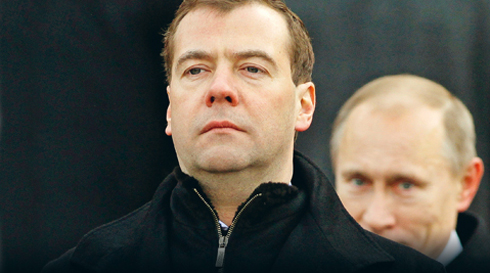
Medvedev and Putin (photo: Reuters)

An unnamed FSB veteran thinks it would.

Monday New Times published a piece on the state of the tandem and political prospects over the next year leading up to the elections which will determine who will be Russia’s president until 2018.

The article’s authors ask whether Medvedev and Putin, frightened by North African events, might be determined to preserve the status quo by any means.  Or perhaps the president and prime minister face an inevitable clash.  The authors have consulted unnamed experts and present their findings.  Scenario No. 2 is Apocalypse Tomorrow.  The mood of the siloviki – in this case, rank-and-file men with uniforms, ranks, and guns – is key to Scenario No. 2 – the tandem blown up.  The authors ask “how would the siloviki conduct themselves if Medvedev decided to fire the premier and his entire government?  On whom would the experts bet?”

The authors asked former USSR intelligence and special service veterans of coup d’etats to sketch out what we’d see in the event of Apocalypse Tomorrow.  They sketch out some of the things Putin and the government would do in addition to calling for the support of the siloviki.

In the end, the article examines the possibility that Putin might agree to go, with the right personal and financial guarantees in place.  His situation is not, after all, exactly like Mubarak’s or Qaddafi’s.

The article ends like this:

“’Putin can hardly count on the silovik bloc if the matter gets to mass bloodshed,’ even a highly placed employee of the FSB’s Spetsnaz Center, which today joins in its structure Directorate A (formerly Group A) and Directorate V (formerly Group Vympel).  ‘His sole full-blooded reserve capable of entering the fray is the Internal Troops [VV], and mainly the VV Spetsnaz’ – the so-called maroon berets.  ‘They are the ones in 1993, after one of the Vympel groups refused to participate in suppressing the civilian population, who fulfilled the given mission’ (this means preventing the storming of the Ostankino television center – New Times).  ‘As far as the FSB Spetsnaz goes, after so many years of ‘reforming’ silovik sub-units, officers will scarcely be zealous in putting down civilians.  Quite the opposite.  It wasn’t for this that they risked their lives in the Caucasus.’  The weakest link, in the opinion of the same expert, is the army:  ‘Among the troops there’s a lot of negative information and dissatisfaction with the reforms that are being introduced.  Promises that a lieutenant will soon receive 50 thousand rubles just remain promises, the apartment issue isn’t resolved.  After the mass dismissal of officers – just in the past year 140 thousand completely young ‘reservists’ were put out in the streets – they will easily return to the ranks [i.e. Serdyukov’s reversal increasing the officer ranks by 70,000], but now they know who their enemy is.  Plus the disbanding of the GRU Spetsnaz.  As a result, the opposition will have something to oppose the Internal Troops.  So the generals will think a thousand times before giving the order to open fire, and if there is the slightest suspicion about the illegitimacy of the mission received, they’ll do everything to sabotage it.’”

“The experts polled by New Times come together on one thing:  a bloody scenario has a greater than 50% probability in one case:  if the premier and his closest silovik circle seriously fear for their lives and property and don’t get a security guarantee.  And now before their eyes there’s even a living example:  going peacefully into retirement Mubarak has a chance to preserve part of his billions frozen in Switzerland, Qaddafi shooting at his own people no longer has such a chance.”

Interesting scenarios, but there are a couple things your present author isn’t so sure about.  Firstly, two things not factored in that could be significant are:  the mood of the average militiaman [i.e. cop] who are very numerous and are also being ‘reformed,’ and the unhappiness among military retirees and older vets demonstrated recently in their Moscow assembly and last year on Poklonnaya gora.  One’s not sure, though, if they’re more supportive of Medvedev or Putin.  Given the choice, they’d probably shoot both.  Secondly, is Medvedev really the type to enter that kind of standoff (or any standoff actually) while holding very few, if any, good cards to play?  At the same time, one is cautious about assuming rational actors.  It’s perfectly conceivable the Russians could blunder and miscalculate their way into Apocalypse Tomorrow.

Meanwhile, Ancentr.ru was following a similar tack earlier this week . . . it looked at the recent personnel decisions regarding General-Lieutenant Valeriy Yevnevich which moved him from the GUBP to Deputy Chief of the General Staff and then to Assistant to the Defense Minister (ostensibly, to advise on peacekeeping activities).  The website thinks this interesting since Yevnevich is a ‘political’ general who as Taman division commander supported President Yeltsin in the 1993 battle with his opponents.  And, it says, such a decisive and staunch supporter of ‘democracy’ as Yevnevich could be useful to vlasti in a responsible post given the general growth in political tension in society, including also a “rise in disloyalty in the army.”  For example, he could command special VDV or other sub-units in an emergency to ensure their loyalty to the regime.  Ancentr.ru goes on to detail other reports from NVO’s Vladimir Mukhin about the level of discontent in the army’s ranks as well as ex-General Staff Chief and Security Council staff member Yuriy Baluyevskiy’s possible role as leader of a military backlash against Defense Minister Serdyukov’s reforms.

Navy Still Not Moving to Piter (Yet)

A highly placed Defense Ministry source tells RIA Novosti there’s no final decision on moving the Navy Main Staff (NMS) from Moscow to St. Petersburg.  It’s been, of course, 3-1/2 years since the issue was first raised.

The press agency source says:

“There are two approaches.  The first is the Navy Main Staff remains in Moscow, and here the efficiency of resolving issues and tasks with the RF Defense Ministry wins and the second is the Navy Main Staff, with significantly reduced personnel, transfers to Saint Petersburg, where the scientific and shipbuilding base of the fleet is concentrated.”

According to this source, the pluses and minuses of both approaches are being calculated in the final phase of forming the command and control system of the Armed Forces.  The question of the NMS location is approached from the point of view that even temporary weakening in the command and control system for naval strategic nuclear forces (MSYaS or МСЯС) is unacceptable:

“The focus is placed on the effectiveness of the functioning of this system.  Whether the Navy Main Staff as just one attribute [of this system] transfers authoritative functions to St. Petersburg or remains in Moscow is not so important.  It’s important that the deployment location should be defended in a corresponding manner and not allow confusion in the general system of Armed Forces command and control.”

There is, according to the source, no doubt it’s essential to preserve the unitary structure of strategic nuclear forces command and control in the future:

“It follows that the Navy command in the form of the Navy Main Staff or, let’s say, a Navy department [департамент] is essential for coordinating the strategy of using the Navy in cooperation with the new regional commands [OSKs].”

He adds that, while OSKs West, South, Center, and East are complete, it still remains to distribute precisely the command and control functions for general purpose forces and strategic nuclear forces.

RIA Novosti’s interlocutor makes all this sound like the main issue may be less the move itself, and more one of figuring out the relationship and responsibilities of the now stronger and more significant MDs / OSKs and the somewhat diminished service main commands (Glavkomaty).  Perhaps the Navy Glavkomat is arguing with OSK West and OSK East over what is part of the strategic Navy, or supports strategic naval operations.

And Interfaks also has an item today saying that the Defense Ministry has ordered the NMS to prepare to move to St. Petersburg.  This came from an informed source in the Navy Glavkomat.  The written order contains no precise date for the move, but the source thinks the “active phase” of relocating will begin in July.

Ground Troops and the GOZ

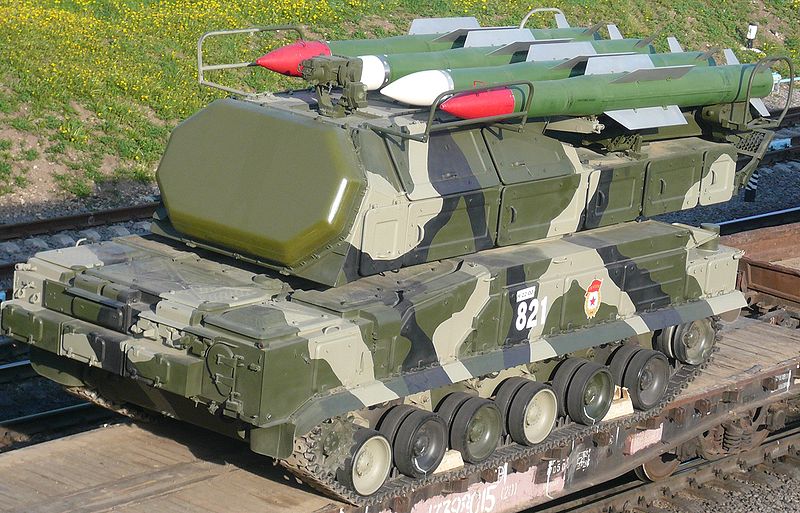
Buk-M2 (SA-17 / Grizzly)

Discussions of service wish-lists for State Armaments Program (GPV) 2011-2020 have tended to overlook the Ground Troops.  It seems they don’t enjoy the same priority as other services.

But in late February and early March, there was a flurry of press detailing what the land forces intend to procure, at least in the short term. 

Arms-expo.ru, Lenta.ru, and other media outlets put out brief items on Ground Troops’ acquisition.  They indicated the Ground Troops will emphasize air defense, command and control, fire support, and BTRs and support vehicles.

But the best run-down of all came from Ground Troops CINC General-Colonel Aleksandr Postnikov himself in Krasnaya zvezda.

Postnikov told the Defense Ministry daily that the main feature of GOZ-2011 is the transition from the repair and modernization of existing systems to the purchase of new, modern ones to reequip Ground Troops formations and units completely.

First and foremost, according to the CINC, the Ground Troops will buy modern digital communications equipment and tactical-level automated command and control systems (ASU), like Polyana-D4M1 for air defense brigades.  He said Ground Troops’ Air Defense will also receive modernized S-300V4 systems, Buk-M2 and Buk-M3, short-range Tor-M2U(M) SAMs, and manportable Igla-S and Verba SAMs.

Postnikov says they will continue equipping missile and artillery brigades with the Iskander-M, new MLRS, self-propelled Khosta and Nona-SVK guns, Khrisantema-S antitank missiles and Sprut-SD antitank guns.

The Ground Troops CINC says he foresees purchases of a new modification of the BTR-82A, BREM-K armored recovery vehicles built on a BTR-80 base and BREM-L on a BMP-3 base, Iveco, Tigr, and Volk armored vehicles, and new KamAZ trucks from the Mustang series.

NBC defense (RKhBZ) troops will get the heavy flamethrower system TOS-1A, RPO PDM-A thermobaric missiles with increased range and power, and VKR airborne radiological reconnaissance systems.  Engineering units will get the newest water purification system on a KamAZ chassis (SKO-10/5).

In the longer term, Postnikov sees rearmament as one of his main tasks, and he repeated President Medvedev’s statement that the Ground Troops should have 30 percent modern equipment by 2015, and 70 percent by 2020.  He laid special stress on getting YeSU TZ into the troops.  Postnikov’s Glavkomat has a Concept for the Development of the Ground Troops Armament System to 2025 emphasizing standardization, multi-functionality, modular construction, and electronic compatibility across several general areas:  armor and military vehicles, tube artillery and MLRS, SSMs, antitank systems, air defense, reconnaissance-information support, UAVs, communications, automated command and control, and soldier and close combat systems.

Makarov Interview

Voyenno-promyshlennyy kuryer published an interview with the Chief of the General Staff, Army General Nikolay Makarov last Tuesday.  It’s not exactly a hard-ball interview.  But it’s fairly consistent with his other statements.  Among the priorities, preserving mobilization appears again.  Inter-service C2 in the new OSKs is a big theme.  He can’t explain why the Air Forces aren’t getting more new aircraft, and PVO sounds like it’s destined for joining VKO under the Space Troops. 

VPK asked about the possibility of changes in Russia’s military doctrine following the NATO-Russia summit and more talk of a strategic partnership.  Makarov said the approach of NATO infrastructure to Russia’s borders and the alliance’s continued “open door” policy vis-a-vis Ukraine and Georgia are still factors in Russia’s military doctrine.  Therefore, there’s no need to adjust it.

Makarov expounded on the concept of force and force structure development [строительство] to 2020 adopted by President Medvedev last April 19.  Its main measures include:

  • Establishment of the air-space (aerospace) defense (VKO) system;
  • Formation of the optimal composition of inter-service troop (force) groupings on strategic axes;
  • Supporting mobilization of military formations and troop groupings;
  • Establishing modern command and control systems;
  • Deploying military towns of a new troop basing system;
  • Reequipping formations and units with new and future types of armaments and military equipment;
  • Resolving social protection issues of servicemen.

Asked about military science and operational training, Makarov said the main task of the military-scientific complex is to “support the training and employment of the Armed Forces in their new profile, especially inter-service training of the military command and control organs” of the new MDs / OSKs. 

Makarov admitted that Russia lags behind developed countries in reconnaissance and command and control, and is still using communications systems developed in the 1990s.  He continued:

“Another problem is the fact that every service and troop branch of the Armed Forces developed its own means of automation and communications without looking at the others.  The command and control systems of the Ground Troops, Navy, and Air Forces didn’t interface with each other, that lowered the possibilities for controlling troop groupings on the operational-strategic and operational level.”

He says the General Staff has given the OPK requirements for high-tech digital reconnaissance and communications systems.  Industry is already developing a fundamentally new, sixth generation radio system with digital signal processing to implement a net organization in radio communications.  He says it’s being built as a unitary, integrated net at all levels, from the General Staff to the individual soldier on the battlefield.  Command and control systems will get 300 billion rubles under GPV-2020, according to Makarov.

Sounding very much the net-centric warfare disciple, Makarov says the main task is to form a unitary information space uniting reconnaissance, navigation, command and control, and new generation weapons.

Makarov doesn’t have a good answer when asked why the Air Forces don’t have a single fully reequipped unit despite increased defense expenditures.  He maintains they are getting new aircraft and their units are now all permanently combat ready and fully equipped and manned.

On aerospace defense, Makarov says PVO, PRO, SPRN, and KKP (space monitoring) will be concentrated in the hands of one commander, but:

“I’d like to note this won’t be a simple, mechanistic merger of different military entities under the leadership of a new strategic command.  Their deep integration and echelonment by mission, information exchange, and interception fire is envisaged.  We’ve already started fulfilling the initial measures on this issue.”

Obviously speaking much prior to last week’s news about reversing cuts in the officer ranks, Makarov addressed the moratorium on inducting new cadets.  He said 78.5 percent of 2010 VVUZ graduates became officers.  Others, he says, who wanted to stay in the service were temporarily placed in lower-ranking [i.e. sergeant] posts, but will participate in command training and form a cadre reserve for filling officer positions.

Lastly, Makarov talked about the new military pay system coming next year.  Military retirees have been especially concerned about its effect on pensions.  Makarov didn’t say much to assuage them.  He said there will be no difference in pensions depending on when servicemen retired, and a commission under Finance Ministry leadership is working on the issue.  That will probably reassure army pensioners.

General Staff Chief Makarov’s Retirement Rumored

On Thursday, Argumenty nedeli said its source claims Defense Minister Serdyukov will soon send some well-known generals into retirement.  The Defense Ministry press service, of course, denies it.

AN’s source says the departure of these generals isn’t due to conflict between them and Serdyukov, but rather to the latter’s policy of “rejuvenating” Russia’s high command.  Among those who will allegedly be retired:

  • General Staff Chief, Army General Nikolay Makarov (61).
  • Deputy Defense Minister for Rear Services, General-Colonel Dmitriy Bulgakov (56).
  • Air Forces CINC, General-Colonel Aleksandr Zelin (57).
  • Navy CINC, Admiral Vladimir Vysotskiy (56).
  • Space Troops Commander, General-Lieutenant Oleg Ostapenko (53).

It’s interesting because none of them is really up against the legal age limit for leaving military service.  And Makarov apparently already has a service term extension from President Medvedev. 

One presumes, according to AN’s information, that the Ground Troops CINC, and RVSN and VDV Commanders are safe for now.

AN also expects some of the newly appointed MD commanders to be dismissed or moved to new posts.

There are other angles to AN’s story besides more rotation in cadres.

First, it repeats earlier press on trouble in finding a replacement for “key military department figure,” former Deputy Defense Minister for Finance-Economic Work Vera Chistova who left her post three months ago. 

An AN source in the Finance-Economic Service claims the lack of a replacement puts in doubt Prime Minister Putin’s promise to deliver a 6.5 percent increase in military pensions on 1 April.  Budget resources weren’t allocated for this.  And there’s still no candidate to replace Chistova.  And without one such issues simply won’t be resolved. 

AN doesn’t mention also that as active duty officer pay is reformed this year, the Defense Ministry will have to figure what to do about retiree pay.  If, as expected, they break the long-standing link between active pay and military pensions, the vets aren’t going to be very happy just before the 2011 and 2012 elections.  Putin just courted representatives of veterans’ organizations about a week ago.

According to AN, the Defense Minister has offered the military finance portfolio to more than one official at different levels in the Finance and Economic Development Ministries, but all of them declined.

The military department’s officers are also talking loudly about the coming appointment of a new Serdyukov deputy who will be called in to “correctly”  track the military’s political preferences ahead of the fast-approaching legislative and presidential elections.  

A high-ranking but unnamed military man tells AN

“He will be an important civilian and definitely a member of ‘United Russia.’  It goes without saying this is connected with the upcoming parliamentary and presidential elections.  The negative mood of officers is great, it is directed against the minister, his assistants and the party of power which is conducting the reforms without considering the human costs.”