Shuffling Generals

The deck of generals has been shuffled somewhat.  But fairly little notice was given to the mid-June reassignments of General-Colonel Vladimir Zarudnitskiy, General-Colonel Nikolay Bogdanovskiy, and General-Lieutenant Andrey Kartapolov.

General-Colonel Zarudnitskiy departs the General Staff’s Main Operations Directorate (GOU) to take over the Central MD, replacing General-Colonel Bogdanovskiy.
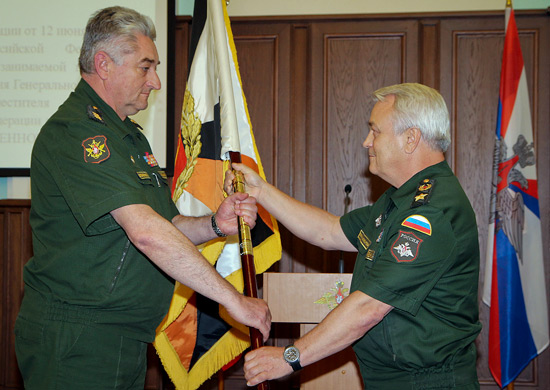
Zarudnitskiy (left) Receives Central MD Standard from Deputy Defense Minister Pankov (photo: Mil.ru)

Zarudnitskiy (left) Receives Central MD Standard from Deputy Defense Minister Pankov (photo: Mil.ru)

Zarudnitskiy’s background is pretty well summarized here.  He is 56.

Bogdanovskiy leaves the Central MD to become First Deputy Chief of the General Staff — a post recreated after former Defense Minister Serdyukov cut it.
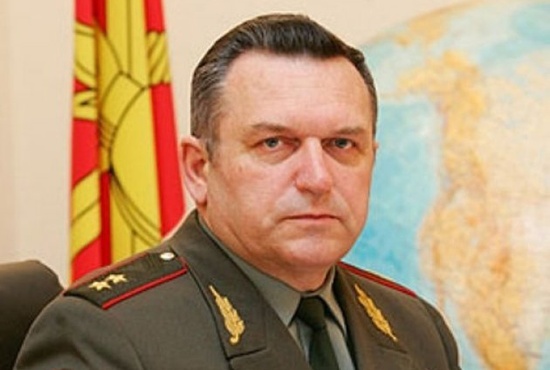
General-Colonel Nikolay Bogdanovskiy (Wearing Two Stars)

General-Colonel Nikolay Bogdanovskiy (Wearing Two Stars)

Bogdanovskiy’s had an interesting career path.  He commanded an army in the Far East before becoming a deputy commander of the old Far East MD.  He served as First Deputy CINC, Chief of the Main Staff of Ground Troops.  He commanded the old Leningrad MD.  He was again a deputy CINC of Ground Troops and Chief of the Main Combat Training Directorate from early 2011 until his late 2012 assignment to the Central MD.  Bogdanovskiy was early rumored to be a candidate to replace General-Colonel Chirkin as Ground Troops CINC.  He is 57.

Find coverage on Zarudnitskiy and Bogdanovskiy at Mil.ru.

General-Lieutenant Andrey Kartapolov is a fresher face.  He’s 50.

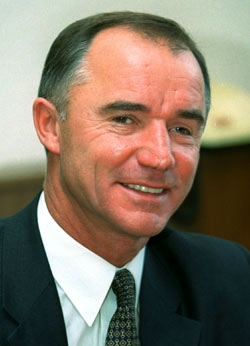
General-Lieutenant Andrey Kartapolov (photo: B-port.com)

General-Lieutenant Andrey Kartapolov (photo: B-port.com)

The most cursory review of Kartapolov’s career shows he was an O-6 commanding a machine gun-artillery division in the Far East in the early 2000s.  In 2007, he served as a deputy commander of the Novosibirsk-based 41st CAA.  He then became First Deputy Commander, Chief of Staff for the 22nd CAA in Nizhegorod.  In 2010, he commanded the 58th CAA, and in early 2013 became a deputy commander of the Southern MD.  After a very brief stint as First Deputy Commander, Chief of Staff of the Western MD, he will head the GOU.

Kartapolov’s wiki bio says he served as chief of an unidentified GOU directorate in 2009-2010.

But GOU chiefs of late still seem more “from the troops” than “born and bred” General Staff officers.
More OOB Notes

Found new data points based on reports about the Central MD’s 2nd CAA during the recent readiness inspection.  Here’s the link.

Visit to the 26th Missile Brigade

Mil.ru provided quite a few good pictures of the new base of the Russian Army’s 26th Missile Brigade at Luga in the Western MD.  They were taken during Defense Minister Sergey Shoygu’s recent inspection trip.

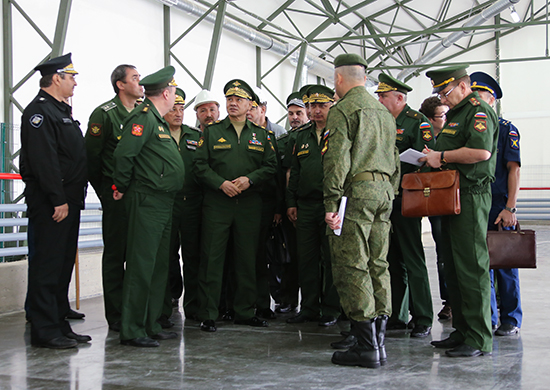
Shoygu with Western MD Commander General-Colonel Anatoliy Sidorov (photo: Mil.ru)

Shoygu with Western MD Commander General-Colonel Anatoliy Sidorov (photo: Mil.ru)

Yes, what follows is ripped-off photo journalism, but the pictures are too good to pass up.

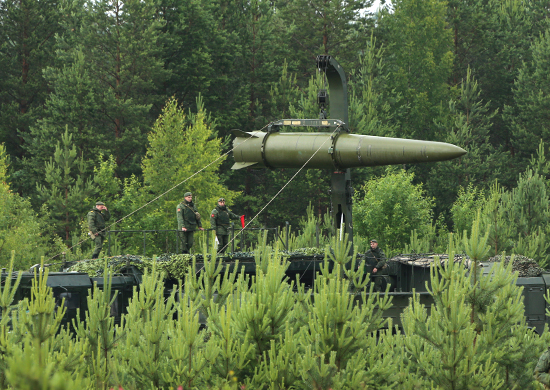
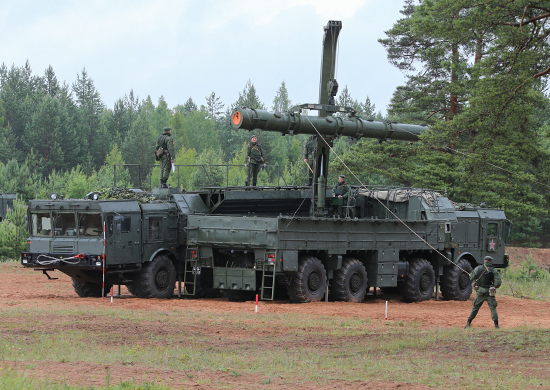
Iskander-K Cruise Missile Canister Being Transloaded (photo: Mil.ru)

Iskander-K Cruise Missile Canister Being Transloaded (photo: Mil.ru)

Iskander-M Ballistic Missile Being Transloaded (photo: Mil.ru)

Iskander-M Ballistic Missile Being Transloaded (photo: Mil.ru)

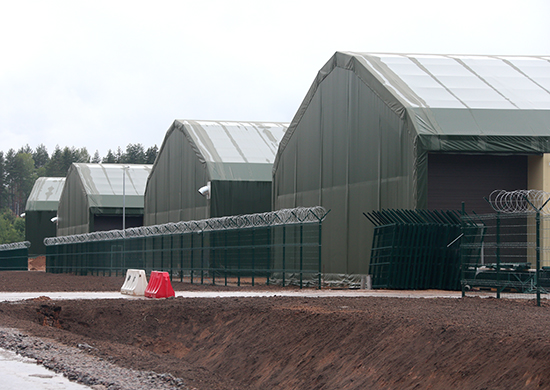
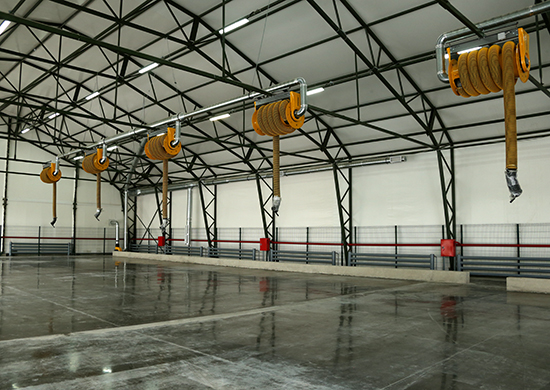
The Brigade's "Tent-Mobile Shelters" (photo: Mil.ru)

The Brigade’s “Tent-Mobile Shelters” (photo: Mil.ru)

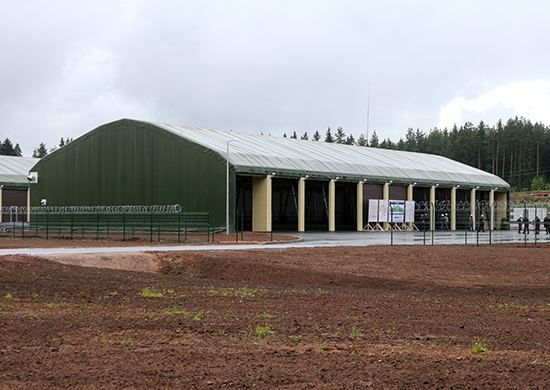
The army erected what are termed “tent-mobile shelters” at the missile brigade’s obviously new base.

"Tent-Mobile Shelters"(photo: Mil.ru)

“Tent-Mobile Shelters”(photo: Mil.ru)

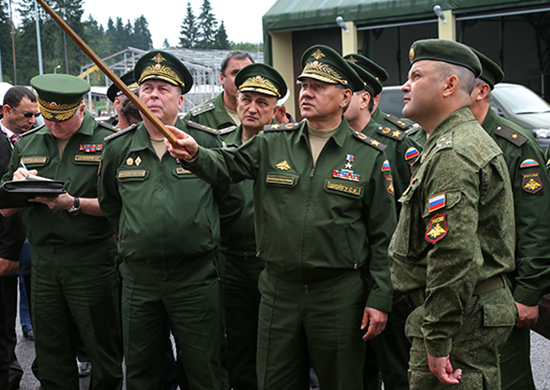
Shoygu Points Something Out, Colonel on Right Likely the Brigade's Commander (photo: Mil.ru)

Shoygu Points Something Out, Colonel on Right Likely the Brigade’s Commander (photo: Mil.ru)

Fuel Hoses Hang Inside the "Tent-Mobile Shelter" (photo: Mil.ru)

Fuel Hoses Hang Inside the “Tent-Mobile Shelter” (photo: Mil.ru)

A Last Chat Inside the "Tent-Mobile Shelter"(photo: Mil.ru)

A Last Chat Inside the “Tent-Mobile Shelter”(photo: Mil.ru)

Shoygu wanted to see that his orders to build essential basing facilities for new arms and equipment are being followed.  The 26th brigade not too long ago received its Iskanders.  Mil.ru noted that the brigade’s vehicle storage area has space for 200 pieces of equipment including the Iskanders.

The defense minister noted that “tent-mobile shelters” also need to be heated, so the missile launchers are always ready.  One wonders, of course, how they’ll hold up against heavy snow, ice, etc.

Shoygu repeated familiar words about synchronizing the arrival of new systems like Iskander with the selection of contractees to operate them.

He checked on the construction of concrete weapons bunkers, but nothing of this is shown or shared.

Promotion List

President Vladimir Putin signed out the latest list of MOD promotees on 11 June, the eve of the Russia Day holiday.

The list also appeared in Krasnaya zvezda.

The 16 new general-majors and two rear-admirals this time round include:

  • A deputy commander of the Central MD;
  • Commanders of air and air defense forces in the Western and Southern MDs;
  • A handful of army, division, and brigade commanders;
  • Senior communicators and logisticians.

Nothing surprising.  Just tracking the data.  Find the newest running promotion list here.

Data on VDV

One can’t call this news.  News not discovered or reported promptly is just data. Not less important to this mind.  But on with the story . . .

Last summer, VDV Commander General-Colonel Vladimir Shamanov told the press about pending changes in the Russian Airborne Troops’ manning and structure.  Not clear if, when, or at what level they’ve been approved.  But fait accompli is Shamanov’s style.  His influence is larger than his nominal rank and post, and he often gets what he wants.

Specifically (among many things), Shamanov claimed the VDV will:

  • Upgrade some regiments to brigades;
  • Establish a logistics brigade;
  • Raise some companies to battalions; and
  • Add a third maneuver regiment to each VDV division.
Valeriy Vostrotin

Valeriy Vostrotin

That’s all context . . . last October, chairman of the Union of Airborne of Russia (SDR or СДР), retired General-Colonel Valeriy Vostrotin gave out two data points in a comment to Rossiyskaya gazeta:

“We veterans were satisfied with the news that it’s now been decided to reinforce the VDV significantly, to increase their numbers by another 20 thousand men.  For me personally, it’s particularly pleasant that, in 2015 in Voronezh an air-assault brigade with the number 345 will be formed and the banner of the famous 345th regiment, which I once commanded in Afghanistan, will be transferred to it . . . .”

So . . . another 20,000 men for VDV, and a new brigade.  Not confirmed, but possibly on the horizon.

Today Russia’s airborne forces are thought to number about 30,000.  Down from an “on-hand” strength ranging anywhere from 55,000 to 75,000 in the late 1980s or very early 1990s.  Desantura.ru gives figures like that.

Going back to 50,000 would be significant, and would add lots of contractees to the ranks.  Equipping a new formation and other new units would not be a minor undertaking either. 

Again, data not news.  May or may not happen.  But we were informed.

PAK FA’s Emergency Landing

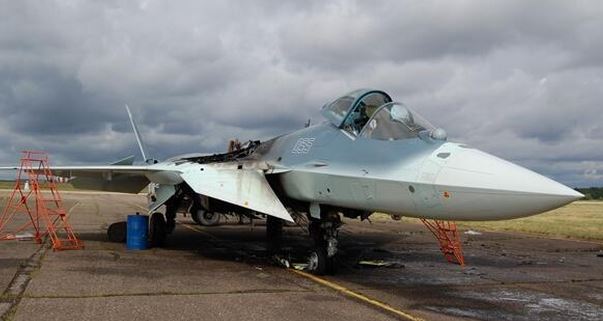
Burned PAK FA Bort 055

Burned PAK FA Bort 055

Interfaks-AVN reported yesterday that a PAK FA on a test flight from Zhukovskiy made an emergency landing.

A source told the military news agency that bort number 055 received “insignificant damage” from a fire that was quickly extinguished.  The pilot was unhurt.

There are four flying T-50 or PAK FA prototypes at present, and two used for ground testing.

This wiki article on PAK FA lists the prototypes and when they first flew.  T-50-5 or bort number 055 is the newest, making its initial flight on 27 October 2013.

AVN notes that the prototypes have performed aerial refueling and are working through various supermaneuvers.

For Reference

Here’s a little reference material with some order-of-battle info.  Just a place to put scraps of data when they’re found.

Visit to NAPO

Not long ago, NVO’s Viktor Myasnikov visited and wrote about Kubinka’s 121st ARZ, where Russia’s Su-25s receive major repairs and overhauls.  That story was a tad boring.

He’s doing a series on the military aviation industry.

This article on Su-34 production was more interesting and useful.  Full of facts and figures.

Su-34

Su-34

According to Myasnikov, the Su-34 was the first post-Soviet military aircraft formally accepted into the inventory by the government on  20 March 2014.  The contract for what was initially the Su-27IB was signed in 1989.

A pre-series airframe flew for the first time on 18 December 1993.  It flew as the Su-32FN at the Paris Air Show in 1995.

In 2003, the MOD decided to put the Su-34 into experimental use.  The year 2006 brought a contract for five Su-34 to be delivered in 2007-2009.

However, Myasnikov notes that the Novosibirsk Aviation Production Association (NAPO) named for V. P. Chkalov was in a pathetic state at the time:

“The state hadn’t ordered new aircraft, assembly shops were empty.  The company survived on account of consumer goods, making instruments, steel doors, etc.  Suffice it to say that now in the final assembly shop of 250 workers only 5 are veterans still having Soviet experience.”

Literally on its knees, he says, the factory re-trained workers and assembled one aircraft per year.

Then, in 2008, came the contract for 32 Su-34s by 2013, and a follow-on for 92 by 2020.  The plan for this year is 16 aircraft, possibly 2 more.

The Su-34, Myasnikov says, has 57,000 parts joined by tens of thousands of rivets and bolts.  About 200 other enterprises contribute products and components worth 75 percent of the aircraft’s cost.

Per unit, the Su-34’s price in the initial contract was 1.3 billion rubles (roughly $37 million).  The price in the second contract is only 1.05 billion ($30 million).

NAPO's Assembly Shop

NAPO’s Assembly Shop

Factory director Sergey Smirnov added that production of one aircraft initially took 460,000 labor hours; now only 170,000.  Call that about 230 manyears down to 85 manyears per plane.

Myasnikov writes that NAPO now uses more modern machinery, much of it imported, to reduce the number of work shifts required to make certain parts.  The two-man cockpit is made of 17-mm titanium sheets weighing only 380 kg.  The final assembly shop works round-the-clock in three shifts.

The average age of workers is 35, and gets younger by a year with each passing year.  The parents (and even grandparents) of many also worked at NAPO.

In all, NAPO has 6,700 employees.  Many work on components for Sukhoy’s civilian Superjet 100.  Their average age is younger than 35.

The typical wage at NAPO runs 32,000-34,000 rubles per month.  Some 800 workers are waiting for apartments, and the factory helps with securing mortgages for them.

NAPO expects to begin overhauling the first Su-34s in 5-6 years, and wants to put out 20 new ones each year.

Myasnikov sums up NAPO’s success story this way:

“Now it’s hard for even old workers to imagine that just several years ago the factory was in a pathetic state, and made consumer good instead of modern combat aircraft.  Thanks to people who knew how to preserve Russia’s aviation industry, who, despite difficulties, underfinancing, wage debts, didn’t allow the production and technological base to be destroyed.  Once the state undertook to reestablish the combat potential of the Armed Forces, and found money for the long-term rearmament program, aircraft plants revived and began working at full power.  The creation of a full-scale integrated structure — the ‘United Aircraft Corporation’ — also helped in this.”

55 OMSBr (G)

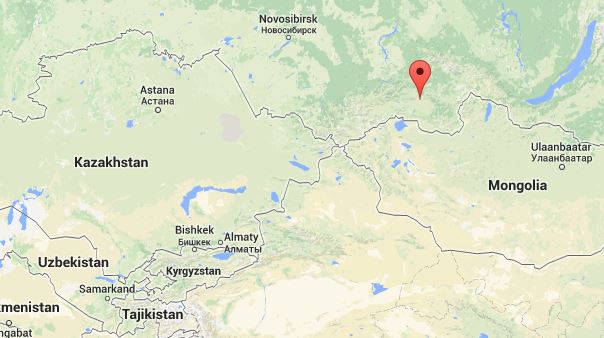
Denis Mokrushin’s blog provided heads up to the establishment of an independent motorized rifle brigade (mountain), which may stand up in, of all places, Tuva in 2015.

Tuva and Central Asia

Tuva and Central Asia

According to Mokrushin, the new 55th Independent Motorized Rifle Brigade (Mountain) will be based in Kyzyl, capital of the ethnic Tuvan republic located at the geographic center of Asia, not far from Central Asian nations where it might deploy in a crisis.

The new mountain brigade, part of Russia’s Central MD, will reportedly be designated not just for mountain combat, but peacekeeping duties as well.  A story from February indicated only residents of Tuva will be considered for enlistment in the 1,500-man brigade.  It will be mainly equipped with GAZ-2330 Tigr vehicles.

The 55th would be one of a handful of formations specifically created for mountain warfare, the most significant being the Southern MD’s 33rd and 34th brigades.  It will also give Russia a maneuver force in a location near its border currently lacking troops.

According to Tuva’s military commissar, contractees in the brigade will have a chance to support themselves and their families.

Tuva might best be described as remote, rugged, impoverished, and sparsely inhabited.  Its 300,000 or so people are predominately, and increasingly, Tuvan as the Russian population dwindles.

The reported plan to recruit only in Tuva means that the 55th brigade would be effectively an ethnic formation — something the Kremlin and the MOD have steadfastly resisted in regions like Tatarstan or the North Caucasus.  The brigade priest will be Buddhist.

This month, however, a military spokesman said men from neighboring Krasnoyarsk Kray, Khakassia, and Kemerovo will be recruited as well.

The report of a new brigade in Tuva appears against the backdrop of previously announced plans to add more Russian Army brigades and sign up larger numbers of contract servicemen.

Import Substitution

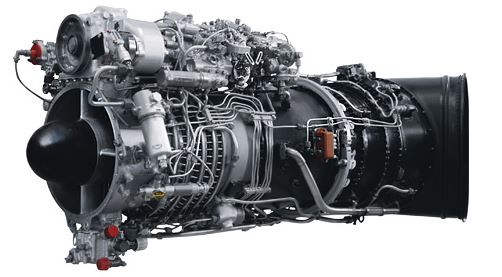
Russian helicopter engines will begin replacing Ukrainian imports.

OAO Klimov announced on 30 April that it will produce VK-2500 helicopter engines to replace those previously supplied by Ukraine’s Motor Sich.  A Klimov representative said the design bureau will manufacture 300-320 annually, including 250 for the Russian military.

Klimov's VK-2500 Helo Engine

Klimov’s VK-2500 Helo Engine

The announcement follows Ukraine’s late March ban on military exports to Russia following its seizure of Crimea.

FGUP Salyut and other Russian firms will produce VK-2500 compressor components.

The Klimov-designed VK-2500 turboshaft powers new Mi-28, Ka-52, and Mi-35 helicopters, and can replace engines on the Mi-17 and Ka-32.  It is an improved version of Klimov’s TV3-117 with increased power, full authority digital engine control, and a longer service life.  Approximately 90% of Russian helicopters carry Klimov engines.

Klimov aims for complete serial production of the VK-2500 by 2016.  It will be assembled at a new facility in St. Petersburg opening this summer.

Russia laid the groundwork for a domestic production line several years ago.  At that time, 500-600 engines per year was the goal.  Even a smaller number, however, means Ukraine’s embargo may slow helicopter deliveries to Russian forces, but not disrupt them altogether.