Tag Archives: GPV

Litovkin on What the GPV Will Buy

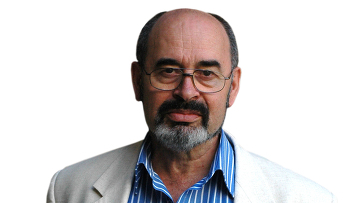
Viktor Litovkin (photo: RIA Novosti)

Returning to procurement and the GPV . . . in this week’s Delovoy vtornik, NVO’s Viktor Litovkin also asks what will 19 trillion rubles be spent on. 

He says the answer isn’t simple.  During the last 20 years of ‘starvation rations,’ the armed forces got handfuls of essential combat equipment, and, meanwhile, a dangerous imbalance between strike and combat support systems was created.  And this was obvious against Georgia in 2008. 

Litovkin says this imbalance has to be corrected, meanwhile priorities like strategic nuclear forces can’t be forgotten – not just the offensive triad, but also the missile attack early warning system (SPRN), missile defense (PRO), and aerospace defense (VKO). 

Like Viktor Yesin of late, Litovkin asks how Russia will replace its aging strategic offensive arms to stay up to the limits of the Prague / New START agreement.  Half the Russian force is SS-18, SS-19, and SS-25 ICBMs which will be retired in 7-10 years.  Moscow needs to build 400 strategic systems to replace them.  He doesn’t even mention Delta III and IV SSBNs and their aging SLBMS.  And Russia has only the SS-27, RS-24 Yars, Sineva, and Bulava to replace them. 

Litovkin expects a very large amount of money to be spent not just on replacing strategic systems, but also reequipping the enterprises that produce them. 

He turns to his second priority – also demonstrated by the Georgian war – precision-guided weapons, which in turn depend on reconnaissance-information support and equipment in space, on long-range surveillance aircraft [AWACS], and UAVs. 

Priority three – automated command and control systems (ASU).  He cites Popovkin on linking all service C2 systems into one system over 2-3 years. 

Litovkin says you can’t forget about the Navy, but he mentions just the Borey-class SSBNs, and the need for a wide range of surface ships.  And he makes the point [made by many] that Mistral is all well and good, but it’ll have to have multipurpose combatants operating in its battle group.  They need to be built, and they won’t cost a small amount of money. 

One can’t forget aviation either.  Litovkin cites a $100 million per copy cost for 60 fifth generation fighters [that’s a significant 180-billion-ruble bite out of the GPV].  He notes Vega is working on an updated Russian AWACS (A-100).  And, like Korotchenko, he mentions transport aircraft, but also combat and support helicopters. 

And so, says Litovkin, the question arises – isn’t the country putting out a lot of money to rearm its army? 
Viktor Litovkin (photo: Ekho Moskvy)

Being bold, he says, not really.  He actually uses that accursed 22 trillion figure, which is procurement for all power ministries.  If he used 19 trillion, it would be 1.9 trillion or $63 billion per year for Russia against $636 billion for the U.S., $78 billion for China, $58 billion for the U.K., and $51 billion for Japan.  But he doesn’t say this is annual procurement, the GPV, against the total annual defense budget for these other countries.  A bit of comparing one piece of pie to a whole pie.  Nevertheless, he concludes this makes Russia far from champion when it comes to military expenditures. 

Litovkin’s last word is Russia will remain one of the G8 with a powerful, combat capable, and effective army, but without it, only a raw materials appendage of either the West or East. 

But one wonders, hasn’t Russia long been in the G8 without that kind of armed forces?  Doesn’t breaking away from the raw materials supplier role have more to do with developing an open, attractive, innovative, value-added, and competitive economy (and a political system and society to match) than with military power? 
What Will GPV 2011-2020 Buy?

Russian military procurement policy is an obvious focus of what you read here, and there’s lots to write about on this score lately – the GPV, defense budget, OPK modernization and innovation, etc.  It’s not possible to capture it all at once.  Here’s a start, and hopefully it will lead to broader insights later.

Writing for his latest project – the Center for the Analysis of the World Arms Trade (TsAMTO or ЦАМТО), Igor Korotchenko addressed what the new GPV might buy.  His article was picked up by VPK.name, and then a somewhat truncated version ran in Nezavisimoye voyennoye obozreniye.  He uses the 22 trillion ruble figure rather than the 19 trillion for the armed forces specifically.  Not that it matters since it’s a wag at best anyway.

In his first broad swipe, Korotchenko forecasts that Russia will buy 500 new aircraft, 1,000 helicopters, and 200 air defense systems among other arms and equipment over the 2011-2020 period.  He admits, even with a fairly generous procurement budget [if approved and fully disbursed every year], it will be impossible to buy everything each service and branch will need after 20 years of very small-scale procurement.

And this is exactly, of course, the point that Popovkin’s deputy, General-Lieutenant Oleg Frolov was making when he argued for 36 trillion . . . .

So, they can’t have everything and will have to prioritize.  Korotchenko gives it a whack, maybe not satisfactory, but it’s a start:

  • Strategic nuclear forces;
  • Precision-guided weapons;
  • Automated command and control systems (ASU);
  • Aircraft;
  • Air and missile defense (PVO / PRO).

Korotchenko doesn’t talk specifics about his first two priorities. On the third, he calls for a unitary military C2 system to enable Russian netcentric warfare.  On aircraft, he somewhat surprisingly emphasizes transport aircraft to move Russia’s million-man army between strategic axes as needed.  And Korotchenko lists PVO / PRO without further commentary.

He supports efforts to overcome Russia’s lag in UAVs, ships, individual protective equipment and soldier systems, and armored vehicles through cooperation with Israel, France, Germany, and Italy.

Then Korotchenko turns back to aircraft, saying they are the thing that will indicate what kind of armed forces Russia will have in 2020.  Based on what’s been said publicly, he counts:

  • An-124 Ruslan — 20
  • An-70 — 50
  • Il-476 — 50
  • Il-112B — ??
  • Su-35S — 48  
  • Su-27SM — 12
  • Su-30MK2 — 4
  • PAK FA — 60
  • Su-34 — 32, possibly 60-80 more
  • Su-25UBM / Su-25TM — 10, possibly 20 more
  • MiG-35 — 30
  • MiG-29SMT / MiG-29UB — 20-30
  • MiG-29K / MiG-29KUB –26, possibly 22 more
  • Yak-130UBS — 120
  • New airborne early warning aircraft — 2-3
  • Be-200PS — 8-10

In all, he summarizes, about 500-600 aircraft by 2020.

Korotchenko doesn’t talk money, so we’ll have to think about what this would cost.  In terms of what’s covered, he’s only talked only about RVSN and Air Forces’ requirements.  You can be sure the Ground Troops, Navy, VDV, and Space Troops have their own lists.  Maybe Korotchenko will address them.

Beyond what they say they need, there are two issues.  Can they buy it all, or at least how much of it?  And, second, can the OPK produce it?  Korotchenko doesn’t get us too far into any of this.

More Popovkin on GPV 2011-2020

Does the GPV really mean anything?

One has to recall Popovkin’s announced 20 trillion rubles is just a plan until the Duma allocates the money every year.  Then there’s a big question of whether allocated money is used effectively.

Mikhail Rastopshin and others have written about how every GPV in memory (GPV 1996-2005, GPV 2001-2010, GPV 2007-2015) was revised shortly after it began.  Now we have GPV 2011-2020 being formulated only four years into the previous one.  This overlapping and cascading makes it difficult to see (even for those involved) what’s actually been procured with the funding provided.

Five trillion for GPV 2007-2015 (about 550 million rubles per year) seemed like a pretty good amount in the mid-2000s, but, as Vladimir Yevseyev and others have been kind enough to point out, it didn’t buy that much.  Yevseyev said Russia’s rate of rearmament would only provide for modern weapons and equipment over the course of 30-50 years, if then.  A Defense Ministry official responsible for the GPV and GOZ, Vasiliy Burenok, recently said Russia’s rearmament rate is only 2 percent, and it should be 9-11 percent per annum.

Finally, Popovkin’s deputy, General-Lieutenant Frolov stated flatly, and rather shockingly, that the government’s first offer of 13 trillion for GPV 2011-2020 was barely one-third of what’s needed to rearm Russia’s Armed Forces.  Now, according to Popovkin, and probably after some intense lobbying, the government comes back with a counteroffer of about 20 trillion.  This insight into the current dynamic of civil-military relations is perhaps more significant than the GPV itself.  What will the ultimate figure be?  Does it matter?  No, because GPV 2011-2020 will be superseded and rewritten well before 2015.

It’s possible to assert plainly that no GPV will ever get done if GPV 2007-2015 — coming at the peak of  oil prices and Russia’s economic boom — didn’t lead to very much.

Back to other things Popovkin announced yesterday . . .

He reaffirmed Russia’s intention to build its own UAVs:

“We’ll build our own.  It’s possible that, based on the results of this air show [Farnborough], requirements for Russian UAVs will be refined.”

Popovkin said the world’s UAV makers are now modernizing existing systems rather than investing in developing new ones. 

He also announced that the Defense Ministry will soon select the Russian enterprise and location where Israeli UAVs will be manufactured.

On Russia’s new ICBM, Popovkin told the media:

“We’ve accepted the RS-24 ‘Yars’ and placed it on combat duty.  The first battalion is standing up.”

He said Russia plans to acquire 20 An-124 ‘Ruslan’ transports, while modernizing its existing fleet of them by 2015-2016, and buy 60 An-70 transports as well.  He also said Moscow will procure 1,000 helicopters by 2020, calling them “one of the priorities for us now.”  Special attention will be given to heavy transport helicopters.

Kramnik on Vostok-2010 and Military Reform

This is complete finally.

Ilya Kramnik’s RIA Novosti piece about the exercise has been quoted by others, but it hasn’t gotten attention as a whole on its own.

So what does Kramnik think?  He cites Makiyenko to the effect that Vostok-2010 showed that reform has been positive for the army, but there are, of course, problems.  Troops aren’t uniformly well-trained, and the failure of contract service has really hurt.  But Kramnik gives Defense Minister Serdyukov a lot of credit, on the order of being a 21st century Milyutin.  But back to the problems again.  Things like contract service, tension over officer cuts and premium pay, military education cuts, and the failure to deliver new weapons have to be fixed.  But Kramnik believes Serdyukov is the kind of guy who’ll go back and fix what he didn’t get right or get done.  Then Kramnik shifts to the type of conflict the military reform is preparing the Russian Army to fight.  Obviously [?] not a nuclear one, but rather, again turning to Makiyenko, a Central Asian local war scenario that might threaten the RF’s internal stability.  The conclusion is that, if reform stays on track and occurs quickly, the army will be able to meet this challenge.  Some, however, might well argue that even a properly and rapidly reformed Russian Army might not be enough to contain and damp down the kind of conflagration Makiyenko describes.  Finally, Kramnik concludes that even the U.S. front isn’t secure; an American regime in 2012 or 2016 might take to renewed active support of new ‘color revolutions’ in Moscow’s back (or front) yard.

Here’s a verbatim text:

“The official results of the just ended ‘Vostok-2010’ exercise are still being reckoned, and this will be done by the Defense Ministry.  Meanwhile, it’s already possible to make some conclusions.” 

“‘Vostok-2010’ was the largest of all in the post-Soviet period of Russian history.  More than 20 thousand men, 75 aircraft, 40 combat and auxiliary ships took part on the ground, in the air, and at sea in maneuvers conducted from Altay Kray to Vladivostok.”

“The aim of the exercise was to check the three-level command structure — operational-strategic command – operational command – brigade, and other new elements in the Armed Forces command and control and support system, and to uncover deficiencies needing correction.  An expert of the Russian Center for the Analysis of Strategies and Technologies Konstantin Makiyenko expressed his opinion on the recent maneuvers:  ‘The recent maneuvers fully refuted the propagated myth about how the army is being destroyed as a result of the actions of the current Defense Ministry leadership.  It’s obvious the army is alive and developing.  Units participating in the exercise demonstrated their combat capability, despite the fact that they are not in the ranks of the best military districts, and scarcely armed with the most modern equipment.'”

“‘It’s especially worth focusing on the good morale of the officer personnel — it’s not possible to speak of general enthusiasm, of course, but I didn’t see dim eyes among the officers.  As a group, they are interested in the success of the current reform and hope for its success.'”

“While agreeing with this point of view, one has to note that the situation with soldiers looks a little different, both RIA Novosti’s reviewer [Kramnik] and Konstantin Makiyenko have also noted this.  Very much depends on the branch of troops and the basic training of the soldiers themselves.  Contract-servicemen in a ‘Tochka-U’ operational-tactical missile launch battery look and are trained much better than conscript-soldiers in motorized rifle units.  In the words of motorized rifle officers up to the battalion commander level, the reduction in the number of contractees has negatively affected platoon and company training.  Ideally, the service term of a specialist-soldier (mechanic-driver, weapons system operator, etc.) needs to be three years, that is achievable only on the contract manning principle for these positions.”

“Speaking about the attainability of the announced goals of the reform, one can say the following:   the will of the military leadership which certainly exists, is the main component of success, a firm understanding of the goal is also obvious, and the possession of authority — it’s not possible to doubt this.  As a result, the current Defense Ministry leadership needs only time to realize its ideas.  Overall, the military reform being conducted is the most significant event of Russian history in the last ten years — since the suppression of the separatist rebellion in the North Caucasus.  The Serdyukov-Makarov reform in the military sphere is the most radical and deepest since the time of Mikhail Frunze’s reforms in the 1920s, if not since Dmitriy Milyutin in the 1860s and 1870s.”

“As proof, it’s possible to note the fact that the Defense Ministry leadership is constantly searching and ready to correct those steps which, when checked, turn out to be incorrect or unattainable in real political-economic conditions.  So, the current principles of manning the army will undergo a serious correction:  it’s obvious that neither the organization of contract service, nor, even more, the existing format of conscript service corresponds to the demands of the time.”

“Evaluating the correspondence of the Defense Ministry leadership to its missions, it’s possible to say, that at present Russia has the most appropriate military leadership since the collapse of the USSR.  At the same time, it’s obvious that the radicalism of the reform, the compressed time of its implementation, unavoidable resistance in the environment and hard economic conditions didn’t allow for avoiding a large number of mistakes and excesses.  Among the most fundamental failures it’s possible to name the collapse of the army’s transition to the contract manning principle, serious social tension arising in connection with the rapid reduction of officer personnel, the ambiguous situation with the scale of servicemen’s complaints after the introduction of the differential pay system [premium pay or Serdyukov’s Order No. 400?], the hurried and not completely thought out reform of military education and many, many other things.  It’s  particularly worth focusing on the implementation of the state armaments programs which fail one after another, not being executed in a significant part.  As a result, the lag of Russia’s Armed Forces behind the most developed countries in the level of  technical equipping continues to grow such that in conditions of a quantitative lag it could become very dangerous.  All these mistakes have to be corrected, since they impact on rudiments of the army’s combat capability.”

“For what type of wars does Russia’s new army need to prepare?  Obviously, the time of long wars between the great powers has gone into the past — nuclear weapons haven’t left chances for such a development of events.  The most probable type of conflict in which the Russian Army will be involved is a local conflict on Russia’s borders and the territory of the former USSR, in the course of which there could be clashes with the most varied enemy:  from a regular army to many bandit formations and terrorist groups.”

“In Konstantin Makiyenko’s opinion, Central Asia presents the greatest danger in the future of a possible hot conflict with Russia’s direct participation:  ‘The U.S. and NATO, obviously, are less and less controlling the Afghanistan situation, and it’s not excluded that in the foreseeable future they may have to abandon this country.  The return to power in Afghanistan of the ‘Taliban’ movement looks most realistic in the event of such a development of events.  The arrival of Islamic radicals in power would unavoidably be a catalyst for conflicts on the territory of former Soviet republics of the region already riven by contradictions.  Weak authoritarian regimes in Tajikistan, Turkmenistan and Uzbekistan, not to mention what’s become the ‘failed government’ in Kyrgyzstan, could be easy prey for the Taliban.  As a result, Russia might be forced to consider the likelihood of a large Asian conflagration which it would have to prevent, or if it didn’t succeed — extinguish, at a minimum with the aim of preserving its own internal stability.  One very much wants to believe that the reform will bear fruit before the described situation becomes a reality.'”

“Besides the described scenario it follows to study also the probability of another development of events:  as experience has shown, on the territory of former USSR republics, the rise of openly anti-Russian regimes with external support at their disposal can’t be excluded.  For today, such a situation is a low probability due to the fact that the current administration in the U.S. — the main sponsor of ‘colored revolutions,’ is clearly not inclined to continue the policy of George Bush.  However by 2012, if President Obama loses the election, the situation could change, and this risk is even greater in 2016 when the administration will change in any case.  Meanwhile, you have to note that even the Democrats remaining in power in the U.S. is not a guarantee of a peaceful life:  Obama’s point of view on a coexistence format with Russia is hardly shared by all his fellow party members.  In the worst case, a return to the next variant of Cold War and new spiral of the arms race isn’t excluded.”

“The coming decade isn’t promising Russia an easy life.  The success of military reform is all the more important.”

Defense Ministry Claims More Money Needed for Armaments

General-Lieutenant Frolov

Speaking before the Duma yesterday, acting Armaments Chief, General-Lieutenant Oleg Frolov indicated the proposed 13-trillion-ruble State Armaments Program (GPV or ГПВ) for 2011-2020 is not enough to accomplish the Kremlin’s rearmament goals.  RIA Novosti reported the draft GPV will go the government’s Military-Industrial Commission (VPK or ВПК) by the end of this month. 

From the Space Troops like his boss Vladimir Popovkin, Frolov is the Defense Ministry’s Deputy Armaments Chief, and Chief of the Main Armaments Directorate. 

Frolov said 13 trillion rubles will guarantee development of strategic nuclear forces, air defense, and aviation, but the Ground Troops’ requirements for modern weapons will be underfinanced. 

He added that 28 trillion rubles would allow the Defense Ministry to cover the Ground Troops’ needs, and 36 trillion—almost three times the planned amount of the GPV—would fully finance programs for the Navy and Space Troops. 

First Deputy VPK Chairman, ex-general Vladislav Putilin responded that his commission hasn’t heard answers as to why the proposed 13-trillion-ruble allocation is insufficient for the military’s needs: 

“In the Defense Ministry’s opinion, the armed forces will degrade under an allocation of 13 trillion rubles out to 2020.  But we haven’t gotten explanations even though we’re asking:  show us these horror stories.” 

Putilin noted that the GPV is still a ‘working’ document at this point. 

At the same time, the Audit Chamber (a GAO-type organization) told the Duma the Defense Ministry is not succeeding in using its allocated funding.  Lenta.ru reported that, by varying measures, the Defense Ministry executed only 42-65 percent of the State Defense Order (GOZ, Gosoboronzakaz, ГОЗ, Гособоронзаказ) for last year.  Also of interest from yesterday, SIPRI released its estimate of Russian defense spending for 2009–$53 billion (about 1.6 trillion rubles), good enough for fifth place worldwide.  See also Grani.ru for coverage of the Defense Ministry’s difficulty spending the GOZ. 

Newsru.com captured this story appropriately as a Defense Ministry demand for more funding.  Prime Minister Putin and President  Medvedev have vowed repeatedly to increase new armaments, from the current level of 10 percent, to 30 and 70 percent of the inventory in 2015 and 2020 respectively.  What’s unknown is why at least one uniformed military man has decided to challenge the feasibility of his political masters’ long-term rearmament goals.

More Money in GPV-2020

ITAR-TASS yesterday cited a Military-Industrial Commission (VPK) source who said the volume of financing for the State Armaments Program 2011-2020 (GPV-2020) will be 13 trillion rubles (roughly $430 billion).  The source said this amount includes purchases of new arms and equipment, development of new types, soldier gear, and other army necessities.  He said the Finance and Economic Development Ministries are familiar with the amount and have not objected.

As background, ITAR-TASS reminded that this money is supposed to get Russia to not less than 30 percent modern armaments by 2015, and not less than 70 percent by 2020, according to Prime Minister Putin’s goals.

Deputy Defense Minister, Armaments Chief Vladimir Popovkin has said the RF Security Council will review GPV-2020 in June, and it will be the basis for developing a new Federal Targeted Program for OPK development.

So, 13 trillion rubles over the 10-year period is 1.3 trillion rubles in procurement per annum (undeflated, of course).  At face value, this is a significant increase over the old GPV 2007-2015, which was reportedly funded at 5 trillion rubles for 9 years, or about 550 billion rubles in military purchasing per annum.

But it’s not so easy.  First, the cascading and overlapping way the GPVs are done (how did the last years of the old one mesh with the first years of the new one?) would make it well-nigh impossible to judge what was actually bought, even if it were clear how much money was disbursed when and what was bought with it.  But none of those things are clear to outside observers, and probably not clear even to officers and officials inside the system.

Rearmament Tempo Less Than 2 Percent Per Year

Vasiliy Burenok

Vasiliy Burenok told a round table at the ‘Army and Society’ exhibition in Moscow Friday that the current pace of Russian force modernization, not more than 2 percent, won’t support the transition to a ‘new profile’ military.

Burenok is Director of the Defense Ministry’s 46th Scientific-Research Institute (46 NII).  The 46 NII is a lead organization involved in formulating the State Armaments Program (GPV) and State Defense Order (GOZ).  It works on military-technical policy documents and program planning methodologies.  Burenok is a member of the Scientific-Technical Council of the RF Government’s Military-Industrial Commission (VPK).

Reviewing history a bit, Burenok told his audience, at the beginning of the 1990s, the rearmament rate was 5-7 percent annually.  But, between 1991 and 2000, financing for new arms and equipment declined more than 50 times, leaving only enough money to maintain existing weapons.

Burenok concludes to get the army to the ‘new profile’ it’s essential to introduce 9 percent new equipment every year, and for some services and combat arms, up to 11 percent.

This 9 to 11 percent is, of course, the difficult target President Medvedev set at the Defense Ministry Collegium.  Burenok indicated just how difficult–going from less than 2 to an 11 percent annual renewal rate.

Armaments Chief and Deputy Defense Minister Vladimir Popovkin also addressed the ‘Army and Society’ round table.  He said GPV 2011-2020 will go to the president for approval in June.  The new GPV will be accompanied by yet another new Federal Targeted Program for OPK Development.

Popovkin said a number of systems won’t be produced under the new GPV.  They include short-range tube artillery, and BTR-80, BMP-2, and BMP-3 combat vehicles that soldiers are afraid to ride in.

Limited Productive Capacity, High Demand for Arms and Equipment

Surprisingly little attention, beyond routine press service reports, went to last Tuesday’s (16 February) government conference on the State Armaments Program, 2011-2020 (GPV-2020).  RIAN and older media reporting indicates the GPV-2020 will be adopted next month.

Prime Minister Putin told the attendees, “We are talking about the time frames and kinds of weapons systems we need to provide to our army and fleet, that have to be put into the arms inventory.”  Noting that nuclear deterrence forces, space, and air defense would be emphasized, Putin also said:

“We have to satisfy, as I already said, the troops’ need for modern communications, command and control, reconnaissance and, of course, complete the fifth generation aircraft, new combatant designs for the Navy.”

He reiterated earlier declarations that modern armaments in the forces must be 30 percent by 2015, and 70 percent by 2020.

Other Putin sound bytes:

“We have to provide essential financial resources for this task.  The Finance Ministry, the Economic Development Ministry have made the necessary calculations, and today we’ll need to analyze them.  Right off I want to note that we can’t allow any inflated estimates, ineffective expenditures.”

“The State Armaments Program has to give long-term guidance for developing the defense-industrial complex itself.  This must enable our enterprises to embark on a corresponding modernization.”

“We’ve conducted a whole series of meetings on these issues, but the Defense Ministry must provide the corresponding technical parameters.  We have to support the technological equipping of our defense-industrial complex exactly under these parameters.”

Finally, Putin indicated defense orders will go to enterprises that will be in a condition to produce truly competitive systems in terms of combat power, range, and protection.

Participants in the conference also reportedly discussed a new draft Federal Targeted Program (FTP or ФЦП) on the Development of the OPK.

On 15 February, Putin met with Industry Minister Khristenko and Director of the Federal Service for Military-Technical Cooperation (FSMTС or ФСВТС) Mikhail Dmitriyev.  Khristenko told Putin last year OPK enterprises received 148 billion rubles in state support (6 billion in credits, 60 billion in capital injections, 76 billion in state-guaranteed credits, and 6 billion in subsidized interest rates on export credits).  According to Khristenko, this support allowed the OPK to increase its production 10 percent.

Unnamed Defense Ministry sources said the 76 billion rubles in state-guaranteed credits are difficult to use, and not all were used.  The 60 billion rubles in capital injections were basically a direct budgetary grant, and, according to one aviation plant manager, 20 billion of it went (get this!) to compensate RSK MiG and other producers for the fiasco with their 34 faulty MiG-29s sold to, and returned by, Algeria.

FSMTC Director Dmitriyev told Putin the volume of Russia’s current arms export contracts is $34 billion, and exports will be $9-10 billion over the next two years.

Aleksey Nikolskiy writing for Vedomosti indicated Dmitriyev said several enterprises have orders for some systems scheduled out to 2017, and some foreign customers have raised the issue of quicker deliveries.  He argued that additional production capacity is needed, but Putin proposed only to review the issue of synchronizing domestic and export orders for arms.  He said, “We have to understand in what time frame we can and have to produce for ourselves and our foreign partners.”

A source close to Rosoboroneksport said the issue concerned limitations in production capacity for the S-300PMU2 and S-400 air defense systems, the Su-35 fighter, and surface-to-surface missiles that don’t allow for simultaneously meeting the demands of foreign customers and the Russian Armed Forces.  Vedomosti noted that VVS CINC Zelin already complained about limited productive capacity for the S-400.  A similar jam exists with the Su-35, which is supposed to enter the VVS and some foreign air forces by the end of 2011.  A Defense Ministry source said there’s a proposal to build two new factories for air defense systems, and to enlarge existing enterprises producing critical equipment, and the government might soon adopt the proposal.

Konstantin Makiyenko of CAST (ЦАСТ) told Vedomosti, for the past 2 years, Rosoboroneksport has received more orders than what it has supplied abroad, and the lack of sufficient productive capacity has become the main limiting factor on the growth of arms exports.  He says either increase the capacity or the army will have to wait for arms it doesn’t need too much, but air defense systems and fighters don’t fall into the category of things not urgently needed.

As Mikhail Rastopshin and others have been so kind to note, there have been a raft of OPK development and armaments programs over the years, but they don’t seem to get completed, each melding into the next albeit under a longer deadline.   In early 2009, Dmitriy Litovkin estimated no more than 20 percent of any arms program has ever been accomplished, even during the years of high oil revenues.

And you can’t do an armaments program without OPK development, and Russia’s defense-industrial base has been increasingly poorly positioned to support the arms program in recent years, according to Rastopshin and others.  And don’t forget about declining RDT&E.  Hard times for research institutes and design bureaus could mean that, rather than modern or futuristic weapons based on ‘new physical principles,’ new units of obsolete designs could be produced under an armaments program.

Here’s a telling reminder.  The  much-vaunted 2003 Urgent Tasks of the Development of the Russian Armed Forces document called for modern weapons at the level of 35 percent in 2010, 40-45 percent in 2015, and 100 percent by 2020-2025.  And now Moscow’s talking 30 percent by 2015 and only 70 percent by 2020.

As recently as 2006, the Russian military claimed 20 percent of its weapons inventory was modern.  But in March 2009, Defense Minister Serdyukov admitted the starting point was actually lower:

“. . . the bulk of [arms and equipment] are physically and morally obsolete. Natural loss is not being compensated by procurement.  As a result, the proportion of modern arms and military equipment is around 10 percent.”

This was when President Medvedev said large-scale rearmament would begin in 2011.

Nevertheless, in his November 2009 address to the Federal Assembly, Medvedev said:

“One of the most difficult yet fundamental tasks is reequipping the troops with new systems and models of armaments and military hardware.  There is no need to discuss some abstract notions here: one needs to obtain these weapons.  Next year, more than 30 land and sea-based ballistic missiles, five Iskander missile systems, about 300 modern armored vehicles, 30 helicopters, 28 warplanes, three nuclear submarines, and one corvette-class combatant must be delivered to the troops, as well as 11 spacecraft.  All this has to be done.”

A pretty daunting list when foreign customers are asking for their weapons too.