Category Archives: Defense Industry

Postnikov on the Army and OPK (Part II)

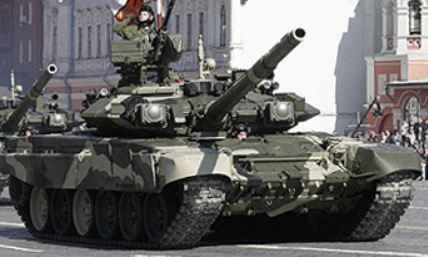
T-90 on Red Square

Continuing with reaction to Ground Troops CINC, General-Colonel Postnikov last week . . .

Speaking to a RIA Novosti press conference, Director of the Ministry of Industry and Trade’s (Minpromtorg) Defense-Industrial Complex Development Department, Igor Karavayev answered Postnikov this way:

“Unfortunately, we are encountering unwarranted criticism of the tactical-technical characteristics of Russian military equipment lately.  Allegedly, it doesn’t match its international counterparts.  An objective evaluation of the characteristics and tests conducted, but also the pace at which our exports are growing, attest to the contrary.”  

He said more than a few countries buy Russian tanks, and the T-90A got a positive evaluation from testing in difficult climatic conditions, including in Saudi Arabia, India, and Malaysia.  In Saudi Arabia, according to Karavayev, the T-90A was the only tank to destroy more than 60 percent of its targets after a road march.  Karavayev continues:

“The tests conducted in Saudi Arabia as part of an open tender fully and completely contradict the Glavkom’s [Postnikov’s] assertions.”

This T-90 modification supposedly has a new turret, a 1,000-hp engine, an improved thermal sight, new active defense measures, and a number of other improvements.  Karavayev flatly said neither the German Leopard, French LeClerc, nor American Abrams is equal to the T-90: 

“So to talk about how our tanks are worse than Western equivalents is not completely reliable information.”

“The price Postnikov quoted exceeds by approximately one and a half times the price at which the producer is ready to supply the vehicle [tank] to the troops.  This situation requires additional professional discussion.”

So that’s about 78 million vice 118 million rubles per T-90.

Izvestiya talked to Uralvagonzavod’s chief armor designer, Vladimir Nevolin, who said:

“The main complaints against the T-90 today are connected with its insufficient survivability.  Its deficiency is the placement of people, weapons, and fuel in one compartment.  In any case of armor penetration, the igniting of fuel is unavoidable.  Even with a fire suppression system, such a possibility isn’t excluded.  Therefore, the development of modern armored equipment is going the way of separating people from the fuel and munitions.  Moreover, the employment of remotely-controlled armaments is essential.  These principles were implemented in our future product – “item 195.”  For example, on it, the tank turret no longer had the crew.  But it turns out no one needed such a project.”

Vesti FM asked Igor Korotchenko whether Postnikov’s claim that Russian arms aren’t up to snuff is true.  He said there are objective problems with Russian-designed weapons, and some planned for introduction are really obsolete.  But, according to Korotchenko, the Defense Ministry’s main criticism is that Russian combat vehicles don’t meet survivability requirements.

At the same time, Korotchenko says Russia can’t fall into dependence on the West.  New armor has to be financed and put into serial production.  Limited purchases of Western military technology and licenses for the newest thermal sights and munitions are acceptable in his view, he says Russia’s national technological base for producing major weapons needs to be protected.

Finally, it was Viktor Baranets’ turn in Komsomolskaya pravda.

Baranets noted Postnikov complained quite openly about Russia’s weapons for a military leader of his rank.  And he opined that Moscow is not only competitive, but superior in some military systems.  But Baranets claims the T-90 cost has doubled from 60 million rubles two years ago due to higher electricity and metal prices as well as adding expensive French or Israeli thermal sights.  Nevertheless, says Baranets, Postnikov exaggerated about buying Leopards for the price of a T-90.

Baranets also interviewed Mikhail Barabanov.

Barabanov says the T-90 really is the 17th modification of the T-72, initially called the T-72BU, but T-90 sounded more modern, at least in 1992.  The T-90A has grown old, but could still be updated with a new turret, gun, and weapons control system.  The 118-million-ruble pricetag comes from a small production run, and it’s steep for a tank that’s not the most modern.

Barabanov says for 118 million you could only buy 3 1980s-vintage Leopard-2A4 from the Bundswehr reserve.  And such tanks don’t have any particular advantage over T-90.  A new Leopard-2A6 is more than $4 million, but with service, training, spares and munitions, it can’t be obtained for less than $10 million.

Baranets asks Barabanov if the share of modern ground armaments really be brought up to 70 percent by 2020.  The latter says:

“It’s realistic given fulfillment of the State Program of Armaments.  But its [the GPV’s] fulfillment depends first and foremost on the country’s capacity for high economic growth rates.”

Postnikov on the Army and OPK (Part I)

Ground Troops CINC, General-Colonel Aleksandr Postnikov really stirred up the hornet’s nest on Tuesday.  Russia’s defense sector – its OPK or oboronki – feeling offended recently, is abuzz about his comments.  Postnikov told a session of the Federation Council’s Defense and Security Committee:

“Those models of weapons that industry produces, including armor, artillery and infantry weapons, don’t correspond to NATO’s or even China’s models in their characteristics.”

The military hadn’t criticized the domestic OPK’s heavy armor and artillery systems to this point.

Insulting Russian tanks is the particular point here.  According to Newsru.com, Postnikov apparently called the much-praised, newest T-90 in actuality just the 17th modification of the Soviet T-72.  And, at the current cost of 118 million rubles per tank, he suggested:

“It would be simpler for us to buy three ‘Leopards’ [German tanks] for this money.”

Newsru.com counters that Rosoboroneksport is proud of the T-90, its sales, and continued interest abroad, but admits it is weak against third generation ATGMs, modern sub-munitions, and “top attack” weapons.  The news outlet also notes that the Russian Defense Ministry has eschewed procurement of the T-95 and BMPT.

In its editorial entitled “Import Generals,” Vedomosti takes Postnikov to task, saying it’s not sure whether he means new or used Leopards, but the German tanks probably come in at $7.5 million a piece at least, against the T-90 at $4 million [i.e. only part of one Leopard for 118 million rubles].  And, says Vedomosti, comparing Russian tanks to Chinese ones is lamer still on Postnikov’s part.

According to the business daily, these criticisms of Russian armaments usually come with calls to buy the same systems abroad.  But the 2008 war with Georgia showed Russia’s deficiencies lay in soldier systems, comms, recce, C2, and some types of infantry weapons rather than in armor.  When Russia doesn’t make something like Mistral or it has inferior technology like UAVs, it’s understandable to buy foreign, but when it’s something like armor, it raises a lot of issues, according to Vedomosti.  Uralvagonzavod certainly needs tank orders.  The idea of large-scale foreign purchases is utopian, says Mikhail Barabanov.  The paper believes thoughts of buying Leopard tanks and Mistral mean Russia’s generalitet has plans beyond local wars.

BFM.ru says Postnikov put the Ground Troops’ modern arms and equipment at only 12 percent of its inventory at present with, again, the goal of 70 percent in 2020.  At the end of this year, the army will get its first brigade complement of the newest automated C2 (ASU) system [i.e. presumably YeSU TZ]:

“In November of this year, we plan to conduct research on the newest  ASU and hand down our verdict.”

According to BFM.ru, he said NATO and China already have analogous systems:

“But for us it is still the future.”

Nezavisimaya gazeta focused on Postnikov’s comments on Ground Troops brigades.  He said he now has 70, but plans for 109 by 2020, including “future type” brigades:

“There will be 42 brigades of the future type, in all there will be 47 military formations of the future type, including military bases abroad which will be built on the same principle.”

The Glavkom didn’t say how the new brigades will be different from the old.

Parsing what he’s talking about is a little tough.  At the end of 2008, the army talked about having 39 combined arms, 21 missile and artillery, 12 signal, 7 air defense, and 2 EW brigades for a total of 81, rather than Postnikov’s current 70.  One might guess a dozen arms storage bases in Siberia and the Far East could be fleshed out into maneuver brigades.  But where does the manpower come from?  Maybe some of the 70,000 officers cut and now being returned to the ranks by Defense Minister Serdyukov. 

Postnikov elaborated some on heavy, medium, and light brigades.  Heavy will have tanks and tracked armor.  NG concludes there won’t be a new tank.  Tanks in storage will get new electronics and Arena active defense systems.  According to Postnikov, medium brigades will get [among other things?] the Bumerang amphibious BTR now in development.  This, says NG, is the first time anyone’s heard Bumerang.  But if it isn’t successfully developed or produced in sufficient numbers by 2020, the army will just buy armored vehicles abroad since there’s already ample precedent for this.

Light brigades will have vehicles like the Tigr or the Italian LMV (Lynx), licensed production of which could begin in Russia this year.  One special Arctic brigade will be created at Pechenga. 

Several media outlets quoted Postnikov to the effect that there’s no plan to change 1-year conscription, but he noted:

“In the transition to one year military service, military men received only a headache.”

There’s lots more reaction to Postnikov’s statements, but it’s too much for one day.

Israeli and Russian UAVs for Ground Troops

Yesterday Aviaport.ru wrote that Defense Minister Anatoliy Serdyukov, his First Deputies, Vladimir Popovkin and Nikolay Makarov, Air Forces CINC, Aleksandr Zelin, and industry representatives attended a demonstration of Russian and Israeli UAVs at Kubinka on 10 March. 

The systems shown included the Israeli mini Bird Eye 400 and medium-range Searcher MkII, and also an unnamed Russian mini selected in comparative testing last fall. 

Aviaport.ru says Russian systems were only on static display, but Israeli ones were actively demonstrated.  The Searcher MkII performed a six-hour continuous flight in the vicinity of Kubinka at an altitude of  five km, relaying imagery to its ground station in real time.

Israeli drones arrived in Russia last year, and operators and technicians were trained, but they are only just starting to be used.  A Defense Ministry source tells Aviaport.ru these UAVs are already receiving high marks from the military.

UAV.ru’s editor-in-chief Denis Fedutinov thinks new pilotless aircraft will be based at the 924th Combat Training and Personnel Retraining Center.  The Center’s personnel previously used only Russian-made UAVs, the most modern of which was the 1980s-vintage Pchela.  Fedutinov says:

“Compared with them [Pchela], the impression of Israeli systems will be like switching from a Zhiguli to a Mercedes.”

Nevertheless, according to Fedutinov, the “door isn’t closed” for Russian developers.  The tests of the mini-UAV last year showed an increase in quality of Russian systems, and there was a promise to buy several dozen Russian systems for experimental use in the Ground Troops.  

The tactical-class segment still isn’t occupied, and there are two Russian contenders — VEGA’s Tipchak and Kronshtadt’s Dozor-100.  The latter is reportedly preferred given Popovkin’s negative comments about the former.

Fedutinov thinks when it comes to larger systems there’s still a possibility for cooperation with the Israelis, and there is Russian interest in the Heron system.  But decisions on this issue are essentially political.

After meeting his French counterpart in Paris — mainly about the Mistral acquisition, Defense Minister Serdyukov declared his interest in procuring all types of UAVs, from reconnaissance to strike variants, according to ITAR-TASS.  Serdyukov stated:

“At present, we’re studying the line-up of Israeli pilotless aircraft in detail.  As is known, ‘Helicopters of Russia’ has agreed with the Israelis on establishing an SP [joint venture] to produce such systems.”

Serdyukov added that a UAV operator training center will be set up soon:

“Where this center will be located isn’t decided yet.  These systems will be part of the Ground Troops.”

He said the Defense Ministry wants to buy all types, from light to heavy UAVs.  Russia is also interested in the foreign practice of using satellites to control unmanned reconnaissance and strike aircraft, Serdyukov said.

Rosoboronpostavka Understaffed, Ineffective?

This author has written several times that Rosoboronpostavka – the Federal Agency for Supplies of Armaments, Military, Special Equipment and Material Resources – is supposed to be key to making the GOZ and GPV work.  It’s supposed to take responsibility for negotiating, contracting and taking deliveries out of the hands of military men, so they aren’t tempted by bribes and kickbacks from manufacturers, and can concentrate on the specific requirements for weapons and equipment that needs to be made and bought.

In mid-2010, erstwhile Putin ally Viktor Cherkesov (who once warned of infighting and corruption among high-ranking security service veterans) was unceremoniously booted from Rosoboronpostavka.  President Dmitriy Medvedev criticized the agency (and Cherkesov) for not accomplishing much, and he moved it under the Defense Ministry, declaring that it would become a reinvigorated part of the effort to rearm the Armed Forces during the next decade.

Nadezhda Sinikova

With great fanfare, Defense Minister Serdyukov’s confidant, Nadezhda Sinikova took over at Rosoboronpostavka.  This all fit pretty well with Serdyukov’s general intent – to establish strict control over the Defense Ministry’s “financial flows,” and to civilianize Defense Ministry functions that aren’t clearly military in nature.

It’s seemed that Sinikova’s Rosoboronpostavka has remained stillborn, much like it was prior to mid-2010.  At least, nothing was heard from or about it until a 3 March article in Rosbalt.ru.  Now we have to be wary — Cherkesov’s wife, Natalya Chaplina is Rosbalt’s General Director.  Be that as it may, the article seems pretty solid.

According to Rosbalt.ru, Rosstat published data on salaries in the federal executive organs, and experts were surprised the highest average paychecks — 135,000 rubles per month or more than 1.6 million rubles per year — are in Rosoboronpostavka, an organization not even really functioning.  The average 12-month federal salary is 728,000 rubles, about 60,000 per month.
 
Rosoboronpostavka is working only in a technical sense.  The different power ministries and departments haven’t hurried to hand over authority to conclude contracts for them, and they’ve tried to sabotage the agency’s work, according to Igor Korotchenko. 

Rosoboronpostavka’s supposed to have 1,100 professional employees, 980 in the Moscow headquarters.  A source close to Rosoboronpostavka claims that, prior to mid-2010, not more than 10 people worked for the agency, and it didn’t have its own office.  They worked in a room in Rosoboroneksport on Moscow’s Ozerkovskiy Embankment. 

The Rosstat data says Rosoboronpostavka has the lowest staffing level of any executive structure, only 15.5 percent or 152 people against an authorized level of 980.
 
Before the mid-2010 changes, Rosoboronpostavka salaries had been 50-70,000 per month; the director got 70,000 and he reported to Prime Minister Putin.  Now, with its status downgraded and reporting to the Defense Minister, the agency’s pay has increased several times.
 
Experts think the pay’s kept high because the country’s leadership wants to deter corruption in the state defense order (GOZ), but deputy editor-in-chief  the journal “Armaments and Economics,” Professor Sergey Vikulov says this high pay comes “from the naive belief of our leaders that high pay will deter bureaucrats from bribery.” 

One notes Vikulov’s journal is the professional publication of the 46th TsNII, not exactly an objective voice since it used to form the GOZ (and probably collect the bribes) pretty autonomously before Rosoboronpostavka was established.
 
Korotchenko believes even bureaucrats who earn millions will be tempted to “saw off” part of the billion-ruble contracts they oversee.  He goes on to say  corruption in the Defense Ministry directorates occupied with the GOZ and the OPK already caused the failure of the two previous state programs of armaments (GPVs).
 
Rosbalt.ru also claims the Audit Chamber has said GOZ-2009 was only 50 percent completed.  Then it cites NG‘s (Mukhin’s) 70 percent fulfillment figure for GOZ-2010.

Although one expert hopes higher pay at the agency is tied to greater productivity in processing contracts, a Rosbalt.ru source says as before only a small number of contracts are being completed.  The expert is just about ready to give up searching for a logical explanation for the lack of elementary order in Russia’s management structures. 

But Korotchenko thinks it might be early to judge Rosoboronpostavka, since it’s still establishing itself.  Perhaps at the end of this year or the beginning of next, it will take over all power ministry arms and equipment procurement contracting, he says.

PAK FA Engine Update

Saturday ITAR-TASS printed an interesting update on the PAK FA engine story.  It doesn’t really clarify anything (actually quite the opposite), but it’s part of the story. 

Recall last spring the engine designers were saying developing a “second phase” engine for PAK-FA could take another 5-6 years, while Sukhoy was saying it might be 10-12 years.  In what follows below, the engines aren’t specifically identified as “second phase,” but they are called “seriously distinct from the 117S.”

General Designer of the A. M. Lyulka Scientific-Technical Center (a Moscow subsidiary of NPO Saturn) Yevgeniy Marchukov claims the construction of an engine for the fifth generation fighter is going successfully, and it will go into serial production. 

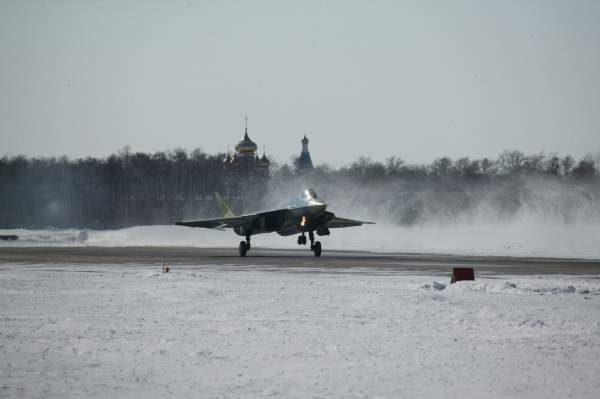
The second experimental T-50 reportedly took off with this engine on 3 March.

Marchukov said:

“The engines in the experimental prototypes of the future Russian fifth generation fighter are seriously distinct from the 117S engines intended for Su-35 aircraft, both in their parameters and in their fundamentally new automated control system.  The T-50 aircraft with NPO Saturn engines fully corresponds to the tactical-technical requirements for the aircraft.  And with these engines produced serially, the PAK FA will be supplied for the needs of the Russian Air Forces.”

For his part, Saturn managing director Ilya Fedorov noted that the enterprise “supported the takeoff of the aircraft in the necessary time,” just as it was ready for flight.

ITAR-TASS goes on to add that special stand tests and service life tests on the engine continue at the Lytkarinskiy Machinebuilding Plant (another Saturn subsidiary).  Ground development is being conducted on the T-50-KNS model with aircraft systems from OKB Sukhoy at the Gromov Flight Test Institute.  Flight tests are also ongoing.  T-50-1 has more than 40 flights, the T-50-2 two flights, and the Su-27 flying laboratory has 32 flights.

Second PAK FA Prototype Flies

Novyye izvestiya has 1TV’s video coverage and story on the flight.

Pilot.strizhi.info posted these photos, along with links to the high resolution originals from Sukhoy.org.

Second PAK FA Takes Off

Landing

PAK FA Chutes Deployed

Nikolskiy on GOZ-2010 Failures

On Tuesday, Vedomosti’s Aleksey Nikolskiy wrote about breakdowns in last year’s State Defense Order (GOZ).  He notes that concern about failures started with Roskosmos, but it isn’t limited to that part of the defense sector.

Nikolskiy recounts Deputy Prime Minister Sergey Ivanov’s session with the Roskosmos collegium.  The space industry only produced five of 11 satellites specified in GOZ-2010, and 6 civilian launches were postponed.  The three GLONASS satellites lost to a “childish mistake” [in filling the rocket’s tanks] cost 2.5 billion rubles.  But we’ll return to Russia’s space woes another day. 

A Defense Ministry source tells Nikolskiy GOZ failures are constant. 

Bulava SLBM delays kept Yuriy Dolgorukiy from entering service [remember the new SSBN itself had to return to Sevmash for work while it awaits the next Bulava test].  Introduction of the new Severodvinsk SSN has been put off until much later because of construction defects.  A United Shipbuilding Corporation (OSK) source tells Nikolskiy the Defense Ministry has stopped financing completion of a proyekt 677 diesel-electric sub, and work on two others laid down at Admiralty Wharves is in question.

Nikolskiy says the Air Forces’ assimilation of Yak-130 trainers is delayed by last March’s crash.  And there’s a serious delay in the testing of the Su-35 fighter, according to a Defense Ministry officer [Sukhoy was reportedly testing two Su-35s last August].  One enterprise manager claims reforms in the Defense Ministry purchasing system are holding back contracting for aircraft deliveries this year. 

CAST’s Konstantin Makiyenko says government and Defense Ministry criticism of industry for its GOZ failures could be followed by personnel changes.  In Roskosmos’ case, the situation is almost “overripe.”  But Makiyenko defends other Russian arms producers by noting that delivery delays are common even for U.S. and European manufacturers.

The Defense Sector’s Systemic Failure

In today’s Nezavisimaya gazeta, Vladimir Mukhin concludes the OPK’s “systemic failure” has left the military without new weapons.  His article also says a lot about the base upon which the Kremlin intends to build a modernized economy.  But perhaps the OPK is in worse shape than other sectors . . .

Defense Minister Serdyukov apparently sent President Medvedev a report explaining why some very important armaments and military equipment were not delivered in 2010.

According to Boris Nakonechnyy, Deputy Chief of the Directorate of State Defense Order Formation in the Defense Ministry’s Armaments Department, Serdyukov proposes that the Supreme CINC use “measures of administrative effect against enterprise directors who have violated the timeframe for fulfilling the Gosoboronzakaz.”  He doesn’t say if this means fines, arrest, etc.  Specifically, Nakonechnyy said, in 2010, a proyekt 20380 corvette, two proyekt 955 submarines, one proyekt 885 submarine, 3 of 9 planned Yak-130 trainers, and 73 of 151 expected BMP-3s  were not delivered.

Mukhin calls this an obvious failure, and estimates at least 30 percent of the 2010 GOZ wasn’t realized.  He contrasts this with President Medvedev’s Poslaniye, in which he said he was sure defense expenditures in the 2011-2013 budgets would allow the Armed Forces to buy the new armaments they need.

Speaking to defense enterprise directors in Sverdlovsk Oblast, Nakonechnyy said the cause of failure in the Gosoboronzakaz is poorly organized work by enterprises and designers:

“Signing contracts . . .  an enterprise director assumes quite serious obligations.  And, signing such a state contract, he is correspondingly bound to meet these obligations.”

But, he says, in a number of OPK enterprises, this isn’t happening.

Mukhin turns to the directors’ side of the story.

Military plant directors in the Urals unanimously announced that “contracts are concluded in such a way that we will always be in extremis.”  They say they’ve made proposals about contracts, but none of them are considered.  They also point to the Defense Ministry’s significant indebtedness to enterprises for completed work.  This supposedly amounts to 228 million rubles in the Urals.  Most of all, managers worry about uncertainty in this year’s GOZ, and about the Defense Ministry’s intention to pay 2009 prices this year.

The head of the Sverdlovsk producers’ group says:

“To this point, there are no agreements, no money.  All this pushes us toward emergency work in the future.  The pricing policy is driving us into a corner.”

Another general director complains of low profitability in the OPK.  Only 6-7 percent, according to him.  The Defense Ministry is allowing growth in materials costs of not more than 1 percent this year, and this will erode profitability further.

Military analyst Vladimir Dvorkin says a third of defense enterprises are really bankrupt.  Investment in R&D is ten times lower than in developed countries.  Investment in basic capital and personnel training is five times lower.  He continues:

“Fixed capital assets at OPK enterprises are two-three times, and labor productivity five-ten times lower than in developed countries.  More than 70% of technologies supporting production demands are worn-out or obsolete.  More than half the machine tool inventory is 100% worn-out.  The average age of OPK workers is more than 50, in defense NII [scientific-research institutes] it approaches 60.”

Dvorkin thinks the Armed Forces can’t be brought to the level of the world’s leading armies without extraordinary efforts.  Priorities need to be set for the armaments development system in order to concentrate efforts on a limited list of systems.

Mukhin thinks it might be too late since Medvedev’s already signed GPV 2011-2020.  But whether its priorities will be met is another thing.  So far in post-Soviet history, not one GPV has been fulfilled, Russia’s defense industry continues to decline, and global restructuring in military production still hasn’t been noticed in Russia.

Corruption and the GPV

This morning’s press included various accounts of statements from Igor Korotchenko or in the name of the Defense Ministry’s Public Council, on which Korotchenko serves, about mitigating the impact of corruption on the State Program of Armaments (GPV), 2011-2020.

RIA Novosti quoted Korotchenko to the effect that the rearmament program will only be successful with strict financial accounting and effective measures against corruption in the State Defense Order (GOZ or гособоронзаказ).

He said Defense Minister Serdyukov is taking steps to ensure that resources are used as intended, including the establishment of a Military Products Price Formation Department and the resubordination of the Federal Arms, Military, Special Equipment and Material Resources Supply Agency (Rosoboronpostavka) to the Defense Ministry.  But the latter step was done over six months ago, and not much has been heard about it since.

Novyye izvestiya and Novyy region quoted the Public Council’s statement:

“But for the army to receive all this [equipment in the GPV], money is simply not enough – it’s necessary to make things so that Defense Ministry generals, who to this point were occupied simultaneously with orders and purchases of weapons, don’t get access to money, are occupied only with formulating lists of everything needed for the conduct of modern war, but the function of monitoring prices and purchases should be transferred to other departments.  Otherwise, government resources allocated to the GPV will get ‘sawed off,’ placing this program in jeopardy.”

Those are, of course, the jobs of the new Price Formation Department and Rosoboronpostavka.  Serdyukov’s tax service veterans are supposed to free the payments system from graft, and use their experience to uncover complex theft schemes.  Military prosecutors are also expected to be more active here.  Main Military Prosecutor (GVP) Sergey Fridinskiy told Novyy region about prosecutors’ work in uncovering the theft of 6.5 billion rubles’ worth of military budget.  He claimed his prosecutors have stopped 240,000 violations, suspended 12,000 illegal actions, held 40,000 people to account, and returned 4 billion rubles to the treasury.  But it’s not clear what time period he’s talking about.

RIA Novosti recounted Korotchenko’s comments about preventing corruption in military RDT&E:

“Special control needs to be provided on scientific-research work and justification of expenditures on it, but also on the development of new types of armaments, since it’s precisely here that opportunities for different types of financial machinations and abuse exist.”

Of course, reminds RIA Novosti, RDT&E only amounts to 10 percent of the GPV.  Bigger chances for theft exist in procurement, which is supposed to be 78-80 percent of the rearmament plan.

According to Novyye izvestiya, on the procurement side, Korotchenko says, in past years, a minimum of 45-50 percent of money for arms simply ended up in someone’s pocket.  For this reason:

“For the very same money, Russia buys 14 tanks a year, and India 100.  This led the country’s leadership to the kind of thinking reflected in the Defense Minister’s authority to reorganize the entire purchasing scheme.  This time [the new GPV] 19 trillion rubles are at stake.  Can you imagine with what interest the ‘market players’ are waiting for them?  But the state machinery is running: many OPK directors are already being removed, in the case of the director of one of the system-forming design bureaus, suspected of stealing money from a state order through offshore shell companies, an investigation is being conducted, and other criminal cases in orders-purchases from previous years are also possible.”

The nongovernmental National Anticorruption Committee says the average kickback in civilian contracting is 30 percent, but, in defense, it’s 60 to 70 percent.  Because arms prices are secret [and hard to determine anyway], no one knows how much this is.  But common sense says this makes everything cost nearly twice what it should.

Mi-28N Crash

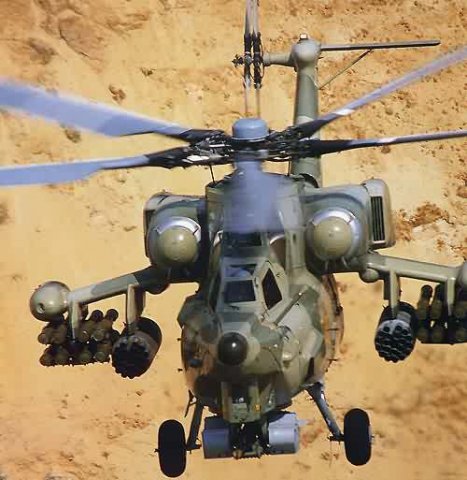
Mi-28N Night Hunter

Russia’s Mi-28N Night Hunter helicopters are grounded pending completion of the investigation into Tuesday’s crash in which the pilot died and his co-pilot was hurt.  The Mi-28N belonged to the Budennovsk-based 487th Helicopter Regiment in the Southern MD.

Unnamed sources tell RIA Novosti investigators attribute the crash to engine failure caused by metal shavings in the engines or gear box.  But one experienced test pilot told Vzglyad.ru that shavings usually don’t cause a sudden loss of control or engine failure.

Over the last year, problems with the Mi-28N’s gear box, flight controls, and tactical performance have been reported in the media. 

In January, Izvestiya’s Dmitriy Litovkin visited the flight training center in Torzhok to look at the Mi-28N.  He discussed the June 2009 crash of an Mi-28N at the Gorokhovets training range with the center’s chief, Colonel Andrey Popov.  Litovkin said people believe that crash occurred when powder gases from a rocket firing got in the helicopter’s engines.  Here’s a video.  Popov acknowledged the Mi-28N’s growing pains, and said the manufacturer is constantly modifying the aircraft.

This certainly sounds like production problems to these nonexpert ears.  There’s still a struggle between those who back the Mi-28N and others who favor the Ka-52 as Russia’s primary attack helicopter.  With stronger state support, the Night Hunter has been winning the battle, but this accident might hurt its case.  Meanwhile, a second Mi-28N squadron is supposed to be established at Budennovsk this year.