Who Will Own VKO (Part I)

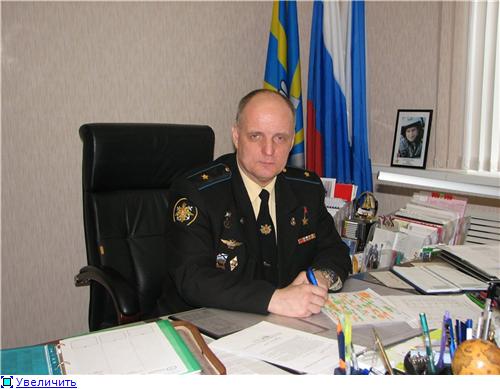
Retired General-Major Aleksandr Tazekhulakhov — Deputy Chief of Troop Air Defense in 2005-2009 — has written on military reform (and on VKO) before, but his piece in Friday’s Nezavisimoye voyennoye obozreniye caught one’s attention.

Let’s get to the main points of his very long, but interesting, article.

Essentially, Tazekhulakhov asks whether trying to decide which service or branch will own VKO isn’t the most expensive and useless project.

The former air defender suggests that, if the character of future wars, dangers, and threats are considered:

“. . . it is essential to give priority to the development and improvement not of separate services and troop branches of the Armed Forces, but of strategic and operational-strategic reconnaissance-combat (offensive and defensive) systems, which are being established on the basis of troop (force) groupings on strategic axes with concrete combat missions.”

Tazekhulakhov says President Medvedev is looking for a unified VKO system, while Defense Minister Serdyukov is planning to deliver VKO Troops [войска ВКО].  The former one-star says:

“Considering that the creation of a system of aerospace defense (VKO), or of VKO Troops could turn out to be the most visible, expensive and at the same time most senseless and useless project, it’s essential to review once more the existential problems and variants for solving this complex mission.”

He stresses that the national missions of VKO can only be resolved according to a common concept and plan, under united command and control.  And he argues against near- or medium-term thoughts of providing equal defense for all Russian territory and borders.  He cautions against thinking the combat potential of VKO systems might someday compare with that of strategic nuclear forces:

“No country in the world today has or can foresee in the medium-term future a missile defense [ПРО] system which would be capable of repulsing a mass (counterforce) missile-nuclear strike, or even a strike consisting of several ICBMs.  Therefore it’s expedient to limit the scale of employing VKO systems to the following framework:  repulsing strikes employing single or small groups (3-5) of ICBMs, IRBMs, operational-tactical missiles, tactical missiles, single, group, or mass strikes by other means of air attack, destruction (suppression) of satellites and other space objects.  Limiting the scale of VKO system employment will allow for reducing expenditures on its maintenance, for making combat missions specific, and for concentrating efforts on developing the most important system components.”

Establishing the VKO system, according to Tazekhulakhov, is a two-fold task. 

Firstly, PVO, PRO, PRN, and KKP [air defense, missile defense, missile attack early warning, and space monitoring] systems have to come under unitary command and control.  This, he says, is an administrative and organizational task that can and should be done in the timeframe indicated by Medvedev.

Secondly, and more troublesome, is the process of uniting the various supporting elements of VKO — what Tazekhulakhov calls the “hidden part of the iceberg” or the “horizontal system components.”  They include reconnaissance and warning, fire and functional defeat (suppression), command and control, and material support.

He claims, however, that, for 30 years, state leaders, military leaders, military scientists, and industry representatives have tried without success to resolve this problem.  It has administrative, functional, technical, algorithmic, and programming aspects requiring resolution on a state level rather than a departmental [Defense Ministry] one.

Thus, Tazekhulakhov limits his discussion to the possibilities for solving the first (“tip of iceberg” or “vertical system components”) problem.

To be continued.
Valeriy Ivanov on VKO, S-500, S-400

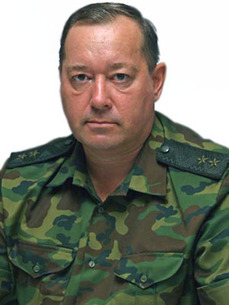
General-Lieutenant Valeriy Ivanov

The Space Troops have seemed pretty confident about getting control of VKO up to this point, but now a senior Air Forces officer has taken his turn to suggest the VVS may have a leg up.

On Friday, Commander of the Operational-Strategic Command of Aerospace Defense (OSK VKO), General-Lieutenant Valeriy Ivanov described for journalists how his command provides air defense for 140 key facilities in Russia’s capital and central industrial regions. 

At a conference in Mozhaysk to commemorate the 70th anniversary of the defeat of the first Nazi air attack on Moscow, Ivanov said 800 OSK VKO personnel secure Moscow’s airspace on a daily basis, and he claimed his command covers two-thirds of Russian Federation territory, according to RIA Novosti

The OSK VKO Commander also said he expects to receive the S-500, new radars, and fighter aircraft by 2015.  Several news outlets repeated an early 2011 Interfaks report saying that ten S-500 battalions will be acquired under GPV-2020. 

Regarding President Medvedev’s late 2010 order to set up a unified VKO command by December 1, 2011, Ivanov told ITAR-TASS that VKO has already been established and is being improved:

“The VKO system is now being integrated, developed, and modernized.  We are now taking, uniting Space Troops and our OSK VKO.” 

But, according to ITAR-TASS, Ivanov had to admit there’s no clarity yet on the new form of VKO, and “our state’s political leadership will make the final decision on this.”

Krasnaya zvezda also provided a somewhat less categorical-sounding Ivanov quote:

“The Aerospace Defense system which we’re creating is now being integrated and developed.  Currently, the process of amalgamating Space Troops and the Operational-Strategic Command is going on.”

Komsomolskaya pravda relayed this Interfaks quote about the fate of aviation:

“Aviation carrying out air defense missions will be immediately subordinated to the VKO commander.  The one who directs the battle will also command [aviation].”

RIA Novosti also reported General-Lieutenant Ivanov saying the second S-400 regiment (at Dmitrov) will be on duty by July 31.  He said a third regiment will appear at Zvenigorod by the end of this year.

More Cadre Changes

This is the last of the backlogged Armed Forces personnel decrees.  It’s from March 2.  All presidential decrees on cadre changes are now reflected on these pages.  This one made General-Lieutenant Yevnevich an assistant to Defense Minister Serdyukov, and dismissed one General-Lieutenant Chaynikov, deputy chief of the 12th GUMO.

Appoint:

  • Colonel Dmitriy Valeryevich Kasperovich, Commander, 28th Independent Motorized Rifle Brigade.
  • Colonel Valeriy Anatolyevich Korobkov, Chief, Signal Troops, Deputy Chief of the Main Staff of the Air Forces for Communications.
  • Colonel Aleksandr Valeryevich Linkov, Chief, Organization-Mobilization Directorate, Deputy Chief of Staff of the Central MD for Organization-Mobilization Work, relieved as Chief, Organization-Mobilization Directorate, Deputy Chief of Staff of the Far East MD for Organization-Mobilization Work.
  • Colonel Vladimir Aleksandrovich Makeyev, Chief, Radioelectronic Warfare Service, Central MD.
  • General-Lieutenant Oleg Vladimirovich Milenin, Deputy Commander, Eastern MD, relieved as Deputy Commander, 2nd Air Forces and Air Defense Command.
  • General-Major Yuriy Petrovich Petrov, Deputy Chief, Main Combat Training Directorate, Ground Troops, relieved as Chief, Combat Training Directorate, Siberian MD.
  • General-Lieutenant Valeriy Gennadyevich Yevnevich, Assistant to the RF Defense Minister, relieved as Chief, Main Combat Training and Troop Service Directorate, RF Armed Forces.
  • Colonel Vladimir Levontyevich Zharov, Deputy Commander of the Southern MD for Personnel Work, Chief, Personnel Work Directorate.
  • Rear-Admiral Aleksandr Andreyevich Zhuchkov, Chief, Naval Operational Art Department, “Naval Academy” Navy Training-Scientific Center, relieved as Chief of Staff, First Deputy Commander, Primorskiy Mixed Forces Flotilla, Pacific Fleet.
  • Colonel Yuriy Yuryevich Kremlev, Chief of Communications, Deputy Chief of Staff for Communications, Southern MD.
  • General-Major Vladimir Viktorovich Maystrenko, Chief of Staff, First Deputy Commander, 5th Army, relieved as Deputy Chief of Staff, North Caucasus MD.
  • Captain First Rank Sergey Nikolayevich Myasoyedov, Chief of Staff, First Deputy Commander, Primorskiy Mixed Forces Flotilla, Pacific Fleet, relieved as Chief, Operations Directorate, Deputy Chief of Staff, Pacific Fleet.
  • Captain First Rank Yuriy Ivanovich Orekhovskiy, Deputy Commander of the Black Sea Fleet for Personnel Work.
  • General-Major Igor Anatolyevich Seritskiy, Chief of Staff, First Deputy Commander, 41st Army, relieved as Deputy Commander, 36th Army.
  • Colonel Viktor Georgiyevich Fedorenko, Chief, Radioelectronic Warfare Service, Southern MD.

* * *

Relieve:

  • Colonel Vadim Mikhaylovich Yezhov, Chief, Missile-Artillery Armaments Service, Volga-Ural MD.
  • Rear-Admiral Vladimir Mikhaylovich Reshetkin, Chief, Ship Maintenance and Repair Directorate, Deputy Chief, Technical Directorate, Navy.
  • Rear-Admiral Sergey Nikolayevich Streltsov, Chief of Staff for Armaments, First Deputy Chief of Shipbuilding, Armaments, and Arms Maintenance, Navy.
  • Rear-Admiral Igor Vladimirovich Vasilyev, Commander, Zaozersk [Zapadnaya Litsa] Submarine Base.
  • Colonel Yuriy Olegovich Shalimov, Commander, 35th Independent Motorized Rifle Brigade.
  • General-Major Vyacheslav Aleksandrovich Shamiyev, Chief of Communications, Deputy Chief of Staff for Communications, Far East MD.
  • Colonel Igor Viktorovich Shcherbakov, Chief of Armaments, Deputy Commander for Armaments, Operational-Strategic Command of Aerospace Defense.

* * *

Relieve and dismiss from service:

  • General-Lieutenant Vladimir Vasilyevich Chaynikov, Deputy Chief, 12th Main Directorate, RF Defense Ministry.

* * *

Dismiss from service:

  • General-Major Mikhail Dmitriyevich Galtsov.
  • General-Major of Medical Service Vladimir Anatolyevich Reshetnikov.

Su-35 Update

Su-35-2 No. 902

Militaryparitet was kind enough to highlight the June issue of Vzlet (Взлёт) and current information on the Su-35S.  The Defense Ministry contracted with Sukhoy for 48 Su-35S during MAKS-2009.

Vzlet says the first Su-35S arrived at the Akhtubinsk State Flight-Test Center on May 28 to begin state joint testing (GSI or ГСИ).

The Su-35S-1 was assembled this spring, and made its first flight from the factory airfield on May 3.  It made seven acceptance flight tests by mid-May.

GSI will determine its preliminary correspondence to basic requirements, and its potential for serial production for combat units.

Prototypes Su-35-1 (No. 901) and Su-35-2 (No. 902) first flew in 2008, and these export versions completed factory testing, fully meeting stability and maneuverability requirements, power plant parameters, and basic onboard system operations, according to Vzlet.

The Su-35S has a digital information-command system, Irbis long-range phased array radar (capable of tracking 30, and attacking 8 air targets, as well as tracking 4, and attacking 2 ground targets), and thrust-vectored 117S engines.

Interfaks reports KnAAPO has built two Su-35S, and a third flew in May.   KnAAPO will build three more for GSI in the second half of this year, a source told the news agency.

Back in April, Periscope2 cited a Kanwa military source in Moscow who claims some Su-35S will go to the 6968th Air Base in Komsomolsk-na-Amure.  Basing them close to the factory will simplify maintenance.  The source also says the first Su-35S will be received in 2012.

This winter the VVS was still saying 48 Su-35S will be put into two or three regiments, but a number of sources have said more will be purchased.

Irkut Offers Up Su-30MK

Su-30MK (photo: http://www.sukhoi.org)

On Monday, Irkut company officials announced the aircraft producer is in negotiations to sell the Defense Ministry up to 40 Su-30MK fighters.  They believe they’ll finalize the contract in 2012.

The officials say the base contract will be for 28 aircraft, with an option for 12.

Vedomosti says a source close to Rosoboroneksport says the fighters go for $50 million a piece, or $2 billion for 40.

Neither the Air Forces nor government holding company OAK reacted to Irkut’s announcement, according to Izvestiya.

Irkut President Aleksey Fedorov told Interfaks the manufacturer sees declining demand for the Su-30MK family, and wants to cease production over the next ten years.  At that time, it will be producing only the Yak-130 trainer for the military.  Irkut intends to concentrate its efforts and investment on building the MS-21 regional passenger jet.

Fedorov told Izvestiya the Su-30MK export model will be “Russified” for 1.5 billion rubles – the onboard computers and displays will change from English to Russian, and some French and Israeli components will be swapped out for Russian ones.  The Russian variant may be called the Su-30SM.

There’s been talk about a small procurement of Su-30MK, or Su-30M2, since MAKS-2009, and two Su-30 fighters arrived at a unit in the Far East last month, according to ITAR-TASS.  The Far East Air Forces and Air Defense Army’s Chief of Aviation, Colonel Aleksandr Maksimtsev said Su-30 deliveries will continue.

A number of commentators have argued for buying the Su-30 for the Air Forces instead of waiting for the Su-35.  CAST’s Konstantin Makiyenko told Izvestiya:

“The Su-35 still isn’t completely finished, and it’s unclear when it’ll be accepted into the inventory.  Therefore, a fully developed export product which has completed all RDT&E will be taken and accepted into the inventory.  This is, indisputably, a smart decision.”

ITAR-TASS wrote that the Russian Air Forces didn’t acquire the Su-30 for financial reasons.  But Izvestiya noted more than 270, in various configurations, have been sold since 1997, with buyers including India, Algeria, Venezuela, Vietnam, China, Malaysia, and Uganda.

Naval Aviation Chief Interviewed

Hero of Russia, General-Major Igor Kozhin

On Sunday, RIA Novosti interviewed Naval Aviation Chief, General-Major Igor Kozhin on his branch’s 95th anniversary.

The news agency’s recap reminded that Naval Aviation lost its strike assets to the Air Forces on 1 April.  And, by year’s end, all remaining Su-27, MiG-31, Tu-22 and part of its transport aircraft will move to the VVS.  Only land-based ASW and carrier aviation will remain.

Asked about training, General-Major Kozhin focused on cost and retention.  He claimed training a pilot costs a rather exorbitant $1.5 to 2 million annually.  He indicated the need to keep older, experienced personnel — even in a civilian capacity — to train his younger pilots.

On upcoming training, Kozhin said his one regiment of 20 carrier-qualified pilots will conduct 100 takeoffs and landings from the Fleet Admiral of the Soviet Union Kuznetsov in August and September.

Kozhin said Kuznetsov is currently preparing for sea, and there’s no plan for capital repairs even though a replacement isn’t foreseen at this time.

He gave no hint of any impending carrier deployment as rumored earlier this year. 

RIA Novosti asked about renting the NITKA carrier trainer in Ukraine.  Kozhin answered by updating the construction of a similar facility at Yeysk, in Krasnodar Kray.  He said toward fall the takeoff and landing strip will be complete, then landing systems will be installed, and the ground-based carrier simulator will be functional in 2013.  He said the entire Naval Aviation training complex will be finished in 2015.

Finally, on new aircraft, Kozhin said the first four MiG-29K for Naval Aviation could apppear in 2012, but the Defense Ministry will have to sign the contract before mid-August.  Otherwise, the first delivery will be in 2013.  In all, a Navy buy of 20 is planned, but the factory is busy now filling India’s order for fighters for the ex-Gorshkov being renovated at Sevmash.

Out With Central Apparatus Generals?

This morning’s Rossiyskaya gazeta repeated a lot of what’s known about the retiring generals’ troyka.  More interesting, however, are other statements and language it used to describe what’s going on in the Defense Ministry.

The article is subtitled, “Cadre Purge Begun in the Defense Ministry.”  An odd choice of words for something that’s been going on for some time, and is supposed to be routine and unsensational.

About Friday’s latest Armed Forces cadre ukaz, RG reports:

“In the Defense Ministry, they don’t conceal the fact that these aren’t the last cadre decisions which will affect highly-placed military leaders, particularly from the military department’s central apparatus.”

The paper repeats the rumor about possible uniformed opponents of Serdyukov’s (or Makarov’s) military reforms being shown the door as well as the contrary points and official denials.  Again, no sensation; all this was hashed over a week ago.

RG ends this way:

“Meanwhile, in the Defense Ministry they don’t exclude new dismissals.  The thing is right now in the Russian Army certification [аттестация] of all command personnel is going on, and, according to its decision, they will propose that a number of military leaders, who’ve served in Moscow more than five years, serve in more distant military districts.”

“As a source in the military department told RG’s correspondent, the majority of dismissal reports appear at once when they suggest a man change his duty in the capital for an equivalent one somewhere in Russia’s sticks.”

Yes, we know generals often prefer to retire in Moscow, get valuable permanent apartments in the capital, and enable their well-connected wives to keep lucrative employment rather than spend a few extra years serving in a possibly terminal post in Khabarovsk, etc. 

What we’re getting at here (again) is either (a) there really is something to Moskovskiy komsomolets’ report about drastically cutting uniformed officers in the central apparatus, or (b) RG was being lazy and reran a worn-out story using some loosely chosen verbiage.

Second S-400 Regiment Delayed

The second S-400 regiment, or “regimental set,” hasn’t commenced combat duty at Dmitrov after all. 

This was supposed to happen on May 15, but didn’t.  According to RIA Novosti, a VVS spokesman said the official commencement of combat duty was postponed [again] from July 17 until the last ten days of this month.

The news agency says the ceremony will take place on Peremilovskaya Height, outside Dmitrov.  

Newly-minted VVS Main Staff Chief and First Deputy CINC, General-Major Viktor Bondarev said in June that a third S-400 regiment will become operational this fall.

Cadre Changes

In decrees published today, President Medvedev accepted the retirement of EW Directorate Chief, General-Major Oleg Ivanov.  Part of the “troyka” of retiring generals, he reportedly requested retirement for health reasons.  No official documents yet on the other two (Andrey Tretyak and Sergey Skokov). 

The press covered the news on General-Major Ivanov, but didn’t note the promotion of General-Major Bondarev to be Chief of the Main Staff, First Deputy CINC of the VVS.  

Bondarev was the Main Staff’s investigating officer in the case of Senior Lieutenant Sulim and the Lipetsk premium pay kickbacks.  The VVS and Defense Ministry must not be unhappy with his work, which consisted mainly of berating and pressuring the officers forced to pay tribute to their superiors.

In any event, the decrees . . .

Appoint:

  • General-Major Vladimir Aleksandrovich Filatov, Deputy Commander, 2nd Army.
  • General-Major Sergey Vasilyevich Chvarkov, Chief, Main Directorate for Personnel Work, RF Armed Forces, relieved as Deputy Chief, Military Art Department, Military Academy of the General Staff, RF Armed Forces.

Relieve and dismiss from service:

  • General-Major Oleg Anatolyevich Ivanov, Chief, Radioelectronic Warfare Troops, RF Armed Forces.
  • General-Major Aleksey Ivanovich Nesterov, Chief, 3rd Directorate, Main Organization-Mobilization Directorate, General Staff, RF Armed Forces.
  • General-Major Anatoliy Grigoryevich Predius, Chief of Military-Space Academy named for A. F. Mozhayskiy Branch (Cherepovets, Vologda Oblast).

Dismiss from service:

  • General-Major Yuriy Yuryevich Perminov.

* * *

Appoint:

  • General-Major Viktor Nikolayevich Bondarev, Chief of Main Staff, First Deputy CINC, Air Forces, relieved as Deputy CINC, Air Forces.
  • Colonel Vladislav Yevgenyevich Kharchenko, Chief, Radioelectronic Warfare Service, Eastern MD.

Dismiss from service:

  • General-Major of Justice Sergey Vladimirovich Devyatov
  • General-Major Vladimir Slavich Kostyuchenko.

Severodvinsk Trials and GOZ Tribulations

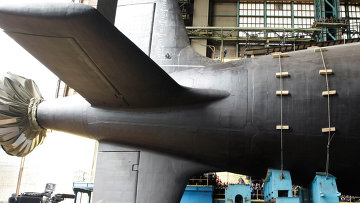
Severodvinsk (photo: RIA Novosti / Vladimir Rodionov)

Your typical good news, bad news story . . . happily for the Russian Navy, the Severodvinsk is nearing its first at-sea testing, but the new submarine has also been held up as a prime example of outrageous price increases in this year’s state defense order.  Final delivery of this SSN, as well as the first two Borey-class SSBNs, represents a big part of troubled GOZ-2011.

RIA Novosti reports new fourth generation Yasen-class (proyekt 885) SSN Severodvinsk will soon head into the White Sea for two months of underway testing, according to Malakhit Design Bureau General Director Vladimir Pyalov.  He added that, after this at-sea period, the final phase of state testing will take place.  

A very precise Mr. Pyalov says Severodvinsk is currently 98.9 percent complete.  He thinks the Navy will accept the new boat before year’s end and, in all, six of these multipurpose submarines will be built.  The second proyekt 885 Kazan is slated for delivery in 2015. 

RIA Novosti says proyekt 885 is a double-hulled, single-shaft boat with a reduced acoustic signature.  The conning tower has a streamlined, oval shape.  The boat is divided into ten compartments. 

For the first time, according to RIA Novosti, Russian designers put the submarine’s torpedo tubes amidships to allow for a new bow-mounted sonar system.  Proyekt 885 has eight vertical launch tubes for supersonic cruise missiles.  It has new communications and navigation systems as well as a fundamentally new nuclear power plant, according to the news agency’s report.  The new submarine is said to be first in noise reduction and stealth among attack submarines worldwide.

But the Severodvinsk couldn’t evade detection in the furor over breakdowns in the state defense order.

Earlier this month, RIA Novosti reported on disputes between the United Shipbuilding Corporation (OSK), submarine-builder Sevmash, and the Defense Ministry over naval construction in this year’s GOZ.  In particular, the military accuses the builder of doubling its prices for proyekt 955 Yuriy Dolgorukiy and proyekt 885 Severodvinsk.

An OSK spokesman defended Sevmash saying the cost of its work on Severodvinsk is only 30 percent of the total price, with the balance being the cost of armaments and components supplied by several dozen enterprises.  He blamed inflation in the industrial sector and the economy more generally.

Summarizing his discussion of submarines with OSK, RIA Novosti reports, Defense Minister Serdyukov said:

“They are giving us an increase in prices on new orders, and, naturally, we don’t agree with this.”

But, he added he’s convinced the Defense Ministry will persuade the producer to lower its prices.

Izvestiya mentioned that Severodvinsk was originally intended for a production run of 30 submarines, now reduced to six more than 20 years later.  As recently as March, the Navy still publicly hoped for ten.

Serdyukov told the paper:

“. . . it’s incomprehensible what the price of the ship [sic] consists of, if the cost of the lead boat was 47 billion rubles ($1.7 billion), but the next, exactly the same is now 112 billion ($4 billion).”

“Of course, the price will grow if, in the cost of one ship [sic], they include all accompanying expenditures on other enterprise projects in no way connected with it, like maintaining kindergartens, infrastructure, etc.”

“We’re prepared to pay, but on the condition that the price formation process will be transparent.  As practice shows, if all articles in the contracts are “decoded,” then it seems it’s possible with confidence to deduct up to 30% from the final cost of a finished product.”

These must be bitter words for an enterprise that went many, many years without completing its trademark product — a nuclear-powered submarine.

A Sevmash source says the cost of submarine construction is directly related to higher prices for materials, energy, and integration:

“The entire range of equipment for a submarine is supplied by monopolistic companies trying to dictate their prices.”