Tag Archives: Yuriy Dolgorukiy

Bulava News

Today Navy CINC, Admiral Vladimir Vysotskiy announced four more tests of the Bulava SLBM this year.  According to Interfaks, Vysotskiy said plans call for a salvo launch either this year or next, depending on the state commission overseeing the Bulava’s testing.

Last Wednesday, a defense sector source told Interfaks to expect the next Bulava test in a month.  Originally, the source said, it was supposed to be a salvo launch a month after the successful June 28 test from Yuriy Dolgorukiy.  But analysis of the June flight test and preparation for the next took longer than expected.  This source said the 16th test will be in late August, or possibly even fall.  He said Dolgorukiy will fire two Bulava SLBMs, one after another. 

On June 30, Vysotskiy claimed the second proyekt 955, Borey-class SSBN Aleksandr Nevskiy will finish sea trials, and test fire a Bulava this year.  But he didn’t repeat the claim today.

Severodvinsk Trials and GOZ Tribulations

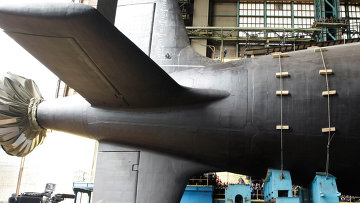
Severodvinsk (photo: RIA Novosti / Vladimir Rodionov)

Your typical good news, bad news story . . . happily for the Russian Navy, the Severodvinsk is nearing its first at-sea testing, but the new submarine has also been held up as a prime example of outrageous price increases in this year’s state defense order.  Final delivery of this SSN, as well as the first two Borey-class SSBNs, represents a big part of troubled GOZ-2011.

RIA Novosti reports new fourth generation Yasen-class (proyekt 885) SSN Severodvinsk will soon head into the White Sea for two months of underway testing, according to Malakhit Design Bureau General Director Vladimir Pyalov.  He added that, after this at-sea period, the final phase of state testing will take place.  

A very precise Mr. Pyalov says Severodvinsk is currently 98.9 percent complete.  He thinks the Navy will accept the new boat before year’s end and, in all, six of these multipurpose submarines will be built.  The second proyekt 885 Kazan is slated for delivery in 2015. 

RIA Novosti says proyekt 885 is a double-hulled, single-shaft boat with a reduced acoustic signature.  The conning tower has a streamlined, oval shape.  The boat is divided into ten compartments. 

For the first time, according to RIA Novosti, Russian designers put the submarine’s torpedo tubes amidships to allow for a new bow-mounted sonar system.  Proyekt 885 has eight vertical launch tubes for supersonic cruise missiles.  It has new communications and navigation systems as well as a fundamentally new nuclear power plant, according to the news agency’s report.  The new submarine is said to be first in noise reduction and stealth among attack submarines worldwide.

But the Severodvinsk couldn’t evade detection in the furor over breakdowns in the state defense order.

Earlier this month, RIA Novosti reported on disputes between the United Shipbuilding Corporation (OSK), submarine-builder Sevmash, and the Defense Ministry over naval construction in this year’s GOZ.  In particular, the military accuses the builder of doubling its prices for proyekt 955 Yuriy Dolgorukiy and proyekt 885 Severodvinsk.

An OSK spokesman defended Sevmash saying the cost of its work on Severodvinsk is only 30 percent of the total price, with the balance being the cost of armaments and components supplied by several dozen enterprises.  He blamed inflation in the industrial sector and the economy more generally.

Summarizing his discussion of submarines with OSK, RIA Novosti reports, Defense Minister Serdyukov said:

“They are giving us an increase in prices on new orders, and, naturally, we don’t agree with this.”

But, he added he’s convinced the Defense Ministry will persuade the producer to lower its prices.

Izvestiya mentioned that Severodvinsk was originally intended for a production run of 30 submarines, now reduced to six more than 20 years later.  As recently as March, the Navy still publicly hoped for ten.

Serdyukov told the paper:

“. . . it’s incomprehensible what the price of the ship [sic] consists of, if the cost of the lead boat was 47 billion rubles ($1.7 billion), but the next, exactly the same is now 112 billion ($4 billion).”

“Of course, the price will grow if, in the cost of one ship [sic], they include all accompanying expenditures on other enterprise projects in no way connected with it, like maintaining kindergartens, infrastructure, etc.”

“We’re prepared to pay, but on the condition that the price formation process will be transparent.  As practice shows, if all articles in the contracts are “decoded,” then it seems it’s possible with confidence to deduct up to 30% from the final cost of a finished product.”

These must be bitter words for an enterprise that went many, many years without completing its trademark product — a nuclear-powered submarine.

A Sevmash source says the cost of submarine construction is directly related to higher prices for materials, energy, and integration:

“The entire range of equipment for a submarine is supplied by monopolistic companies trying to dictate their prices.”

Quoting Tolya

Tolya’s remarks to the press today made quite a few headlines, and left a few useful benchmarks for the future.  Defense Minister Serdyukov addressed procurement and manpower issues.  Here are his quotes from RIA Novosti and ITAR-TASS.

Tanks for Nothin’

“We met the designers who proposed their preliminary work to us.  60 percent of what was proposed is old work.  Therefore, we still declined these proposals.”

“Now it’s more expedient to modernize our country’s tank inventory than to buy new ones, for example the T-90.”

Cold Water on Carriers

“We have no plans to build aircraft carriers.”

“Only after this [a preliminary design of what this ship might look like], the Genshtab together with the Navy will make a decision on the need for such a ship.”

SSBNs Aren’t Automobiles

“‘Bulava’ flew, this is good news.  We understand precisely that it’s possible to launch serial production of the missile on this variant.”

“We got the result, now it’s possible to load SSBN ‘Yuriy Dolgorukiy’ with ‘Bulava.'”

“We’d like to do this [test Bulava from Aleksandr Nevskiy], but we understand that to plan this precisely is impossible.  A nuclear submarine isn’t an automobile.”

Bullish on Arms Deliveries

“Deliveries of strategic missiles ‘Topol-M,’ ‘Yars,’ ‘Avangard’ will increase three times, ‘Bulava’ and ‘Sineva’ missiles for strategic submarines one and a half times, aircraft four times, helicopters almost five times, air defense systems almost two and a half times [in 2011-2015 compared with 2006-2010].”

Not Going Below a Million Men

“There are no such plans, there are no questions of cutting manpower.  We’re striving for the entire army under the million number, and it isn’t planned to cut this figure.”

“On account of this [increasing contractees from 2014], we’ll manage without fail to get through the demographic hole which is anticipated in 2014.”

Two Arctic Brigades

“The Genshtab is now developing plans to establish two of these formations.  In the plans, deployment places, armaments, manning, and the infrastructure of these brigades need to be specified.”

“It’s possible this will be Murmansk, Arkhangelsk, or another place.”

Bulava Launch Window

An OPK source told RIA Novosti yesterday a state commission on experimental flight testing has identified June 28-30 as the window for this year’s first Bulava SLBM test.  The commission will select a precise date within the next two days.  The source says Borey-class SSBN Yuriy Dolgorukiy will be the platform for the launch.

Dolgorukiy Returns to Sea

This morning ITAR-TASS reports that fourth generation Borey-class SSBN Yuriy Dolgorukiy is at sea for testing.  This is the boat’s first underway period of 2011. 

At the close of last year’s Arctic navigation season, Dolgorukiy returned to the hall at Sevmash, where it was prepared for the concluding phases of its state underway testing.  Sevmash says the submarine should be officially handed over to the Navy within the next few months.

Recall the Russian press reports that modified Typhoon SSBN Dmitriy Donskoy will be the launch platform for this year’s first Bulava SLBM test.

Fateful Season for Bulava Begins

A Defense Ministry source tells RIA Novosti that Bulava SLBM testing will resume between 15 and 17 June.  The test launch will come from modified Proyekt 941U SSBN Dmitriy Donskoy, though the source claims Borey-class SSBN Yuriy Dolgorukiy is ready to fire the missile.

Recall that Proyekt 955 Dolgorukiy was back at Sevmash for work this winter.

The source says the first launch from Dolgorukiy will come after two successful firings from Donskoy.

Bulava now has 7 reported successes in 14 tries.  There will be 4-5 tests in 2011.

If they are successful (and at least a couple come from Dolgorukiy), the SLBM and its intended submarine will be accepted into the Navy inventory.  And serial production of Bulava will ramp up. 

If they aren’t, the naval strategic modernization effort will find itself back where it was prior to two successful launches last October.

But the Russians seem pretty confident this time around.

Nikolskiy on GOZ-2010 Failures

On Tuesday, Vedomosti’s Aleksey Nikolskiy wrote about breakdowns in last year’s State Defense Order (GOZ).  He notes that concern about failures started with Roskosmos, but it isn’t limited to that part of the defense sector.

Nikolskiy recounts Deputy Prime Minister Sergey Ivanov’s session with the Roskosmos collegium.  The space industry only produced five of 11 satellites specified in GOZ-2010, and 6 civilian launches were postponed.  The three GLONASS satellites lost to a “childish mistake” [in filling the rocket’s tanks] cost 2.5 billion rubles.  But we’ll return to Russia’s space woes another day. 

A Defense Ministry source tells Nikolskiy GOZ failures are constant. 

Bulava SLBM delays kept Yuriy Dolgorukiy from entering service [remember the new SSBN itself had to return to Sevmash for work while it awaits the next Bulava test].  Introduction of the new Severodvinsk SSN has been put off until much later because of construction defects.  A United Shipbuilding Corporation (OSK) source tells Nikolskiy the Defense Ministry has stopped financing completion of a proyekt 677 diesel-electric sub, and work on two others laid down at Admiralty Wharves is in question.

Nikolskiy says the Air Forces’ assimilation of Yak-130 trainers is delayed by last March’s crash.  And there’s a serious delay in the testing of the Su-35 fighter, according to a Defense Ministry officer [Sukhoy was reportedly testing two Su-35s last August].  One enterprise manager claims reforms in the Defense Ministry purchasing system are holding back contracting for aircraft deliveries this year. 

CAST’s Konstantin Makiyenko says government and Defense Ministry criticism of industry for its GOZ failures could be followed by personnel changes.  In Roskosmos’ case, the situation is almost “overripe.”  But Makiyenko defends other Russian arms producers by noting that delivery delays are common even for U.S. and European manufacturers.

Yuriy Dolgorukiy Headed for Pacific Fleet

In Vladivostok yesterday, Defense Minister Anatoliy Serdyukov made the surprising announcement that the first Borey-class SSBN, Yuriy Dolgorukiy, will deploy to Russia’s Pacific Fleet, once it becomes operational with its complement of Bulava SLBMs. 

To be precise, Serdyukov said:

“The first Borey will enter the TOF [Pacific Ocean Fleet].  This is how it is in our plans.  . . . new barracks are already built for crews of new submarines.  Since 2007, we’ve been taking down old barracks and building new ones, renovating the social infrastructure 100 percent.”

Serdyukov made the comments while inspecting new construction in Vilyuchinsk for Pacific Fleet contractees.

Basing the first Borey away from where it was built, and away from Russia’s Northern Fleet, is a sharp break from the Soviet / Russian Navy tradition of keeping the first units of new classes — especially SSBNs — close to their point of origin at Sevmash.  A Pacific Fleet deployment could complicate service and support not only for Yuriy Dolgorukiy, but for its new missile system as well, and make this more costly too. 

The Defense Ministry seems to have decided it needs to retain a two-fleet naval strategic nuclear deterrent.  And putting the first Borey there seems essential given that the Pacific Fleet has only a handful of 30-year-old Delta III-class SSBNs at this point.  This decision may also reflect what’s been presented several times as an increased Russian military focus on the Asia-Pacific region.

Bulava Launch Postponed by Ice

A Belomorsk Naval Base representative told RIA Novosti this morning that the planned third and final Bulava test for 2010 has been postponed until early next summer:

“The freezing White Sea ice interfered with the conduct of testing, which was planned for 17 December from onboard nuclear submarine ‘Yuriy Dolgorukiy’.”

The next test will likely occur in June when the pack ice thaws.

Solomonov and Bulava

Bulava designer Yuriy Solomonov seems to have come out from underground now that the Bulava SLBM has some successes under its belt.

Yesterday the Russian media carried excerpts from a soon-to-be-published interview with Igor Korotchenko’s Natsionalnaya oborona

Solomonov already has a book about his adventures in missile design to his credit.  The only thing that’s changed is the Bulava program seems to be righting itself.

Solomonov said, not surprisingly, that the Bulava’s warheads are ready, and he expects the missile to stay in the inventory until 2050.

He expects Votkinsk to ramp up for Bulava production.  He noted that, for a facility that produced 100 missiles a year in Soviet times, “Now there isn’t any kind of problem from the point of view of organizing the technological process and organizing people for this task.”

Solomonov said Borey-class SSBN Yuriy Dolgorukiy will begin (like Dmitriy Donskoy did) with a surface test launch.  But he doesn’t rule out that this could be changed to a submerged launch.  The tentative date is 17 December. 

He forecasts 4 tests in 2011, the start of serial Bulava production, and possibly the missile’s acceptance into the Navy arsenal, if it achieves a “high reliability coefficient.”

In the interview, Solomonov apparently will talk about how Bulava could be adapted into a ground-launched missile.  This brings back the whole issue of “inter-service unification,” which led to some of the excitement with Bulava.

Svpressa.ru and Anatoliy Tsyganok have a good time lambasting Solomonov for this (again) if you want to take a look.