Tag Archives: T-50

Popovkin Details the GPV

Yesterday First Deputy Defense Minister Vladimir Popovkin gave RIA Novosti more details on Russia’s procurement plans under the State Program of Armaments (GPV), 2011-2020.  He said 78-80 percent of the 19-trillion-ruble Armed Forces portion of the GPV will go to procurement.   

Popovkin said Russia plans to develop a new liquid-fueled heavy ICBM to carry up to ten warheads, and having a service life of up to 35 years.  Former RVSN Commander General-Lieutenant Andrey Shvaychenko talked about a new liquid heavy as far back as late 2009, and the issue’s been debated in the Russian military press since. 

Popovkin said the Defense Ministry plans to accept the Bulava SLBM and the first two Borey-class SSBNs this year.  There will be 4-5 Bulava launches this year.  Recall to date only 7 of 14 Bulava tests have been successful.  Addressing the missile’s past failures, Popovkin said there were many deviations from the design documentation during production.  He also said Russia plans to build eight SSBNs to carry Bulava by 2020.  He was unclear if this includes the first two Borey-class boats.

Popovkin said work on a new strategic bomber is ongoing, and he claimed a technical design will be complete in 2015.  He said this work isn’t being rushed.

Popovkin told RIA Novosti  the Air Forces will receive more than 600 new aircraft and 1,000 new helicopters by 2020.  In 2011, Su-27SM, Su-30M2, Su-35S, Yak-130, and Su-34 aircraft are to be procured.  More than 100 helicopters, including Mi-26 transports and Mi-28N and Ka-52 combat helicopters will be acquired this year, according to Popovkin. 

Popovkin said a contract for the first ten experimental PAK FA (T-50) aircraft will be signed in 2013, with serial production of 60 aircraft beginning in 2016.

The GPV includes the purchase of ten S-500 air defense systems.  Popovkin said this system will begin testing in 2015, initially with missiles from the S-400.  Fifty-six S-400 units will also be purchased by 2020.  This sounds like seven 8-launcher battalions.   

Popovkin said the GPV will buy 100 ships – including 20 submarines, 35 corvettes, and 15 frigates – for the Navy.  He didn’t specify types for the other 30 ships, and it’s unclear if new SSBNs are included in these numbers.  Popovkin reconfirmed Russia’s plan to buy two and build two Mistral amphibious ships.  Recall also the Black Sea Fleet alone is supposed to get 18 new ships including proyekt 636 diesel-electric submarines, proyekt 11356 and 22350 frigates, and proyekt 11711 LSTs.

Popovkin also mentioned plans to buy a limited number of French FELIN soldier systems, with the intent of Russia producing its own version by 2020.  He looks for it to equal the advertised capabilities of U.S. and German equivalents.

Fighters Flying Nowhere?

The first flight test of China’s ‘fifth generation’ J-20 fighter inspired Trud’s Mikhail Lukanin to address the subject.  If you’d like a translation of it, see Russia Today.

Lukanin notes China’s now third behind the U.S. and Russia to unveil a ‘fifth generation’ fighter, and he cites Ruslan Pukhov and Vitaliy Shlykov who conclude these future aircraft are little suited to modern wars, and are being developed exclusively to satisfy political ambitions.

About China’s “very raw prototype,” Pukhov says:

“According to its technological possibilities, China is still not ready to develop new generation aircraft, since even usual Chinese fighters are copies of foreign ones, mainly Russian aircraft.  The Chinese really still need at least ten years to get the J-20 to 5th generation fighter parameters.”

Lukanin recaps that Russia’s PAK FA, the T-50, started design in 2002, flew in 2010, and is looking for serial production by 2015.  He gives a quick, limited definition of 5th generation (that would horrify U.S. Air Force types):  supercruise, stealth, and 360° radar.

Shlykov tells Lukanin the T-50 and F-22 are unlikely to meet in battle, and employing a ‘superfighter’ in a small war like the Russian-Georgian one is senseless since today’s aircraft can handle such a conflict.  Shlykov calls the fifth generation fighter an “offspring of the arms race” created for a world war between superpowers.

Lukanin highlights the F-22’s exorbitant pricetag and the cut in its production run, and he puts the T-50’s price at $80-100 million, 4-5 times cheaper than the F-22 [perhaps it’s cheaper because it’s not a full-fledged 5th generation aircraft, at least by the USAF definition].

Finally, Lukanin returns to Pukhov, who says:

“For China and Russia, 5th generation fighters are first and foremost political projects, necessary for assuring themselves that they are leading world economies.”

Pukhov says the lion’s share of T-50 aircraft will be exported.

There are at least two interesting issues Lukanin might have addressed here, but didn’t. 

First, is it possible that China might actually be uncomfortably close to Russia in technological capabilities?  Is the J-20 really ten or more years behind the T-50?  Or how about this — is the T-50 anywhere close to the F-22?

Second, fifth generation aircraft could also become passe quickly if the U.S. moves on to a sixth generation unmanned, robotic aircraft.

There are a couple additional articles today worthy of attention.  Argumenty nedeli calls the J-20 a fifth generation Frankenstein, with the nose of the F-22, and the body of the old MiG 1.44 design.  AN says the J-20 lacks an engine [possibly also true of T-50].  The Chinese unveiling might just an elaborate PR show.

Vedomosti isn’t quite as dismissive, and says the J-20 might push Russian development faster.  The paper notes questions about what’s really inside the aircraft, and concludes the flight may have been timed for the U.S. Defense Secretary’s trip to China.

It cites Konstantin Makiyenko to the effect that, for Russia, the J-20’s first flight means it’s essential to increase the financing and pace of the T-50 program, both to preserve the military balance, and to preserve Russia’s competitiveness as an exporter.

Once again, maybe it is all about prestige and exports.

PAK FA Update

PAK FA (photo: RIA Novosti / Aleksey Druzhinin)

RIA Novosti reports the second T-50 (PAK FA) testbed will begin flight tests before the end of the year, according to Sukhoy chief Mikhail Pogosyan.  He said the first testbed has performed 40 flights.  Sukhoy is satisfied with the course of testing which has gone faster than expected.

Pogosyan added that negotiations with India on its entry into the fifth generation fighter program should be completed this year.  Russia and India will roughly split the development expenses for one- and two-seat versions.  The PAK FA will start to enter the Russian inventory in 2015, and Indian forces around 2020.

Fifth Generation Fighter Update

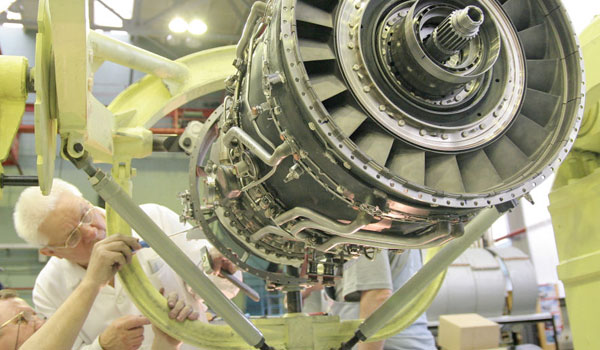
On 26 April, ITAR-TASS reported what is now termed the ‘second phase’ engine for the fifth generation fighter could be ready in 5-6 years, according to NPO Saturn’s managing director Ilya Fedorov.  In his words:

“The RDT&E on the components for making the engine is now being conducted.  It is going on not just at Saturn.  Salyut and the Petersburg Factory named for Klimov are also conducting scientific-research work.”

Fedorov seemed confident the ‘second phase’ fifth generation engine could fly in 5-6 years, depending mostly on what decision the Defense Ministry makes.

Obviously, Saturn wants and needs the work now.

Sukhoy says the fifth generation fighter’s first test phase, consisting of six flights, was successfully completed.  The aircraft’s reliability and controls, engine operation, and other basic systems were tested at a range of speeds and altitudes.

ITAR-TASS reminds that engine signature reduction measures are supposed to provide the new fighter an unprecedentedly low level of radar, optical, and infrared detectability, allowing the plane to raise significantly its combat effectiveness against air and ground targets.

Recall that Saturn put its 117 or 117S engine–a modernized AL-31F like on the Su-35–on PAK FA as its ‘first phase’ engine.  Everything else is up for debate.  As previously written, the Defense Ministry could decide to forego a truly new engine for a while. 

Meanwhile, talk about future fighter engine work isn’t really helping sort out the competition between ODK/Saturn and Salyut, or the general shakeout in a Russian industry with many players and interested parties.

Early last month Sukhoy General Director Mikhail Pogosyan said the PAK FA would be commissioned with ‘first phase’ engines, and ‘second phase’ ones would require another 10-12 years of development.  He doesn’t sound like a fan of new engines, and obviously wants to get his airframes on the assembly line and out the factory doors.

Specifically, Pogosyan said:

“We need to determine how much financing there will be for the phase two engines, how many of them there will be, and many other issues need to be resolved.”

5th Generation Engine Delayed?

Work at NPO Saturn

Marker.ru yesterday wrote about NPO Saturn, FGUP Salyut, OAK, ODK, the Defense Ministry, and development of a fifth generation engine for Russia’s fighter aircraft.

Salyut believes it has basically defeated Saturn in the Defense Ministry’s tender to produce a fifth generation engine for the PAK FA, but Salyut fears development will be given instead to the newly created ODK, the United Engine-building Corporation.

Meanwhile, in OAK–the United Aircraft-building Corporation, they think the Defense Ministry may be considering not making a new engine for the first PAK FA model, and instead concentrating engineering resources on development of a 5th generation engine for future modifications of the new fighter. 

Salyut believes it decisively beat Saturn in the tender’s first phase, but the Defense Ministry has not announced the second and conclusive phase possibly because, according to Salyut’s Dmitriy Yeliseyev, the issue of creating the fifth generation engine was automatically decided when Saturn joined ODK.  But Salyut will insist on completing the tender process to decide who will be lead designer for the 5th generation fighter’s engines.

Yeliseyev says:

“We understand that general direction of the work to create an engine for PAK FA will be under ODK, but we also believe the tender is needed to even decide who will develop the gas generator for the future engine, and basically decide who will drive work on the engine for PAK FA.”

Salyut is now focused on modernizing the fourth generation AL-31 engine.  But test models of PAK FA have Saturn’s 117 engine, a modification of the AL-31.

OAK representative Konstantin Lantratov says the fifth generation engine has fundamentally new requirements, particularly in the areas of radar and infrared signature reduction.  OAK believes the Defense Ministry is not announcing the conclusive phase of the tender to build PAK FA’s engines because it’s waiting for the aircraft’s test results with its current engines.

Marker.ru asks is it necessary to make a 5th generation engine right now?  Wouldn’t it be better to concentrate work on producing engines for aircraft that will follow the PAK FA?  If a new engine starts development today, it will be ready in 5-7 years, about the time modernized or other variants of the PAK FA will be appearing [of course, this assumes the original PAK FA is successful and operational pretty quickly].

OAK’s Lantratov seems to think the Defense Ministry should decide now, if it wants to pay for new engines, and is willing to risk paying and not getting the right results.

Marker.ru consults CAST’s Konstantin Makiyenko . . . he thinks the Defense Ministry has no reason to hurry.  ‘Deeply modernized’ fourth generation engines from Saturn and Salyut are meeting VVS and PAK FA requirements, at least during the test phase.

He thinks a real 5th generation engine is 10 years away.  The need for more powerful engines will arise as other variants (2-seat, strike, naval, etc.) of the PAK FA appear.  Over their life cycles, aircraft get heavier and thrust has to keep pace, so more powerful engines would need to appear around 2020 anyway.

Golts Looks Under the Hood of PAK FA

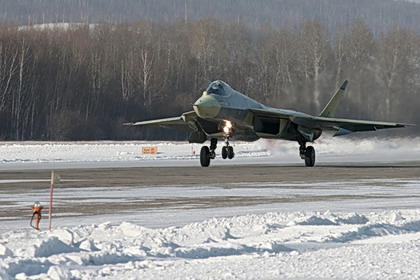
PAK FA in First Test Flight (photo: RIA Novosti)

In today’s Yezhednevnyy zhurnal, Aleksandr Golts turns his skeptical eye toward the PAK FA, Russia’s 5th generation fighter aircraft which just took its first test flight.

Golts says, looking a little like the F-22 and even more than the Su-27, PAK FA called forth a storm, a waterfall of success reports.  He notes that Prime Minister Putin cited it as proof of the wisdom of creating the United Aircraft-building Corporation [UAC or OAK] four years ago. 

Those in charge of the project are breathing easier.  After the Bulava SLBM failures, getting the new fighter off the ground was a matter of principle, especially since the leadership promised that it would fly every year since 2005.  Golts believes the Bulava failures combined with the 5th gen fighter delays caused people to discuss whether Russia could modernize, and whether it could develop high-tech products.  One thing Bulava and PAK FA have in common is that both are truly Russian projects, ones that are being implemented without dependence on significant leftover Soviet-era resources.  Their results could enable observers to question whether the OPK is being managed correctly, whether it was smart for Putin, [Sergey] Ivanov, and Chemezov to herd hundreds of enterprises into several gigantic OPK kolkhozy. 

Golts says some aviation industry leaders worried that OAK was created, not to concentrate resources to build PAK FA, but for Moscow bureaucrats to get their hands on profits from foreign aircraft orders [doesn’t ROE do this already?].  And Golts reminds that around 2000 then-Minister of Industry Ilya Klebanov said PAK FA development would cost $1.5 billion, but as we’ve learned the pricetag was closer to $10 billion over ten years. 

And it had to fly no matter what, and so it did.  But what actually flew, Golts asks.  One thing for sure, the first new airframe in 25 years.  And that’s it.  Everything else–speed, max and min ceilings, radars, weapons systems–all remain to be seen. 

As for the engines, Golts says we just don’t know.  Years ago the engine producers fought it out to be the designer and builder.  NPO ‘Saturn’ won out.  And, according to Golts, its director started to lie.  Putin and Ivanov both recognize that the engine problems will take some time to work out.  But on the day of PAK FA’s first test, the managing director of ‘Saturn,’ who directs the PAK FA program for the United Engine-building Corporation [ODK], claimed the new fighter has the newest engine, not an improved version of the Su-35’s engine, as the press and specialists have written. 

So what Putin and Ivanov worried about was secretly resolved by NPO ‘Saturn’ and the new engine is ready.  This is great news for Air Forces CINC Zelin.  Just four months ago he said that the PAK FA engine couldn’t be foreseen in the near future.  He said it would fly with a ‘Saturn’ engine, the 117S, a ‘deeply modernized’ version of the AL-31F. 

So, according to Golts, either ‘Saturn’ decided to pawn off on the Motherland an engine it demonstrated four years ago or, worse, having pocketed the contract, it simply decided to put old engines in a new aircraft. 

Golts concludes honestly that he can’t say whether PAK FA will be a true 5th generation aircraft, but it has taken off in a thick fog of lies.  And here’s the distinction between it and Bulava; there’s no way to hide Bulava’s failures since the U.S. gets the telemetry and people in other countries can see evidence of an unsuccessful test launch.  There aren’t the same limits on lying about PAK FA. 

So PAK FA is a “cat in a sack.”  You can’t say much for sure about the cat, but don’t worry, it’s a 5th generation sack.